
Digital Twin Market Overview
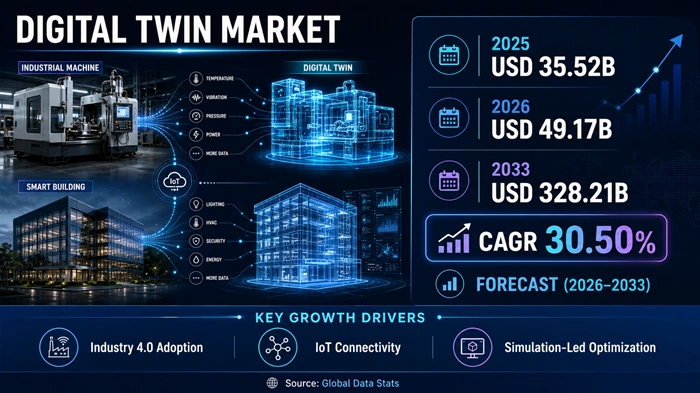
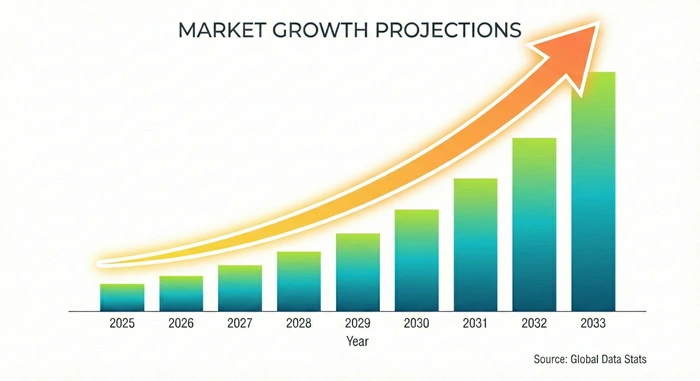
The global digital twin market size is valued at USD 35.52 billion in 2025 and is predicted to increase from USD 49.17 billion in 2026 to approximately USD 328.21 billion by 2033, growing at a CAGR of 30.50% from 2026 to 2033.
Digital twin technology creates virtual replicas of physical objects, systems, or processes that enable real-time monitoring, simulation, analysis, and optimization across diverse industrial applications. This transformative approach connects the physical and digital worlds through continuous data exchange facilitated by Internet of Things sensors, artificial intelligence algorithms, and cloud computing infrastructure, allowing organizations to test scenarios, predict outcomes, and improve decision-making without disrupting actual operations.
The digital twin market continues to reshape how industries approach product development, operational efficiency, and predictive maintenance by providing dynamic virtual models that evolve alongside their physical counterparts. Organizations across manufacturing, healthcare, automotive, aerospace, energy, and smart city sectors leverage digital twin technology to reduce downtime, accelerate innovation cycles, minimize development costs, and enhance sustainability initiatives. Advanced capabilities including machine learning integration, augmented reality visualization, and edge computing enable increasingly sophisticated simulations that support autonomous decision-making, workforce training, and complex system optimization throughout entire product lifecycles.
AI Impact on the Digital Twin Industry
Transforming Simulation Accuracy and Autonomous Optimization Capabilities
Artificial intelligence fundamentally transforms the digital twin market by enabling autonomous optimization, predictive analytics, and generative design capabilities that significantly enhance the value delivered by virtual representations. AI algorithms analyze massive volumes of real-time data streaming from IoT sensors embedded in physical assets, identifying patterns and anomalies that human operators might overlook while continuously refining digital models to maintain accuracy as physical systems age and operating conditions change. Machine learning models trained on historical performance data predict equipment failures days or weeks before they occur, allowing organizations to schedule maintenance during planned downtime rather than responding to unexpected breakdowns that disrupt operations and damage productivity.
Furthermore, generative AI creates entirely new design variations by autonomously exploring solution spaces too vast for human engineers to analyze manually, proposing optimized configurations that balance competing objectives such as performance, cost, weight, and sustainability. Natural language processing capabilities allow non-technical stakeholders to query digital twin systems using conversational interfaces, democratizing access to complex simulation insights and enabling broader organizational participation in data-driven decision-making processes. Computer vision integration enhances digital twin accuracy by automatically detecting physical changes through image analysis, updating virtual models to reflect real-world modifications without requiring manual data entry, while reinforcement learning algorithms enable digital twins to discover optimal operating parameters through simulated trial-and-error experimentation that would be prohibitively expensive or dangerous to conduct on actual equipment.
Growth Factors
Industry 4.0 Adoption and Predictive Maintenance Demands Drive Market Expansion
The digital twin market experiences robust growth driven by widespread adoption of Industry 4.0 practices that emphasize connectivity, automation, and data-driven manufacturing across global industrial sectors. Organizations increasingly recognize that traditional reactive maintenance approaches waste resources on unnecessary preventive work while still experiencing unexpected failures, whereas digital twin-enabled predictive maintenance analyzes real-time operating conditions to forecast failures with remarkable precision. This capability reduces maintenance costs by 20-30% while decreasing equipment downtime by 40-50%, delivering compelling return on investment that justifies technology adoption even among conservative industries traditionally resistant to digital transformation initiatives.
The growing complexity of modern products and systems creates additional demand for digital twin technology as organizations struggle to optimize interconnected components with thousands of variables affecting performance outcomes. Automotive manufacturers developing electric vehicles use digital twins to simulate battery performance under diverse climate conditions and usage patterns, aerospace companies test aircraft designs virtually before building expensive physical prototypes, and energy utilities model grid behavior to integrate renewable sources without compromising reliability. The pressure to accelerate product development cycles while reducing costs and environmental impact makes digital twins essential tools for maintaining competitive positions, particularly as sustainability regulations increasingly require organizations to demonstrate carbon footprint reductions and circular economy participation through detailed lifecycle analysis that digital models facilitate.
Market Outlook
Strong Growth Trajectory Supported by Infrastructure Investment and Regulatory Mandates
The digital twin market demonstrates exceptional growth prospects through the forecast period, supported by massive infrastructure investments in smart cities, 5G networks, and industrial IoT deployments that create enabling ecosystems for widespread adoption. North America currently leads market share due to early technology adoption by manufacturing giants, aerospace leaders, and energy companies with substantial R&D budgets, while Asia Pacific exhibits the fastest growth rates driven by smart factory initiatives in China, advanced robotics programs in Japan, and digital transformation mandates across India's rapidly modernizing industrial base.
Investment in the digital twin market spans venture capital funding for specialized startups developing vertical-specific solutions, strategic acquisitions by established software vendors seeking to expand platform capabilities, and collaborative partnerships between technology providers and industrial companies co-developing next-generation applications. Regulatory compliance requirements further accelerate market growth as governments worldwide implement sustainability mandates requiring detailed emissions tracking, energy efficiency optimization, and circular economy participation that digital twins facilitate through comprehensive lifecycle monitoring. The convergence of complementary technologies including 5G connectivity enabling real-time data transmission, edge computing reducing latency for time-sensitive applications, and augmented reality providing intuitive visualization interfaces creates synergies that expand digital twin applicability across previously unsuitable use cases.
Expert Speaks
-
Roland Busch, CEO of Siemens, announced at CES 2026 that "Digital Twin Composer represents a breakthrough solution allowing companies to design, simulate and optimize industrial systems with unprecedented speed and accuracy, igniting the industrial AI future through seamless integration of virtual and physical worlds".
-
Barbara Humpton, CEO of Siemens USA, emphasized that "Digital twin technology enables you to explore numerous variations before you start shaping metal, revolutionizing our entire approach to work by allowing manufacturers to enhance productivity, achieve greater sustainability, and compete effectively on a global scale".
-
Shane McArdle, CEO of Kongsberg Digital, stated at the 2025 Future Digital Twin & AI USA conference that "The critical importance of openness, trust, and collaboration in advancing the digital twin ecosystem comes not only by celebrating successes but by sharing failures and learnings that shaped real innovation".
Key Report Takeaways
-
North America leads the digital twin market with the largest regional share of 31.3% in 2025, driven by extensive adoption of Industry 4.0 technologies across manufacturing, aerospace, and automotive sectors, strong R&D investments, and government initiatives promoting smart manufacturing infrastructure
-
Asia Pacific emerges as the fastest-growing region with the highest projected CAGR during the forecast period, fueled by rapid industrialization, smart city initiatives, large-scale investments in smart factories particularly in China, and national digital transformation programs like Made in China 2025
-
The system segment dominates solution categories with 40.9% market share in 2025, as enterprises demand real-time process optimization and system-wide visibility across manufacturing, logistics, and utility sectors for autonomous decision-making capabilities
-
Cloud-based deployment demonstrates the highest growth rate during the forecast period due to scalability, cost efficiency, and flexibility enabling organizations to deploy and manage digital twin models without heavy infrastructure investments while supporting geographically dispersed team collaboration
-
Predictive maintenance applications lead with 31.04% market share and exhibit the highest CAGR, driven by early failure detection capabilities that minimize downtime, reduce maintenance costs by 20-30%, and optimize timing for service activities
-
Automotive and transport sector holds the largest end-use share at 22% in 2024, leveraging digital twins to simulate vehicle dynamics, test autonomous driving technologies, optimize production lines, and support electric vehicle development initiatives
Market Scope
| Report Coverage | Details |
|---|---|
| Market Size by 2033 | USD 328.21 Billion |
| Market Size by 2025 | USD 35.52 Billion |
| Market Size by 2026 | USD 49.17 Billion |
| Market Growth Rate from 2026 to 2033 | CAGR of 30.50% |
| Dominating Region | North America |
| Fastest Growing Region | Asia Pacific |
| Base Year | 2025 |
| Forecast Period | 2026 to 2033 |
| Segments Covered | Solution, Deployment, Enterprise Size, Application, End Use, Region |
| Regions Covered | North America, Europe, Asia Pacific, Latin America, Middle East & Africa |
Market Dynamics
Drivers Impact Analysis
IoT Integration and Sustainability Initiatives Accelerate Technology Adoption
The increasing prevalence of Internet of Things devices and sensors provides a wealth of real-time data that fuels digital twin market expansion by enabling accurate and dynamic virtual representations of physical entities. Organizations deploy millions of connected sensors across manufacturing facilities, infrastructure assets, and commercial products that continuously stream operational data including temperature, vibration, pressure, energy consumption, and performance metrics to cloud platforms where digital twin algorithms process information to maintain model accuracy. This connectivity transforms static simulations into living models that evolve alongside physical counterparts, detecting degradation, anticipating maintenance needs, and identifying optimization opportunities that would remain invisible without continuous monitoring capabilities.
Sustainability mandates and corporate environmental commitments represent another critical driver as organizations worldwide face increasing pressure to reduce carbon emissions, minimize resource consumption, and demonstrate circular economy participation. Digital twin technology enables detailed lifecycle analysis tracking environmental impact from raw material extraction through manufacturing, operation, and end-of-life disposal, helping companies identify opportunities to reduce energy usage, optimize material selection, and extend product lifespans through better maintenance. Governments implement regulations requiring emissions reporting and energy efficiency improvements that digital twins facilitate by providing granular visibility into operational footprints, while investors increasingly evaluate environmental, social, and governance performance when making allocation decisions, creating financial incentives for sustainability investments that digital twin platforms support through measurement and optimization capabilities.
| Driver | ≈ Impact on CAGR Forecast | Geographic Relevance | Impact Timeline |
|---|---|---|---|
| IoT Integration and Real-Time Data Availability | High (+4-5%) | Global, particularly North America and Asia Pacific | Immediate to Long-term (2026-2033) |
| Sustainability Initiatives and Regulatory Compliance | High (+3-4%) | Global, particularly Europe and North America | Immediate to Long-term (2026-2033) |
Restraints Impact Analysis
High Implementation Costs and Data Security Concerns Limit Market Adoption
The high costs associated with implementing comprehensive digital twin solutions represent significant restraints affecting digital twin market growth across industries and organizational sizes. Developing accurate digital twins requires substantial investments in IoT sensor networks to capture real-time operational data, computational infrastructure to process massive data volumes, specialized software licenses for simulation and analytics platforms, and skilled personnel with expertise spanning physical domain knowledge and data science capabilities. Small and medium-sized enterprises often lack capital budgets necessary for full-scale implementations, while even large organizations face challenges justifying investments when quantifying returns on digital twin projects proves difficult due to indirect benefits and long payback periods.
Data security and privacy concerns create additional barriers limiting digital twin market adoption as organizations recognize that digital twins aggregate sensitive information about proprietary designs, operational processes, and competitive advantages into centralized repositories vulnerable to cyberattacks. Manufacturing companies worry that detailed digital representations of production facilities could reveal trade secrets if accessed by competitors through data breaches, while critical infrastructure operators fear that digital twins of power grids, water systems, or transportation networks might provide adversaries with blueprints for targeted attacks disrupting essential services. The absence of universal standards for digital twin technology leads to interoperability challenges where systems from different vendors cannot exchange data seamlessly, forcing organizations into vendor lock-in situations or requiring expensive custom integration work, while lack of standardized security practices creates inconsistent protection levels across implementations.
| Restraint | ≈ Impact on CAGR Forecast | Geographic Relevance | Impact Timeline |
|---|---|---|---|
| High Implementation Costs and ROI Uncertainty | Medium (-2-3%) | Global, particularly SMEs and emerging markets | Immediate to Medium-term (2026-2030) |
| Data Security, Privacy, and Interoperability Challenges | Medium (-2-3%) | Global, particularly regulated industries | Immediate to Long-term (2026-2033) |
Opportunities Impact Analysis
5G Connectivity and AR/VR Integration Create Expansion Avenues
The emergence of 5G technology represents a transformative opportunity for the digital twin market by enabling high-speed, low-latency connectivity that facilitates smooth transmission of massive data volumes from numerous IoT devices to cloud platforms. Previous cellular generations lacked bandwidth and responsiveness required for real-time digital twin applications where millisecond delays could compromise safety or operational effectiveness, whereas 5G networks support thousands of simultaneous connections with latencies below 10 milliseconds, making previously impractical use cases commercially viable. Mobile digital twins monitoring remote assets across mining operations, agricultural fields, or distributed infrastructure become practical when 5G eliminates dependence on fixed broadband connections, while autonomous systems relying on digital twin guidance can operate safely when network latency approaches real-time responsiveness.
The integration of augmented reality and virtual reality technologies with digital twin platforms creates significant opportunities by providing intuitive visualization interfaces that democratize access to complex simulation insights. Engineers wearing AR headsets view digital twin overlays superimposed on physical equipment showing internal component conditions, predicted failure points, or optimal adjustment recommendations without consulting separate displays or documentation, while remote experts provide guidance by annotating AR views shared across global teams. VR environments enable immersive training where technicians practice maintenance procedures on virtual replicas of expensive equipment without risking damage or production interruptions, while design teams collaborate within shared virtual spaces reviewing full-scale product models that would be impossible to physically prototype, reducing development costs and accelerating innovation cycles through enhanced visualization capabilities.
| Opportunity | ≈ Impact on CAGR Forecast | Geographic Relevance | Impact Timeline |
|---|---|---|---|
| 5G Network Deployment and Edge Computing Integration | High (+3-5%) | Global, particularly Asia Pacific and North America | Medium to Long-term (2027-2033) |
| AR/VR Integration and Enhanced Visualization | High (+2-4%) | Global, particularly North America and Europe | Medium to Long-term (2027-2033) |
Segment Analysis
Solution Analysis
System-Level Digital Twins Lead Market While Process Segment Shows Rapid Growth
The system segment dominates the digital twin market with 40.9% revenue share in 2025, driven by enterprise demand for real-time process optimization, operational resilience, and system-wide visibility across manufacturing, logistics, and utility sectors. System-level digital twins combine individual components and processes into unified large-scale models supporting cross-functional optimization, comprehensive monitoring, and improved decision-making across operations, infrastructure, and enterprise ecosystems. Organizations leverage system digital twins to simulate entire production facilities where changes to one subsystem automatically propagate through interconnected models revealing downstream impacts, enabling holistic optimization impossible when analyzing isolated components independently. The growing integration of AI into digital twin platforms enables dynamic modeling of production lines, supply chains, and energy management systems that continuously adapt to changing conditions while maintaining performance targets.
The process segment exhibits the fastest projected growth rate from 2026 to 2033, fueled by increasing deployment of integrated digital twin environments simulating behavior and performance of complex workflows across industries. Process-level digital twins are increasingly adopted to simulate entire workflows, improve predictive planning, and support autonomous decision-making particularly in high-variability environments like chemical manufacturing, pharmaceutical production, and food processing where precise control of sequential operations determines product quality. North America leads process digital twin adoption with companies in aerospace, automotive, and advanced manufacturing sectors implementing sophisticated workflow simulations, while Europe follows closely driven by stringent quality and environmental regulations requiring detailed process documentation and optimization. Key players including Siemens, Dassault Systèmes, and ANSYS provide advanced process simulation platforms combining computational fluid dynamics, finite element analysis, and discrete event simulation capabilities that model complex interactions across production stages, enabling organizations to identify bottlenecks, reduce waste, and improve throughput before implementing physical changes.
Application Analysis
Predictive Maintenance Dominates While Business Optimization Exhibits Strong Growth
The predictive maintenance segment holds the largest share at 31.04% in the 2026 digital twin market, driven by compelling value propositions including early detection of potential equipment failures that minimize downtime and maintain continuous operations. Digital twins analyze real-time sensor data to identify subtle changes in vibration patterns, temperature profiles, or performance metrics that signal impending failures days or weeks before catastrophic breakdowns occur, allowing maintenance teams to schedule repairs during planned downtime rather than responding to emergencies that halt production unexpectedly. This capability reduces maintenance costs by 20-30% through elimination of unnecessary preventive work performed on healthy equipment while simultaneously decreasing downtime by 40-50% through proactive failure prevention, delivering measurable ROI that accelerates adoption across asset-intensive industries including energy, manufacturing, transportation, and facilities management.
The business optimization segment demonstrates the fastest projected CAGR during the forecast period as organizations increasingly leverage digital twin technology to enhance operational efficiency, reduce costs, and improve decision-making across complex business processes. By creating virtual representations of entire operations including supply chains, distribution networks, and service delivery systems, digital twins enable real-time monitoring, scenario simulation, and predictive analytics helping companies identify bottlenecks, optimize resource allocation, and streamline workflows without disrupting actual operations. Asia Pacific leads business optimization adoption particularly in China and India where rapidly scaling manufacturing operations require sophisticated tools to manage complexity while maintaining quality and efficiency standards. The segment benefits from growing recognition that digital twins deliver strategic value beyond operational maintenance, with organizations using simulations to test expansion plans, evaluate merger synergies, and model competitive responses before committing resources, transforming digital twins from cost-reduction tools into revenue-generating strategic assets.
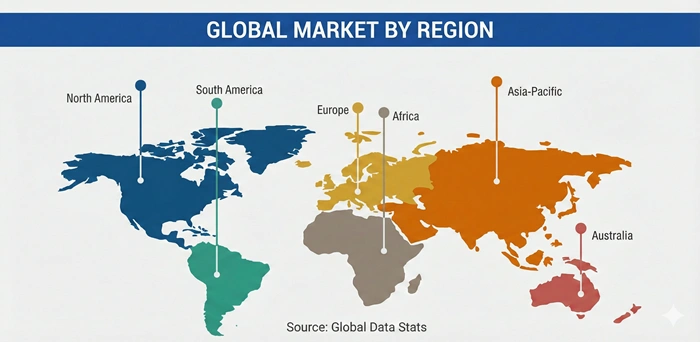
Regional Insights
North America
Advanced Technology Ecosystem and Early Adoption Drive Regional Leadership
North America dominates the global digital twin market with the largest revenue share of 31.3% in 2025, supported by extensive adoption of Industry 4.0 technologies across manufacturing, aerospace, and automotive sectors combined with strong R&D investments and government initiatives promoting smart manufacturing infrastructure. The region benefits from mature IT ecosystems including ubiquitous cloud computing, advanced analytics platforms, and widespread IoT deployments that provide enabling infrastructure for digital twin implementations. The United States leads North American market activity, with enterprises leveraging digital twins to optimize complex supply chains, enhance product lifecycle management, and enable real-time data analytics supported by high technology adoption rates and substantial capital budgets for digital transformation initiatives. The U.S. market is expected to grow significantly at a CAGR of 27.5% from 2026 to 2033, reaching estimated value of USD 44.37 billion by 2032.
The North American digital twin market thrives due to presence of leading technology providers including Siemens, General Electric, Microsoft, IBM, and Rockwell Automation that drive continuous platform innovation through substantial research investments while also representing sophisticated customer bases demanding cutting-edge capabilities. The aerospace and defense sector has emerged as an early adopter utilizing virtual prototyping and simulation to improve aircraft design, optimize manufacturing processes, and ensure reliability of defense systems, while automotive manufacturers leverage digital twins to accelerate electric vehicle development and test autonomous driving technologies. Manufacturing facilities embrace digital twin technology to enhance efficiency, optimize production processes, and implement Industry 4.0 practices enabling real-time monitoring, simulation, and predictive maintenance that reduce costs while improving quality, supported by government programs including the Manufacturing USA initiative that funds collaborative research advancing digital manufacturing capabilities.
Asia Pacific
Rapid Industrialization and Smart City Initiatives Fuel Fastest Regional Growth
Asia Pacific emerges as the fastest-growing region for the digital twin market during the forecast period, driven by rapid industrialization, increasing urbanization, and adoption of smart manufacturing technologies in countries like China, Japan, South Korea, and India. The region's growth stems from massive infrastructure development programs including smart city initiatives that utilize digital twins for urban planning, transportation optimization, infrastructure management, and efficient delivery of public services. China dominates the regional market, holding substantial market share in 2025 due to large-scale investments in smart factories, industrial IoT, and national digital transformation initiatives such as Made in China 2025 that prioritize advanced manufacturing capabilities. The China market is projected to reach USD 2.82 billion by 2026, benefiting from rapid adoption of AI-driven predictive analytics, real-time monitoring, and automation across manufacturing, energy, and transportation sectors.
The Asia Pacific digital twin market benefits from government support through digital transformation mandates, technology funding programs, and regulatory frameworks encouraging Industry 4.0 adoption across public and private sectors. Japan demonstrates particular strength in robotics, automation, and high-tech manufacturing where digital twins are extensively used for quality improvement, process optimization, and reducing production downtime, aligning with the nation's emphasis on precision, efficiency, and advanced engineering solutions. The Japan market is projected to reach USD 1.81 billion by 2026, while India's market reaches USD 1.77 billion driven by growing manufacturing sector, expanding IT services industry, and government initiatives promoting digitalization across industries. Key regional players including Hitachi, NEC Corporation, and emerging Chinese technology firms drive innovation through development of industry-specific solutions, strategic partnerships with global vendors, and investments in AI capabilities that enhance digital twin intelligence and automation, positioning Asia Pacific as both the fastest-growing market and increasingly important innovation center for global digital twin industry.
Top Key Players
-
Siemens (Germany)
-
General Electric Company (United States)
-
Microsoft Corporation (United States)
-
IBM Corporation (United States)
-
Dassault Systèmes (France)
-
PTC Inc. (United States)
-
ANSYS Inc. (United States)
-
SAP SE (Germany)
-
ABB Ltd. (Switzerland)
-
Rockwell Automation Inc. (United States)
-
Autodesk Inc. (United States)
-
AVEVA Group Limited (United Kingdom)
-
Bentley Systems Incorporated (United States)
-
Hexagon AB (Sweden)
-
Robert Bosch GmbH (Germany)
Recent Developments
-
November 2025: Rockwell Automation and Eplan launched a digital twin-driven integration linking Eplan's schematic design tools with Rockwell's Emulate3D software, allowing engineers to virtually model, test, and optimize systems like industrial robots, control panels, and automated conveyors before hardware construction, streamlining workflows and reducing engineering time
-
October 2025: ABB introduced its next-generation excitation system UNITROL 8000 designed to enhance power generation reliability, combining real-time excitation control, embedded digital twin capabilities, built-in data analytics, and cybersecurity by design with modular customization allowing site-specific adaptations and future upgrades without operational disruption
-
October 2025: Zoom Communications partnered with Oracle in a strategic go-to-market agreement to host Zoom Contact Center platform on Oracle Cloud Infrastructure, expanding enterprise reach while demonstrating broader digital twin ecosystem integration across complementary cloud services
-
June 2025: Siemens and Arm launched the PAVE360 digital twin giving developers cloud access to virtual models of Arm automotive IP including the new Zena CSS ahead of silicon availability, enabling testing of AI-driven complex vehicle workloads and helping identify system integration issues before hardware and software deployment
-
January 2026: Siemens CEO Roland Busch announced Digital Twin Composer at CES 2026, described as a breakthrough solution enabling companies to design, simulate, and optimize industrial systems with unprecedented speed and accuracy through seamless virtual and physical world integration
Market Trends
Generative AI Integration and Automated Model Creation Transform Development
The digital twin market demonstrates clear trends toward generative AI integration that autonomously creates content, models, and designs while optimizing structures for performance, efficiency, and innovation. Generative AI enhances simulation capabilities by generating diverse scenarios and simulations allowing comprehensive analysis of how physical assets behave under various conditions, supporting risk assessment and decision-making processes that would require prohibitive time and resources if conducted manually. The technology automates creation of digital twin models by learning from existing data, dramatically accelerating development processes that previously required extensive manual effort by specialized engineers, while reducing time and costs associated with building virtual representations of physical entities. Generative AI algorithms trained on historical data detect anomalies and patterns in physical asset behavior, enhancing predictive maintenance capabilities by helping organizations anticipate and address potential issues before failures occur.
Cloud computing and edge computing transformations reshape the digital twin market by making deployment of scalable and cost-effective solutions accessible to broader organizational segments. Cloud infrastructure provides storage and processing capabilities for vast datasets generated by IoT sensors while supporting collaboration across geographically dispersed teams, whereas edge computing ensures faster data processing closer to sources reducing latency for time-sensitive applications where millisecond delays impact safety or performance. The emergence of 5G technology catalyzes digital twin adoption through high-speed, low-latency connectivity facilitating smooth data transmission from numerous devices to platforms, while integration with augmented reality and virtual reality technologies provides intuitive visualization interfaces that democratize access to complex simulation insights enabling participation from non-technical stakeholders across organizations.
Segments Covered in the Report
By Solution
-
Component
-
Process
-
System
By Deployment
-
Cloud
-
On-Premise
By Enterprise Size
-
Large Enterprises
-
Small and Medium Enterprises (SMEs)
By Application
-
Product Design & Development
-
Predictive Maintenance
-
Business Optimization
-
Others (Inventory Management, Performance Monitoring)
By End Use
-
Manufacturing
-
Automotive & Transport
-
Aerospace & Defense
-
Energy & Utilities
-
Healthcare & Life Sciences
-
Telecommunications
-
Residential & Commercial
-
Retail & Consumer Goods
-
Agriculture
-
Oil & Gas
By Region
-
North America (United States, Canada, Mexico)
-
Europe (Germany, United Kingdom, France, Italy, Spain)
-
Asia Pacific (China, Japan, India, South Korea, Australia)
-
Latin America (Brazil, Argentina, Chile)
-
Middle East & Africa (UAE, Saudi Arabia, South Africa)
Frequently Asked Questions
Question 1: What is the digital twin market size and projected growth?
Answer: The global digital twin market is valued at USD 35.52 billion in 2025 and is predicted to reach USD 328.21 billion by 2033, growing at a CAGR of 30.50% from 2026 to 2033. This growth reflects increasing Industry 4.0 adoption and predictive maintenance demand worldwide.
Question 2: Which region dominates the digital twin market currently?
Answer: North America leads the digital twin market with 31.3% market share in 2025, supported by advanced technology ecosystems and early adoption across manufacturing and aerospace sectors. Asia Pacific demonstrates the fastest growth rate driven by rapid industrialization and smart city initiatives.
Question 3: What applications drive the digital twin market expansion?
Answer: Predictive maintenance holds the largest application share at 31.04% enabling early failure detection and downtime reduction, while business optimization exhibits the fastest growth rate. Product design and development applications also contribute significantly through virtual prototyping capabilities.
Question 4: How does the digital twin market benefit from AI integration?
Answer: The digital twin market leverages AI for autonomous optimization, predictive analytics, and generative design capabilities that enhance simulation accuracy and enable real-time decision-making. Machine learning algorithms predict equipment failures while natural language processing democratizes access to complex insights.
Question 5: What challenges affect digital twin market adoption rates?
Answer: The digital twin market faces challenges including high implementation costs requiring substantial IoT sensor and infrastructure investments, data security concerns about proprietary information protection, and lack of universal standards creating interoperability issues. ROI quantification difficulties also limit adoption among smaller organizations.