
Digital Payment Market Overview
The global Digital Payment market size is valued at USD 169.94 billion in 2025 and is predicted to increase from USD 199.73 billion in 2026 to approximately USD 760.29 billion by 2033, growing at a CAGR of 20.39% from 2026 to 2033.
This transformative financial technology encompasses electronic transactions conducted through various channels including mobile wallets, payment gateways, contactless cards, and online banking platforms that eliminate the need for physical cash or check exchanges. The Digital Payment market has accelerated dramatically as consumers worldwide embrace convenient, secure, and instant payment methods while businesses recognize the operational efficiencies and expanded customer reach enabled by digital transaction infrastructure.
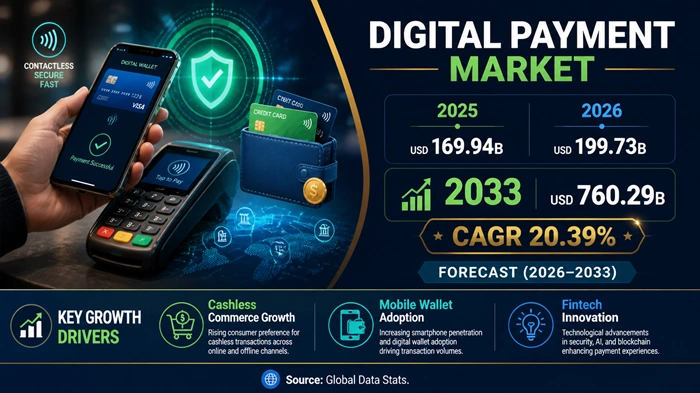
Enabling Seamless Financial Transactions Through Advanced Technology and Connected Ecosystems
Traditional payment methods involving cash and checks have given way to sophisticated digital alternatives that process transactions instantly across borders while maintaining robust security protocols. The Digital Payment approach integrates diverse technologies including near-field communication for contactless payments, QR code scanning for merchant transactions, biometric authentication for enhanced security, and blockchain for transparent ledger management. This digital transformation enables consumers to complete purchases with simple taps on smartphones, make peer-to-peer transfers through mobile applications, pay bills automatically through scheduled transactions, and access financial services regardless of physical proximity to banking institutions. Technology providers have developed comprehensive platforms that combine payment processing, fraud detection, regulatory compliance, and customer analytics into unified ecosystems serving merchants, financial institutions, and individual users.
AI Impact on the Digital Payment Industry
Artificial Intelligence Revolutionizes Transaction Security and Personalization Through Advanced Analytics
Artificial intelligence has emerged as a transformative force within the Digital Payment market, fundamentally reshaping how financial institutions detect fraud, assess risk, and personalize customer experiences. Machine learning algorithms analyze billions of transactions in real-time to identify suspicious patterns, distinguishing between legitimate purchases and fraudulent activities with accuracy levels impossible through traditional rule-based systems. AI-powered fraud prevention commands the largest share of payment technology investments at 28% as criminals leverage sophisticated techniques including deepfakes and social engineering that require equally advanced detection capabilities. Predictive analytics enhance risk management by evaluating customer creditworthiness, transaction histories, and behavioral patterns to approve legitimate payments instantly while flagging high-risk activities for additional verification.
Personalization represents another critical area where AI delivers substantial value within the Digital Payment market through analysis of spending habits, purchase frequencies, and merchant preferences. Financial technology companies leverage AI to provide customized budgeting recommendations, personalized loan offers, and tailored rewards programs that increase customer engagement and loyalty. Natural language processing enables conversational interfaces where users interact with AI-powered chatbots to resolve payment issues, check transaction status, and receive financial guidance without human intervention. Autonomous AI agents are emerging as the next frontier, capable of handling majority of transactions including purchases and returns on behalf of consumers, moving toward truly invisible payment experiences that occur entirely in the background. The Digital Payment market benefits from AI orchestration that weaves together advanced payment technologies in unified ways, improving the ability of payment companies to deliver frictionless experiences for merchants and end users.
Growth Factors
E-commerce Expansion and Smartphone Proliferation Drive Unprecedented Digital Transaction Adoption
The explosive growth of e-commerce platforms has created unprecedented demand for the Digital Payment market as online retailers require seamless checkout experiences that minimize cart abandonment and maximize conversion rates. Online shopping continues expanding globally with consumers increasingly preferring digital transactions for their convenience, speed, and 24/7 accessibility compared to traditional in-person payment methods. The COVID-19 pandemic accelerated existing trends by compressing years of digital adoption into months as consumers forced to avoid physical interactions rapidly embraced contactless payments, online ordering, and mobile wallets. This behavioral shift has proven permanent with data indicating sustained preference for digital payment methods even as pandemic restrictions lifted. The rise of social commerce, live streaming shopping, and direct-to-consumer brands creates additional growth drivers as new retail formats depend entirely on digital payment infrastructure.
Smartphone penetration has revolutionized the Digital Payment market by putting powerful payment capabilities directly into billions of consumers' pockets worldwide. Mobile devices enable seamless integration of payment functionalities through applications that leverage near-field communication for contactless transactions, QR code scanning for merchant payments, and biometric authentication for enhanced security. Platforms including Apple Pay, Google Pay, Samsung Pay, and regional alternatives like Paytm have gained widespread adoption by offering users instant payment experiences that eliminate the need for physical cards or cash. Government initiatives promoting cashless economies represent powerful catalysts propelling market expansion, particularly across developing nations where programs including India's Digital India initiative and China's mobile payment ecosystem channel substantial resources into digital infrastructure development. Financial inclusion efforts bring previously unbanked populations into formal financial systems through mobile-first solutions that bypass traditional banking infrastructure requirements.
Market Outlook
Strong Growth Projections and Technology Convergence Signal Robust Future Expansion
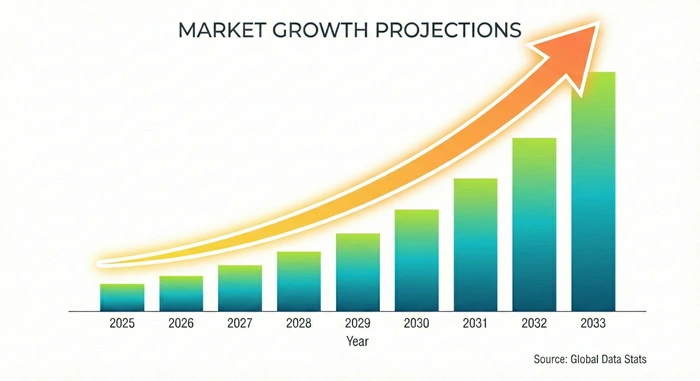
The Digital Payment market demonstrates compelling long-term prospects as payment technologies continue evolving through integration of blockchain, biometrics, artificial intelligence, and Internet of Things devices. Market analysts project sustained high growth rates extending through 2033 as both developed and emerging economies expand digital payment adoption across consumer and commercial segments. North America maintains market leadership with 36-39% share supported by advanced technology infrastructure, mature fintech ecosystem, high consumer digital literacy, and substantial presence of major payment processors. Asia Pacific emerges as the fastest-growing region driven by massive population bases, rapid smartphone adoption, supportive government policies, and innovative payment platforms including Alipay and WeChat Pay that have achieved unprecedented scale.
Investment in payment innovation remains robust as technology giants including Visa, Mastercard, PayPal, Apple, Google, and Amazon compete to deliver comprehensive solutions addressing evolving consumer preferences and merchant requirements. The convergence of multiple technology trends including 5G networks, augmented reality, voice interfaces, and wearable devices creates unprecedented opportunities for differentiated payment experiences. Central bank digital currencies represent a significant development with numerous governments piloting or implementing digital versions of national currencies that could fundamentally reshape monetary systems. The shift toward embedded finance accelerates as non-financial companies integrate payment capabilities directly into their products and services, eliminating friction from customer experiences. Mergers and acquisitions continue reshaping the competitive landscape with major transactions including Shift4 Payments acquiring Global Blue Group for 2.4 billion dollars, Santander purchasing TSB for 2.65 billion pounds, and Corpay acquiring Alpha Group International for 2.2 billion dollars demonstrating ongoing industry consolidation.
Expert Speaks
-
Vijay Sondhi, CEO of NMI emphasized that AI will transform fintech in 2025 by enabling truly invisible payment solutions where transactions happen entirely in the background, with AI-powered personal financial managers helping consumers organize spending habits while handling majority of purchases autonomously.
-
Taylor Lauber, President of Shift4 Payments discussed their acquisition strategy focused on globalization through cross-border deals, noting that integrating acquired companies into unified payment platforms positions the organization as a leading unified commerce payment provider capable of serving merchants worldwide.
-
PayPal Leadership highlighted their commitment to providing seamless digital payment experiences through continued innovation in mobile wallets, cryptocurrency integration, and buy-now-pay-later services that address diverse customer needs while maintaining security and regulatory compliance standards.
Key Report Takeaways
-
North America leads the Digital Payment market with the largest regional market share of 36-39% due to advanced fintech ecosystem, high consumer adoption of digital wallets and mobile payments, mature technology infrastructure, and strong presence of major payment processors
-
Asia Pacific emerges as the fastest-growing region with a projected CAGR exceeding 20% from 2026 to 2033, driven by massive smartphone penetration, government cashless economy initiatives, expanding e-commerce sector, and innovative platforms including Alipay and WeChat Pay serving billions of users
-
Payment processing segment dominates solutions category by capturing 25.8% market share as merchants prioritize efficient transaction handling, real-time authorization, multi-currency support, and seamless integration with existing business systems
-
Point of sale payments represent the largest mode segment accounting for 53% market share due to continued importance of in-person retail transactions enhanced by contactless and mobile payment technologies
-
Large enterprises constitute the primary customer segment with 59.6% market share driven by complex payment requirements across distributed operations, high transaction volumes, and need for robust security features
-
Cloud deployment shows fastest growth potential as organizations increasingly prefer scalable, cost-effective solutions that eliminate on-premise infrastructure investments while providing automatic updates and enhanced accessibility
Market Scope
| Report Coverage | Details |
|---|---|
| Market Size by 2033 | USD 760.29 Billion |
| Market Size by 2025 | USD 169.94 Billion |
| Market Size by 2026 | USD 199.73 Billion |
| Market Growth Rate from 2026 to 2033 | CAGR of 20.39% |
| Dominating Region | North America |
| Fastest Growing Region | Asia Pacific |
| Base Year | 2025 |
| Forecast Period | 2026 to 2033 |
| Segments Covered | Solution, Mode of Payment, Deployment, Enterprise Size, End Use, Region |
| Regions Covered | North America, Europe, Asia Pacific, Latin America, Middle East and Africa |
Market Dynamics
Drivers Impact Analysis
Contactless Technology Adoption and E-Commerce Growth Accelerate Market Expansion
| Factor | (≈) % Impact on CAGR Forecast | Geographic Relevance | Impact Timeline |
|---|---|---|---|
| E-Commerce Expansion | High (3-4%) | Global | 2026-2033 |
| Smartphone and Mobile Wallet Adoption | High (3-4%) | Asia Pacific, Global | 2026-2033 |
| Government Cashless Economy Initiatives | Medium-High (2-3%) | Asia Pacific, Europe | 2026-2033 |
| Contactless Payment Preference | Medium-High (2-3%) | Global | 2026-2033 |
The rapid expansion of e-commerce has positioned the Digital Payment market as essential infrastructure for online retail operations, with merchants requiring payment solutions that minimize friction while maximizing security. Online shopping transaction volumes continue growing at remarkable rates as consumers appreciate the convenience of purchasing from home, comparing prices across multiple vendors, and accessing products unavailable locally. Digital payment systems enable instantaneous transaction authorization, reducing cart abandonment rates that plague checkout processes requiring manual payment information entry or complex authentication procedures. The growth of cross-border e-commerce creates additional demand for payment solutions capable of handling multiple currencies, varied payment preferences across regions, and complex regulatory requirements governing international financial transactions. Social commerce and live streaming shopping represent emerging channels that depend entirely on seamless digital payment integration to capitalize on impulse purchases and time-limited offers.
Smartphone penetration has fundamentally transformed the Digital Payment market by providing ubiquitous access to payment capabilities through devices consumers carry constantly. Mobile wallets including Apple Pay, Google Pay, Samsung Pay, and regional alternatives have achieved mainstream adoption by offering users convenient, secure payment experiences that eliminate the need to carry physical cards or cash. Near-field communication technology enables contactless payments with simple device taps at merchant terminals, reducing transaction times while improving hygiene considerations that gained prominence during the pandemic. Government initiatives promoting cashless economies channel substantial resources into digital payment infrastructure through incentives, regulatory frameworks, and public awareness campaigns that accelerate adoption across both urban and rural populations. India's Digital India program, China's mobile payment ecosystem, and similar initiatives across developing nations bring hundreds of millions of previously unbanked individuals into formal financial systems through mobile-first solutions.
Restraints Impact Analysis
Security Concerns and Technical Barriers Challenge Market Penetration
| Factor | (≈) % Impact on CAGR Forecast | Geographic Relevance | Impact Timeline |
|---|---|---|---|
| Cybersecurity and Fraud Risks | Medium-High (-2 to -3%) | Global | 2026-2033 |
| Data Privacy Concerns | Medium (-1.5 to -2%) | Europe, North America | 2026-2033 |
| Infrastructure Limitations | Medium (-1 to -1.5%) | Developing Markets | 2026-2033 |
| Regulatory Compliance Complexity | Low-Medium (-0.5 to -1%) | Global | 2026-2033 |
Cybersecurity threats and fraud represent significant challenges constraining Digital Payment market growth as criminals develop increasingly sophisticated attack methods targeting payment systems. The rise of digital transactions has attracted malicious actors who exploit vulnerabilities through phishing schemes, malware infections, credential theft, and social engineering tactics that compromise user accounts and payment information. Generative AI technologies including deepfakes enable fraudsters to bypass authentication systems by creating convincing fake identities or impersonating legitimate users. Data breaches at payment processors, merchants, or financial institutions can expose millions of customer records containing sensitive payment credentials, creating substantial financial losses and reputational damage. Consumer fear of fraud may deter adoption particularly among older demographics or individuals in regions where digital literacy remains limited and trust in electronic transactions has not fully developed.
Data privacy concerns create hesitation among consumers wary of how payment companies collect, store, and utilize transaction information for marketing, profiling, or sharing with third parties. Regulatory frameworks governing data protection vary substantially across jurisdictions with Europe's General Data Protection Regulation imposing strict requirements that increase operational complexity for payment providers operating across multiple markets. Infrastructure limitations constrain the Digital Payment market in developing regions where unreliable internet connectivity, inadequate mobile network coverage, and frequent power outages undermine the reliability of digital transaction systems. Rural areas and low-income communities often lack the technology infrastructure required for digital payments, creating digital divides that exclude vulnerable populations from accessing financial services. Regulatory compliance complexity intensifies as payment providers navigate diverse requirements across different countries regarding licensing, anti-money laundering, know-your-customer verification, and cross-border transaction reporting. The cost of maintaining compliance across multiple jurisdictions creates barriers particularly for smaller payment providers lacking the resources of large multinational corporations.
Opportunities Impact Analysis
Emerging Technologies and Vertical Expansion Create Growth Pathways
| Factor | (≈) % Impact on CAGR Forecast | Geographic Relevance | Impact Timeline |
|---|---|---|---|
| Central Bank Digital Currencies | High (2-3%) | Global | 2027-2033 |
| Embedded Finance Integration | Medium-High (2-2.5%) | Global | 2026-2033 |
| Blockchain and Cryptocurrency Adoption | Medium (1.5-2%) | North America, Europe, Asia Pacific | 2026-2033 |
| Biometric Authentication Advancement | Medium (1-2%) | Global | 2026-2033 |
Central bank digital currencies represent substantial opportunities for the Digital Payment market as governments worldwide pilot or implement digital versions of national currencies. These sovereign digital currencies could fundamentally reshape payment systems by providing instant settlement, reducing transaction costs, improving financial inclusion, and enabling more effective monetary policy implementation. China leads CBDC development with widespread pilot programs for its digital yuan, while numerous other countries including members of the European Union, Japan, India, and the United States explore similar initiatives. Payment technology providers that position themselves as infrastructure partners for CBDC implementation can capture significant value from this transformation. The convergence of CBDCs with existing digital payment platforms could create comprehensive financial ecosystems offering consumers seamless experiences spanning traditional currencies, digital currencies, and cryptocurrency.
Embedded finance represents a transformative opportunity as non-financial companies integrate payment capabilities directly into their products and services. Retailers, transportation platforms, healthcare providers, and software companies increasingly offer payment, lending, and financial management services as natural extensions of their core offerings. This trend eliminates friction from customer experiences by enabling transactions within familiar interfaces without redirecting to separate payment applications or banking websites. Blockchain technology and cryptocurrency adoption create opportunities for payment innovation through decentralized finance applications, cross-border remittances, and smart contract-enabled programmable payments. Biometric authentication advancement enables more secure, convenient payment experiences through fingerprint recognition, facial scanning, voice identification, and behavioral biometrics that eliminate password requirements. The expansion of Internet of Things devices including wearables, connected vehicles, and smart home systems creates new payment touchpoints where transactions occur seamlessly through everyday objects.
Segment Analysis
By Solution: Payment Processing Segment
Transaction Handling Capabilities Drive Dominant Market Position
The payment processing segment commands significant market share of approximately 25.8% within the Digital Payment market due to its fundamental role in authorizing, settling, and reconciling financial transactions between merchants, customers, and financial institutions. This segment encompasses the technical infrastructure and services that enable merchants to accept various payment methods including credit cards, debit cards, mobile wallets, bank transfers, and alternative payment options through unified interfaces. Payment processing solutions handle critical functions including real-time transaction authorization through communication with card networks and issuing banks, fraud detection through analysis of transaction patterns and risk indicators, currency conversion for international transactions, settlement of funds to merchant accounts, and comprehensive reporting for reconciliation and business intelligence. North America leads payment processing adoption with mature market characterized by high card penetration, sophisticated merchant infrastructure, and strong presence of major processors including Fiserv, Global Payments, Worldpay, and Square. The segment benefits from recurring revenue models as processors charge merchants percentage fees on transaction values plus fixed per-transaction amounts.
Asia Pacific demonstrates the fastest growth within payment processing driven by explosive e-commerce expansion, rapidly growing middle-class populations, and increasing merchant adoption of omnichannel payment solutions. The Digital Payment market segment shows particular momentum in mobile point-of-sale solutions that enable small merchants to accept digital payments through smartphone attachments or applications without requiring expensive traditional terminals. Cloud-based payment processing gains traction as merchants appreciate benefits including lower upfront costs, automatic software updates, enhanced security through professional infrastructure management, and improved scalability to handle transaction volume fluctuations. Leading technology providers serving this segment including PayPal, Stripe, Adyen, Square, and regional processors invest substantially in developing comprehensive platforms that combine payment processing with additional services including fraud prevention, subscription management, and business analytics. The convergence of payment processing with broader commerce platforms creates integrated ecosystems where merchants manage inventory, customer relationships, marketing, and financial transactions through unified interfaces.
By Mode of Payment: Mobile Payment Segment
Smartphone-Enabled Transactions Transform Consumer Payment Preferences
The mobile payment segment represents the fastest-growing category within the Digital Payment market as smartphone proliferation and mobile-first consumer behaviors drive dramatic adoption increases across all demographics. This segment includes diverse payment methods enabled by mobile devices including near-field communication contactless payments at physical merchant terminals, QR code scanning for peer-to-peer transfers and merchant transactions, in-app payments within mobile applications, mobile wallet transactions, and mobile browser-based e-commerce purchases. Mobile payments offer consumers unparalleled convenience through elimination of physical wallet requirements, instant transaction confirmation, integrated loyalty programs, and seamless integration with other smartphone functions including navigation, communication, and shopping. Asia Pacific leads mobile payment adoption with particularly strong momentum in China where Alipay and WeChat Pay have achieved near-universal acceptance across retail environments serving over one billion users. India follows with explosive growth driven by the Unified Payments Interface that enables instant bank-to-bank transfers through simple mobile applications.
The segment demonstrates particularly strong growth potential as mobile wallets evolve beyond simple payment tools to become comprehensive financial management platforms offering features including budgeting, savings, investment, insurance, and lending services. Apple Pay, Google Pay, Samsung Pay, and regional alternatives continue expanding functionality while maintaining focus on security through tokenization that replaces actual card numbers with unique transaction codes. The Digital Payment market benefits from mobile payments addressing financial inclusion challenges by bringing unbanked populations into formal financial systems through simple smartphone applications that bypass traditional banking infrastructure requirements. Major technology companies serving this segment including Apple, Google, Samsung, PayPal, Ant Financial (Alipay), and Tencent (WeChat Pay) invest billions developing enhanced features, expanding merchant acceptance, and forming partnerships with financial institutions. Wearable payment devices including smartwatches, fitness trackers, and even smart rings represent natural extensions of mobile payments as consumers embrace frictionless transaction experiences.
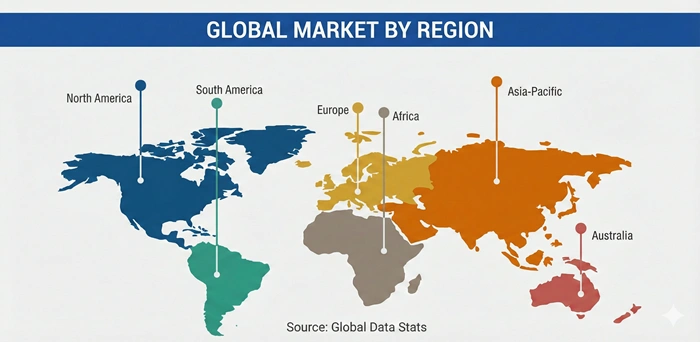
Regional Insights
North America
Advanced Infrastructure and Innovation Leadership Establish Regional Market Dominance
North America commands the largest regional share of 36-39% in the Digital Payment market, supported by advanced technology infrastructure, mature fintech ecosystem, high consumer digital literacy, and substantial presence of major payment processors and technology companies. The region benefits from well-established card payment networks with near-universal merchant acceptance of credit and debit cards creating strong foundation for digital payment adoption. The United States dominates regional activity with market size reaching 42.63 billion dollars in 2025 and projected to grow to 208.84 billion dollars by 2035, driven by sophisticated e-commerce sector, high smartphone penetration, and technology-forward consumer base comfortable with mobile wallets and contactless payments. Major payment networks including Visa and Mastercard maintain headquarters in North America, along with technology giants Apple, Google, Amazon, and PayPal who continuously innovate to enhance digital payment experiences.
The North American Digital Payment market demonstrates robust growth as financial institutions modernize legacy systems and embrace open banking frameworks that enable fintech innovation. Consumer adoption accelerates across all demographics with younger generations showing strong preference for mobile wallets while older populations increasingly embrace contactless cards and online banking. The region shows particular strength in embedded finance as retailers, software companies, and service providers integrate payment capabilities directly into their offerings. Canada contributes significantly to regional market development with advanced digital payment infrastructure and supportive regulatory environment encouraging fintech innovation. Key players serving this market including PayPal Holdings, Visa Inc., Mastercard Incorporated, American Express Company, Apple Inc., Google LLC, Square Inc., Fiserv Inc., and numerous specialized fintech providers invest substantially in North American operations through technology development, partnership networks, and consumer education initiatives.
Asia Pacific
Massive Population and Mobile-First Culture Drive Exceptional Regional Growth
Asia Pacific has emerged as the fastest-growing region in the Digital Payment market with projected CAGR exceeding 20% from 2026 to 2033, driven by enormous population bases, rapid smartphone adoption, innovative payment platforms, and supportive government policies promoting cashless economies. The region held 38.72% of global market value in 2025 and maintains leadership position driven by China and India where digital payment adoption has reached unprecedented scale. China demonstrates the world's most advanced mobile payment ecosystem with Alipay and WeChat Pay processing trillions of dollars annually across hundreds of millions of merchants serving over one billion users. These platforms have achieved near-ubiquitous acceptance from major retailers to street vendors, fundamentally transforming how Chinese consumers conduct daily transactions. India shows explosive growth through the Unified Payments Interface that enables instant bank-to-bank transfers through simple mobile applications, with transaction volumes growing at remarkable rates.
The Asia Pacific Digital Payment market benefits from government initiatives actively promoting cashless economies through supportive policies, infrastructure investments, and financial inclusion programs that bring previously unbanked populations into digital systems. QR code payments have gained particular prominence across the region due to low implementation costs that enable even small merchants to accept digital payments through simple printed codes. The region's young, tech-savvy population demonstrates strong comfort with mobile-first payment experiences, often leapfrogging traditional card-based systems entirely. Japan, South Korea, Australia, Singapore, and Southeast Asian nations including Indonesia, Thailand, Vietnam, and Philippines show robust growth driven by expanding middle classes, improving digital infrastructure, and increasing merchant acceptance. Key players active across this diverse region include Alipay (Ant Financial), WeChat Pay (Tencent), Paytm, PhonePe, Google Pay, Samsung Pay, Visa, Mastercard, and numerous local payment providers tailoring solutions to specific market preferences and regulatory requirements within individual countries.
Top Key Players
-
PayPal Holdings Inc. (United States)
-
Visa Inc. (United States)
-
Mastercard Incorporated (United States)
-
Apple Inc. (United States)
-
Alphabet Inc. (Google Pay) (United States)
-
Amazon.com Inc. (Amazon Pay) (United States)
-
American Express Company (United States)
-
Ant Financial Services Group (Alipay) (China)
-
Tencent Holdings Ltd. (WeChat Pay) (China)
-
Square Inc. (United States)
-
Fiserv Inc. (United States)
-
Stripe Inc. (United States)
-
Adyen N.V. (Netherlands)
-
Samsung Electronics Co. Ltd. (Samsung Pay) (South Korea)
Recent Developments
-
Shift4 Payments (February 2025) announced acquisition of Switzerland-based Global Blue Group for enterprise value of 2.4 billion dollars, demonstrating strategic focus on globalization through cross-border deals that position the company as leading unified commerce payment provider serving merchants worldwide
-
Santander (July 2025) announced expansion of UK footprint through acquisition of TSB for 2.65 billion pounds, strengthening regional presence and customer base within competitive British banking market
-
Stripe (July 2025) acquired paytech startup Orum to enhance payment processing capabilities and expand service offerings for merchants seeking comprehensive digital payment solutions
-
Corpay (July 2025) agreed to acquire Alpha Group International for 2.2 billion dollars, demonstrating continued industry consolidation as major players seek scale advantages and expanded service portfolios
-
NomuPay (January 2025) secured 37 million dollars in Series B financing for post-money valuation of 200 million dollars, with funding supporting continued expansion of cross-border payment platform serving merchants across Asia and Middle East
Market Trends
Invisible Payments and Embedded Finance Reshape Transaction Experiences
The Digital Payment market continues evolving toward invisible payment experiences where transactions occur seamlessly in the background without requiring active user intervention. AI-powered personal financial managers handle increasing portions of consumer transactions including purchases and returns autonomously, analyzing spending patterns and executing payments according to user preferences and budgets. Embedded finance accelerates as non-financial companies integrate payment capabilities directly into their core products and services, eliminating friction by enabling transactions within familiar interfaces. Retailers, transportation platforms, healthcare providers, software companies, and even social media platforms offer payment, lending, and financial management services as natural extensions of their offerings. This trend creates comprehensive ecosystems where consumers manage finances without visiting separate banking applications or payment platforms.
Biometric authentication gains prominence as the Digital Payment market prioritizes security enhancement while improving user convenience through fingerprint recognition, facial scanning, and voice identification that eliminate password requirements. Tokenization becomes standard practice as payment systems replace actual card numbers with unique transaction codes that prevent sensitive information exposure if intercepted. Central bank digital currencies move from pilot programs toward mainstream implementation as governments recognize opportunities to improve financial inclusion, reduce transaction costs, and enhance monetary policy effectiveness. Buy-now-pay-later services experience explosive growth as consumers embrace flexible payment options that split purchases into installments, with payment providers including PayPal, Affirm, Klarna, and Afterpay capturing significant transaction volume. Cryptocurrency integration advances as traditional payment platforms add capabilities for buying, selling, and transacting with digital currencies, bridging conventional and decentralized finance ecosystems.
Segments Covered in the Report
By Solution
-
Payment Processing
-
Payment Gateway
-
Payment Wallet
-
Payment Security and Fraud Management
-
Transaction Risk Management
-
Others
By Mode of Payment
-
Point of Sale
-
Online Payment
-
Mobile Payment
By Deployment
-
On-Premise
-
Cloud
By Enterprise Size
-
Large Enterprises
-
Small and Medium-Sized Enterprises
By End Use
-
BFSI (Banking, Financial Services, and Insurance)
-
Retail and E-Commerce
-
Healthcare
-
IT and Telecom
-
Media and Entertainment
-
Transportation and Logistics
-
Others
By Region
-
North America
-
Europe
-
Asia Pacific
-
Latin America
-
Middle East and Africa
Frequently Asked Questions
Question 1: What is the projected Digital Payment market size by 2033?
Answer: The global Digital Payment market is expected to reach approximately USD 760.29 billion by 2033. The market demonstrates robust growth driven by e-commerce expansion, smartphone proliferation, government cashless economy initiatives, and consumer preference for convenient, secure digital transaction methods.
Question 2: Which region dominates the Digital Payment market currently?
Answer: North America holds the largest market share at 36-39% due to advanced fintech ecosystem and high consumer adoption. The region benefits from mature technology infrastructure, well-established card networks, and strong presence of major payment processors including Visa, Mastercard, PayPal, and technology giants developing digital payment solutions.
Question 3: What factors drive growth in the Digital Payment market?
Answer: Key drivers include explosive e-commerce expansion, widespread smartphone and mobile wallet adoption, government initiatives promoting cashless economies, and increasing consumer preference for contactless payments. The Digital Payment market also benefits from financial inclusion efforts bringing unbanked populations into formal financial systems through mobile-first solutions.
Question 4: How is AI impacting the Digital Payment market development?
Answer: Artificial intelligence enhances digital payments through real-time fraud detection analyzing billions of transactions, predictive risk management assessing creditworthiness, and personalized financial recommendations based on spending patterns. AI enables autonomous transaction handling and invisible payment experiences in the Digital Payment market.
Question 5: Which payment mode segment shows fastest growth in the Digital Payment market?
Answer: Mobile payment represents the fastest-growing segment as smartphone proliferation and mobile-first consumer behaviors drive adoption increases. Mobile payments offer unparalleled convenience through contactless NFC transactions, QR code scanning, mobile wallets, and in-app purchases that eliminate physical wallet requirements in the Digital Payment market.