
Dietary Fiber Gummies Market Overview
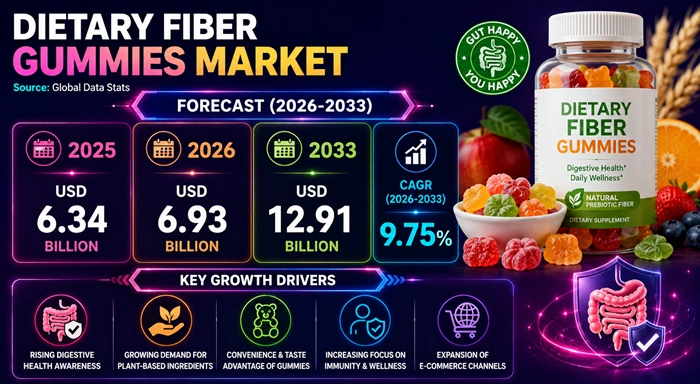
The global dietary fiber gummies market size is valued at USD 6.34 billion in 2025 and is predicted to increase from USD 6.93 billion in 2026 to approximately USD 12.91 billion by 2033, growing at a CAGR of 9.75% from 2026 to 2033.
Dietary fiber gummies are chewable dietary supplements formulated with soluble fibers such as pectin, acacia, inulin, and polydextrose — designed to help individuals meet their daily fiber intake goals in a convenient, palatable format. Rising global prevalence of lifestyle-related disorders, accelerating consumer preference for preventive nutrition, growing fatigue with traditional supplement formats like capsules and powders, and the expanding popularity of gut health supplementation are collectively driving strong commercial growth in the fiber gummies sector through the forecast period.
AI Impact on the Dietary Fiber Gummies Industry
AI-Driven Product Formulation, Personalized Nutrition Algorithms, and Smart Manufacturing Automation Are Transforming the Dietary Fiber Gummies Market from a Mass-Market Category into a Precision Wellness Segment
Artificial intelligence is reshaping the product development and consumer engagement landscape of the dietary fiber gummies market in ways that were not commercially viable just a few years ago. AI-powered formulation platforms analyze vast datasets of consumer health outcomes, taste preference surveys, ingredient compatibility matrices, and regulatory ingredient databases to rapidly identify optimal fiber source combinations, sweetener ratios, and functional co-ingredient pairings that deliver both palatability and clinically relevant fiber dosing. This capability is compressing the new product development cycle from the historical 12–18 months to as few as 4–6 months in leading organizations — enabling brands to respond to emerging consumer trends such as sugar-free fiber gummies, postbiotic-enriched formats, and collagen-plus-fiber combinations significantly faster than traditional R&D approaches allow. Machine learning models trained on consumer feedback data are also enabling manufacturers to predict which flavor innovations, fiber source combinations, and functional benefit claims will resonate most strongly in specific demographic segments before committing to production tooling and inventory investment.
Personalized nutrition represents a second transformative AI application reshaping the market. Digital health applications and wearable devices are generating individual-level data on dietary patterns, gut microbiome composition, physical activity, and metabolic markers that AI systems can synthesize into highly specific nutritional recommendations — including personalized fiber gummy formulations tailored to an individual's microbiome health needs, caloric goals, and flavor preferences. Several D2C supplement brands operating in the dietary fiber gummies market are now offering AI-curated subscription programs where product composition evolves month-to-month based on consumer-reported health outcomes and dietary logging data. In manufacturing, AI-assisted quality control systems using computer vision and real-time sensor analytics are catching texture defects, filling inconsistencies, and contamination events in gummy production lines with precision that manual inspection cannot match — reducing waste rates, improving product consistency, and protecting brand quality standards at scale.
Growth Factors
Rising Lifestyle Disease Burden, Surging Gut Health Consumer Awareness, and the Mainstream Wellness Positioning of Gummy Supplements Are the Three Core Structural Drivers Fueling Consistent Dietary Fiber Gummies Market Expansion
The escalating global prevalence of lifestyle-related health conditions — including type 2 diabetes, obesity, irritable bowel syndrome, high cholesterol, and cardiovascular disease — is the most direct and commercially significant demand driver in the dietary fiber gummies market. An estimated 90% of adults in the United States, and comparable proportions in Western Europe and urban Asia, consistently fall short of the 25–38 grams of daily dietary fiber recommended by nutritional authorities — a deficiency directly linked to the rising incidence of the metabolic and digestive conditions affecting hundreds of millions globally. As awareness of this fiber gap spreads through mainstream media, social platforms, and healthcare provider guidance, consumers are actively seeking convenient, effective ways to supplement their fiber intake without disrupting their existing dietary habits. Gummy-format fiber supplements — which deliver measured fiber doses with a pleasant taste and no preparation requirement — are uniquely well positioned to capture this demand, particularly among busy working adults who have abandoned capsule or powder supplement programs due to inconvenience or poor palatability.
The mainstream emergence of gut health as a consumer wellness priority is the second structural driver transforming the category from a digestive aid into a lifestyle supplement. The scientific literature linking the gut microbiome to immune function, mental health through the gut-brain axis, metabolic regulation, and inflammatory response has generated substantial popular media coverage — and consumers are translating this awareness into active purchasing behavior for products that demonstrably support digestive and microbiome health. Dietary fiber's established prebiotic role — feeding beneficial gut bacteria including Bifidobacterium and Lactobacillus species — makes fiber gummies an accessible, evidence-supported entry point into the broader gut health supplement category. Brands are capitalizing on this positioning by co-formulating fiber gummies with probiotics, postbiotics, and digestive enzyme complexes that amplify the microbiome benefit narrative and support premium price positioning. The "fibermaxxing" trend that has gained significant social media traction on TikTok and Instagram — where consumers share their experiences with high fiber intake for digestive and weight management benefits — is bringing a new, younger demographic to the fiber gummies category and creating organic marketing momentum that expensive media campaigns cannot replicate.
Market Outlook
The Dietary Fiber Gummies Market Outlook Through 2033 Is Defined by Clean-Label Innovation, Children's Segment Acceleration, and Asia Pacific Emerging as the Highest-Growth Regional Opportunity
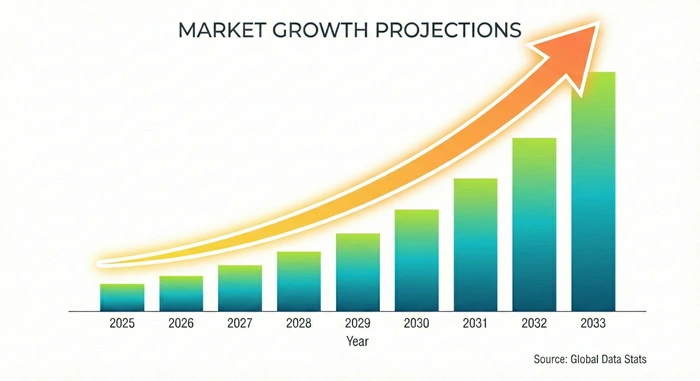
The long-term commercial trajectory of the dietary fiber gummies market through 2033 is shaped by three converging product and market development trends that will collectively diversify both the consumer base and revenue mix of the sector. Clean-label and plant-based product innovation is the most pervasive near-term trend, as consumers — particularly millennials and Gen Z shoppers — demand supplement products with transparent ingredient declarations, no synthetic additives, and formulations compatible with vegan, halal, and gluten-free dietary requirements. Traditional gelatin-based gummy matrices are progressively being replaced by pectin, agar, or tapioca starch bases that satisfy all of these requirements simultaneously, while natural sweeteners including monk fruit extract, stevia glycosides, and prebiotic-active sweeteners such as fructooligosaccharides are replacing corn syrup and sugar alcohols — addressing the caloric concern that has been the most frequently cited adoption barrier in consumer research.
The acceleration of the children's segment and the expansion of the direct-to-consumer digital channel are the two market development trends that will most significantly influence commercial outcomes through 2033. Parents are increasingly recognizing children's fiber deficiency as a contributing factor in childhood constipation, irregular digestion, and microbiome imbalances — and gummy formats that children voluntarily consume without resistance represent an enormously appealing solution compared to fiber powders added to beverages. The children's segment is growing at the fastest rate within the dietary fiber gummies market at approximately 12.67% CAGR, creating compelling new product development opportunities for pediatric-formulated, reduced-sugar fiber gummies with child-appealing flavors. Simultaneously, online retail channels — growing at approximately 13.9% CAGR — are enabling D2C fiber gummy brands to build direct consumer relationships, gather health outcome data for product personalization programs, and operate subscription models that deliver superior lifetime customer value compared to single-purchase retail transactions.
Expert Speaks
-
"Consumer understanding of gut health and its connection to overall wellness has reached a genuine tipping point, and the demand for convenient, science-backed fiber supplementation formats like gummies is directly benefiting from this shift in awareness. We are seeing new consumer segments — including younger adults, parents buying for their children, and active seniors — entering the fiber supplement category for the first time, and the product innovation required to serve these diverse needs is extraordinary. The market is in a multi-year expansion phase that we believe will significantly exceed historical growth rates." — CEO, Nestlé Health Science
-
"The functional gummies segment is experiencing some of the strongest consumer demand dynamics we have seen in any supplement format category in decades. The combination of convenience, palatability, and efficacy in a single product format has fundamentally solved the compliance problem that has historically limited supplement adoption — and fiber gummies are at the leading edge of that consumer behavior change. Our investments in clean-label formulation innovation and digital consumer engagement reflect our conviction in the long-term commercial opportunity." — CEO, Bayer AG
-
"Digestive health is one of the fastest-growing consumer wellness priorities globally, and dietary fiber occupies a uniquely credible and accessible position within that space because the nutritional science linking fiber intake to gut microbiome health, metabolic wellness, and immune function is both well-established and increasingly well-understood by mainstream consumers. The brands that invest in transparent ingredient sourcing, physician-endorsed efficacy claims, and digital personalization capabilities will build the strongest competitive positions in this market through 2033 and beyond." — CEO, Church & Dwight Co. Inc.
Key Report Takeaways
-
North America leads the global dietary fiber gummies market with approximately 41–42% revenue share in 2025, driven by the world's highest per-capita dietary supplement spending, widespread consumer awareness of fiber deficiency and gut health benefits, a well-developed nutraceutical retail infrastructure spanning mass retail, specialty health stores, and e-commerce platforms, and the concentrated commercial presence of major fiber gummy brands including Church & Dwight (Vitafusion), Procter & Gamble (Metamucil gummies), and Nature's Way
-
Asia Pacific is the fastest-growing regional market, projected to expand at approximately 12.9% CAGR through the forecast period, powered by rapid urbanization creating fiber-deficient processed food diets, escalating consumer spending on health and wellness products in China, India, and Southeast Asia, expanding e-commerce accessibility that removes geographic distribution barriers, and growing local brand investment in culturally tailored fiber gummy formulations for Asian consumer taste preferences
-
Plant-based fiber dominates the source segment with approximately 68–69% market share in 2025, preferred for its alignment with clean-label and vegan trends, superior consumer acceptance, and favorable regulatory standing globally — while the synthetic/functional fiber segment is growing at approximately 9.28% CAGR driven by targeted health benefit claims, high-precision dosing, and demand for functional gummies addressing specific conditions including weight management, cholesterol support, and blood sugar regulation
-
Adults are the leading target group segment at approximately 61–62% revenue share in 2025, with working professionals seeking convenient digestive health support — while the children's segment is the fastest-growing target group at approximately 12.67% CAGR, driven by parent awareness of childhood fiber deficiency and growing availability of child-specific, low-sugar gummy formulations
-
Supermarkets and hypermarkets lead distribution with approximately 39–40% channel share in 2025 through broad product range availability, competitive family-pack pricing, and in-store promotional programs — while online retail is the fastest-growing distribution channel at approximately 13.9% CAGR, accelerated by subscription purchasing models, AI-personalized product recommendations, and the D2C brand strategies of emerging fiber gummy challengers
-
Mixed berry is the dominant flavor segment with approximately 36% flavor revenue share in 2025, combining broad age group appeal with a health-associated flavor profile — while citrus, peach, and apple variants are growing fastest as brands diversify palate-appeal to attract new consumer segments and reduce category concentration risk
Market Scope
| Report Coverage | Details |
|---|---|
| Market Size by 2033 | USD 12.91 Billion |
| Market Size by 2025 | USD 6.34 Billion |
| Market Size by 2026 | USD 6.93 Billion |
| Market Growth Rate from 2026 to 2033 | CAGR of 9.75% |
| Dominating Region | North America |
| Fastest Growing Region | Asia Pacific |
| Base Year | 2025 |
| Forecast Period | 2026 to 2033 |
| Segments Covered | Source, Target Group, Flavor, Distribution Channel, Region |
| Regions Covered | North America, Europe, Asia Pacific, Latin America, Middle East & Africa |
Market Dynamics
Drivers Impact Analysis
The Global Fiber Deficiency Epidemic and the Mainstream Emergence of Gut Health as a Consumer Wellness Priority Are the Two Most Commercially Powerful Demand Drivers in the Dietary Fiber Gummies Market
| Driver | ≈ % Impact on CAGR Forecast | Geographic Relevance | Impact Timeline |
|---|---|---|---|
| Rising lifestyle disease burden and documented fiber deficiency | ~30% | Global, led by North America and Europe | Long-term |
| Growing consumer gut health awareness and microbiome science popularization | ~28% | Global, strongest in North America, Europe | Medium to long-term |
| Supplement format preference shift from capsules/powders to gummies | ~24% | Global | Medium to long-term |
| Product innovation in clean-label, vegan, and functional co-formulations | ~12% | North America, Europe, Asia Pacific | Short to medium-term |
| E-commerce expansion and D2C subscription model adoption | ~6% | Global, strongest in Asia Pacific, North America | Short to medium-term |
The global fiber deficiency epidemic is the most direct and commercially durable demand driver in the dietary fiber gummies market. Across the United States, United Kingdom, Canada, Australia, and most Western European nations, population-level dietary surveys consistently show that 90–95% of adults consume less than the recommended daily fiber intake — a deficiency that clinical research has associated with elevated risks of colorectal cancer, cardiovascular disease, type 2 diabetes, and weight gain. As this evidence base has been increasingly translated into public health messaging, physician guidance, and consumer media coverage, the proportion of adults actively seeking fiber supplementation has grown materially — and gummy formats are capturing a disproportionately large share of this demand due to their decisive advantages over capsule and powder competitors in palatability, convenience, and consumer compliance rates. The self-reinforcing nature of this demand dynamic — where consumers who adopt fiber gummies for digestive relief frequently become long-term repurchasers motivated by broader health benefits including improved satiety and weight management — creates high customer lifetime value characteristics that reward brands investing in quality and efficacy.
The supplement format preference shift from capsules and powders to gummies is the second independent structural driver that is expanding the total addressable market for fiber supplementation — not only capturing existing supplement users switching formats, but unlocking an entirely new category of consumers who previously rejected fiber supplementation specifically because of format barriers. Consumer research consistently identifies "pill fatigue" — discomfort or psychological resistance to swallowing capsules — as the primary reason adults with recognized fiber deficiencies decline to use traditional fiber supplements. Gummies eliminate this barrier completely, converting passive awareness of fiber deficiency into active supplement purchasing behavior across demographic segments that were previously systematically underserved by the fiber supplement market, including young adults, parents purchasing for children, and elderly consumers with swallowing difficulties. This format-driven market expansion dynamic is structurally distinct from competitive market share displacement — it represents genuine incremental revenue growth that benefits the overall dietary fiber gummies market rather than simply redistributing existing supplement spending.
Restraints Impact Analysis
High Sugar Content Perception, Gastrointestinal Tolerance Issues with Certain Fiber Types, and Consumer Skepticism About Supplement Efficacy Are the Three Primary Barriers Limiting Market Penetration
| Restraint | ≈ % Impact on CAGR Forecast | Geographic Relevance | Impact Timeline |
|---|---|---|---|
| Consumer concern about sugar content and caloric intake | ~35% | Global, strongest in health-conscious demographics | Medium to long-term |
| Gastrointestinal discomfort from inulin and synthetic fiber types | ~30% | Global | Short to medium-term |
| Consumer skepticism about supplement efficacy vs. whole-food fiber | ~25% | Europe, Health-Conscious North American consumers | Medium to long-term |
| Regulatory complexity around health claims in key markets | ~10% | EU, North America | Medium-term |
Consumer perception of gummies as confectionery rather than therapeutic nutrition remains one of the most commercially significant restraints in the dietary fiber gummies market. Traditional gummy formats require sweeteners, gelling agents, and flavor compounds to create their characteristic taste and texture — and the resulting sugar content of many fiber gummy products is prominently visible on nutritional panels in ways that create cognitive dissonance for health-conscious shoppers evaluating a product positioned as a wellness supplement. This concern is particularly acute among diabetic, pre-diabetic, and weight-management-focused consumers — precisely the demographic most motivated to increase fiber intake for metabolic health benefits — creating a structural tension between the category's primary health value proposition and the formulation requirements of its delivery format. Brands are investing heavily in sugar-free and low-glycemic reformulations using stevia, monk fruit, and prebiotic fiber sweeteners to address this concern, but reformulation at scale without compromising texture and palatability requires significant technical development investment that creates barriers for smaller market entrants.
Gastrointestinal tolerance issues represent the second practically significant restraint, particularly for products using inulin, chicory root fiber, and certain sugar alcohol combinations that are among the most widely used fiber and sweetener ingredients in gummy formulations. These ingredients are well-documented to cause gas, bloating, and abdominal discomfort in a meaningful proportion of consumers — particularly when consumed above threshold doses or by individuals with irritable bowel syndrome. Negative first-use experiences caused by gastrointestinal intolerance represent both an individual churn risk and a negative word-of-mouth propagation risk that disproportionately affects category trial rates in the social-media-driven supplement purchasing environment. Manufacturers are increasingly reformulating with better-tolerated fiber sources including partially hydrolyzed guar gum, psyllium husk derivatives, and citrus pectin that deliver equivalent prebiotic and digestive benefits with substantially lower gastrointestinal side-effect profiles — though transitioning existing bestselling formulations to new ingredient bases introduces product change risks that require careful consumer communication management.
Opportunities Impact Analysis
Children's Fiber Supplement Innovation, Senior-Focused Digestive Wellness Formulations, and Emerging Market E-Commerce Distribution Are the Three Highest-Value Growth Opportunities in the Dietary Fiber Gummies Market
| Opportunity | ≈ % Impact on CAGR Forecast | Geographic Relevance | Impact Timeline |
|---|---|---|---|
| Children's segment formulation innovation for pediatric fiber needs | ~40% | Global, led by North America, Asia Pacific | Short to medium-term |
| Geriatric digestive health supplement targeting | ~32% | North America, Europe, Japan | Medium to long-term |
| Emerging market e-commerce distribution expansion | ~28% | Asia Pacific, Latin America, MEA | Medium to long-term |
The children's segment represents the single highest-growth commercial opportunity within the dietary fiber gummies market, expanding at the fastest CAGR of approximately 12.67% among all target group segments through 2033. Parental awareness of childhood constipation, irregular digestion, and the long-term health implications of fiber-deficient pediatric diets has grown substantially — with primary care physicians and pediatric dietitians increasingly recommending fiber supplementation for children who consistently fall short of age-appropriate fiber intake recommendations. Gummy formats are uniquely effective for pediatric supplement delivery because they eliminate the compliance barriers that make powders and chewable tablets difficult to administer consistently to children — a child who enjoys the taste of their fiber supplement will self-administer reliably, creating the daily-use habit pattern that drives repeat purchase and strong category economics. Brands investing in pediatric-specific fiber formulations with reduced sugar content, tooth-friendly formulations, and character-branded packaging are building early loyalty relationships that can extend into adult supplement purchasing over time — creating customer lifetime value far exceeding the pediatric category revenue alone.
Emerging market e-commerce distribution represents a parallel opportunity that is opening the dietary fiber gummies market to consumer populations that traditional brick-and-mortar supplement retail infrastructure has historically not served effectively. In India, Southeast Asia, Brazil, and the Gulf states, the combination of rapidly expanding smartphone internet penetration, maturing digital payment infrastructure, and growing logistical coverage from e-commerce fulfillment networks is making premium international fiber gummy brands accessible to urban middle-class consumers for the first time. These consumers have strong aspirational motivations for health and wellness product adoption, actively seek out international brand credibility signals, and are responsive to social media-driven product discovery — making digital marketing and influencer-led D2C strategies highly effective as market entry approaches. Local manufacturing investment by brands seeking to localize formulations for regional taste preferences, halal certifications, and Ayurvedic ingredient integrations will further accelerate market penetration in these high-growth geographies through the forecast period.
Segment Analysis
By Source
Plant-Based Fiber Commands Over 68% Revenue Share in the Dietary Fiber Gummies Market While Synthetic Fiber Emerges as the Fastest-Growing Source Driven by Targeted Health Benefit Positioning
The plant-based fiber segment holds the dominant position in the dietary fiber gummies market by source, accounting for approximately 68–69% of total source segment revenue in 2025. Plant-based fibers — primarily pectin, acacia gum, psyllium husk, and chicory inulin — carry powerful consumer trust advantages rooted in their association with whole food nutrition, digestive safety, and environmental sustainability. They are inherently compatible with the clean-label, vegan, and gelatin-free formulation requirements that represent the most important product trends in the supplement gummy market — enabling manufacturers to develop products that satisfy simultaneously the preferences of vegan shoppers, halal consumers, and health-conscious buyers who scrutinize ingredient labels for recognizable, natural components. North America leads plant-based fiber gummy revenue globally, where companies including Church & Dwight (Vitafusion), NOW Foods, and Nature's Way have built market leadership positions on plant-sourced pectin and acacia-based formulations that carry strong brand equity in the wellness supplement retail channel.
The synthetic/functional fiber segment — comprising polydextrose, inulin derivatives, and other purpose-engineered fiber molecules — is projected to grow at the fastest CAGR of approximately 9.28% within the source segment through 2033, driven by its advantages in precise dosing consistency, enhanced gut microbiome modulation, and high-fiber-density formulations that deliver clinically relevant doses within standard gummy serving sizes. Functional fibers including polydextrose are gaining regulatory acceptance and consumer tolerance credibility as formulation technologies improve, enabling brands to build evidence-based product positioning around specific conditions including weight management, blood glucose regulation, and cholesterol reduction. Asia Pacific is the fastest-growing region for synthetic fiber gummy adoption, where science-backed functional food positioning resonates strongly with urban, educated consumer demographics who seek clinically substantiated supplement products — with companies including H&H Group (Swisse) and local Asian nutraceutical brands leading the formulation innovation agenda in this fast-expanding regional market.
By Target Group
Adults Lead with Over 61% Revenue Share While Children Are the Fastest-Growing Target Group at 12.67% CAGR, Driven by Parental Gut Health Awareness and Pediatric-Friendly Fiber Formulations
The adults target group holds the leading revenue position in the dietary fiber gummies market at approximately 61–62% of total target group revenue in 2025, reflecting the alignment of gummy fiber supplements with the specific lifestyle and health priorities of working-age adults. Adult consumers — particularly those aged 25–54 managing demanding professional schedules, irregular eating patterns, and growing awareness of metabolic and digestive health — represent the core purchasing demographic for mainstream fiber gummy brands. The convergence of pill fatigue, time constraints that prevent regular whole-food fiber consumption, and growing social media-driven supplement culture is driving fiber gummy adoption within this demographic at rates that significantly outpace total supplement category growth. Companies including Church & Dwight, Procter & Gamble, Nestlé Health Science, and Haleon plc target this segment through a combination of pharmacy shelf presence, mass retail promotional programs, and digital subscription marketing that collectively maintain high brand visibility across the channels where adult supplement purchases are made.
The children's target group segment is growing at the fastest CAGR of approximately 12.67% within the dietary fiber gummies market through 2033, propelled by parents' recognition of dietary fiber's role in childhood digestive health, school-performance-linked gut-brain wellness narratives, and the practical reality that gummy formats are the most reliable supplement delivery mechanism for pediatric populations. The children's segment is experiencing particularly strong growth in North America and Western Europe, where pediatric nutrition awareness is highest and parents demonstrate the highest supplement purchasing engagement rates globally — with companies including SmartyPants Vitamins, Nature's Way Kids, and Nordic Naturals developing dedicated children's fiber gummy lines with age-appropriate dosing, reduced sugar content, and child-specific flavor profiles that maximize compliance and parental confidence simultaneously. The segment's above-market growth rate creates compelling product development investment opportunities for brands capable of delivering clinically appropriate formulations within the regulatory frameworks governing children's supplement claims in major markets.
Regional Insights
North America
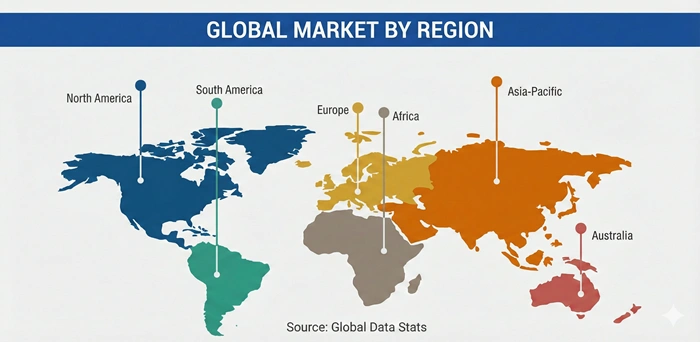
North America Commands Over 41% of Global Dietary Fiber Gummies Revenue, Driven by the World's Highest Supplement Penetration Rate, Advanced Nutraceutical Infrastructure, and Mainstream Gut Health Consumer Culture
North America holds approximately 41–42% of global dietary fiber gummies market revenue in 2025, expanding at a regional CAGR of approximately 11.17% through the forecast period — a rate that reflects both the market's continued volume expansion and the premiumization of the category driven by functional co-formulation and clean-label reformulation trends. The United States is the dominant revenue contributor, supported by the world's most developed dietary supplement retail ecosystem spanning mass market channels including Walmart and Target, specialty wellness retailers including Whole Foods and The Vitamin Shoppe, pharmacy channels including CVS and Walgreens, and rapidly growing D2C digital platforms where subscription fiber gummy brands have built substantial direct consumer relationships. Key players including Church & Dwight (Vitafusion brand), Procter & Gamble (Metamucil Fiber Gummies), NOW Foods, Renew Life, and SmartyPants Vitamins collectively dominate the North American market, competing through product innovation, distribution breadth, and consumer trust built through decades of established brand presence in the supplement category.
Canada contributes meaningful supplemental regional demand through its well-developed health food retail sector and high per-capita supplement spending that closely mirrors U.S. consumer behavior and category trends. Mexican market growth is at an earlier stage but is accelerating through expanding pharmacy-based supplement distribution and growing urban middle-class wellness spending. North America's market is also the primary innovation laboratory for the global dietary fiber gummies category — with trends including probiotic-plus-fiber combination gummies, sugar-free pectin formulations, and AI-personalized D2C subscription programs all originating in the North American market before being adapted and commercialized internationally. The region's high regulatory standards enforced by the FDA and Health Canada, while creating meaningful compliance investment requirements, also function as quality credibility signals that support premium pricing and consumer trust across all distribution channels.
Asia Pacific
Asia Pacific Is the Fastest-Growing Regional Market in the Dietary Fiber Gummies Sector, Powered by Urbanization-Driven Fiber Deficiency, Expanding Health Spending, and E-Commerce Distribution Transformation
Asia Pacific is projected to grow at the highest regional CAGR globally at approximately 12.9% through 2033, establishing it as the most strategically important growth region for the dietary fiber gummies market in the current decade. China is the largest individual country market within the region, where rapid urbanization has created highly processed, fiber-deficient dietary patterns across hundreds of millions of urban consumers — creating substantial latent demand for convenient fiber supplementation that gummy formats are uniquely positioned to convert into active purchasing behavior. China's rapidly maturing e-commerce infrastructure, dominated by Alibaba's Tmall and JD.com health platforms, is enabling both domestic brands and international players to reach health-conscious urban consumers at scale — with brands including H&H Group (Swisse), Nature's Sunshine, and Amway (Nutrilite) among those achieving significant fiber supplement sales through these digital channels.
India represents one of the market's highest-velocity growth opportunities, where the government's Fit India movement, growing middle-class health supplement adoption, and expanding pharmacy and e-commerce distribution of nutraceuticals are creating a rapidly developing fiber gummy consumer base. Japan and South Korea are mature, quality-conscious markets where consumers prioritize clinically substantiated, clean-label formulations and are willing to pay premium prices for products from trusted brands with verifiable ingredient sourcing and manufacturing quality credentials. Australia has achieved significant functional gummy market penetration across the pharmacy and health specialty retail channels, with Swisse, Herbaland, and international brands including Nature Made well-represented at leading pharmacy chains. Across emerging Southeast Asian markets including Indonesia, Vietnam, Thailand, and Malaysia, improving logistics infrastructure and rapid smartphone-driven e-commerce adoption are progressively opening the fiber gummy category to urban consumer populations that represent significant long-term commercial opportunity.
Customization Available for This Report
This report offers comprehensive region-wise and country-wise customization, providing tailored market intelligence on dietary fiber gummies consumer trends, regulatory frameworks, distribution channel dynamics, product innovation opportunities, and competitive landscape insights specifically aligned to your selected geography and market keyword combination.
Customized versions of this report are available for each region and country listed below, delivering actionable, geography-specific intelligence for nutraceutical manufacturers, supplement brands, retail buyers, ingredient suppliers, and investment analysts:
North America
-
U.S. — FDA regulatory framework for gummy supplement claims, mass retail vs. D2C channel dynamics, clean-label trend adoption, children's segment growth, and competitive brand landscape analysis
-
Canada — Health Canada regulatory environment, supplement retail channel analysis, consumer wellness trend adoption, and competitive market dynamics
-
Mexico — COFEPRIS regulatory requirements, pharmacy-led distribution growth, middle-class wellness spending trends, and market entry opportunity analysis
Europe
-
U.K. — MHRA regulatory framework, online retail growth, vegan gummy formulation trends, and competitive supplement brand landscape
-
Germany — BfR regulatory standards, pharmacy and health store channel dynamics, clean-label preference trends, and key competitive dynamics
-
France — ANSES regulatory requirements, specialty health retail growth, botanical fiber gummy trends, and market opportunity analysis
-
Italy — ISS regulatory standards, consumer wellness awareness growth, distribution channel analysis, and competitive market landscape
-
Rest of Europe — Eastern European supplement market development, EU Novel Food regulatory impact, and emerging fiber gummy market opportunity analysis
Asia Pacific
-
China — SAMR regulatory standards, Tmall/JD.com e-commerce channel analysis, domestic vs. international brand competition, and urbanization-driven demand growth
-
India — FSSAI regulatory framework, Fit India initiative impact, pharmacy and e-commerce distribution dynamics, and market entry opportunity analysis
-
Japan — MHLW regulatory standards, functional food market culture, premium supplement buyer behavior, and competitive brand landscape
-
South Korea — MFDS regulatory environment, K-wellness trend influence, supplement retail dynamics, and competitive market analysis
-
Australia — TGA regulatory framework, pharmacy retail channel leadership, Swisse competitive dominance, and clean-label consumer trend analysis
-
Rest of Asia Pacific — Country-level fiber gummy market analysis for Indonesia, Vietnam, Thailand, Malaysia, and the Philippines
Latin America
-
Brazil — ANVISA regulatory requirements, supplement retail channel growth, e-commerce expansion, and consumer wellness trend adoption analysis
-
Argentina — Economic environment impact on supplement spending, channel distribution dynamics, and market opportunity analysis
-
Rest of Latin America — Colombia, Chile, Peru supplement market development and fiber gummy opportunity analysis
Middle East & Africa
-
UAE — Halal certification requirements, premium pharmacy and health retail dynamics, wellness supplement consumer trends, and international brand competitive landscape
-
Saudi Arabia — SFDA regulatory standards, Vision 2030 health promotion initiatives, consumer preference for halal-certified and plant-based formulations, and competitive market dynamics
-
Rest of MEA — Sub-Saharan Africa urban consumer supplement market development, halal market opportunity, and emerging distribution channel analysis
Top Key Players
-
Church & Dwight Co. Inc. (United States)
-
Procter & Gamble Co. (United States)
-
Nestlé Health Science (Switzerland)
-
Bayer AG (Germany)
-
Unilever plc / Olly Nutrition (United Kingdom / United States)
-
NOW Foods (United States)
-
Haleon plc (United Kingdom)
-
SmartyPants Vitamins Inc. (United States)
-
Nature's Way Products LLC / Schwabe Group (United States / Germany)
-
H&H Group / Swisse Wellness (Hong Kong / Australia)
-
Nordic Naturals Inc. (United States)
-
Herbaland Naturals Inc. (Canada)
-
TopGum Industries Ltd. (Israel)
-
Renew Life Formulas LLC (United States)
-
Better Nutritionals LLC (United States)
-
Swanson Health Products Inc. (United States)
Recent Developments
-
In October 2025, BelliWelli, a U.S.-based wellness supplement brand, launched a new range of watermelon-flavored dietary fiber gummies enriched with prebiotics and collagen, available through Walmart's health supplement section — positioning the product at the intersection of the gut health, beauty-from-within, and convenient wellness supplement trends and targeting working adult females as the primary demographic
-
In August 2025, Nature Made, a leading U.S. supplement brand, introduced a new probiotic and prebiotic fiber gummy line specifically formulated for comprehensive gut microbiome support, combining clinically studied probiotic strains with prebiotic soluble fiber in a clean-label gummy format designed to meet growing consumer demand for science-backed synbiotic digestive health supplements
-
In May 2025, Simply Enough Brands (Good Enough Brands) launched postbiotic fiber gummies containing the Lactobacillus gasseri CP2305 strain in a blackberry flavor format — marking one of the first commercially available postbiotic-plus-fiber combination gummies in the U.S. market and addressing the emerging consumer segment seeking research-supported gut microbiome management products beyond traditional probiotic-only formulations
-
In March 2025, Top Gum Industries of Israel unveiled Gummiotics, a novel synbiotic gummy supplement combining postbiotics, probiotics, and prebiotic dietary fiber in a single product — representing a technically sophisticated multi-functional formulation approach that positions the product at the premium end of the gut health gummy category and targets health-conscious adults seeking comprehensive microbiome support
-
In February 2026, Concordix broadened its proprietary chewable emulsion supplement technology by unveiling more than 60 new nutraceutical product concepts covering immunity, longevity, children's health, and wellness categories — accompanied by a U.S. patent extension covering the core emulsion formulation technology, signaling significant IP-protected innovation activity in the premium functional gummy market and strengthening Concordix's competitive positioning as a technology partner for branded fiber and wellness gummy launches
Market Trends
Two Powerful Trends Are Reshaping the Dietary Fiber Gummies Market: The Clean-Label and Vegan Formulation Revolution Eliminating Gelatin from Premium Products and the Multi-Functional Fiber-Plus-Probiotic Supplement Format Capturing the Gut Wellness Premium Tier
The clean-label and plant-based formulation revolution is the single most commercially pervasive trend reshaping product development priorities across the dietary fiber gummies market. Consumer demand for ingredient transparency — driven by millennial and Gen Z shoppers who routinely research supplement ingredient lists before purchasing — is compelling manufacturers to reformulate away from gelatin-based matrices, artificial colorants, and high-fructose corn syrup sweeteners toward pectin, agar, and tapioca-based gelling systems combined with natural fruit concentrates, stevia, and monk fruit sweeteners. These formulation transitions are technically challenging — plant-based gelling systems require significant manufacturing process adjustments to replicate the textural consistency and shelf stability of gelatin-based formulations — but they unlock substantial market access advantages by qualifying products for vegan, halal, kosher, and free-from label claims that significantly broaden the addressable consumer base. The premium price positioning supported by clean-label credentials is also improving category margins for brands willing to invest in the formulation and manufacturing process development required to deliver genuinely clean-label products at commercial scale.
The multi-functional fiber-plus-probiotic combination supplement format represents the second major trend that is simultaneously expanding the average selling price ceiling and attracting new consumer cohorts to the dietary fiber gummies market. Products that combine prebiotic dietary fiber with clinically studied probiotic strains, postbiotics, vitamins, collagen, or digestive enzymes in a single gummy deliver a more comprehensive gut wellness benefit narrative that commands meaningful price premiums over single-function fiber gummies while offering consumers a simplified supplementation routine. The "two-in-one" positioning resonates strongly with the growing segment of health-conscious adults who are already managing complex supplement routines and actively seeking products that consolidate multiple functional benefits in fewer daily supplements. This multi-benefit trend is creating an innovation premium tier within the dietary fiber gummies market — anchored by products positioned as complete digestive wellness solutions rather than simple fiber supplements — that is growing significantly faster than the base market and is attracting investment from both established supplement brands and venture-backed D2C challengers focused on the premium wellness segment.
Segments Covered in the Report
By Source
-
Plant-Based Fiber
-
Pectin and Acacia Gum Fiber
-
Psyllium Husk and Chicory Inulin
-
Other Natural Plant Fiber Sources
-
-
Synthetic / Functional Fiber
-
Polydextrose and Resistant Dextrin
-
Inulin Derivatives and Oligosaccharides
-
By Target Group
-
Adults
-
Working Professionals (25–54 Years)
-
Active Aging Adults (55+ Years)
-
-
Children
-
Ages 2–6 (Toddler Formulations)
-
Ages 7–12 (School-Age Formulations)
-
-
Pregnant Women
-
Prenatal Digestive Support Formulations
-
-
Geriatric
-
Senior Digestive Wellness and Regularity Support
-
By Flavor
-
Mixed Berry
-
Blueberry, Raspberry, Strawberry Blends
-
-
Citrus, Peach and Apple
-
Orange, Lemon, Grapefruit, and Tropical Variants
-
-
Others
-
Unflavored / Natural Formulations
-
By Distribution Channel
-
Supermarkets / Hypermarkets
-
National and Regional Chain Grocery Retailers
-
-
Pharmacies and Drug Stores
-
Specialty Pharmacy Health Supplement Sections
-
-
Online Retail
-
D2C Brand Websites and Subscription Platforms
-
Amazon, Tmall, and Other E-Commerce Marketplaces
-
-
Specialty Stores
-
Health and Wellness Retailers, Natural Food Stores
-
By Region
-
North America (U.S., Canada, Mexico)
-
Europe (U.K., Germany, France, Italy, Rest of Europe)
-
Asia Pacific (China, India, Japan, South Korea, Australia, Rest of Asia Pacific)
-
Latin America (Brazil, Argentina, Rest of Latin America)
-
Middle East and Africa (UAE, Saudi Arabia, Rest of MEA)
❝ Built for Every Level — From Startups to Industry Giants ❞
Here Is Exactly How This Report Works for You
-
For tier 1 global nutraceutical manufacturers, leading supplement brands, and institutional investors, this report delivers granular competitor revenue analysis — including product-line and geography-level breakdowns for Church & Dwight, Procter & Gamble, Nestlé Health Science, Bayer AG, and Haleon — alongside a comprehensive geopolitical and regulatory risk assessment covering how FDA health claim enforcement, EU Novel Food regulations, and Asia Pacific market-specific import requirements are shaping competitive positioning, product pipeline strategy, and geographic expansion investment decisions in the dietary fiber gummies market through 2033
-
For tier 2 and tier 3 supplement brands, private label gummy manufacturers, ingredient suppliers, and health retail buyers, this report maps the highest-growth product categories including children's fiber gummies, multi-functional probiotic-fiber combinations, and sugar-free clean-label formats, the most commercially accessible regional expansion markets with the lowest competitive intensity, and the distribution channel shift dynamics between traditional retail and D2C e-commerce that are creating new brand-building opportunities for mid-market players challenging established shelf space incumbents
-
For all decision-makers across the dietary fiber gummies value chain — from chief marketing officers and product development directors to retail category managers and venture fund investors — this report translates complex market signals including clean-label adoption acceleration, children's segment growth velocity, Asia Pacific e-commerce distribution maturation, and multi-functional formulation premium pricing dynamics into actionable strategic intelligence that supports better product development investment, geographic expansion, partnership, and competitive positioning decisions through 2033
Frequently Asked Questions
Question 1: What is the current size of the global dietary fiber gummies market and what is the projected value by 2033?
Answer: The global dietary fiber gummies market was valued at USD 6.34 billion in 2025 and is projected to reach approximately USD 12.91 billion by 2033, growing at a CAGR of 9.75% from 2026 to 2033. This growth is driven by rising consumer awareness of gut health and fiber deficiency, growing preference for convenient gummy supplement formats over capsules and powders, and expanding product innovation in clean-label, vegan, and multi-functional fiber gummy formulations.
Question 2: Are dietary fiber gummies actually effective at improving digestive health?
Answer: Yes, dietary fiber gummies containing clinically studied soluble fiber sources including psyllium, pectin, acacia, and inulin are supported by substantial nutritional science demonstrating benefits including improved gut microbiome diversity, enhanced digestive regularity, reduced cholesterol absorption, and improved satiety and blood glucose regulation when consumed consistently at recommended doses. The key efficacy considerations are fiber source quality, dose per serving relative to daily targets, and consistent daily use — factors that consumers should evaluate when selecting between fiber gummy products.
Question 3: Which target group is driving the fastest growth in the dietary fiber gummies market?
Answer: The children's segment is driving the fastest target group growth in the dietary fiber gummies market at approximately 12.67% CAGR through 2033, fueled by growing parental awareness of pediatric fiber deficiency's role in childhood digestive health challenges and the practical reality that gummy formats achieve significantly higher compliance rates in children compared to capsule or powder alternatives. Manufacturers are responding with dedicated pediatric formulations featuring age-appropriate dosing, reduced sugar content, and child-appealing flavors that address both parent nutrition concerns and child acceptance requirements.
Question 4: What are the most popular dietary fiber gummy flavors and which source type dominates the market?
Answer: Mixed berry is the most popular flavor profile in the dietary fiber gummies market with approximately 36% of flavor segment revenue in 2025, valued for its broad demographic appeal, health-associated taste profile, and compatibility with both adult and children's formulation requirements. Plant-based fiber sources including pectin, acacia, and chicory inulin dominate the source segment with approximately 68–69% share, preferred for their clean-label credentials, vegan compatibility, and strong consumer perception of digestive safety compared to synthetic fiber alternatives.
Question 5: Which region leads the dietary fiber gummies market and where is growth accelerating fastest?
Answer: North America leads the global dietary fiber gummies market with approximately 41–42% revenue share in 2025, supported by the world's highest supplement penetration rates, well-developed nutraceutical retail infrastructure, and high consumer awareness of fiber deficiency's health implications. Asia Pacific is growing at the fastest regional CAGR of approximately 12.9% through 2033, driven by urbanization-fueled fiber-deficient dietary patterns, rapidly expanding health supplement spending across China, India, and Southeast Asia, and e-commerce platform development that is making premium fiber gummy brands accessible to large, previously underserved consumer populations.