
Desiccant Dehumidifier Market Overview
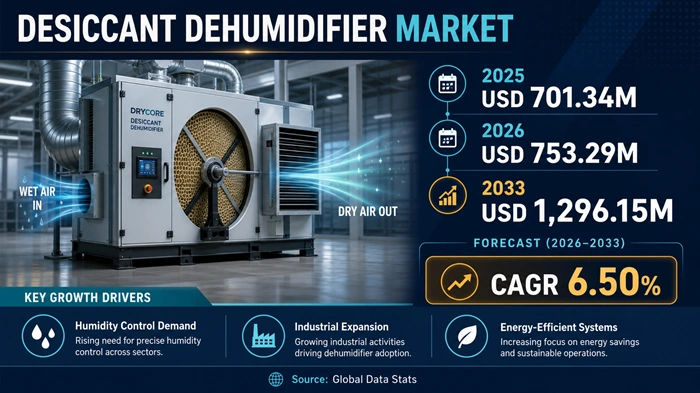
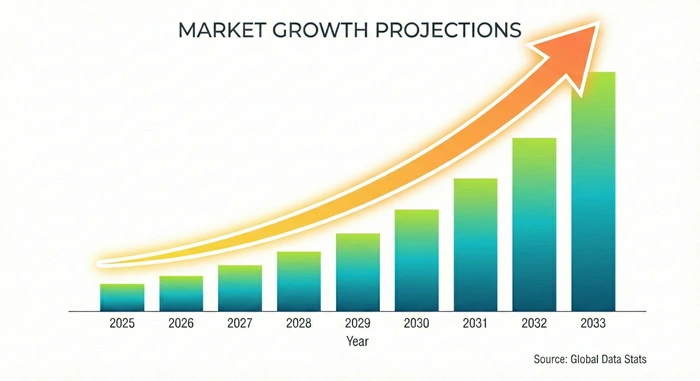
The global desiccant dehumidifier market size is valued at USD 701.34 million in 2025 and is predicted to increase from USD 753.29 million in 2026 to approximately USD 1296.15 million by 2033, growing at a CAGR of 6.50% from 2026 to 2033.
The desiccant dehumidifier market represents an essential segment of the air treatment and humidity control industry, serving critical applications across pharmaceutical manufacturing, food processing, electronics production, cold storage facilities, and HVAC systems. These specialized devices utilize moisture-absorbing desiccant materials such as silica gel, molecular sieves, and activated alumina to extract water vapor from air, providing superior performance in low-temperature environments and applications requiring extremely low humidity levels. The market's robust growth trajectory reflects increasing awareness about indoor air quality, rising demand for energy-efficient climate control solutions, and stringent regulatory requirements for precise humidity management across multiple industrial sectors.
Advancing Moisture Control Technologies for Industrial Excellence and Environmental Sustainability
Manufacturers worldwide are recognizing the strategic importance of maintaining optimal humidity levels to protect sensitive products, enhance operational efficiency, and comply with evolving quality standards. Desiccant dehumidifiers offer distinct advantages over traditional refrigerant-based systems, particularly in environments where temperatures fall below standard operating ranges or where deep drying is essential. As industries transition toward automated production systems and smart building technologies, the integration of advanced dehumidification equipment with IoT-enabled sensors and predictive analytics is becoming increasingly prevalent. This technological evolution is transforming humidity control from a passive maintenance function into a proactive, data-driven operational strategy that delivers measurable improvements in product quality, energy consumption, and environmental sustainability.
AI Impact on the Desiccant Dehumidifier Industry
Revolutionizing Humidity Management Through Intelligent Automation and Predictive Maintenance Systems
Artificial intelligence is fundamentally transforming the desiccant dehumidifier market by introducing sophisticated monitoring and control capabilities that optimize performance while minimizing energy consumption. Machine learning algorithms analyze real-time data from temperature sensors, humidity detectors, and airflow monitors to automatically adjust regeneration cycles, fan speeds, and heating elements based on environmental conditions and operational requirements. These intelligent systems can predict optimal operating parameters for different manufacturing processes, weather patterns, and facility usage scenarios, delivering substantial reductions in electricity costs while maintaining precise humidity control. AI-powered platforms also enable remote monitoring and diagnostics, allowing facility managers to oversee multiple dehumidifier installations across different locations through centralized dashboards that provide instant alerts about performance anomalies or maintenance needs.
The implementation of predictive maintenance algorithms represents another transformative AI application in the desiccant dehumidifier market. Advanced analytics platforms continuously evaluate equipment performance indicators such as desiccant wheel rotation speed, heater efficiency, and moisture removal rates to identify subtle degradation patterns that precede component failures. By detecting these early warning signs, AI systems enable scheduled maintenance interventions before breakdowns occur, significantly reducing unplanned downtime and extending equipment lifespan. Additionally, artificial intelligence is enhancing desiccant material development through computational modeling that predicts molecular absorption characteristics, enabling researchers to design next-generation materials with superior moisture capture capacity and faster regeneration times. This convergence of AI technology with humidity control engineering is creating unprecedented opportunities for manufacturers to deliver smarter, more efficient, and more reliable dehumidification solutions.
Growth Factors
Pharmaceutical and Food Processing Industries Driving Sustained Market Expansion
The pharmaceutical industry's stringent requirements for moisture-controlled environments are generating substantial demand for advanced desiccant dehumidifier systems. Drug manufacturing processes require precise humidity levels to prevent degradation of active pharmaceutical ingredients, ensure consistent tablet coating quality, and maintain stability during storage. Regulatory agencies worldwide enforce strict environmental control standards for cleanrooms, compounding facilities, and packaging areas where even minor humidity fluctuations can compromise product efficacy and patient safety. The increasing production of biologics, vaccines, and temperature-sensitive medications is further amplifying the need for reliable dehumidification equipment capable of maintaining extremely low moisture levels across extended operating periods. As pharmaceutical manufacturers expand production capacity to meet growing global demand, investments in high-performance climate control infrastructure including desiccant dehumidifiers continue to accelerate.
The food processing and cold storage sectors represent another major growth driver for the desiccant dehumidifier market. Moisture control is critical throughout food production chains to prevent microbial contamination, extend shelf life, and maintain product texture and flavor characteristics. Bakeries utilize dehumidifiers to control dough consistency and prevent condensation on refrigerated surfaces, while meat processing facilities require precise humidity management to inhibit bacterial growth during cutting and packaging operations. The rapid expansion of cold chain logistics infrastructure to support e-commerce grocery delivery and international food trade is creating substantial demand for dehumidification systems in refrigerated warehouses and distribution centers. Additionally, consumer preferences for frozen and packaged foods with extended shelf life are driving food manufacturers to invest in advanced moisture control technologies that preserve quality while reducing waste and improving operational efficiency.
Market Outlook
Positive Growth Trajectory Supported by Industrialization and Energy Efficiency Mandates
The desiccant dehumidifier market outlook remains exceptionally favorable as manufacturing industries worldwide prioritize precise environmental control to enhance product quality and operational efficiency. Government initiatives promoting energy-efficient building systems and sustainable manufacturing practices are accelerating adoption of advanced dehumidification technologies that reduce electricity consumption compared to traditional refrigerant-based systems. Many regions have implemented building codes and industrial standards that mandate specific humidity control measures for sensitive manufacturing environments, creating stable regulatory-driven demand for compliant equipment. The increasing emphasis on indoor air quality in commercial buildings, healthcare facilities, and educational institutions is expanding market opportunities beyond traditional industrial applications into commercial and institutional sectors where occupant health and comfort considerations drive investment decisions.
Emerging applications in electronics manufacturing and automotive production are opening new growth avenues for desiccant dehumidifier technology. The production of semiconductors, printed circuit boards, and display panels requires extremely low humidity environments to prevent moisture-induced defects and corrosion during fabrication processes. As electronics manufacturers transition to smaller component geometries and more sophisticated assembly techniques, tolerance for environmental variations continues to shrink, necessitating more capable humidity control equipment. Similarly, the automotive industry's shift toward electric vehicles is creating demand for precise moisture management during battery assembly and electronics integration to ensure long-term reliability and safety. These expanding application areas, combined with ongoing technological improvements in desiccant materials and regeneration efficiency, position the market for sustained growth throughout the forecast period.
Expert Speaks
-
Stefan Aspman, President of Munters Group, emphasized that the company is witnessing accelerating demand for intelligent dehumidification solutions integrated with IoT platforms and predictive analytics, particularly across pharmaceutical manufacturing and food processing sectors where precise humidity control directly impacts product quality and regulatory compliance.
-
Dr. Jochen Weyrauch, CEO of Condair Group, stated that the convergence of energy efficiency requirements with stringent industrial environmental standards is driving substantial investments in advanced desiccant dehumidification technologies, with manufacturers increasingly seeking systems that deliver optimal performance while minimizing carbon footprint and operational costs.
-
Rajiv Mathur, CEO of Bry-Air, highlighted that rapid industrialization in emerging markets combined with growing awareness about indoor air quality is creating unprecedented growth opportunities for moisture control solutions, with desiccant dehumidifiers playing increasingly vital roles in protecting valuable assets and ensuring manufacturing process consistency.
Key Report Takeaways
-
Asia Pacific dominates the desiccant dehumidifier market with approximately 44.8% market share, driven by rapid industrialization, expanding pharmaceutical manufacturing capacity, growing food processing industries, and substantial investments in cold chain logistics infrastructure across China, India, Japan, and Southeast Asian nations.
-
North America represents the fastest-growing regional market with a projected CAGR of 7.2%, fueled by stringent regulatory requirements for industrial environmental control, increasing adoption of energy-efficient building systems, expanding pharmaceutical production facilities, and growing emphasis on sustainable manufacturing practices across the United States and Canada.
-
Portable desiccant dehumidifiers hold the largest product segment share accounting for approximately 47.4% of total market value, favored for their flexibility, ease of deployment, mobility, and cost-effectiveness across residential, commercial, and temporary industrial applications requiring localized humidity control.
-
Pharmaceutical industry contributes the most significant end-use revenue representing roughly 34.5% of total market value, as drug manufacturing processes demand precise humidity regulation to maintain product stability, prevent contamination, and comply with stringent regulatory standards governing cleanroom environments.
-
High capacity dehumidifiers are experiencing the fastest growth with a projected CAGR of 6.4%, gaining traction in large-scale industrial facilities, food processing plants, and cold storage warehouses that require continuous, high-volume moisture removal capabilities for extensive operational areas.
-
Rotor component segment will exhibit strong market dominance expected to maintain approximately 43.4% market share, driven by its critical role in moisture absorption processes and ongoing innovations in desiccant wheel materials, coatings, and designs that enhance efficiency and durability across industrial applications.
Market Scope
| Report Coverage | Details |
|---|---|
| Market Size by 2033 | USD 1296.15 Million |
| Market Size by 2025 | USD 701.34 Million |
| Market Size by 2026 | USD 753.29 Million |
| Market Growth Rate from 2026 to 2033 | CAGR of 6.50% |
| Dominating Region | Asia Pacific |
| Fastest Growing Region | North America |
| Base Year | 2025 |
| Forecast Period | 2026 to 2033 |
| Segments Covered | Type, Capacity, Component, End-Use Industry, Application, Region |
| Regions Covered | North America, Europe, Asia Pacific, Latin America, Middle East & Africa |
Market Dynamics
Drivers Impact Analysis
Rising Industrial Manufacturing and Stringent Quality Standards Propelling Market Demand
| Driver | (≈) % Impact on CAGR Forecast | Geographic Relevance | Impact Timeline |
|---|---|---|---|
| Increasing pharmaceutical production and regulatory compliance requirements | +1.9% | Global | 2026-2033 |
| Growing food processing industry and cold chain expansion | +1.7% | Asia Pacific, North America | 2026-2033 |
| Energy efficiency mandates and sustainability initiatives | +1.4% | Europe, North America | 2026-2030 |
The pharmaceutical industry's continuous expansion worldwide is creating sustained demand for advanced desiccant dehumidifier systems capable of maintaining precise environmental conditions. Drug manufacturing processes are highly sensitive to humidity variations that can trigger chemical reactions, promote microbial growth, or alter physical properties of active ingredients and excipients. Regulatory authorities including the FDA, EMA, and various national agencies enforce comprehensive environmental monitoring requirements for facilities producing injectable medications, biologics, and sterile products. These regulations mandate specific humidity ranges for different production areas, with documentation requirements that necessitate reliable dehumidification equipment. The growing production of complex biologics and personalized medicines requiring ultra-clean manufacturing environments is intensifying demand for high-performance desiccant systems that can achieve and maintain extremely low dew points while providing consistent, verifiable performance across extended operating periods.
The rapid expansion of food processing operations and cold storage infrastructure worldwide is driving substantial investments in humidity control technologies. Moisture management is critical throughout food supply chains to prevent quality degradation, reduce spoilage, and extend shelf life without compromising nutritional value or sensory characteristics. Desiccant dehumidifiers enable food manufacturers to maintain optimal conditions during production, packaging, and storage operations, directly impacting product consistency and consumer satisfaction. The growth of e-commerce grocery delivery services has accelerated development of sophisticated cold chain networks requiring precise climate control in refrigerated warehouses and distribution centers. Additionally, increasing consumer demand for minimally processed foods with clean label ingredients is encouraging manufacturers to adopt advanced preservation technologies including humidity control systems that reduce reliance on chemical preservatives while maintaining food safety standards.
Restraints Impact Analysis
High Capital Investment and Maintenance Requirements Limiting Adoption Rates
| Restraint | (≈) % Impact on CAGR Forecast | Geographic Relevance | Impact Timeline |
|---|---|---|---|
| Substantial initial equipment and installation costs | -1.1% | Emerging Markets | 2026-2029 |
| Specialized technical expertise requirements | -0.7% | Global | 2026-2033 |
| Competition from alternative dehumidification technologies | -0.5% | Residential, Small Commercial | 2026-2028 |
The significant capital expenditure associated with purchasing and installing desiccant dehumidifier systems represents a considerable barrier to market penetration, particularly among small and medium-sized enterprises operating with limited equipment budgets. Complete installations including the dehumidifier unit, ducting, controls, and necessary infrastructure modifications can require investments exceeding tens of thousands of dollars for industrial-grade systems. These upfront costs must be justified through detailed financial analyses considering energy savings, quality improvements, and reduced product losses. Organizations in price-sensitive markets or those facing uncertain demand conditions may delay equipment purchases despite recognizing operational benefits, instead relying on less effective but more affordable humidity control alternatives. The economic feasibility challenge is particularly acute in emerging markets where access to capital financing may be restricted and return-on-investment timelines must be compressed to satisfy management approval processes.
The operation and maintenance of desiccant dehumidifier systems demand specialized technical knowledge that many organizations lack internally. Proper system configuration requires understanding of psychrometric principles, desiccant regeneration dynamics, and integration with existing HVAC infrastructure to achieve optimal performance. Organizations must invest in training programs for maintenance personnel or establish service contracts with equipment suppliers or specialized technicians, adding ongoing operational expenses beyond initial purchase costs. The periodic replacement of desiccant wheels, filters, and heating elements requires careful scheduling to minimize production disruptions while ensuring consistent humidity control performance. This technical complexity creates hesitation among potential adopters, particularly in regions with limited access to qualified service providers, potentially slowing market growth rates in developing economies where industrial infrastructure is rapidly expanding but technical support networks remain underdeveloped.
Opportunities Impact Analysis
Healthcare Sector Expansion and Smart Technology Integration Creating Growth Potential
| Opportunity | (≈) % Impact on CAGR Forecast | Geographic Relevance | Impact Timeline |
|---|---|---|---|
| Healthcare facility growth and infection control emphasis | +1.2% | Global | 2027-2033 |
| IoT integration and smart building system adoption | +1.0% | North America, Europe, Asia Pacific | 2026-2033 |
| Emerging market industrialization and infrastructure development | +0.8% | Asia Pacific, Latin America, Middle East | 2028-2033 |
The healthcare sector's rapid expansion globally presents substantial growth opportunities for the desiccant dehumidifier market as hospitals, clinics, and medical facilities prioritize infection control and environmental quality. Maintaining appropriate humidity levels in healthcare environments is essential for preventing mold growth, bacterial proliferation, and viral transmission that pose serious risks to immunocompromised patients. Operating rooms, intensive care units, and pharmaceutical compounding areas require precise moisture control to ensure sterile conditions and protect sensitive medical equipment from corrosion and malfunction. The COVID-19 pandemic heightened awareness about airborne disease transmission and ventilation quality, accelerating investments in advanced air treatment systems including dehumidifiers that contribute to healthier indoor environments. As global healthcare infrastructure continues expanding to serve growing and aging populations, demand for reliable humidity control solutions will increase correspondingly across both new construction projects and facility upgrade initiatives.
The integration of desiccant dehumidifiers with Internet of Things platforms and smart building management systems is creating transformative opportunities to enhance operational efficiency and user experience. Modern dehumidifier units equipped with wireless connectivity, cloud-based monitoring, and mobile control interfaces enable facility managers to optimize performance across multiple locations through centralized platforms. IoT integration allows automated adjustments based on occupancy patterns, weather forecasts, and production schedules, maximizing energy efficiency while maintaining required humidity levels. The ability to collect and analyze historical performance data enables continuous improvement of operating strategies and predictive maintenance scheduling that reduces downtime. Smart technology adoption is particularly appealing to large commercial and industrial operators managing extensive facility portfolios who can realize substantial cost savings through coordinated humidity control strategies. This technological convergence is expanding the addressable market beyond traditional industrial customers into commercial real estate, hospitality, and institutional sectors seeking comprehensive building automation solutions.
Segment Analysis
Portable Desiccant Dehumidifiers
Market Leadership Through Flexibility and Cost-Effectiveness Across Diverse Applications
Portable desiccant dehumidifiers command the largest share of the market at approximately 47.4%, reflecting their widespread adoption across residential, commercial, and industrial applications where mobility and flexibility are paramount. These compact units provide targeted humidity control in specific areas without requiring permanent installation or extensive modifications to existing infrastructure. The portability advantage enables users to relocate equipment as needs change, making these systems particularly valuable for construction sites, temporary storage facilities, rental properties, and seasonal applications where permanent installations would be economically unjustifiable. Small businesses and residential users appreciate the lower upfront costs and simple operation of portable units compared to fixed industrial systems. The segment benefits from continuous product innovation focused on reducing size and weight while improving dehumidification capacity and energy efficiency. Asia Pacific and North America represent the strongest markets for portable units, collectively accounting for over 60% of segment revenue, driven by diverse climate conditions and extensive small-scale commercial activities. Leading manufacturers including Munters, Trotec, and Ebac have developed comprehensive portable product lines offering capacities ranging from compact residential models to heavy-duty commercial units suitable for construction drying and disaster restoration applications.
The portable segment is projected to maintain steady growth with a CAGR of 6.2% through 2033 as awareness about indoor air quality and moisture-related problems continues expanding across consumer and small business markets. The increasing frequency of extreme weather events and flooding incidents is driving demand for portable dehumidifiers used in water damage restoration and emergency drying applications. Rental equipment services represent a growing distribution channel, providing temporary access to professional-grade portable units for short-term projects without capital investment requirements. Technological advances have produced lighter, quieter, and more energy-efficient portable models that appeal to residential consumers seeking to improve comfort and prevent mold growth in basements, closets, and other problem areas. The commercial segment utilizes portable desiccant dehumidifiers extensively in offices, retail stores, museums, and archives where protecting documents, electronics, and valuable inventory from moisture damage justifies equipment investments. European markets show particularly strong adoption of portable units in heritage building preservation where maintaining appropriate humidity protects historical artifacts and architectural elements from deterioration.
Pharmaceutical End-Use Industry
Capturing Dominant Revenue Share Through Critical Humidity Control Requirements
The pharmaceutical industry represents the largest end-use segment for desiccant dehumidifiers, accounting for approximately 34.5% of total market revenue, reflecting the absolute necessity of precise moisture control throughout drug manufacturing processes. Pharmaceutical production environments must maintain specific humidity ranges to ensure consistent chemical reactions, prevent cross-contamination, and preserve the stability of active pharmaceutical ingredients and finished products. Solid dosage manufacturing operations utilize dehumidifiers to control moisture content during granulation, drying, and coating processes where excess humidity can cause tablets to stick together or develop quality defects. The production of capsules, particularly gelatin-based formulations, requires extremely low humidity to maintain proper shell characteristics and filling operations. Sterile manufacturing facilities producing injectable medications and biologics implement comprehensive environmental control systems where desiccant dehumidifiers play critical roles in achieving required cleanliness classifications while preventing microbial growth. North America and Europe dominate pharmaceutical segment demand with a combined market share exceeding 58%, concentrated in regions hosting major drug manufacturers and contract manufacturing organizations. Leading companies including Pfizer, Novartis, and Johnson & Johnson operate facilities worldwide equipped with sophisticated climate control systems incorporating multiple desiccant dehumidifier installations.
The pharmaceutical segment is experiencing accelerated growth with a projected CAGR of 6.8% driven by expanding biologic drug production and increasing generic medication manufacturing in emerging markets. The development of personalized medicines and cell-based therapies is creating demand for flexible manufacturing facilities requiring adaptable environmental control systems that can accommodate varying production requirements. Regulatory agencies continue tightening environmental monitoring requirements, mandating continuous recording of temperature and humidity parameters with automated alarm systems for excursions beyond acceptable ranges. These compliance demands necessitate reliable dehumidification equipment capable of maintaining stable conditions while providing verifiable performance data for regulatory submissions. The pharmaceutical packaging segment represents another significant application area where moisture control prevents degradation during blister pack sealing, bottle filling, and labeling operations. Asia Pacific is emerging as a major growth region for pharmaceutical dehumidifier applications as countries including India, China, and Singapore expand drug manufacturing capacity to serve both domestic markets and global export opportunities. The segment benefits from long equipment replacement cycles and ongoing service revenue streams as pharmaceutical facilities typically maintain dehumidifier systems for 15-20 years with regular maintenance programs.
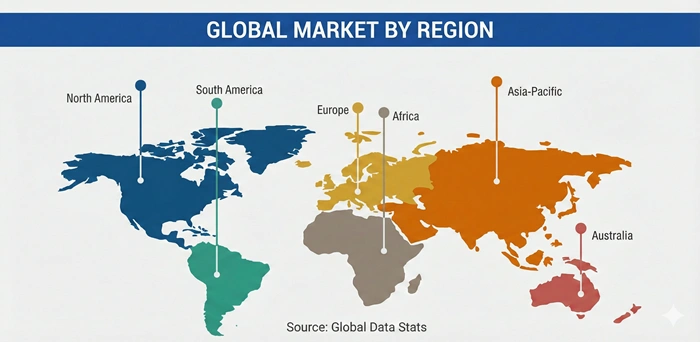
Regional Insights
Asia Pacific
Commanding Market Leadership Through Rapid Industrialization and Manufacturing Expansion
Asia Pacific dominates the global desiccant dehumidifier market with approximately 44.8% share valued at around USD 337 million in 2026, driven by the region's extensive manufacturing base, rapid industrial development, and growing emphasis on quality control across multiple sectors. China represents the largest single country market within the region, accounting for over 45% of Asia Pacific demand through its massive pharmaceutical manufacturing industry, expanding food processing sector, and extensive electronics production capabilities. The country's transition toward higher-value manufacturing and stringent quality standards is accelerating adoption of advanced humidity control technologies across industrial facilities. Japan and South Korea contribute substantial demand through their sophisticated electronics industries and pharmaceutical operations requiring ultra-precise environmental control. India's pharmaceutical sector represents another major growth driver as the country supplies generic medications worldwide and invests in upgrading manufacturing facilities to meet international quality standards. The region's desiccant dehumidifier market is projected to grow at a CAGR of 6.5% through 2033 as industrialization continues and environmental regulations tighten across emerging economies.
The concentration of food processing operations and cold storage infrastructure throughout Asia Pacific creates sustained demand for humidity control equipment. Countries across the region are investing heavily in cold chain logistics to reduce food waste and enable agricultural exports to international markets. The tropical climate conditions prevalent across Southeast Asia make moisture management particularly challenging and economically important for preserving product quality during storage and transportation. Leading dehumidifier manufacturers including Munters, Bry-Air, and Seibu Giken DST have established substantial manufacturing and service operations throughout the region to serve local markets. China's electronics industry utilizes desiccant dehumidifiers extensively in semiconductor fabrication, display panel production, and precision assembly operations where even minimal moisture can cause defects and yield losses. Government initiatives promoting energy efficiency and environmental sustainability are encouraging industrial facilities to adopt advanced climate control technologies that reduce electricity consumption while maintaining required environmental conditions. The region benefits from abundant technical workforce and growing engineering expertise that supports sophisticated dehumidifier installations and maintenance programs.
North America
Experiencing Fastest Growth Through Regulatory Compliance and Energy Efficiency Emphasis
North America represents the fastest-growing regional market for desiccant dehumidifiers with a projected CAGR of 7.2% from 2026 to 2033, fueled by stringent regulatory requirements, increasing energy efficiency mandates, and substantial pharmaceutical manufacturing investments. The United States accounts for approximately 82% of North American demand through its extensive pharmaceutical industry, large food processing sector, and growing emphasis on indoor air quality across commercial buildings. The region's regulatory environment enforces strict environmental control requirements for sensitive manufacturing operations, creating compliance-driven demand for reliable dehumidification equipment. The FDA and USDA implement comprehensive inspection programs that verify humidity control capabilities in facilities producing drugs, medical devices, and food products, necessitating properly designed and maintained dehumidifier systems. Energy efficiency standards including ASHRAE guidelines and LEED certification requirements are encouraging building operators to adopt advanced climate control technologies that reduce operational costs while meeting environmental goals. The market currently captures approximately 28% of global share valued near USD 211 million in 2026, with growth concentrated in industrial and commercial applications.
Canada's pharmaceutical and food processing industries contribute additional demand, particularly in provinces including Ontario and Quebec where manufacturing activities cluster around major urban centers. The region's cold climate conditions create unique challenges for humidity control in heated buildings where temperature differentials can cause condensation problems if not properly managed. Desiccant dehumidifiers offer effective solutions for these applications by removing moisture without cooling air as refrigerant-based systems do. Leading companies including Zygo Corporation, DriSteem, and Colmac Coil operate substantial manufacturing and service operations throughout North America, providing local support and rapid response capabilities. The aerospace and defense sectors utilize dehumidifiers extensively to protect sensitive equipment and prevent corrosion in storage facilities and manufacturing operations. Healthcare facility expansion across the region is driving demand for medical-grade environmental control systems that maintain optimal conditions for patient care and infection prevention. The commercial construction sector increasingly specifies dehumidification systems for data centers, museums, archives, and high-value retail environments where protecting valuable assets and maintaining occupant comfort justify equipment investments. The region exhibits strong preference for technologically advanced systems featuring IoT integration, energy recovery, and automated controls that optimize performance.
Top Key Players
-
Munters Group AB (Sweden)
-
Bry-Air (India)
-
Condair Group (Switzerland)
-
Seibu Giken DST (Sweden)
-
DehuTech AB (Sweden)
-
Atlas Copco AB (Sweden)
-
Trotec Laser GmbH (Austria)
-
Fisen Corporation (United States)
-
Kaeser Kompressoren (Germany)
-
Ebac Limited (United Kingdom)
-
Thermax Limited (India)
-
Cotes (Denmark)
-
DriSteem Corporation (United States)
-
Dri-Eaz Products Inc (United States)
-
SPX FLOW (United States)
Recent Developments
-
Munters Group (September 2023) completed the acquisition of ZECO, a leading Indian air treatment solutions manufacturer, for an enterprise value of approximately MSEK 790, significantly strengthening its market position in the rapidly growing Indian dehumidification market and expanding its product portfolio to serve pharmaceutical, food processing, and industrial customers across South Asia with enhanced local manufacturing and service capabilities.
-
Nature Miracle (May 2024) launched two innovative smart dehumidifier models under its Efinity brand specifically designed for indoor agriculture and controlled environment applications, featuring advanced precision climate control technologies and energy-efficient operation optimized for horticultural facilities, vertical farms, and greenhouse operations requiring precise humidity management to maximize crop yields and quality.
-
Condair Group (2024) introduced a new series of energy-efficient hybrid desiccant dehumidifiers combining rotary desiccant technology with heat pump systems to deliver superior moisture removal performance while reducing electricity consumption by up to 40% compared to conventional models, targeting pharmaceutical manufacturing and food processing facilities seeking to minimize operational costs and carbon footprints while maintaining strict environmental control.
-
Bry-Air (2023) expanded its manufacturing capacity in India with a new 50,000 square foot production facility dedicated to desiccant dehumidifier assembly and testing, enabling the company to increase output by 35% and reduce lead times for customers across Asia Pacific and Middle East markets while supporting growing demand from pharmaceutical, automotive, and electronics manufacturing sectors.
-
Seibu Giken DST (2024) partnered with leading building automation system providers to integrate its desiccant dehumidifiers with IoT platforms and smart building management systems, enabling real-time monitoring, predictive maintenance, and automated optimization of humidity control operations across commercial and industrial facilities worldwide, enhancing energy efficiency and reducing operational complexity for facility managers.
Market Trends
Integration of Smart Technologies and Sustainability Focus Reshaping Industry Dynamics
The desiccant dehumidifier market is undergoing significant transformation as manufacturers integrate advanced digital technologies including IoT sensors, cloud connectivity, and artificial intelligence to create intelligent humidity control systems. Modern dehumidifiers equipped with wireless communication capabilities enable remote monitoring and control through smartphone applications and web-based dashboards, providing facility managers with real-time visibility into equipment performance across multiple locations. These connected systems automatically adjust operating parameters based on ambient conditions, occupancy patterns, and energy cost schedules to optimize efficiency while maintaining required humidity levels. Predictive maintenance algorithms analyze equipment performance data to identify potential failures before they occur, scheduling service interventions at convenient times rather than experiencing unexpected downtime. The integration trend is particularly pronounced in commercial building applications where dehumidifiers interface with comprehensive building automation systems that coordinate HVAC, lighting, and security functions. Manufacturers offering seamless integration capabilities and open communication protocols are gaining competitive advantages as customers increasingly prioritize interoperability and data accessibility when selecting climate control equipment.
Sustainability considerations are increasingly influencing product development and purchasing decisions throughout the desiccant dehumidifier market. Manufacturers are focusing on improving energy efficiency through innovations in desiccant materials, heat recovery systems, and regeneration processes that reduce electricity consumption without compromising moisture removal performance. The development of hybrid systems combining desiccant technology with heat pump dehumidification enables optimized operation across varying conditions by automatically selecting the most efficient operating mode based on temperature and humidity requirements. Environmental concerns about desiccant material disposal and refrigerant emissions are encouraging research into biodegradable desiccants and systems utilizing environmentally benign working fluids. Customers across all sectors are incorporating lifecycle cost analysis and carbon footprint considerations into equipment selection processes, favoring products that deliver long-term operating cost savings and environmental benefits even when initial purchase prices exceed conventional alternatives. This sustainability focus is creating opportunities for manufacturers that invest in green technologies and can demonstrate measurable performance advantages through third-party testing and certification programs aligned with international environmental standards.
Segments Covered in the Report
By Type
-
Portable Desiccant Dehumidifiers
-
Industrial/Fixed Desiccant Dehumidifiers
-
Commercial Desiccant Dehumidifiers
By Capacity
-
Low Capacity (<500 CFM)
-
Medium Capacity (500-2000 CFM)
-
High Capacity (>2000 CFM)
By Component
-
Rotor
-
Heater
-
Fans and Motors
-
Control Systems
-
Filters
By End-Use Industry
-
Pharmaceuticals
-
Food and Beverage Processing
-
Cold Storage and Warehousing
-
Electronics and Semiconductors
-
HVAC Systems
-
Chemical and Petrochemical
-
Healthcare
-
Automotive
By Application
-
Corrosion Prevention
-
Condensation Prevention
-
Mold and Fungus Prevention
-
Dry Cooling
-
Product Drying
-
Storage Protection
By Region
-
North America (United States, Canada, Mexico)
-
Europe (Germany, United Kingdom, France, Italy, Spain, Rest of Europe)
-
Asia Pacific (China, India, Japan, South Korea, Australia, Southeast Asia, Rest of Asia Pacific)
-
Latin America (Brazil, Argentina, Rest of Latin America)
-
Middle East & Africa (UAE, Saudi Arabia, South Africa, Rest of Middle East & Africa)
Frequently Asked Questions
Question 1: What is the expected desiccant dehumidifier market size by 2033?
Answer: The global desiccant dehumidifier market is projected to reach approximately USD 1296.15 million by 2033. This substantial growth from the 2026 baseline reflects increasing demand across pharmaceutical manufacturing, food processing, electronics production, and commercial building sectors requiring precise humidity control.
Question 2: Which region currently leads the desiccant dehumidifier market?
Answer: Asia Pacific dominates the desiccant dehumidifier market with approximately 44.8% market share. However, North America is experiencing the fastest growth rate with a CAGR of 7.2%, driven by stringent regulatory requirements and increasing adoption of energy-efficient climate control technologies.
Question 3: What are the primary industries driving desiccant dehumidifier market growth?
Answer: The pharmaceutical industry represents the largest end-use segment accounting for 34.5% of market revenue, followed by food and beverage processing. Both sectors require precise humidity control to maintain product quality, ensure regulatory compliance, and prevent moisture-related degradation during manufacturing and storage operations.
Question 4: How does AI technology impact the desiccant dehumidifier market?
Answer: Artificial intelligence is transforming desiccant dehumidifier capabilities through automated performance optimization, predictive maintenance algorithms, and real-time monitoring systems. AI integration enables substantial energy savings, reduces operational downtime, and enhances moisture control precision while minimizing dependency on specialized technical expertise.
Question 5: What factors are limiting desiccant dehumidifier market expansion?
Answer: High initial capital investment requirements and specialized technical expertise needs represent primary market constraints. Additionally, competition from alternative refrigerant-based dehumidification technologies and environmental concerns regarding desiccant material disposal create adoption barriers, particularly among small businesses and residential users with limited budgets.