
Dental Prosthetics Market Overview
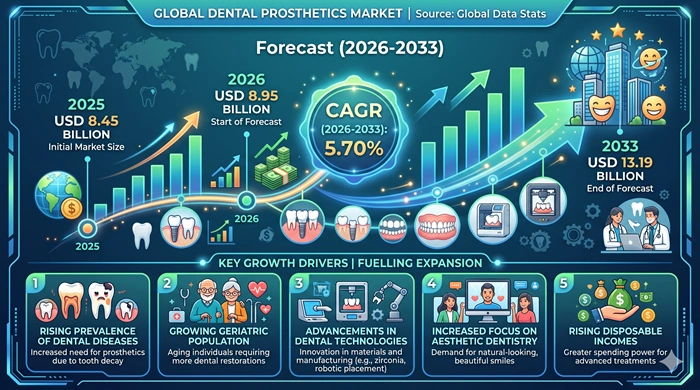
The global dental prosthetics market size is valued at USD 8.45 billion in 2025 and is predicted to increase from USD 8.95 billion in 2026 to approximately USD 13.19 billion by 2033, growing at a CAGR of 5.70% from 2026 to 2033. Rising global prevalence of tooth loss and edentulism, growing aging populations, increasing demand for cosmetic and restorative dentistry, and rapid advances in digital dental technology are collectively driving sustained expansion across both developed and emerging markets.
AI Impact on the Dental Prosthetics Industry
Artificial Intelligence and Digital Dentistry Technologies Are Transforming the Design, Manufacturing, and Clinical Delivery of Dental Prosthetics Across the Globe*
AI is reshaping the dental prosthetics industry in profound ways — from computerized prosthetic design to AI-assisted treatment planning and automated milling workflows. Intraoral scanning and CAD/CAM (computer-aided design and manufacturing) technologies, now increasingly powered by AI algorithms, allow dental professionals to design highly accurate prosthetic restorations in a fraction of the time required by conventional impression-based methods. AI image analysis tools can assess patient dental scans to identify bone density, gum health, and occlusion patterns, enabling clinicians to plan implant placements and prosthetic designs with exceptional precision before any procedure begins. Companies such as Dentsply Sirona and Straumann Group are actively embedding AI capabilities into their CAD/CAM platforms and digital dentistry ecosystems, accelerating both clinical accuracy and workflow efficiency.
Beyond clinical applications, AI is transforming dental laboratory operations. Automated milling machines, AI-assisted quality inspection systems, and predictive analytics tools are helping dental labs optimize their production schedules, reduce material waste, and improve consistency across high-volume prosthetic fabrication workflows. Digital twins of prosthetic designs allow virtual testing before physical production, reducing costly remakes and adjustment chair time. As AI integration within the dental prosthetics manufacturing chain deepens, the industry is moving steadily toward a future of same-day restorations, fully digital workflows, and personalized prosthetics designed and delivered with unprecedented speed and accuracy.
Growth Factors
Aging Global Population, Rising Tooth Loss Prevalence, Growing Cosmetic Dentistry Demand, and Expansion of Dental Insurance Coverage Are the Core Forces Driving Market Growth*
The dental prosthetics market is fundamentally driven by the growing global burden of tooth loss, which affects hundreds of millions of people across all age groups and all geographies. The WHO estimates that severe periodontitis — a leading cause of tooth loss — affects approximately 19% of the global adult population, while the incidence of caries, trauma-related tooth loss, and edentulism rises sharply with advancing age. As the global elderly population continues to grow, with the number of individuals aged 65 and above expected to reach 1.5 billion by 2050, the demand for dentures, dental implants, crowns, bridges, and other prosthetic restorations is set to grow in parallel. This structural demographic driver provides a persistent and expanding foundation for market revenue growth.
The growing consumer focus on dental aesthetics and quality of life is another major force propelling the dental prosthetics market forward. Patients increasingly regard their dental appearance as an important component of personal well-being, professional image, and social confidence — driving strong demand for high-quality, natural-looking prosthetic restorations. The expansion of dental insurance coverage in key markets, combined with the growing availability of dental financing options and the rise of affordable dental tourism destinations in Asia Pacific and Latin America, is making prosthetic dental procedures accessible to a broader patient population. These factors are collectively broadening the addressable market for dental prosthetics manufacturers, distributors, and dental service providers worldwide.
Market Outlook
The Long-Term Outlook Is Strongly Positive, Anchored by Digital Dentistry Adoption, Emerging Market Growth, and Growing Patient Acceptance of Advanced Restorative Solutions*
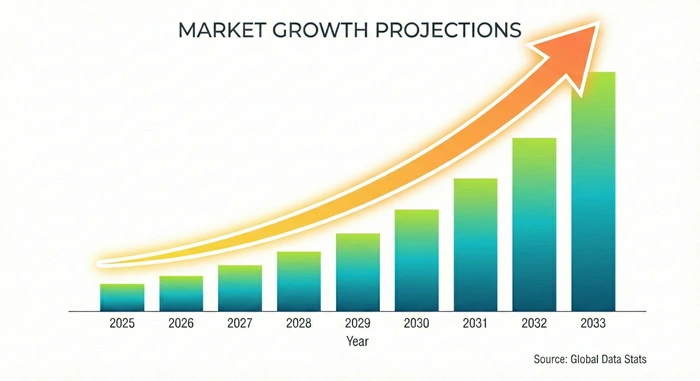
The long-term outlook for the dental prosthetics market is consistently positive across all major segments and geographies. Digital dentistry — encompassing intraoral scanning, CAD/CAM design, 3D printing, and digital occlusal analysis — is not only improving clinical outcomes but is also making prosthetic procedures more efficient, more comfortable, and more predictable for both clinicians and patients. As same-day restoration capabilities become more widespread through chairside milling units and rapid 3D printing platforms, patient acceptance of dental prosthetic procedures is expected to increase, driving higher treatment uptake rates and market volume growth.
Emerging markets across Asia Pacific, Latin America, and the Middle East & Africa represent enormous growth potential as healthcare infrastructure improves, dental professional networks expand, and patient awareness of prosthetic dental options grows. In China and India — two of the world's most populous nations — the dental prosthetics market is still largely underpenetrated relative to developed market benchmarks, creating substantial room for volume growth as disposable incomes rise and access to dental care improves. Multinational dental prosthetics companies are actively investing in distribution partnerships, local manufacturing facilities, and dental professional education programs in these regions to capture a share of this high-growth opportunity.
Expert Speaks
-
"Digital workflows are fundamentally transforming how dental prosthetics are designed and delivered. At Dentsply Sirona, we are committed to enabling dental professionals with the most advanced CAD/CAM and digital imaging platforms so they can offer patients the best possible outcomes efficiently and confidently." — Simon Campion, CEO, Dentsply Sirona
-
"The growing global demand for dental implants and prosthetic solutions is creating unprecedented opportunity for our industry. At Straumann Group, our strategic investments in digital dentistry, implant technology, and clear aligner systems position us well to serve both clinicians and patients across every market segment." — Guillaume Daniellot, CEO, Straumann Group
-
"Nobel Biocare has always been at the forefront of implant-based prosthetic solutions, and we continue to see strong momentum driven by aging populations and growing patient demand for permanent restorative options. The shift to digital and immediate-loading protocols is accelerating adoption in ways we have not seen before." — Markus Boehringer, President, Nobel Biocare (Envista Holdings)
Key Report Takeaways
-
North America leads the global dental prosthetics market, holding approximately 38–40% of total market share in 2026, driven by its high per-capita dental expenditure, strong dental insurance penetration, widespread adoption of digital dental technologies, and the presence of major market leaders including Dentsply Sirona, Zimmer Biomet, and Envista Holdings (Nobel Biocare).
-
Asia Pacific is the fastest-growing regional market, expanding at a CAGR of approximately 8.3% through 2033, powered by rapidly expanding dental service infrastructure, growing middle-class populations with rising dental awareness, and government-backed oral health programs in China, India, Japan, and South Korea.
-
Dental clinics and specialist dental practices are the dominant end-user segment, accounting for the largest revenue share as the majority of prosthetic procedures — including crown placements, implant surgeries, and denture fittings — are performed in private or group dental practice settings with professional clinical supervision.
-
The fixed dental prosthetics segment (crowns and implants) contributes the most to overall market revenues, reflecting the growing preference for permanent, aesthetically superior, and functionally reliable restorations over removable alternatives, particularly in North America and Europe.
-
Ceramics and zirconia are the most popular prosthetic materials, commanding the largest material segment share as clinicians and patients increasingly favor all-ceramic and zirconia restorations for their superior aesthetics, biocompatibility, and durability compared to traditional metal-ceramic options.
-
The dental implants sub-segment is set to grow the fastest, projected to expand at a CAGR of approximately 7.8% through 2033, driven by growing patient acceptance of implant-based solutions, expanding indications, falling procedure costs, and rapid adoption of immediate-loading and all-on-four implant protocols in both developed and emerging markets.
Market Scope
| Report Coverage | Details |
|---|---|
| Market Size by 2025 | USD 8.45 Billion |
| Market Size by 2026 | USD 8.95 Billion |
| Market Size by 2033 | USD 13.19 Billion |
| Market Growth Rate (2026–2033) | CAGR of 5.70% |
| Dominating Region | North America |
| Fastest Growing Region | Asia Pacific |
| Base Year | 2025 |
| Forecast Period | 2026 to 2033 |
| Segments Covered | Product Type, Material Type, End User, Region |
| Regions Covered | North America, Europe, Asia Pacific, Latin America, Middle East & Africa |
Market Dynamics
Drivers Impact Analysis
Surging Edentulism Rates, Rising Geriatric Population, Expanding Dental Insurance Coverage, and the Digital Dentistry Revolution Are the Key Drivers Powering the Dental Prosthetics Market*
| Driver | ≈% Impact on CAGR Forecast | Geographic Relevance | Impact Timeline |
|---|---|---|---|
| Rising prevalence of tooth loss and edentulism | ~33% | Global, highest in aged populations of Europe & North America | Near to long-term |
| Growing global aging population | ~26% | North America, Europe, Asia Pacific | Near to long-term |
| Increasing demand for cosmetic and restorative dentistry | ~20% | North America, Europe | Near to medium-term |
| Adoption of digital dentistry and CAD/CAM technologies | ~14% | North America, Europe, Asia Pacific | Medium to long-term |
| Expansion of dental insurance and financing options | ~7% | North America, Emerging markets | Near to medium-term |
The dental prosthetics market benefits from one of the most consistent and demographically driven demand bases in healthcare — the global aging population. As populations age, the prevalence of tooth loss increases sharply, creating a structural and growing demand for fixed and removable prosthetic solutions that restore oral function, speech, and aesthetics. With the United Nations projecting that the global population of people aged 60 and above will double to over 2 billion by 2050, the long-term demand trajectory for dental prosthetics is firmly anchored in unavoidable demographic reality across both developed and developing markets.
Technological progress in digital dentistry is simultaneously expanding the market by making prosthetic procedures more accessible, faster, and more clinically predictable. CAD/CAM systems that enable chairside same-day crown fabrication, intraoral scanners that eliminate uncomfortable traditional impressions, and 3D printing platforms that reduce prosthetic production costs are all lowering barriers to prosthetic treatment acceptance among patients. These innovations are particularly powerful in expanding the dental prosthetics market in mid-tier and emerging markets, where reducing procedure costs and chair time is critical to broadening patient reach.
Restraints Impact Analysis
High Treatment Costs, Limited Dental Insurance Access in Emerging Markets, and Shortage of Qualified Dental Professionals Are Key Barriers Restraining Market Expansion*
| Restraint | ≈% Impact on CAGR Forecast | Geographic Relevance | Impact Timeline |
|---|---|---|---|
| High cost of dental prosthetic procedures | ~37% | Emerging markets, lower-income populations globally | Near to medium-term |
| Limited dental insurance coverage in developing markets | ~28% | Asia Pacific, Latin America, Africa | Near to medium-term |
| Shortage of dental specialists in rural and remote areas | ~21% | Africa, Southeast Asia, Latin America | Near-term |
| Risk of implant failure and prosthetic complications | ~14% | Global | Near-term |
The high out-of-pocket cost of dental prosthetic procedures — particularly dental implants, which can cost several thousand dollars per unit in developed markets — remains one of the most significant barriers to broader market penetration. Many patients, particularly in lower-income groups and uninsured populations, delay or forgo necessary prosthetic dental treatment due to affordability concerns. This cost sensitivity is not limited to developing markets; even in the United States and Europe, a significant proportion of adults with dental prosthetic needs do not receive treatment due to cost barriers, representing a large untapped opportunity that the market has yet to fully convert.
The shortage of qualified dental specialists — particularly periodontists, prosthodontists, and oral surgeons trained in implant placement and complex prosthetic work — limits the rate at which prosthetic procedures can be performed in many regions. This workforce constraint is especially acute in rural and remote areas of developing countries where dental care access is structurally limited. Additionally, concerns about implant failure rates in medically complex patients — including those with osteoporosis, diabetes, and autoimmune conditions — can deter both clinician adoption and patient acceptance of implant-based prosthetic solutions in certain clinical contexts.
Opportunities Impact Analysis
Digital Dental Laboratories, Dental Tourism Expansion, Emerging Market Infrastructure Growth, and 3D-Printed Prosthetics Offer Transformative Opportunities in the Market*
| Opportunity | ≈% Impact on CAGR Forecast | Geographic Relevance | Impact Timeline |
|---|---|---|---|
| Expansion of digital dental laboratories and CAD/CAM workflows | ~32% | North America, Europe, Asia Pacific | Near to medium-term |
| Growing dental tourism in Asia Pacific and Latin America | ~27% | Asia Pacific, Latin America, Eastern Europe | Near to medium-term |
| 3D-printed prosthetics and cost-reduction manufacturing innovations | ~25% | Global | Medium to long-term |
| Rising awareness and dental care investment in emerging markets | ~16% | Asia Pacific, Africa, Middle East | Long-term |
The expansion of centralized digital dental laboratories is creating significant opportunities for the dental prosthetics market by enabling high-quality, cost-efficient prosthetic fabrication at scale. Centralized milling centers that receive digital impressions from multiple dental practices, produce zirconia crowns, bridges, and implant components using automated CAD/CAM workflows, and ship finished restorations within 24–48 hours are disrupting traditional dental lab models. This digital lab model reduces per-unit production costs, improves consistency, and enables smaller dental practices to offer the same quality of prosthetic restorations as major clinic chains.
The rapidly expanding dental tourism industry — particularly in Thailand, Mexico, Hungary, Turkey, and India — is another high-value opportunity. Patients from North America and Western Europe are increasingly traveling to these destinations to receive high-quality dental prosthetic procedures at a fraction of domestic costs, and the growing infrastructure of internationally accredited dental facilities in these markets is expanding treatment capacity and driving demand for prosthetic materials, components, and equipment from global suppliers. As digital connectivity and medical travel platforms make it easier for patients to research and book dental tourism packages, the volume of prosthetic procedures performed in these destinations is expected to grow significantly.
Segment Analysis
By Product Type
Fixed Dental Prosthetics Dominate Market Revenues While Dental Implants Surge as the Fastest-Growing Prosthetic Solution Globally*
The fixed dental prosthetics segment — encompassing crowns, bridges, inlays, onlays, and veneers — holds the dominant position in the dental prosthetics market, accounting for approximately 48–50% of total revenues in 2025 at a CAGR of approximately 5.4% through 2033. Fixed prosthetics are preferred by both clinicians and patients for their superior stability, natural appearance, and long-term functional outcomes compared to removable alternatives. Crowns alone represent the highest-volume individual product within this segment, driven by the widespread adoption of single-visit CAD/CAM chairside restoration systems that allow dentists to design, mill, and deliver ceramic crowns within a single appointment. North America leads global revenues for fixed prosthetics, with major manufacturers including Dentsply Sirona, Ivoclar Vivadent, and 3M ESPE maintaining strong market positions through comprehensive product portfolios and deep clinical support networks across the United States and Canada.
The dental implants segment is the fastest-growing product type in the dental prosthetics market, projected to expand at a CAGR of approximately 7.8% through 2033, driven by rising patient demand for permanent tooth replacement solutions that replicate the look, feel, and function of natural teeth. Europe and North America are the leading markets for implant adoption, where established clinical guidelines, strong insurance co-payment frameworks, and high patient awareness support consistently high procedure volumes. Companies including Straumann Group, Nobel Biocare (Envista Holdings), Zimmer Biomet, and Osstem Implant are the dominant players in the global dental implant segment. Asia Pacific is registering the fastest implant market growth, particularly in China, South Korea, and Japan, where domestic implant manufacturers are gaining share alongside global leaders by offering clinically validated, cost-competitive implant systems.
By Material Type
Zirconia and All-Ceramic Materials Lead Prosthetics Revenue as Patients and Clinicians Prioritize Aesthetics, Biocompatibility, and Long-Term Durability*
The ceramics and zirconia material segment holds the largest share of the dental prosthetics market by material type, accounting for approximately 41–43% of total revenues in 2025, growing at a CAGR of approximately 6.2% through 2033. Zirconia's combination of exceptional strength, natural translucency, tooth-like aesthetics, and outstanding biocompatibility has made it the material of choice for crowns, bridges, and implant-supported restorations in both anterior and posterior applications. The shift from metal-ceramic restorations to full-zirconia and lithium disilicate ceramic options is well established across North America and Europe, where patients increasingly request metal-free, natural-looking restorations and clinicians appreciate the reliable clinical performance of all-ceramic systems. Leading material suppliers including Ivoclar Vivadent, Dentsply Sirona, and Kuraray Noritake Dental maintain dominant positions in the ceramic prosthetic materials market through continuous investment in material science and clinical research.
The composite resin material segment is gaining traction within the dental prosthetics market, particularly for interim and same-day restorations, as improving composite formulations offer better wear resistance, shade matching, and machinability for CAD/CAM applications. Asia Pacific is registering above-average growth in ceramic and zirconia material adoption as domestic dental manufacturers in China and South Korea bring increasingly high-quality ceramic prosthetic materials to market at competitive price points, enabling broader clinical adoption across the region. The global trend toward metal-free, biocompatible dentistry — supported by patient demand, evolving clinical guidelines, and regulatory pressure in some markets — is expected to sustain the ceramics segment's dominant position and drive continued material innovation through 2033.
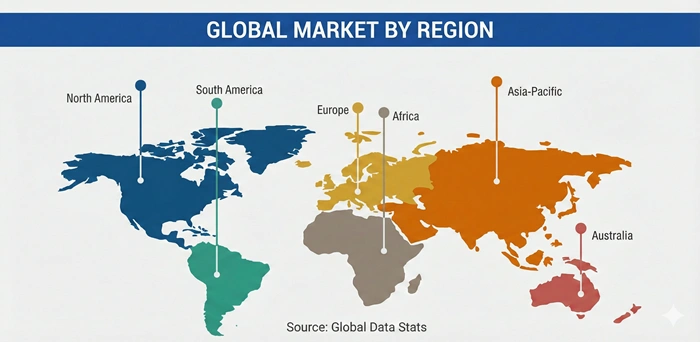
Regional Insights
North America
North America Leads the Global Dental Prosthetics Market, Supported by High Dental Expenditure, Advanced Clinical Infrastructure, and Widespread CAD/CAM Technology Adoption*
North America holds the dominant position in the dental prosthetics market, capturing approximately 38–40% of global revenues in 2026 and growing at a CAGR of approximately 5.5% through 2033. The United States is the largest single country market, characterized by high per-capita dental spending, mature dental insurance infrastructure, and one of the world's highest per-capita rates of elective dental procedures. Major companies including Dentsply Sirona, Zimmer Biomet, Envista Holdings (Nobel Biocare, Kerr Dental), and 3M Oral Care maintain extensive commercial operations in North America, serving both dental clinics and digital dental laboratories with a broad range of prosthetic products, materials, and digital workflow solutions. The widespread adoption of intraoral scanning, same-day crown milling, and digital implant planning platforms has made North America the most technologically advanced dental prosthetics market globally.
Canada contributes meaningfully to North America's dental prosthetics revenues, with a well-insured dental patient population — further expanded by Canada's recently introduced national dental insurance program — that is expected to drive incremental prosthetic procedure volumes through the forecast period. The region benefits from a dense network of qualified dental specialists, strong continuing education culture, and a robust dental laboratory ecosystem that supports high-quality prosthetic fabrication. North America's leadership in the dental prosthetics sector is expected to be sustained through 2033, driven by consistent demographic demand, technological leadership, and growing insurance coverage expansion.
Asia Pacific
Asia Pacific Is the Fastest-Growing Region in the Dental Prosthetics Market, Driven by Expanding Dental Infrastructure, Rising Middle-Class Awareness, and Government Oral Health Initiatives*
Asia Pacific is the fastest-growing regional market for dental prosthetics, projected to expand at a CAGR of approximately 8.3% through 2033, with a current market share of approximately 23–25% in 2026. China is the largest and highest-growth country market in the region, with a massive and underserved prosthetic dental treatment need, rapidly expanding network of dental clinics and hospital dental departments, and growing domestic dental implant and prosthetic material manufacturing sector. Government oral health programs in China are raising awareness of dental care among rural and semi-urban populations, while strong private sector investment in premium dental clinic chains — including Arrail Dental and Stomatology Group — is expanding access to high-quality prosthetic services in major urban centers. Leading global companies including Straumann, Osstem Implant, and Dentsply Sirona are investing heavily in China through distribution partnerships, localized product strategies, and dental professional training programs.
South Korea, Japan, and India are also important contributors to Asia Pacific's prosthetics market growth. South Korea has one of the world's most developed dental implant industries — with domestic manufacturers such as Osstem Implant and Dentium Inc. competing globally — and is a significant dental tourism destination for patients from neighboring countries. India's dental prosthetics market is growing rapidly as urban dental clinic chains expand, awareness of implant options grows among the middle class, and domestic manufacturing of prosthetic components develops. The dental prosthetics market across Asia Pacific is expected to see accelerating growth as digital dentistry tools become more affordable and widely adopted at both private practice and dental lab levels.
Top Key Players
-
Dentsply Sirona Inc. (United States)
-
Straumann Group AG (Switzerland)
-
Envista Holdings Corporation (Nobel Biocare, Kerr) (United States)
-
Zimmer Biomet Holdings Inc. (United States)
-
Ivoclar Vivadent AG (Liechtenstein)
-
Osstem Implant Co. Ltd. (South Korea)
-
GC Corporation (Japan)
-
3M Company (Oral Care Solutions) (United States)
-
BioHorizons Implant Systems Inc. (United States)
-
Kuraray Noritake Dental Inc. (Japan)
-
Dentium Co. Ltd. (South Korea)
-
Henry Schein Inc. (United States)
-
SHOFU Dental GmbH (Germany)
-
Coltene Holding AG (Switzerland)
-
Bicon LLC (United States)
Recent Developments
-
2024 – Straumann Group completed the acquisition of a controlling stake in DT Smile, a leading Brazilian digital dentistry company, expanding its digital prosthetics workflow capabilities and strengthening its commercial presence in the fast-growing Latin American dental market.
-
2024 – Dentsply Sirona launched an upgraded version of its CEREC Primemill CAD/CAM milling unit featuring enhanced multi-material capability, enabling same-day fabrication of zirconia, lithium disilicate, and composite resin prosthetic restorations with improved speed and precision for single-unit and multi-unit prosthetics.
-
2024 – Envista Holdings announced a portfolio optimization strategy under which it is focusing investments on its Nobel Biocare implant platform and Kerr dental materials business, consolidating its dental prosthetics product lineup to improve competitive positioning and profitability across its core product categories.
-
2025 – Osstem Implant expanded its manufacturing and distribution capabilities in Southeast Asia by establishing a new regional headquarters and training center in Vietnam, targeting the rapidly growing dental prosthetics markets in Vietnam, Thailand, and Indonesia as part of its broader Asia Pacific growth strategy.
-
2025 – Ivoclar Vivadent launched IPS e.max CAD Multi-Color, a new generation of multi-shaded lithium disilicate milling blocks for CAD/CAM prosthetic fabrication that enables gradient shade transitions in a single block, allowing dental labs to produce more aesthetic and lifelike crowns and veneers with significantly reduced finishing time.
Market Trends
Digital Dentistry Integration, 3D-Printed Prosthetics, and the Rise of Full-Arch Implant Solutions Are Defining the Future of the Dental Prosthetics Market*
One of the most powerful and far-reaching trends in the dental prosthetics market is the accelerating integration of fully digital clinical and laboratory workflows. The adoption of intraoral scanners, digital treatment planning software, cloud-based case sharing platforms, and automated milling and printing systems is progressively eliminating analog steps from the prosthetic workflow — from impression to delivery. This digital transformation is improving prosthetic accuracy, reducing turnaround times, and enabling more predictable clinical outcomes. Same-day dentistry, driven by chairside CAD/CAM systems, is becoming mainstream across developed markets and is beginning to gain traction in mid-tier markets as system costs decline and dental professional training improves.
The rise of full-arch prosthetic rehabilitation — particularly the All-on-4 and All-on-6 implant-supported protocols — is another trend that is reshaping the dental prosthetics market. These protocols allow fully edentulous or severely compromised dentition patients to receive a full-arch fixed prosthetic restoration supported by as few as four implants in a single surgical session, dramatically reducing treatment complexity, cost, and patient rehabilitation time compared to conventional full-arch implant approaches. As awareness of full-arch implant solutions grows among both patients and referring dentists, and as clinical training and digital workflow tools make these procedures more widely accessible, the full-arch prosthetics segment is expected to become an increasingly important revenue contributor within the broader market through 2033.
Segments Covered in the Report
By Product Type:
-
Dental Implants
-
Crowns
-
Bridges
-
Dentures (Complete and Partial)
-
Veneers
-
Inlays and Onlays
-
Other Product Types
By Material Type:
-
Ceramics and Zirconia
-
Composite Resin
-
Metal and Metal Alloys
-
Acrylic Resin
-
Porcelain-Fused-to-Metal (PFM)
-
Other Materials
By End User:
-
Dental Clinics and Private Practices
-
Hospitals and Dental Departments
-
Dental Laboratories
-
Dental Academic and Research Institutes
-
Other End Users
By Region:
-
North America
-
United States
-
Canada
-
-
Europe
-
Germany
-
United Kingdom
-
France
-
Italy
-
Spain
-
Rest of Europe
-
-
Asia Pacific
-
China
-
India
-
Japan
-
South Korea
-
Australia
-
Rest of Asia Pacific
-
-
Latin America
-
Brazil
-
Mexico
-
Rest of Latin America
-
-
Middle East & Africa
-
GCC Countries
-
South Africa
-
Rest of Middle East & Africa
-
"Built for Every Level — From Startups to Industry Giants"
Here Is Exactly How This Report Works for You
-
For large dental corporations, Tier 1 manufacturers, and institutional investors, this report delivers in-depth competitor revenue analysis, revenue source mapping, and market share benchmarking across all major dental prosthetics product categories and geographies — giving decision-makers the data-driven intelligence needed to identify acquisition targets, allocate capital effectively, and stay ahead of competitive positioning shifts in a rapidly evolving market.
-
For Tier 2 and Tier 3 companies, mid-level dental material suppliers, and emerging market entrants, this report provides a granular view of supply-demand dynamics, raw material pricing trends, distribution channel shifts, and white-space segment opportunities — equipping growing businesses with the competitive intelligence needed to optimize market entry strategies, strengthen product portfolios, and scale efficiently.
-
For all decision-makers navigating today's complex geopolitical and regulatory environment, this report provides clear analysis of how trade policy changes, raw material supply chain disruptions, regional regulatory differences, and macroeconomic pressures are directly impacting dental prosthetics manufacturing costs, product pricing, and cross-border market access — enabling businesses to make confident, informed strategic decisions even in uncertain and rapidly changing conditions.
Frequently Asked Questions
Question 1: What is the current size of the dental prosthetics market and what is the expected growth through 2033?
Answer: The dental prosthetics market is valued at USD 8.45 billion in 2025 and is projected to reach USD 13.19 billion by 2033. It is expected to grow at a CAGR of 5.70% from 2026 to 2033.
Question 2: What are the key drivers of growth in the dental prosthetics market?
Answer: The dental prosthetics market is primarily driven by the rising global prevalence of tooth loss and edentulism, a rapidly growing aging population, and increasing consumer demand for cosmetic and restorative dental procedures. The adoption of digital dentistry technologies including CAD/CAM systems and intraoral scanners is further accelerating market growth by improving clinical efficiency and patient outcomes.
Question 3: Which product segment holds the largest share in the dental prosthetics market?
Answer: The fixed dental prosthetics segment — particularly crowns and dental implants — holds the largest share in the dental prosthetics market, accounting for approximately 48–50% of total revenues in 2025. Dental implants are the fastest-growing individual product type, expanding at approximately 7.8% CAGR through 2033.
Question 4: Which region leads the dental prosthetics market and which region is growing the fastest?
Answer: North America leads the dental prosthetics market with approximately 38–40% of global revenues in 2026, supported by high dental expenditure, strong insurance coverage, and advanced digital dentistry adoption. Asia Pacific is the fastest-growing region, expanding at approximately 8.3% CAGR through 2033.
Question 5: Who are the leading companies in the dental prosthetics market?
Answer: Key companies in the dental prosthetics market include Dentsply Sirona, Straumann Group, Envista Holdings (Nobel Biocare), Zimmer Biomet, Ivoclar Vivadent, Osstem Implant, GC Corporation, 3M Oral Care, and BioHorizons, among others. These companies compete through product innovation, digital workflow integration, clinical research investment, and global distribution network development.