
Data Science Platform Market Overview
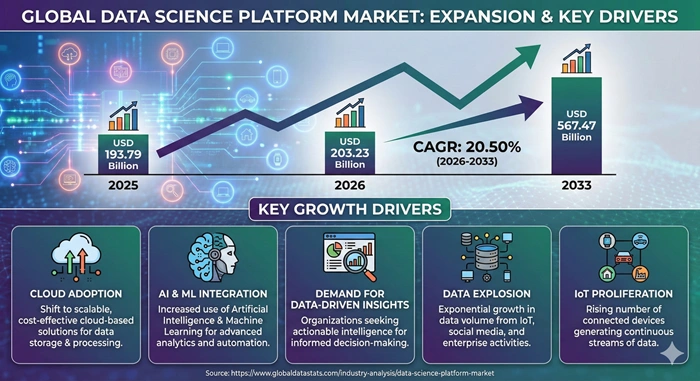
The global data science platform market size is valued at USD 193.79 billion in 2025 and is predicted to increase from USD 203.23 billion in 2026 to approximately USD 567.47 billion by 2033, growing at a CAGR of 20.50% from 2026 to 2033. Data science platforms represent integrated software environments providing comprehensive tools and services supporting every stage of data science projects, from data exploration and preparation through model creation, testing, deployment, and monitoring. These platforms enable organizations to manage, retrieve, and examine vast data volumes while leveraging artificial intelligence, machine learning, and advanced analytics to generate valuable insights driving strategic decision-making, operational optimization, and competitive advantage across industries.
The data science platform market continues transforming how enterprises approach data-driven decision-making through democratization of analytics capabilities, allowing non-technical users to create predictive models, while providing data scientists with sophisticated environments accelerating development cycles. Organizations increasingly adopt data science platforms to extract meaningful patterns from exponentially growing data volumes generated through digital transformation initiatives, IoT device proliferation, social media interactions, and transactional systems. The convergence of big data technologies, cloud computing infrastructure, automated machine learning capabilities, and collaborative workspaces enables businesses across sectors to operationalize data science at scale, moving beyond experimental projects toward enterprise-wide deployment of AI-powered insights.
AI Impact on the Data Science Platform Industry
Accelerating Model Development and Enabling Automated Intelligence Across Workflows
Artificial intelligence fundamentally transforms the data science platform market by introducing automated machine learning capabilities that dramatically reduce time and expertise required to develop accurate predictive models from complex datasets. Traditional data science workflows demanded extensive manual effort selecting appropriate algorithms, engineering features, tuning hyperparameters, and validating model performance, requiring specialized expertise limiting data science to small teams of highly trained practitioners. AI-powered platforms automate these processes through intelligent algorithms that automatically test multiple modeling approaches, optimize configurations, and recommend best-performing solutions, enabling business analysts and domain experts to create sophisticated models without deep statistical knowledge or programming skills.
Furthermore, AI integration enables data science platforms to perform intelligent data preparation, automatically detecting data quality issues, suggesting appropriate transformations, and engineering features that improve model accuracy. Natural language processing capabilities allow users to query data conversationally, generate automated insights from analytical results, and create narrative explanations making complex findings accessible to non-technical stakeholders. Generative AI assists data scientists by suggesting code completions, debugging errors, creating documentation, and even generating entire analytical workflows from high-level descriptions, dramatically accelerating development cycles. The embedding of AI throughout data science platforms creates virtuous cycles where systems continuously learn from user interactions, improving recommendations, automating repetitive tasks, and enabling organizations to scale data science capabilities across enterprises rather than concentrating expertise within isolated teams.
Growth Factors
Explosive Data Growth and Cloud Computing Adoption Fuel Market Expansion
The data science platform market experiences robust growth driven by explosive data generation across enterprises, with organizations worldwide creating 2.5 quintillion bytes of data daily through digital operations, customer interactions, IoT sensors, and social media engagement. This unprecedented data volume creates competitive imperatives for businesses to extract meaningful insights guiding strategic decisions, identifying emerging trends, understanding customer preferences, and optimizing operational efficiency. Companies recognizing data as strategic assets invest heavily in platforms enabling systematic analysis, with research showing data-driven organizations achieve significantly higher productivity and profitability compared to competitors relying on intuition-based decision-making. The proliferation of data sources including structured databases, unstructured text, images, videos, and streaming information demands sophisticated platforms integrating diverse analytical techniques within unified environments.
Cloud computing adoption accelerates data science platform market growth by providing scalable infrastructure supporting massive computational requirements for training complex machine learning models without enormous upfront capital investments in hardware. Cloud-based platforms offer advantages including reduced costs through pay-as-you-go pricing eliminating overprovisioned on-premises infrastructure, enhanced scalability accommodating fluctuating workloads and growing data volumes, improved accessibility enabling distributed teams to collaborate regardless of location, and automatic software updates ensuring organizations always access latest capabilities without lengthy upgrade cycles. Major cloud providers including Microsoft Azure, Amazon Web Services, and Google Cloud Platform invest billions developing sophisticated data science services integrated with broader cloud ecosystems, while specialized vendors offer platform-as-a-service solutions combining best-of-breed tools through cloud delivery models. The shift toward cloud deployment particularly benefits small and medium enterprises previously unable to afford expensive on-premises data science infrastructure, democratizing access to advanced analytics capabilities.
Market Outlook
Strong Growth Trajectory Supported by Digital Transformation and Regulatory Compliance
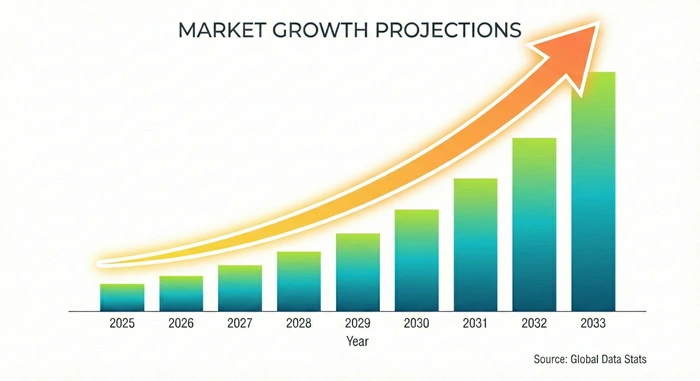
The data science platform market demonstrates exceptional growth prospects through the forecast period, supported by global digital transformation initiatives driving organizations across industries to modernize operations, enhance customer experiences, and create data-driven business models. Enterprises increasingly recognize that competitive differentiation requires leveraging data effectively, with executives understanding that organizations failing to build analytical capabilities risk disruption from more agile competitors utilizing insights to identify opportunities, personalize offerings, and optimize operations. The COVID-19 pandemic accelerated digital adoption timelines, forcing rapid implementation of remote work infrastructure, e-commerce platforms, and digital customer engagement channels generating unprecedented data volumes requiring sophisticated analytical platforms extracting actionable intelligence.
Investment in the data science platform market spans venture capital funding for innovative startups developing specialized capabilities, strategic acquisitions by established software vendors expanding portfolios, and massive corporate spending on platform licenses, implementation services, and talent development. The market benefits from evolving regulatory landscapes around data privacy, algorithmic fairness, and model explainability creating demand for platforms providing governance capabilities, audit trails, and transparency features ensuring compliance with regulations including GDPR, CCPA, and industry-specific frameworks. Low-code and no-code platform capabilities expand addressable markets by enabling citizen data scientists to create models without programming expertise, while advanced features satisfy requirements of expert practitioners developing cutting-edge applications. The convergence of data science with business intelligence, data management, and MLOps creates comprehensive analytical ecosystems where platforms serve as enterprise intelligence hubs rather than standalone tools used by isolated teams.
Expert Speaks
-
Ali Ghodsi, Co-founder and CEO of Databricks Inc., stated during the Data+AI Summit that "I like big competitors because it validates the space. If we've learned anything, it's how big this market is. All of this is based on data and moving your legacy data and getting it ready for AI. I think there's a massive opportunity here".
-
Craig Mundie, Senior Advisor to the CEO at Microsoft, emphasized that "data are becoming the new raw material of business," highlighting the fundamental shift in how organizations view information assets and the critical importance of platforms enabling effective data utilization across enterprises.
-
Eric McGee, VP Data and Analytics, predicted that "in the next two to three years, consumer data will be the most important differentiator. Whoever is able to unlock the reams of data and strategically use it will win," underscoring the competitive advantages delivered by sophisticated data science capabilities.
Key Report Takeaways
-
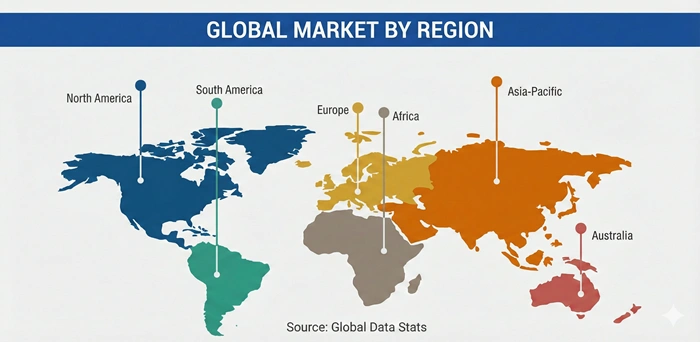
North America leads the data science platform market with the largest regional share of 36% in 2025, driven by strong presence of technology giants, substantial investments in AI and analytics, early adoption across industries, and robust ecosystem of data science talent and service providers
-
Asia Pacific emerges as the fastest-growing region during the forecast period, fueled by rapid digital transformation across China, India, and Southeast Asia, massive data generation from expanding internet populations, government initiatives supporting AI development, and growing investments in cloud infrastructure
-
Platform segment dominates the component category with 83% market share in 2024, as organizations increasingly adopt integrated environments providing end-to-end data science capabilities including data preparation, model development, deployment, and monitoring within unified interfaces
-
Services segment demonstrates highest growth rate during the forecast period, driven by increasing demand for consulting, integration, training, and managed services helping organizations successfully implement platforms, develop use cases, and build internal capabilities
-
Marketing and sales holds the largest application segment share exceeding 35% in 2024, leveraging data science for customer segmentation, personalized recommendations, campaign optimization, churn prediction, and sales forecasting applications
-
BFSI vertical commands the largest industry share at nearly 20% in 2025, utilizing data science platforms for fraud detection, risk assessment, credit scoring, regulatory compliance, customer analytics, and algorithmic trading applications
Market Scope
| Report Coverage | Details |
|---|---|
| Market Size by 2033 | USD 567.47 Billion |
| Market Size by 2025 | USD 193.79 Billion |
| Market Size by 2026 | USD 203.23 Billion |
| Market Growth Rate from 2026 to 2033 | CAGR of 20.50% |
| Dominating Region | North America |
| Fastest Growing Region | Asia Pacific |
| Base Year | 2025 |
| Forecast Period | 2026 to 2033 |
| Segments Covered | Component, Application, Deployment Mode, Organization Size, Industry Vertical, Region |
| Regions Covered | North America, Europe, Asia Pacific, Latin America, Middle East & Africa |
Market Dynamics
Drivers Impact Analysis
Machine Learning Proliferation and Real-Time Analytics Demand Accelerate Adoption
The proliferation of machine learning across business applications drives data science platform market expansion as organizations implement AI-powered solutions for customer service chatbots, recommendation engines, fraud detection, predictive maintenance, and autonomous decision-making. Machine learning models require sophisticated development environments supporting iterative experimentation, version control, reproducibility, and scalability that data science platforms provide. The shift from experimental AI projects toward production deployment of hundreds of models across enterprises creates demand for platforms managing entire machine learning lifecycles, from initial data exploration through continuous model monitoring and retraining. Organizations increasingly recognize that competitive advantage derives from operationalizing AI at scale rather than isolated proof-of-concept demonstrations, driving investments in platforms enabling systematic, repeatable, and governed model development.
The demand for real-time analytics capabilities propels data science platform adoption as businesses require instant insights from streaming data sources including IoT sensors, social media feeds, transaction logs, and customer interactions. Traditional batch processing approaches analyzing historical data prove insufficient for applications demanding immediate responses like fraud detection identifying suspicious transactions milliseconds after occurrence, recommendation engines suggesting products during active browsing sessions, and supply chain optimization adjusting to real-time demand fluctuations. Data science platforms integrate stream processing capabilities, edge analytics enabling processing near data sources, and automated decision systems executing model predictions without human intervention. The convergence of IoT generating billions of connected devices, 5G networks providing high-bandwidth low-latency connectivity, and edge computing infrastructure enables real-time analytical applications previously impractical, creating sustained demand for platforms supporting these sophisticated use cases.
| Driver | ≈ Impact on CAGR Forecast | Geographic Relevance | Impact Timeline |
|---|---|---|---|
| Machine Learning Proliferation and AI Operationalization | High (+4-5%) | Global, particularly North America and Asia Pacific | Immediate to Long-term (2026-2033) |
| Real-Time Analytics and IoT Integration Demand | High (+3-4%) | Global, particularly developed markets | Immediate to Long-term (2026-2033) |
Restraints Impact Analysis
Data Privacy Concerns and Skills Shortage Challenges Limit Growth
Data privacy and security concerns represent significant restraints affecting data science platform market growth as organizations handling sensitive customer information, personal health records, financial data, and proprietary business intelligence face substantial risks from data breaches, unauthorized access, and regulatory non-compliance. Data science workflows require moving data between systems, creating copies for analysis, and potentially exposing information to broader audiences, each creating vulnerability points. High-profile breaches affecting major organizations demonstrate real consequences including financial penalties, reputation damage, customer trust erosion, and legal liability. Regulatory frameworks including GDPR, CCPA, HIPAA, and industry-specific standards impose strict requirements around data collection, storage, processing, and deletion that platforms must support while maintaining analytical utility. Organizations particularly in healthcare, finance, and government sectors exhibit caution implementing data science platforms without robust security features, governance controls, and compliance capabilities.
The shortage of qualified data science talent creates barriers to data science platform adoption as organizations struggle hiring professionals possessing required combinations of statistical knowledge, programming skills, domain expertise, and business acumen. Universities produce insufficient graduates with specialized data science training meeting industry demand, while competition for available talent drives compensation levels beyond budgets of many organizations, particularly small and medium enterprises. Even organizations successfully hiring data scientists face challenges retaining talent as professionals receive continuous recruitment approaches offering higher compensation and more interesting projects. The skills gap extends beyond technical capabilities to include communication abilities translating complex analytical findings into actionable business recommendations, understanding of ethical considerations around algorithmic bias and fairness, and familiarity with regulatory compliance requirements. While low-code platforms attempt addressing skills shortages by democratizing model development, many sophisticated applications still require expert practitioners, limiting adoption rates particularly for advanced use cases.
| Restraint | ≈ Impact on CAGR Forecast | Geographic Relevance | Impact Timeline |
|---|---|---|---|
| Data Privacy Concerns and Regulatory Compliance Complexity | Medium (-2-3%) | Global, particularly Europe and North America | Immediate to Long-term (2026-2033) |
| Data Science Talent Shortage and Skills Gap | Medium (-2-3%) | Global, particularly emerging markets | Immediate to Medium-term (2026-2030) |
Opportunities Impact Analysis
Industry-Specific Solutions and Federated Learning Adoption Create Growth Avenues
The development of industry-specific data science platforms creates substantial opportunities for the data science platform market by addressing unique requirements, regulatory constraints, and domain-specific analytical techniques characterizing different sectors. Healthcare platforms integrate specialized capabilities for medical imaging analysis, genomic sequencing, clinical trial optimization, and electronic health record processing while ensuring HIPAA compliance and medical device certification. Financial services platforms provide pre-built models for credit scoring, fraud detection, regulatory reporting, and algorithmic trading incorporating industry-specific risk management and compliance frameworks. Manufacturing platforms offer predictive maintenance models, quality control analytics, supply chain optimization, and process mining capabilities tailored to industrial environments. Vertical-focused solutions command premium pricing by delivering immediate value through pre-configured workflows, industry-standard metrics, and specialized algorithms reducing time-to-value compared to generic platforms requiring extensive customization.
Federated learning and privacy-preserving analytics create transformative opportunities for data science platforms by enabling collaborative model development across organizational boundaries without sharing sensitive underlying data. Traditional machine learning requires centralizing data from multiple sources into unified datasets, creating privacy risks, regulatory challenges, and practical obstacles when dealing with proprietary or sensitive information. Federated approaches train models on decentralized data, sharing only model updates rather than raw information, enabling applications like healthcare consortiums developing diagnostic algorithms from patient records across multiple hospitals without violating privacy regulations, financial institutions collaborating on fraud detection without exposing transaction details, and retailers improving demand forecasting through industry-wide insights without revealing competitive information. The technology addresses growing data sovereignty concerns as governments impose restrictions on cross-border data transfers, while enabling smaller organizations to benefit from collective intelligence without requiring individual access to massive datasets. As privacy regulations tighten and collaborative opportunities expand, federated learning capabilities become competitive differentiators for platform vendors.
| Opportunity | ≈ Impact on CAGR Forecast | Geographic Relevance | Impact Timeline |
|---|---|---|---|
| Industry-Specific Platform Development and Vertical Solutions | High (+4-5%) | Global, particularly regulated industries | Medium to Long-term (2027-2033) |
| Federated Learning and Privacy-Preserving Analytics Adoption | High (+3-4%) | Global, particularly Europe and Asia Pacific | Medium to Long-term (2027-2033) |
Segment Analysis
Component Analysis
Platform Segment Dominates While Services Demonstrate Rapid Growth
The platform segment accounts for 83% of the data science platform market share in 2024, driven by organizations adopting integrated software environments providing comprehensive capabilities for data ingestion, preparation, exploration, visualization, modeling, testing, deployment, and monitoring. Modern platforms offer unified interfaces where data scientists access diverse tools including programming notebooks supporting Python and R languages, visual workflow designers enabling drag-and-drop model creation, automated machine learning engines generating models without manual coding, and collaboration features allowing team members to share insights, review code, and maintain version control. The segment benefits from shift toward cloud-based platforms providing scalability, accessibility, and cost-effectiveness compared to traditional on-premises installations requiring substantial hardware investments and IT maintenance overhead. Leading vendors including Microsoft, IBM, Google, SAS, and specialized providers like Databricks and DataRobot compete intensely, driving continuous innovation in capabilities, user experience, and pricing models.
The services segment demonstrates the fastest projected growth rate during the forecast period as organizations require expert assistance implementing platforms, developing use cases, building analytical capabilities, and deriving maximum value from technology investments. Data science platform services encompass consulting engagements helping enterprises identify high-priority business problems suitable for analytics, assess data readiness and quality, and develop implementation roadmaps balancing quick wins with long-term strategic objectives. Integration specialists connect platforms with existing data warehouses, business intelligence tools, operational applications, and cloud infrastructure ensuring seamless information flow across technology ecosystems. Training services prove critical as successful deployment requires upskilling existing staff on platform capabilities, data science methodologies, and best practices, while managed services allow organizations to outsource platform administration, model monitoring, and technical support to specialized providers. North America leads services adoption driven by mature consulting markets and substantial enterprise budgets, while Asia Pacific exhibits rapid growth as organizations across emerging economies require external expertise navigating complex implementations and capability development.
Deployment Mode Analysis
On-Premises Leads Market Share While Cloud Exhibits Fastest Growth
The on-premises deployment segment holds larger market share during the current period, driven by large enterprises in highly regulated sectors including banking, healthcare, government, and manufacturing preferring to maintain direct control over sensitive data and analytical infrastructure. On-premises installations provide maximum security and compliance assurance as data never leaves organizational boundaries, addressing concerns around third-party access, cross-border transfers, and regulatory requirements mandating domestic data residency. Organizations with substantial existing IT infrastructure and resources opt for on-premises deployment leveraging sunk costs in data centers, network equipment, and technical personnel. The segment benefits from concerns around cloud vendor lock-in, where organizations fear dependence on specific cloud providers limiting future flexibility, and preferences for customization capabilities exceeding constraints of standardized cloud services. Financial institutions, defense contractors, and healthcare providers handling extremely sensitive information frequently mandate on-premises deployment for critical data science platform workloads regardless of higher total cost of ownership.
The cloud deployment segment exhibits the fastest projected CAGR as organizations increasingly recognize advantages of cloud-based data science platforms including dramatically reduced upfront capital requirements eliminating expensive hardware purchases, elastic scalability automatically expanding compute resources during intensive model training then contracting during idle periods optimizing costs, geographic distribution enabling global teams to collaborate without complex VPN configurations, and automatic software updates ensuring continuous access to latest platform capabilities and security patches. Cloud platforms integrate seamlessly with broader cloud ecosystems accessing massive data lakes, leveraging specialized AI accelerators like GPUs and TPUs for complex computations, and connecting with cloud-native data services. The shift toward cloud proves particularly pronounced among small and medium enterprises previously unable to afford on-premises data science infrastructure, while large enterprises increasingly adopt hybrid approaches maintaining sensitive data on-premises while leveraging cloud scalability for less critical workloads. Asia Pacific leads cloud growth as organizations building modern analytics capabilities from scratch bypass legacy on-premises infrastructure entirely, adopting cloud-first strategies aligned with overall digital transformation initiatives.
Regional Insights
North America
Technology Leadership and Enterprise Adoption Drive Regional Dominance
North America dominates the global data science platform market with 36% market share in 2025, supported by presence of leading platform vendors including Microsoft, IBM, Oracle, SAS, and innovative startups like Databricks and DataRobot headquartered in the region, substantial corporate investments in analytics and AI capabilities, and mature ecosystem of data science talent, consulting services, and implementation partners. The United States leads North American activity with market reaching USD 82.86 billion in 2025, driven by early enterprise adoption across financial services, healthcare, retail, technology, and manufacturing sectors recognizing data as strategic competitive assets. The region benefits from sophisticated technology infrastructure including extensive cloud data center networks, high-speed internet connectivity, and advanced computing resources supporting demanding analytical workloads, while regulatory frameworks balancing innovation encouragement with consumer protection create predictable environments for technology investments.
The North American data science platform market thrives due to strong culture of data-driven decision-making with executives increasingly demanding analytical justification for strategic choices, investors scrutinizing companies' data capabilities when evaluating valuations, and competitive pressures requiring continuous innovation impossible without deep customer insights. Major corporations including Amazon, Netflix, Google, and Walmart demonstrate data science leadership through recommendation engines, personalization systems, supply chain optimization, and automated decision-making creating benchmarks inspiring broader industry adoption. Universities including MIT, Stanford, Carnegie Mellon, and UC Berkeley produce steady streams of data science talent while conducting cutting-edge research advancing platform capabilities, fostering collaboration between academia and industry. Canada contributes to regional growth through advanced analytics adoption in financial services, telecommunications, natural resources, and public sector, while government initiatives support AI research and responsible innovation. The region faces emerging challenges around algorithmic bias, explainability requirements, and ethical AI frameworks increasingly influencing platform development and deployment strategies.
Asia Pacific
Rapid Digital Transformation and Government Initiatives Fuel Regional Growth
Asia Pacific emerges as the fastest-growing region for the data science platform market during the forecast period, driven by rapid digital transformation across China, India, Japan, South Korea, and Southeast Asian nations, explosive data generation from massive internet and mobile user populations exceeding two billion people, and aggressive government initiatives including China's New Generation AI Development Plan and India's National Strategy for Artificial Intelligence supporting analytics adoption. China leads regional market activity through combination of domestic technology giants including Alibaba, Tencent, and Baidu developing sophisticated platforms serving massive user bases, government policies prioritizing AI leadership as national strategic objective, and extensive deployment across manufacturing, e-commerce, fintech, and smart city applications. The region benefits from manufacturing strength creating enormous operational data volumes enabling predictive maintenance, quality optimization, and supply chain analytics, while growing middle classes in emerging economies drive consumer-focused applications including personalized marketing, fraud detection, and customer service automation.
The Asia Pacific data science platform market demonstrates particular strength in mobile-first analytics as smartphone penetration exceeds desktop computing in many markets, creating demand for platforms optimized for mobile data sources and delivery of insights through mobile interfaces. India exhibits explosive growth driven by expanding IT services industry, government Digital India initiative, growing startup ecosystem developing innovative applications, and increasing enterprise recognition that data capabilities determine competitive positioning in global markets. Japan maintains leadership in manufacturing and robotics analytics while pursuing Society 5.0 vision integrating cyber and physical systems, South Korea leverages technology strengths in electronics and telecommunications deploying advanced analytics across industries, while Southeast Asian nations including Singapore, Indonesia, Thailand, and Vietnam demonstrate rapid adoption as digital economies mature. The region faces challenges including varying data privacy regulations across countries, infrastructure gaps in less developed markets, and talent shortages despite large populations, creating opportunities for platforms addressing these constraints through localized capabilities, simplified interfaces, and managed service models.
Top Key Players
-
Microsoft Corporation (United States)
-
IBM Corporation (United States)
-
Google LLC (United States)
-
SAS Institute Inc. (United States)
-
Oracle Corporation (United States)
-
Alteryx Inc. (United States)
-
Databricks Inc. (United States)
-
RapidMiner Inc. (United States)
-
TIBCO Software Inc. (United States)
-
MathWorks Inc. (United States)
-
Dataiku (United States)
-
Domino Data Lab Inc. (United States)
-
DataRobot Inc. (United States)
-
H2O.ai Inc. (United States)
-
Cloudera Inc. (United States)
Recent Developments
-
May 2023: Microsoft introduced Microsoft Fabric under the Power BI platform as comprehensive analytics product consolidating organization's data and analytics onto unified platform, integrating advanced features of Power BI, Azure Synapse, and Azure Data Factory creating unified SaaS solution enabling professionals across data engineering, warehousing, science, and analysis to collaborate effectively
-
October 2023: Dotmatics launched Dotmatics Luma as innovative scientific data platform designed to assist scientists and administrators in life sciences consolidating and analyzing substantial data volumes to enhance decision-making processes, demonstrating specialized platform development for industry-specific applications
-
May 2023: Konovo declared launch of next-generation market insights technology platform funding rapid insights and data collection in healthcare and life science industries, showcasing platform evolution toward domain-specific capabilities addressing unique sector requirements
-
September 2021: MathWorks released version 2021b of MATLAB and Simulink product families including hundreds of new features, enhanced code rewriting and block editing capabilities, and ability to run Python commands and scripts from MATLAB, demonstrating continuous innovation in established platforms
-
May 2021: Google Cloud introduced Vertex AI as new managed machine learning platform intended to simplify model deployment and maintenance for developers, representing major hyperscaler investment in unified AI development environments
Market Trends
Low-Code Democratization and MLOps Integration Transform Platform Capabilities
The data science platform market demonstrates clear trends toward low-code and no-code capabilities democratizing analytics by enabling business users, domain experts, and citizen data scientists to create predictive models without extensive programming knowledge or statistical expertise. Visual workflow designers allow users to drag and drop data preparation steps, feature engineering transformations, algorithm selections, and evaluation metrics, with platforms automatically generating underlying code and managing technical complexity. Automated machine learning engines test hundreds of algorithm and parameter combinations, identifying optimal configurations and presenting results through intuitive dashboards rather than technical output requiring interpretation. These capabilities address talent shortages by expanding the population capable of developing models from small teams of expert data scientists to broader organizations including business analysts, operations managers, and subject matter experts possessing domain knowledge but lacking technical training. The democratization trend extends beyond model development to deployment and monitoring, with platforms providing one-click publishing converting notebook experiments into production APIs and automatic drift detection alerting when model performance degrades.
MLOps integration represents another significant trend as data science platforms incorporate DevOps principles enabling systematic, repeatable, and scalable model lifecycle management from development through production deployment and continuous monitoring. Traditional data science workflows struggled transitioning experimental models into production systems, with separate teams, tools, and processes creating friction, delays, and failures translating research prototypes into reliable business applications. Modern platforms provide integrated capabilities including version control tracking code, data, and model changes enabling reproducibility, automated testing validating model accuracy and fairness before deployment, containerization packaging models with dependencies for consistent execution across environments, continuous integration/continuous deployment pipelines automating promotion from development through staging to production, and monitoring dashboards tracking prediction quality, system performance, and business impact. The convergence of data science development and operations eliminates handoffs between teams, accelerates deployment cycles from months to days, and enables organizations to maintain hundreds of models simultaneously rather than handful of isolated applications, fundamentally changing how enterprises operationalize analytics at scale.
Segments Covered in the Report
By Component
-
Platform (Integrated Development Environments, Automated ML, Model Management, Deployment Tools)
-
Services (Consulting, Integration & Implementation, Training & Support, Managed Services)
By Application
-
Marketing & Sales (Customer Segmentation, Campaign Optimization, Churn Prediction)
-
Logistics (Route Optimization, Demand Forecasting, Inventory Management)
-
Finance & Accounting (Financial Forecasting, Risk Assessment, Fraud Detection)
-
Customer Support (Chatbots, Sentiment Analysis, Ticket Routing)
-
Human Resources (Talent Acquisition, Performance Analytics, Attrition Prediction)
-
Others (Product Development, Quality Management, Competitive Intelligence)
By Deployment Mode
-
Cloud (Public Cloud, Private Cloud, Hybrid Cloud)
-
On-Premises
By Organization Size
-
Small & Medium Enterprises
-
Large Enterprises
By Industry Vertical
-
BFSI (Banking, Financial Services, Insurance)
-
Healthcare & Life Sciences
-
Retail & E-Commerce
-
IT & Telecommunications
-
Manufacturing
-
Energy & Utilities
-
Government & Public Sector
-
Media & Entertainment
-
Transportation & Logistics
-
Others
By Region
-
North America (United States, Canada, Mexico)
-
Europe (United Kingdom, Germany, France, Italy, Spain)
-
Asia Pacific (China, Japan, India, South Korea, Australia, Southeast Asia)
-
Latin America (Brazil, Argentina, Chile)
-
Middle East & Africa (UAE, Saudi Arabia, South Africa)
Frequently Asked Questions
Question 1: What is the data science platform market size and projected growth?
Answer: The global data science platform market is valued at USD 193.79 billion in 2025 and is predicted to reach USD 567.47 billion by 2033, growing at a CAGR of 20.50% from 2026 to 2033. This growth reflects increasing adoption across industries, cloud migration, and proliferation of AI and machine learning applications.
Question 2: Which region dominates the data science platform market currently?
Answer: North America leads the data science platform market with 36% market share in 2025, supported by technology leadership and strong enterprise adoption. Asia Pacific demonstrates the fastest growth rate driven by rapid digital transformation, government AI initiatives, and massive data generation across China, India, and Southeast Asia.
Question 3: What components drive the data science platform market expansion?
Answer: The platform component holds 83% market share in 2024 through integrated development environments, automated ML, and deployment tools, while services segment exhibits fastest growth. Consulting, integration, training, and managed services prove critical helping organizations successfully implement platforms and build internal capabilities.
Question 4: How does the data science platform market benefit from cloud deployment?
Answer: The data science platform market leverages cloud deployment through reduced capital requirements, elastic scalability optimizing costs, and seamless integration with cloud data services. Cloud platforms enable automatic updates, global collaboration, and access to specialized AI accelerators proving particularly valuable for small and medium enterprises.
Question 5: What challenges affect data science platform market adoption?
Answer: The data science platform market faces challenges including data privacy concerns requiring robust security and compliance capabilities, talent shortages limiting implementation expertise, and integration complexity with legacy systems. Regulatory requirements, skills gaps, and change management issues also constrain adoption particularly among organizations lacking data science maturity.