
Dairy Products Market Overview
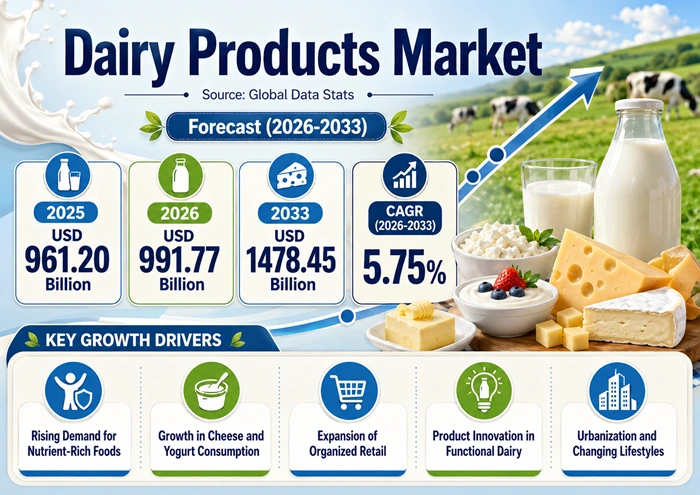
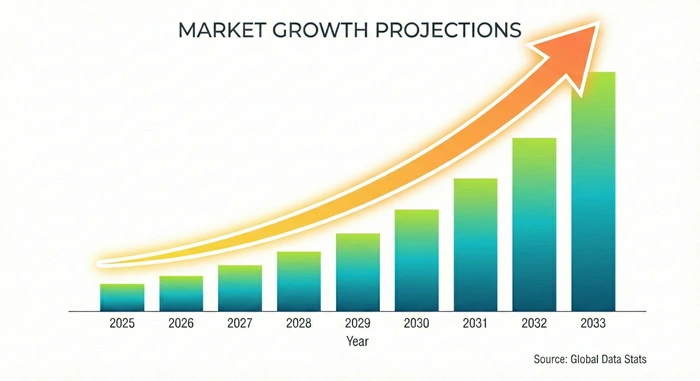
The global dairy products market size is valued at USD 961.20 billion in 2025 and is predicted to increase from USD 991.77 billion in 2026 to approximately USD 1478.45 billion by 2033, growing at a CAGR of 5.75% from 2026 to 2033.
Rising protein consumption and calcium intake awareness drive unprecedented demand for milk-based nutrition delivering essential nutrients, bone health support, and muscle development across all age groups. Dairy products including milk, cheese, yogurt, butter, and ice cream remain dietary staples providing complete protein, calcium, vitamins, and probiotics supporting overall wellness while serving as versatile ingredients in countless recipes and food applications worldwide.
AI Impact on the Dairy Products Industry
Artificial Intelligence Revolutionizing Production Efficiency and Quality Assurance
Artificial intelligence is fundamentally transforming the dairy products market by enabling precision dairy farming, predictive quality control, automated milking systems, supply chain optimization, and personalized nutrition recommendations that enhance production efficiency while ensuring product safety and maximizing nutritional consistency. Machine learning algorithms analyze livestock data including cow health metrics, milk production patterns, feed consumption, activity levels, and environmental conditions predicting optimal milking times, detecting early disease symptoms, identifying underperforming animals, and recommending feed adjustments maximizing milk yield per cow increasing from 22 pounds to 30 pounds daily while reducing resource waste and improving animal welfare. AI-powered robotic milking systems enable automated dairy operations tracking individual cow production, adjusting milking parameters automatically, detecting mastitis infections before visible symptoms, and ensuring gentle humane milking reducing labor costs by 40% while improving milk quality and animal comfort particularly valuable for large-scale operations managing thousands of cows.
Computer vision systems inspect dairy product quality detecting contamination, verifying packaging integrity, identifying product defects, measuring fat content and consistency, and ensuring label accuracy with 99% precision preventing substandard products reaching consumers while reducing costly recalls damaging brand reputation. Natural language processing technologies monitor consumer feedback, social media discussions, nutritionist recommendations, and dietary trend conversations identifying preferences for lactose-free options, probiotic yogurt demand, grass-fed dairy interest, and plant-based alternative competition informing product development and marketing strategies. The dairy products market benefits from AI-driven cold chain monitoring tracking temperature and humidity throughout distribution preventing spoilage, predicting maintenance needs before equipment failures, and optimizing delivery routes reducing transportation costs by 25% ensuring fresh dairy products reach retailers with maximum remaining shelf life. Predictive analytics forecast demand patterns across milk, cheese, and yogurt by analyzing seasonal consumption trends, weather impacts, holiday periods, and regional preferences enabling dairy cooperatives to optimize production planning, minimize waste from perishable products, and ensure adequate supply during peak demand periods.
Growth Factors
Health Consciousness and Protein Demand Drive Market Expansion
The dairy products market is experiencing robust growth driven by escalating health consciousness about nutritional benefits, rising protein intake awareness supporting muscle health, increasing calcium consumption for bone density, expanding middle-class populations affording quality nutrition, and growing demand for functional dairy products enriched with probiotics and vitamins. Health consciousness transformation positions dairy as nutritional powerhouse with consumers increasingly recognizing connections between dairy consumption and diverse health outcomes including bone health with calcium and vitamin D preventing osteoporosis particularly critical for aging populations, muscle development and recovery with complete protein containing all essential amino acids, weight management with dairy protein promoting satiety and supporting lean mass, dental health with calcium and phosphorus strengthening teeth, and blood pressure regulation with potassium and bioactive peptides supporting cardiovascular wellness documented through extensive nutritional research.
Protein awareness reaches mainstream consciousness with fitness enthusiasts, athletes, aging adults, and health-conscious consumers prioritizing adequate protein intake recognizing dairy provides high-quality bioavailable protein with 8 grams per cup of milk, cheese delivering concentrated protein, Greek yogurt offering 15-20 grams per serving, and cottage cheese providing lean protein supporting diverse dietary needs from muscle building to weight loss. The dairy products market benefits from convenience demands with ready-to-drink milk, single-serve yogurt cups, pre-portioned cheese snacks, and on-the-go smoothies providing portable nutrition supporting busy modern lifestyles eliminating meal preparation time while ensuring adequate nutrient intake. Probiotic dairy products including yogurt and kefir gain popularity as consumers understand gut health importance affecting digestion, immunity, mental wellness through gut-brain axis, and overall health with beneficial bacteria strains like Lactobacillus and Bifidobacterium providing measurable health benefits supported by clinical research creating functional food segment commanding premium pricing. Emerging market economic growth particularly across Asia Pacific enables hundreds of millions of middle-class consumers to afford quality dairy products previously inaccessible, urbanization concentrates populations accessing refrigerated distribution, westernization of diets introduces dairy consumption into traditionally non-dairy cultures, and nutrition education promotes dairy as essential component of balanced diets supporting sustained volume expansion.
Market Outlook
Innovation and Plant-Based Competition Define Future Industry Evolution
The dairy products market is positioned for sustained expansion through 2033 as manufacturers invest heavily in lactose-free innovations, develop fortified functional products, expand organic and grass-fed offerings, address plant-based competition through hybrid formulations, and leverage sustainable farming practices responding to environmental concerns. Lactose-free dairy products using lactase enzyme treatment enable lactose-intolerant consumers comprising 65-70% of global adults to enjoy milk, cheese, yogurt, and ice cream without digestive discomfort expanding addressable market dramatically, commanding 10-20% premium pricing, and growing faster than conventional dairy reflecting unmet consumer need for dairy benefits without intolerance symptoms. Fortified dairy products incorporating additional vitamin D for bone health and immunity, omega-3 fatty acids for cardiovascular and brain function, protein enrichment delivering 15-20 grams per serving, calcium fortification exceeding natural levels, and functional ingredients like fiber and probiotics create premium wellness-positioned products targeting health-optimization consumers willing to pay substantial premiums.
Organic and grass-fed dairy production expands responding to clean-label preferences, animal welfare concerns, environmental sustainability priorities, and perceptions of superior nutrition with organic dairy prohibiting synthetic hormones and antibiotics, grass-fed milk offering higher omega-3 and CLA content, and ethical farming practices appealing to conscious consumers commanding 30-50% premium pricing despite higher production costs reflecting consumer values alignment. The dairy products market witnesses plant-based competition intensifying with almond milk, oat milk, soy milk, and dairy alternatives capturing 15% of milk category particularly among younger demographics concerned about sustainability, lactose intolerance, and dietary preferences driving traditional dairy companies to launch hybrid products combining dairy and plant ingredients, invest in plant-based acquisitions, and reformulate products highlighting unique dairy nutritional advantages including complete protein and bioavailable calcium. Sustainability initiatives including methane emission reduction through feed additives and genetic selection, water conservation in processing operations, renewable energy adoption in manufacturing, regenerative agriculture practices improving soil health, and recyclable packaging materials address environmental criticism of dairy industry particularly important to millennial and Gen Z consumers prioritizing climate action creating competitive differentiation supporting premium positioning.
Expert Speaks
-
Dirk Van de Put, Chairman and Chief Executive Officer of Mondelēz International, emphasized that dairy-based snacking including cheese products represents strategic priority with consumer demand for protein-rich convenient snacks driving innovation in portion control formats, flavor varieties, and nutritional enhancements, with Mondelēz investing substantially in dairy snacking portfolio expansion, distribution excellence, and consumer insights supporting category leadership.
-
Ramon Laguarta, Chairman and Chief Executive Officer of PepsiCo, highlighted that dairy products through strategic partnerships and portfolio expansion demonstrate sustained relevance despite plant-based competition with functional dairy beverages, probiotic offerings, and protein-enhanced products addressing evolving wellness priorities, requiring continuous innovation in taste, nutrition, and sustainability supporting long-term category growth.
-
Mark Schneider, Chief Executive Officer of Nestlé S.A., stated that dairy products remain fundamental nutrition pillar with milk, yogurt, cheese, and ice cream serving essential roles across life stages from infant formula to senior nutrition, with successful dairy brands requiring science-based formulations, safety excellence, and taste satisfaction building consumer trust while adapting to lactose-free demands, clean-label preferences, and sustainability expectations.
Key Report Takeaways
-
Asia Pacific leads the dairy products market with approximately 44% market share in 2025, driven by enormous populations exceeding 4.5 billion people, rising middle-class incomes enabling quality dairy purchases, rapid urbanization creating refrigerated distribution access, traditional dairy consumption in India, growing westernization in China, and nutritional awareness about bone health and protein needs.
-
Europe is growing steadily with a projected CAGR of 4.80% from 2026 to 2033, fueled by established dairy culture with cheese and yogurt traditions, premium artisanal product demand, organic dairy expansion, advanced processing technologies, strong cooperative structures, sustainability leadership, and aging populations prioritizing bone health through calcium intake.
-
Milk dominates with approximately 52% market share as fundamental dietary staple consumed directly as beverage, essential ingredient in coffee and cereals, base for processed dairy products like cheese and yogurt, affordable protein and calcium source, and culturally significant across most global cuisines with established consumption habits spanning generations.
-
The supermarkets and hypermarkets distribution channel contributes the most to overall market revenue with approximately 58% share in 2025, reflecting refrigerated section prominence, competitive pricing through volume purchasing, convenient one-stop shopping for groceries, wide product variety enabling comparison, and promotional activities driving trial and basket size increases.
-
Lactose-free dairy segment will grow quickly with an estimated CAGR of 8.40% as intolerance awareness increases, enzyme treatment technologies improve taste matching conventional dairy, premium pricing reflects specialized processing, and previously excluded consumers gain access to dairy nutrition supporting bone health and protein intake without digestive distress symptoms.
-
The online retail segment will expand rapidly with estimated CAGR of 7.20% as e-commerce grocery adoption accelerates, subscription dairy delivery services gain traction, refrigerated logistics infrastructure improves enabling reliable delivery, younger demographics embrace convenient home delivery, and direct-to-consumer dairy brands bypass traditional retail reaching consumers efficiently.
Market Scope
| Report Coverage | Details |
|---|---|
| Market Size by 2033 | USD 1478.45 Billion |
| Market Size by 2025 | USD 961.20 Billion |
| Market Size by 2026 | USD 991.77 Billion |
| Market Growth Rate from 2026 to 2033 | CAGR of 5.75% |
| Dominating Region | Asia Pacific |
| Fastest Growing Region | Middle East and Africa |
| Base Year | 2025 |
| Forecast Period | 2026 to 2033 |
| Segments Covered | Product Type, Distribution Channel, Packaging, Region |
| Regions Covered | North America, Europe, Asia Pacific, Latin America, Middle East and Africa |
Market Dynamics
Driver Impact Analysis
Rising Health Consciousness and Nutritional Awareness Propel Market Growth
The escalating global health consciousness combined with growing nutritional awareness about dairy benefits represents the most powerful driver propelling the dairy products market toward sustained expansion across all geographic regions and demographic segments. Health consciousness transformation positions dairy as essential nutritional foundation with consumers increasingly recognizing connections between dairy consumption and comprehensive wellness outcomes including bone health with calcium and vitamin D intake preventing osteoporosis affecting 200 million people globally particularly postmenopausal women and elderly populations, muscle development and maintenance with complete protein containing all nine essential amino acids supporting fitness goals and combating sarcopenia, dental health with calcium and phosphorus strengthening tooth enamel reducing cavity risks, blood pressure regulation with dairy peptides demonstrating modest cardiovascular benefits, and weight management with dairy protein promoting satiety and supporting lean muscle mass preservation during calorie restriction documented through clinical trials and nutritional research.
Protein awareness reaches unprecedented levels with fitness enthusiasts recognizing dairy provides most bioavailable protein sources scored at 1.0 biological value for whey protein surpassing plant alternatives, athletes consuming chocolate milk as recovery beverage providing ideal carbohydrate-to-protein ratio, aging populations prioritizing adequate protein intake combating muscle loss, and health-conscious consumers seeking convenient protein delivery through yogurt, cheese snacks, and protein-fortified milk varieties creating sustained demand across demographics. The dairy products market benefits from calcium deficiency concerns with osteoporosis affecting 10 million Americans and 44 million at increased risk, dietary guidelines recommending 1000-1300mg daily calcium intake best obtained through dairy providing 300mg per cup of milk, pediatricians emphasizing childhood calcium intake for peak bone mass development, and women's health advocates promoting dairy consumption supporting bone density preservation throughout life stages. Probiotic awareness drives yogurt and fermented dairy consumption with consumers understanding gut microbiome health impacts overall wellness including digestive function, immune system strength with 70% of immune cells residing in gut, mental health through gut-brain axis producing neurotransmitters, and metabolic health affecting weight management creating functional dairy segment growing 12% annually. Government nutrition programs including school milk programs reaching 30 million children daily, WIC programs supporting low-income families with dairy vouchers, and national dietary guidelines recommending 2-3 dairy servings daily create institutional demand supporting sustained market stability and growth.
| Driver | ≈ % Impact on CAGR Forecast | Geographic Relevance | Impact Timeline |
|---|---|---|---|
| Health Consciousness and Nutritional Benefits | +2.00% | Global, strongest in developed markets | 2026-2033 |
| Protein Demand and Fitness Culture | +1.60% | Health-conscious demographics, active populations | 2026-2033 |
| Calcium Deficiency and Bone Health Concerns | +1.40% | Aging populations, women's health focus | 2026-2033 |
| Middle-Class Growth in Emerging Markets | +1.20% | Asia Pacific, Africa, Latin America | 2027-2033 |
Restraints Impact Analysis
Lactose Intolerance and Plant-Based Competition Limit Market Penetration
The dairy products market confronts significant barriers related to widespread lactose intolerance affecting majority of global population, intensifying plant-based alternative competition, environmental sustainability concerns about dairy farming, cholesterol and saturated fat health debates, and animal welfare criticism constraining adoption among growing conscious consumer segments. Lactose intolerance represents fundamental biological limitation with 65-70% of global adults losing lactase enzyme production after weaning making dairy digestion difficult, prevalence particularly high among Asian populations exceeding 90% in some countries, African descent populations experiencing 80% intolerance, and even 30% of Caucasian populations affected creating digestive discomfort including bloating, gas, cramping, and diarrhea deterring dairy consumption despite nutritional benefits.
Plant-based alternative proliferation challenges traditional dairy market share with almond milk, oat milk, soy milk, and dairy-free products capturing 15% of milk category growing 20% annually, younger demographics particularly millennials and Gen Z demonstrating higher plant-based adoption rates concerned about sustainability and health, retail shelf space increasingly allocated to alternatives reducing dairy visibility, and aggressive marketing positioning plant-based as healthier more sustainable choices despite nutritional differences. The dairy products market suffers from environmental criticism with dairy farming contributing methane emissions from cattle digestion accounting for 14.5% of global greenhouse gas emissions from livestock, water consumption concerns with dairy production requiring 1000 liters water per liter of milk, land use debates about pasture and feed crop allocation, and manure management challenges creating negative environmental perceptions particularly among climate-conscious consumers prioritizing sustainability. Health debates persist about saturated fat content with dairy products containing 5-8 grams per cup of whole milk, cholesterol concerns although recent research questions dietary cholesterol impact on blood cholesterol, and confusion about full-fat versus low-fat dairy health implications creating hesitation among health-conscious consumers receiving mixed nutritional guidance. Animal welfare criticism from activist groups highlighting factory farming conditions, dairy cow treatment including continuous pregnancy cycles and calf separation, and ethical concerns about animal exploitation create moral objections particularly among younger generations increasingly adopting vegan lifestyles and questioning animal product consumption ethics.
| Restraint | ≈ % Impact on CAGR Forecast | Geographic Relevance | Impact Timeline |
|---|---|---|---|
| Lactose Intolerance Prevalence | -1.40% | Asia Pacific, African populations, global markets | 2026-2033 |
| Plant-Based Alternative Competition | -1.20% | Developed markets, younger demographics | 2026-2033 |
| Environmental Sustainability Concerns | -1.00% | Climate-conscious consumers, European markets | 2026-2033 |
| Health Debates and Misconceptions | -0.80% | Health-focused consumers, medical communities | 2026-2033 |
Opportunities Impact Analysis
Lactose-Free Innovation and Functional Dairy Create Growth Avenues
The development of lactose-free dairy products combined with functional ingredient fortification presents enormous opportunities for the dairy products market by addressing intolerance barriers, creating premium differentiation, targeting specific health outcomes, and expanding addressable consumer populations previously excluded from dairy category. Lactose-free dairy using lactase enzyme treatment breaking down milk sugar enables 65-70% of lactose-intolerant global adults to consume milk, cheese, yogurt, and ice cream without digestive symptoms, maintains identical taste and nutrition to conventional dairy, commands 10-30% premium pricing reflecting specialized processing, and represents fastest-growing dairy segment expanding market beyond traditional consumers particularly important in Asian markets where intolerance exceeds 90% creating massive untapped opportunity.
Functional dairy fortification incorporating additional vitamin D addressing widespread deficiency affecting 42% of Americans, omega-3 fatty acids supporting cardiovascular and brain health, protein enrichment delivering 15-20 grams per serving appealing to fitness enthusiasts, probiotics providing gut health and immunity benefits with clinically-validated strains, and calcium fortification exceeding natural levels targeting osteoporosis prevention creates premium wellness-positioned products commanding substantial pricing premiums reflecting specialized formulation and targeted health benefits. The dairy products market benefits from A2 milk innovation excluding A1 beta-casein protein believed to cause digestive discomfort in some individuals, enabling previously dairy-avoiding consumers to enjoy milk benefits, growing 20% annually, commanding 50% premium pricing, and representing emerging category with significant expansion potential particularly targeting consumers experiencing mild dairy intolerance symptoms. Emerging market penetration across Africa, Middle East, and Southeast Asia where current per-capita dairy consumption remains fraction of developed markets presents massive untapped populations with improving incomes, expanding cold chain infrastructure enabling dairy distribution, growing nutritional awareness about calcium and protein importance, and cultural dietary shifts incorporating western foods creating favorable long-term growth conditions. Sustainable dairy farming innovations including methane-reducing feed additives cutting emissions by 30%, regenerative agriculture improving soil health, water conservation technologies, renewable energy adoption, and carbon-neutral dairy initiatives address environmental criticism enabling dairy industry to compete effectively against plant-based alternatives on sustainability metrics increasingly important to conscious consumers.
| Opportunity | ≈ % Impact on CAGR Forecast | Geographic Relevance | Impact Timeline |
|---|---|---|---|
| Lactose-Free Product Innovation | +1.80% | Global markets, high intolerance populations | 2026-2033 |
| Functional Fortification and Premium Products | +1.60% | Health-conscious consumers, developed markets | 2026-2033 |
| Emerging Market Expansion | +1.50% | Asia Pacific, Africa, Middle East | 2027-2033 |
| Sustainable Dairy Farming Practices | +1.30% | Climate-conscious demographics, European markets | 2027-2033 |
Segment Analysis
Milk
Dominant Segment Driven by Fundamental Dietary Staple Status and Versatile Usage
The milk segment dominates the dairy products market with approximately 52% share in 2025 and steady CAGR of 5.90% from 2026 to 2033, driven by the segment's fundamental status as dietary staple consumed directly as beverage, essential ingredient in coffee and tea, base for breakfast cereals, cooking ingredient in countless recipes, affordable nutrition source, and culturally significant across most global cuisines with established consumption patterns spanning generations. Milk provides complete nutrition delivering 8 grams protein per cup, 30% daily calcium requirement, vitamin D fortification supporting bone health, B vitamins for energy metabolism, and potassium for blood pressure regulation making it nutritionally-dense affordable option particularly important for children's growth and development. Product variety creates options across whole milk providing full fat content, low-fat and skim milk reducing calorie and saturated fat intake, lactose-free milk enabling intolerant consumers to enjoy dairy benefits, organic milk commanding premium positioning, flavored milk particularly chocolate milk popular among children and athletes, and ultra-filtered milk delivering higher protein content appealing to fitness enthusiasts.
Asia Pacific shows particularly strong milk consumption growth with approximately 48% regional market share and CAGR of 6.80%, driven by enormous populations with India leading global milk production exceeding 200 million metric tons annually, rising middle-class incomes enabling quality dairy purchases, rapid urbanization creating access to refrigerated distribution, nutritional awareness campaigns promoting milk consumption for children's height and development, and westernization of diets incorporating dairy into traditionally non-dairy cultures particularly in China where consumption increased 300% over past two decades. Leading companies serving the dairy products market including Nestlé, Danone, Dairy Farmers of America, Fonterra, Arla Foods, FrieslandCampina, Lactalis, Dean Foods, Saputo, and regional cooperatives compete through quality assurance, pricing strategies, distribution excellence, brand trust built over decades, and product innovation including lactose-free varieties, organic certifications, and protein-enriched formulations. The segment continues evolving through A2 milk excluding potentially problematic protein variants, grass-fed milk offering higher omega-3 content and ethical positioning, ultra-filtered milk providing higher protein and lower sugar, shelf-stable UHT milk enabling distribution in regions lacking refrigeration, and fortified milk varieties targeting specific health outcomes from bone health to immunity support addressing diverse consumer needs expanding category relevance beyond traditional white milk consumption declining among younger demographics.
Yogurt
Fast-Growing Segment Capitalizing on Probiotic Health Benefits and Convenient Formats
The yogurt segment represents one of the fastest-growing categories in the dairy products market with a projected CAGR of 7.50% from 2026 to 2033, driven by probiotic health benefits supporting digestive wellness and immunity, convenient portable packaging enabling on-the-go consumption, versatile flavor options appealing to diverse taste preferences, breakfast meal replacement positioning, and premium Greek yogurt variants delivering higher protein content. Yogurt provides beneficial probiotic bacteria including Lactobacillus and Bifidobacterium strains supporting gut microbiome health affecting digestion, immune function with 70% of immune cells in gut, mental wellness through gut-brain axis, and metabolic health with clinical research demonstrating measurable health benefits creating functional food positioning commanding premium pricing. Product innovation drives category expansion with Greek yogurt offering 15-20 grams protein per serving double conventional yogurt appealing to fitness enthusiasts, Icelandic skyr providing thick creamy texture and high protein, Australian-style yogurt delivering indulgent creaminess, probiotic-enhanced varieties featuring specific clinically-validated strains, and plant-based yogurt alternatives using coconut, almond, and oat bases expanding addressable market.
North America shows explosive yogurt consumption growth particularly Greek yogurt capturing 50% of yogurt market share growing from 1% in 2007 demonstrating remarkable category transformation, driven by protein trend alignment, breakfast occasion expansion, health positioning, convenient single-serve packaging, and extensive flavor variety. Leading companies serving the yogurt segment including Danone (Dannon, Activia, Oikos), Chobani revolutionizing Greek yogurt category, General Mills (Yoplait), Nestlé, Lactalis, Müller, Fage, Stonyfield Organic, and emerging brands compete through probiotic strain differentiation, protein content optimization, flavor innovation, clean-label formulations eliminating artificial ingredients, and strategic retail placement capturing refrigerated section visibility. The segment continues evolving through high-protein varieties delivering 20-25 grams per serving, low-sugar options using stevia or monk fruit natural sweeteners addressing health concerns, dairy-free plant-based yogurts expanding category beyond lactose-intolerant consumers, drinkable yogurt formats providing portable consumption, and functional ingredients including collagen, fiber, and vitamins creating premium wellness-positioned products supporting sustained rapid growth throughout forecast period with favorable health perceptions and convenient consumption occasions.
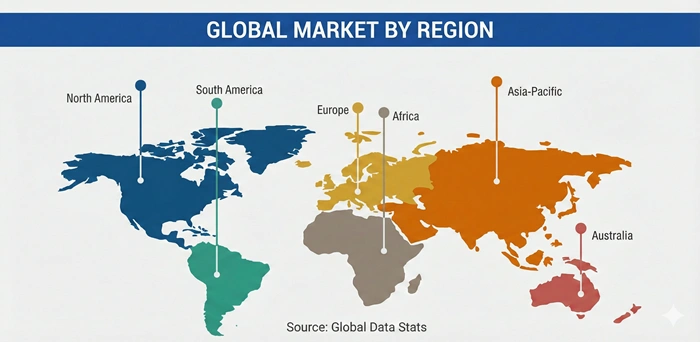
Regional Insights
Asia Pacific
Market Leadership Through Population Scale and Rising Middle-Class Consumption
Asia Pacific maintains its position as the dominant region in the dairy products market, commanding approximately 44% of global market share in 2025 with an estimated value of USD 422.93 billion, projected to reach USD 637.59 billion by 2033 growing at a CAGR of 5.88%. The region's leadership stems from enormous populations exceeding 4.5 billion people with India and China alone representing 2.8 billion consumers, rising middle-class incomes enabling premium dairy purchases previously unaffordable, rapid urbanization concentrating populations in cities accessing modern refrigerated retail, traditional dairy consumption in India producing and consuming over 200 million metric tons milk annually, growing westernization in China introducing dairy into traditionally non-dairy diet, and nutritional awareness campaigns promoting calcium and protein intake for bone health and growth particularly important for children. India dominates regional milk production with water buffalo and dairy cows providing livelihoods for 80 million rural families, religious and cultural significance of dairy products in Hindu traditions, extensive cooperative structure including Amul serving millions of smallholder farmers, and government support through dairy development programs while China demonstrates explosive consumption growth with per-capita dairy intake increasing from 5kg to 35kg annually over two decades driven by urbanization, income growth, and nutrition education.
Leading companies serving the Asia Pacific dairy products market include Amul (India), Nestlé expanding regional presence, Danone leveraging partnerships, Fonterra (New Zealand) exporting to Asian markets, Meiji Holdings (Japan), Inner Mongolia Yili Industrial Group (China), China Mengniu Dairy Company, Morinaga Milk Industry, Yakult Honsha, and regional cooperatives adapting to local preferences. The region benefits from growing organized retail including modern supermarkets and hypermarkets replacing traditional wet markets, expanding e-commerce enabling home delivery particularly important in densely populated cities, government nutrition programs promoting dairy consumption in schools, and increasing health consciousness about bone health and protein needs particularly as middle-class families invest in children's nutrition and development. Japan demonstrates sophisticated premium dairy consumption with high-quality standards, willingness to pay substantial premiums for specialty products, and declining dairy consumption due to aging population and smaller household sizes contrasting with explosive growth across developing Asian markets. The region witnesses lactose-free product proliferation addressing high intolerance prevalence exceeding 90% in some populations, flavored milk varieties appealing to taste preferences, yogurt consumption growth as probiotic awareness increases, and ultra-high temperature (UHT) milk enabling distribution in areas lacking refrigeration infrastructure supporting sustained rapid expansion throughout forecast period with favorable demographics and economic conditions.
Middle East and Africa
Fastest Regional Growth Through Infrastructure Development and Import Dependence
Middle East and Africa represents the fastest-growing region in the dairy products market with a projected CAGR of 6.40% from 2026 to 2033, with market value expected to increase from USD 86.50 billion in 2025 to USD 135.03 billion by 2033, capturing rapidly expanding global revenue share. The region's exceptional growth trajectory stems from hot climate limiting local dairy production requiring imports of milk powder and processed dairy products, rising middle-class populations in Gulf Cooperation Council countries affording premium imported dairy, rapid urbanization concentrating populations accessing modern retail, growing young populations with high birth rates creating pediatric nutrition demand, and government initiatives investing in cold chain infrastructure and local dairy farming development. Gulf countries including Saudi Arabia, UAE, and Qatar depend heavily on imports with limited local production due to extreme heat and water scarcity requiring imported milk powder reconstituted for consumption, preference for long-life UHT milk not requiring refrigeration, and growing demand for premium dairy products including European cheese and yogurt varieties among affluent populations.
Leading companies serving the Middle East and Africa dairy market include Almarai (Saudi Arabia) as largest dairy company in Middle East, Danone expanding African presence, Nestlé with regional manufacturing, Lactalis, Juhayna Food Industries (Egypt), Savola Group, and international exporters from New Zealand, Europe, and Australia supplying powder and finished products. The region witnesses investment in local dairy farming particularly in Saudi Arabia with modern climate-controlled facilities, subsidies supporting domestic production reducing import dependence, and vertical integration from farming through processing and retail. Africa shows enormous untapped potential with extremely low per-capita dairy consumption averaging 30-40kg annually versus global 100kg, rising incomes enabling middle-class expansion across Nigeria, Kenya, Ethiopia, and other populous nations, nutrition awareness about childhood stunting and malnutrition driving dairy program implementations, and traditional fermented dairy products like ayran and laban maintaining cultural significance. The region benefits from powder milk trade enabling long-distance transportation and ambient storage, fortified dairy addressing malnutrition particularly iron and vitamin A deficiencies, affordable sachet packaging making dairy accessible to low-income populations, and mobile payment systems enabling e-commerce penetration supporting sustained rapid growth throughout forecast period despite challenges including heat, infrastructure limitations, and affordability constraints gradually being addressed through development.
Top Key Players
-
Nestlé S.A. (Switzerland)
-
Danone S.A. (France)
-
Dairy Farmers of America (United States)
-
Fonterra Co-operative Group Limited (New Zealand)
-
Arla Foods amba (Denmark)
-
FrieslandCampina (Netherlands)
-
Lactalis Group (France)
-
Saputo Inc. (Canada)
-
Gujarat Cooperative Milk Marketing Federation Ltd. (Amul) (India)
-
The Kraft Heinz Company (United States)
-
Dean Foods Company (United States)
-
Meiji Holdings Co. Ltd. (Japan)
-
Yili Group (China)
-
Mengniu Dairy (China)
-
Schreiber Foods Inc. (United States)
Recent Developments
-
Nestlé (2025): Launched lactose-free dairy product line expansion in March 2025 introducing lactose-free ice cream, cheese, and cream products complementing existing milk and yogurt offerings, utilizing proprietary lactase treatment technology maintaining taste identical to conventional dairy, addressing 65% of global adults experiencing lactose intolerance, and commanding 20% premium pricing supporting margin expansion in high-growth functional dairy segment.
-
Danone (2024): Acquired probiotic yogurt brand in November 2024 for USD 320 million expanding functional dairy portfolio, gaining proprietary probiotic strains with clinical research supporting digestive and immune benefits, accessing direct-to-consumer subscription model, and strengthening position in premium wellness-positioned dairy segment growing 15% annually reflecting consumer health priorities and willingness to pay premiums for functional benefits.
-
Fonterra (2025): Invested USD 150 million in sustainability initiative in June 2025 implementing methane-reducing feed additives across New Zealand dairy farms cutting emissions by 30%, installing renewable energy in processing facilities achieving carbon-neutral operations, and developing regenerative agriculture programs improving soil health addressing environmental criticism of dairy industry and positioning Fonterra as sustainability leader supporting premium positioning in climate-conscious markets.
-
Arla Foods (2024): Expanded organic dairy production capacity in September 2024 partnering with 500 additional organic certified farms across Denmark and Sweden responding to 25% annual organic dairy demand growth, investing in organic processing facilities, and launching premium organic product lines including grass-fed milk, organic yogurt, and artisanal cheeses commanding 40% premium pricing reflecting clean-label preferences and animal welfare priorities.
-
Amul (2025): Launched UHT milk in innovative packaging in January 2025 introducing shelf-stable milk in single-serve Tetra Pak cartons enabling distribution beyond refrigerated infrastructure, targeting rural and semi-urban Indian markets lacking consistent electricity, offering 180-day ambient shelf life, and expanding dairy accessibility to 100 million additional consumers supporting Indian government nutrition programs and cooperative mission serving smallholder farmers.
Market Trends
Health-Focused Innovation and Sustainability Practices Reshape Industry Standards
The dairy products market is experiencing transformative shifts driven by lactose-free product proliferation, protein enrichment meeting fitness culture demands, probiotic yogurt expansion, organic and grass-fed premium positioning, and sustainability initiatives addressing environmental criticism reshaping production and consumer perceptions. Lactose-free dairy represents fastest-growing segment with enzymatic treatment breaking down milk sugar enabling previously excluded 65% of adults to enjoy dairy nutrition, maintaining identical taste and nutritional composition to conventional products, expanding across all dairy categories including milk, yogurt, cheese, ice cream, and cream, commanding 15-25% premium pricing reflecting specialized processing, and growing 12% annually significantly outpacing conventional dairy demonstrating massive unmet consumer need previously limiting market size. Protein fortification creates functional dairy products delivering 15-25 grams per serving appealing to fitness enthusiasts, athletes, aging populations maintaining muscle mass, and health-conscious consumers seeking satiety and weight management support with ultra-filtered milk, Greek yogurt, protein-enriched cottage cheese, and high-protein puddings representing rapidly expanding segment.
Probiotic dairy expansion beyond traditional yogurt includes probiotic milk drinks, kefir growing 20% annually, probiotic cheese varieties, and functional dairy products featuring clinically-validated strains like Lactobacillus casei, Bifidobacterium lactis, and proprietary cultures providing digestive health, immunity support, and mental wellness benefits documented through research creating premium positioning. The dairy products market witnesses organic and grass-fed premium segment growth with consumers willing to pay 30-50% premiums for dairy produced without synthetic hormones, antibiotics, and pesticides, grass-fed varieties offering higher omega-3 fatty acids and CLA content, animal welfare assurances, and environmental sustainability benefits appealing to conscious consumers prioritizing values alignment beyond nutrition and taste. Sustainability practices including methane emission reduction through genetic selection and feed additives cutting emissions by 25-30%, water conservation in processing operations, renewable energy adoption achieving carbon-neutral facilities, regenerative agriculture improving soil health and biodiversity, and recyclable packaging materials address climate criticism enabling dairy industry to compete against plant-based alternatives on environmental metrics increasingly important to millennial and Gen Z consumers representing future market growth engine. Ready-to-drink dairy beverages including flavored milk, protein shakes, probiotic drinks, and coffee-dairy combinations provide convenient portable nutrition supporting on-the-go consumption, eliminating preparation time, and appealing to busy modern lifestyles creating fastest-growing format alongside traditional packaged dairy products.
Segments Covered in the Report
By Product Type
-
Milk
-
Whole Milk
-
Skim Milk
-
Flavored Milk
-
Lactose-Free Milk
-
-
Cheese
-
Natural Cheese
-
Processed Cheese
-
-
Yogurt
-
Regular Yogurt
-
Greek Yogurt
-
Probiotic Yogurt
-
-
Butter
-
Ice Cream
-
Cream
-
Fresh Cream
-
Sour Cream
-
-
Others
By Distribution Channel
-
Supermarkets and Hypermarkets
-
Convenience Stores
-
Online Retail
-
Specialty Stores
-
Others
By Packaging
-
Bottles
-
Cartons
-
Pouches
-
Cups
-
Others
By Fat Content
-
Full Fat
-
Low Fat
-
Fat-Free
By Region
-
North America
-
United States
-
Canada
-
Mexico
-
-
Europe
-
Germany
-
United Kingdom
-
France
-
Italy
-
Spain
-
Rest of Europe
-
-
Asia Pacific
-
China
-
India
-
Japan
-
Australia
-
South Korea
-
Rest of Asia Pacific
-
-
Latin America
-
Brazil
-
Argentina
-
Rest of Latin America
-
-
Middle East and Africa
-
Saudi Arabia
-
United Arab Emirates
-
South Africa
-
Rest of Middle East and Africa
-
Frequently Asked Questions
Question 1: What is the projected dairy products market size by 2033?
Answer: The dairy products market is projected to reach USD 1478.45 billion by 2033, growing from USD 991.77 billion in 2026. This represents steady expansion driven by rising health consciousness, protein demand, calcium intake awareness, middle-class growth in emerging markets, and functional dairy innovation particularly lactose-free and probiotic products.
Question 2: Which region dominates the global dairy products market share?
Answer: Asia Pacific dominates the global dairy products market with approximately 44% market share in 2025, valued at USD 422.93 billion. This leadership position reflects enormous populations exceeding 4.5 billion people, rising middle-class incomes, rapid urbanization, traditional dairy consumption in India, growing westernization in China, and nutritional awareness campaigns.
Question 3: What factors are driving the dairy products market growth?
Answer: Key factors driving dairy products market growth include escalating health consciousness about bone health and protein needs, rising fitness culture emphasizing protein intake, increasing calcium deficiency awareness, probiotic yogurt demand for gut health, middle-class income growth in Asia Pacific and Africa, and convenient ready-to-drink formats. Lactose-free innovation also contributes significantly.
Question 4: Which product type segment holds the largest share in the dairy products market?
Answer: The milk segment holds the largest share in the dairy products market with approximately 52% in 2025. This dominance reflects fundamental status as dietary staple consumed directly and as ingredient, affordable nutrition source providing protein and calcium, cultural significance across global cuisines, and established consumption patterns spanning generations.
Question 5: What are the emerging trends in the dairy products market?
Answer: Emerging trends in the dairy products market include lactose-free product proliferation enabling intolerant consumers to enjoy dairy, protein enrichment delivering 15-25 grams per serving, probiotic expansion beyond yogurt, organic and grass-fed premium positioning, sustainability initiatives reducing methane emissions, A2 milk innovation, and plant-based hybrid products. Ready-to-drink convenient formats also gain significant traction.