
Dairy Ingredients Market Overview
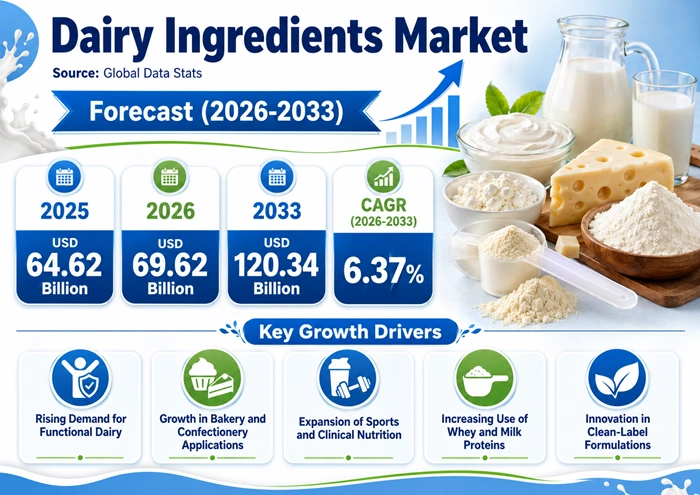
The global dairy ingredients market size is valued at USD 64.62 billion in 2025 and is predicted to increase from USD 69.62 billion in 2026 to approximately USD 120.34 billion by 2033, growing at a CAGR of 6.37% from 2026 to 2033.
Rising health consciousness among consumers worldwide drives unprecedented demand for protein-rich ingredients, functional foods, and nutritional supplements derived from milk. Dairy ingredients including milk powder, whey proteins, casein, lactose, and specialized fractions serve essential roles across food and beverage manufacturing, pharmaceutical formulations, sports nutrition products, and infant formula applications providing vital nutrition and functional properties.
AI Impact on the Dairy Ingredients Industry
Artificial Intelligence Transforming Production Optimization and Quality Assurance
Artificial intelligence is fundamentally revolutionizing the dairy ingredients market by enabling precision processing optimization, automated quality control, predictive maintenance, supply chain transparency, and personalized nutrition recommendations that enhance operational efficiency while ensuring consistent product quality and safety. Machine learning algorithms analyze vast datasets from dairy processing including temperature profiles, pressure parameters, flow rates, membrane filtration performance, and spray drying conditions to optimize whey protein isolation, milk powder production, casein extraction, and lactose crystallization maximizing yields while minimizing energy consumption and waste generation. AI-powered computer vision systems inspect dairy ingredients throughout production detecting color variations, particle size inconsistencies, foreign material contamination, and packaging defects automatically with 99% accuracy ensuring only pharmaceutical-grade and food-grade ingredients meeting stringent specifications reach downstream customers in food manufacturing, supplement production, and pharmaceutical applications.
Predictive analytics forecast dairy ingredient demand patterns across infant nutrition, sports nutrition, functional foods, and industrial applications by analyzing seasonal consumption trends, demographic shifts, fitness movements, regulatory changes, and economic indicators enabling manufacturers to adjust production schedules proactively avoiding costly overproduction or supply shortages. Natural language processing technologies monitor customer feedback, social media conversations, research publications, and patent filings identifying emerging applications for dairy ingredients including novel protein formulations, functional dairy beverages, beauty-from-within products, and medical nutrition solutions guiding research and development priorities. The dairy ingredients market benefits from blockchain integration combined with AI providing complete supply chain traceability from farm milk collection through processing, quality testing, and distribution ensuring authenticity, preventing adulteration, and verifying organic, grass-fed, or hormone-free certifications increasingly demanded by conscious consumers and premium brands. Smart sensors combined with AI algorithms monitor dairy processing equipment predicting maintenance needs before failures occur, reducing downtime, extending equipment lifespan, and preventing contamination incidents that could compromise entire production batches worth millions in ingredient value.
Growth Factors
Protein Demand and Functional Foods Drive Market Expansion
The dairy ingredients market is experiencing robust growth driven by escalating global protein consumption, rising demand for functional foods delivering health benefits beyond basic nutrition, expanding sports nutrition sector, and growing infant formula market particularly in developing regions. Global protein consumption trends reflect fundamental dietary shifts as consumers worldwide increasingly prioritize high-protein diets for muscle building, weight management, satiety, healthy aging, and overall wellness with dairy proteins including whey and casein recognized as complete proteins providing all essential amino acids in optimal ratios superior to most plant proteins. The sports nutrition market explosion driven by fitness enthusiasm, gym membership growth, athletic participation, and bodybuilding culture creates massive demand for whey protein isolates, whey protein concentrates, milk protein isolates, and casein proteins incorporated into protein powders, ready-to-drink shakes, protein bars, and recovery supplements.
Functional food innovations incorporating dairy ingredients for specific health benefits including probiotics for gut health, calcium for bone strength, protein for muscle support, and bioactive peptides for blood pressure management drive ingredient demand as consumers seek foods delivering measurable wellness outcomes rather than empty calories. The dairy ingredients market benefits from infant formula market growth particularly across Asia Pacific where rising birth rates, growing middle-class incomes, urbanization patterns, and preference for premium nutrition drive consumption of specialized infant formulas requiring high-quality milk powders, whey proteins, lactose, and fortified ingredients meeting strict nutritional and safety standards. Bakery and confectionery industries represent massive established markets for dairy ingredients with milk powder, butter powder, whey ingredients, and lactose providing essential functionality including texture enhancement, browning reactions, moisture retention, shelf life extension, and flavor development in breads, cakes, biscuits, chocolates, and countless processed foods. Aging populations across developed markets prioritize bone health, muscle preservation, immune support, and overall vitality driving consumption of calcium-fortified foods, high-protein nutrition products, medical nutrition formulas, and functional dairy beverages specifically targeting senior demographics' unique nutritional needs.
Market Outlook
Innovation and Sustainability Define Future Industry Evolution
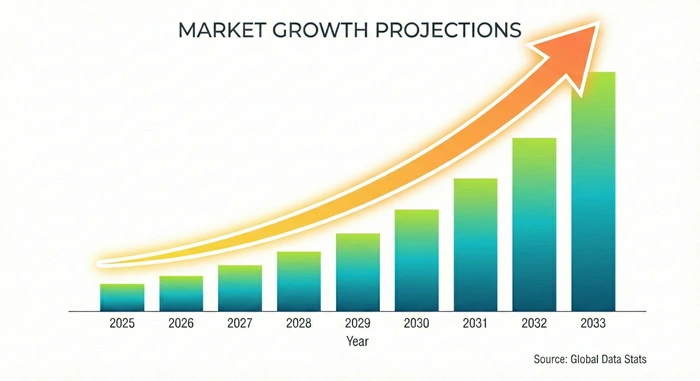
The dairy ingredients market is positioned for sustained expansion through 2033 as manufacturers invest heavily in processing technology innovations, develop specialized ingredient fractions, expand into emerging applications, and address sustainability concerns reshaping dairy production practices. Advanced processing technologies including membrane filtration, ultrafiltration, microfiltration, and nanofiltration enable production of highly purified protein fractions, reduced-lactose ingredients, clarified whey proteins, and specialty dairy components commanding premium prices in sports nutrition, clinical nutrition, and functional food applications. Protein innovation focuses on native whey proteins, hydrolyzed proteins for rapid absorption, milk protein isolates, micellar casein for sustained release, and customized protein blends optimized for specific applications including infant formula, sports recovery, medical nutrition, and elderly care.
Clean-label trends demand minimally processed dairy ingredients produced without chemical modifications, harsh treatments, or artificial additives driving innovation in natural production methods, gentle processing technologies, and transparent sourcing that maintain ingredient integrity while meeting consumer expectations for wholesome nutrition. The dairy ingredients market witnesses explosive growth in ready-to-drink protein beverages leveraging liquid dairy ingredients, ultra-filtered milk, and shelf-stable protein fortification creating convenient on-the-go nutrition appealing to busy professionals, fitness enthusiasts, and health-conscious consumers seeking alternatives to powder-based supplements. Sustainability initiatives throughout dairy supply chains including methane reduction programs, renewable energy adoption, water conservation technologies, regenerative grazing practices, and circular economy approaches recycling processing byproducts address environmental concerns while improving industry reputation and meeting corporate sustainability commitments from major food manufacturers. Emerging markets across Asia, Africa, and Latin America present enormous growth opportunities as economic development, protein consumption increases, western dietary pattern adoption, and dairy processing infrastructure investments create favorable conditions for dairy ingredient market expansion from historically low per capita consumption levels particularly for premium specialty ingredients currently dominated by developed markets.
Expert Speaks
-
Hein Schumacher, Chief Executive Officer of Royal FrieslandCampina, emphasized that dairy ingredients represent strategic growth platform combining nutrition science, processing innovation, and sustainability commitments, with FrieslandCampina investing substantially in specialized protein ingredients, grass-fed dairy sourcing, and climate-neutral dairy production meeting evolving consumer demands for functional nutrition and environmental responsibility.
-
Oleg Sirota, Chief Executive Officer of Glanbia plc, highlighted that performance nutrition and lifestyle nutrition segments drive robust dairy ingredient demand particularly for whey proteins, milk protein isolates, and functional dairy solutions, with market success requiring continuous innovation in bioavailability, taste profiles, application versatility, and scientific validation demonstrating measurable health benefits justifying premium positioning.
-
Peder Tuborgh, former Chief Executive Officer of Arla Foods, stated that dairy industry sustainability transformation proves essential for long-term viability with consumer trust, regulatory pressure, and environmental imperatives requiring comprehensive approaches addressing greenhouse gas emissions, animal welfare, biodiversity protection, and circular resource utilization while maintaining dairy ingredients' competitive nutritional advantages versus plant-based alternatives.
Key Report Takeaways
-
Asia Pacific leads the dairy ingredients market with approximately 40% market share in 2025, driven by massive populations, rising middle-class incomes, growing protein consumption, expanding infant formula demand particularly in China and India, robust dairy processing industries, and government support for dairy sector development addressing nutrition security and economic development goals.
-
North America is growing rapidly with a projected CAGR of 6.58% from 2026 to 2033, fueled by mature sports nutrition market, protein supplementation culture, functional food innovations, clean-label preferences, technological processing leadership, and premium ingredient demand from health-conscious consumers willing to pay substantial premiums for grass-fed, organic, or specialized dairy proteins.
-
Milk powder dominates with approximately 35% market share as versatile ingredient with long shelf life, easy storage and transportation, extensive applications across infant formula, bakery products, confectionery, dairy beverages, and food manufacturing where reconstituted milk functionality proves essential for product formulation, cost management, and supply chain efficiency.
-
The food and beverages application contributes the most to overall market revenue with approximately 52% share in 2025, reflecting dairy ingredients' fundamental roles in countless processed foods, beverages, bakery goods, confectionery products, frozen desserts, and dairy products where functional properties including emulsification, texturization, nutrition enhancement, and flavor development prove indispensable.
-
Powder form dominates with approximately 68% market share as powdered dairy ingredients offer superior shelf stability, reduced storage costs, simplified logistics, concentration benefits reducing transportation expenses, and versatility for dry blending into numerous food formulations, supplement powders, and instant beverage mixes compared to liquid forms requiring refrigeration and immediate use.
-
The nutraceuticals segment will grow quickly with an estimated CAGR of 7.12% as health-conscious consumers increasingly seek dairy-based supplements, protein powders, functional beverages, and medical nutrition products delivering specific health benefits including muscle building, weight management, bone health support, and immune enhancement driving premium dairy ingredient demand.
Market Scope
| Report Coverage | Details |
|---|---|
| Market Size by 2033 | USD 120.34 Billion |
| Market Size by 2025 | USD 64.62 Billion |
| Market Size by 2026 | USD 69.62 Billion |
| Market Growth Rate from 2026 to 2033 | CAGR of 6.37% |
| Dominating Region | Asia Pacific |
| Fastest Growing Region | North America |
| Base Year | 2025 |
| Forecast Period | 2026 to 2033 |
| Segments Covered | Product, Form, Application, Livestock, Region |
| Regions Covered | North America, Europe, Asia Pacific, Latin America, Middle East and Africa |
Market Dynamics
Driver Impact Analysis
Rising Health Consciousness and Protein Prioritization Propel Market Growth
The escalating global health consciousness combined with protein prioritization across demographics represents the most powerful driver propelling the dairy ingredients market toward sustained expansion across all geographic regions and application segments. Global protein consumption trends reflect fundamental dietary transformations as consumers worldwide increasingly recognize protein's essential roles in muscle maintenance, satiety promotion, metabolic health, immune function, and healthy aging motivating active protein intake increases particularly from high-quality complete protein sources like dairy. The sports nutrition explosion driven by fitness culture proliferation, gym membership growth exceeding 200 million globally, athletic participation increases, and bodybuilding enthusiasm creates massive demand for whey protein isolates, whey protein concentrates, and casein proteins recognized for superior amino acid profiles, rapid absorption characteristics, and proven muscle-building effectiveness.
Weight management trends prioritizing high-protein low-carbohydrate diets including ketogenic, paleo, and high-protein approaches for appetite control and metabolic enhancement drive dairy protein ingredient adoption in meal replacement shakes, protein bars, fortified snacks, and functional beverages. The dairy ingredients market benefits from aging population demographics across developed nations where seniors represent fastest-growing demographic prioritizing protein intake for sarcopenia prevention, bone health maintenance, immune support, and overall vitality with medical nutrition and functional dairy products specifically formulated for elderly nutritional needs representing rapidly expanding segment. Infant nutrition emphasis particularly across developing markets where rising incomes enable premium formula purchases drives demand for specialized milk powders, whey proteins, lactose, and fortified dairy ingredients meeting strict nutritional requirements and safety standards supporting infant development. Functional food movements positioning foods as preventive medicine drive incorporation of dairy proteins, bioactive peptides, probiotics, calcium, and other dairy-derived functional ingredients into yogurts, beverages, snacks, and fortified products delivering measurable health benefits beyond basic nutrition creating premium pricing opportunities.
| Driver | ≈ % Impact on CAGR Forecast | Geographic Relevance | Impact Timeline |
|---|---|---|---|
| Protein Consumption Trends | +2.10% | Global, strongest in developed markets | 2026-2033 |
| Sports Nutrition Growth | +1.80% | North America, Europe, urban Asia | 2026-2033 |
| Infant Formula Demand | +1.60% | Asia Pacific, Latin America, Africa | 2026-2033 |
| Functional Food Innovation | +1.40% | Developed markets, health-conscious segments | 2026-2033 |
Restraints Impact Analysis
Plant-Based Competition and Price Volatility Limit Market Penetration
The dairy ingredients market confronts significant barriers related to intensifying plant-based alternatives competition, raw milk price volatility, sustainability concerns about dairy environmental impacts, and lactose intolerance prevalence that constrain adoption and create market share pressures particularly in environmentally conscious and health-sensitive consumer segments. Plant-based protein alternatives including pea protein, soy protein, rice protein, and innovative sources like algae protein gain substantial market share as vegan, vegetarian, and flexitarian populations grow while environmental sustainability concerns about dairy greenhouse gas emissions, water usage, and land requirements motivate dietary shifts away from animal-based ingredients. Price volatility in raw milk markets influenced by weather patterns, feed costs, disease outbreaks, trade policies, and supply-demand imbalances creates unpredictable input costs for dairy ingredient manufacturers complicating pricing strategies, profit margin maintenance, and long-term customer contracts.
Lactose intolerance affecting approximately 65% of global adult population particularly prevalent in Asian, African, and Latin American populations creates inherent market limitations for lactose-containing dairy ingredients though innovations in lactose-free processing, enzyme treatments, and lactose-reduced products partially address this constraint. The dairy ingredients market suffers from negative environmental perceptions as consumers increasingly aware of agriculture's climate impact scrutinize dairy's methane emissions, water footprint, and land use intensity creating reputational risks and motivating food manufacturers to reduce dairy ingredient content or seek plant-based substitutes meeting sustainability commitments. Animal welfare concerns including industrial dairy farming practices, calf separation, and intensive production methods create ethical objections among conscious consumers influencing purchasing decisions particularly among younger demographics prioritizing cruelty-free products. Regulatory variations across markets regarding dairy standards, quality specifications, hormone usage permissions, and labeling requirements create compliance complexities and market entry barriers for international dairy ingredient suppliers while limiting marketing flexibility that could otherwise drive adoption.
| Restraint | ≈ % Impact on CAGR Forecast | Geographic Relevance | Impact Timeline |
|---|---|---|---|
| Plant-Based Competition | -1.50% | Developed markets, urban centers | 2026-2033 |
| Raw Milk Price Volatility | -1.20% | Global, producer regions | 2026-2033 |
| Environmental Concerns | -1.00% | Europe, North America, eco-conscious segments | 2026-2033 |
| Lactose Intolerance | -0.90% | Asia Pacific, Africa, Latin America | 2026-2033 |
Opportunities Impact Analysis
Specialized Proteins and Emerging Markets Create Growth Avenues
The development of specialized dairy protein ingredients targeting specific applications and the massive untapped potential in emerging markets present enormous opportunities for the dairy ingredients market by addressing unmet nutritional needs, creating premium product segments, and expanding geographic reach beyond saturated developed markets. Advanced protein fractionation technologies including membrane filtration, chromatography, and enzymatic processing enable production of highly specialized ingredients including native whey proteins maintaining natural structure, hydrolyzed proteins for rapid absorption, alpha-lactalbumin enriched fractions for infant formula, lactoferrin for immune support, and glycomacropeptides for satiety demonstrating that ingredient sophistication commands premium pricing from discerning customers. Medical nutrition represents high-growth opportunity as aging populations, chronic disease management, post-surgical recovery, cancer treatment support, and elderly care require specialized nutritional solutions with dairy proteins' superior digestibility, complete amino acid profiles, and bioactive components making them ideal bases for clinical nutrition formulas.
Ready-to-drink protein beverages leveraging ultra-filtered milk, liquid whey proteins, and shelf-stable formulations address convenience demands from busy professionals, fitness enthusiasts, and health-conscious consumers seeking grab-and-go nutrition without powder mixing creating substantial growth segment. The dairy ingredients market benefits from personalized nutrition trends as genetic testing, microbiome analysis, and health tracking enable customized protein recommendations based on individual metabolism, fitness goals, dietary restrictions, and health conditions creating opportunities for tailored ingredient solutions and direct-to-consumer business models. Emerging markets including India, China, Southeast Asia, Brazil, and Africa represent massive untapped populations where rising incomes, urbanization, protein consumption increases, and dairy industry development create favorable long-term growth conditions as per capita dairy ingredient consumption gradually approaches developed market levels. Beauty-from-within applications leveraging collagen-supporting dairy proteins, calcium for skin health, and bioactive peptides for anti-aging position dairy ingredients in cosmeceuticals and functional beauty products targeting appearance-conscious consumers willing to invest substantially in nutritional approaches to beauty enhancement.
| Opportunity | ≈ % Impact on CAGR Forecast | Geographic Relevance | Impact Timeline |
|---|---|---|---|
| Specialized Protein Fractions | +1.90% | Premium markets globally | 2027-2033 |
| Medical Nutrition Growth | +1.70% | Aging populations, developed markets | 2026-2033 |
| Emerging Market Expansion | +1.60% | Asia Pacific, Latin America, Africa | 2027-2033 |
| RTD Protein Beverages | +1.40% | Urban markets, convenience seekers | 2026-2033 |
Segment Analysis
Milk Powder
Dominant Segment Driven by Versatility and Shelf Stability
The milk powder segment dominates the dairy ingredients market with approximately 35% share in 2025 and steady CAGR of 6.25% from 2026 to 2033, driven by the segment's unmatched versatility across applications, superior shelf stability eliminating refrigeration requirements, concentrated nutrition per unit weight reducing transportation costs, and essential functionality in infant formula, bakery products, confectionery, and reconstituted dairy beverages. Whole milk powder, skim milk powder, and instant milk powder variants serve diverse applications with infant formula representing premium end-use requiring highest quality standards, stringent safety testing, and nutritional fortification making this application willing to pay substantial premiums for certified organic, grass-fed, or specialty milk powders. Bakery and confectionery industries consume massive milk powder volumes for moisture retention, browning reactions through Maillard chemistry, texture development, nutritional enhancement, and cost-effective milk solids incorporation without liquid milk logistics challenges.
Asia Pacific shows particularly strong milk powder demand with approximately 42% regional segment share and CAGR of 6.45%, driven by massive infant formula market in China following domestic production challenges and consumer preference for imported premium formulas, rapidly growing middle-class populations prioritizing infant nutrition, expanding bakery industries, and limited fresh milk availability in certain regions making shelf-stable milk powder essential. Leading companies serving the dairy ingredients market including Fonterra Cooperative Group, Lactalis International, Nestlé, Royal FrieslandCampina, Dairy Farmers of America, Arla Foods, and specialized milk powder producers dominate through extensive dairy collection networks, advanced spray drying facilities, stringent quality control systems, and established relationships with infant formula manufacturers and food processors. The segment continues innovating through organic milk powder meeting clean-label preferences, grass-fed milk powder commanding premium positioning, A2 milk powder addressing digestive concerns, and functional milk powders fortified with probiotics, DHA, or other bioactive compounds creating differentiation beyond commodity pricing pressures.
Nutraceuticals Application
Fastest Growing Segment Capitalizing on Health and Wellness Trends
The nutraceuticals application segment represents the fastest-growing category in the dairy ingredients market with a projected CAGR of 7.12% from 2026 to 2033, driven by health-conscious consumers actively seeking dairy-based supplements, protein powders, functional beverages, and medical nutrition products delivering specific measurable health benefits beyond basic nutrition. Whey protein supplements dominate sports nutrition and fitness categories with isolates, concentrates, and hydrolysates targeting muscle building, exercise recovery, weight management, and performance optimization backed by extensive clinical research validating efficacy. Casein proteins appeal to serious athletes and bodybuilders seeking sustained amino acid release for overnight muscle preservation and appetite control with micellar casein representing premium segment commanding higher prices than standard caseinates.
North America shows particularly explosive nutraceutical dairy ingredient growth with CAGR exceeding 7.40%, driven by mature supplement culture with over 70% of adults consuming dietary supplements regularly, influential fitness movements, protein prioritization across demographics, direct-to-consumer supplement brands, and e-commerce channels democratizing access to specialized protein ingredients previously available only through specialty retailers or gyms. Key players serving the dairy ingredients market including Glanbia plc, Hilmar Ingredients, Arla Foods Ingredients, Agropur Ingredients, and specialized whey protein producers invest heavily in ingredient innovation, clinical research validating health claims, application development support for supplement brands, and quality certifications including informed-sport testing for banned substance screening. The segment benefits from protein fortification trends extending beyond traditional supplements into bars, beverages, snacks, and functional foods as mainstream consumers seek convenient protein delivery without supplement pills or powders creating crossover opportunities. Medical nutrition applications including oncology nutrition, geriatric formulas, wound healing support, and metabolic disease management require pharmaceutical-grade dairy proteins with specific amino acid profiles, digestibility characteristics, and bioactive properties commanding premium pricing from healthcare institutions and specialized medical nutrition companies.
Regional Insights
Asia Pacific
Market Leadership Through Production Scale and Growing Consumption
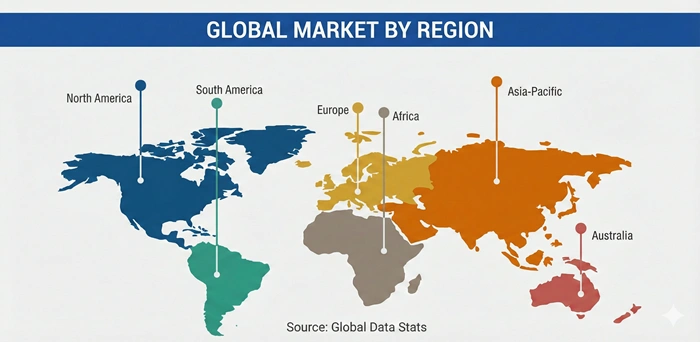
Asia Pacific maintains its position as the dominant region in the dairy ingredients market, commanding approximately 40% of global market share in 2025 with an estimated value of USD 25.85 billion, projected to reach USD 46.94 billion by 2033 growing at a CAGR of 6.55%. The region's leadership stems from massive dairy production particularly in India producing over 200 million metric tons annually representing approximately 24% of global milk production, rapidly growing middle-class populations prioritizing protein nutrition, expanding infant formula demand especially in China following quality scandals driving preference for premium products, and robust food processing industries incorporating dairy ingredients into countless products. China dominates regional demand with approximately 32% share driven by enormous population, infant formula market explosion, growing sports nutrition adoption, dairy consumption increases from traditionally low levels, and government nutrition improvement initiatives.
Leading companies serving the Asia Pacific dairy ingredients market include Fonterra Cooperative Group, Yili Group, Mengniu Dairy, Nestlé, Danone, Amul (Gujarat Cooperative Milk Marketing Federation), regional dairy cooperatives, and international ingredient suppliers establishing local production facilities to serve growing demand while navigating regulatory requirements. India represents particularly dynamic growth market with massive milk production providing raw material abundance, expanding dairy processing infrastructure, growing protein awareness, rising incomes enabling premium product purchases, and government dairy development programs supporting industry modernization creating favorable long-term conditions. The region benefits from urbanization concentrating populations in cities with modern retail infrastructure, cold chain logistics enabling fresh and chilled dairy ingredient distribution, and younger demographics embracing fitness, protein supplementation, and western dietary patterns including increased dairy consumption.
North America
Fastest Regional Growth Through Premium Products and Innovation Leadership
North America represents the fastest-growing region in the dairy ingredients market with a projected CAGR of 6.58% from 2026 to 2033, with market value expected to increase from USD 17.57 billion in 2025 to USD 30.62 billion by 2033, capturing expanding global revenue share. The region's exceptional growth trajectory stems from mature sports nutrition market with protein supplementation normalized across demographics, functional food innovation leadership developing novel dairy ingredient applications, clean-label and grass-fed trends commanding premium pricing, advanced processing technologies enabling specialized protein fractions, and affluent consumers willing to pay substantial premiums for quality, sustainability, and performance. The United States dominates regional demand with approximately 82% share driven by massive fitness culture, protein prioritization, established supplement retail infrastructure, direct-to-consumer e-commerce channels, technological processing leadership, and influential wellness movements.
Leading companies serving the North American dairy ingredients market include Dairy Farmers of America, Glanbia plc, Agropur Cooperative, Saputo Inc., Hilmar Ingredients, California Dairies Inc., Land O'Lakes, and specialized ingredient suppliers providing customized solutions for sports nutrition brands, food manufacturers, and pharmaceutical companies. The region benefits from extensive research infrastructure at universities and corporate R&D centers advancing dairy protein science, processing innovation, application development, and clinical validation supporting health claims that differentiate premium products. Canada contributes approximately 13% of North American revenue through similar protein consumption trends, strong dairy cooperative infrastructure, cold climate advantage for dairy production, and sophisticated food processing sector incorporating innovative dairy ingredients into diverse product categories.
Top Key Players
-
Fonterra Co-operative Group Limited (New Zealand)
-
Lactalis International (France)
-
Royal FrieslandCampina N.V. (Netherlands)
-
Arla Foods amba (Denmark)
-
Dairy Farmers of America Inc. (United States)
-
Nestlé S.A. (Switzerland)
-
Saputo Inc. (Canada)
-
Glanbia plc (Ireland)
-
Agropur Cooperative (Canada)
-
Kerry Group plc (Ireland)
-
Hilmar Ingredients (United States)
-
Schreiber Foods Inc. (United States)
-
Leprino Foods Company (United States)
-
Volac International Limited (United Kingdom)
-
DMK Group (Germany)
Recent Developments
-
Arla Foods Ingredients (2025): Unveiled new high-protein dairy concepts in November 2025 at Fi Europe including hydrolyzed whey drinks with 25g protein per serving, high-protein snacks, and transparent yogurt formulations demonstrating innovation leadership in functional dairy ingredients, strengthening market position through differentiated products targeting sports nutrition, active lifestyle, and health-conscious consumer segments.
-
Integrated Dairy Ingredients (2024): Formed in September 2024 through collaboration of three prominent East Coast dairy cooperatives including Agri-Mark, Maryland & Virginia Milk Producers Cooperative Association, and Upstate Niagara Cooperative, launching operations in January 2025 to market high-quality dairy ingredients, deliver comprehensive solutions, and build lasting customer partnerships contributing to sustainable dairy industry development.
-
Nestlé (2023): Unveiled innovative N3 milk in November 2023 derived from cow's milk and enriched with essential proteins, vitamins, minerals, prebiotic fibers, and featuring over 15% fewer calories with low lactose content compared to traditional milk, demonstrating product innovation addressing consumer demand for healthier functional dairy products delivering multiple nutritional benefits.
-
Strauss Group (2025): Announced September 2025 launch of animal-free dairy products in Israel developed in collaboration with Imagindairy using precision fermentation technology, starting with CowFree Symphony cream cheese and Yotvata CowFree drink representing breakthrough innovation in sustainable dairy alternatives produced without animals while maintaining authentic dairy functionality.
-
Arla Foods Ingredients (2024): Launched campaign in September 2024 encouraging dairy manufacturers to create innovative high-protein products responding to over 40% of global consumers citing protein as most important ingredient, emphasizing protein quality conversation, and addressing industry challenges in differentiation, processing, taste, and texture driving market evolution toward premium protein solutions.
Market Trends
Clean Label Demands and Sustainable Sourcing Reshape Industry Practices
The dairy ingredients market is experiencing transformative shifts driven by clean-label demands prioritizing minimal processing and transparent sourcing, sustainability imperatives reducing environmental footprints, and protein innovation creating specialized high-value ingredients commanding premium pricing. Clean-label movements demand dairy ingredients produced without chemical modifications, artificial additives, or extensive processing driving innovation in gentle processing technologies including cold membrane filtration, natural fermentation, and minimal-intervention methods maintaining nutritional integrity while meeting consumer expectations for wholesome recognizable ingredients. Grass-fed dairy ingredients gain market share despite 30-50% price premiums as health-conscious consumers perceive grass-fed milk as superior in omega-3 fatty acids, conjugated linoleic acid, and overall nutritional quality while supporting animal welfare and sustainable grazing practices versus intensive feedlot operations.
Organic dairy ingredients expand rapidly as certified organic milk production increases globally responding to consumer willingness to pay premium pricing for products guaranteed free from synthetic pesticides, GMO feeds, synthetic hormones, and antibiotics with organic certification providing trusted third-party verification. The dairy ingredients market witnesses carbon-neutral and climate-positive initiatives as major dairy companies commit to substantial greenhouse gas emission reductions through methane digesters, renewable energy adoption, regenerative agriculture practices, and carbon offset programs addressing environmental concerns while differentiating brands through sustainability leadership. Protein customization enables tailored amino acid profiles, digestibility characteristics, functionality properties, and bioactive peptide content meeting specific application requirements including infant formula regulations, sports nutrition performance targets, medical nutrition therapeutic goals, and functional food health benefit claims creating technical differentiation beyond commodity pricing. Technology-enabled traceability through blockchain, QR codes, and digital platforms provides complete transparency from farm through processing enabling consumers to verify sustainability claims, quality certifications, animal welfare standards, and origin information building trust particularly important for premium organic and grass-fed products.
Segments Covered in the Report
By Product
-
Milk Powder
-
Whole Milk Powder
-
Skim Milk Powder
-
Instant Milk Powder
-
-
Whey Ingredients
-
Whey Protein Concentrate
-
Whey Protein Isolate
-
Whey Protein Hydrolysate
-
-
Casein and Caseinates
-
Acid Casein
-
Rennet Casein
-
Caseinates
-
-
Lactose and Derivatives
-
Milk Proteins
-
Milk Protein Concentrate
-
Milk Protein Isolate
-
By Form
-
Powder
-
Liquid
By Application
-
Food and Beverages
-
Pharmaceuticals
-
Nutraceuticals
-
Animal Feed
-
Bakery and Confectionery
-
Infant Formula
-
Sports Nutrition
By Livestock
-
Cows
-
Buffaloes
-
Goats
-
Sheep
-
Others
By Production Method
-
Traditional Method
-
Membrane Separation
-
Ultrafiltration
-
Reverse Osmosis
By Region
-
North America
-
United States
-
Canada
-
Mexico
-
-
Europe
-
Germany
-
France
-
United Kingdom
-
Italy
-
Spain
-
Netherlands
-
Rest of Europe
-
-
Asia Pacific
-
China
-
India
-
Japan
-
Australia
-
New Zealand
-
Southeast Asia
-
Rest of Asia Pacific
-
-
Latin America
-
Brazil
-
Argentina
-
Rest of Latin America
-
-
Middle East and Africa
-
Saudi Arabia
-
United Arab Emirates
-
South Africa
-
Rest of Middle East and Africa
-
Frequently Asked Questions
Question 1: What is the projected dairy ingredients market size by 2033?
Answer: The dairy ingredients market is projected to reach USD 120.34 billion by 2033, growing from USD 69.62 billion in 2026. This represents steady expansion driven by rising protein consumption, growing sports nutrition sector, expanding infant formula demand, functional food innovations, and increasing health consciousness across demographics particularly in developing markets.
Question 2: Which region dominates the global dairy ingredients market share?
Answer: Asia Pacific dominates the global dairy ingredients market with approximately 40% market share in 2025, valued at USD 25.85 billion. This leadership position reflects massive dairy production particularly in India, rapidly growing middle-class populations, expanding infant formula demand especially in China, robust food processing industries, and increasing protein consumption.
Question 3: What factors are driving the dairy ingredients market growth?
Answer: Key factors driving dairy ingredients market growth include escalating protein prioritization across demographics, sports nutrition market explosion, growing infant formula demand particularly in Asia Pacific, functional food innovations delivering health benefits, aging populations requiring specialized nutrition, and bakery and confectionery industries' massive ingredient consumption. Health consciousness and premium product willingness contribute significantly.
Question 4: Which product segment holds the largest share in the dairy ingredients market?
Answer: The milk powder segment holds the largest share in the dairy ingredients market with approximately 35% in 2025. This dominance reflects milk powder's unmatched versatility across applications, superior shelf stability eliminating refrigeration, concentrated nutrition reducing transportation costs, and essential functionality in infant formula, bakery products, confectionery, and reconstituted beverages.
Question 5: What are the emerging trends in the dairy ingredients market?
Answer: Emerging trends in the dairy ingredients market include clean-label demands prioritizing minimal processing and transparent sourcing, grass-fed and organic dairy ingredient premiumization, specialized protein fractions for targeted applications, sustainability initiatives reducing environmental footprints, and ready-to-drink protein beverages leveraging liquid dairy ingredients. Technology-enabled traceability through blockchain and personalized nutrition also gain significant traction.