
Critical Care Drugs Market Overview
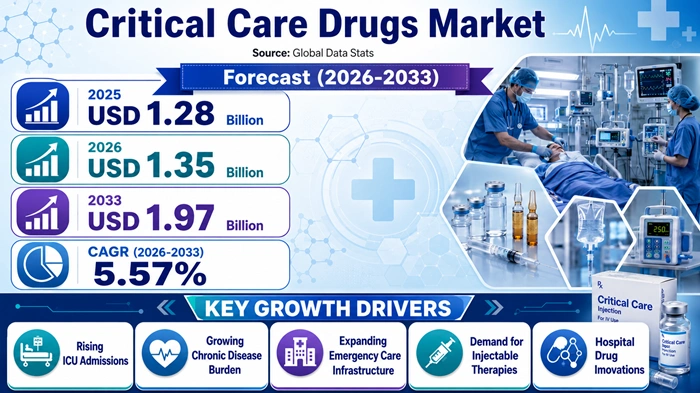
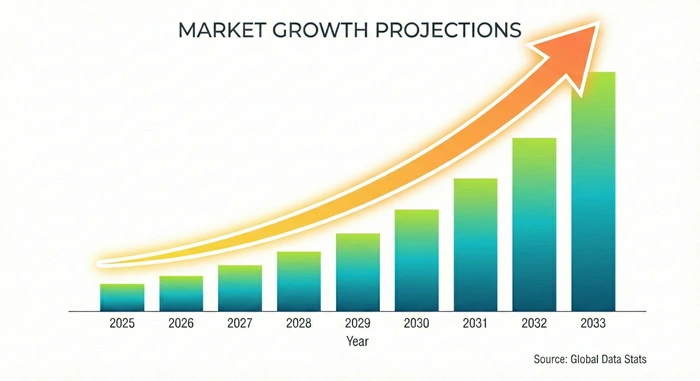
The global critical care drugs market size is valued at USD 1.28 billion in 2025 and is predicted to increase from USD 1.35 billion in 2026 to approximately USD 1.97 billion by 2033, growing at a CAGR of 5.57% from 2026 to 2033.
This steady growth reflects the rising global burden of life-threatening conditions requiring intensive monitoring, along with expanding intensive care unit infrastructure across both developed and emerging healthcare systems. Growing surgical volumes, an aging population, and rising chronic disease prevalence are together pushing demand for specialized critical care drugs across hospitals, trauma centers, and emergency response units worldwide.
AI Impact on the Critical Care Drugs Industry
Artificial Intelligence Is Quietly Transforming How Hospitals Manage, Dose, and Deliver Life-Saving Medications in Intensive Care Settings
Artificial intelligence is beginning to reshape how critical care physicians manage medication dosing and patient monitoring in high-stakes clinical environments. Machine learning algorithms integrated into ICU monitoring systems can now analyze vast patient datasets to predict deterioration before it becomes clinically obvious, allowing care teams to adjust critical care drug regimens proactively rather than reactively. AI-powered dosing tools are also helping reduce medication errors in intensive care units by flagging unusual prescribing patterns and recommending evidence-based dosage adjustments for sedatives, vasopressors, and analgesics based on real-time patient parameters.
Beyond bedside monitoring, AI is accelerating drug discovery within the critical care segment by predicting how novel compounds interact with biological targets relevant to sepsis, respiratory failure, and cardiovascular collapse. Hospitals are also leveraging predictive analytics to improve inventory control for critical care drugs, ensuring life-saving medications remain available during demand surges such as seasonal trauma spikes or infectious disease outbreaks. As digital health adoption deepens, AI-driven personalization of treatment plans based on genetic and clinical history is expected to further improve outcomes across intensive care and emergency medicine settings.
Growth Factors
Rising Chronic Disease Burden and Expanding Surgical Volumes Are Accelerating Demand for Specialized Critical Care Medications
One of the strongest growth drivers for this market is the escalating global incidence of chronic conditions such as cardiovascular disease, diabetes, and respiratory disorders, all of which frequently lead to acute complications requiring intensive care intervention. As populations age worldwide, the proportion of patients experiencing multi-organ dysfunction and sudden clinical deterioration continues to rise, directly increasing demand for vasopressors, sedatives, anticoagulants, and analgesics used in critical care settings. This demographic shift is particularly pronounced in developed economies with large aging populations, though emerging markets are following a similar trajectory as life expectancy improves.
Additionally, the growing volume of surgical procedures performed globally, including cardiovascular surgery, organ transplants, and orthopedic operations, is fueling greater reliance on critical care drugs during post-operative recovery. Patients undergoing complex surgeries typically require extended stays in intensive care or coronary care units, where medications supporting pain management, infection control, and vital sign stabilization are essential. Expanding hospital infrastructure in developing regions, combined with improved insurance coverage for critical illness treatment, continues to widen access to these essential medications across a broader patient base.
Market Outlook
Technological Innovation and Expanding ICU Capacity Are Setting the Stage for Sustained Long-Term Growth in Critical Care Pharmaceuticals
Looking ahead, the critical care drugs market is expected to benefit from continuous innovation in drug delivery technology, including controlled-release formulations and nanotechnology-based systems that improve therapeutic precision while reducing adverse effects. As pharmaceutical companies invest in next-generation sedatives, analgesics, and vasopressors with improved safety profiles, the addressable patient population for advanced critical care therapies is expected to expand considerably. This innovation pipeline suggests steady momentum will continue well into the next decade.
Government-led initiatives to expand ICU bed capacity, particularly across Asia Pacific and parts of the Middle East, are also expected to support sustained institutional procurement of critical care medications. Combined with rising government reimbursement support and growing private healthcare investment in emerging economies, the outlook for this market remains firmly positive. Analysts expect competitive intensity to increase as regional generic manufacturers expand alongside established multinational pharmaceutical companies in this space.
Expert Speaks
-
"Critical care medicine continues to evolve rapidly, and our investment in next-generation sedation and analgesic therapies reflects a broader commitment to improving ICU outcomes worldwide." — CEO, Pfizer Inc.
-
"As hospital systems modernize their intensive care infrastructure, we are seeing accelerated demand for critical care drugs that combine efficacy with improved safety margins for vulnerable patients." — CEO, Abbott Laboratories
-
"The integration of digital monitoring with pharmaceutical innovation is redefining what's possible in acute care, and we expect this convergence to shape the critical care drugs landscape significantly through 2033." — CEO, Baxter International Inc.
Key Report Takeaways
-
North America currently leads the global critical care drugs market, supported by advanced ICU infrastructure, strong insurance coverage, and rapid adoption of innovative acute care therapies.
-
Asia Pacific is the fastest-growing region, driven by rising chronic disease prevalence, expanding hospital infrastructure, and growing healthcare investment in countries such as China and India.
-
Intensive care units (ICUs) remain the dominant end-use segment, as these facilities manage the most severe cases requiring continuous monitoring and multiple concurrent critical care medications.
-
The opioids segment contributes the largest drug type share, reflecting their essential role in managing severe pain during trauma recovery, surgery, and mechanical ventilation.
-
Intravenous administration remains the most widely used delivery route, given its ability to provide rapid onset of action in emergency and intensive care scenarios.
-
The sedatives segment is expected to grow fastest going forward, holding an estimated 19% market share by 2033 and expanding at a CAGR above 6.8%, driven by rising ICU admissions and growing reliance on ventilator support therapies.
Market Scope
| Report Coverage | Details |
|---|---|
| Market Size by 2033 | USD 1.97 Billion |
| Market Size by 2025 | USD 1.28 Billion |
| Market Size by 2026 | USD 1.35 Billion |
| Market Growth Rate from 2026 to 2033 | CAGR of 5.57% |
| Dominating Region | North America |
| Fastest Growing Region | Asia Pacific |
| Base Year | 2025 |
| Forecast Period | 2026 to 2033 |
| Segments Covered | Drug Type, Clinical Application, Route of Administration, End User, Region |
| Regions Covered | North America, Europe, Asia Pacific, Latin America, Middle East & Africa |
Market Dynamics
Drivers Impact Analysis
Rising Chronic Disease Prevalence and Expanding Surgical Procedure Volumes Are the Two Most Powerful Forces Propelling This Market Forward
| Driver | (≈) % Impact on CAGR Forecast | Geographic Relevance | Impact Timeline |
|---|---|---|---|
| Rising prevalence of chronic diseases | ~34% | Global, especially North America & Europe | Short to long-term |
| Increasing number of surgical procedures | ~30% | Global | Medium-term |
| Aging global population | ~22% | North America, Europe, East Asia | Long-term |
| Expanding ICU and hospital infrastructure | ~14% | Asia Pacific, Latin America, MEA | Medium to long-term |
The rising global prevalence of chronic diseases such as cardiovascular disorders, diabetes, and respiratory conditions is without question the single most powerful demand driver in the critical care drugs market. Patients with underlying chronic illness face a significantly higher risk of sudden clinical deterioration, requiring continuous monitoring and rapid pharmaceutical intervention in intensive care settings. This trend is intensifying as global life expectancy rises, expanding the population vulnerable to acute critical events that necessitate specialized drug therapy.
The growing volume of surgical procedures represents the second major driver reshaping this market. As more complex operations, including cardiovascular surgery and organ transplantation, become routine, post-operative recovery increasingly depends on critical care medications to manage pain, prevent infection, and stabilize vital functions. Combined with expanding hospital infrastructure in developing economies, this rising surgical burden continues to strengthen institutional demand across the global critical care drugs market.
Restraints Impact Analysis
Limited Access in Developing Regions and Complex Regulatory Requirements Continue to Present Real-World Barriers to Full Market Penetration
| Restraint | (≈) % Impact on CAGR Forecast | Geographic Relevance | Impact Timeline |
|---|---|---|---|
| Limited accessibility in low- and middle-income countries | ~38% | Sub-Saharan Africa, rural Asia | Short to medium-term |
| Complex and varying regulatory requirements | ~30% | Global | Short to long-term |
| High cost of advanced critical care therapies | ~20% | Low- to middle-income countries | Medium-term |
| Narrow therapeutic windows requiring specialized handling | ~12% | Global | Ongoing |
The most significant structural restraint in the critical care drugs market is limited access in developing regions, where healthcare infrastructure, distribution networks, and trained personnel needed to manage these potent medications remain underdeveloped. This creates meaningful disparities in patient outcomes between well-resourced and under-resourced healthcare systems, particularly for medications requiring cold-chain logistics or specialized administration protocols.
Regulatory complexity further compounds this challenge, as manufacturers must adapt formulations and distribution processes to meet varying national standards across different jurisdictions. This often delays product launches in certain regions, increases compliance costs, and complicates cross-border supply chains for critical care drugs. The narrow therapeutic windows associated with many of these medications also demand rigorous quality control and monitoring, adding further cost and complexity to manufacturing and distribution operations globally.
Opportunities Impact Analysis
Advanced Drug Delivery Innovation and Orphan Drug Designations Represent the Most Commercially Significant Growth Opportunities
| Opportunity | (≈) % Impact on CAGR Forecast | Geographic Relevance | Impact Timeline |
|---|---|---|---|
| Advancement in drug delivery technology | ~40% | Global, led by North America, Europe | Medium to long-term |
| Orphan drug designations and incentives | ~33% | North America, Europe | Medium-term |
| Expansion of ICU capacity in emerging markets | ~27% | Asia Pacific, Latin America, MEA | Long-term |
The development of advanced drug delivery techniques, including controlled-release formulations and nanotechnology-based systems, represents one of the most commercially attractive opportunities in the critical care drugs sector. These innovations improve drug absorption, reduce side effects, and extend therapeutic effectiveness, making treatment more efficient for both patients and healthcare providers managing complex critical care cases.
Orphan drug designations granted to novel critical care therapies targeting rare and life-threatening conditions are also opening new revenue streams for manufacturers, offering tax incentives and market exclusivity that encourage continued investment. Meanwhile, expanding ICU capacity across emerging markets in Asia Pacific and Latin America is creating fresh institutional demand for critical care medications, positioning manufacturers who invest early in these regions to capture disproportionate future growth within the global critical care drugs market.
Segment Analysis
By Drug Type
Opioids Dominate the Category, Supported by Their Essential Role in Managing Severe Pain Across Trauma and Post-Surgical Recovery
Opioids hold the dominant position in the critical care drugs market, accounting for a substantial share of total drug type revenue given their critical role in managing severe pain among ICU patients, post-surgical recovery cases, and trauma victims. This dominance is deeply rooted in the clinical necessity of rapid, potent pain relief for patients on mechanical ventilation or recovering from major cardiac, orthopedic, or gastrointestinal procedures. North America remains the leading region for this segment, supported by well-established hospital networks and strong insurance coverage that facilitates access to advanced pain management protocols. Leading companies such as Pfizer, Abbott, and Cambrex Corporation continue to strengthen their opioid product portfolios through steady manufacturing investment and regulatory compliance across multiple markets.
Asia Pacific is emerging as a fast-growing region for opioid-based critical care drugs, driven by expanding surgical volumes and improving hospital infrastructure across China and India. The region's growing elderly population, combined with rising incidence of trauma-related hospital admissions, is generating sustained institutional demand for potent analgesics within intensive care and trauma center settings. Regional manufacturers including Cadila Pharmaceuticals and Neon Laboratories have expanded their presence through cost-competitive product offerings tailored to local healthcare budgets, reinforcing the segment's continued relevance across the broader critical care drugs market.
By End User
Intensive Care Units Lead Institutional Demand, Driven by Their Central Role in Managing the Most Severe and Complex Patient Cases
Intensive care units (ICUs) represent the largest end-user segment within the critical care drugs market, reflecting their essential function in treating patients with life-threatening illnesses that require round-the-clock monitoring and rapid therapeutic intervention. Patients admitted to ICUs frequently present with multiple organ dysfunction, sepsis, severe infections, or respiratory failure, driving heavy reliance on vasopressors, inotropes, sedatives, and anticoagulants. North America continues to lead this segment due to its concentration of advanced ICU facilities and technologically sophisticated hospital networks capable of supporting complex, resource-intensive treatment protocols.
Coronary care units (CCUs) are expected to witness the fastest growth within the end-user segment through the forecast period, as rising cardiovascular disease prevalence among aging populations drives demand for specialized cardiac critical care. Companies such as Boehringer Ingelheim and Cambrex Corporation have expanded their cardiovascular drug pipelines to support this growing demand, particularly in regions integrating advanced cardiac devices with pharmaceutical interventions. This segment's growth trajectory highlights the increasingly specialized nature of institutional demand across the global critical care drugs market.
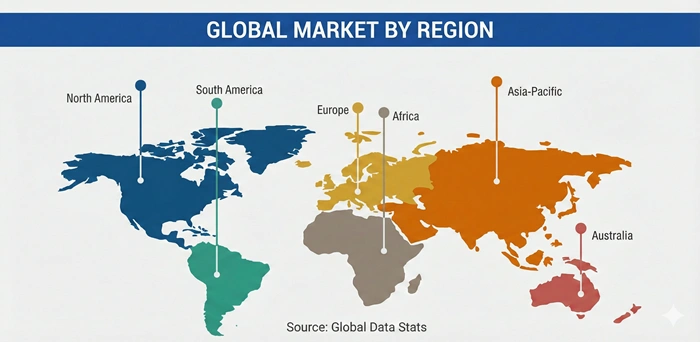
Regional Insights
North America
Advanced Hospital Infrastructure and Strong Insurance Coverage Have Positioned North America as the Clear Market Leader
North America commands the largest share of the global critical care drugs market, supported by some of the most technologically advanced intensive care units and hospitals in the world, particularly across the United States and Canada. The region's ability to manage critical situations such as sepsis, respiratory failure, and severe trauma is reinforced by widespread access to government programs like Medicaid and Medicare, alongside robust private insurance coverage that ensures patient access to essential critical care medications. This region currently holds an estimated 40% share of global revenue, driven by consistent institutional investment in acute care capacity.
Leading companies including Pfizer, Abbott, and Baxter International maintain strong North American distribution networks supported by direct sales infrastructure and long-standing hospital procurement relationships. Growing demand for advanced sedation and analgesic therapies, combined with continued expansion of ICU bed capacity across major metropolitan hospital systems, is expected to sustain North America's leadership position within the critical care drugs market at a projected CAGR near 5%through 2033.
Asia Pacific
Rising Chronic Disease Burden and Expanding Healthcare Investment Are Driving Rapid Growth Across Key Regional Markets
Asia Pacific stands out as the fastest-growing region within the critical care drugs market, fueled by the rising prevalence of chronic illnesses such as cancer and respiratory conditions that frequently result in complications requiring urgent intervention. Countries including China, India, and South Korea are witnessing rapid expansion in hospital infrastructure, supported by growing disposable incomes that enable greater healthcare spending on advanced treatment options. This region is expected to grow at a CAGR exceeding 7% through 2033, outpacing most other geographies globally.
Rising government investment in ICU capacity building, combined with expanding private healthcare networks, is making the region increasingly attractive for both established multinational manufacturers and regional generic drug producers. Companies such as Dr. Reddy's Laboratories and Cipla have strengthened their regional footprints through strategic partnerships and localized manufacturing, positioning Asia Pacific to capture a growing share of the global critical care drugs market in the years ahead.
Region-Wise and Country-Wise Report Customization
Tailored Regional Breakdowns Allow Decision-Makers to Focus Their Strategy on the Specific Geographies That Matter Most to Their Business
This report can be customized to provide detailed, country-specific insights covering market analysis, trends, opportunities, and competitive positioning across the following regions and countries:
North America
-
U.S., Canada, Mexico
Europe
-
U.K., Germany, France, Italy, Rest of Europe
Asia Pacific
-
China, India, Japan, South Korea, Australia, Rest of Asia Pacific
Latin America
-
Brazil, Argentina, Rest of Latin America
Middle East & Africa
-
UAE, Saudi Arabia, Rest of MEA
Customized versions of this report deliver granular, geography-specific data tailored to your chosen market and keyword combination, helping businesses make informed regional decisions with greater precision.
Top Key Players
-
Pfizer Inc. (United States)
-
Abbott Laboratories (United States)
-
Baxter International Inc. (United States)
-
Boehringer Ingelheim International GmbH (Germany)
-
Cambrex Corporation (United States)
-
Cadila Pharmaceuticals Ltd. (India)
-
Dr. Reddy's Laboratories Ltd. (India)
-
Cipla Ltd. (India)
-
Sun Pharmaceutical Industries Ltd. (India)
-
Aurobindo Pharma Ltd. (India)
-
Mankind Pharma Limited (India)
-
Neon Laboratories Limited (India)
Recent Developments
-
In 2025, Mankind Pharma Limited acquired Bharat Serums and Vaccines Limited, strengthening its critical care drugs portfolio through access to complex biologics and hospital-focused therapy expertise.
-
In 2024, Edwards Lifesciences entered a definitive agreement with BD (Becton, Dickinson and Company) for the acquisition of its critical care product group, expanding acute care device and drug integration capabilities.
-
In 2024, Dr. Reddy's Laboratories partnered with Pharmazz Inc. to launch an innovative resuscitative critical care medication for hypovolemic shock in the Indian market.
-
In 2025, Medanta group of hospitals expanded Tele-ICU services in collaboration with GE HealthCare, supporting broader critical care drug administration protocols across remote facilities.
-
In 2025, Baxter International expanded its critical care therapeutic portfolio through new product introductions targeting sepsis and acute cardiovascular event management.
Market Trends
The Critical Care Drugs Market Is Rapidly Shifting Toward Advanced Sedation Protocols and AI-Integrated Dosing Systems That Improve Patient Safety
Two of the most consequential trends reshaping the critical care drugs landscape are the growing use of advanced sedatives and analgesics in ICU settings and the rising adoption of continuous monitoring and dose optimization tools. Hospitals are increasingly integrating digital monitoring platforms with pharmaceutical administration protocols, allowing care teams to adjust dosing in real time based on patient response, a shift that is improving both safety outcomes and treatment efficiency across intensive care environments.
The second major trend is the expansion of protocol-based drug administration within operation theatres, alongside a growing focus on minimizing adverse drug reactions in critical care settings. As pharmaceutical companies invest in safer formulations and hospitals adopt standardized treatment protocols, the overall quality and consistency of critical care drug administration continues to improve, strengthening long-term confidence in these essential therapies across the global healthcare system.
Segments Covered in the Report
By Drug Type
-
Opioids
-
Morphine
-
Pethidine
-
Naloxone
-
Fentanyl
-
Benzodiazepines
-
Diazepam
-
Midazolam
-
Lorazepam
-
Sedatives
-
Anesthetics
-
Others
By Clinical Application
-
Sepsis and Septic Shock
-
Acute Respiratory Distress Syndrome (ARDS)
-
Acute Cardiovascular Events
-
Acute Kidney Injury
-
Traumatic Injuries
By Route of Administration
-
Intravenous (IV)
-
Intramuscular (IM)
-
Inhalation
-
Subcutaneous
By End User
-
Intensive Care Unit (ICU)
-
Coronary Care Unit (CCU)
-
Operation Theatres
-
Trauma Centers
By Region
-
North America (U.S., Canada, Mexico)
-
Europe (U.K., Germany, France, Italy, Rest of Europe)
-
Asia Pacific (China, India, Japan, South Korea, Australia, Rest of Asia Pacific)
-
Latin America (Brazil, Argentina, Rest of Latin America)
-
Middle East & Africa (UAE, Saudi Arabia, Rest of MEA)
❝ Built for Every Level — From Startups to Industry Giants ❞
Here Is Exactly How This Report Works for You
-
For tier 1 enterprises, investors, and high-level decision-makers, this report delivers competitor revenue analysis, detailed revenue source breakdowns, geopolitical risk assessments, and supply-demand dynamics that enable confident capital allocation, M&A targeting, and strategic market entry or expansion decisions in the critical care drugs space.
-
For tier 2 and tier 3 companies, mid-level businesses, and startups, this report provides a practical roadmap of the most commercially viable segments, regional opportunities, and product pipeline priorities, helping you compete effectively against established players and identify white spaces before they become crowded.
-
For all decision-makers across the value chain, this report explains exactly how regulatory shifts, tariff-driven supply chain disruptions, hospital procurement trends, and competitor positioning are converging to shape market direction through 2033, giving you the intelligence framework to make proactive, evidence-based decisions rather than reactive ones.
Frequently Asked Questions
Question 1: What is the current size of the global critical care drugs market and how is it expected to grow?
Answer: The global critical care drugs market was valued at USD 1.28 billion in 2025 and is projected to reach USD 1.97 billion by 2033. This growth is driven by rising chronic disease prevalence and expanding surgical procedure volumes worldwide.
Question 2: Which factors are driving growth in the critical care drugs market?
Answer: The primary drivers of the critical care drugs market include the increasing prevalence of chronic diseases and a rising number of surgical procedures globally. Expanding ICU infrastructure and growing insurance coverage are also accelerating adoption.
Question 3: Which region holds the largest share in the critical care drugs market?
Answer: North America currently dominates the critical care drugs market, supported by advanced hospital infrastructure and strong insurance coverage. Asia Pacific is the fastest-growing region, driven by rising chronic disease burden and expanding healthcare investment.
Question 4: What are the key drug type segments driving revenue in the critical care drugs market?
Answer: Opioids account for the largest drug type share in the critical care drugs market, given their essential role in pain management during trauma and surgical recovery. Sedatives are also gaining significant traction due to rising ICU admissions.
Question 5: Who are the leading companies operating in the critical care drugs market?
Answer: Leading players in the critical care drugs market include Pfizer, Abbott, Baxter International, Boehringer Ingelheim, and Cambrex Corporation. These companies compete through expanding product portfolios and strong global distribution networks.