
Copper Hydroxide Market Overview
Agricultural Fungicide Applications Transform Crop Protection, Sustainable Farming, and Organic Certification Landscapes
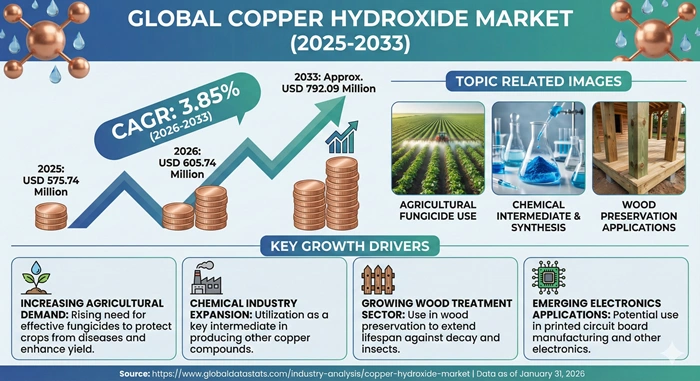
The global copper hydroxide market size is valued at USD 575.74 million in 2025 and is predicted to increase from USD 605.74 million in 2026 to approximately USD 792.09 million by 2033, growing at a CAGR of 3.85% from 2026 to 2033. This specialized agricultural chemical industry encompasses production, distribution, and application of copper hydroxide fungicides serving as essential crop protection solutions demonstrating broad-spectrum disease control, organic farming compatibility, and environmental sustainability characteristics. Copper hydroxide formulations deliver effective prevention and treatment of fungal and bacterial diseases across diverse crops including fruits, vegetables, nuts, ornamentals, and specialty agricultural products requiring reliable disease management throughout growing seasons.
The copper hydroxide market addresses escalating demand for sustainable crop protection solutions where organic farming expansion, integrated pest management adoption, and regulatory restrictions on synthetic fungicides drive consumption growth. This inorganic compound demonstrating blue-green crystalline appearance provides contact fungicide action preventing pathogen germination and infection on plant surfaces. Major agricultural sectors including conventional farming, organic production, greenhouse operations, and specialty crop cultivation consume substantial copper hydroxide volumes as growers pursue yield protection, quality maintenance, and certification compliance throughout production cycles requiring effective disease control without synthetic chemical residues compromising food safety or environmental stewardship objectives.
AI Impact on the Copper Hydroxide Industry
Precision Application Technology and Predictive Disease Modeling Revolutionize Fungicide Deployment Efficiency
Artificial intelligence transforms the copper hydroxide market through precision agriculture platforms integrating weather data, disease models, and crop monitoring systems predicting infection risks enabling optimized application timing reducing unnecessary sprays while maintaining disease control efficacy. Machine learning algorithms analyze historical disease pressure, environmental conditions, and crop susceptibility patterns forecasting outbreak probabilities days or weeks in advance supporting proactive treatment decisions. These AI-powered systems incorporate satellite imagery, drone surveillance, and ground-based sensors detecting early disease symptoms invisible to human observation enabling targeted interventions. Predictive analytics optimize copper hydroxide application rates, spray schedules, and tank-mix combinations maximizing efficacy while minimizing copper accumulation in soils addressing environmental concerns and regulatory scrutiny throughout sustainable agriculture initiatives.
Advanced AI applications extend beyond disease prediction to revolutionize formulation development and resistance management within the copper hydroxide market landscape. Neural networks analyze pathogen genomic data, fungicide interaction studies, and field performance results identifying optimal copper hydroxide formulations, adjuvant combinations, and application techniques overcoming disease resistance and improving rainfastness characteristics. Computer vision systems monitor spray equipment performance, droplet distribution patterns, and canopy coverage ensuring uniform application preventing under-treated areas vulnerable to disease establishment. Automated logistics platforms optimize distribution routes, inventory positioning, and seasonal demand forecasting ensuring product availability during critical application windows. These AI-driven capabilities position manufacturers and distributors to achieve superior disease control while reducing copper usage by 20-30% and improving environmental compliance throughout forecast period.
Growth Factors
Organic Agriculture Expansion and Food Security Demands Drive Unprecedented Copper Hydroxide Adoption
The copper hydroxide market experiences robust growth propelled by organic agriculture expansion where certification standards permit copper-based fungicides as approved alternatives to synthetic chemical treatments. Global organic farmland exceeding 75 million hectares and growing 10-15% annually creates substantial copper hydroxide demand supporting organic fruit production, vegetable cultivation, and specialty crop management. United States organic food sales surpassing 60 billion dollars annually drive domestic organic acreage expansion particularly California, Washington, and Florida concentrations requiring intensive disease management programs. European organic farming particularly Germany, France, and Italy implementing ambitious organic conversion goals establish baseline copper hydroxide consumption supporting regulatory compliance and market access requirements. Organic certification bodies including USDA National Organic Program, EU organic regulation, and international standards specifically list copper hydroxide among permitted substances creating sustained demand independent of conventional agriculture fungicide substitution trends throughout forecast period.
Food security imperatives drive copper hydroxide market expansion through government agricultural support programs, crop protection initiatives, and sustainable intensification policies promoting higher yields on existing farmland. Developing nations particularly Asia Pacific and Latin American countries pursuing food self-sufficiency goals invest substantially in agricultural extension services, farmer training programs, and subsidized crop protection inputs including copper-based fungicides. Climate change impacts including shifting disease patterns, increased humidity, and unpredictable precipitation create elevated disease pressure requiring more frequent fungicide applications. Specialty crop production particularly high-value fruits, nuts, and vegetables demonstrating low disease tolerance and high quality standards maintain intensive copper hydroxide usage throughout production cycles. Resistance management programs rotating fungicide modes of action specify copper hydroxide as multi-site contact fungicide preventing resistance development to single-site systemic fungicides. These agricultural fundamentals create sustained market growth throughout forecast period.
Market Outlook
Sustainable Formulation Innovation and Application Technology Position Industry for Sustained Long-Term Expansion
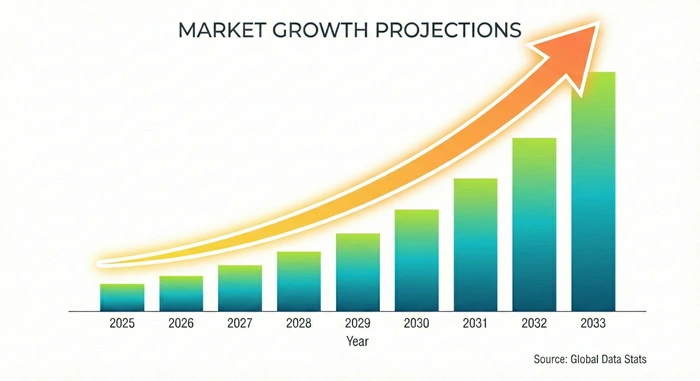
The copper hydroxide market outlook remains exceptionally positive as manufacturers invest substantially in advanced formulations including nano-particles, stabilized suspensions, and controlled-release technologies improving efficacy while reducing copper application rates addressing environmental concerns. Next-generation formulation technologies incorporating smaller particle sizes achieve superior plant surface coverage, improved rainfastness, and enhanced disease control at reduced copper rates compared to conventional wettable powders. Suspension concentrate formulations offering convenience, consistency, and improved handling characteristics capture market share from traditional powder products appealing to commercial growers pursuing operational efficiency. Combination products incorporating copper hydroxide with complementary fungicide modes of action deliver broader disease spectrums, resistance management benefits, and reduced application frequencies creating premium product segments. Adjuvant technology advancements including spreaders, stickers, and penetrants optimize copper hydroxide performance across diverse environmental conditions and crop surfaces supporting consistent disease control throughout variable weather patterns.
Investment trends within the copper hydroxide market reflect growing confidence in long-term demand fundamentals as agrochemical companies, specialty formulators, and copper chemical producers expand production capacity and distribution infrastructure. Leading producers including Albaugh LLC, IQV Agro, Spiess-Urania Chemicals, and regional manufacturers maintain capital expenditure programs upgrading synthesis facilities, formulation lines, and quality control laboratories meeting agricultural registration requirements. Acquisition activity intensifies as multinational crop protection companies pursue market entry through strategic acquisitions of specialty fungicide producers, regional distributors, and formulation technology providers accessing established customer relationships and regulatory portfolios. Vertical integration strategies connecting copper chemical production with fungicide formulation and agricultural distribution create streamlined supply chains reducing costs and ensuring consistent product availability throughout seasonal demand peaks. These favorable dynamics position the market for sustained expansion exceeding general fungicide industry growth rates through 2033.
Expert Speaks
-
Scott Kay, Vice President of BASF Agricultural Solutions, emphasized market conditions: "In 2025 we saw weather, weeds and dynamic markets impact farmers and their operations. Our commitment remains providing innovative crop protection solutions including fungicide technologies supporting disease management challenges farmers face across diverse growing conditions while advancing sustainable agriculture practices and operational efficiency".
-
Corteva Agriscience Leadership, highlighted innovation focus: "Corteva Agriscience launched Zorvec Vinabel, a synthetic fungicide developed for effective control of downy mildew in vineyards and other high-value crops. The product combines advanced active ingredients to deliver systemic and long-lasting disease protection, strengthening fungicide portfolio and supporting resistance management in specialty crop production addressing evolving pathogen challenges".
-
Bayer AG Executive Leadership, articulated strategic direction: "Bayer AG launched EverGolRise, a new synthetic crop protection product aimed at enhancing disease control in pulse crops. EverGolRise combines four active ingredients in a single formulation to deliver broad and improved protection against tough pathogens such as Ascochyta, underscoring commitment to advancing chemical solutions addressing evolving disease challenges supporting stronger yield outcomes for farmers".
Key Report Takeaways
-
Asia Pacific dominates the copper hydroxide market with commanding share exceeding 35%, driven by intensive agricultural production, large-scale fruit and vegetable cultivation, and government crop protection initiatives across China, India, and Southeast Asia where rice paddies, citrus orchards, and vegetable farms consume substantial fungicide volumes supporting regional food security objectives.
-
Latin America emerges as the fastest-growing regional market with projected CAGR approaching 4.5% through 2033, propelled by expanding coffee production, fruit exports, and organic farming adoption where Brazil, Colombia, and Central American nations demonstrate strong agricultural growth requiring intensive disease management supporting international market competitiveness.
-
Wettable powder formulations represent the dominant product segment accounting for approximately 45% market share due to established manufacturing infrastructure, cost-effectiveness, and broad registration portfolios where traditional suspension formulations serve conventional agricultural applications across diverse crops and farming operations worldwide.
-
Agriculture and farming applications constitute the largest end-use segment capturing substantial market share driven by field crop disease control, orchard management, and vegetable production where fungal and bacterial disease prevention supports yield protection, quality maintenance, and harvest security across seasonal production cycles.
-
Suspension concentrate formulations exhibit exceptional growth potential with anticipated CAGR exceeding 5.2% through 2033, attributed to improved handling characteristics, precise application capabilities, and enhanced environmental stability where liquid formulations appeal to commercial growers pursuing operational efficiency and consistent disease control performance.
-
Agrochemical distributors and retailers maintain dominant distribution channel position representing approximately 60% market share driven by established agricultural supply chains, technical support capabilities, and farmer relationships where regional cooperatives, independent dealers, and national chains serve diverse customer segments throughout agricultural production regions.
Market Scope
| Report Coverage Details | |
|---|---|
| Market Size by 2033 | USD 792.09 Million |
| Market Size by 2025 | USD 575.74 Million |
| Market Size by 2026 | USD 605.74 Million |
| Market Growth Rate from 2026 to 2033 | CAGR of 3.85% |
| Dominating Region | Asia Pacific |
| Fastest Growing Region | Latin America |
| Base Year | 2025 |
| Forecast Period | 2026 to 2033 |
| Segments Covered | Form, End-Use Industry, Distribution Channel, Region |
| Regions Covered | North America, Europe, Asia Pacific, Latin America, Middle East & Africa |
Market Dynamics
Drivers Impact Analysis
Organic Certification Growth and Disease Resistance Concerns Accelerate Copper Hydroxide Adoption
| Impact Factor | (≈) % Impact on CAGR Forecast | Geographic Relevance | Impact Timeline |
|---|---|---|---|
| Organic Agriculture Expansion | +1.6% | Global Markets | 2026-2033 |
| Fungicide Resistance Management | +1.2% | Intensive Agriculture Regions | 2026-2033 |
| Climate Change Disease Pressure | +0.9% | Tropical and Subtropical | 2026-2033 |
| Sustainable Farming Initiatives | +0.7% | Developed Markets | 2026-2033 |
The copper hydroxide market benefits substantially from organic agriculture expansion where global organic farmland exceeding 75 million hectares and growing at double-digit annual rates creates concentrated fungicide demand. United States organic production particularly California specialty crops including grapes, citrus, almonds, and vegetables requires intensive copper hydroxide applications throughout growing seasons preventing diseases including downy mildew, anthracnose, and bacterial spot. European organic conversion initiatives particularly Germany pursuing 30% organic farmland by 2030 and France implementing ambitious organic action plans establish sustained consumption growth. Indian organic farming particularly cotton, tea, and spice production increasingly adopts copper-based fungicides meeting international certification requirements for export markets. Organic certification standards specifically permitting copper hydroxide among limited approved fungicide options create sustained baseline demand independent of conventional agriculture substitution trends. Premium pricing for organic produce justifies fungicide input costs supporting consistent copper hydroxide consumption throughout forecast period.
Fungicide resistance management accelerates copper hydroxide market adoption as agricultural advisors, extension services, and crop protection companies recommend multi-site contact fungicides preventing resistance development to single-site systemics. Pathogen populations including downy mildew, late blight, and bacterial diseases demonstrate documented resistance to specific fungicide classes requiring mode-of-action rotation strategies. Copper hydroxide classified as multi-site contact fungicide with low resistance risk serves as essential rotation partner, tank-mix component, or resistance management foundation. Specialty crop production particularly grapes, hops, and vegetables demonstrating intensive fungicide programs incorporate copper applications as resistance management insurance. Integrated pest management programs emphasize preventive copper applications reducing reliance on curative systemic treatments. These agronomic realities position copper hydroxide as indispensable crop protection tool supporting sustained market growth throughout forecast period.
Restraints Impact Analysis
Environmental Concerns and Copper Accumulation Challenge Market Penetration Across Sensitive Applications
| Restraint Factor | (≈) % Impact on CAGR Forecast | Geographic Relevance | Impact Timeline |
|---|---|---|---|
| Soil Copper Accumulation | -1.4% | Intensive Agriculture Areas | 2026-2033 |
| Regulatory Usage Restrictions | -1.1% | European Union | 2026-2031 |
| Phytotoxicity Concerns | -0.8% | Sensitive Crop Varieties | 2026-2033 |
| Alternative Fungicide Competition | -0.6% | Conventional Agriculture | 2026-2030 |
The copper hydroxide market faces growth constraints from environmental concerns where repeated copper applications accumulate in agricultural soils reaching concentrations affecting soil microbial communities, earthworm populations, and beneficial organisms. European Union regulations implementing copper usage limits typically 4-6 kg metallic copper per hectare annually restrict application frequencies particularly intensive crop production including organic vineyards and orchards. Scientific studies documenting copper persistence in soils, potential groundwater contamination risks, and aquatic ecosystem toxicity create regulatory scrutiny and public perception challenges. Organic farming organizations debate copper usage restrictions proposing phase-outs or severe limitations forcing industry innovation toward reduced-copper alternatives. Agricultural certification programs implementing stricter copper limits particularly biodynamic and regenerative agriculture frameworks restrict market growth among environmentally-conscious farming segments. These environmental considerations motivate alternative fungicide development and integrated disease management strategies reducing copper dependency throughout forecast period.
Phytotoxicity concerns constrain copper hydroxide market penetration where certain crop varieties, growth stages, or environmental conditions demonstrate sensitivity to copper applications causing leaf burning, fruit russeting, or growth suppression. Citrus production particularly young trees and tender growth stages requires careful copper application timing preventing cosmetic damage affecting fruit marketability. Stone fruit crops including peaches and nectarines demonstrate copper sensitivity limiting application windows and rates. Ornamental horticulture particularly sensitive flowering plants and foliage crops restricts copper usage preventing aesthetic damage. High temperature and humidity conditions during application increase phytotoxicity risks requiring applicators to avoid midday spraying or adverse weather conditions. Crop consultant recommendations emphasizing caution and conservative application rates limit consumption compared to theoretical disease control requirements. These agronomic limitations restrict addressable market opportunities particularly among sensitive specialty crops throughout forecast period.
Opportunities Impact Analysis
Nanotechnology Formulations and Emerging Markets Create Substantial Growth Avenues Beyond Traditional Applications
| Opportunity Factor | (≈) % Impact on CAGR Forecast | Geographic Relevance | Impact Timeline |
|---|---|---|---|
| Nano-Copper Formulations | +1.3% | Advanced Agriculture Markets | 2027-2033 |
| Emerging Market Agriculture | +1.1% | Africa, Southeast Asia | 2026-2033 |
| Greenhouse and Hydroponics | +0.8% | Controlled Environment | 2027-2033 |
| Biostimulant Combinations | +0.6% | Premium Agriculture | 2027-2033 |
The copper hydroxide market stands to capture substantial value from nanotechnology formulation advances where nano-sized copper particles demonstrate superior efficacy, reduced application rates, and improved environmental profiles compared to conventional formulations. Nano-copper hydroxide formulations achieving particle sizes below 100 nanometers deliver enhanced plant surface coverage, improved cellular penetration, and prolonged disease protection at 40-60% reduced copper rates addressing environmental accumulation concerns. Advanced encapsulation technologies incorporating copper hydroxide in biodegradable matrices provide controlled-release characteristics maintaining effective concentrations while minimizing phytotoxicity risks. Combination products incorporating nano-copper with biological control agents, plant defense activators, or complementary fungicides create synergistic disease control exceeding individual component performance. Premium pricing for advanced formulations targeting environmental stewardship-focused growers, organic premium markets, and regulatory-restricted regions creates attractive market opportunities. Research institutions, agricultural universities, and corporate R&D programs pursuing nano-enabled crop protection support commercialization pathways throughout forecast period.
Emerging market agricultural development presents exceptional growth opportunities for the copper hydroxide market as countries including Sub-Saharan Africa, Southeast Asia, and Central Asia establish modern agricultural sectors requiring crop protection inputs. Government agricultural modernization programs, foreign investment in commercial farming, and smallholder farmer organization create addressable markets for affordable crop protection solutions. International development initiatives supporting food security, agricultural productivity, and rural income generation promote integrated pest management incorporating copper-based fungicides. Export-oriented agriculture particularly coffee, cocoa, tropical fruits, and vegetables pursuing international quality standards and certification requires disease management programs including copper applications. Agricultural extension services, demonstration projects, and farmer field schools introduce copper hydroxide technologies to traditional farming communities. These geographic expansion opportunities enable market growth beyond saturated developed regions supporting sustained industry expansion throughout forecast period.
Segment Analysis
By Form: Wettable Powder Formulations
Established Manufacturing Infrastructure and Cost-Effectiveness Sustain Wettable Powder Segment Market Leadership
Wettable powder formulations command the largest share within the copper hydroxide market, accounting for approximately 45% of global revenue with continued expansion projected at steady CAGR of 3.6% through 2033. This product category encompasses dry powder formulations requiring water dispersion before application demonstrating traditional suspension characteristics, broad crop registration portfolios, and established manufacturing processes. The copper hydroxide market benefits from wettable powder advantages including extended shelf stability, economical packaging and transportation, and compatibility with diverse application equipment serving conventional agricultural operations. Manufacturing simplicity utilizing standard milling, blending, and packaging equipment enables cost-competitive production supporting price-sensitive agricultural markets particularly developing regions and commodity crop applications. Broad regulatory registration portfolios accumulated over decades of commercial usage facilitate market access across numerous countries, crops, and disease targets without extensive re-registration investments required for novel formulations.
Asia Pacific and Latin America lead wettable powder consumption within the market, driven by cost-focused agricultural operations, established distribution channels, and traditional spray equipment compatibility. Indian agriculture particularly cotton, vegetables, and fruit orchards utilizing manual knapsack sprayers and tractor-mounted equipment consumes substantial wettable powder volumes. Chinese agricultural cooperatives and smallholder farmers favor economical powder formulations meeting basic disease control requirements without premium pricing. Brazilian coffee plantations, Colombian fruit production, and Central American vegetable farms maintain traditional wettable powder usage throughout established crop protection programs. Leading manufacturers including Albaugh LLC, IQV Agro, Spiess-Urania Chemicals, and regional formulators operate production facilities serving local markets through agricultural distributors and retail networks. North American and European wettable powder applications emphasize organic farming operations, conventional orchard management, and vineyard disease control where established product registrations and applicator familiarity support continued usage. Price competitiveness compared to suspension concentrates appeals to cost-conscious growers particularly during commodity price downturns throughout forecast period.
By End-Use Industry: Agriculture and Farming
Broad-Spectrum Disease Control and Organic Compatibility Position Agriculture as Dominant Application Category
Agriculture and farming applications represent the largest segment within the copper hydroxide market, capturing substantial market share driven by field crop disease control, orchard management, vineyard protection, and vegetable production. This sector encompasses diverse agricultural production systems including conventional farming, organic operations, integrated pest management programs, and specialty crop cultivation requiring fungicidal and bactericidal disease prevention. The copper hydroxide market benefits from agriculture segment's volume opportunities where global crop production exceeding 9 billion metric tons annually across grains, oilseeds, fruits, vegetables, and specialty crops creates substantial addressable disease control markets. Preventive disease management programs incorporating copper applications before symptom development deliver optimal economic returns compared to curative treatments after infection establishment. Organic farming requirements specifically permitting copper-based fungicides among limited approved options create sustained baseline consumption independent of conventional agriculture alternatives.
North America and Europe lead agricultural copper hydroxide applications within the market, driven by intensive specialty crop production, organic farming expansion, and established disease management programs. California agriculture particularly grapes, almonds, walnuts, citrus, and vegetables consumes substantial copper hydroxide volumes throughout year-round growing seasons. Pacific Northwest tree fruit production including apples, pears, and cherries incorporates copper applications for bacterial disease control particularly fire blight prevention. European viticulture particularly France, Italy, and Spain maintaining millions of hectares requiring intensive disease management consumes significant copper fungicide volumes addressing downy mildew and other foliar diseases. Leading crop protection companies including BASF, Bayer, Corteva, and Syngenta maintain comprehensive copper hydroxide product portfolios serving agricultural customers through distributor networks and direct sales channels. Emerging applications including greenhouse production, hydroponic systems, and urban agriculture create growth opportunities beyond traditional field agriculture. Precision application technologies, disease forecasting systems, and integrated management programs optimize copper usage efficiency supporting sustainable agriculture throughout forecast period.
Regional Insights
Asia Pacific
Agricultural Intensity and Food Security Imperatives Establish Regional Dominance in Copper Hydroxide Consumption
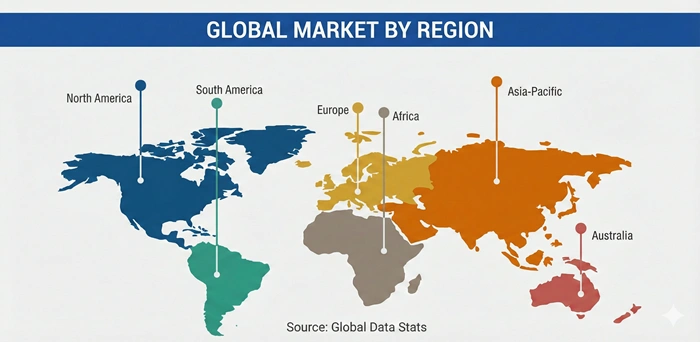
Asia Pacific commands the copper hydroxide market with dominant share exceeding 35%, driven by intensive agricultural production, large rural populations, and government food security initiatives across China, India, and Southeast Asia where diverse crop production and disease management requirements consume substantial fungicide volumes. China alone accounts for approximately 40% of Asia Pacific market share with agricultural sector supporting 1.4 billion population through rice paddies, vegetable production, fruit orchards, and specialty crops requiring intensive disease management programs. Indian agriculture particularly cotton, vegetables, fruits, and plantation crops demonstrates growing copper hydroxide consumption supporting yield protection and export quality requirements. Southeast Asian nations including Thailand, Vietnam, Indonesia, and Philippines maintain tropical agriculture vulnerable to fungal and bacterial diseases requiring frequent fungicide applications throughout humid growing conditions. Japanese and South Korean specialty agriculture particularly greenhouse production and high-value crops maintains consistent copper hydroxide usage supporting quality-focused production systems.
Regional agricultural policies strengthen Asia Pacific's market position through government crop protection subsidies, farmer training programs, and agricultural modernization initiatives promoting disease management technologies. Chinese agricultural policy supporting food self-sufficiency, rural income growth, and sustainable intensification maintains fungicide consumption supporting 120 million hectares of cultivated land. Indian government schemes including Pradhan Mantri Fasal Bima Yojana crop insurance and agricultural extension services promote crop protection adoption among smallholder farmers. Southeast Asian export agriculture particularly coffee, palm oil, tropical fruits, and vegetables serving international markets requires disease control meeting import standards and quality specifications. Leading regional manufacturers including Jiangxi Heyi Chemical, Shandong Greenyuan Chemicals, and local formulators serve domestic markets through agricultural cooperatives and retail networks. Organic agriculture growth particularly tea, spices, and certified produce creates premium market opportunities. The region's market dominance continues through 2033 as population growth, dietary improvements, and agricultural intensification create sustained crop protection demand supporting continued leadership position throughout forecast period.
Latin America
Export Agriculture Expansion and Organic Certification Drive Fastest Regional Market Growth
Latin America emerges as the fastest-growing regional copper hydroxide market with projected CAGR of 4.5% through 2033, propelled by expanding coffee production, fruit exports, and organic farming adoption. Brazil dominates regional market accounting for over 45% of Latin American consumption with agriculture sector supporting extensive coffee plantations, citrus groves, soybean production, and sugarcane cultivation requiring disease management programs. Colombian coffee production representing economic cornerstone and major export commodity maintains intensive copper hydroxide usage controlling coffee rust and other fungal diseases threatening production. Central American agriculture particularly coffee, bananas, and vegetables serving North American export markets requires disease control meeting international standards and organic certification requirements. Chilean fruit exports including grapes, apples, and berries demonstrate growing copper consumption supporting quality production and export competitiveness. Argentine agriculture particularly soybean, corn, and specialty crops expanding into new production regions requires crop protection inputs addressing emerging disease challenges.
Regional export focus strengthens Latin America's market growth through international quality standards, organic certification requirements, and sustainable agriculture commitments. Coffee certification programs including Rainforest Alliance, Fair Trade, and organic standards specifically permit copper-based fungicides supporting disease management while maintaining certification eligibility. Fruit exports to United States, Europe, and Asian markets require phytosanitary certifications, residue compliance, and quality specifications driving intensive disease control programs. Leading agrochemical distributors including local cooperatives, multinational companies, and regional formulators serve diverse agricultural customers through technical support, credit programs, and supply chain services. Government agricultural development programs particularly Brazil's agricultural research system, Colombian coffee federation, and regional agricultural banks support technology adoption and input access. Organic agriculture growth particularly premium coffee, tropical fruits, and certified produce creates sustained market opportunities. The region's market growth continues accelerating through 2033 as agricultural expansion, export competitiveness, and sustainable production create favorable dynamics supporting sustained market expansion throughout forecast period.
Top Key Players
-
Albaugh LLC (United States)
-
IQV Agro (Spain)
-
Spiess-Urania Chemicals GmbH (Germany)
-
Certis USA LLC (United States)
-
Nufarm Limited (Australia)
-
ADAMA Agricultural Solutions (Israel)
-
Jiangxi Heyi Chemical Co. Ltd. (China)
-
Shandong Greenyuan Chemicals Co. Ltd. (China)
-
Parth Corporation (India)
-
Biota Agro (Brazil)
-
Agrochem Lab (India)
-
Rainbow Chem (India)
-
Manica S.A. (Argentina)
-
Cosmocel (India)
-
Kunshan Odowell Co. Ltd. (China)
Recent Developments
-
Albaugh LLC (2025): Expanded copper hydroxide production capacity at North American manufacturing facilities increasing output by 25% addressing growing demand from organic agriculture, specialty crop production, and sustainable farming operations requiring approved fungicide solutions, demonstrating commitment to serving agricultural markets with reliable product supply and technical support capabilities throughout seasonal application windows.
-
Nufarm Limited (2024): Launched advanced suspension concentrate copper hydroxide formulation incorporating nano-particle technology and enhanced adjuvant systems delivering improved rainfastness, extended residual activity, and reduced application rates addressing environmental concerns while maintaining disease control efficacy supporting premium positioning in specialty crop markets particularly viticulture and high-value fruit production.
-
ADAMA Agricultural Solutions (2024): Completed strategic acquisition of regional copper fungicide manufacturer in Latin America expanding market presence, production capabilities, and distribution networks serving Brazilian coffee production, Colombian agriculture, and Central American export crops strengthening position as leading crop protection supplier throughout rapidly growing regional markets requiring disease management solutions.
-
Certis USA (2024): Introduced combination product incorporating copper hydroxide with biological control agents and plant defense activators creating synergistic disease control suitable for organic farming, integrated pest management programs, and resistance management strategies addressing grower demands for sustainable crop protection solutions reducing copper usage while maintaining efficacy across diverse crops and disease targets.
-
IQV Agro (2024): Received regulatory approvals for expanded copper hydroxide registrations across European Union member states and Asian markets enabling broader geographic sales, additional crop applications, and new disease claims strengthening competitive position and market access supporting international expansion strategy throughout key agricultural production regions requiring certified fungicide products meeting regulatory compliance standards.
Market Trends
Reduced-Copper Formulations and Biological Integration Reshape Industry Competitive Dynamics
The copper hydroxide market experiences transformative trends centered on reduced-copper formulations as environmental regulations, soil accumulation concerns, and sustainability initiatives drive innovation toward lower application rates maintaining disease control efficacy. Manufacturers develop advanced particle size reduction technologies achieving nano-scale copper particles delivering superior plant surface coverage, improved disease prevention, and reduced metallic copper requirements by 30-50% compared to conventional formulations. Enhanced adjuvant systems incorporating spreaders, stickers, and penetrants optimize copper hydroxide performance extending residual activity and improving rainfastness characteristics reducing application frequencies. Combination products integrating copper with complementary modes of action including organic acids, plant extracts, or mineral compounds achieve synergistic disease control exceeding individual component performance. Precision agriculture technologies including variable-rate application, disease forecasting, and targeted spraying optimize copper usage applying fungicides only where needed, when needed, at rates needed reducing total copper inputs while maintaining crop protection. These innovation trends address environmental concerns while maintaining disease control supporting sustained market relevance throughout forecast period.
Biological integration trends reshape the copper hydroxide market as manufacturers develop combination products incorporating beneficial microbes, plant defense activators, or bio-fungicides with copper formulations creating integrated disease management solutions. Trichoderma species, Bacillus subtilis, and other beneficial organisms demonstrate compatibility with copper hydroxide enabling tank-mixing or pre-formulated combinations. Plant defense activators including salicylic acid derivatives or phosphonates combined with copper enhance plant immune responses reducing disease susceptibility. Organic farming acceptance of biological-copper combinations maintains disease control efficacy while reducing copper dependency addressing organic certification concerns about copper usage limits. These integrated approaches appeal to sustainable agriculture advocates, organic premium markets, and environmentally conscious growers pursuing reduced-input production systems. Research programs at universities, government laboratories, and corporate R&D centers investigate optimal biological-copper integration strategies supporting commercialization throughout forecast period.
Segments Covered in the Report
By Form
-
Wettable Powder (WP)
-
Suspension Concentrate (SC)
-
Dry Flowable (DF)
-
Water Dispersible Granules (WG)
By End-Use Industry
-
Agriculture and Farming (Field Crops, Orchards, Vineyards)
-
Horticulture and Floriculture (Vegetables, Ornamentals, Nurseries)
-
Aquaculture (Disease Prevention, Water Treatment)
-
Industrial Applications (Wood Preservation, Antifouling Coatings)
By Distribution Channel
-
Agrochemical Distributors and Retailers (Cooperatives, Independent Dealers)
-
Direct Sales (Large Farms, Corporate Agriculture)
-
Online Platforms (E-commerce, Digital Marketplaces)
-
Government Programs (Subsidized Distribution, Extension Services)
By Region
-
North America (United States, Canada, Mexico)
-
Europe (Germany, France, Italy, Spain, United Kingdom, Rest of Europe)
-
Asia Pacific (China, India, Japan, Southeast Asia, Australia, Rest of Asia Pacific)
-
Latin America (Brazil, Colombia, Argentina, Central America, Rest of Latin America)
-
Middle East & Africa (South Africa, Egypt, Rest of MEA)
Frequently Asked Questions
Question 1: What is the projected size of the copper hydroxide market by 2033?
Answer: The global copper hydroxide market is expected to reach approximately USD 792.09 million by 2033, growing from USD 605.74 million in 2026. This substantial expansion reflects organic agriculture growth, sustainable farming adoption, disease management requirements, and crop protection demand across diverse agricultural production systems worldwide.
Question 2: Which region dominates the copper hydroxide market currently?
Answer: Asia Pacific leads the copper hydroxide market with over 35% share, driven by intensive agricultural production, large rural populations, and government food security initiatives across China, India, and Southeast Asia. Leading manufacturers including Jiangxi Heyi Chemical, Shandong Greenyuan Chemicals, and regional formulators maintain dominant production and distribution positions serving diverse agricultural markets.
Question 3: What are the primary drivers of copper hydroxide market growth?
Answer: Key growth drivers include organic agriculture expansion requiring approved fungicides, fungicide resistance management programs incorporating multi-site contact products, climate change increasing disease pressure, and sustainable farming initiatives favoring environmentally compatible crop protection solutions. These factors create sustained demand across conventional and organic agricultural production systems throughout forecast period.
Question 4: Which formulation type holds the largest copper hydroxide market share?
Answer: Wettable powder formulations dominate the copper hydroxide market with approximately 45% share due to established manufacturing infrastructure, cost-effectiveness, broad crop registrations, and compatibility with traditional application equipment. These conventional formulations serve price-sensitive agricultural markets, smallholder farmers, and commodity crop production systems supporting market leadership position.
Question 5: How do environmental regulations impact the copper hydroxide market?
Answer: Environmental regulations particularly European Union copper usage limits and soil accumulation concerns constrain application rates and frequencies driving innovation toward reduced-copper formulations, nano-particle technologies, and biological integration strategies. However, organic certification standards specifically permitting copper-based fungicides create sustained baseline demand supporting market stability despite regulatory pressures, with manufacturers developing advanced formulations addressing environmental concerns while maintaining disease control efficacy throughout forecast period.