
Contrast Media Market Overview
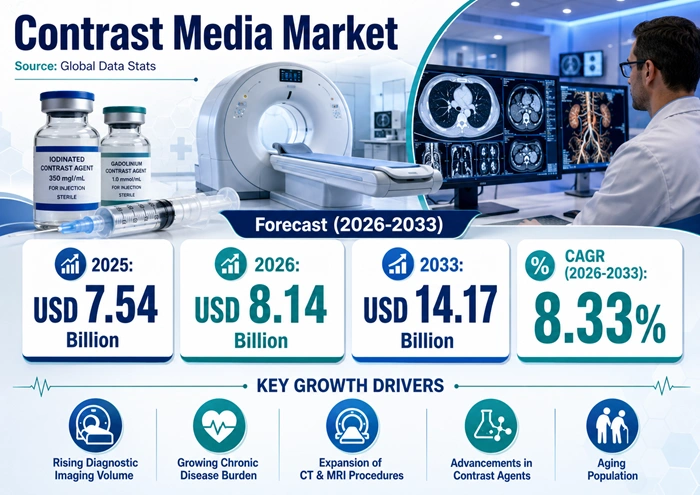
The global contrast media market size is valued at USD 7.54 billion in 2025 and is predicted to increase from USD 8.14 billion in 2026 to approximately USD 14.17 billion by 2033, growing at a CAGR of 8.33% from 2026 to 2033. This strong growth trajectory is driven by a steady rise in diagnostic imaging procedures worldwide, growing prevalence of chronic diseases such as cancer, cardiovascular disorders, and neurological conditions, and continuous advancements in imaging technologies that demand more precise and safer contrast agents.
AI Impact on the Contrast Media Industry
Artificial Intelligence Is Transforming Diagnostic Imaging Workflows, Reshaping How Contrast Agents Are Used, Optimized, and Developed Across Global Healthcare Systems
Artificial intelligence is fundamentally changing the way contrast media is administered, analyzed, and developed. AI-powered imaging platforms are enabling radiologists to optimize contrast agent dosing in real time, reducing patient exposure to potentially harmful volumes while maintaining or improving diagnostic image quality. Machine learning algorithms embedded in CT and MRI systems can now auto-adjust acquisition parameters based on a patient's physiological data, which directly influences the type and volume of contrast agent required. This precision-driven approach is accelerating the shift toward personalized contrast protocols across hospitals and diagnostic imaging centers globally.
On the research and development side, AI is significantly compressing the timelines for developing next-generation contrast agents with improved safety profiles. Computational drug discovery platforms powered by deep learning are helping pharmaceutical companies identify novel molecular formulations for gadolinium-based and iodinated contrast agents that reduce nephrotoxicity and allergic reaction risks. Predictive analytics tools are also being deployed to monitor patient outcomes post-contrast administration, feeding valuable safety data back into product improvement cycles. As AI integration deepens across the diagnostic imaging ecosystem, it is expected to raise the clinical standards of the contrast media market and accelerate the adoption of advanced contrast solutions in both developed and emerging healthcare markets.
Growth Factors
A Rapidly Aging Global Population, Rising Chronic Disease Burden, and Expanding Diagnostic Imaging Infrastructure Are Collectively Driving Robust Market Growth
The most significant growth driver for the contrast media market is the escalating global burden of chronic and life-threatening diseases. Cardiovascular diseases remain the leading cause of death worldwide, and conditions such as cancer, kidney disease, and neurological disorders require frequent and accurate imaging for early detection, staging, and treatment monitoring. Each of these clinical use cases demands the use of contrast agents to enhance image clarity and diagnostic confidence. As global healthcare systems invest more heavily in early diagnosis as a cost-saving strategy, the demand for high-quality contrast media continues to strengthen across all major modalities, including CT, MRI, and ultrasound.
Equally important is the rapid expansion of diagnostic imaging infrastructure, especially across emerging economies in Asia Pacific, Latin America, and the Middle East. Governments and private healthcare investors are building new hospitals and diagnostic centers equipped with advanced imaging systems, creating a growing installed base of CT and MRI equipment that drives demand for imaging agents. The aging global population further amplifies this trend, as older adults are disproportionately affected by the diseases that most commonly require contrast-enhanced imaging. The convergence of demographic pressure, healthcare infrastructure growth, and technological advancement positions the contrast media market for sustained expansion through the 2026 to 2033 forecast period.
Market Outlook
The Contrast Media Market Is Set for Sustained Long-Term Growth Underpinned by Technological Innovation, Patient Safety Focus, and Increasing Global Imaging Procedure Volumes
The contrast media market outlook through 2033 is highly favorable, shaped by a combination of clinical necessity and technological progress. Next-generation contrast agents, including targeted molecular contrast media and blood-pool agents for MRI, are gradually entering clinical use, offering superior diagnostic specificity and a reduced side-effect profile compared to conventional agents. Simultaneously, the growing adoption of minimally invasive diagnostic and interventional procedures is reinforcing the clinical importance of contrast-enhanced imaging across surgical planning, oncological staging, and vascular assessment. These developments are expected to sustain a steady upward trend in both procedure volumes and per-procedure contrast media consumption.
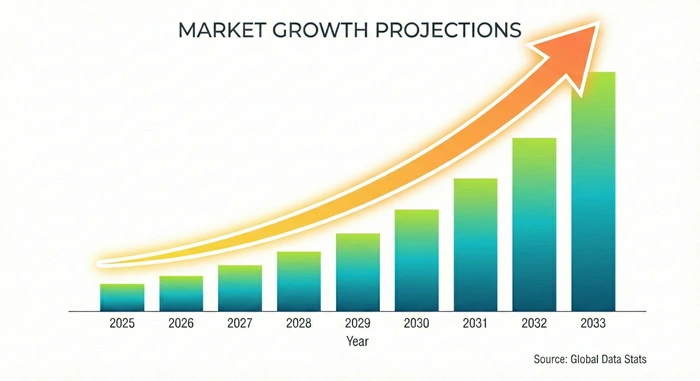
From a business perspective, the major players in the contrast media market are actively expanding their geographic reach and product portfolios through strategic partnerships, acquisitions, and regional regulatory approvals. Increased healthcare spending in countries such as China, India, Brazil, and Saudi Arabia is unlocking large addressable markets that were previously underpenetrated. At the same time, ongoing research into reducing gadolinium retention concerns and managing iodinated contrast media-related adverse events is expected to improve the safety narrative around contrast agents, ultimately widening their clinical acceptance. By 2033, the market is projected to be nearly double its 2025 size, reflecting both rising procedure volumes and product-level innovation.
Expert Speaks
-
"The diagnostic imaging space is undergoing a profound transformation. The growing need for precise, early-stage disease detection is fundamentally elevating the role of advanced contrast agents in clinical practice, and we are committed to leading that evolution with science-backed innovation."
— CEO, Bayer AG -
"As healthcare systems globally shift toward value-based care, the demand for diagnostic clarity at lower patient risk is intensifying. Our investments in next-generation contrast media formulations are directly aligned with the clinical need for safer, more effective imaging solutions across all modalities."
— CEO, GE HealthCare Technologies -
"The intersection of artificial intelligence and diagnostic imaging is creating extraordinary opportunities for contrast media providers. Real-time imaging optimization, combined with AI-driven dose management, will redefine how contrast agents deliver value across radiology workflows globally."
— CEO, Bracco Imaging
Key Report Takeaways
-
North America leads the contrast media market with approximately 38.9% of global revenue in 2025, supported by a highly advanced healthcare infrastructure, a high volume of diagnostic imaging procedures, and strong clinical adoption of both iodinated and gadolinium-based contrast agents
-
Asia Pacific is the fastest-growing regional market, driven by expanding healthcare investment, rapid growth in diagnostic imaging center installations, government-supported health screening programs, and a large patient population in countries such as China, India, Japan, and South Korea
-
Hospitals and diagnostic imaging centers are the dominant end-user segment, contributing the largest share of contrast media consumption globally due to the high volume of CT, MRI, and angiography procedures performed in institutional settings
-
The X-ray and Computed Tomography (CT) modality segment contributes the most to overall market revenue, holding approximately 74% of the global modality-based revenue share in 2025, owing to the widespread clinical application of CT scans in oncology, cardiology, and emergency medicine
-
Iodinated contrast agents remain the most widely used product type across CT and angiography procedures, given their well-established safety profile, broad clinical availability, and compatibility with existing imaging equipment worldwide
-
The Ultrasound contrast agents segment is projected to be the fastest-growing modality, with an estimated CAGR of approximately 10.2% from 2026 to 2033, fueled by growing preference for radiation-free imaging in pediatric and cardiac applications and the emergence of second-generation microbubble contrast agents
Market Scope
| Report Coverage | Details |
|---|---|
| Market Size by 2033 | USD 14.17 Billion |
| Market Size by 2025 | USD 7.54 Billion |
| Market Size by 2026 | USD 8.14 Billion |
| Market Growth Rate from 2026 to 2033 | CAGR of 8.33% |
| Dominating Region | North America |
| Fastest Growing Region | Asia Pacific |
| Base Year | 2025 |
| Forecast Period | 2026 to 2033 |
| Segments Covered | Product Type, Modality, Application, End User |
| Regions Covered | North America, Europe, Asia Pacific, Latin America, Middle East & Africa |
Market Dynamics
Drivers Impact Analysis
Rising Diagnostic Imaging Volumes, Increasing Chronic Disease Prevalence, and Continuous Product Innovation Are the Primary Forces Accelerating the Contrast Media Market
| Driver | ≈ % Impact on CAGR Forecast | Geographic Relevance | Impact Timeline |
|---|---|---|---|
| Rising volume of diagnostic imaging procedures | ~33% | Global, especially North America & Europe | Immediate – Long-term |
| Increasing prevalence of chronic and oncological diseases | ~27% | Global | Immediate – Long-term |
| Advancements in contrast agent safety and formulation | ~20% | North America, Europe, Asia Pacific | Medium to Long-term |
| Expansion of diagnostic imaging infrastructure | ~13% | Asia Pacific, Latin America, MEA | Medium-term |
| Growing adoption of minimally invasive procedures | ~7% | North America, Europe | Short to Long-term |
The contrast media market is experiencing consistent upward pressure from the global rise in diagnostic imaging volumes. The growing clinical emphasis on early disease detection — particularly for cardiovascular disease, cancer, and neurological conditions — is translating directly into a higher number of CT, MRI, and angiography procedures that require contrast enhancement. In North America and Europe, where healthcare infrastructure is most developed, the standardization of contrast-enhanced imaging protocols across clinical guidelines has entrenched contrast media as an indispensable diagnostic tool. The growing geriatric population in these regions further amplifies procedure volumes, as older patients require more frequent imaging across multiple disease areas.
Technological advancements in contrast agent formulation are reinforcing this demand by expanding the clinical utility of imaging agents into new procedure types and patient populations. The development of lower-osmolarity iodinated agents, macrocyclic gadolinium-based contrast agents, and second-generation ultrasound microbubble agents has broadened the eligibility criteria for contrast use, reducing contraindications and improving safety for high-risk patients such as those with compromised kidney function. The contrast media market is also benefiting from the rapid proliferation of interventional radiology procedures worldwide, which require real-time contrast-enhanced imaging for precision guidance. As hospitals and imaging centers invest in the latest MRI and multi-detector CT systems, the associated demand for compatible, high-performance contrast agents is expected to grow proportionally across all major geographies.
Restraints Impact Analysis
Adverse Reaction Risks, Regulatory Complexity, and High Cost of Advanced Agents Are Creating Meaningful Headwinds That May Moderate Growth in Certain Segments
| Restraint | ≈ % Impact on CAGR Forecast | Geographic Relevance | Impact Timeline |
|---|---|---|---|
| Risk of nephrotoxicity and allergic reactions | ~36% | Global | Immediate – Long-term |
| Gadolinium retention and safety concerns | ~28% | North America, Europe | Medium to Long-term |
| High cost of advanced contrast agents | ~22% | Emerging markets, Asia Pacific, MEA | Immediate – Medium-term |
| Stringent regulatory approval processes | ~14% | Global | Medium-term |
One of the most persistent restraints in the contrast media market is the risk of adverse reactions associated with contrast agent administration. Contrast-induced nephropathy (CIN) remains a significant clinical concern, particularly for patients with pre-existing renal impairment who require iodinated contrast agents for CT imaging. Allergic reactions, ranging from mild skin rashes to severe anaphylaxis, continue to limit contrast agent use in certain patient populations and require clinical settings to maintain emergency response protocols during every contrast-enhanced procedure. These safety concerns have led to increased scrutiny from regulatory bodies, additional pre-procedure patient screening requirements, and growing demand for alternative imaging approaches that do not require contrast enhancement.
The issue of gadolinium retention in brain tissue, identified through post-mortem studies and confirmed in patients with normal renal function, has introduced a new layer of safety uncertainty into the gadolinium-based contrast agent segment. While regulatory agencies in the United States and Europe have taken measures such as restricting the use of linear gadolinium agents and mandating stronger labeling requirements, the long-term clinical implications of gadolinium deposition remain an active area of research and regulatory debate. These concerns are influencing prescribing patterns, particularly in pediatric and chronic disease populations that require repeated MRI examinations. Companies that can demonstrate superior gadolinium stability through macrocyclic formulations are gaining competitive advantage, but the overall safety narrative continues to create hesitancy in segments of the contrast media market.
Opportunities Impact Analysis
Emerging Markets, Next-Generation Contrast Agents, and AI-Enhanced Imaging Protocols Present Transformational Growth Opportunities for the Contrast Media Market
| Opportunity | ≈ % Impact on CAGR Forecast | Geographic Relevance | Impact Timeline |
|---|---|---|---|
| Expansion into underserved emerging markets | ~35% | Asia Pacific, Latin America, MEA | Medium to Long-term |
| Development of targeted and molecular contrast agents | ~30% | North America, Europe | Long-term |
| AI-driven contrast dose optimization solutions | ~22% | Global, led by North America & Europe | Short to Long-term |
| Growth of ultrasound contrast agents in new indications | ~13% | Asia Pacific, Europe | Medium-term |
The most significant long-term opportunity for the contrast media market lies in the rapid expansion of healthcare infrastructure and diagnostic imaging adoption across emerging economies. Countries in Southeast Asia, the Middle East, Sub-Saharan Africa, and Latin America are investing heavily in modern hospital facilities, diagnostic imaging centers, and preventive healthcare programs. As these markets gain more CT and MRI equipment and train more radiologists, they will create a substantial new demand base for contrast agents that is still largely untapped today. Pharmaceutical companies with strong distribution networks and local regulatory expertise are best positioned to capture first-mover advantages in these high-growth geographies.
The development of targeted molecular contrast agents represents a transformational scientific and commercial opportunity for the next generation of the contrast media market. Unlike conventional agents that distribute non-specifically throughout the body, targeted agents bind to specific molecular markers associated with tumors, plaques, or inflammatory lesions, enabling much earlier and more accurate disease detection. Research programs across academic medical centers and biopharmaceutical companies in the United States and Europe are actively advancing these technologies, with several candidates in preclinical and early clinical stages. The commercial introduction of such agents — particularly in oncological and cardiovascular applications — has the potential to significantly expand both the clinical utility and the average selling price of contrast media products over the 2026 to 2033 forecast window.
Segment Analysis
By Modality
The CT and X-Ray Modality Segment Dominates the Market While Ultrasound Contrast Agents Are Rapidly Gaining Traction as a Radiation-Free, High-Growth Imaging Alternative
The X-ray and Computed Tomography (CT) modality segment holds the dominant position in the global contrast media market, accounting for approximately 74% of total modality-based revenue in 2025. This commanding share is rooted in the widespread clinical application of CT imaging across emergency medicine, oncology, cardiology, and pulmonology. CT contrast procedures are among the most frequently performed diagnostic studies worldwide, owing to the speed, accessibility, and diagnostic versatility of CT scanners. Iodinated contrast agents are the backbone of CT imaging, used in a broad range of procedures including CT angiography, perfusion CT, and multiphase abdominal imaging. North America leads this segment, with the United States accounting for the largest single-country share driven by high CT scan utilization rates and strong clinical guideline support for contrast-enhanced protocols. Key players such as GE HealthCare, Bayer AG, Bracco Imaging, and Guerbet Group are the dominant suppliers in this space, offering a wide portfolio of iodinated agents across varying osmolality profiles and iodine concentrations tailored to different clinical settings. The CT modality segment is expected to grow at a CAGR of approximately 7.8% from 2026 to 2033, supported by continuous scanner upgrades, expanded clinical indications, and growing procedure volumes across Asia Pacific.
The Ultrasound contrast agents (UCA) segment is the fastest-growing modality within the contrast media market, projected to achieve a CAGR of approximately 10.2% from 2026 to 2033 and gradually increase its global revenue share. Ultrasound contrast agents — primarily composed of microbubble formulations — offer the unique advantage of real-time vascular imaging without any ionizing radiation exposure, making them particularly valuable in pediatric cardiology, liver lesion characterization, and stress echocardiography. Growing clinical evidence supporting the diagnostic accuracy of UCAs in detecting focal liver lesions and evaluating myocardial perfusion is accelerating their adoption in routine radiology and cardiology practice. Europe and Asia Pacific are the key growth markets for this segment, with Germany, France, Japan, and China driving demand through expanded clinical guideline endorsements and increasing physician training programs. Companies such as Bracco Imaging with its SonoVue/Lumason product line and Lantheus Holdings with DEFINITY are the leading commercial players in this space, actively investing in indication expansion studies to broaden regulatory approvals in new anatomical areas and clinical conditions. Asia Pacific is expected to witness the most rapid ultrasound contrast agent adoption over the forecast period, driven by a large patient population requiring non-invasive cardiac imaging and strong healthcare system investments in cutting-edge diagnostic ultrasound technology.
By Product Type
Iodinated Contrast Agents Lead Global Revenue While Gadolinium-Based Agents Are Expanding Rapidly Across MRI-Intensive Clinical Markets in Both Developed and Developing Economies
Iodinated contrast agents represent the largest product type segment in the contrast media market, generating the majority of global revenue due to their broad application across CT scanning, conventional X-ray, and fluoroscopy procedures. These agents are available in both ionic and non-ionic formulations, with low-osmolarity non-ionic variants becoming the standard of care for most CT applications owing to their superior safety profile and patient tolerability. The global clinical preference for non-ionic iodinated agents has been reinforced by decades of safety data and strong incorporation into international radiology practice guidelines. North America, with its large installed base of multi-detector CT systems and high annual CT scan volume, dominates this segment, with key players such as GE HealthCare's Omnipaque and Bayer AG's Ultravist commanding significant market share. This segment is expected to maintain a revenue CAGR of approximately 7.4% through 2033, supported by growing CT utilization across preventive oncology screening programs and cardiovascular imaging protocols globally.
Gadolinium-based contrast agents (GBCAs) constitute the second-largest product category and the most dynamic growth segment within the contrast media market, driven by the global expansion of MRI procedures and increasing clinical adoption of contrast-enhanced MRI in neurology, musculoskeletal imaging, and oncological staging. Europe leads the GBCA segment, particularly through strong MRI utilization in Germany, France, and the United Kingdom, where clinical protocols for brain tumor assessment, multiple sclerosis monitoring, and breast cancer screening heavily rely on contrast-enhanced MRI. The shift away from linear GBCAs toward macrocyclic formulations — driven by gadolinium retention safety concerns — has reshaped product portfolios across all major manufacturers, with Guerbet's Dotarem, Bayer's Gadovist, and Bracco's ProHance among the leading macrocyclic agents gaining prescribing preference. Asia Pacific is the fastest-growing geography for GBCAs, with China and South Korea expanding their MRI scanner bases rapidly and increasing the per-capita MRI procedure rate year over year. This segment is projected to grow at a CAGR of approximately 9.3% from 2026 to 2033, making it a key strategic focus area for all major contrast media manufacturers.
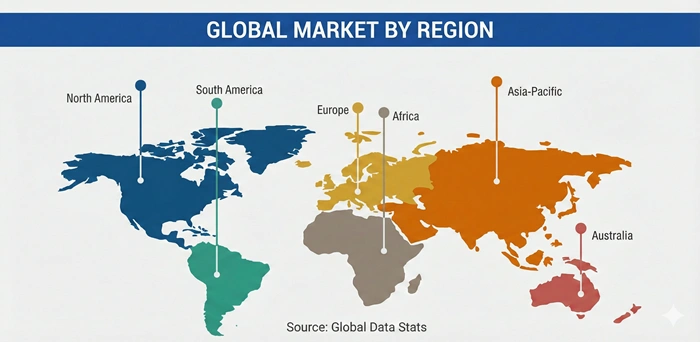
Regional Insights
Geographic Growth Patterns in the Contrast Media Market Reflect Differences in Healthcare Infrastructure Maturity, Disease Epidemiology, Imaging Technology Adoption, and Regulatory Frameworks Across Global Regions
North America
North America is the dominant region in the global contrast media market, holding approximately 38.9% of total global revenue in 2025. The region's leadership position is rooted in its world-class healthcare infrastructure, high diagnostic imaging utilization rates, and strong insurance coverage that facilitates widespread access to contrast-enhanced CT, MRI, and angiography procedures. The United States is by far the single largest national market, driven by a healthcare system that performs millions of CT and MRI scans annually and maintains sophisticated clinical protocols for contrast agent use across oncology, cardiology, and emergency medicine. Key companies active in North America include GE HealthCare, Bayer AG's Radiology division, Bracco Diagnostics, Lantheus Holdings, and Guerbet, all of which maintain strong commercial and medical affairs infrastructure in the region. North America is projected to continue growing at a CAGR of approximately 7.6% from 2026 to 2033, supported by ongoing expansion in outpatient imaging centers, increasing adoption of AI-assisted imaging protocols, and a growing aging population that drives higher per-capita imaging procedure volumes.
Asia Pacific
Asia Pacific is the fastest-growing regional market in the contrast media industry and is projected to record a CAGR of approximately 10.1% from 2026 to 2033, outpacing all other geographies by a significant margin. The region's rapid expansion is driven by large and growing patient populations in China and India, accelerating government investment in modern hospital construction and diagnostic imaging capability, rising middle-class healthcare expenditure, and an increasing prevalence of non-communicable diseases requiring imaging-based diagnosis and monitoring. China is the single most dynamic market in the region, rapidly increasing its installed base of CT and MRI equipment and expanding access to advanced diagnostic services through its national healthcare reform programs. South Korea, Japan, Australia, and India are also significant growth contributors, with national health initiatives and insurance expansion programs driving higher imaging procedure rates. Companies such as Guerbet, Bayer AG, Bracco Imaging, and several regional generics manufacturers including J.B. Chemicals & Pharmaceuticals are actively investing in Asia Pacific distribution networks and local manufacturing partnerships to capture this high-growth opportunity across the contrast media market.
Report Customization by Region and Country
Tailored Contrast Media Market Intelligence Is Available for Every Region and Country — Because Precise Geographic Data Is the Foundation of Effective Healthcare Business Strategy
This report on the contrast media market is available with full region-wise and country-wise customization, providing granular data, competitive insights, regulatory landscape analysis, and growth opportunity assessments tailored specifically to your target geography. Customized editions of this report are designed to meet the specific strategic needs of healthcare companies, pharmaceutical manufacturers, medical device investors, and diagnostic imaging providers operating in or planning to enter specific regional markets.
Customized reports are available for all the following regions and countries:
North America
-
Detailed contrast media market analysis available for the U.S., Canada, and Mexico, including country-level imaging procedure volumes, contrast agent adoption rates, competitive landscape, and regulatory environment assessments through 2033
Europe
-
Country-specific insights available for the U.K., Germany, France, Italy, and Rest of Europe, covering gadolinium safety regulation impacts, MRI utilization trends, and national healthcare system-level demand forecasts
Asia Pacific
-
Customized market intelligence available for China, India, Japan, South Korea, Australia, and Rest of Asia Pacific, with detailed analysis of healthcare infrastructure expansion, imaging equipment installed base growth, and contrast agent demand projections
Latin America
-
Tailored regional analysis available for Brazil, Argentina, and Rest of Latin America, with insights into healthcare investment patterns, diagnostic imaging market development, and local contrast agent distribution landscapes
Middle East & Africa
-
Geography-specific customization available for the UAE, Saudi Arabia, and Rest of MEA, covering Vision 2030-aligned healthcare projects, private hospital expansion, and rising diagnostic imaging procedure adoption across the region
Top Key Players
-
Bayer AG (Germany)
-
GE HealthCare Technologies Inc. (United States)
-
Bracco Imaging S.p.A. (Italy)
-
Guerbet Group (France)
-
Lantheus Holdings Inc. (United States)
-
Mallinckrodt Pharmaceuticals (Ireland)
-
Unijules Life Sciences Ltd. (India)
-
J.B. Chemicals & Pharmaceuticals Ltd. (India)
-
Sanochemia Pharmazeutika GmbH (Austria)
-
Taejoon Pharm Co. Ltd. (South Korea)
-
iMax Diagnostic Imaging Limited (Canada)
-
Nano-X Imaging Ltd. (Israel)
-
Acist Medical Systems Inc. (United States)
-
BioSig Technologies Inc. (United States)
-
Spago Nanomedical AB (Sweden)
Recent Developments
-
In 2025, Bayer AG advanced its radiology portfolio by receiving expanded regulatory approvals in multiple Asia Pacific countries for its Gadovist (gadobutrol) macrocyclic MRI contrast agent, strengthening its competitive position in the fastest-growing regional market and reinforcing its commitment to safer gadolinium-based contrast solutions with proven stability profiles.
-
In 2024, Lantheus Holdings completed the acquisition of POINT Biopharma Global Inc. in a deal valued at approximately USD 1.4 billion, significantly expanding its radiopharmaceutical and targeted contrast agent capabilities and accelerating its strategy of building a comprehensive molecular imaging and theranostics portfolio for oncological applications.
-
In 2025, Guerbet Group announced a strategic partnership with a leading Asian healthcare technology firm to co-develop AI-integrated contrast media delivery systems designed to optimize dosing protocols in real time during CT and MRI procedures, targeting clinical adoption in China, Japan, and South Korea as part of its Asia Pacific expansion strategy.
-
In 2024, Bracco Imaging S.p.A. received U.S. Food and Drug Administration (FDA) expanded approval for its Lumason (sulfur hexafluoride lipid-type A microspheres) ultrasound contrast agent for pediatric cardiac imaging, marking a significant regulatory milestone that opens a large new patient population to ultrasound contrast-enhanced echocardiography procedures in the United States.
-
In 2025, GE HealthCare Technologies entered into a collaboration with a leading academic medical center to advance research on AI-guided contrast protocol optimization for multi-detector CT systems, with the aim of reducing contrast media doses by up to 30% without compromising diagnostic image quality, a development that reflects the growing industry focus on patient safety and contrast stewardship.
Market Trends
Innovation in Contrast Agent Safety, the Rise of Targeted Molecular Imaging, and AI-Driven Protocol Optimization Are Defining the Next Generation of the Contrast Media Market
The contrast media market is being reshaped by two dominant and complementary trends: a sharpened focus on patient safety and the gradual emergence of molecularly targeted imaging agents. The global radiology community has intensified its attention on contrast-induced nephropathy prevention, gadolinium retention mitigation, and allergic reaction management, pushing manufacturers to reformulate legacy products and invest heavily in next-generation agents with superior biocompatibility. Macrocyclic gadolinium agents have effectively displaced linear formulations in most developed markets, and similar safety-driven product transitions are underway in CT and ultrasound contrast categories. Healthcare institutions are also implementing automated contrast management systems that track cumulative patient exposure to contrast agents across multiple procedures, reflecting a broader industry shift toward contrast stewardship as a clinical priority.
At the same time, the contrast media market is witnessing the early commercialization of targeted and functional imaging agents that represent a paradigm shift from anatomical to molecular imaging. These novel agents are designed to bind selectively to disease-specific biological markers — including tumor antigens, atherosclerotic plaque components, and inflammatory cytokines — enabling radiologists to detect diseases at earlier stages and with greater specificity than conventional contrast agents allow. The development of nanoparticle-based contrast agents for MRI and multimodal agents that are simultaneously detectable by both CT and MRI is opening entirely new diagnostic possibilities. Coupled with the rapid growth of AI-powered radiology platforms that enable smarter imaging protocols and reduced contrast volumes, these trends are collectively positioning the global contrast media market for a decade of accelerated clinical and commercial evolution through 2033 and beyond.
Segments Covered in the Report
By Product Type
-
Iodinated Contrast Agents (Ionic, Non-Ionic, Low-Osmolarity, Iso-Osmolarity)
-
Gadolinium-Based Contrast Agents (Linear, Macrocyclic)
-
Microbubble Contrast Agents (Ultrasound Contrast Agents)
-
Barium-Based Contrast Agents
-
Other Contrast Agents (Manganese-Based, Iron Oxide-Based)
By Modality
-
X-Ray and Computed Tomography (CT)
-
Magnetic Resonance Imaging (MRI)
-
Ultrasound
-
Other Modalities (Nuclear Medicine, Fluoroscopy)
By Application
-
Cardiovascular Disorders
-
Cancer / Oncology
-
Neurological Disorders
-
Gastrointestinal Disorders
-
Musculoskeletal Disorders
-
Other Applications
By End User
-
Hospitals
-
Diagnostic Imaging Centers
-
Ambulatory Surgical Centers
-
Research and Academic Institutes
-
Other End Users
By Region
-
North America (U.S., Canada, Mexico)
-
Europe (U.K., Germany, France, Italy, Rest of Europe)
-
Asia Pacific (China, India, Japan, South Korea, Australia, Rest of Asia Pacific)
-
Latin America (Brazil, Argentina, Rest of Latin America)
-
Middle East & Africa (UAE, Saudi Arabia, Rest of MEA)
❝ Built for Every Level — From Startups to Industry Giants ❞
Here Is Exactly How This Report Works for You
-
Whether you are a diagnostic imaging startup, a mid-size pharmaceutical company expanding into contrast agents, or a Tier 1 healthcare conglomerate evaluating acquisition targets, this report delivers precise intelligence on contrast media market size, segmental revenue breakdowns, regional growth dynamics, and competitive positioning — equipping you with the data-driven clarity needed to make high-confidence investment, market entry, and product development decisions through 2033
-
Investors and high-level enterprises will gain access to detailed competitor revenue analysis, product portfolio benchmarking, supply-demand balance assessments, and geopolitical risk evaluations that reveal consolidation opportunities, under-penetrated geographies, and emerging technology bets — allowing you to allocate capital strategically and build resilient business models that withstand macro disruptions in the global contrast media landscape
-
For companies at every tier navigating complex regulatory environments, evolving patient safety standards, and intensifying market competition, this report provides an actionable roadmap built on granular clinical demand data, country-level customization options, and forward-looking scenario analysis — enabling procurement teams, product managers, and C-suite executives to align strategy with verified market reality and drive profitable growth across the contrast media market through 2033
Frequently Asked Questions
Question 1: What is the current size of the contrast media market and what is its projected value by 2033?
Answer: The global contrast media market is valued at USD 7.54 billion in 2025 and is expected to grow to approximately USD 14.17 billion by 2033. This growth is driven by rising diagnostic imaging procedure volumes and increasing prevalence of chronic diseases requiring contrast-enhanced imaging.
Question 2: What factors are driving growth in the contrast media market?
Answer: The primary drivers include the escalating global burden of cardiovascular, oncological, and neurological diseases that require contrast-enhanced CT and MRI imaging for accurate diagnosis. Additionally, the expansion of diagnostic imaging infrastructure in Asia Pacific and Latin America is creating new demand centers for contrast agents at an accelerating pace.
Question 3: Which modality segment holds the largest share in the contrast media market?
Answer: The X-ray and Computed Tomography (CT) modality segment is the largest, accounting for approximately 74% of total modality-based revenue in 2025. CT imaging's broad clinical application across oncology, cardiology, and emergency medicine makes iodinated contrast agents the highest-volume product category in the market.
Question 4: Which region dominates the global contrast media market and which is growing the fastest?
Answer: North America holds the largest share of the contrast media market at approximately 38.9% of global revenue in 2025, driven by its advanced healthcare infrastructure and high imaging utilization rates. Asia Pacific is the fastest-growing region, projected to achieve a CAGR of approximately 10.1% through 2033, fueled by healthcare system expansion and rising diagnostic imaging adoption.
Question 5: Who are the leading companies operating in the contrast media market?
Answer: The top players in the contrast media market include Bayer AG, GE HealthCare Technologies, Bracco Imaging, Guerbet Group, and Lantheus Holdings, among others. These companies are driving market growth through continuous product innovation, strategic acquisitions, and geographic expansion into high-growth emerging markets.