
Contact Center Software Market Overview
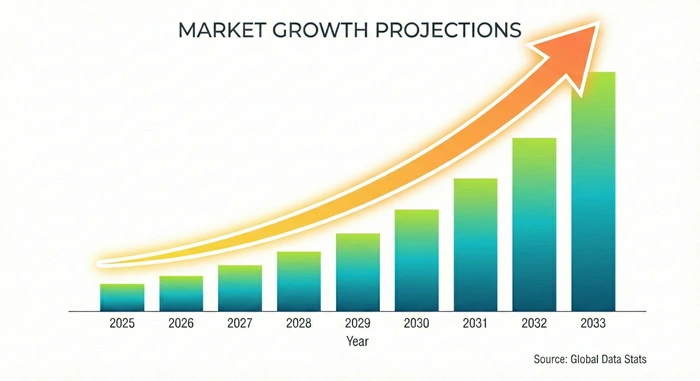
The global contact center software market size is valued at USD 47.41 billion in 2025 and is predicted to increase from USD 56.63 billion in 2026 to approximately USD 227.41 billion by 2033, growing at a CAGR of 21.30% from 2026 to 2033. This software serves as a comprehensive communication solution that helps businesses streamline customer interactions through centralized platforms capable of handling voice calls, emails, live chats, social media messages, and video consultations across multiple channels. Organizations worldwide are investing heavily in these solutions to improve customer experience, reduce operational costs, and enhance agent productivity through features like automatic call distribution, interactive voice response systems, workforce optimization tools, and real-time analytics dashboards.
The contact center software market continues its transformation from traditional on-premise call centers to sophisticated cloud-based platforms that support remote workforces and omnichannel engagement strategies. Modern solutions integrate cutting-edge technologies including artificial intelligence for predictive analytics, machine learning for sentiment analysis, natural language processing for chatbot interactions, and robotic process automation for routine task handling. The shift toward customer-centric business models drives demand for advanced contact center capabilities that deliver personalized experiences, reduce wait times, improve first-call resolution rates, and provide actionable insights from customer interaction data to inform strategic business decisions.

AI Impact on the Contact Center Software Industry
Revolutionizing Customer Interactions Through Intelligent Automation and Predictive Capabilities
Artificial intelligence has fundamentally transformed the contact center software market by introducing intelligent automation capabilities that enhance both customer experiences and operational efficiency. AI-powered chatbots and virtual assistants handle routine inquiries instantly without human intervention, resolving common questions about account balances, order status, product information, and appointment scheduling while freeing human agents to focus on complex issues requiring empathy and critical thinking. Advanced speech analytics systems analyze customer conversations in real time to detect sentiment, identify emerging issues, and provide agents with contextual information and next-best-action recommendations during live interactions. These AI-driven tools reduce average handling times significantly while improving customer satisfaction scores through faster resolutions and more personalized service delivery.
Furthermore, AI enables predictive analytics that help contact centers anticipate customer needs before they arise and optimize resource allocation based on forecasted demand patterns. Machine learning algorithms analyze historical interaction data to identify customers at risk of churn, predict future call volumes with remarkable accuracy, and recommend proactive outreach strategies to prevent issues before customers need to contact support. Natural language processing capabilities allow systems to understand customer intent across multiple languages and communication channels, routing inquiries to the most qualified agents automatically while maintaining conversation context across channel switches. The integration of AI transforms contact centers from reactive cost centers into proactive revenue generators that drive customer loyalty, increase cross-selling opportunities, and deliver competitive advantages through superior service quality.
Growth Factors
Omnichannel Communication Demands and Cloud Migration Accelerate Market Expansion
The contact center software market experiences robust growth driven by escalating customer expectations for seamless omnichannel experiences that maintain conversation context across voice, email, chat, social media, SMS, and video channels. Modern consumers frequently switch between communication methods during single service journeys, expecting agents to access complete interaction histories regardless of channel used previously. Contact center software enables businesses to unify these disparate channels into integrated platforms where agents view consolidated customer profiles, previous interactions, purchase histories, and preferences in single interfaces. This omnichannel capability improves customer satisfaction by eliminating frustrating experiences where customers must repeat information when switching channels, while simultaneously boosting agent efficiency by providing comprehensive context for every interaction.
Cloud-based deployment models represent another critical growth driver as organizations migrate from expensive on-premise systems to flexible cloud solutions offering scalability, rapid deployment, and lower upfront capital requirements. Cloud contact centers eliminate needs for organizations to maintain complex hardware infrastructure, provide automatic software updates, and support distributed agent workforces working from home or multiple locations seamlessly. The subscription-based pricing models of cloud solutions reduce financial barriers for small and medium-sized enterprises that previously could not afford sophisticated contact center capabilities, expanding the addressable market significantly. Additionally, the increasing adoption of data analytics and business intelligence tools drives demand for contact center platforms that capture detailed interaction metrics, customer journey analytics, and performance insights that inform strategic decisions across marketing, product development, and customer service departments.
Market Outlook
Strong Growth Trajectory Supported by Digital Transformation and Regulatory Compliance Needs
The contact center software market demonstrates exceptional growth prospects through the forecast period, supported by ongoing digital transformation initiatives across industries and geographical regions. North America currently dominates market share due to early technology adoption, mature customer service industries, and presence of major solution providers, while Asia Pacific exhibits the fastest growth rates driven by expanding e-commerce sectors, rising customer service expectations, and government initiatives promoting digital business operations. The market benefits from increasing recognition that exceptional customer service delivers competitive differentiation in crowded markets where products and pricing become increasingly commoditized across industries.
Investment in the contact center software market spans venture capital funding for innovative startups developing specialized AI capabilities, strategic acquisitions by established technology vendors seeking to expand platform capabilities, and partnerships between contact center providers and complementary technology firms offering CRM systems, workforce management tools, and quality assurance solutions. The regulatory compliance landscape further drives market growth as industries like banking, healthcare, and insurance face stringent requirements for recording customer interactions, protecting sensitive data, and demonstrating adherence to consumer protection regulations. Modern contact center platforms include built-in compliance features for call recording, data encryption, secure authentication, and audit trails that help organizations meet these regulatory obligations while avoiding costly penalties and reputational damage from data breaches or compliance failures.
Expert Speaks
-
Tiago Paiva, CEO of Talkdesk, stated that "The Talkdesk team remains tireless in advancing our mission to rid the world of bad customer experiences through AI. We'll continue to innovate with simple yet effective AI that helps companies of all sizes transform their customer experience".
-
Steve Johansson, Managing Director of AI Breakthrough, emphasized that "Tiago Paiva's pioneering spirit has demonstrated exceptional foresight and leadership in making Talkdesk a formidable force among AI platforms. In an era where AI implementation introduces concerns about liability, bias, and accuracy, Paiva continues championing responsible AI practices".
-
Paul Hughes, Head of CX Sales for UKISA at Mitel, noted that "The priority has to be unifying service teams around the customer journey. That starts with understanding that journey, then building better integration, shared data, and smarter workflows that connect everyone, from contact center agents to caseworkers".
Key Report Takeaways
-
North America leads the contact center software market with the largest regional share of 36.4% in 2025, driven by mature adoption of cloud-native platforms, advanced workforce engagement suites, and heavy investments in AI-driven automation by large enterprises and digital-native companies
-
Asia Pacific emerges as the fastest-growing region with a projected CAGR of 27.5% during the forecast period, fueled by expanding e-commerce activities, rising digital payment adoption, mobile-first customer behaviors, and growing expectations for instant localized support across messaging applications
-
The solution segment dominates the component category with 66.2% market share in 2025, as enterprises migrate from legacy on-premise systems to cloud-native omnichannel platforms offering unified voice, email, chat, social media, and messaging integration
-
Cloud-based deployment holds 61.70% market share in 2025 and demonstrates the highest growth rate at CAGR of 12.60%, driven by flexibility to scale services, secure collaboration capabilities, and in-depth tracking information unavailable in on-premise solutions
-
Large enterprises segment dominates with 63.10% market share, though small and medium enterprises represent the fastest-growing segment as they adopt cloud-based solutions to ease workloads, improve customer experiences, and compete more effectively without massive capital investments
-
Customer support applications lead with 42.80% market share, while sales and lead management represents the fastest-growing application segment at 12.90% CAGR driven by improved omnichannel customer experience needs and integration of predictive analytics capabilities
Market Scope
| Report Coverage | Details |
|---|---|
| Market Size by 2033 | USD 227.41 Billion |
| Market Size by 2025 | USD 47.41 Billion |
| Market Size by 2026 | USD 56.63 Billion |
| Market Growth Rate from 2026 to 2033 | CAGR of 21.30% |
| Dominating Region | North America |
| Fastest Growing Region | Asia Pacific |
| Base Year | 2025 |
| Forecast Period | 2026 to 2033 |
| Segments Covered | Component, Deployment, Enterprise Size, Application, End-Use Industry, Region |
| Regions Covered | North America, Europe, Asia Pacific, Latin America, Middle East & Africa |
Market Dynamics
Drivers Impact Analysis
Enhanced Customer Experience Requirements and AI Integration Drive Adoption
The increasing demand for enhanced customer experience serves as a primary driver propelling the contact center software market forward as businesses recognize that exceptional service quality directly impacts customer retention, brand loyalty, and revenue growth. Organizations across industries invest in contact center solutions to streamline customer interactions, improve response times, and personalize every touchpoint throughout customer journeys. The rise of omnichannel communication fundamentally changes customer expectations, as consumers now interact with businesses through voice calls, email correspondence, live chat sessions, social media platforms, SMS messaging, and video consultations, expecting seamless transitions between channels without losing conversation context. Contact center software enables enterprises to manage and integrate these diverse channels effectively, providing consistent experiences across all touchpoints while maintaining comprehensive interaction histories that agents access instantly.
The integration of artificial intelligence and machine learning technologies represents another critical driver accelerating contact center software market expansion. Businesses leverage AI-powered features including intelligent chatbots that handle routine inquiries automatically, advanced speech analytics that assess customer sentiment and agent performance in real time, and predictive analytics engines that forecast customer needs and optimize resource allocation dynamically. These AI capabilities automate repetitive processes, extract valuable insights from millions of customer interactions, and improve operational efficiency dramatically while reducing costs associated with manual task handling. The globalization of business operations further drives adoption as companies expanding internationally require contact center solutions supporting multiple languages, diverse time zones, and geographical locations distributed across continents, with multi-site capabilities and language support enabling consistent customer service delivery regardless of location.
| Driver | ≈ Impact on CAGR Forecast | Geographic Relevance | Impact Timeline |
|---|---|---|---|
| Enhanced Customer Experience Requirements | High (+3-4%) | Global, particularly North America and Europe | Immediate to Long-term (2026-2033) |
| AI and Machine Learning Integration | High (+3-5%) | Global, particularly North America and Asia Pacific | Immediate to Long-term (2026-2033) |
Restraints Impact Analysis
Implementation Complexity and Integration Challenges Limit Market Growth
The complexity and integration challenges associated with implementing new contact center software solutions represent significant restraints affecting contact center software market growth across diverse industries and organization sizes. Integrating modern contact center platforms with existing systems and legacy infrastructure proves to be complex processes requiring careful planning, substantial technical expertise, and significant coordination across IT teams, operations departments, and business units. Many organizations operate legacy systems and outdated infrastructure incompatible with modern cloud-based contact center software, resulting in integration difficulties, potential operational disruptions during transition periods, and unexpected costs for system upgrades or modifications. Businesses must conduct thorough assessments of existing systems to identify compatibility gaps, plan necessary infrastructure improvements, and allocate sufficient resources for seamless integration that maintains business continuity throughout migration processes.
High implementation costs and ongoing maintenance expenses create additional barriers limiting contact center software market adoption, particularly among cost-sensitive small and medium-sized enterprises with limited technology budgets. On-premise contact center deployments require substantial capital investments in specialized hardware, dedicated network infrastructure, and ongoing maintenance services that strain organizational budgets. Even cloud-based solutions involve significant expenses including subscription fees, professional services for implementation and customization, data migration costs, employee training programs, and integration with complementary systems like CRM platforms and workforce management tools. Security and compliance concerns further complicate adoption decisions as organizations handling sensitive customer data face stringent requirements for data protection, privacy regulations like GDPR and CCPA, and industry-specific compliance standards that mandate secure call recording, encrypted data storage, and comprehensive audit capabilities requiring additional investment in security infrastructure and compliance management tools.
| Restraint | ≈ Impact on CAGR Forecast | Geographic Relevance | Impact Timeline |
|---|---|---|---|
| Implementation Complexity and Integration Challenges | Medium (-2-3%) | Global, particularly emerging markets | Immediate to Medium-term (2026-2030) |
| High Implementation and Maintenance Costs | Medium (-1-2%) | Global, particularly SMEs in all regions | Immediate to Long-term (2026-2033) |
Opportunities Impact Analysis
Emerging Markets Expansion and Advanced Analytics Integration Create Growth Avenues
The rapid expansion of emerging markets in Asia Pacific, Latin America, and Middle East Africa regions presents enormous growth opportunities for the contact center software market as businesses in these regions increasingly adopt advanced customer service technologies to compete in global markets. The Asia Pacific region demonstrates particularly strong potential driven by massive populations with growing internet penetration, smartphone adoption, and e-commerce participation creating unprecedented customer service demands. Countries like India, China, Indonesia, and the Philippines experience explosive growth in IT-enabled services sectors, business process outsourcing operations, and domestic enterprises establishing customer support capabilities to serve expanding middle-class consumer bases. Government initiatives promoting digital transformation, cashless payment systems, and smart city development create favorable environments for contact center technology adoption across public and private sectors.
The integration of advanced analytics and business intelligence capabilities creates significant opportunities for contact center software market vendors to differentiate their offerings and capture higher-value customer segments. Organizations increasingly recognize contact centers as strategic assets generating valuable customer insights rather than merely cost centers handling inquiries reactively. Modern analytics platforms embedded within contact center solutions provide real-time dashboards tracking key performance indicators, customer journey analytics revealing friction points across service touchpoints, predictive models forecasting customer churn risks, and sentiment analysis identifying emerging trends in customer feedback. These insights inform strategic decisions across marketing campaigns, product development priorities, operational improvements, and customer retention strategies, elevating contact center software from operational necessity to competitive differentiator. The rise of industry-specific solutions tailored to verticals like banking, healthcare, retail, and telecommunications creates additional opportunities as vendors develop specialized workflows, pre-trained AI models, compliance features, and integrations addressing unique requirements of each industry segment.
| Opportunity | ≈ Impact on CAGR Forecast | Geographic Relevance | Impact Timeline |
|---|---|---|---|
| Emerging Markets Expansion | High (+3-4%) | Asia Pacific, Latin America, Middle East & Africa | Immediate to Long-term (2026-2033) |
| Advanced Analytics and Business Intelligence Integration | High (+2-3%) | Global, particularly North America and Europe | Medium to Long-term (2027-2033) |
Segment Analysis
Component Analysis
Solutions Segment Leads Market While Services Demonstrate Fastest Growth
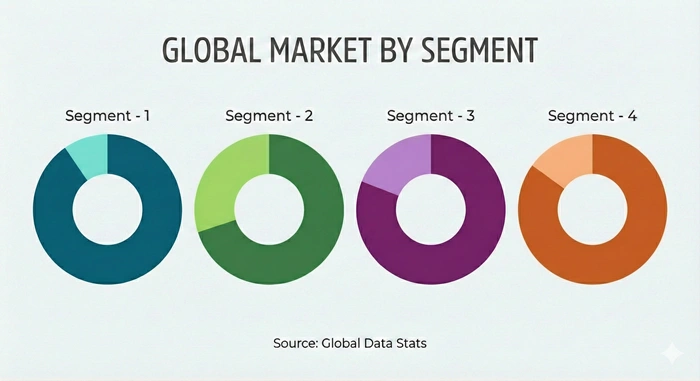
The solution segment accounts for the largest share of 66.2% in the 2025 contact center software market, driven by enterprises transitioning from legacy on-premise contact center systems to modern cloud-native platforms offering comprehensive omnichannel capabilities. Organizations seek unified solutions seamlessly integrating voice telephony, email correspondence, live chat sessions, social media interactions, and messaging applications into single interfaces delivering consistent customer experiences across all touchpoints. Cloud-based solutions offer distinct advantages including faster deployment timelines measured in weeks rather than months, elastic scalability accommodating seasonal demand fluctuations without infrastructure investments, and lower upfront costs making advanced capabilities accessible to mid-sized businesses previously limited to basic phone systems. This fundamental shift from capital-intensive on-premise deployments to flexible subscription-based cloud platforms accelerates replacement cycles as organizations recognize competitive disadvantages of maintaining outdated systems unable to support modern customer engagement strategies.
The service segment demonstrates the fastest projected growth rate during the forecast period as enterprises require expert support implementing, migrating, and optimizing increasingly sophisticated contact center platforms integrating AI capabilities and complex workflows. Transitioning to cloud-based AI-enabled contact centers involves intricate processes including integration with existing IT infrastructure, migration of historical customer data, redesign of business processes to leverage new capabilities, and comprehensive agent training programs ensuring workforce readiness. Professional services including consulting engagements that define optimal configurations, system integration projects connecting contact centers with CRM platforms and back-office systems, deployment assistance ensuring smooth production launches, and ongoing support maintaining system performance become essential investments maximizing return on technology spending. The complexity of modern contact center software market solutions creates sustained demand for vendor-led and partner-led services throughout implementation lifecycles and ongoing optimization efforts, with managed services offerings gaining traction among organizations preferring to outsource technical operations while focusing internal resources on core business activities.
Deployment Analysis
Cloud-Based Deployment Dominates Growth While On-Premise Maintains Presence
The cloud-based segment holds 61.70% market share in 2025 within the contact center software market and exhibits the highest growth rate at CAGR of 12.60% throughout the forecast period, driven by fundamental advantages over traditional on-premise deployments. Businesses worldwide prefer cloud-based contact center solutions over on-premise alternatives primarily due to superior ability to scale services dynamically, supporting seasonal fluctuations in contact volumes without requiring infrastructure investments or lengthy procurement cycles. Cloud solutions connect contact center agents to centralized applications effectively while offering secure collaboration platforms where employees communicate regardless of physical location, supporting distributed workforces and remote agent models that became essential during recent global disruptions and remain preferred arrangements balancing employee flexibility with operational requirements. Cloud-based systems provide in-depth information about agent performance, customer interaction patterns, and operational metrics that executives cannot track effectively using on-premise solutions with limited analytics capabilities.
The on-premise segment maintains significant presence in 2025 despite cloud migration trends, particularly among large enterprises with stringent data sovereignty requirements, highly customized workflows built over many years, or regulatory compliance mandates restricting cloud data storage in certain industries and jurisdictions. On-premise deployment involves installing all hardware and software required to operate contact centers at customer facilities, providing benefits including complete control over infrastructure, extensive customizability tailored to unique business processes, and integration with legacy systems difficult to replicate in standardized cloud environments. However, on-premise solutions present challenges including high capital expenditures for hardware purchases, complex deployment processes requiring specialized technical expertise, and ongoing maintenance responsibilities consuming IT resources that could address other strategic priorities. The contact center software market increasingly favors hybrid deployment models combining on-premise infrastructure for sensitive data processing with cloud capabilities for scalability and advanced features, allowing organizations to balance control requirements with innovation adoption while managing migration risks through phased approaches.
Regional Insights
North America
Mature Technology Adoption and Innovation Leadership Drive Regional Dominance
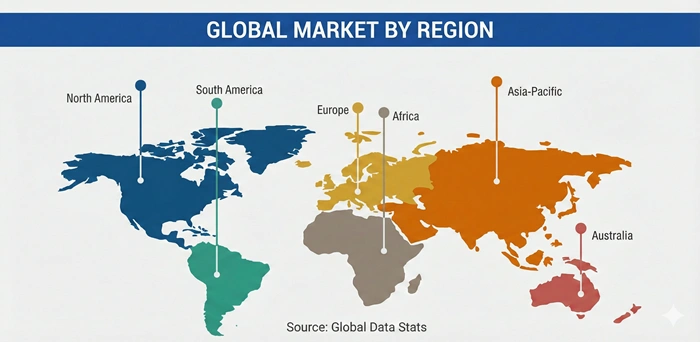
North America holds the dominant position in the global contact center software market with 36.4% market share in 2025, supported by mature adoption of cloud-native platforms, sophisticated omnichannel routing capabilities, and advanced workforce engagement suites integrated throughout customer service operations. The region benefits from well-established technology infrastructure, high broadband penetration enabling reliable cloud service delivery, and cultural emphasis on customer service excellence driving continuous investments in contact center capabilities across industries. The United States leads North American market activity as home to major contact center software vendors including Genesys, Five9, Talkdesk, and 8x8 that drive platform innovation through substantial research and development investments, while also representing the largest customer base with enterprises across retail, financial services, healthcare, and technology sectors deploying sophisticated contact center solutions.
The North American contact center software market demonstrates particular strength in integration of AI-driven automation including virtual agents handling routine inquiries, real-time speech analytics providing agent coaching during live interactions, sentiment analysis detecting customer frustration triggering supervisor interventions, and low-code orchestration platforms enabling business users to design automated workflows without extensive programming knowledge. Enterprises increasingly prioritize flexible consumption models including pure SaaS subscriptions and hybrid deployments that scale across distributed agent workforces supporting remote-first operations normalized following pandemic-driven transformations. The region's favorable regulatory environment balancing innovation encouragement with consumer protection creates predictable compliance frameworks that facilitate technology investments, while competitive labor markets with high agent turnover rates drive adoption of workforce management tools, quality monitoring systems, and AI automation reducing dependence on human resources for routine tasks, positioning North America as both largest market and primary innovation center for global contact center software industry.
Asia Pacific
Rapid Digital Transformation and Mobile-First Behaviors Fuel Fastest Regional Growth
Asia Pacific emerges as the fastest-growing region for the contact center software market with projected CAGR of 27.5% during the forecast period from 2026 to 2033, driven by heterogeneous market dynamics spanning rapid cloud uptake in advanced economies and continued reliance on hybrid deployments in developing markets. Growth stems from expanding e-commerce sectors creating massive customer service demands, proliferation of digital payment systems requiring real-time support, and rising customer expectations for localized instant support delivered through popular messaging applications and social platforms dominating regional communication preferences. China represents distinctive market dynamics with mobile-first customer behaviors and deep integration requirements with domestic messaging ecosystems including WeChat, prompting strong demand for contact center solutions natively supporting these platforms rather than Western-centric channels, with domestic cloud and SaaS providers competing intensely against global vendors through differentiation on local compliance, innovation speed, and integrations with popular domestic CRM and commerce platforms.
The Asia Pacific contact center software market benefits from rapidly expanding middle-class populations with increasing disposable incomes and consumption patterns driving customer service interactions across retail, banking, telecommunications, and healthcare sectors. High digital penetration rates particularly among younger demographics comfortable with mobile banking and online transactions facilitate rapid platform adoption supporting mobile-optimized interfaces and messaging-first communication strategies. The proliferation of small and medium-sized enterprises throughout the region creates sustained demand for business financing and customer support that traditional service models struggle to address efficiently, opening opportunities for cloud contact center platforms offering streamlined deployment, affordable subscription pricing, and pre-configured workflows reducing implementation complexity. Countries including Japan emphasize high-quality culturally nuanced customer interactions favoring stable reliable platforms supporting detailed quality assurance processes, while markets like India benefit from massive IT-enabled services sectors, business process outsourcing operations, and government initiatives promoting digital financial inclusion creating favorable environments for contact center technology expansion across diverse industry verticals and customer segments.
Top Key Players
-
Genesys (United States)
-
Five9 Inc. (United States)
-
Talkdesk Inc. (United States)
-
8x8 Inc. (United States)
-
Cisco Systems Inc. (United States)
-
Avaya Inc. (United States)
-
Amazon Web Services Inc. (United States)
-
NICE Ltd. (Israel)
-
Twilio Inc. (United States)
-
Microsoft Corporation (United States)
-
Enghouse Interactive Inc. (Canada)
-
SAP SE (Germany)
-
NEC Corporation (Japan)
-
Alcatel-Lucent Enterprise (France)
-
Exotel Techcom Pvt. Ltd. (India)
Recent Developments
-
October 2025: Zoom Communications partnered with Oracle in a strategic go-to-market agreement to host its Zoom Contact Center platform on Oracle Cloud Infrastructure, expanding Zoom's enterprise reach into sectors like finance and retail while allowing enterprises embedded in Oracle's ecosystem to deploy Zoom's tools seamlessly
-
October 2025: Vi Business, the enterprise division of Vodafone Idea, partnered with Genesys to deliver next-generation cloud-based Contact Centre as a Service solutions in India, marking Vi's entry into the sector with unified omnichannel customer experiences combining Vi's robust telecom network with Genesys' advanced cloud platform
-
December 2025: Talkdesk CEO Tiago Paiva received the Best Artificial Intelligence Company CEO award from AI Breakthrough, recognizing his pioneering leadership in making Talkdesk a formidable force among AI platforms and championing responsible AI deployment that is transparent, accountable, and adaptable
-
March 2024: 8x8 Inc. released 8x8 Contact Center for Microsoft Teams integration, providing agents and staffs with access to an integrated contact center and global direct routing solution with cloud contact center and communication capabilities managed from any Teams endpoint
-
July 2020: NICE Systems Ltd. introduced ENLIGHTEN Fraud Prevention platform using artificial intelligence and speech biometrics to automatically identify fraudsters based on predictive behavioral models, analyzing millions of speech encounters to identify dangerous and aberrant conduct including authentication techniques and address change requests
Market Trends
AI-Powered Automation and Workforce Transformation Reshape Industry
The contact center software market demonstrates clear trends toward AI-powered automation fundamentally transforming how customer service operations function and what roles human agents perform within these environments. Contact centers increasingly deploy AI to handle simple repetitive inquiries allowing human agents to focus on meaningful complex interactions requiring empathy, critical thinking, and relationship-building capabilities that technology cannot replicate effectively. Gartner research indicates that by 2027 approximately 50 percent of organizations initially expecting to significantly reduce customer service workforces will abandon these plans, recognizing that AI reshapes rather than eliminates human work within contact centers. The technology handles structured repeatable tasks with speed and precision while routing complex scenarios to specialized human agents possessing deep product knowledge, problem-solving abilities, and communication skills that deliver superior outcomes for challenging customer situations.
Voice communication experiences renaissance as AI-powered express lane for customer experience within the contact center software market, with advanced natural language processing enabling conversational interfaces that understand customer intent without rigid menu structures frustrating callers. The workforce splits into distinct categories with specialists increasing while generalists decline, as AI assumes bulk of routine work previously handled by entry-level agents following scripts and decision trees. Contact centers invest heavily in agent tools providing real-time guidance, coaching visibility enabling supervisors to monitor performance and provide targeted development, and workflow clarity reducing confusion about processes and decision authorities. Modern reporting capabilities ensure leaders trust data guiding strategic decisions through accurate real-time dashboards replacing outdated metrics and delayed reporting that characterized traditional contact center management approaches, positioning successful organizations to orchestrate entire customer experiences across channels with measurable outcomes rather than merely answering phones faster.
Segments Covered in the Report
By Component
-
Solution (Automatic Call Distribution, Call Recording, Computer Telephony Integration, Customer Collaboration, Dialer, Interactive Voice Response, Reporting and Analytics, Workforce Optimization)
-
Service (Integration and Deployment, Support and Maintenance, Training and Consulting, Managed Services)
By Deployment
-
Cloud-Based (Public Cloud, Private Cloud, Hybrid Cloud)
-
On-Premise
-
Hybrid
By Enterprise Size
-
Large Enterprises
-
Small and Medium Enterprises
By Application
-
Customer Support
-
Sales and Lead Management
-
Telemarketing
-
Technical Support
-
Collections
-
Helpdesk Services
By End-Use Industry
-
BFSI (Banking, Financial Services, and Insurance)
-
IT and Telecom
-
Healthcare and Life Sciences
-
Retail and E-commerce
-
Government and Public Sector
-
Travel and Hospitality
-
Consumer Goods
-
Manufacturing
-
Education
-
Utilities and Energy
By Region
-
North America (United States, Canada, Mexico)
-
Europe (United Kingdom, Germany, France, Spain, Italy, Netherlands)
-
Asia Pacific (China, Japan, India, South Korea, Australia, Malaysia, Philippines)
-
Latin America (Brazil, Argentina, Chile, Colombia)
-
Middle East & Africa (UAE, Saudi Arabia, South Africa, GCC Countries)
Frequently Asked Questions
Question 1: What is the contact center software market size and projected growth?
Answer: The global contact center software market is valued at USD 47.41 billion in 2025 and is predicted to reach USD 227.41 billion by 2033, growing at a CAGR of 21.30% from 2026 to 2033. This growth reflects increasing adoption of AI-powered omnichannel platforms and cloud-based deployments worldwide.
Question 2: Which region dominates the contact center software market currently?
Answer: North America leads the contact center software market with 36.4% market share in 2025, driven by mature technology adoption and innovation leadership. Asia Pacific demonstrates the fastest growth rate at CAGR of 27.5% fueled by expanding e-commerce and mobile-first customer behaviors.
Question 3: What deployment models drive the contact center software market expansion?
Answer: Cloud-based deployment holds 61.70% market share and exhibits the highest growth rate at CAGR of 12.60%, offering scalability and lower costs. On-premise solutions maintain presence among enterprises with data sovereignty requirements and highly customized workflows.
Question 4: How does the contact center software market benefit from AI integration?
Answer: The contact center software market leverages AI for intelligent chatbots handling routine inquiries, speech analytics assessing sentiment, and predictive analytics optimizing resources. AI automation improves operational efficiency while enhancing customer experiences through personalized interactions and faster resolutions.
Question 5: What challenges affect contact center software market adoption rates?
Answer: The contact center software market faces challenges including implementation complexity with legacy systems, high deployment and maintenance costs, and security compliance requirements. Integration difficulties and workforce training needs also limit adoption, particularly among small and medium-sized enterprises.