
Contact Center Analytics Market Overview
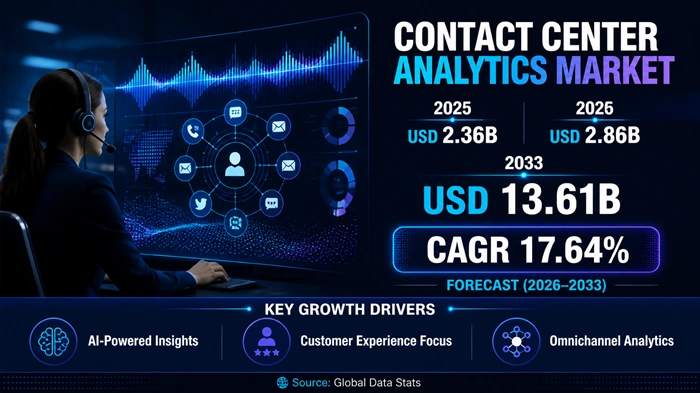
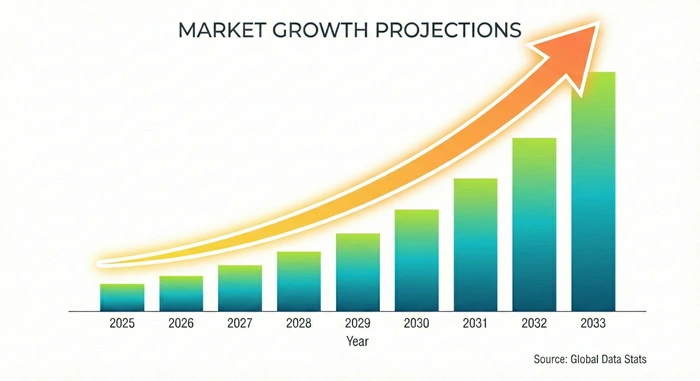
The global Contact Center Analytics market size is valued at USD 2.36 billion in 2025 and is predicted to increase from USD 2.86 billion in 2026 to approximately USD 13.61 billion by 2033, growing at a CAGR of 17.64% from 2026 to 2033.
Contact center analytics refers to the systematic analysis of customer interaction data collected across multiple communication channels including voice calls, emails, social media, chat platforms, and messaging applications to derive actionable insights that improve operational efficiency and customer satisfaction. These advanced analytical solutions enable organizations to monitor agent performance, identify customer sentiment patterns, predict potential issues, and optimize resource allocation in real-time.
The Contact Center Analytics market has experienced remarkable transformation as businesses recognize the strategic value of customer interaction data in driving competitive advantage and revenue growth. Modern analytics platforms leverage artificial intelligence, machine learning algorithms, and natural language processing technologies to extract meaningful insights from structured and unstructured data generated through millions of daily customer interactions. Organizations across banking, telecommunications, healthcare, retail, and government sectors are implementing sophisticated analytics solutions to transition their contact centers from traditional cost centers into strategic customer engagement hubs that generate valuable business intelligence. The increasing volume of omnichannel interactions combined with growing regulatory requirements for compliance monitoring and data retention has accelerated enterprise investments in unified analytics platforms capable of processing diverse data types simultaneously.
AI Impact on the Contact Center Analytics Industry
Revolutionizing Customer Experience Through Intelligent Automation and Predictive Insights
Artificial intelligence has fundamentally transformed the Contact Center Analytics market by introducing capabilities that were previously unattainable through traditional analytical approaches. AI-powered sentiment analysis technologies now enable contact centers to understand customer emotions in real-time by analyzing tone, word choice, and conversational patterns during live interactions, allowing agents to adjust their approach dynamically based on the emotional state of customers. Advanced machine learning algorithms process historical interaction data to identify patterns that predict customer behavior, potential churn risks, and satisfaction trends, empowering organizations to implement proactive intervention strategies before problems escalate. Natural language processing capabilities have revolutionized speech analytics by automatically transcribing and analyzing voice conversations at scale, extracting valuable insights about product issues, service gaps, and customer preferences without manual review. These AI-driven technologies reduce the workload on human supervisors while providing deeper, more accurate insights than traditional sampling-based quality assurance methods.
The integration of conversational AI and predictive analytics within contact center operations has enabled organizations to anticipate customer needs and provide personalized solutions with unprecedented speed and accuracy. AI-powered predictive models analyze customer demographics, purchase history, previous interactions, and real-time behavioral signals to forecast call volumes, optimal staffing levels, and potential service issues based on seasonal trends or marketing campaign timing. Intelligent routing systems leverage machine learning to match customers with the most appropriate agents based on skill sets, past performance, and the complexity of customer inquiries, significantly improving first-call resolution rates. Real-time decision-making capabilities powered by AI algorithms enable supervisors to monitor agent performance through dynamic dashboards and make immediate workflow adjustments to maintain service quality standards. The Contact Center Analytics market continues evolving as AI technologies become more sophisticated, with future developments focusing on emotion forecasting, automated coaching recommendations, and hyper-personalized customer engagement strategies.
Growth Factors
Expanding Omnichannel Communication and Customer Experience Imperatives
The Contact Center Analytics market is experiencing robust growth driven by the exponential increase in omnichannel customer interactions spanning voice, email, social media, chat, and messaging platforms. Modern consumers expect seamless experiences across all communication channels, creating demand for unified analytics platforms capable of tracking customer journeys across multiple touchpoints and providing comprehensive interaction histories. Organizations recognize that fragmented data from isolated channel-specific systems prevents them from obtaining complete customer insights, driving investments in integrated analytics solutions that consolidate information from diverse sources into centralized intelligence platforms. The shift from reactive customer service models to proactive engagement strategies has made real-time analytics capabilities essential for identifying issues before they impact customer satisfaction. Businesses across industries are leveraging analytics to measure critical performance indicators including average handling time, first-call resolution rates, customer satisfaction scores, and agent productivity metrics, using these insights to drive continuous operational improvements.
The increasing adoption of cloud-based contact center infrastructure has accelerated the deployment of advanced analytics capabilities across organizations of all sizes. Cloud-native analytics platforms offer scalability, cost-effectiveness, and rapid implementation timelines compared to traditional on-premise solutions, enabling small and medium enterprises to access sophisticated analytical tools previously available only to large corporations. According to industry surveys, more than 80% of organizations prefer incorporating AI, data analytics, and robotic automation into their contact center systems to improve operational efficiency and customer experience. Regulatory mandates requiring detailed audit trails, compliance monitoring, and data retention policies are compelling organizations to implement comprehensive analytics solutions that automatically track and document customer interactions for regulatory review. The growing recognition of contact centers as strategic assets rather than mere operational necessities has shifted executive perspectives, with leadership teams now viewing customer interaction data as valuable business intelligence that informs product development, marketing strategies, and overall business direction.
Market Outlook
Accelerating Digital Transformation and Sustainability-Focused Innovation
The Contact Center Analytics market outlook remains exceptionally positive as digital transformation initiatives accelerate across industries and geographic regions. The increasing demand for real-time customer insights powered by artificial intelligence and machine learning is driving enterprise investments in next-generation analytics platforms that deliver predictive capabilities and automated decision-making support. Organizations are transitioning from basic historical reporting to sophisticated predictive models that forecast customer behavior, anticipate service issues, and recommend optimal actions to maximize customer lifetime value. The speech analytics segment is projected to maintain leadership position with approximately 24.5% revenue share in 2025, driven by growing demand for real-time voice analysis that uncovers customer sentiment, identifies compliance gaps, and monitors agent behavior patterns. Industries with stringent compliance requirements including banking, telecommunications, and healthcare are particularly aggressive adopters of speech analytics solutions that automatically monitor conversational data and flag potential regulatory violations.
Sustainability considerations are emerging as important factors shaping the Contact Center Analytics market as organizations recognize the environmental impact of contact center operations. Advanced analytics platforms help optimize agent performance and reduce call handling times, which translates to lower energy consumption in operational facilities and decreased carbon footprints associated with extended customer interactions. The integration of remote work capabilities enabled by cloud-based analytics has minimized the need for large physical call center facilities, reducing real estate footprints and associated environmental impacts. The startup ecosystem within the analytics space is experiencing significant growth, with innovative companies developing emotionally intelligent platforms, voice biometric verification systems, and low-code adaptable solutions that democratize access to advanced analytics capabilities. Emerging markets are rapidly adopting contact center analytics to support multilingual customer bases, facilitate digital-first service models, and build competitive outsourcing industries that attract international business process operations. These converging trends position the Contact Center Analytics market for sustained expansion throughout the forecast period.
Expert Speaks
-
Marc Benioff, CEO of Salesforce stated in early 2025 that "Customer experience has become the ultimate competitive differentiator, and contact center analytics powered by AI and predictive intelligence are essential tools for organizations seeking to understand and anticipate customer needs in real-time across every interaction."
-
Satya Nadella, CEO of Microsoft emphasized during a 2025 technology conference that "The convergence of Azure AI capabilities with contact center platforms is transforming how businesses engage with customers, enabling sentiment analysis, automated quality assurance, and predictive issue resolution that fundamentally elevate service delivery standards."
-
Arvind Krishna, CEO of IBM noted in a recent industry statement that "Intelligent automation and advanced analytics are reshaping contact center operations from cost centers into strategic engagement hubs, with AI-driven insights enabling personalized customer experiences at scale while improving operational efficiency and agent satisfaction."
Key Report Takeaways
-
North America dominates the Contact Center Analytics market with a commanding 35% revenue share in 2025, supported by early technology adoption, extensive presence of leading solution providers, and substantial enterprise investments in customer experience improvement initiatives across BFSI, retail, and telecommunications sectors
-
Asia-Pacific emerges as the fastest-growing region with an exceptional CAGR of 22.9% from 2026 to 2033, fueled by rapid digital transformation, expanding e-commerce ecosystems, increasing smartphone penetration, and growing demand for omnichannel customer experiences across China, India, Japan, and Southeast Asian markets
-
Speech analytics segment leads solution types capturing 24.5% of total market revenue in 2025, driven by demand for real-time voice analysis capabilities that enable sentiment detection, compliance monitoring, agent performance evaluation, and early identification of customer churn indicators
-
Integration and deployment services dominate service segment accounting for 42% market share in 2025, as organizations require specialized expertise to align complex analytics platforms with existing telephony systems, CRM infrastructure, and enterprise data warehouses while ensuring secure data pipelines and seamless interoperability
-
BFSI sector demonstrates strongest end-user adoption with approximately 26% of global contact centers in 2020 serving financial services organizations, driven by high transaction volumes, stringent regulatory compliance requirements, and strategic focus on fraud prevention and customer retention through advanced analytics capabilities
-
Hosted deployment models are experiencing rapid growth projected to capture 63% revenue share by 2025 with continued acceleration through 2033, as cloud-based solutions offer scalability, cost-effectiveness, minimal infrastructure investment, faster time-to-value, and enhanced support for distributed remote agent workforces
Market Scope
| Report Coverage | Details |
|---|---|
| Market Size by 2033 | USD 13.61 Billion |
| Market Size by 2025 | USD 2.36 Billion |
| Market Size by 2026 | USD 2.86 Billion |
| Market Growth Rate from 2026 to 2033 | CAGR of 17.64% |
| Dominating Region | North America |
| Fastest Growing Region | Asia-Pacific |
| Base Year | 2025 |
| Forecast Period | 2026 to 2033 |
| Segments Covered | Solution, Service, Deployment, Enterprise Size, Application, End-Use, Region |
| Regions Covered | North America, Europe, Asia-Pacific, Latin America, Middle East & Africa |
Market Dynamics
Driver Impact Analysis
Rising Customer Experience Focus and Omnichannel Interaction Complexity
| Impact Factor | Details |
|---|---|
| ≈ Impact on CAGR Forecast | +3.2% to +4.8% |
| Geographic Relevance | Global, with strongest impact in North America, Europe, and Asia-Pacific |
| Impact Timeline | 2026-2033 |
The Contact Center Analytics market is experiencing accelerated growth as organizations across all industries prioritize customer experience as a critical competitive differentiator in increasingly crowded marketplaces. Businesses recognize that exceptional customer service directly correlates with loyalty, repeat purchases, and positive word-of-mouth recommendations, driving substantial investments in analytics tools that measure and improve service quality across all interaction channels. The proliferation of communication platforms has created unprecedented complexity, with customers now engaging through voice calls, live chat, email, social media, messaging apps, and self-service portals, expecting consistent experiences regardless of channel selection. Traditional contact centers struggling to manage fragmented data from isolated channel-specific systems are implementing unified analytics platforms that consolidate customer interaction histories and provide comprehensive journey visibility. Real-time monitoring capabilities enable supervisors to identify service quality issues as they occur, implementing immediate corrective actions that prevent customer dissatisfaction from escalating into churn.
The growing adoption of social media platforms has fundamentally expanded the scope of the Contact Center Analytics market as businesses analyze customer feedback expressed through blogs, forums, online reviews, and social networking sites. Advanced text analytics solutions process unstructured social media content including slang, jargon, and acronyms, extracting meaningful sentiment insights that inform product improvements and service strategy refinements. Organizations leveraging social media analytics gain competitive advantages by responding to customer concerns publicly and proactively, demonstrating commitment to customer satisfaction while simultaneously addressing issues before they damage brand reputation. The increasing demand for first-call resolution has driven adoption of predictive analytics solutions that provide agents with comprehensive customer context and recommended actions before interactions begin, significantly improving resolution rates and reducing repeat contacts. Workforce optimization capabilities embedded within analytics platforms help contact centers balance staffing levels with predicted call volumes, minimizing customer wait times during peak periods while controlling labor costs during slower periods.
Restraints Impact Analysis
High Implementation Costs and Data Privacy Concerns
| Impact Factor | Details |
|---|---|
| ≈ Impact on CAGR Forecast | -1.5% to -2.3% |
| Geographic Relevance | Particularly impactful in emerging markets and among SMEs globally |
| Impact Timeline | 2026-2030 |
The Contact Center Analytics market faces significant adoption barriers related to the substantial upfront investment requirements associated with implementing comprehensive analytics solutions. Small and medium-sized enterprises with limited capital resources often struggle to justify the initial expenditures for software licenses, hardware infrastructure, system integration services, and specialized analytics personnel required to fully operationalize advanced platforms. Traditional on-premise deployments require significant capital investments in PRI phone systems, server infrastructure, and network equipment, along with ongoing expenses for maintenance, upgrades, and long-term telecommunications service contracts that strain budgets of smaller organizations. Although cloud-based solutions offer more accessible entry points with subscription-based pricing models, organizations must carefully evaluate whether their business models and operational requirements align with the capabilities and limitations of hosted platforms. The complexity of analytics solutions creates additional barriers, as successful implementations require expertise spanning multiple disciplines including operational technology, information technology, data science, and business process optimization that may not exist within current workforce structures.
Data privacy and security concerns represent critical restraints limiting Contact Center Analytics market expansion, particularly as contact centers store and process massive volumes of sensitive customer information including financial data, health records, and personal identification details. The alarming increase in call center fraud attempts has forced organizations to implement sophisticated authentication processes and security protocols that can negatively impact customer experience by introducing additional verification steps that frustrate callers seeking quick assistance. According to industry surveys, 57% of respondents prefer comprehensive identification processes before accepting calls, highlighting the tension between security requirements and customer convenience expectations. Organizations must navigate complex regulatory landscapes including data protection regulations, industry-specific compliance requirements, and cross-border data transfer restrictions that vary significantly across geographic markets. The challenge of selecting reliable and privacy-compliant analytics solution providers adds additional complexity to procurement decisions, as organizations must thoroughly vet vendors' security practices, data handling procedures, and regulatory compliance track records. These technical, financial, and regulatory challenges require ongoing attention from vendors and customers to ensure the Contact Center Analytics market continues expanding sustainably.
Opportunities Impact Analysis
AI Integration and Emerging Market Expansion
| Impact Factor | Details |
|---|---|
| ≈ Impact on CAGR Forecast | +2.6% to +3.9% |
| Geographic Relevance | Strong opportunities in Asia-Pacific, Latin America, and Middle East regions |
| Impact Timeline | 2026-2033 |
The Contact Center Analytics market presents substantial growth opportunities through the accelerating integration of artificial intelligence technologies that dramatically enhance analytical capabilities and operational efficiency. AI-powered predictive analytics enable organizations to transition from reactive service models to proactive engagement strategies by forecasting customer behavior patterns, identifying potential issues before they manifest, and recommending optimal intervention approaches. Advanced sentiment analysis technologies utilizing natural language processing can detect subtle emotional cues in customer communications, allowing agents to tailor their responses based on real-time emotional intelligence and escalate potentially volatile situations to specialized support resources. Machine learning algorithms continuously improve their accuracy by analyzing historical outcomes and adapting models to reflect changing customer preferences and market conditions, creating self-optimizing systems that become more valuable over time. Conversational AI and intelligent chatbot technologies are expanding analytics scope beyond human agent interactions to include automated customer service channels, providing comprehensive visibility into entire customer service ecosystems.
Emerging markets across Asia-Pacific, Latin America, Middle East, and Africa regions offer exceptional growth potential for the Contact Center Analytics market as digital transformation initiatives accelerate and customer service expectations rise. Rapid smartphone penetration and expanding internet connectivity are enabling digital-first customer engagement models in developing economies, creating demand for analytics platforms that support multilingual interactions and culturally diverse customer bases. Government initiatives promoting digital infrastructure development and business process outsourcing industries are creating favorable regulatory environments and financial incentives for contact center investments in emerging markets. Organizations in these regions are leaping directly to modern cloud-based analytics platforms without legacy infrastructure constraints, potentially accelerating adoption rates compared to developed markets burdened by existing on-premise systems. The growing middle class in emerging economies is driving consumer demand for quality customer service across banking, retail, telecommunications, and healthcare sectors, compelling local organizations to implement professional contact center operations supported by analytics capabilities. These converging factors position emerging markets as critical growth engines for the global Contact Center Analytics market throughout the forecast period.
Segment Analysis
By Solution: Speech Analytics Segment
Real-Time Voice Analysis and Compliance Monitoring Drive Segment Leadership
The speech analytics segment dominates the Contact Center Analytics market with a commanding 24.5% revenue share in 2025, projected to maintain leadership throughout the forecast period with a CAGR exceeding 18% from 2026 to 2033. Speech analytics solutions automatically transcribe and analyze recorded voice conversations to extract valuable insights about customer sentiment, agent performance, compliance adherence, and operational inefficiencies that would be impossible to identify through manual sampling approaches. Organizations across banking, telecommunications, healthcare, and insurance sectors are implementing speech analytics to monitor 100% of customer interactions rather than traditional quality assurance methods that review only small percentages of calls, ensuring comprehensive visibility into service delivery quality. Real-time speech analytics capabilities enable supervisors to receive immediate alerts when conversations contain specific keywords, emotional escalation patterns, or compliance violations, allowing for immediate intervention that prevents customer dissatisfaction and regulatory breaches. The integration of machine learning and natural language processing technologies has dramatically improved speech analytics accuracy, enabling systems to understand context, detect sarcasm, and identify subtle sentiment indicators that earlier generation tools missed.
North America and Europe lead speech analytics adoption within the Contact Center Analytics market, driven by stringent regulatory requirements in financial services and healthcare sectors that mandate comprehensive monitoring of customer interactions for compliance purposes. Leading providers including NICE, CallMiner, Verint Systems, and Genesys have established strong market positions by offering sophisticated platforms that combine speech analytics with predictive modeling and automated quality management capabilities. The Asia-Pacific region is experiencing the fastest growth in speech analytics adoption, with a regional CAGR approaching 23% through 2033, as rapidly expanding contact center operations in India, Philippines, China, and Southeast Asia implement advanced monitoring capabilities to ensure service quality consistency. Organizations are leveraging speech analytics to identify training opportunities by analyzing successful and unsuccessful customer interactions, enabling targeted coaching programs that improve agent performance based on data-driven insights rather than subjective evaluations. The segment benefits from continuous innovation including emotion detection capabilities, multilingual support for global operations, and integration with workforce management systems that correlate performance patterns with scheduling factors. These technological advancements and expanding use cases position speech analytics as the cornerstone solution within the Contact Center Analytics market.
By Service: Integration & Deployment Services Segment
Complex System Implementation Requirements Fuel Professional Services Demand
The integration and deployment services segment captures the largest share of the Contact Center Analytics market by service type, accounting for 42% of revenue in 2025 and projected to grow at a CAGR of 19.2% from 2026 to 2033. Organizations implementing contact center analytics platforms require specialized expertise to ensure seamless integration with existing telephony infrastructure, customer relationship management systems, workforce management applications, and enterprise data warehouses. The technical complexity of creating secure data pipelines, configuring user access controls, establishing system interoperability protocols, and implementing custom reporting dashboards necessitates professional services from experienced integration specialists. Enterprises operating in hybrid IT environments face additional challenges synchronizing on-premise and cloud-based systems, requiring sophisticated middleware solutions and careful data governance planning to maintain consistency across distributed technology stacks. The growing emphasis on omnichannel analytics compounds integration complexity as organizations must consolidate data from diverse communication platforms including traditional phone systems, web chat applications, email servers, social media monitoring tools, and mobile messaging platforms into unified analytical frameworks.
North America maintains the largest market for integration and deployment services within the Contact Center Analytics market, supported by the presence of major system integrators including Accenture, IBM, Genpact, and specialized contact center consultancies with deep technical expertise. The segment is experiencing particularly strong growth in Asia-Pacific markets where rapid contact center expansion and digital transformation initiatives create substantial demand for implementation support services. Organizations increasingly prefer outcome-based service models where integration partners guarantee specific performance improvements, first-call resolution targets, or customer satisfaction score enhancements rather than traditional time-and-materials arrangements. The segment benefits from the ongoing shift toward cloud-based analytics platforms which, despite reducing infrastructure complexity, still require significant configuration and customization to align with unique business processes and reporting requirements. Leading service providers are developing industry-specific integration accelerators and pre-configured templates that reduce implementation timelines while incorporating best practices from previous deployments. The critical role of professional services in ensuring successful analytics implementations and maximizing return on technology investments positions this segment for sustained growth throughout the forecast period.
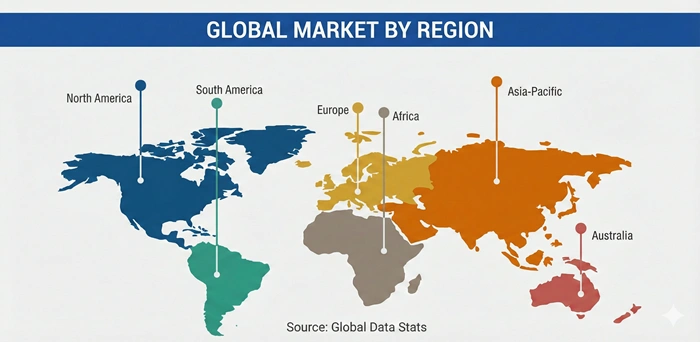
Regional Insights
North America
Technology Leadership and Mature Contact Center Ecosystem Drive Regional Dominance
North America maintains its position as the dominant region in the Contact Center Analytics market, capturing approximately 35% of global revenue in 2025 with a projected CAGR of 18.48% from 2026 to 2033. The United States represents the largest national market within the region, valued at USD 651.70 million in 2025 and expected to reach USD 3,550.71 million by 2035, driven by extensive presence of large-scale contact center operations across financial services, telecommunications, retail, and healthcare sectors. American organizations demonstrate early technology adoption patterns and substantial willingness to invest in innovative customer experience solutions, creating a favorable environment for analytics platform providers to introduce advanced capabilities. The region benefits from a mature ecosystem of solution vendors, system integrators, and managed service providers including Cisco Systems, NICE, Genesys, Five9, and Oracle who maintain significant research and development operations focused on next-generation analytics innovations. Federal government IT spending approached USD 45 billion in 2019, with substantial portions allocated to customer service modernization initiatives that incorporate advanced analytics capabilities.
The North American Contact Center Analytics market is characterized by strong adoption of cloud-based unified communication-as-a-service solutions managed through subscription-based models that enable organizations to scale licenses dynamically based on fluctuating demand. Small and medium enterprises in the region increasingly prefer cloud-based analytics offerings from specialized providers who deliver cost-effective services and rapid implementation timelines compared to traditional enterprise software vendors. Canada contributes meaningfully to regional growth with approximately 98 companies providing industrial IoT and analytics solutions as of 2021, serving diverse sectors including financial services, telecommunications, natural resources, and transportation. Leading technology companies including Microsoft, IBM, Salesforce, and SAP have established major North American operations focused on developing AI-powered analytics platforms that integrate seamlessly with their broader enterprise software portfolios. The region's sophisticated regulatory framework governing data privacy and consumer protection creates compliance-driven demand for analytics solutions that automatically monitor interactions and flag potential violations. Strong partnerships between analytics platform providers, telecommunications carriers, and contact center equipment manufacturers continue fostering innovation and establishing North America as the global reference point for Contact Center Analytics market best practices.
Asia-Pacific
Digital Transformation and Outsourcing Industry Growth Fuel Regional Expansion
The Asia-Pacific region emerges as the fastest-growing segment of the global Contact Center Analytics market, projected to expand at an exceptional CAGR of 22.9% from 2026 to 2033, driven by rapid digital transformation, expanding e-commerce ecosystems, and aggressive investments in customer service infrastructure. The regional market was valued at USD 326 million in 2024 and is expected to reach USD 1,526.3 million by 2030, reflecting the enormous growth potential as organizations across diverse sectors implement advanced analytics capabilities. China leads regional adoption as the world's manufacturing hub and home to massive consumer markets, with government initiatives supporting digital infrastructure development and smart city projects that incorporate intelligent customer service platforms. The rapid expansion of e-commerce across China has created unprecedented customer service volumes, compelling retailers to implement sophisticated analytics tools that optimize agent performance and personalize customer interactions at scale. India represents another critical growth market, leveraging its position as a global business process outsourcing destination to attract international companies seeking cost-effective contact center operations enhanced by advanced analytics capabilities.
Japan contributes significantly to the Asia-Pacific Contact Center Analytics market growth, driven by acute labor shortages resulting from demographic aging and declining working-age population. Japanese organizations are aggressively implementing AI-powered analytics, robotic process automation, and predictive workforce management tools to maximize productivity from limited human resources. The country's high digital maturity and sophisticated technology infrastructure support rapid adoption of cutting-edge analytics capabilities across finance, healthcare, and manufacturing sectors. Southeast Asian markets including Singapore, Malaysia, Thailand, and Philippines are experiencing robust growth as regional economic development creates expanding middle classes with rising customer service expectations. Leading global analytics providers including Cisco Systems, NICE, Genesys, SAP, and Oracle have established substantial regional operations and partnerships with local technology companies to capture market opportunities. The Asia-Pacific region benefits from lower implementation costs compared to Western markets, making advanced analytics technologies accessible to small and medium-sized enterprises that represent the majority of regional business landscape. Government support through favorable regulatory frameworks, tax incentives, and digital transformation funding programs creates an exceptionally conducive environment for sustained Contact Center Analytics market expansion throughout the forecast period.
Top Key Players
-
Cisco Systems Inc. (United States)
-
NICE Ltd. (Israel)
-
Oracle Corporation (United States)
-
SAP SE (Germany)
-
Genesys (United States)
-
Verint Systems Inc. (United States)
-
CallMiner (United States)
-
Five9 Inc. (United States)
-
8x8 Inc. (United States)
-
Genpact Limited (United States)
-
Talkdesk (United States)
-
Mitel Networks Corporation (Canada)
-
Enghouse Interactive (Canada)
-
Salesforce Inc. (United States)
-
IBM Corporation (United States)
-
Microsoft Corporation (United States)
-
Avaya Holdings Corp. (United States)
-
Aspect Software Inc. (United States)
-
Calabrio Inc. (United States)
-
Clarabridge Inc. (United States)
Recent Developments
-
Zoom Communications Inc. launched Zoom Contact Center in India in June 2025, introducing a modern AI-powered omnichannel contact-center-as-a-service platform with integrated video capabilities supporting voice, video, virtual agents, social platforms, email, and messaging applications to address growing demand for comprehensive customer engagement solutions
-
GoTo introduced its GoTo Contact Center Pro solution in March 2024, enhancing its Contact Center as a Service offerings for medium and large businesses with modern flexible platforms featuring omnichannel capabilities, powerful integrations, excellent agent experiences, and rich data analytics to support organizational growth and customer experience improvement initiatives
-
Five9 acquired Aceyus in August 2023, a Charlotte-based analytics specialist, in a strategic move to enhance its data integration and analytics capabilities by providing contextual data that improves predictive accuracy and delivers better service outcomes for enterprise clients
-
Infosys launched Infosys Cortex client engagement platform in January 2021, supporting Google Cloud Contact Center AI services and Genesys technology with managed artificial intelligence monitoring services to help organizations implement intelligent customer engagement solutions
-
NICE expanded its CXone cloud platform capabilities in 2024 with enhanced AI-powered workforce management and quality management features designed to optimize agent scheduling, automate quality assurance processes, and improve overall operational efficiency across distributed contact center environments
Market Trends
Cloud Migration and Omnichannel Integration Reshape Market Dynamics
The Contact Center Analytics market is experiencing a fundamental shift toward cloud-based deployment models that offer superior scalability, cost-effectiveness, and operational flexibility compared to traditional on-premise installations. Organizations are migrating legacy analytics infrastructure to hosted platforms that eliminate capital expenditures for hardware procurement while providing automatic software updates, enhanced disaster recovery capabilities, and seamless support for distributed remote agent workforces. Cloud-native analytics platforms enable faster integration of emerging AI capabilities including advanced natural language processing, emotion detection, and predictive modeling without requiring significant infrastructure upgrades. The subscription-based pricing models associated with cloud platforms align analytics costs directly with usage volumes, providing financial flexibility particularly valuable for organizations with seasonal demand fluctuations or uncertain growth trajectories. Hybrid deployment strategies are gaining traction among enterprises with regulatory concerns about data residency or organizations seeking to preserve existing on-premise investments while gradually transitioning toward cloud-based capabilities.
Omnichannel analytics integration represents another transformative trend within the Contact Center Analytics market as organizations recognize the inadequacy of channel-specific analytical approaches in understanding modern customer journeys. Advanced platforms now consolidate interaction data from voice calls, web chat, email, social media, SMS messaging, and self-service portals into unified customer profiles that provide comprehensive visibility across all touchpoints. This holistic perspective enables organizations to identify patterns and preferences that single-channel analyses miss, supporting more effective personalization strategies and improved customer experience consistency. Real-time decision-making capabilities are becoming standard expectations rather than premium features, with organizations demanding instant access to performance dashboards, automated alerts for service quality issues, and dynamic workforce management recommendations. The growing emphasis on employee experience alongside customer experience is driving demand for analytics tools that monitor agent satisfaction, identify burnout risks, and optimize work environments to reduce costly turnover in high-stress contact center roles. These converging trends continue expanding the addressable market and use cases for contact center analytics solutions across diverse industries and organizational sizes.
Segments Covered in the Report
By Solution
-
Speech Analytics
-
Performance Analytics
-
Predictive Analytics
-
Text Analytics
-
Cross-Channel Analytics
By Service
-
Integration & Deployment
-
Support & Maintenance
-
Training & Consulting
-
Managed Services
By Deployment
-
On-Premise
-
Hosted
-
Hybrid
By Enterprise Size
-
Large Enterprises
-
Small & Medium Enterprises
By Application
-
Customer Experience Management
-
Workforce Optimization
-
Risk & Compliance Management
-
Real-Time Monitoring & Reporting
-
Automatic Call Distributor
-
Log Management
-
Others
By End-Use
-
BFSI (Banking, Financial Services, and Insurance)
-
IT & Telecom
-
Healthcare & Life Sciences
-
Consumer Goods & Retail
-
Travel & Hospitality
-
Government & Public Sector
-
Manufacturing
-
Energy & Utilities
-
Others
By Region
-
North America
-
United States
-
Canada
-
Mexico
-
-
Europe
-
Germany
-
United Kingdom
-
France
-
Italy
-
Spain
-
Rest of Europe
-
-
Asia-Pacific
-
China
-
Japan
-
India
-
South Korea
-
Australia
-
Southeast Asia
-
Rest of Asia-Pacific
-
-
Latin America
-
Brazil
-
Argentina
-
Rest of Latin America
-
-
Middle East & Africa
-
UAE
-
Saudi Arabia
-
South Africa
-
Rest of MEA
-
Frequently Asked Questions
Question 1: What is the projected Contact Center Analytics market size by 2033?
Answer: The global Contact Center Analytics market is projected to reach USD 13.61 billion by 2033, growing from USD 2.86 billion in 2026. The market is expanding at a CAGR of 17.64% during the 2026-2033 forecast period driven by AI integration and omnichannel customer experience priorities.
Question 2: Which region dominates the Contact Center Analytics market currently?
Answer: North America dominates the Contact Center Analytics market with approximately 35% revenue share in 2025, supported by mature infrastructure and early technology adoption. However, Asia-Pacific is the fastest-growing region with a CAGR of 22.9% from 2026 to 2033.
Question 3: What are the key applications driving Contact Center Analytics market adoption?
Answer: Customer experience management leads Contact Center Analytics market applications with 19% revenue share in 2025, focused on personalizing interactions and improving satisfaction. Workforce optimization and compliance monitoring are other critical applications driving enterprise adoption.
Question 4: How is artificial intelligence transforming the Contact Center Analytics market?
Answer: Artificial intelligence is revolutionizing the Contact Center Analytics market through predictive analytics, sentiment analysis, and automated quality assurance capabilities. AI-powered solutions enable real-time emotion detection and proactive customer engagement strategies that significantly improve service outcomes.
Question 5: Which deployment model is growing fastest in the Contact Center Analytics market?
Answer: Hosted deployment models are experiencing the fastest growth in the Contact Center Analytics market, projected to capture 63% revenue share by 2025. Cloud-based solutions offer superior scalability, cost-effectiveness, and support for distributed remote workforces compared to on-premise alternatives.