
Cloud Enterprise Content Management Market Overview
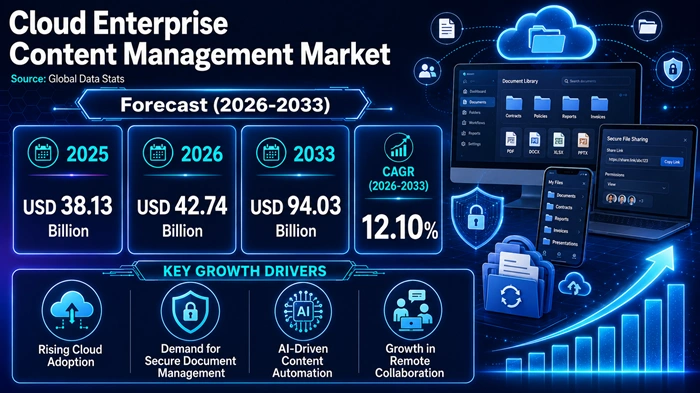
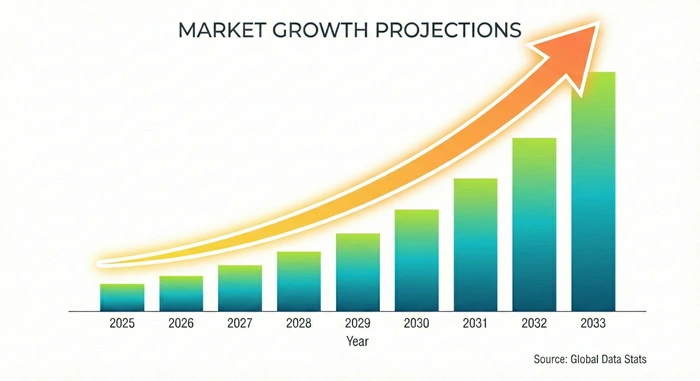
The global cloud enterprise content management market size is valued at USD 38.13 billion in 2025 and is predicted to increase from USD 42.74 billion in 2026 to approximately USD 94.03 billion by 2033, growing at a CAGR of 12.10% from 2026 to 2033.
Driven by the rapid shift from legacy on-premises document repositories to intelligent, scalable SaaS-based content platforms, enterprises worldwide are modernizing their content governance, workflow automation, and regulatory compliance infrastructure. Organizations across banking, healthcare, manufacturing, and government verticals are actively investing in cloud ECM solutions to manage the explosive growth of unstructured data, enable hybrid workforce collaboration, and meet increasingly stringent data privacy and retention regulations — making cloud content management one of the most commercially dynamic segments within enterprise software.
AI Impact on the Cloud Enterprise Content Management Industry
Generative AI and Machine Learning Are Transforming Cloud ECM from Passive Document Repositories into Intelligent, Proactive Content Governance Platforms That Automate Classification, Compliance, and Insight Delivery
Artificial intelligence is fundamentally changing how the cloud enterprise content management market operates by converting static document storage systems into dynamic, self-organizing content intelligence platforms. Machine learning models trained on organizational content patterns are now capable of automatically classifying incoming documents, applying retention labels, tagging metadata, and routing content through approval workflows — eliminating the manual indexing effort that historically consumed significant staff time and introduced inconsistency into governance processes. Generative AI capabilities, such as those embedded in Microsoft SharePoint Premium's Copilot features and OpenText Aviator, are enabling natural-language search across large unstructured content archives — allowing legal, compliance, and operations teams to retrieve specific information across millions of documents within seconds rather than hours. Early adopters in regulated industries report that AI-powered governance automation has cut audit preparation cycles from weeks to days and measurably reduced compliance remediation costs after regulatory examinations.
Beyond governance, AI is enabling the cloud ECM market to deliver a new generation of analytical value from content assets that previously functioned only as passive records. Contract intelligence tools are extracting obligation clauses, renewal dates, and pricing terms from vast contract archives and surfacing actionable business insights — enabling procurement and legal teams to proactively manage contractual risk rather than discovering liability exposures after the fact. In healthcare, AI-powered ECM platforms are automatically linking patient records with diagnostic imaging, lab results, and clinical notes in real time — improving care coordination while simultaneously applying HIPAA retention and access control policies without manual intervention. These AI capabilities are shifting enterprise decision-making criteria for cloud ECM platform selection from basic storage and workflow functionality toward analytical intelligence and automation depth — a transition that favors platform vendors with significant AI research investment and is accelerating competitive separation between market leaders and laggards.
Growth Factors
Accelerating Enterprise Digital Transformation, Stricter Global Data Privacy Regulations, and the Rise of Hybrid Work Models Are the Three Primary Structural Drivers of Sustained Cloud ECM Market Expansion
The broad wave of enterprise digital transformation — across virtually every industry and geography — is the most powerful macro demand driver in the cloud enterprise content management market. Organizations that spent decades accumulating critical business content in disconnected on-premises file systems, legacy ECM platforms, email archives, and physical paper records are now executing cloud migration programs that centralize content management, automate lifecycle governance, and integrate document workflows with modern ERP, CRM, and collaboration platforms. This transformation is being driven simultaneously by operational efficiency imperatives, risk management priorities, and board-level recognition that unstructured data — which represents approximately 80% of all enterprise information — is both a significant liability when poorly managed and a substantial strategic asset when properly organized and searchable. The economics of cloud SaaS delivery models — which eliminate capital expenditure, reduce IT maintenance burden, and provide automatic feature and security updates — are making this transition financially attractive across all organization sizes, from global enterprises to small and medium-sized businesses.
Regulatory expansion and tightening are the second major independent growth driver operating throughout the forecast period. GDPR in the European Union, the California Consumer Privacy Act, India's Digital Personal Data Protection Act, and sector-specific frameworks including HIPAA, Basel III, MiFID II, and the U.S. 21st Century Cures Act collectively require organizations to maintain precise, auditable, and timely control over where business content resides, who has accessed it, how long it must be retained, and when it must be deleted. Modern cloud ECM platforms ship with pre-configured compliance templates for major regulatory frameworks — dramatically reducing the implementation complexity of meeting these requirements compared to custom-configured legacy systems. As regulatory scrutiny intensifies globally and penalties for non-compliance reach material levels — with GDPR fines reaching up to 4% of global turnover — investment in cloud ECM compliance infrastructure is transitioning from discretionary to operationally essential, creating a durable demand floor that persists through economic cycles.
Market Outlook
The Cloud ECM Market Outlook Through 2033 Is Defined by Hybrid Architecture Dominance, Vertical SaaS Specialization, and the Commercial Emergence of AI-Native Content Services Platforms
The long-term commercial trajectory of the cloud enterprise content management market through 2033 is shaped by three converging structural transitions that will collectively redefine competitive positioning and revenue mix across the sector. The most architecturally significant trend is the progressive shift from pure public cloud to hybrid and multi-cloud ECM deployments — where organizations route sensitive regulated content to private cloud or on-premises nodes while directing collaborative, lower-sensitivity workloads to public SaaS platforms for AI-enhanced analytics and search. Hybrid cloud's 16.52% CAGR within the overall ECM market reflects both the genuine technical capability of modern hybrid platforms and the institutional reality that data sovereignty, privacy law requirements, and legacy system integration needs will prevent a wholesale migration to public SaaS for the majority of large enterprise and government accounts through the forecast period.
Vertical SaaS specialization is a second trend that will significantly shape competitive dynamics and revenue growth within the cloud enterprise content management market. General-purpose ECM platforms are facing increasing competition from domain-specific solutions — such as Veeva Systems for life sciences, Procore for construction, and specialized healthcare content platforms — that deliver regulatory compliance templates, workflow configurations, and integration connectors pre-built for specific industry requirements. These vertical specialists win by reducing implementation time and customization cost compared to configuring generic ECM platforms for industry-specific compliance requirements. In response, established platform vendors including Microsoft, OpenText, IBM, and Hyland are investing in industry-specific solution packaging, partnership programs, and pre-certified compliance modules that enable their platforms to compete effectively on both breadth and domain depth — intensifying competitive activity that benefits enterprise buyers through accelerating innovation and improving product quality.
Expert Speaks
-
"The volume and complexity of unstructured business content is growing at a pace that manual governance processes simply cannot keep up with. AI-powered cloud ECM platforms are now delivering real-time classification, retention enforcement, and compliance monitoring capabilities that transform content management from a cost center into a strategic risk management and efficiency driver. Our platform investments reflect our conviction that this market will be one of enterprise software's strongest growth segments through the rest of the decade." — CEO, Microsoft Corporation
-
"Organizations across every industry are under mounting pressure to manage their content governance obligations with greater precision, speed, and cost efficiency than legacy systems allow. The cloud enterprise content management market is responding to that demand with a generation of AI-integrated, hybrid-deployable platforms that are achieving adoption rates and business impact we have not seen in this sector before." — CEO, OpenText Corporation
-
"The combination of hybrid work adoption, escalating regulatory complexity, and generative AI capabilities is creating a sustained investment cycle in cloud content management infrastructure. Enterprises that invest in intelligent, integrated ECM platforms today are building durable competitive advantages in compliance readiness, operational efficiency, and knowledge management that will compound in value over the coming years." — CEO, IBM Corporation
Key Report Takeaways
-
North America leads the global cloud enterprise content management market with approximately 37–38% revenue share in 2025, driven by high enterprise digital maturity, the concentrated presence of major technology vendors including Microsoft, IBM, OpenText, Oracle, and Adobe, aggressive SEC and FDA record-keeping enforcement, and strong corporate investment in hybrid work infrastructure that requires scalable, policy-governed cloud content management
-
Asia Pacific is the fastest-growing regional market, projected to expand at approximately 16.05% CAGR through 2033, powered by state-backed digitization mandates in India, China, and Japan, rapid BFSI sector modernization, mobile-first content access requirements of distributed workforces, and growing domestic cloud infrastructure investment that is enabling compliant data residency for organizations in regulated industries
-
Content management is the dominant solution segment, holding approximately 33–34% of total solution segment revenue in 2025, as core document repository, version control, search, and access management capabilities remain the foundational purchase driver for cloud ECM platform deployments across all industries and organization sizes globally
-
Public cloud deployment leads with approximately 63–64% of total deployment segment revenue in 2025, reflecting its superior cost efficiency, instant scalability, AI analytics integration, and automatic compliance update capabilities — though the hybrid cloud segment is the fastest-growing at 16.52% CAGR as regulated industry buyers seek to balance data sovereignty with cloud platform benefits
-
BFSI is the leading end-user industry segment, accounting for approximately 26–27% of total industry segment revenue in 2025, driven by record-keeping mandates under Basel III, MiFID II, and national banking regulations that require tamper-evident, auditable content archives — while healthcare is the fastest-growing end-user at 13.78% CAGR as interoperability mandates accelerate EHR and clinical content platform investment
-
Digital asset management is the fastest-growing solution subsegment, expanding at approximately 15.18% CAGR through 2033, as marketing, media, and e-commerce organizations require AI-assisted management of rapidly growing libraries of video, imagery, and brand content — with enterprises reporting 40% faster campaign launch times after deploying cloud DAM platforms
Market Scope
| Report Coverage | Details |
|---|---|
| Market Size by 2033 | USD 94.03 Billion |
| Market Size by 2025 | USD 38.13 Billion |
| Market Size by 2026 | USD 42.74 Billion |
| Market Growth Rate from 2026 to 2033 | CAGR of 12.10% |
| Dominating Region | North America |
| Fastest Growing Region | Asia Pacific |
| Base Year | 2025 |
| Forecast Period | 2026 to 2033 |
| Segments Covered | Solution, Deployment Model, Service, Organization Size, End-User Industry, Region |
| Regions Covered | North America, Europe, Asia Pacific, Latin America, Middle East & Africa |
Market Dynamics
Drivers Impact Analysis
AI-Powered Content Automation and the Surging Regulatory Compliance Burden Are the Two Most Commercially Significant and Durably Compounding Growth Drivers in the Cloud ECM Market
| Driver | ≈ % Impact on CAGR Forecast | Geographic Relevance | Impact Timeline |
|---|---|---|---|
| AI-powered content automation for governance and compliance | ~28% | Global, led by North America and Europe | Medium to long-term |
| Growing digital transformation in regulated industries (BFSI, healthcare) | ~25% | Global | Long-term |
| Increasing adoption of cloud computing replacing legacy on-premises ECM | ~22% | Global, stronger in Asia Pacific and MEA | Medium to long-term |
| Shift toward remote and hybrid work models requiring universal content access | ~18% | North America, Europe, Asia Pacific | Short to medium-term |
| Rising enterprise mobility and BYOD policies | ~7% | North America, Asia Pacific | Medium-term |
The convergence of AI automation and regulatory compliance pressure is the most powerful commercial force in the cloud enterprise content management market, creating a uniquely self-reinforcing growth dynamic. On the compliance side, organizations subject to GDPR, HIPAA, MiFID II, and equivalent national frameworks face escalating penalties and supervisory scrutiny that demand provably governed, auditable content management processes — a standard that manual or legacy-system-based approaches consistently fail to meet at acceptable cost. On the AI automation side, generative AI and machine learning tools are dramatically reducing the implementation and ongoing operational cost of meeting these compliance standards by automating classification, metadata tagging, retention enforcement, and audit reporting — making governance-grade cloud ECM both more effective and more economically accessible than at any prior point. This combination of rising regulatory necessity and falling technology cost is accelerating the replacement cycle for legacy ECM systems and expanding the addressable market to include organizations that previously could not justify premium governance software expenditure.
The structural shift to hybrid and remote work models that accelerated during the pandemic and has remained sticky across North American and European enterprise workforces is the second major driver that operates independently of regulatory trends. Distributed teams require universally accessible, policy-controlled content management environments where employees, contractors, and partners can securely access, edit, and collaborate on business documents regardless of physical location or device type. This requirement is fundamentally incompatible with legacy on-premises file servers and VPN-dependent ECM architectures, driving direct migration demand toward cloud-based ECM platforms that provide browser-native access with enterprise-grade access controls, versioning, and audit trails. As hybrid work becomes the permanent operational model for knowledge-intensive industries globally, the content management infrastructure required to support it represents a recurring replacement cycle that will sustain cloud ECM demand throughout the forecast period.
Restraints Impact Analysis
Legacy System Migration Complexity and Multi-Tenant Security Concerns Remain the Two Primary Barriers Limiting the Speed and Depth of Cloud ECM Adoption in Enterprise and Regulated Markets
| Restraint | ≈ % Impact on CAGR Forecast | Geographic Relevance | Impact Timeline |
|---|---|---|---|
| Complex migration from legacy ECM to cloud-native platforms | ~38% | Global, particularly North America and Europe | Medium to long-term |
| Multi-tenant security and compliance concerns in regulated industries | ~30% | Global, highest in defense, pharma, legal | Long-term |
| Bandwidth limitations in developing regions | ~20% | Asia Pacific, MEA, Latin America | Short to medium-term |
| Vendor lock-in risks limiting strategic flexibility | ~12% | Global | Medium-term |
The migration complexity inherent in replacing decades-old on-premises ECM installations with modern cloud-native platforms is the most practically significant adoption barrier in the cloud enterprise content management market. Large financial institutions, healthcare systems, and government agencies have accumulated vast archives containing millions of documents with custom metadata schemas, proprietary retention codes, bespoke workflow configurations, and complex inter-document linkages that do not transfer cleanly to standardized cloud platform architectures. Broken document references, orphaned audit trails, retention code mismatches, and incompatible access control structures discovered mid-migration can force costly remediation work, extend project timelines from months to years, and create periods of parallel system operation that double infrastructure costs. The scarcity of integration specialists with deep expertise in both legacy ECM architectures and modern cloud platforms is a persistent resource constraint that caps the pace of large-scale ECM modernization projects across the market.
Multi-tenant security concerns continue to create procurement hesitancy among regulated industry buyers — particularly defense contractors, pharmaceutical research organizations, and legal professional firms — who must demonstrate that sensitive content is not accessible to other platform tenants or to cloud provider personnel. While confidential computing technologies and comprehensive encryption at rest and in transit address many of the theoretical risks of shared cloud infrastructure, documented security incidents at major cloud platforms and persistent regulatory guidance in several jurisdictions recommending on-premises storage for specific sensitive data categories continue to sustain buyer caution. Vendors are investing heavily in private cloud deployment options, customer-managed encryption key programs, and third-party security audit certifications to address these concerns — but the gap between cloud security capabilities and regulated industry security comfort levels will continue to constrain pure SaaS adoption for the highest-sensitivity content categories through the medium term.
Opportunities Impact Analysis
SME Market Expansion Through Accessible SaaS Pricing, Vertical SaaS ECM Specialization, and Emerging Market Digital Infrastructure Investment Are the Three Highest-Value Commercial Opportunities
| Opportunity | ≈ % Impact on CAGR Forecast | Geographic Relevance | Impact Timeline |
|---|---|---|---|
| SME adoption through affordable SaaS and no-code workflow tools | ~40% | Global, strongest in North America, Asia Pacific | Short to medium-term |
| Vertical SaaS ECM specialization for regulated industries | ~36% | Global, led by healthcare, BFSI, government | Medium to long-term |
| Emerging market digital infrastructure investment enabling cloud ECM adoption | ~24% | Asia Pacific, Latin America, MEA | Medium to long-term |
The small and medium enterprise segment represents one of the most commercially significant near-term expansion opportunities in the cloud enterprise content management market. Historically, enterprise-grade ECM platforms required upfront capital expenditure and specialized IT implementation expertise that placed them beyond the practical reach of organizations with fewer than 200–500 employees. Modern cloud SaaS platforms — including Microsoft 365, Box Business, and DocuWare Cloud — are delivering sophisticated sensitivity labeling, retention policy automation, workflow orchestration, and e-discovery capabilities through subscription models priced below USD 10–20 per user per month, making governance-grade content management financially accessible across the full SME spectrum. No-code workflow builders and AI-assisted onboarding tools are further reducing implementation time from months to weeks, eliminating the professional services dependency that previously constrained SME adoption. With SME adoption currently expanding at 17.35% CAGR — the fastest cohort within the overall market — this segment is emerging as the primary volume growth engine for the cloud ECM industry through 2033.
Vertical SaaS specialization creates a parallel opportunity that targets the highest-revenue, highest-compliance-complexity organizations in the market. Sector-specific cloud ECM solutions that deliver regulatory compliance templates, integration connectors for industry-standard EHR, ERP, and core banking systems, and pre-configured workflows aligned to industry-specific business processes are achieving significantly faster deployment cycles and lower total cost of ownership compared to configuring general-purpose ECM platforms for vertical requirements. This opportunity is most substantial in healthcare — where interoperability mandates and digitization investment are creating significant cloud ECM demand — and in government, where citizen services digitization programs in Asia Pacific and the Middle East are driving large-scale cloud content management procurement. Vendors that invest in building deep vertical expertise and certified integration ecosystems for these high-value industry segments will build sustainable competitive advantages that command premium pricing and high renewal rates.
Segment Analysis
By Solution
Content Management Leads the Solution Segment with the Highest Revenue Share While Digital Asset Management Emerges as the Fastest-Growing Subsegment in the Cloud Enterprise Content Management Market
The content management subsegment holds the dominant position within the cloud enterprise content management market by solution, accounting for approximately 33–34% of total solution revenue in 2025. This leadership position reflects its foundational role as the core repository and access control infrastructure upon which all other ECM capabilities are built — without effective document storage, version control, metadata management, and permissions governance, no other content services capability can operate reliably. Companies including Microsoft, OpenText, IBM, Hyland, and Oracle maintain the dominant content management platform positions globally, competing through depth of compliance template libraries, scale of AI automation capabilities, and breadth of integration ecosystems connecting ECM platforms to enterprise ERP, CRM, and collaboration systems. North America leads this subsegment's revenue, shaped by the region's advanced enterprise digital maturity, intense regulatory enforcement environment, and deep investment by Fortune 1000 organizations in content governance infrastructure.
The digital asset management (DAM) subsegment is growing at the fastest rate within the market at approximately 15.18% CAGR through 2033, driven by the explosive growth of video, imagery, and rich media content across marketing, e-commerce, training, and product information management functions. Organizations managing more than one million digital assets report campaign launch time reductions of up to 40% after deploying cloud DAM platforms with AI-powered auto-tagging, usage rights management, and multi-channel distribution automation. The workflow management and case management subsegments are experiencing strong growth as no-code process automation tools including Microsoft Power Automate and OpenText AppWorks enable business teams to build and modify content workflows without developer intervention — reducing IT backlogs and accelerating the ROI of cloud ECM investments across finance, legal, insurance, and public sector organizations.
By Deployment Model
Public Cloud Leads with Over 63% Deployment Share While Hybrid Cloud Is the Fastest-Growing Architecture as Organizations Balance Data Sovereignty with Cloud Scalability Benefits
The public cloud deployment model commands the leading share of the cloud enterprise content management market at approximately 63–64% of total deployment segment revenue in 2025. Public cloud's dominance reflects the compelling combination of zero capital expenditure, instant scalability, automatic software updates and security patching, and seamless integration with the major enterprise SaaS ecosystems — including Microsoft 365, Google Workspace, and Salesforce — that modern knowledge workers use daily. Public cloud platforms also deliver the most mature AI content analysis capabilities, as hyperscale cloud providers including Microsoft, Google, and Amazon Web Services continuously integrate their latest machine learning advances into content management services available to all platform customers. Cost-per-user pricing that scales with organizational growth, combined with the elimination of on-premises IT maintenance overhead, makes public cloud the default deployment choice for the vast majority of new ECM deployments, particularly among mid-market and SME organizations.
The hybrid cloud deployment model is growing at the fastest CAGR of approximately 16.52% within the segment, reflecting the architectural preference of large enterprise and regulated industry buyers who need the performance and scalability benefits of cloud platforms while maintaining sovereign control over specific sensitive content categories. European banks complying with GDPR data localization requirements, U.S. defense contractors subject to ITAR and CUI handling rules, and pharmaceutical organizations managing FDA-regulated clinical trial records are among the most active hybrid cloud ECM adopters. Platform solutions including AWS Outposts, Microsoft Azure Stack, and purpose-built hybrid ECM configurations from Hyland, OpenText, and IBM allow organizations to deliver unified content management user experiences across both private and public cloud nodes — enabling flexible data tiering that matches content risk classification to appropriate infrastructure while maintaining centralized governance visibility.
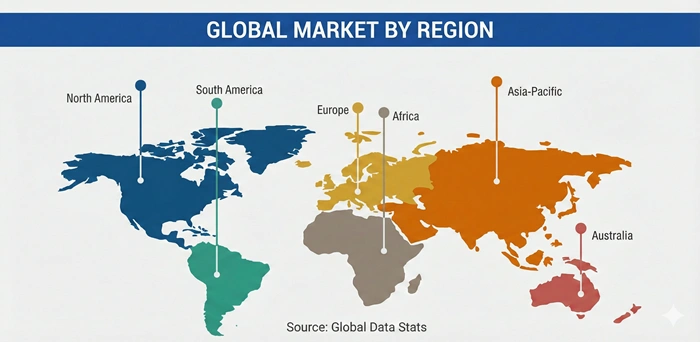
Regional Insights
North America
North America Commands the Cloud ECM Market Through Advanced Enterprise Digital Maturity, the World's Strictest Regulatory Enforcement Environment, and a Deep Ecosystem of Leading ECM Platform Vendors
North America holds approximately 37–38% of global cloud enterprise content management market revenue in 2025, expanding at a regional CAGR of approximately 12.54% through 2033. The United States accounts for the dominant share of regional revenue, driven by the combination of the world's most digitally mature enterprise environment, rigorous regulatory enforcement by the SEC, FDA, HIPAA regulators, and state privacy authorities, and the headquarters presence of the market's leading platform vendors including Microsoft, IBM, Oracle, Adobe, Hyland, Laserfiche, M-Files, and Box. U.S. enterprises are investing aggressively in cloud ECM modernization to manage both the expanding volume of digital content created by distributed workforces and the escalating compliance obligations of an ever-growing body of federal and state data governance legislation. The North American market is also the primary commercial proving ground for AI-enhanced ECM capabilities — with Microsoft's Copilot for SharePoint, OpenText Aviator, and IBM's Watson-powered content analytics achieving their largest enterprise deployments in the U.S. market before being scaled internationally.
Canada contributes meaningful regional revenue through large financial institution and government cloud content management investments, with the federal government's digital services modernization program driving significant cloud ECM procurement across departments. Mexico is at an earlier stage of cloud ECM adoption but represents growing demand as multinational manufacturing and shared services operations invest in document management infrastructure aligned with their global parent company standards. North American market dynamics are also strongly influenced by the rapid adoption of managed services delivery models — where organizations outsource platform administration, compliance monitoring, and content security management to specialist providers including Accenture, Cognizant, and Deloitte — creating a service revenue layer that is growing at above-platform-software rates and expanding the total commercial footprint of cloud ECM within the region.
Asia Pacific
Asia Pacific Is the Fastest-Growing Region in the Cloud ECM Market, Propelled by Government Digitization Mandates, BFSI Modernization, and Rapid Digital Infrastructure Expansion Across Emerging Economies
Asia Pacific is projected to register the highest regional CAGR globally at approximately 16.05% through 2033, establishing it as the most strategically significant growth region in the cloud enterprise content management market for the entire forecast period. India is one of the most dynamic individual country markets within the region, where the government's Digital India initiative is driving mass digitization of public services, the Income Tax Department's transition to digital filing mandates structured electronic record management, and the rapidly expanding private BFSI sector is investing heavily in cloud content platforms to meet RBI regulatory requirements and improve operational efficiency. China represents the largest absolute revenue opportunity, with state-backed digitization programs, BFSI sector modernization, and the growth of domestic cloud platforms including Huawei Cloud and Alibaba Cloud creating a substantial addressable market for cloud ECM solutions that meet China's PIPL data residency requirements.
Japan and South Korea contribute mature, stable cloud ECM revenue through established enterprise software markets where domestic providers including Fujitsu, NEC, and Samsung SDS compete alongside international platforms from Microsoft, IBM, and OpenText. Australia has achieved significant cloud ECM penetration across government, financial services, and healthcare sectors, supported by the Australian Signals Directorate's cloud security frameworks that provide regulatory clarity for cloud content management adoption in sensitive industries. Across emerging Asia Pacific markets including Vietnam, Indonesia, Thailand, and Malaysia, rapidly expanding digital infrastructure, growing BFSI sector formalization, and government e-governance programs are creating early-stage but quickly developing cloud ECM demand that will contribute progressively larger regional revenue shares through 2033 and beyond.
Customization Available for This Report
This report offers comprehensive region-wise and country-wise customization, providing tailored market intelligence on cloud ECM adoption trends, vendor competitive landscape, regulatory environment, deployment model preferences, and growth opportunities specifically aligned to your selected geography and the cloud enterprise content management market keyword combination.
Customized versions of this report are available for each region and country below, delivering actionable, geography-specific insights for platform vendors, systems integrators, enterprise IT decision-makers, and technology investors:
North America
-
U.S. — SEC/FDA/HIPAA compliance-driven ECM demand, major platform vendor competitive landscape, AI content automation adoption, hybrid work content infrastructure investment, and SME market penetration analysis
-
Canada — Federal government digitization programs, PIPEDA compliance requirements, financial sector ECM investment, and key platform and services competitive dynamics
-
Mexico — Multinational operations ECM standardization, BFSI sector cloud content management adoption, and market entry opportunity analysis
Europe
-
U.K. — Post-Brexit data residency implications, FCA and NHS content management requirements, GDPR compliance-driven ECM investment, and major platform competitive landscape
-
Germany — GDPR localization requirements, manufacturing sector ECM digitization, Mittelstand cloud adoption patterns, and key platform and integration partner competitive analysis
-
France — CNIL regulatory framework, public sector digitization programs, BFSI sector ECM investment, and hybrid cloud adoption analysis
-
Italy — GDPR compliance investment, government digitization programs, BFSI and manufacturing ECM adoption, and competitive landscape analysis
-
Rest of Europe — Eastern European cloud ECM market development, EU Digital Single Market regulation impact, and emerging market adoption analysis
Asia Pacific
-
China — PIPL data residency requirements, state-backed digitization mandates, domestic vs. international platform competition, and BFSI sector ECM investment analysis
-
India — Digital India initiative impact, RBI compliance requirements, DPDPA data protection framework, and rapid cloud ECM adoption analysis across BFSI and IT sectors
-
Japan — FSA regulatory requirements, enterprise digitization investment, domestic platform competitive landscape, and cloud ECM adoption trends
-
South Korea — PIPA regulatory framework, BFSI and government sector ECM investment, and competitive platform landscape analysis
-
Australia — ASD cloud security framework, government and healthcare sector ECM investment, and competitive platform and services landscape
-
Rest of Asia Pacific — Country-level cloud ECM market analysis for Vietnam, Indonesia, Thailand, Malaysia, and the Philippines
Latin America
-
Brazil — LGPD data protection compliance, BFSI sector modernization, government digitization programs, and cloud ECM adoption analysis
-
Argentina — Data protection regulatory framework, economic environment impact on IT investment, and cloud ECM market opportunity analysis
-
Rest of Latin America — Colombia, Chile, Peru cloud ECM market sizing and growth opportunity analysis
Middle East & Africa
-
UAE — Dubai Paperless Initiative, ADGM and DIFC regulatory frameworks, smart government program ECM investment, and international vendor competitive landscape
-
Saudi Arabia — Vision 2030 digital transformation programs, NCA regulatory requirements, government and BFSI sector ECM investment, and key competitive dynamics
-
Rest of MEA — Sub-Saharan Africa digital infrastructure development, sovereign cloud investment, and emerging cloud ECM market opportunity analysis
Top Key Players
-
Microsoft Corporation (United States)
-
OpenText Corporation (Canada)
-
IBM Corporation (United States)
-
Oracle Corporation (United States)
-
Adobe Inc. (United States)
-
Hyland Software Inc. (United States)
-
Box Inc. (United States)
-
Alfresco Software Inc. (United States / United Kingdom)
-
Xerox Holdings Corporation (United States)
-
Newgen Software Technologies Limited (India)
-
Laserfiche (United States)
-
DocuWare GmbH (Germany)
-
M-Files Corporation (Finland / United States)
-
Fabasoft AG (Austria)
-
Kiteworks Inc. (United States)
-
Veeva Systems Inc. (United States)
-
KnowledgeLake Inc. (United States)
Recent Developments
-
In January 2025, M-Files Corporation announced a strategic partnership with Salesforce to embed contract and compliance content management functionality directly within Salesforce CRM workflows, enabling sales and legal teams to access, review, and sign contracts from within Salesforce — with the integration reported to reduce deal-closure cycle times by approximately 15% in early adopter deployments by eliminating context switching between platforms
-
In April 2024, Hyland Software Inc. launched Hyland Experience Automate (Hx Automate), a cloud-native intelligent content automation service incorporating large language model integrations and low-code workflow design tools, enabling insurance, education, and healthcare organizations to modernize content management processes and integrate cloud ECM capabilities with existing legacy systems through a drag-and-drop configuration interface
-
In December 2024, DocuWare GmbH released Cloud 8.0, a major platform update featuring offline document capture capabilities and biometric authentication login, designed to support field-based workers who require document access and processing capabilities in environments with intermittent connectivity — with early adopters reporting 30% reductions in paperwork processing time for field operations teams
-
In November 2024, Fabasoft AG earned ISO 27001 certification for its cloud ECM platform infrastructure, enabling the company to compete for procurement contracts with European financial services institutions and public sector organizations that require independently verified information security management standards as a minimum vendor qualification criterion
-
In March 2025, Microsoft Corporation rolled out enhanced SharePoint Premium AI document processing capabilities, including automatic sensitive information type detection, AI-assisted content assembly for standard document packages, and Copilot-powered document summarization integrated directly into SharePoint document libraries — accelerating the adoption of AI-enhanced governance within its large installed base of enterprise cloud ECM customers
Market Trends
Two Defining Trends Are Reshaping the Cloud Enterprise Content Management Market: The Rapid Maturation of Hybrid Cloud Architecture as the Enterprise Default and the Commercial Emergence of Content Services Platforms That Bundle the Full ECM Value Chain Under a Single License
The progressive institutional adoption of hybrid cloud architectures as the predominant enterprise ECM deployment model is the single most structurally important trend reshaping the cloud enterprise content management market through 2033. As organizations accumulate experience operating cloud ECM environments and as regulatory frameworks in Europe, Asia Pacific, and emerging markets impose increasingly specific data localization and sovereignty requirements, the architectural consensus is shifting away from pure public cloud deployments toward sophisticated hybrid models that match data sensitivity classification to appropriate infrastructure tiers. Enterprises are implementing tiered content architectures where active working documents flow through public cloud SaaS platforms for maximum collaboration and AI analytics value, while completed records, regulated documents, and highly sensitive content are retained on private cloud or on-premises nodes under direct organizational control. This hybrid architecture trend is simultaneously benefiting platform vendors with strong hybrid deployment capabilities and creating demand for integration and managed services expertise that is driving services revenue growth within the overall ECM market.
The commercial emergence of integrated content services platforms — which bundle capture, document management, records management, workflow automation, digital asset management, and advanced analytics capabilities within a single licensed platform rather than requiring organizations to assemble these capabilities from multiple point solutions — represents the second major structural trend in the cloud ECM market. Vendors including Microsoft, OpenText, Hyland, and IBM are investing in consolidating historically separate ECM capability modules into unified, AI-powered content services platforms that provide a consistent governance framework, user experience, and analytics layer across all content types and workflows. This platform consolidation trend is reducing the total cost of ownership for enterprise buyers, simplifying vendor management, and enabling AI capabilities to function across the full content lifecycle rather than being siloed within individual point solutions. Buyers are responding by consolidating their content technology spend onto fewer strategic platform relationships — creating larger per-account revenue opportunities for platform vendors and intensifying competition for the strategic ECM platform designation at major enterprise accounts.
Segments Covered in the Report
By Solution
-
Content Management
-
Document Repository and Version Control
-
Metadata Management and Search
-
-
Case Management
-
Regulatory Case and Investigation Management
-
Customer Onboarding and Servicing Workflows
-
-
Workflow Management
-
No-Code Process Automation Platforms
-
Approval and Review Workflow Orchestration
-
-
Record Management
-
Retention Schedule Automation
-
Legal Hold and e-Discovery Management
-
-
Digital Asset Management
-
Video and Rich Media Content Management
-
Brand Asset Distribution and Rights Management
-
-
Others
By Deployment Model
-
Public Cloud
-
Hyperscale SaaS Deployments (Microsoft 365, Google Workspace Integrations)
-
Standalone Public Cloud ECM Platforms
-
-
Private Cloud
-
Dedicated On-Premises Private Cloud Installations
-
Hosted Private Cloud for Regulated Industries
-
-
Hybrid Cloud
-
On-Premises / Public Cloud Tiered Architectures
-
Multi-Cloud ECM Federated Deployments
-
By Service
-
Professional Services
-
Implementation and Migration Services
-
Training, Customization, and Advisory Services
-
-
Managed Services
-
Platform Administration and Monitoring
-
Compliance Monitoring and Security Management
-
By Organization Size
-
Small and Medium Enterprises
-
Cloud-Native SaaS Subscription Models
-
-
Large Enterprises
-
Enterprise Agreement and Custom Deployment Models
-
By End-User Industry
-
Banking Financial Services and Insurance (BFSI)
-
Regulatory Record-Keeping and Audit Management
-
Customer Onboarding and Contract Management
-
-
Healthcare
-
EHR Integration and Clinical Content Management
-
HIPAA-Compliant Patient Record Governance
-
-
Manufacturing
-
Engineering Document and Product Specification Management
-
Supplier Contract and Quality Record Management
-
-
Retail
-
Marketing Asset and Campaign Content Management
-
Supplier and Procurement Document Management
-
-
IT and Telecom
-
Technical Documentation and SLA Record Management
-
-
Energy and Power
-
Maintenance Log and Incident Report Management
-
-
Others
By Region
-
North America (U.S., Canada, Mexico)
-
Europe (U.K., Germany, France, Italy, Rest of Europe)
-
Asia Pacific (China, India, Japan, South Korea, Australia, Rest of Asia Pacific)
-
Latin America (Brazil, Argentina, Rest of Latin America)
-
Middle East and Africa (UAE, Saudi Arabia, Rest of MEA)
❝ Built for Every Level — From Startups to Industry Giants ❞
Here Is Exactly How This Report Works for You
-
For tier 1 enterprise software corporations, cloud platform vendors, and institutional technology investors, this report delivers granular competitor revenue analysis — including product-line revenue breakdowns for Microsoft, OpenText, IBM, Oracle, Hyland, and other key platform vendors — alongside a structured geopolitical and regulatory risk assessment covering how GDPR enforcement trajectories, Asia Pacific data sovereignty laws, and evolving AI governance regulations are reshaping the competitive landscape for cloud ECM platform providers globally, enabling confident product portfolio strategy, M&A targeting, and geographic expansion investment decisions
-
For tier 2, tier 3 ECM solution providers, regional systems integrators, cloud technology resellers, and enterprise IT procurement teams, this report maps the highest-growth solution categories including digital asset management, hybrid cloud architecture, and AI-integrated workflow automation, the most commercially accessible vertical and geographic markets, and the technology partnership and distribution channel strategies that are generating the strongest revenue growth outcomes — providing a data-driven competitive positioning roadmap for the 2026 to 2033 period
-
For all decision-makers across the cloud enterprise content management value chain — from chief information officers and digital transformation directors to commercial development heads and venture investors — this report translates complex market signals including SME SaaS adoption acceleration curves, hybrid cloud architecture adoption trajectories, vertical SaaS disruption dynamics, and generative AI content governance commercialization timelines into clear, actionable strategic intelligence that supports better technology investment, product development, partnership, and market entry decisions through 2033
Frequently Asked Questions
Question 1: What is the current size of the global cloud enterprise content management market and how large will it be by 2033?
Answer: The global cloud enterprise content management market was valued at USD 38.13 billion in 2025 and is projected to reach approximately USD 94.03 billion by 2033, growing at a CAGR of 12.10% from 2026 to 2033. This strong double-digit growth reflects the accelerating replacement of legacy on-premises ECM systems with AI-powered cloud platforms, driven by digital transformation investment, regulatory compliance mandates, and the operational requirements of hybrid and remote work models across all major industries.
Question 2: Which deployment model is growing fastest in the cloud enterprise content management market?
Answer: The hybrid cloud deployment model is growing at the fastest rate within the cloud enterprise content management market at approximately 16.52% CAGR, as organizations balance data sovereignty and regulatory compliance requirements with the scalability, AI analytics, and cost efficiency benefits of public cloud platforms. Pure public cloud retains the largest deployment share at approximately 63–64% in 2025, driven by its lower entry cost and immediate access to AI-powered classification and governance tools.
Question 3: Which region dominates the cloud ECM market and which is growing fastest?
Answer: North America leads the cloud enterprise content management market with approximately 37–38% revenue share in 2025, driven by advanced enterprise digital maturity, strict regulatory enforcement, and the headquarters presence of leading vendors including Microsoft, IBM, OpenText, Oracle, and Adobe. Asia Pacific is the fastest-growing region at approximately 16.05% CAGR through 2033, powered by government digitization mandates in India and China, rapid BFSI sector modernization, and expanding digital infrastructure investment across the region's emerging economies.
Question 4: How is AI transforming the cloud enterprise content management market?
Answer: AI is transforming the cloud enterprise content management market by enabling automatic document classification, metadata tagging, retention policy enforcement, and audit log generation — converting passive document repositories into proactive governance platforms that reduce compliance preparation from weeks to days. Generative AI capabilities including natural language content search, contract clause extraction, and AI-assisted content assembly are creating new operational efficiency and risk management value that is accelerating platform upgrade decisions and expanding the revenue opportunity for advanced cloud ECM solutions.
Question 5: What are the key growth opportunities in the cloud enterprise content management market through 2033?
Answer: The largest growth opportunities in the cloud enterprise content management market include the rapid SME adoption of affordable SaaS-based ECM platforms — with SME deployments growing at 17.35% CAGR driven by per-user subscription pricing below USD 20 per month and no-code workflow tools that eliminate traditional implementation barriers. Vertical SaaS specialization for regulated industries including healthcare and BFSI, and emerging market digital infrastructure investment enabling cloud ECM adoption across Asia Pacific and Middle East governments and enterprises, represent the second and third most commercially significant opportunity categories through 2033.