
Border Security Technologies Market Overview
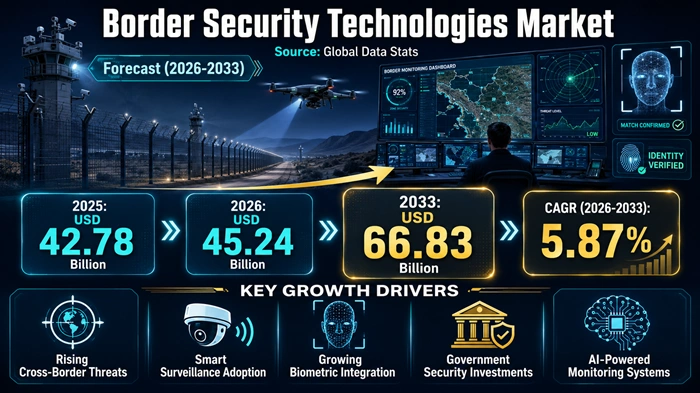
The global border security technologies market size is valued at USD 42.78 billion in 2025 and is predicted to increase from USD 45.24 billion in 2026 to approximately USD 66.83 billion by 2033, growing at a CAGR of 5.87% from 2026 to 2033.
Border security technology covers the hardware, software, and services that governments and defense agencies deploy to monitor, detect, and control activity along national borders, including surveillance cameras, radar systems, biometric checkpoints, drones, and perimeter sensors. Rising geopolitical tensions, growing cross-border migration, and the push toward smarter, AI-enabled surveillance infrastructure are together pushing governments worldwide to modernize their border protection systems. As threats evolve from physical smuggling to cyber-enabled infiltration, demand for integrated, technology-driven border security solutions continues to climb steadily across nearly every region.
AI Impact on the Border Security Technologies Industry
How Artificial Intelligence Is Powering Smarter Threat Detection, Faster Identity Verification, and Predictive Surveillance Across Border Security Technologies Deployments
Artificial intelligence has become one of the most transformative forces reshaping border management infrastructure. AI-powered video analytics can now scan thousands of hours of surveillance footage in real time, automatically flagging unusual movement patterns, unauthorized crossings, or suspicious vehicle activity long before a human operator would notice. This capability is especially valuable along long, remote, and difficult-to-patrol borders, where agencies previously relied on limited personnel to monitor vast stretches of terrain. Multimodal biometric systems that combine facial recognition with fingerprint or iris scanning are also becoming standard at major checkpoints, cutting passenger processing time significantly while improving identity verification accuracy.
Beyond physical surveillance, AI is helping border agencies build predictive risk models that flag high-risk travelers or cargo shipments before they even reach a checkpoint, using data patterns from previous incidents. This shift toward predictive, intelligence-led border management is changing how agencies allocate personnel and resources, directing manpower toward higher-risk zones instead of spreading coverage evenly. Vendors in the border security technologies market are increasingly bundling AI analytics software with hardware sales, creating recurring revenue opportunities and deepening long-term relationships with government customers who require continuous software updates and threat intelligence feeds.
Growth Factors
Rising Geopolitical Tensions, Migration Pressures, and Modernization Budgets Are the Three Most Influential Drivers Behind Market Expansion
Escalating geopolitical tensions and ongoing regional conflicts are prompting governments across multiple continents to significantly increase border security spending. Nations sharing contested or historically volatile borders are investing heavily in radar networks, surveillance towers, and unmanned aerial systems to maintain constant situational awareness. This defense-driven spending pattern has become one of the most reliable and recession-resistant growth factors supporting the border security technologies market, since national security budgets tend to remain protected even during broader economic slowdowns.
Growing migration flows and concerns around smuggling and trafficking are a second major growth driver, pushing agencies to adopt smart border solutions that combine physical barriers with digital monitoring layers. Aging legacy infrastructure across many developed nations is also being replaced through modernization programs that integrate biometric checkpoints, automated gates, and networked sensor systems. Together, these factors are creating sustained, multi-year procurement cycles for both established defense contractors and emerging technology specialists serving the border protection sector.
Market Outlook
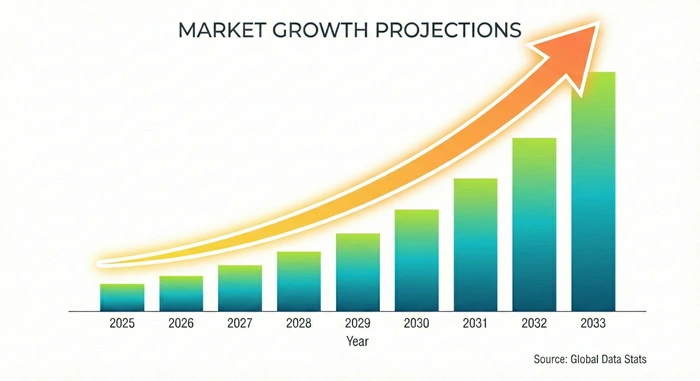
Border Security Technologies Are Set for Steady, Long-Term Growth Through 2033 as Governments Prioritize Integrated Smart Border Ecosystems
The long-term outlook for border security technology remains firmly positive as governments shift away from isolated hardware purchases toward fully integrated smart border ecosystems that combine surveillance, biometrics, data analytics, and rapid-response coordination. As more countries pilot digital border programs, contractors that can deliver interoperable, software-driven platforms rather than standalone hardware are expected to capture a disproportionate share of new contracts. This shift favors large defense primes with strong systems integration capabilities, but also creates openings for specialized technology firms offering modular AI analytics add-ons.
Looking further ahead, the industry is expected to see growing consolidation as larger defense contractors acquire smaller biometric and drone technology specialists to build end-to-end border security portfolios. Continued investment in cybersecurity for border data systems, along with expanding use of autonomous aerial and maritime surveillance platforms, will keep the border security technologies market on a strong upward trajectory through 2033, even as procurement cycles remain sensitive to shifting government budget priorities and international trade relationships.
Expert Speaks
-
"Border security is no longer just about physical barriers; it is about building intelligent, connected systems that can detect and respond to threats in real time. This is exactly the direction our surveillance and sensor technologies are heading." — CEO, Northrop Grumman Corporation.
-
"Governments are demanding integrated solutions that combine radar, biometrics, and data analytics into a single operational picture. We continue to invest heavily in these capabilities to support our defense and homeland security customers globally." — CEO, Thales Group.
-
"The pace of geopolitical change is pushing nations to modernize their border infrastructure faster than ever before, and we see strong sustained demand for our surveillance and unmanned systems portfolio." — CEO, Lockheed Martin Corporation.
Key Report Takeaways
-
North America leads the border security technologies market with an estimated 34% revenue share in 2025, supported by strong federal funding, advanced surveillance infrastructure, and continuous modernization programs along key borders.
-
Asia Pacific is the fastest-growing region, projected to expand at a CAGR near 8% through 2033, driven by rising defense budgets, expanding maritime surveillance needs, and border tension across several densely populated countries.
-
Government and homeland security agencies represent the largest customer base, deploying the majority of surveillance, biometric, and perimeter detection technologies across military and civilian checkpoints.
-
Surveillance systems contribute the most to overall demand, as governments prioritize continuous, wide-area monitoring across land, air, and maritime borders.
-
Radar and sensor-based detection technology remains the most widely deployed process, valued for its reliability across varied terrain and weather conditions.
-
The unmanned systems segment, including drones and autonomous ground vehicles, is projected to grow fastest going forward, expected to hold close to 24% market share by 2033 while expanding at a CAGR near 9% during the forecast period.
Market Scope
| Report Coverage Details | Details |
|---|---|
| Dominating Region | North America |
| Fastest Growing Region | Asia Pacific |
| Base Year | 2025 |
| Forecast Period | 2026 to 2033 |
| Segments Covered | By Component, By System Type, By Technology, By Application, By Region |
| Regions Covered | North America, Europe, Asia Pacific, Latin America, Middle East & Africa |
Market Dynamics
Drivers Impact Analysis
Rising Geopolitical Tensions and Government Modernization Spending Are the Most Commercially Significant Drivers of Growth
| Driver | (≈) % Impact on CAGR Forecast | Geographic Relevance | Impact Timeline |
|---|---|---|---|
| Escalating geopolitical tensions and cross-border conflicts | ~35% | Global, led by Asia Pacific and Middle East | Short to long-term |
| Government modernization of legacy border infrastructure | ~28% | North America, Europe | Medium-term |
| Rising migration and cross-border smuggling concerns | ~22% | Europe, North America, Latin America | Short to medium-term |
| Expanding maritime and aerial surveillance requirements | ~15% | Asia Pacific, Middle East & Africa | Medium to long-term |
Escalating geopolitical tensions remain the most powerful driver behind sustained investment in the border security technologies market, as nations facing contested or high-risk borders continue to expand radar networks, surveillance towers, and rapid-response infrastructure. This defense-driven demand tends to hold steady even during broader economic uncertainty, since national security budgets are typically insulated from general spending cuts.
Government-led modernization of aging border infrastructure is a second significant driver, as many developed nations replace decades-old fencing and manual checkpoints with networked sensor systems and automated biometric gates. Combined with rising migration pressures across multiple continents, these drivers together sustain long procurement cycles and consistent multi-year revenue visibility for both established defense contractors and specialized surveillance technology vendors.
Restraints Impact Analysis
High Deployment Costs and Data Privacy Concerns Are the Two Primary Constraints Limiting Faster Market Growth
| Restraint | (≈) % Impact on CAGR Forecast | Geographic Relevance | Impact Timeline |
|---|---|---|---|
| High upfront cost of advanced surveillance and biometric systems | ~37% | Latin America, MEA, parts of Asia Pacific | Short to medium-term |
| Data privacy and civil liberties concerns around biometric surveillance | ~30% | Europe, North America | Medium-term |
| Complex interoperability challenges between legacy and new systems | ~20% | Global | Short-term |
| Supply chain disruptions affecting sensor and component sourcing | ~13% | Global | Ongoing |
The high upfront cost of deploying advanced surveillance networks, biometric checkpoints, and unmanned aerial systems remains a significant barrier, particularly for developing nations operating with constrained defense and homeland security budgets. Full-scale border modernization programs often require sustained multi-year funding commitments that many governments struggle to secure amid competing fiscal priorities.
Growing public concern around data privacy and civil liberties, especially regarding biometric data collection and facial recognition at borders, has also slowed adoption in several European and North American jurisdictions where regulatory scrutiny is intensifying. These restraints do not reverse the underlying growth trend but do introduce friction that can delay procurement timelines and increase compliance costs across the border security technologies market.
Opportunities Impact Analysis
AI-Driven Predictive Surveillance and Expansion Into Emerging Defense Markets Represent the Most Significant Untapped Growth Opportunities
| Opportunity | (≈) % Impact on CAGR Forecast | Geographic Relevance | Impact Timeline |
|---|---|---|---|
| AI-driven predictive surveillance and analytics software | ~38% | Global | Short to medium-term |
| Expansion of border modernization programs in emerging economies | ~34% | Asia Pacific, Latin America, MEA | Medium to long-term |
| Growing integration of autonomous drones and maritime surveillance | ~28% | Middle East, Asia Pacific | Long-term |
Integrating artificial intelligence into predictive surveillance analytics presents a major opportunity for vendors to shift from one-time hardware sales toward recurring, software-driven revenue models. Companies that can package AI threat detection as a subscription service alongside their sensor and camera hardware are positioned to capture growing government appetite for continuously updated intelligence capabilities.
Emerging economies across Asia Pacific, Latin America, and the Middle East represent a second major growth avenue as rising defense budgets and expanding domestic manufacturing capacity create fresh procurement opportunities. Vendors that build early local partnerships and establish regional service and maintenance networks are well positioned to capture a growing share of the border security technologies market as autonomous drone and maritime surveillance adoption accelerates globally.
Segment Analysis
By System Type
Surveillance Systems Command the Largest Share Within Border Security Technologies Deployments
Surveillance systems hold the largest share of the border security technologies market, accounting for roughly 36% of total system-type revenue with a CAGR near 6.5% through 2033. Continuous monitoring across land, aerial, and maritime borders remains the top procurement priority for most governments, driving strong demand for camera networks, radar installations, and thermal imaging equipment. North America leads this segment because of extensive federal investment in long-range border surveillance infrastructure and continuous system upgrades. Leading companies operating in this space include Northrop Grumman, Lockheed Martin, and Teledyne FLIR, each holding substantial contracts with U.S. federal agencies for surveillance hardware and integration services.
Perimeter intrusion detection is the second-largest system-type contributor, benefiting from growing demand for fenced-line sensor networks that detect unauthorized crossings in real time across sensitive stretches of border terrain. This segment is expanding particularly quickly across the Middle East, where several nations are investing heavily in fortified border infrastructure amid ongoing regional security concerns. Companies such as Elbit Systems in Israel and Israel Aerospace Industries have built strong regional reputations delivering integrated perimeter detection solutions across this geography. Growing government preference for layered security combining surveillance and intrusion detection continues to reinforce demand growth across both segments within the border security technologies market.
By Technology
Biometrics and Unmanned Systems Represent the Fastest-Evolving Technology Categories Within Border Security
Biometric identification technology accounts for a substantial and growing share of the border security technologies market, supported by strong CAGR growth above 7% as governments replace manual document checks with automated facial, fingerprint, and iris scanning systems. Airports and land checkpoints across Europe have been early adopters of multimodal biometric pods that speed up traveler processing while strengthening identity verification. Companies such as Thales and IDEMIA have established leading positions in this technology category through long-standing government contracts and continuous product innovation across European checkpoints.
Unmanned aerial vehicles and autonomous ground systems represent the fastest-growing technology category, expected to expand at a CAGR near 9% as agencies increasingly deploy drones for continuous aerial monitoring of remote and difficult-to-access border stretches. Asia Pacific is emerging as a particularly strong growth region for this technology, driven by extensive maritime borders and rising defense modernization budgets across countries including India and Australia. General Atomics and Anduril Industries, both based in the United States, along with regional players expanding into Asia Pacific markets, are increasingly competing for unmanned systems contracts as demand accelerates across the broader border security technologies landscape.
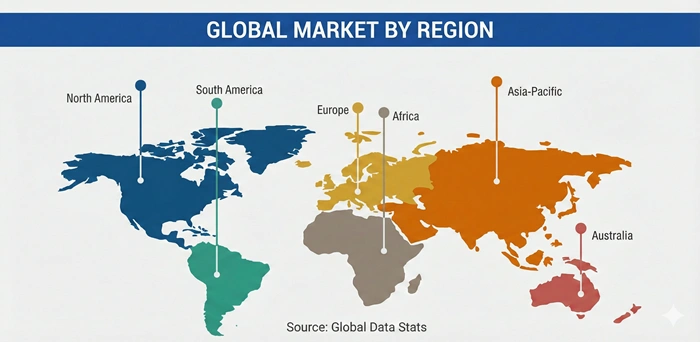
Regional Insights
North America
Strong Federal Funding and Mature Surveillance Infrastructure Keep North America at the Top of the Border Security Technologies Market
North America commands the largest share of the global border security technologies market, holding close to 34% of total revenue in 2025 with a regional CAGR near 5.5% through 2033. Strong federal funding for border modernization, particularly along key land borders, keeps demand consistently high for surveillance towers, radar systems, and biometric checkpoints throughout the region. Leading companies such as Northrop Grumman and Lockheed Martin, both headquartered in the United States, dominate surveillance hardware and systems integration contracts across major federal border agencies.
The region's mature procurement framework, combined with continuous congressional funding cycles for homeland security modernization, further reinforces this leadership position within the border security technology landscape. Large-scale programs integrating drone surveillance, sensor networks, and automated processing at major crossing points continue to expand across both the northern and southern borders. This combination of sustained funding, established contractor relationships, and technology maturity ensures North America remains the anchor region for border security technologies revenue generation over the coming years.
Asia Pacific
Rising Defense Budgets and Expanding Maritime Surveillance Needs Make Asia Pacific the Fastest-Growing Region
Asia Pacific is the fastest-growing region in the border security technologies market, projected to expand at a CAGR near 8% through 2033 while currently holding around 21% of global revenue share. Rising defense budgets, extensive maritime border lengths, and ongoing territorial tensions across multiple countries are together driving this accelerated regional growth. Companies such as Bharat Electronics in India and various government-backed defense contractors in China are scaling local production capacity to meet surging regional demand for surveillance and detection technology.
Growing government investment in coastal and maritime surveillance, combined with expanding drone manufacturing capacity across the region, continues to widen the addressable opportunity for both domestic and international vendors. Japan, South Korea, and Australia are also contributing meaningfully through steady defense modernization programs and growing collaboration with international technology providers. As affordability improves and regional manufacturing capacity expands further, Asia Pacific is expected to narrow its overall revenue gap with North America over the coming several years within the broader border security technologies market.
Customization Available for This Report
Region-wise and country-wise customized reports are available for organizations seeking deeper geographic insight into the border security technologies market. Our research team can tailor market analysis, competitive intelligence, trends, and growth opportunities specifically for any of the regions and countries listed below, offering detailed information aligned to your selected market and keyword combination.
North America
-
U.S., Canada, Mexico — detailed procurement trends, federal funding analysis, and competitive positioning
Europe
-
U.K., Germany, France, Italy, Rest of Europe — regulatory frameworks, biometric adoption trends, and key player analysis
Asia Pacific
-
China, India, Japan, South Korea, Australia, Rest of Asia Pacific — defense budget trends, maritime surveillance demand, and local manufacturing capacity
Latin America
-
Brazil, Argentina, Rest of Latin America — border modernization initiatives and emerging procurement opportunities
Middle East & Africa
-
UAE, Saudi Arabia, Rest of MEA — perimeter security investment and regional defense partnerships
Top Key Players
-
Northrop Grumman Corporation (United States)
-
Lockheed Martin Corporation (United States)
-
Thales Group (France)
-
Airbus SE (Netherlands)
-
General Dynamics Corporation (United States)
-
BAE Systems plc (United Kingdom)
-
L3Harris Technologies Inc. (United States)
-
Leonardo S.p.A. (Italy)
-
Elbit Systems Ltd. (Israel)
-
Israel Aerospace Industries Ltd. (Israel)
-
Teledyne FLIR LLC (United States)
-
IDEMIA Group (France)
-
Anduril Industries Inc. (United States)
-
DERMALOG Identification Systems GmbH (Germany)
Recent Developments
-
In 2025, Thales unveiled a multimodal biometric pod for border control using AI-driven dual biometric recognition to speed up traveler identification and strengthen security protocols.
-
In 2025, Amadeus IT Group acquired Vision-Box, a Portugal-based biometric and identity solutions provider, to strengthen its border protection technology capabilities.
-
In 2025, Northrop Grumman expanded its surveillance and radar system contracts with federal border agencies, reinforcing its long-range detection infrastructure portfolio.
-
In 2026, Anduril Industries deepened its autonomous surveillance tower deployment across multiple border regions, expanding its AI-powered detection network footprint.
-
In 2026, L3Harris Technologies secured new contracts for integrated sensor and communication systems supporting multi-agency border surveillance coordination.
Market Trends
Convergence of AI Analytics, Biometric Innovation, and Unmanned Surveillance Is Reshaping the Border Security Technologies Landscape
One of the clearest trends shaping the industry is the shift toward integrated smart border ecosystems that combine surveillance cameras, biometric checkpoints, and centralized data analytics into a single operational platform. This is replacing the earlier approach of deploying isolated, standalone hardware systems that lacked interoperability, and it is pushing governments to prioritize vendors capable of delivering unified, software-connected solutions.
A second notable trend is the growing reliance on unmanned aerial and maritime surveillance platforms to cover remote or difficult-to-patrol border stretches that were previously monitored only sporadically by ground personnel. As drone technology matures and costs continue to decline, adoption is expanding beyond major defense powers into mid-sized economies, reinforcing sustained long-term demand growth across the border security technologies market well beyond its traditional developed-market base.
Segments Covered in the Report
By Component
-
Hardware
-
Software
-
Services
By System Type
-
Surveillance Systems
-
Perimeter Intrusion Detection
-
Access Control Systems
-
Unmanned Systems
By Technology
-
Biometrics
-
Radar Systems
-
Thermal Imaging
-
Unmanned Aerial Vehicles
-
Others
By Application
-
Military
-
Homeland Security
-
Others
By Region
-
North America (U.S., Canada, Mexico)
-
Europe (U.K., Germany, France, Italy, Rest of Europe)
-
Asia Pacific (China, India, Japan, South Korea, Australia, Rest of Asia Pacific)
-
Latin America (Brazil, Argentina, Rest of Latin America)
-
Middle East and Africa (UAE, Saudi Arabia, Rest of MEA)
❝ Built for Every Level — From Startups to Industry Giants ❞
Here Is Exactly How This Report Works for You
-
For tier 1 defense contractors and institutional investors, this report delivers granular competitor revenue analysis across Northrop Grumman, Lockheed Martin, and Thales, alongside geopolitical supply chain risk assessment supporting confident investment and contract-bidding decisions.
-
For tier 2, tier 3 companies, defense technology startups, and regional integrators, this report identifies the highest-growth technology categories and most commercially accessible regional markets, offering an evidence-based roadmap for entering or expanding within the border security technologies market.
-
For all decision-makers across the border security value chain, this report translates complex supply-demand shifts and evolving trade regulations into clear, actionable strategic intelligence supporting stronger procurement and commercialization decisions through 2033.
Frequently Asked Questions
Question 1: What is the current size of the border security technologies market and how large will it grow by 2033?
Answer: The border security technologies market was valued at USD 42.78 billion in 2025. It is projected to reach approximately USD 66.83 billion by 2033 at a CAGR of 5.87%.
Question 2: Which region leads the border security technologies market today?
Answer: North America leads the border security technologies market with roughly 34% revenue share. Strong federal funding and mature surveillance infrastructure support this position.
Question 3: Which region is growing the fastest in the border security technologies market?
Answer: Asia Pacific is the fastest-growing region in the border security technologies market. Rising defense budgets and maritime surveillance needs are driving this expansion.
Question 4: Who are the leading companies in the border security technologies market?
Answer: Northrop Grumman, Lockheed Martin, and Thales Group are top companies in the border security technologies market. They lead through strong surveillance and biometric technology portfolios.
Question 5: What technology segment is growing fastest in the border security technologies market?
Answer: Unmanned systems, including drones and autonomous vehicles, are the fastest-growing technology segment. This growth is driven by expanding aerial and maritime surveillance requirements.