
Bone Growth Stimulators Market Overview
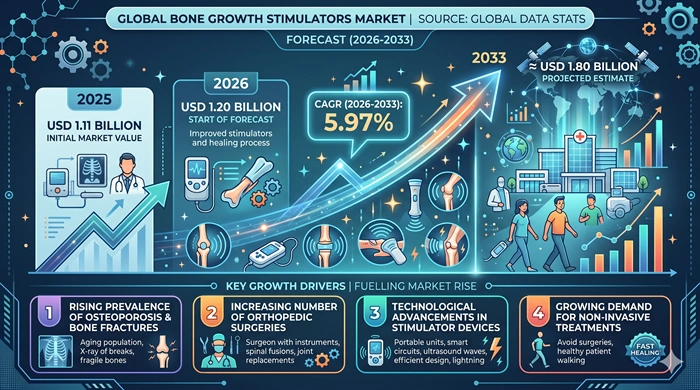
The global bone growth stimulators market size is valued at USD 1.11 billion in 2025 and is predicted to increase from USD 1.20 billion in 2026 to approximately USD 1.80 billion by 2033, growing at a CAGR of 5.97% from 2026 to 2033. Rising incidence of orthopedic conditions including non-union fractures and spinal fusion complications, a rapidly aging global population, growing awareness of non-invasive bone healing alternatives, and increased surgical volumes in spine and trauma care are driving steady and consistent growth across this specialized medical devices market worldwide.
AI Impact on the Bone Growth Stimulators Industry
Artificial Intelligence Is Enhancing Patient Selection, Treatment Personalization, and Clinical Outcome Monitoring in the Bone Growth Stimulators Space*
AI is beginning to reshape the bone growth stimulators industry in meaningful ways, particularly in the areas of patient selection, treatment planning, and outcome prediction. Machine learning models trained on large orthopedic patient datasets are being used to identify which patients are at highest risk of delayed bone healing or non-union after fracture fixation or spinal fusion surgery — enabling orthopedic surgeons to proactively prescribe bone growth stimulation therapy rather than waiting for healing complications to become apparent. AI-powered imaging analysis tools are improving the accuracy of non-union diagnosis from radiographic and CT imaging, which is a critical first step in determining the appropriate stimulation modality and treatment duration for individual patients. These capabilities are gradually being integrated into digital health platforms used by major orthopedic device companies, enabling more data-driven and personalized bone healing management protocols.
On the device technology side, AI and smart sensor integration are being explored for next-generation bone growth stimulator devices that can monitor patient compliance, measure tissue response to stimulation in real time, and automatically adjust stimulation parameters to optimize therapeutic outcomes. Wearable and implantable bone stimulator platforms equipped with connectivity features are enabling remote patient monitoring, allowing clinicians to track patient adherence to prescribed stimulation regimens and receive alerts when treatment parameters fall outside therapeutic windows. Companies such as Orthofix Medical and DJO Global are investing in digital health and connected device capabilities that will allow their bone growth stimulators to function as integrated, data-generating therapeutic tools rather than purely passive electrical or ultrasonic devices.
Growth Factors
Rising Non-Union Fracture Incidence, Expanding Spinal Fusion Surgery Volumes, and Growing Adoption of Non-Invasive Bone Healing Therapies Are the Primary Drivers of Market Growth*
The bone growth stimulators market is anchored by the significant and growing clinical burden of impaired bone healing worldwide. Non-union — defined as the failure of a fractured bone to heal within an expected timeframe — affects an estimated 5–10% of all fractures globally, and the incidence increases substantially in high-risk populations including elderly patients, diabetics, smokers, and patients receiving corticosteroids or immunosuppressants. Spinal fusion surgery non-unions and pseudarthrosis represent another major clinical indication, as spine surgeons frequently prescribe bone growth stimulation as an adjunct therapy to improve fusion rates in complex multilevel constructs, revision procedures, and patients with known bone healing risk factors. Each of these clinical scenarios represents a direct and growing patient population requiring bone stimulation therapy, creating a persistent and expanding demand base.
The global aging population is the most powerful long-term structural driver of the bone growth stimulators market. Elderly patients have inherently reduced bone healing capacity due to declining osteoblast activity, hormonal changes, nutritional deficiencies, and the cumulative effects of comorbid conditions — making them both more likely to develop non-union fractures and more likely to benefit significantly from adjunctive bone stimulation therapy. As the global population aged 65 and above continues to grow, and as osteoporosis prevalence expands in parallel, the volume of fragility fractures — particularly hip, vertebral, and distal radius fractures — requiring orthopedic management is expected to increase substantially, generating a growing pool of patients who may benefit from prescribed bone growth stimulation as part of their fracture management protocol.
Market Outlook
The Market's Long-Term Trajectory Is Positive, Driven by Expanding Clinical Evidence, Broader Insurance Coverage, and Growing Surgeon Adoption of Adjunctive Stimulation Therapy*
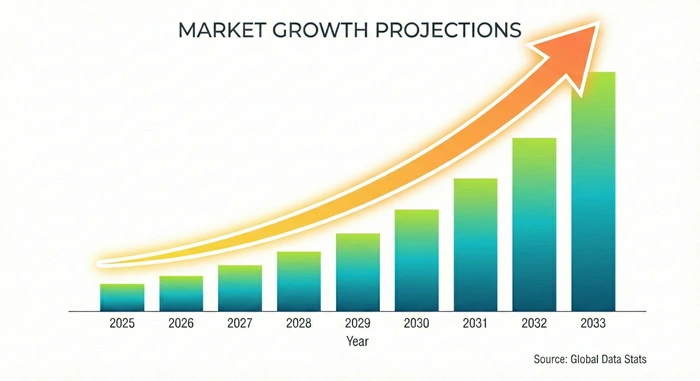
The long-term market outlook for bone growth stimulators is consistently favorable, supported by growing clinical evidence of efficacy, expanding reimbursement frameworks, and rising surgeon awareness of the role that adjunctive stimulation plays in improving outcomes for high-risk fracture and fusion patients. Multiple randomized controlled trials and large retrospective analyses have demonstrated significant improvements in fusion rates and fracture healing time with both electrical and ultrasonic stimulation devices, building a progressively stronger clinical evidence base that is encouraging broader prescription behavior among orthopedic and spine surgeons. As clinical guidelines increasingly acknowledge bone stimulation as a validated adjunct therapy, and as payors in more markets recognize its cost-saving potential by preventing costly revision surgeries, market adoption is expected to accelerate.
The growing number of FDA-cleared and CE-marked bone growth stimulator devices — spanning wearable electrical stimulation devices, implantable direct current devices, and low-intensity pulsed ultrasound (LIPUS) systems — is also expanding treatment options and patient accessibility. The non-invasive and wearable nature of modern bone stimulators aligns well with patient preferences for home-based therapy and is a meaningful driver of prescription compliance and treatment uptake. Emerging clinical applications — including the potential use of bone stimulation therapy in osteoporosis management, diabetic bone healing acceleration, and implant osseointegration improvement — represent significant future growth opportunities that could meaningfully expand the bone growth stimulators market's addressable clinical space through 2033 and beyond.
Expert Speaks
-
"Bone healing is a complex biological process, and there remains a significant unmet need for reliable adjunctive therapies that can support healing in challenging patient populations. At Orthofix Medical, we are committed to advancing our bone growth stimulation portfolio with the clinical evidence and digital connectivity features that modern surgeons and patients demand." — Massimo Cernuschi, CEO, Orthofix Medical Inc.
-
"Spine surgery outcomes are directly tied to fusion success, and bone growth stimulators play an important role in supporting fusion in the most complex cases. At Medtronic, we continue to invest in our biologics and electrical stimulation capabilities to give spine surgeons every tool they need to achieve the best possible patient outcomes." — Geoff Martha, CEO, Medtronic plc
-
"The orthopedic healing market is evolving rapidly, and non-invasive modalities like low-intensity pulsed ultrasound and electrical stimulation are becoming standard adjuncts in orthopedic trauma and spine care. At Smith+Nephew, we see significant opportunity in building connected, evidence-backed bone healing solutions that complement our surgical implant portfolio." — Deepak Nath, CEO, Smith+Nephew plc
Key Report Takeaways
-
North America leads the global bone growth stimulators market, holding approximately 48–50% of total market revenues in 2026, driven by high spinal fusion and orthopedic trauma surgical volumes, well-established insurance reimbursement for bone stimulation devices, strong surgeon awareness, and the presence of leading market players including Orthofix Medical, DJO Global, and Medtronic in the United States.
-
Asia Pacific is the fastest-growing regional market, expanding at a CAGR of approximately 8.1% through 2033, driven by rapidly growing orthopedic surgical volumes, an expanding aging population, rising healthcare expenditure, and improving insurance frameworks for orthopedic medical device adoption in China, Japan, India, and South Korea.
-
Hospitals and orthopedic specialty clinics are the dominant end-user segment, accounting for the largest share of bone growth stimulator prescriptions and device sales as surgical inpatient and post-operative care protocols represent the primary channel through which stimulation therapy is initiated for post-surgical and fracture patients.
-
The spine application segment contributes the most to total market revenues, accounting for approximately 50–52% of all revenues in 2025, driven by the high volume of spinal fusion procedures globally and the widespread clinical adoption of adjunctive bone growth stimulation to improve fusion rates in complex multilevel and revision spine constructs.
-
Non-invasive/wearable bone growth stimulators are the most popular device type, commanding the largest product segment share as patients and surgeons strongly prefer non-invasive electromagnetic and ultrasonic stimulation devices that allow home-based therapy without surgical implantation risks or the need for device removal procedures.
-
The low-intensity pulsed ultrasound (LIPUS) segment is set to grow the fastest, projected at a CAGR of approximately 7.4% through 2033, driven by growing evidence for LIPUS in both fresh fracture healing acceleration and established non-union treatment, along with the expanding use of portable LIPUS devices such as the Exogen system in home-based fracture rehabilitation programs.
Market Scope
| Report Coverage | Details |
|---|---|
| Market Size by 2025 | USD 1.11 Billion |
| Market Size by 2026 | USD 1.20 Billion |
| Market Size by 2033 | USD 1.80 Billion |
| Market Growth Rate (2026–2033) | CAGR of 5.97% |
| Dominating Region | North America |
| Fastest Growing Region | Asia Pacific |
| Base Year | 2025 |
| Forecast Period | 2026 to 2033 |
| Segments Covered | Product Type, Technology, Application, End User, Region |
| Regions Covered | North America, Europe, Asia Pacific, Latin America, Middle East & Africa |
Market Dynamics
Drivers Impact Analysis
Rising Non-Union Fracture Burden, Growing Spinal Fusion Volumes, Aging Population, and Expanding Insurance Reimbursement for Bone Stimulation Are the Core Market Growth Drivers*
| Driver | ≈% Impact on CAGR Forecast | Geographic Relevance | Impact Timeline |
|---|---|---|---|
| Rising incidence of non-union fractures and failed spinal fusion | ~34% | Global, highest in North America & Europe | Near to long-term |
| Growing global aging population and osteoporosis prevalence | ~27% | North America, Europe, Asia Pacific | Near to long-term |
| Increasing spinal fusion and orthopedic trauma surgery volumes | ~20% | North America, Asia Pacific | Near to medium-term |
| Expanding insurance reimbursement for bone stimulation devices | ~12% | North America, Europe | Near to medium-term |
| Growing surgeon and patient preference for non-invasive healing adjuncts | ~7% | Global | Near-term |
The bone growth stimulators market is underpinned by the consistently high clinical burden of impaired bone healing across the global orthopedic patient population. Non-union fractures — particularly in the tibia, humerus, and femur — represent one of the most challenging and costly complications in orthopedic trauma care, often requiring revision surgery, bone grafting, and prolonged rehabilitation that carries significant cost and morbidity. By offering a non-invasive, clinically validated adjunct that can stimulate osteogenesis and promote fracture union without additional surgical intervention, bone growth stimulators address a meaningful and growing unmet clinical need. The clinical and economic case for stimulation therapy is compelling, as successful non-invasive fracture union via bone stimulation avoids the far greater cost and risk of revision surgery.
Spinal fusion surgery represents the single largest application driver within the bone growth stimulators market. The United States alone performs over 400,000 spinal fusion procedures annually, and internationally the volume continues to rise as populations age and the prevalence of degenerative spine conditions grows. The fusion failure rate — which can reach 30–40% in complex multilevel constructs and revision surgeries — creates a large and consistent patient population that benefits from adjunctive electrical or ultrasonic bone stimulation. As spine surgeons increasingly standardize their post-operative care protocols to include bone stimulation for at-risk fusion patients, the volume of device prescriptions is expected to grow steadily alongside rising surgical volumes.
Restraints Impact Analysis
High Device Costs, Limited Reimbursement in Emerging Markets, Patient Compliance Challenges, and Lack of Broad Awareness Among General Practitioners Are Key Restraints*
| Restraint | ≈% Impact on CAGR Forecast | Geographic Relevance | Impact Timeline |
|---|---|---|---|
| High out-of-pocket cost in markets with limited insurance coverage | ~36% | Emerging markets, Asia Pacific, Latin America | Near to medium-term |
| Patient compliance challenges with home-use stimulation devices | ~28% | Global | Near-term |
| Limited awareness among non-specialist healthcare providers | ~21% | Global, especially developing markets | Near-term |
| Regulatory approval complexities for new stimulation technologies | ~15% | Global | Medium-term |
The relatively high cost of bone growth stimulators — particularly premium electrical stimulation systems, which can cost several thousand dollars per device — poses a significant access barrier in markets without comprehensive insurance coverage for these devices. In many developing markets in Asia, Latin America, and the Middle East & Africa, bone growth stimulation is considered a discretionary or non-essential therapeutic adjunct, and patients who cannot afford out-of-pocket costs or who lack coverage under limited insurance plans simply forego treatment. This affordability barrier constrains adoption in otherwise demographically attractive growth markets, limiting the bone growth stimulators market's global penetration rate below what the underlying clinical need might otherwise support.
Patient compliance with prescribed bone stimulation protocols is another persistent challenge that affects both market growth and clinical outcomes. Non-invasive bone stimulators typically require patients to wear devices for several hours per day over periods of several months — a demanding regimen that many patients struggle to maintain consistently, particularly those who are working, have limited mobility, or have low health literacy. Poor compliance reduces clinical effectiveness, generates negative perceptions of the technology, and can undermine surgeon confidence in prescribing bone stimulation as a first-line adjunct therapy. Improving device usability, reducing required daily wear time through more efficient stimulation protocols, and deploying digital compliance monitoring tools are critical strategies for addressing this restraint.
Opportunities Impact Analysis
LIPUS Technology Expansion, Digital Connected Devices, Emerging Market Penetration, and New Clinical Applications Offer Significant Untapped Growth Potential*
| Opportunity | ≈% Impact on CAGR Forecast | Geographic Relevance | Impact Timeline |
|---|---|---|---|
| Growing adoption of LIPUS devices for fracture and non-union treatment | ~32% | North America, Europe, Asia Pacific | Near to medium-term |
| Development of smart, connected, and compliance-monitoring bone stimulators | ~27% | North America, Europe | Near to medium-term |
| Expanding clinical applications (osteoporosis, implant osseointegration) | ~25% | Global | Medium to long-term |
| Rising orthopedic care investment in Asia Pacific and Latin America | ~16% | Asia Pacific, Latin America | Medium to long-term |
The growing evidence base for low-intensity pulsed ultrasound (LIPUS) therapy in both fresh fracture healing and established non-union treatment represents one of the most commercially significant near-term opportunities in the bone growth stimulators market. The Exogen system (Smith+Nephew) has established a strong clinical track record in LIPUS-based non-union treatment, and ongoing clinical research is expanding evidence for LIPUS in additional indications including stress fractures, diabetic foot wound healing, and dental implant osseointegration. As more randomized controlled trial data supports broader clinical use, LIPUS adoption is expected to accelerate meaningfully beyond its current focus on established non-union cases.
The development of next-generation bone growth stimulators with integrated digital health features — including Bluetooth connectivity, smartphone companion apps, compliance tracking sensors, and remote patient monitoring capabilities — represents a compelling product differentiation and market expansion opportunity. Connected bone stimulators allow patients to track their daily therapy sessions via mobile apps, receive reminders when treatment sessions are overdue, and share compliance data with their treating surgeons in real time. These features address one of the market's most persistent challenges — patient non-compliance — while also generating valuable real-world evidence data that can support clinical and regulatory submissions.
Segment Analysis
By Technology
Non-Invasive Electrical Bone Growth Stimulators Lead the Market While Low-Intensity Pulsed Ultrasound Technology Captures the Fastest Growth*
Non-invasive electrical bone growth stimulators — including combined magnetic field (CMF) devices and capacitively coupled electrical stimulation (CCES) devices — represent the largest technology segment in the bone growth stimulators market, accounting for approximately 48–50% of total revenues in 2025 at a CAGR of approximately 5.6% through 2033. These devices deliver low-level electrical or electromagnetic fields through external electrodes or coils worn around the injured bone, stimulating osteoblast activity and promoting fracture healing without any surgical implantation. North America leads global revenues for non-invasive electrical stimulators, where devices from Orthofix Medical (Cervical-Stim, SpinalLogic) and DJO Global (EBI Bone Healing System) are widely prescribed by spine and orthopedic trauma surgeons and supported by strong Medicare and private insurance reimbursement coverage. The combination of strong clinical evidence, high surgeon familiarity, and broad insurance coverage sustains this segment's dominant market position and drives consistent high-volume prescriptions from the large base of established clinical users.
The low-intensity pulsed ultrasound (LIPUS) technology segment is the fastest-growing segment within the bone growth stimulators market, projected to expand at a CAGR of approximately 7.4% through 2033, driven by the strong clinical performance and growing evidence base for the Exogen Bone Healing System (Smith+Nephew) and other LIPUS devices in non-union treatment and fresh fracture healing acceleration. Europe is the second-leading geography for LIPUS adoption after North America, with the technology gaining growing traction in Germany, France, the UK, and the Nordics as clinical guidelines and national health system reimbursement frameworks for LIPUS therapy continue to develop. Asia Pacific — particularly Japan and South Korea, where regulatory approvals for LIPUS devices have been granted and domestic orthopedic device markets are advanced — is the fastest-growing regional market for LIPUS bone stimulation, driven by favorable demographics and growing adoption among orthopedic trauma specialists.
By Application
Spinal Fusion Applications Lead Market Revenue While Orthopedic Trauma and Long-Bone Non-Union Treatment Drive Growing Market Demand*
The spinal fusion application segment is the dominant revenue contributor in the bone growth stimulators market, accounting for approximately 50–52% of total revenues in 2025 and growing at a CAGR of approximately 6.0% through 2033. Bone growth stimulation is commonly prescribed as an adjunct to multi-level and complex lumbar and cervical fusion procedures, revision spine surgeries, and in patients with multiple risk factors for fusion failure — including tobacco use, diabetes, obesity, and prior failed fusions. North America holds the largest share of spinal application revenues, as the United States performs the highest per-capita rate of spinal fusion surgeries globally and has the most mature and well-reimbursed clinical framework for post-surgical bone stimulation therapy prescription. Leading companies serving the spine bone stimulation application in North America include Orthofix Medical, DJO Global, and Medtronic, all of which maintain dedicated spine surgeon education and clinical evidence programs that drive prescription behavior across major spine surgery centers.
The orthopedic trauma and long-bone non-union application is the second-largest and an important growth segment within the bone growth stimulators market, accounting for approximately 33–35% of total revenues in 2025 at a CAGR of approximately 6.3% through 2033, growing slightly faster than the spine segment as clinical adoption of bone stimulation for complex fracture healing expands. Asia Pacific is the fastest-growing geographic market for orthopedic trauma bone stimulation applications, driven by rising road traffic accident rates, growing awareness of bone stimulation therapy among trauma surgeons, and expanding health insurance frameworks that are beginning to include coverage for bone growth stimulation devices in key markets including China and India. Companies including Smith+Nephew (Exogen LIPUS), Bioventus (LIPUS/CMF), and Orthofix are actively expanding their orthopedic trauma clinical programs and distribution networks in Asia Pacific to capture this emerging growth opportunity within the broader bone growth stimulators market landscape.
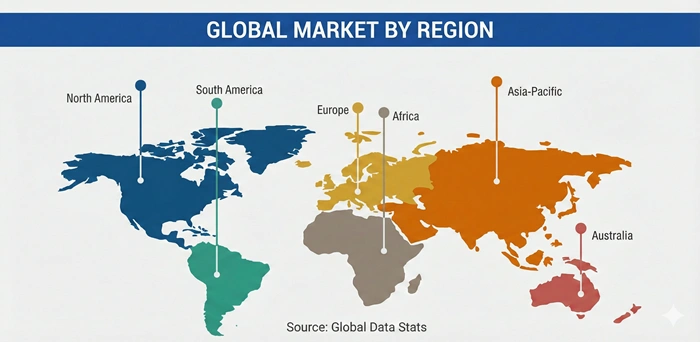
Regional Insights
North America
North America Dominates the Bone Growth Stimulators Market, Supported by High Surgical Volumes, Mature Reimbursement Frameworks, and Strong Surgeon Adoption*
North America holds the dominant position in the bone growth stimulators market, capturing approximately 48–50% of global revenues in 2026 and growing at a CAGR of approximately 5.7% through 2033. The United States is the largest country market by far, driven by its high rates of spinal fusion surgery, orthopedic trauma procedures, and one of the world's most comprehensive Medicare and private insurance reimbursement systems for durable medical equipment including bone growth stimulators. Major companies operating in the North American bone growth stimulators market include Orthofix Medical (headquartered in Lewisville, Texas), DJO Global, Bioventus LLC, and Smith+Nephew — all of which maintain large direct sales forces, clinical education programs, and established relationships with the region's leading orthopedic and spine surgery practices.
Canada contributes meaningfully to the region's bone growth stimulators market revenues, with a well-organized orthopedic healthcare system and growing adoption of electrical and ultrasonic bone stimulation in major spine and trauma surgery centers across Ontario, British Columbia, and Alberta. North America's dominance in the bone growth stimulators market is sustained by the continuous increase in spine surgery volumes, consistent growth in the elderly trauma patient population, and the strong body of published clinical evidence supporting bone stimulation that reinforces physician prescribing confidence and insurance approval rates across the region.
Asia Pacific
Asia Pacific Is the Fastest-Growing Market for Bone Growth Stimulators, Driven by Aging Demographics, Rising Orthopedic Surgery Volumes, and Expanding Healthcare Infrastructure*
Asia Pacific is the fastest-growing regional market for bone growth stimulators, projected to expand at a CAGR of approximately 8.1% through 2033, with a current market share of approximately 17–19% in 2026. Japan is the most mature market within the region, with a well-established and aging population, high surgical volumes, and regulatory approvals for multiple bone growth stimulator devices — including LIPUS and electromagnetic devices — that are supported by Japan's national healthcare reimbursement system. South Korea, with its advanced domestic medical device industry and strong orthopedic care infrastructure, is another significant market, particularly for LIPUS-based bone stimulation products that align with the country's preference for high-technology medical devices in clinical practice. Companies including Smith+Nephew (Exogen), Orthofix, and regional distributors are actively expanding their market presence in Japan and South Korea through direct sales partnerships and clinical evidence generation.
China and India represent the highest-growth opportunities within the Asia Pacific bone growth stimulators market, driven by enormous populations, rapidly growing orthopedic surgery volumes, rising healthcare expenditure, and improving insurance coverage for medical devices. China's expanding middle-class demand for high-quality orthopedic care, combined with the government's commitment to healthcare infrastructure development under successive Five-Year Plans, is creating a growing and increasingly sophisticated market for orthopedic adjunct therapies including bone stimulation. As awareness of the bone growth stimulators market grows among Chinese and Indian orthopedic surgeons — supported by international medical education, clinical conference participation, and active marketing by global device companies — adoption rates are expected to accelerate substantially through the forecast period.
Top Key Players
-
Orthofix Medical Inc. (United States)
-
DJO Global LLC (United States)
-
Smith+Nephew plc (Exogen) (United Kingdom)
-
Bioventus LLC (United States)
-
Medtronic plc (Ireland / United States)
-
Stryker Corporation (United States)
-
Zimmer Biomet Holdings Inc. (United States)
-
Ossatec Benelux BV (Netherlands)
-
Roper Technologies Inc. (IMRS Bone Therapy) (United States)
-
ITO Co. Ltd. (Japan)
-
Enraf-Nonius B.V. (Netherlands)
-
IGEA Clinical Biophysics (Italy)
-
Scintica Instrumentation Inc. (Canada)
Recent Developments
-
2024 – Orthofix Medical Inc. received FDA 510(k) clearance for an updated version of its SpinalLogic Bone Growth Stimulator featuring enhanced digital connectivity and a companion mobile app for patient compliance monitoring, representing a significant step toward smart, connected bone stimulation device platforms for the spine surgery market.
-
2024 – Bioventus LLC expanded its clinical evidence program for the DUET bone stimulation system by initiating a multicenter prospective study evaluating combined electrical and biological stimulation approaches for long-bone non-union, aiming to generate Level I clinical evidence supporting broader insurance coverage and physician adoption.
-
2024 – Smith+Nephew announced global commercial expansion of its Exogen LIPUS Bone Healing System into three new Asia Pacific markets including Vietnam and Indonesia, establishing regional distribution partnerships and investing in surgeon education programs to build awareness of LIPUS therapy among orthopedic trauma specialists in these high-growth markets.
-
2025 – DJO Global launched an updated version of its EBI Bone Healing System with a redesigned ergonomic wearable form factor and improved battery life optimized for improved patient compliance with daily prescribed stimulation regimens, addressing one of the key adoption barriers for home-based orthopedic bone stimulation therapy.
-
2025 – Zimmer Biomet Holdings entered into a strategic distribution agreement with a leading Japanese medical device distributor to expand the commercial availability of its bone stimulation product portfolio in the Japanese market, supporting the company's broader Asia Pacific growth strategy in the orthopedic devices segment.
Market Trends
Connected Device Integration, Combination Therapy Approaches, and Expanding Clinical Indications Are the Most Influential Trends Shaping the Bone Growth Stimulators Market*
The most significant trend in the bone growth stimulators market is the rapid movement toward digital connectivity and smart device integration. The next generation of bone stimulators — whether electrical, electromagnetic, or ultrasonic — is being designed with Bluetooth sensors, patient-facing mobile apps, and cloud-based clinical dashboards that allow real-time compliance tracking, remote treatment monitoring, and outcomes data collection. This connectivity evolution addresses the market's most persistent clinical challenge — patient non-compliance — while simultaneously generating real-world evidence datasets that support regulatory submissions, payable outcomes frameworks, and value-based care contracting models with hospital systems and insurance payors. The shift toward connected bone stimulators is expected to accelerate as healthcare systems globally move away from fee-for-service models toward outcomes-based payment structures that reward compliance and clinical results.
A second defining trend is the growing clinical exploration of combination therapy approaches — using bone growth stimulation in conjunction with biological adjuncts such as bone morphogenetic proteins (BMPs), platelet-rich plasma (PRP), autologous bone graft, and demineralized bone matrix (DBM) to accelerate healing in the most complex non-union and fusion failure cases. Preliminary clinical evidence suggests that combining electrical or LIPUS stimulation with biologic enhancers produces synergistic effects on osteogenesis that exceed what either modality achieves alone. As orthopedic surgeons increasingly adopt personalized, multimodal bone healing strategies — particularly for high-risk revision spine and complex trauma cases — the demand for bone growth stimulators as a routine component of comprehensive bone healing protocols is expected to strengthen meaningfully through 2033.
Segments Covered in the Report
By Product Type:
-
Non-Invasive Bone Growth Stimulators
-
Invasive / Implantable Bone Growth Stimulators
-
Semi-Invasive Bone Growth Stimulators
By Technology:
-
Electrical Bone Growth Stimulators
-
Combined Magnetic Field (CMF) Devices
-
Capacitively Coupled Electrical Stimulation (CCES) Devices
-
Direct Current Electrical Stimulation (DCES) Devices
-
-
Low-Intensity Pulsed Ultrasound (LIPUS) Devices
-
Other Technologies
By Application:
-
Spinal Fusion
-
Fractures and Non-Unions
-
Osteoporosis Management
-
Tendon and Ligament Healing
-
Other Applications
By End User:
-
Hospitals
-
Orthopedic and Spine Specialty Clinics
-
Ambulatory Surgical Centers
-
Home Care Settings
-
Other End Users
By Region:
-
North America
-
United States
-
Canada
-
-
Europe
-
Germany
-
United Kingdom
-
France
-
Italy
-
Spain
-
Rest of Europe
-
-
Asia Pacific
-
China
-
India
-
Japan
-
South Korea
-
Australia
-
Rest of Asia Pacific
-
-
Latin America
-
Brazil
-
Mexico
-
Rest of Latin America
-
-
Middle East & Africa
-
GCC Countries
-
South Africa
-
Rest of Middle East & Africa
-
"Built for Every Level — From Startups to Industry Giants"
Here Is Exactly How This Report Works for You
-
For Tier 1 orthopedic device corporations, large hospital procurement organizations, and institutional investors, this report delivers detailed competitor revenue analysis, product revenue source mapping, and geographic market share benchmarking across all bone growth stimulator technologies, applications, and regions — providing the precise, data-driven intelligence needed to identify acquisition targets, evaluate market entry timing, and allocate capital toward the highest-growth segments in this specialized medical device market.
-
For Tier 2 and Tier 3 device companies, emerging orthopedic startups, and regional medical device distributors, this report provides granular supply-demand analysis, clinical reimbursement landscape assessment, pricing trend benchmarking, and product differentiation opportunity mapping — equipping growing businesses with the competitive intelligence needed to build commercially viable bone growth stimulator product strategies and distribution partnerships in the most promising geographic markets.
-
For all decision-makers managing today's complex geopolitical and regulatory environment, this report delivers direct analysis of how medical device import/export regulations, country-specific reimbursement policy shifts, raw material supply chain vulnerabilities, and macroeconomic pressures are impacting bone growth stimulator manufacturing costs, pricing strategies, and cross-border market access decisions — enabling businesses to navigate uncertainty with confidence and build geopolitically resilient growth plans.
Frequently Asked Questions
Question 1: What is the current size of the bone growth stimulators market and what is the growth forecast through 2033?
Answer: The bone growth stimulators market is valued at USD 1.11 billion in 2025 and is projected to reach USD 1.80 billion by 2033. The market is expected to grow at a CAGR of 5.97% from 2026 to 2033.
Question 2: What are the primary factors driving growth in the bone growth stimulators market?
Answer: The bone growth stimulators market is primarily driven by the rising global incidence of non-union fractures and spinal fusion complications, combined with an expanding elderly population with higher fracture and healing impairment risks. Increasing spinal surgery volumes and growing insurance reimbursement support for bone stimulation devices in North America and Europe are further accelerating market growth.
Question 3: What are the main types of bone growth stimulators available in the market?
Answer: The bone growth stimulators market offers three main device categories — non-invasive electrical stimulators (including CMF and CCES devices), low-intensity pulsed ultrasound (LIPUS) devices, and invasive implantable direct current stimulators. Non-invasive devices are the most widely used, while LIPUS technology is the fastest-growing segment due to its strong clinical evidence and patient-friendly home-use design.
Question 4: Which region leads the bone growth stimulators market and which region is growing the fastest?
Answer: North America leads the bone growth stimulators market with approximately 48–50% of global revenues in 2026, supported by high surgical volumes, strong reimbursement, and concentrated market player presence. Asia Pacific is the fastest-growing region, expanding at approximately 8.1% CAGR through 2033.
Question 5: Who are the top companies in the bone growth stimulators market?
Answer: Leading companies in the bone growth stimulators market include Orthofix Medical, DJO Global, Smith+Nephew (Exogen), Bioventus, Medtronic, Stryker, Zimmer Biomet, and IGEA Clinical Biophysics, among others. These companies compete through clinical evidence development, device innovation, digital connectivity features, and geographic market expansion strategies.