
Bleisure Travel Market Overview
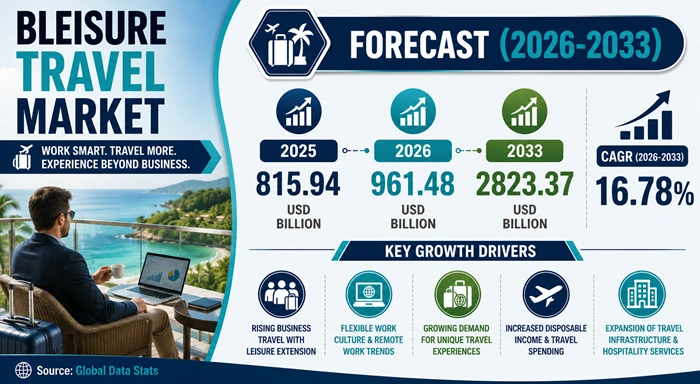
The global bleisure travel market size is valued at USD 815.94 billion in 2025 and is predicted to increase from USD 961.48 billion in 2026 to approximately USD 2823.37 billion by 2033, growing at a CAGR of 16.78% from 2026 to 2033. The modern workforce increasingly seeks meaningful ways to balance professional obligations with personal fulfillment through extended business trips. Bleisure travel combines corporate responsibilities with leisure experiences, allowing employees to explore destinations, reduce travel costs, and enhance overall well-being.
AI Impact on the Bleisure Travel Industry
Artificial Intelligence Transforming Travel Planning and Personalized Experience Delivery
Artificial intelligence is fundamentally reshaping the bleisure travel market by enabling hyper-personalized itinerary creation, predictive expense management, and seamless integration of business and leisure activities through intelligent recommendation systems. Machine learning algorithms analyze traveler preferences, past booking patterns, corporate policies, and destination data to automatically suggest optimal hotel locations that balance proximity to business venues with access to leisure attractions, restaurants, and cultural experiences. AI-powered chatbots provide instant support for travel modifications, booking confirmations, expense queries, and local recommendations, operating continuously across time zones to assist business travelers navigating unfamiliar destinations. Natural language processing systems scan millions of reviews, social media posts, and travel blogs to identify trending leisure activities, hidden gems, and authentic experiences that align with individual traveler interests and available timeframes.
Predictive analytics platforms forecast travel disruptions, flight delays, and accommodation availability issues before they impact itineraries, automatically suggesting alternative arrangements and rebooking options that minimize business disruptions while preserving leisure plans. Computer vision technologies enable virtual destination previews, allowing travelers to experience hotel properties, meeting venues, and nearby attractions through immersive 360-degree tours before committing to bookings. AI-driven expense management systems automatically categorize business versus leisure expenses, flag policy violations, and generate compliant expense reports that streamline approval processes while reducing administrative burdens. The bleisure travel market benefits from AI's ability to optimize complex multi-city itineraries that seamlessly transition between professional commitments and personal exploration, maximizing value from each trip while respecting budget constraints and corporate travel policies.
Growth Factors
Remote Work Revolution and Work-Life Balance Drive Market Expansion
The bleisure travel market is experiencing explosive growth driven by widespread remote work adoption, corporate culture shifts emphasizing employee wellness, and growing recognition that business trips present valuable opportunities for personal enrichment and stress reduction. The COVID-19 pandemic permanently transformed work arrangements, with countless companies adopting hybrid models that provide employees flexibility to work from various locations, making it feasible to extend business trips for leisure without compromising professional responsibilities. Millennials and Gen Z workers entering the workforce in large numbers prioritize experiences over possessions, work-life integration rather than separation, and meaningful travel that enriches their lives beyond transactional business engagements. Corporate recognition that bleisure travel enhances employee satisfaction, reduces turnover, boosts recruitment appeal, and improves mental health motivates companies to develop more flexible travel policies accommodating personal time extensions.
Cost efficiency benefits appeal to both employees and employers, as extending existing business trips for leisure purposes leverages already-covered transportation expenses, hotel negotiated rates, and destination familiarity to deliver vacation experiences at fraction of standalone leisure trip costs. Digital nomad culture normalization and widespread acceptance of remote work blur traditional boundaries between professional and personal time, making it increasingly natural for employees to combine work commitments with exploration and relaxation. The proliferation of co-working spaces in popular destinations, improved global Wi-Fi connectivity, cloud-based collaboration tools, and mobile productivity applications enable business travelers to maintain full work capabilities while enjoying new environments. Growing awareness about mental health, burnout prevention, and stress management motivates individuals to seize opportunities for rejuvenation during business travel rather than rushing back to offices immediately after meetings conclude throughout the bleisure travel market.
Market Outlook
Technology Integration and Customized Offerings Define Future Growth
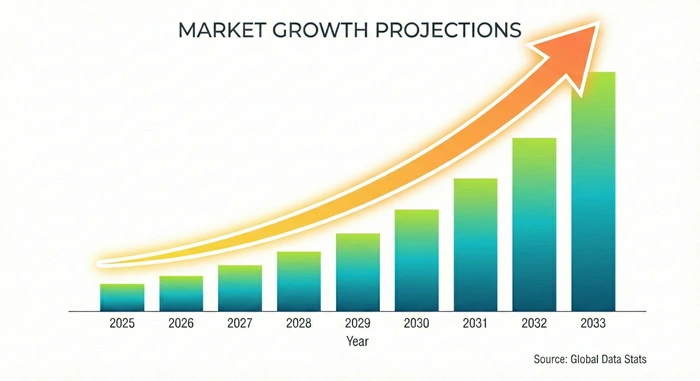
The bleisure travel market is positioned for sustained expansion through 2033 as travel management companies, hospitality providers, and corporate travel departments invest heavily in technology platforms, flexible policies, and specialized offerings catering to blended travel needs. Travel management platforms increasingly incorporate bleisure-specific features including easy trip extension tools, leisure activity recommendations, companion booking options, and transparent business-leisure expense separation that simplifies policy compliance and approval processes. Hotels develop dedicated bleisure packages combining business amenities like meeting spaces and high-speed internet with leisure benefits including spa credits, extended checkout times, activity vouchers, and local experience guides that appeal to extended-stay travelers. Airlines introduce fare structures accommodating weekend stays, stopover programs enabling multi-city exploration on single tickets, and loyalty program enhancements rewarding both business and leisure travel.
Destination marketing organizations target bleisure travelers through specialized campaigns highlighting business infrastructure alongside leisure attractions, creating comprehensive resources addressing professional and personal needs within single trips. Corporate travel policies evolve beyond rigid rules toward flexible frameworks acknowledging bleisure benefits while maintaining cost controls and duty of care responsibilities through clear guidelines, automated approval workflows, and transparent expense categorization. Technology solutions including virtual reality destination previews, AI-powered itinerary optimization, blockchain-based expense verification, and biometric authentication streamline bleisure planning and execution while enhancing traveler experiences. Emerging markets in Asia Pacific, Latin America, and Middle East present enormous growth opportunities as economic development, business expansion, improved travel infrastructure, and growing middle classes drive international business activity combined with rising interest in exploring new destinations throughout the bleisure travel market.
Expert Speaks
-
Glenn Fogel, Chief Executive Officer of Booking Holdings, emphasized that the convergence of business and leisure travel represents one of the most significant shifts in travel industry dynamics, with Booking.com and related platforms investing substantially in features addressing bleisure traveler needs including flexible booking options, comprehensive destination information, and seamless trip planning tools.
-
Anthony Capuano, President and Chief Executive Officer of Marriott International, highlighted that bleisure travel has become critical business segment with Marriott properties worldwide developing amenities, services, and programs specifically designed for travelers combining work and leisure, recognizing this trend enhances occupancy, extends stays, and drives ancillary revenue across portfolio.
-
Dara Khosrowshahi, Chief Executive Officer of Expedia Group, stated that technology platforms enabling seamless integration of business and leisure travel components represent strategic priorities, with Expedia investing in artificial intelligence, machine learning, and data analytics capabilities that deliver personalized recommendations helping travelers maximize value from each trip regardless of primary purpose.
Key Report Takeaways
-
North America leads the bleisure travel market with approximately 36% market share in 2025, driven by established remote work culture, flexible corporate travel policies, high business travel volumes, strong emphasis on work-life balance, and widespread acceptance of combining professional commitments with personal exploration.
-
Europe is growing the fastest with a projected CAGR of 17.40% from 2026 to 2033, fueled by excellent transportation infrastructure connecting cities, diverse cultural attractions within short distances, strong employee protection regulations including generous vacation time, and growing corporate recognition of bleisure benefits.
-
Solo travelers represent the primary traveler segment for bleisure trips, accounting for approximately 54% of market activity as individual business travelers extend trips independently to explore destinations, pursue personal interests, and enjoy flexible schedules without coordinating group logistics or family needs.
-
The lodging service segment contributes the most to overall market revenue with approximately 42% share in 2025, reflecting that accommodation represents largest expense category for bleisure travelers and hotels increasingly develop specialized offerings, amenities, and packages targeting extended-stay business-leisure guests.
-
Domestic travel dominates with approximately 51% market share as travelers frequently extend domestic business trips for leisure, benefiting from familiar languages, no visa requirements, shorter travel distances, and lower costs while supporting local tourism economies and regional destination exploration.
-
The international travel segment will grow quickly with an estimated CAGR of 17.90% and market share expanding as global business expansion, improved air connectivity, rising disposable incomes, and growing desire to explore diverse cultures drive employees to extend overseas business trips for meaningful leisure experiences.
Market Scope
| Report Coverage | Details |
|---|---|
| Market Size by 2033 | USD 2823.37 Billion |
| Market Size by 2025 | USD 815.94 Billion |
| Market Size by 2026 | USD 961.48 Billion |
| Market Growth Rate from 2026 to 2033 | CAGR of 16.78% |
| Dominating Region | North America |
| Fastest Growing Region | Europe |
| Base Year | 2025 |
| Forecast Period | 2026 to 2033 |
| Segments Covered | Tour Type, Travel Type, Travel Duration, Service Type, Region |
| Regions Covered | North America, Europe, Asia Pacific, Latin America, Middle East and Africa |
Market Dynamics
Driver Impact Analysis
Flexible Remote Work Policies and Cost Efficiency Accelerate Market Growth
The widespread adoption of flexible remote work policies represents the most powerful driver propelling the bleisure travel market toward sustained expansion across industries, demographics, and geographic regions worldwide. The COVID-19 pandemic permanently transformed workplace norms, with countless organizations discovering that productivity remains high when employees work remotely, leading to hybrid arrangements where physical office presence occurs only select days weekly or monthly. This flexibility enables employees traveling for business purposes to extend stays without taking additional vacation days, as they can fulfill work responsibilities from hotel rooms or co-working spaces while enjoying leisure activities outside working hours. Technology infrastructure including ubiquitous Wi-Fi, cloud-based applications, video conferencing platforms, and mobile productivity tools eliminates technical barriers to remote work from virtually any location globally.
Corporate recognition that bleisure travel enhances employee satisfaction, reduces burnout, improves retention, and serves as recruitment differentiator motivates progressive companies to explicitly incorporate bleisure options into travel policies rather than treating extended trips as exceptions requiring special approvals. Cost efficiency represents compelling value proposition for both travelers and employers, as extending existing business trips leverages already-covered airfare or mileage, negotiated corporate hotel rates typically lower than leisure traveler pricing, and destination familiarity gained through business activities to maximize leisure experiences efficiently. The bleisure travel market benefits from growing evidence that employees who engage in bleisure travel demonstrate higher job satisfaction, improved work-life balance, enhanced cultural competence from destination exposure, and stronger loyalty to employers supporting their wellbeing. Younger generations entering workforce in large numbers expect flexibility, meaningful experiences, and employer recognition of their holistic needs beyond narrow job descriptions, making bleisure policies increasingly essential for talent attraction and retention.
| Driver | ≈ % Impact on CAGR Forecast | Geographic Relevance | Impact Timeline |
|---|---|---|---|
| Remote Work Adoption | +4.30% | Global, strongest in North America and Europe | 2026-2033 |
| Work-Life Balance Emphasis | +3.80% | Developed markets worldwide | 2026-2033 |
| Cost Efficiency Benefits | +3.20% | Global, particularly price-sensitive segments | 2026-2033 |
| Digital Nomad Culture | +2.90% | Tech-savvy demographics globally | 2026-2033 |
Restraints Impact Analysis
Stringent Corporate Policies and Expense Complexity Limit Market Penetration
The bleisure travel market confronts significant barriers related to restrictive corporate travel policies, complex expense separation requirements, and organizational concerns about liability, productivity loss, and cost control that constrain adoption particularly in traditional industries and risk-averse companies. Many organizations maintain strict travel policies developed before remote work normalization that prohibit or discourage trip extensions, require immediate return after business obligations conclude, or limit hotel stays to minimum necessary durations without accommodating personal time. Expense management complexity creates administrative burdens as travelers must meticulously separate business expenses legitimately covered by employers from personal leisure costs, maintain detailed records justifying each expenditure, and navigate approval processes that may lack clear bleisure guidelines. Legal and liability concerns arise regarding employer responsibilities for employee welfare, insurance coverage, duty of care obligations, and workers' compensation applicability during leisure portions of trips where clear business purposes don't exist.
Productivity concerns persist among management skeptical that employees can effectively balance work commitments with leisure activities, worried about reduced availability during extended trips, and uncertain whether business objectives receive adequate focus when personal enjoyment becomes part of travel purpose. The bleisure travel market suffers from limited awareness among employees unfamiliar with bleisure concepts, unaware of company policy provisions, or hesitant to request trip extensions fearing negative perceptions from supervisors or colleagues questioning their dedication. Cultural barriers in certain regions or industries where clear separation between professional and personal life remains strong norm create resistance to blended travel approaches that traditional mindsets view as inappropriate mixing of distinct spheres. Budget constraints during economic uncertainty cause companies to scrutinize travel expenses closely, potentially restricting flexible policies or eliminating provisions accommodating bleisure activities perceived as unnecessary costs rather than valuable employee benefits.
| Restraint | ≈ % Impact on CAGR Forecast | Geographic Relevance | Impact Timeline |
|---|---|---|---|
| Restrictive Corporate Policies | -2.80% | Traditional industries, risk-averse organizations | 2026-2033 |
| Expense Management Complexity | -2.10% | Global, particularly regulated industries | 2026-2033 |
| Productivity Concerns | -1.60% | Management-driven, traditional work cultures | 2026-2030 |
Opportunities Impact Analysis
Specialized Packages and Technology Platforms Create Growth Avenues
The development of specialized bleisure packages by travel agencies, hotel chains, and destination marketing organizations presents substantial opportunities for the bleisure travel market as tailored offerings address unique needs of business-leisure travelers. Travel management companies create dedicated bleisure booking platforms enabling employees to seamlessly extend trips, add leisure components, invite companions, and access curated destination experiences while maintaining corporate policy compliance and transparent expense categorization. Hotels develop bleisure-specific packages combining business essentials like meeting rooms, business centers, and fast Wi-Fi with leisure amenities including spa treatments, local tours, flexible check-in/check-out, complimentary breakfasts, and activity vouchers that enhance extended stays. Airlines introduce fare structures accommodating longer stays, stopover programs enabling multi-destination exploration on single tickets, and loyalty programs rewarding combined business-leisure travel patterns.
Destination marketing organizations target bleisure travelers through campaigns highlighting business infrastructure alongside cultural attractions, outdoor activities, culinary experiences, and entertainment options, positioning locations as ideal for combined purposes. The bleisure travel market benefits from technology innovations including AI-powered itinerary builders that optimize schedules balancing meetings with leisure, mobile apps providing instant local recommendations, virtual reality destination previews, and blockchain-based expense tracking ensuring transparent business-leisure separation. Co-working space proliferation in attractive destinations enables productive work environments combined with inspiring locations, appealing particularly to digital nomads and extended-stay bleisure travelers. Partnership opportunities between corporate travel programs, hospitality providers, activity operators, and technology platforms create comprehensive ecosystems delivering integrated bleisure experiences superior to independently arranged combinations.
| Opportunity | ≈ % Impact on CAGR Forecast | Geographic Relevance | Impact Timeline |
|---|---|---|---|
| Specialized Travel Packages | +3.50% | Global, led by innovative providers | 2026-2033 |
| Technology Platform Development | +3.10% | Tech-savvy markets worldwide | 2027-2033 |
| Co-Working Space Integration | +2.60% | Urban destinations, remote work hotspots | 2026-2033 |
| Strategic Partnerships | +2.30% | Mature travel markets | 2027-2033 |
Segment Analysis
Solo Travel
Market Leadership Through Flexibility and Personalization Advantages
The solo travel segment dominates the bleisure travel market with approximately 54% share in 2025, reflecting fundamental advantages including complete schedule control, personalized activity selection, simplified decision-making, and freedom to balance work commitments with individual leisure preferences without group coordination. This segment's market leadership stems from business travel's inherently individual nature, with most corporate trips involving single employees attending meetings, conferences, or client engagements, making solo trip extensions natural and logistically straightforward. Solo bleisure travelers enjoy flexibility to work whenever necessary without impacting companions, pursue specific interests aligned with personal passions, adjust plans spontaneously based on business schedule changes, and control budgets precisely according to individual financial comfort levels. The segment benefits from growing acceptance of solo travel generally, with social stigmas diminishing as independent exploration becomes celebrated lifestyle choice particularly among millennials who value authentic self-directed experiences.
North America shows particularly strong solo bleisure adoption with approximately 58% regional segment share and CAGR of 16.95%, driven by individualistic culture, high business travel volumes, established remote work practices, and corporate policies increasingly accommodating solo trip extensions. Leading companies serving the bleisure travel market including Expedia Group, Booking Holdings, American Express Global Business Travel, and BCD Travel develop specialized tools, resources, and packages targeting solo bleisure travelers through features like simplified booking interfaces, safety information, solo-friendly accommodation recommendations, and activity suggestions suitable for independent participation. Europe demonstrates substantial solo bleisure growth as excellent public transportation, compact city layouts, safe urban environments, and abundant cultural attractions make independent exploration appealing and accessible for business travelers extending stays. The segment continues expanding as travel management platforms enhance solo traveler features including companion-finding for optional group activities, solo-friendly restaurant recommendations, personalized itinerary building, and safety resources providing confidence for independent exploration.
International Travel
Fastest Growing Segment Capitalizing on Global Business Expansion
The international travel segment represents the fastest-growing category in the bleisure travel market with a projected CAGR of 17.90% from 2026 to 2033, driven by accelerating globalization, expanding international business activities, improved air connectivity, and growing desire to maximize value from expensive overseas trips through leisure extensions. International bleisure travel delivers particularly compelling value propositions as long-haul flights represent substantial costs and time investments that travelers increasingly seek to leverage for meaningful destination experiences beyond brief business engagements. Multinational corporations expanding operations globally send employees internationally with increasing frequency for market development, partnership building, operations oversight, and knowledge transfer, creating abundant opportunities to explore diverse cultures, cuisines, attractions, and landscapes. Airlines develop stopover programs enabling multi-destination exploration at minimal additional cost, transforming previously inconvenient connection points into deliberate leisure destinations that enrich international business trips.
Europe leads international bleisure growth with CAGR exceeding 18.20%, fueled by convenient intra-European transportation enabling efficient multi-country business-leisure combinations, Schengen area facilitating border-free travel, concentrated cultural diversity within manageable distances, and strong corporate support for employee wellbeing through generous vacation provisions. Key players in the bleisure travel market including major global hotel chains like Marriott International, Hilton Worldwide, InterContinental Hotels Group, and Accor develop properties strategically located near business districts while providing easy access to tourist attractions, cultural sites, and leisure activities appealing to international bleisure travelers. The segment benefits from growing middle classes in emerging markets including China, India, Southeast Asia, and Latin America where rising incomes, expanding business sectors, and outbound travel growth create new international bleisure traveler populations. Digital connectivity improvements, translation applications, mobile payment systems, and comprehensive travel information reduce traditional barriers to international exploration, making extended overseas business trips increasingly feasible and appealing.
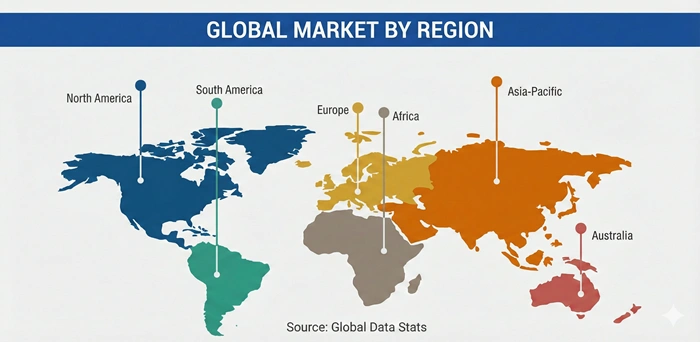
Regional Insights
North America
Market Dominance Through Remote Work Culture and Flexible Policies
North America maintains its position as the dominant region in the bleisure travel market, commanding approximately 36% of global market share in 2025 with an estimated value of USD 293.74 billion, projected to reach USD 926.82 billion by 2033 growing at a CAGR of 16.50%. The region's leadership stems from widespread remote work adoption, progressive corporate travel policies explicitly accommodating bleisure extensions, high business travel volumes generating abundant opportunities for leisure additions, and cultural emphasis on work-life balance. The United States dominates North American bleisure activity with approximately 73% regional share driven by massive business travel industry, technology sector leadership pioneering flexible work arrangements, diverse destinations offering business infrastructure alongside compelling leisure attractions, and young workforce demographics favoring blended travel experiences.
Corporate travel programs in North America increasingly incorporate bleisure provisions including clear policy guidelines defining permissible extensions, transparent expense separation protocols, automated approval workflows, and employee communications promoting benefits and proper procedures. The bleisure travel market in North America benefits from robust travel management company ecosystem including American Express Global Business Travel, BCD Travel, Corporate Travel Management, and Flight Centre Travel Group developing sophisticated platforms, specialized services, and comprehensive support addressing bleisure traveler needs. Canada contributes approximately 21% of North American revenue through similar workplace flexibility trends, outdoor recreation opportunities, cultural attractions, and corporate cultures supporting employee wellbeing through travel enrichment. The region leads in technology innovation for bleisure travel including mobile booking platforms, AI-powered itinerary optimization, virtual destination experiences, and integrated expense management solutions that streamline blended trip planning and execution.
Europe
Fastest Regional Growth Through Infrastructure and Cultural Diversity
Europe represents the fastest-growing region in the bleisure travel market with a projected CAGR of 17.40% from 2026 to 2033, with market value expected to increase from USD 261.34 billion in 2025 to USD 873.99 billion by 2033, capturing expanding global revenue share. The region's exceptional growth trajectory stems from outstanding transportation infrastructure including high-speed rail networks, extensive flight connectivity, and integrated public transit enabling efficient business-leisure combinations within compact timeframes. Cultural diversity concentrated within manageable distances allows business travelers to experience dramatically different languages, cuisines, architectures, and traditions through brief trip extensions, maximizing leisure value from business visits. European workplace cultures generally emphasize work-life balance more strongly than other regions, with statutory vacation provisions, shorter workweeks, and social norms supporting leisure pursuits creating favorable environments for bleisure adoption.
Key destinations including United Kingdom, Germany, France, Spain, and Italy combine substantial business activities with world-class leisure attractions, making them natural bleisure hotspots where corporate meetings seamlessly transition to cultural exploration, culinary experiences, and recreational activities. Leading hospitality companies serving the European bleisure travel market including Accor, NH Hotel Group, Melia Hotels International, and Scandic Hotels develop properties strategically positioned for business convenience while maximizing leisure accessibility through design, amenities, and local partnerships. The region benefits from Schengen area facilitating border-free travel enabling multi-country business-leisure combinations, budget airline competition maintaining affordable transportation costs, and comprehensive tourism infrastructure supporting diverse traveler needs. Millennial and Gen Z workforce growth throughout Europe drives bleisure expansion as younger demographics particularly value experiential travel, authentic cultural immersion, and flexible work arrangements enabling location-independent productivity.
Top Key Players
-
Expedia Group, Inc. (United States)
-
Booking Holdings Inc. (United States)
-
American Express Global Business Travel (United States)
-
BCD Travel (Netherlands)
-
Flight Centre Travel Group (Australia)
-
Corporate Travel Management (Australia)
-
Carlson Wagonlit Travel (United States)
-
FCM Travel Solutions (Australia)
-
Travel Leaders Group (United States)
-
World Travel Holdings Inc. (United States)
-
Frosch Travel (United States)
-
Direct Travel, Inc. (United States)
-
Adelman Travel Group (United States)
-
ATPI Ltd. (United Kingdom)
-
JTB Corporation (Japan)
Recent Developments
-
Expedia Group (2025): Launched comprehensive bleisure booking platform in January 2025 featuring AI-powered itinerary optimization, seamless business-leisure expense separation, companion booking options, and curated local experience recommendations, targeting corporate travel customers seeking streamlined solutions for extended business trips across global destinations served through Expedia corporate travel division.
-
Booking Holdings (2024): Expanded Booking.com for Business platform in November 2024 with dedicated bleisure features including flexible trip extension tools, transparent cost visibility separating business and personal expenses, mobile app enhancements for on-the-go modifications, and partnership with major TMCs enabling integrated bleisure bookings within corporate travel management workflows.
-
American Express Global Business Travel (2024): Introduced specialized bleisure travel consulting services in September 2024 helping corporate clients develop comprehensive bleisure policies, train travelers on proper procedures, implement technology solutions for seamless bookings and expense management, and measure program impact on employee satisfaction and retention across multinational client organizations.
-
BCD Travel (2023): Partnered with Airbnb for Work in December 2023 to integrate alternative accommodation options into corporate travel platform, providing bleisure travelers with home-like properties, local neighborhood experiences, and flexible booking options that complement traditional hotel offerings while maintaining corporate policy compliance and duty of care standards.
-
Flight Centre Travel Group (2023): Launched dedicated bleisure travel division in October 2023 combining corporate travel management expertise with leisure vacation specialization, offering comprehensive services including policy development, customized booking platforms, traveler education programs, and measurement tools tracking bleisure program utilization and business value for enterprise clients worldwide.
Market Trends
Sustainability Focus and Multigenerational Travel Reshape Experiences
The bleisure travel market is experiencing transformative shifts driven by sustainability consciousness, multigenerational travel patterns, and destination diversification beyond traditional business hubs toward locations offering unique leisure experiences alongside professional amenities. Environmental awareness motivates bleisure travelers to extend trips rather than taking separate business and leisure journeys that duplicate carbon emissions, viewing combined travel as eco-friendly approach reducing overall environmental impact. Sustainable accommodation preferences including eco-certified hotels, locally-owned boutique properties, and alternative lodging options like serviced apartments align with bleisure traveler values while often providing better amenities for extended stays including kitchens, living spaces, and neighborhood integration. Transportation sustainability drives bleisure travelers toward destinations accessible via train rather than flights, supports bike-friendly cities enabling carbon-neutral local transportation, and rewards hotels implementing renewable energy, waste reduction, and water conservation programs.
Multigenerational bleisure emerges as growing trend where business travelers bring family members including children, parents, or spouses who enjoy leisure activities while the primary traveler fulfills professional obligations, strengthening family bonds while maximizing trip value. Destinations previously overlooked for bleisure now actively market combined business-leisure capabilities, developing infrastructure including co-working spaces, business centers, and meeting facilities while promoting natural attractions, cultural experiences, outdoor recreation, and culinary scenes appealing to leisure interests. The bleisure travel market witnesses democratization beyond senior executives toward broader employee populations as remote work normalization, flexible policies, and cost-conscious approaches make blended travel accessible regardless of title or seniority level. Wellness integration becomes standard expectation with bleisure travelers seeking accommodations offering fitness facilities, healthy dining options, spa services, and proximity to outdoor activities that support physical and mental wellbeing during extended stays.
Segments Covered in the Report
By Tour Type
-
Solo
-
Group
By Travel Type
-
Domestic
-
International
By Travel Duration
-
2-4 Days
-
1 Week
-
Above 1 Month
By Service Type
-
Lodging
-
Travel
-
Food and Beverage
-
Others
By Gender
-
Male
-
Female
By Age Group
-
Millennial
-
Generation X
-
Others
By Industry Vertical
-
IT
-
Manufacturing
-
Finance
-
Healthcare
-
Others
By Region
-
North America
-
United States
-
Canada
-
Mexico
-
-
Europe
-
United Kingdom
-
Germany
-
France
-
Italy
-
Spain
-
Rest of Europe
-
-
Asia Pacific
-
China
-
India
-
Japan
-
South Korea
-
Australia
-
Rest of Asia Pacific
-
-
Latin America
-
Brazil
-
Argentina
-
Rest of Latin America
-
-
Middle East and Africa
-
United Arab Emirates
-
Saudi Arabia
-
South Africa
-
Rest of Middle East and Africa
-
Frequently Asked Questions
Question 1: What is the projected bleisure travel market size by 2033?
Answer: The bleisure travel market is projected to reach USD 2823.37 billion by 2033, growing from USD 961.48 billion in 2026. This represents substantial expansion driven by remote work normalization, flexible corporate policies, work-life balance emphasis, cost efficiency benefits, and growing recognition that business trips present valuable opportunities for personal enrichment.
Question 2: Which region dominates the global bleisure travel market share?
Answer: North America dominates the global bleisure travel market with approximately 36% market share in 2025, valued at USD 293.74 billion. This leadership position reflects established remote work culture, progressive corporate travel policies, high business travel volumes, cultural emphasis on work-life balance, and strong technology infrastructure supporting location-independent work.
Question 3: What factors are driving the bleisure travel market growth?
Answer: Key factors driving bleisure travel market growth include widespread remote work adoption enabling trip extensions without vacation days, corporate culture shifts emphasizing employee wellness, cost efficiency leveraging covered business expenses for leisure, digital nomad culture normalization, and younger workforce demographics prioritizing experiences. Technology improvements enabling seamless booking, expense management, and remote productivity also contribute significantly.
Question 4: Which tour type segment holds the largest share in the bleisure travel market?
Answer: The solo travel segment holds the largest share in the bleisure travel market with approximately 54% in 2025. This dominance reflects business travel's inherently individual nature, flexibility advantages enabling personalized schedules and activity selection, simplified logistics without group coordination, and growing cultural acceptance of solo travel as enriching lifestyle choice.
Question 5: What are the emerging trends in the bleisure travel market?
Answer: Emerging trends in the bleisure travel market include sustainability focus viewing combined trips as eco-friendly alternatives to separate journeys, multigenerational travel where families accompany business travelers, destination diversification beyond traditional hubs, wellness integration addressing physical and mental wellbeing, and democratization extending bleisure access beyond executives. Specialized packages, technology platforms, and strategic partnerships also gain significant traction.