
Biotechnology Market Overview
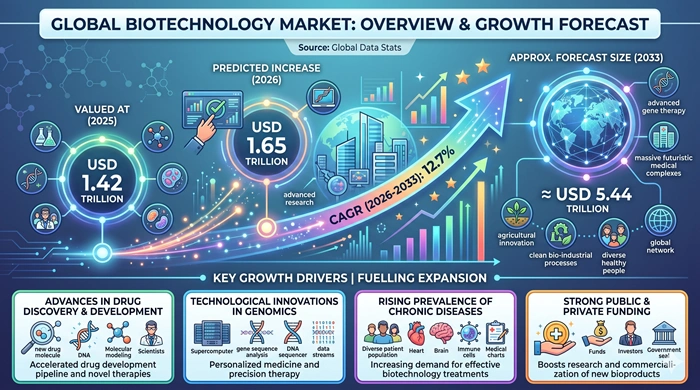
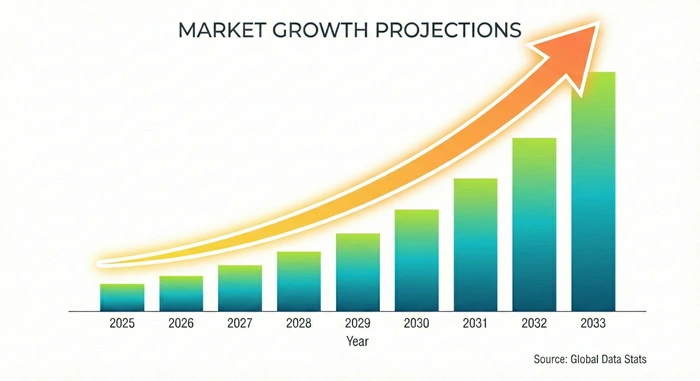
The global biotechnology market size is valued at USD 1.42 trillion in 2025 and is predicted to increase from USD 1.65 trillion in 2026 to approximately USD 5.44 trillion by 2033, growing at a CAGR of 12.7% from 2026 to 2033.
Biotechnology is the application of biological systems, living organisms, and their derivatives to develop products, technologies, and processes that improve human health, agriculture, industrial production, and environmental management. The industry spans biopharmaceuticals, genetic engineering, DNA sequencing, tissue engineering, cell-based therapies, industrial fermentation, agricultural biotechnology, and bioinformatics — representing one of the broadest and most commercially dynamic sectors in the global economy. The biotechnology market is experiencing powerful and sustained growth driven by the rising global burden of chronic and rare diseases, landmark advances in gene editing and CRISPR technologies, the acceleration of precision medicine and targeted therapy development, the growing commercial maturity of cell and gene therapy platforms, and the transformative impact of artificial intelligence on biological research and drug discovery efficiency.
AI Impact on the Biotechnology Industry
Artificial Intelligence Is Transforming the Biotechnology Industry Through AI-Accelerated Drug Discovery and Target Identification, Machine Learning-Powered Genomics and Protein Structure Prediction, AI-Optimized Clinical Trial Design, and Generative Biology Platforms That Are Compressing Development Timelines Across the Full Biopharmaceutical Pipeline
Artificial intelligence is creating unprecedented disruption across every dimension of the biotechnology market — from basic biological research and target identification through clinical development and commercial manufacturing optimization. AlphaFold's revolutionary protein structure prediction capability — which solved a 50-year fundamental science challenge by accurately predicting the three-dimensional structure of proteins from their amino acid sequences — has made a database of over 200 million predicted protein structures freely available to researchers globally, dramatically accelerating structure-based drug design, enzyme engineering, and functional protein identification across every segment of the biotechnology industry. This single AI breakthrough has compressed what was previously years of experimental structural biology work into computationally accessible prediction within hours — enabling biotechnology researchers to identify druggable protein targets, design binding molecules, and rationalize structure-activity relationships at a pace and scale that is fundamentally changing how the biotechnology market's drug discovery research is conducted.
Generative AI platforms — applied to biological sequence design, molecule generation, and synthetic biology circuit design — are creating a new generation of AI-native biotechnology companies that use large biological language models to design novel proteins, antibodies, nucleic acid therapeutics, and synthetic gene circuits with specified functional properties. Companies including Insilico Medicine, Recursion Pharmaceuticals, AbSci, and Generate:Biomedicines are using AI-first biological design platforms to generate drug candidate libraries, identify lead compounds, and optimize therapeutic molecules with dramatically greater efficiency than traditional medicinal chemistry approaches. These AI-driven biological design capabilities are not marginal improvements — they represent a phase transition in how biotechnology companies approach therapeutic candidate generation, and are creating competitive advantage for AI-native biotech firms that will progressively reshape the commercial structure of the biotechnology market through the forecast period.
Growth Factors
Escalating Global Chronic and Rare Disease Burden Driving Biopharmaceutical Innovation Demand, CRISPR and Gene Editing Advances Unlocking New Therapeutic Frontiers, Precision Medicine Adoption Expanding Targeted Therapy Markets, and Growing Government and Private Biotechnology R&D Investment Are the Core Growth Drivers
The global burden of chronic diseases — including cancer, diabetes, cardiovascular disease, autoimmune disorders, neurological conditions, and rare genetic diseases — represents the fundamental demand driver for biotechnology innovation and the primary commercial engine sustaining the biotechnology market's exceptional growth trajectory. An estimated 1.9 billion people worldwide live with one or more chronic conditions, and the global prevalence of cancer alone — with over 20 million new diagnoses annually and rising — creates an enormous and growing commercial market for novel oncology biopharmaceuticals including monoclonal antibodies, checkpoint inhibitors, CAR-T cell therapies, bispecific antibodies, and antibody-drug conjugates that are among the biotechnology market's most commercially significant product categories. The World Health Organization's projections for continued chronic disease prevalence growth through 2033 — driven by aging populations, urbanization-associated lifestyle changes, and population growth in developing countries — ensure that the disease burden demand driver for biotechnology innovation will continue to expand throughout the forecast period.
CRISPR-Cas9 gene editing technology and its increasingly refined successors — including base editing, prime editing, and epigenome editing systems — represent one of the most transformative scientific developments in the biotechnology market's history, enabling precise and programmable modification of DNA sequences in living cells with a speed, accuracy, and versatility that was previously impossible. The regulatory approval of the first CRISPR-based therapeutic (Casgevy, developed by Vertex Pharmaceuticals and CRISPR Therapeutics for sickle cell disease and beta-thalassemia) has validated the clinical and commercial viability of gene editing therapeutics and opened the pathway for dozens of CRISPR-based programs in oncology, metabolic disease, cardiovascular disease, and infectious diseases that are now advancing through clinical development. The commercial success of gene editing therapies — combined with continuous improvement in delivery systems, editing precision, and in-vivo editing capability — is creating one of the most exciting and commercially significant growth frontiers in the biotechnology market heading toward 2033.
Market Outlook
The Biotechnology Market Is Positioned for Extraordinary Growth Through 2033 as Gene and Cell Therapy Platforms Mature Commercially, AI-Driven Drug Discovery Accelerates Pipeline Productivity, Biosimilar Adoption Expands Market Access, and Precision Medicine Reshapes the Commercial Therapeutic Landscape
The commercial outlook for the biotechnology market through 2033 is characterized by both extraordinary headline growth potential and significant technology platform maturation across cell and gene therapy, mRNA therapeutics, antibody-drug conjugates, and AI-driven drug discovery. The cell and gene therapy sector — once viewed as a promising but commercially early-stage field — has now achieved regulatory approval for multiple transformative therapies across hematological malignancies, inherited genetic disorders, and solid tumor oncology, establishing a commercial infrastructure of manufacturing, reimbursement, and patient access that will support progressively broader product launches and revenue growth through 2033. The value that approved gene therapies deliver to patients — in some cases representing functional cures for previously life-limiting conditions — is creating strong payer willingness to fund high-cost gene therapy programs through innovative outcomes-based payment models, progressively improving the commercial sustainability of the cell and gene therapy segment within the broader biotechnology market.
The biosimilar sector represents a parallel growth opportunity within the biotechnology market — as an extraordinary volume of first-generation biologic drugs including adalimumab (Humira), etanercept, rituximab, bevacizumab, and trastuzumab face biosimilar competition in major global markets, creating both commercial challenges for originator companies and significant market access and patient affordability improvements that are expanding the total treated patient population for these important therapeutic categories. Biosimilar manufacturers — including Amgen, Sandoz, Samsung Bioepis, Celltrion, and Biocon — are capturing substantial commercial revenue from originator biologic market penetration while simultaneously driving total market volume expansion by making effective biologic therapies accessible to payers and patient populations that could not previously afford originator biologic prices.
Expert Speaks
-
Albert Bourla, CEO, Pfizer — "The biotechnology market is experiencing one of its most extraordinary periods of scientific and commercial innovation — with gene editing technologies, mRNA therapeutic platforms, and AI-driven drug discovery collectively creating a new generation of medicines that will transform how we treat cancer, genetic disease, and infectious disease in ways that were not imaginable a decade ago. Pfizer is deeply committed to leading in this transformational moment — investing across oncology biologics, gene therapy manufacturing, mRNA therapeutics, and AI-powered drug discovery to ensure we capture the commercial opportunities these platform technologies create while delivering genuinely transformative medicines to patients who need them."
-
Bob Ford, CEO, Abbott Laboratories — "The convergence of biotechnology innovation, precision diagnostics, and digital health platforms is creating a new paradigm of personalized medicine — where patients receive treatments selected and monitored based on their individual biological characteristics rather than population-average clinical guidelines — and this precision medicine transformation is creating growing commercial demand across the full biotechnology market from therapeutic biologics through companion diagnostics and biosensor monitoring. Abbott's investments in molecular diagnostics, genomic testing, and connected health monitoring platforms are all positioned to benefit from this precision medicine-driven expansion of the biotechnology market's commercial addressable revenue."
-
Vas Narasimhan, CEO, Novartis — "Novartis has strategically repositioned itself as a pure-play innovative medicines company with deep biotechnology capabilities across precision oncology, radioligand therapy, and gene therapy — because we believe the biotechnology market's highest-value commercial opportunities in the coming decade will be captured by companies that master the combination of biological target validation, platform technology application, and data science-driven clinical development. The commercial success of Kymriah as the world's first approved CAR-T cell therapy, and the growing Novartis oncology biologic portfolio, demonstrate that transformative cell and gene therapy programs can achieve the clinical and commercial validation needed to deliver sustained revenue growth within the biotechnology market."
Key Report Takeaways
-
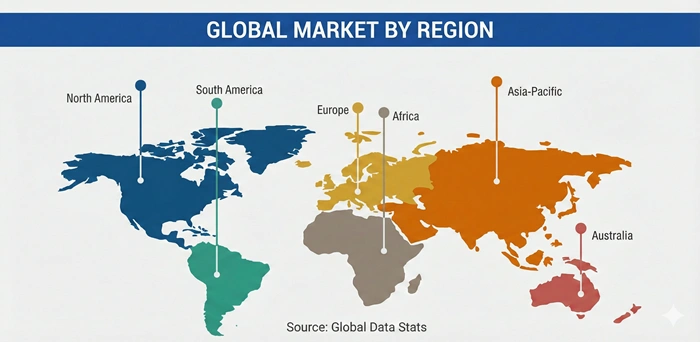
North America leads the biotechnology market, holding approximately 41.0% of global revenue in 2025, driven by the United States' role as the world's largest single national biopharmaceutical market, the world's highest concentration of biotechnology companies headquartered in the San Francisco Bay Area and Boston biotech clusters, robust NIH and BARDA research funding sustaining the academic-to-commercial pipeline, and the most developed venture capital ecosystem for early-stage biotechnology company financing globally
-
Asia-Pacific is the fastest-growing regional market, projected to expand at a CAGR of over 14.5% through 2033, driven by China's rapidly expanding domestic biopharmaceutical industry and government investment in life sciences innovation, India's growing biotechnology manufacturing and biosimilar production capabilities, Japan and South Korea's advanced biotechnology research ecosystems, and the region's large and growing disease-burdened patient population creating strong demand for affordable biotechnology-derived therapeutics
-
Biopharmaceuticals are the dominant application segment, accounting for approximately 44.6% of total application revenue in 2025, driven by the extraordinary commercial success of monoclonal antibody therapies (Humira, Keytruda, Opdivo, Dupixent), the rapid growth of checkpoint inhibitor immunotherapy across oncology indications, expanding antibody-drug conjugate approvals, and the emergence of cell and gene therapies as a commercially viable therapeutic category
-
DNA sequencing technology is the leading technology segment, accounting for approximately 17.5% of total technology revenue in 2025, driven by the progressive cost reduction of next-generation sequencing below the clinical actionability threshold, growing clinical adoption of whole genome sequencing for rare disease diagnosis and oncology precision therapy selection, and expanding liquid biopsy and non-invasive prenatal testing applications
-
Tissue engineering and regeneration is the largest technology segment by revenue share in the biotechnology market at approximately 19.2% in 2025, driven by the growing clinical adoption of regenerative medicine platforms across orthopedic repair, wound healing, organ tissue engineering, and cardiovascular applications
-
Nanobiotechnology is the fastest-growing technology segment in the biotechnology market, projected to grow at a CAGR of approximately 16.2% through 2033 and expected to account for approximately 18% of total technology revenue by 2033, driven by its critical enabling role in lipid nanoparticle delivery systems for mRNA therapeutics and gene editing tools, targeted drug delivery for oncology biologics, and next-generation biosensor diagnostic platform development
Market Scope
| Report Coverage | Details |
|---|---|
| Market Size by 2033 | USD 5.44 Trillion |
| Market Size by 2025 | USD 1.42 Trillion |
| Market Size by 2026 | USD 1.65 Trillion |
| Market Growth Rate (2026–2033) | CAGR of 12.7% |
| Dominating Region | North America |
| Fastest Growing Region | Asia-Pacific |
| Base Year | 2025 |
| Forecast Period | 2026 – 2033 |
| Segments Covered | Application, Technology, End User, Product Type |
| Regions Covered | North America, Europe, Asia-Pacific, Latin America, Middle East & Africa |
Market Dynamics
Drivers Impact Analysis
Rising Global Chronic and Rare Disease Burden Creating Biopharmaceutical Innovation Demand, CRISPR and Gene Editing Breakthroughs Opening New Therapeutic Categories, AI-Powered Drug Discovery Accelerating Pipeline Productivity, and Growing Global R&D Investment Sustaining Innovation Momentum Are the Core Drivers of the Biotechnology Market
| Driver | ≈ % Impact on CAGR Forecast | Geographic Relevance | Impact Timeline |
|---|---|---|---|
| Escalating global chronic and rare disease burden driving biopharmaceutical innovation demand | ~29% | Global | Short to Long-term |
| CRISPR gene editing and cell therapy advances unlocking new therapeutic categories | ~24% | North America, Europe, Asia-Pacific | Short to Long-term |
| AI-powered drug discovery accelerating pipeline productivity and reducing development timelines | ~22% | North America, Europe | Short to Long-term |
| Growing government and private R&D investment sustaining biotechnology innovation momentum | ~17% | North America, Asia-Pacific, Europe | Ongoing |
| Biosimilar adoption expanding market access and growing total biologics patient population | ~8% | Europe, Asia-Pacific, North America | Short to Long-term |
The convergence of genomics, precision medicine, and advanced biologic therapy platforms — combined with the growing data infrastructure of real-world evidence, biobank resources, and electronic health records — is creating a drug discovery and development environment of unprecedented productivity that is progressively reducing the biotechnology market's historic attrition rates in clinical development. Companies with access to large, well-characterized patient genomic datasets, sophisticated biomarker-driven clinical trial designs, and AI-powered response prediction capabilities are achieving clinical success rates that significantly exceed historic industry averages — creating commercial competitive advantage for data-rich, scientifically sophisticated biotechnology companies that can systematically improve pipeline success probability. This precision medicine-driven improvement in clinical development productivity is accelerating the pace at which novel biopharmaceutical products reach commercial approval, compressing the industry's revenue generation timeline and expanding the commercial opportunity within the biotechnology market.
Government investment in biotechnology research and development represents a foundational and consistently growing driver of the biotechnology market's innovation pipeline — with the United States NIH annual budget exceeding USD 48 billion, the European Horizon Europe health research program committing multi-billion euro annual funding, and China's national biotechnology development programs committing substantial government investment to life sciences innovation. These government funding programs sustain the basic and translational research that generates the scientific discoveries and therapeutic candidates that commercial biotechnology companies subsequently develop into marketable products — creating a publicly funded innovation pipeline that reduces commercial development risk and accelerates the time from scientific discovery to commercial product launch. The growing recognition among governments that biotechnology leadership is a strategic national security and economic competitiveness imperative is driving above-inflation government biotechnology research funding growth in major markets globally.
Restraints Impact Analysis
High Biopharmaceutical Drug Development Costs and Clinical Failure Rates, Complex and Lengthy Regulatory Approval Timelines, Healthcare Payer Reimbursement Pressure on High-Cost Biologics, and Intellectual Property and Biosimilar Competition Erosion Are the Primary Restraints
| Restraint | ≈ % Impact on CAGR Forecast | Geographic Relevance | Impact Timeline |
|---|---|---|---|
| High clinical development costs and persistent late-stage failure rates constraining pipeline productivity | ~31% | Global | Ongoing |
| Complex and lengthy regulatory approval processes for novel biologic and gene therapy products | ~26% | North America, Europe, Asia-Pacific | Ongoing |
| Healthcare payer pricing and reimbursement pressure on high-cost biopharmaceuticals | ~22% | North America, Europe | Ongoing |
| Biosimilar and generic competition eroding originator biologic revenue after patent expiry | ~13% | North America, Europe, Asia-Pacific | Ongoing |
| Manufacturing complexity and scale-up challenges for cell and gene therapy products | ~8% | North America, Europe | Short to Medium-term |
The extraordinary cost of biopharmaceutical drug development — with estimates suggesting that the fully capitalized cost of bringing a new biologic drug to market exceeds USD 2 billion when accounting for failures and cost of capital — creates substantial financial barriers to commercial biotechnology participation that limit the market primarily to large well-capitalized companies and venture-backed startups with access to substantial early-stage funding. The persistent clinical development failure rate — with over 90% of drug candidates that enter clinical trials failing to achieve regulatory approval — means that biotechnology companies must pursue broad pipeline diversification strategies to maintain commercial viability, requiring scale and financial depth that many smaller companies lack. These structural cost and attrition realities create consolidation pressure within the biotechnology market — driving mergers, acquisitions, and licensing partnerships between large pharmaceutical companies seeking pipeline replenishment and smaller biotechnology companies that have generated compelling clinical data but lack the commercial resources for full drug development and launch.
Healthcare payer pricing pressure — particularly in the United States following the Inflation Reduction Act's Medicare drug price negotiation provisions, and in European countries with established health technology assessment reimbursement frameworks — is creating growing revenue headwinds for high-cost biopharmaceutical products within the biotechnology market. Payers' growing sophistication in negotiating biologic pricing, expanding use of value-based outcome contracts, and active substitution of biosimilars for originator biologics where available are collectively compressing the revenue per-patient economics of established biologic product franchises and creating pricing strategy pressure for new product launches that must demonstrate compelling comparative effectiveness evidence to command premium reimbursement in major markets.
Opportunities Impact Analysis
mRNA Therapeutic Platform Expansion Beyond Vaccines, AI-Driven Biological Design Accelerating Drug Discovery, Cell and Gene Therapy Commercial Maturation, and Asia-Pacific Biotechnology Market Expansion Are the Most Commercially Compelling Opportunities
| Opportunity | ≈ % Impact on CAGR Forecast | Geographic Relevance | Impact Timeline |
|---|---|---|---|
| mRNA therapeutic platform expansion into oncology, autoimmune, and metabolic disease applications | ~33% | North America, Europe | Short to Long-term |
| AI-driven biological design and generative biology platform commercial development | ~26% | North America, Europe | Short to Long-term |
| Cell and gene therapy commercial infrastructure maturation expanding patient access | ~22% | North America, Europe | Short to Medium-term |
| Asia-Pacific biotechnology market expansion and domestic industry development | ~13% | Asia-Pacific | Medium to Long-term |
| Agricultural biotechnology and industrial fermentation market expansion | ~6% | Global | Short to Long-term |
The mRNA therapeutic platform — validated at an unprecedented scale by the COVID-19 vaccine program — represents the most commercially exciting technology expansion opportunity in the biotechnology market beyond the vaccine application where it first achieved commercial success. Moderna, Pfizer-BioNTech, and a growing number of specialized mRNA biotechnology companies are advancing clinical programs across oncology (personalized cancer vaccines, shared tumor antigen vaccines), autoimmune diseases (mRNA-encoded tolerogenic molecules), metabolic diseases (mRNA-encoded enzyme replacement), cardiovascular diseases, and rare genetic conditions — collectively creating an mRNA therapeutic pipeline of extraordinary breadth and commercial potential. The regulatory acceptance of mRNA technology, the improving stability and manufacturing scalability of lipid nanoparticle delivery systems, and the growing clinical evidence base supporting mRNA's therapeutic applicability beyond prophylactic vaccination collectively signal that mRNA therapeutics will become one of the biotechnology market's most commercially significant product categories within the forecast period.
Agricultural biotechnology — encompassing genetically engineered crop varieties with improved yield, drought tolerance, pest resistance, and nutritional profiles; precision fermentation for food protein production; and microbiome-based soil health products — represents a large and growing commercial segment of the biotechnology market that is attracting substantial investment as global food security concerns, climate change agricultural challenges, and consumer demand for sustainable food production drive technology adoption. Companies including Bayer CropScience, Corteva Agriscience, Syngenta, and a growing ecosystem of agricultural biotechnology startups are developing next-generation biotechnology-derived agricultural products that address the fundamental challenge of feeding a growing global population under increasingly challenging climate conditions — creating sustained long-term commercial growth opportunities within the broader biotechnology market.
Segment Analysis
By Application
Biopharmaceuticals Lead the Biotechnology Market Application Segment With the Dominant Revenue Share as Monoclonal Antibodies, Cell Therapies, and Gene Therapies Drive Commercial Expansion
The biopharmaceutical application segment is the dominant category in the biotechnology market, accounting for approximately 44.6% of total application revenue in 2025 and projected to grow at a strong CAGR of 12.9% through 2033. This segment encompasses the full spectrum of biotechnology-derived therapeutic products — including monoclonal antibodies, bispecific antibodies, antibody-drug conjugates, CAR-T cell therapies, gene therapies, mRNA vaccines and therapeutics, and recombinant protein drugs — that are collectively generating the biotechnology market's largest and most commercially dynamic revenue streams. North America is the dominant region for biopharmaceutical revenue, where the United States' role as the world's largest drug market, the presence of the world's largest biopharmaceutical companies including Johnson & Johnson, AbbVie, Amgen, Gilead Sciences, and Bristol Myers Squibb, and the deep commercial infrastructure of specialty pharmacy, patient assistance programs, and outcomes-based payer contracting sustain the world's highest biopharmaceutical revenue concentration. The extraordinary commercial success of checkpoint inhibitor immunotherapy products — led by Merck's Keytruda (pembrolizumab), which exceeded USD 25 billion in annual global revenue — demonstrates the scale of commercial opportunity that breakthrough biopharmaceutical innovations can achieve within the biotechnology market.
Europe is the second-largest biopharmaceutical market, with major European pharmaceutical companies including Roche, Novartis, AstraZeneca, Sanofi, and UCB maintaining substantial biologics franchises across oncology, immunology, and rare disease that generate significant European biopharmaceutical biotechnology market revenue. The bioinformatics application segment — encompassing genomic data analysis software, protein structure prediction tools, AI-powered drug discovery platforms, and computational biology research infrastructure — is the fastest-growing application segment, projected to grow at a CAGR of approximately 15.4% through 2033, driven by the extraordinary expansion of genomic and proteomic data volumes generated by next-generation sequencing and multi-omics research programs that require sophisticated bioinformatics tools for meaningful analysis and therapeutic application.
By Technology
DNA Sequencing Technology Dominates Revenue Share in the Biotechnology Market While Nanobiotechnology Emerges as the Fastest-Growing Technology Segment Driven by mRNA Delivery and Targeted Therapeutics
The tissue engineering and regeneration technology segment holds the largest revenue share in the biotechnology market at approximately 19.2% of total technology revenue in 2025, projected to maintain a CAGR of 12.4% through 2033, encompassing three-dimensional tissue scaffold development, organ-on-a-chip platforms, stem cell-based regenerative therapies, and cell-based wound healing products. North America is the dominant region for tissue engineering technology, where leading companies including Organogenesis, MiMedx, Integra LifeSciences, and a growing number of regenerative medicine startups are driving clinical adoption across orthopedic repair, wound care, and cardiovascular regeneration applications — supported by FDA Regenerative Medicine Advanced Therapy designations that accelerate clinical development timelines for novel tissue engineering products within the biotechnology market. The DNA sequencing segment remains a critical revenue contributor at approximately 17.5% share in 2025 — driven by Illumina's dominant market position in short-read sequencing platforms, PacBio's long-read sequencing advancement, and Oxford Nanopore Technologies' portable sequencing applications across clinical diagnostics, infectious disease surveillance, and environmental monitoring.
Nanobiotechnology is the fastest-growing technology segment in the biotechnology market, projected to expand at a CAGR of approximately 16.2% through 2033, driven by its foundational enabling role in lipid nanoparticle mRNA delivery systems, targeted nanoparticle drug delivery for oncology, and nanosensor biosensor diagnostic platforms. Asia-Pacific is the fastest-growing region for nanobiotechnology development — with China, India, Japan, and South Korea all pursuing significant national nanotechnology research investment programs that are creating growing academic and commercial nanobiotechnology capability. Key companies active in biotechnology nanomaterial and nanoparticle development include Alnylam Pharmaceuticals, BioNTech, Moderna, and specialized nanomedicine companies including Nanospectra Biosciences and Nanobiotix that are advancing nanoparticle therapeutic programs across oncology and rare disease applications within the global biotechnology market.
Regional Insights
North America
North America Leads the Global Biotechnology Market With the Dominant Revenue Share, the World's Largest Biopharmaceutical Industry, the Most Productive Biotechnology Innovation Ecosystem, and the Deepest Venture and Public Capital Markets Funding Biotechnology Development
North America holds the dominant position in the global biotechnology market, accounting for approximately 41.0% of total global revenue in 2025 and projected to maintain a CAGR of 12.3% through 2033. The United States biotechnology industry — centered on the San Francisco Bay Area and Boston-Cambridge biotech clusters, with significant additional presence in San Diego, Research Triangle Park, and New York — is the world's most productive and commercially significant biotechnology innovation ecosystem. Leading biotechnology and biopharmaceutical companies headquartered in North America — including Amgen, Gilead Sciences, Regeneron Pharmaceuticals, Biogen, Vertex Pharmaceuticals, Moderna, BioMarin, and Alnylam Pharmaceuticals — collectively represent the largest concentration of publicly traded pure-play biotechnology company market capitalization in the world, generating the majority of the biotechnology market's global biopharmaceutical innovation pipeline. NIH funding of over USD 48 billion annually, the US FDA's innovative regulatory pathways including Breakthrough Therapy and Accelerated Approval designations, and the world's deepest biotechnology venture capital ecosystem collectively create a uniquely productive commercial environment for biotechnology innovation development and commercialization.
Canada contributes additional North American biotechnology market strength through its growing life sciences cluster in Toronto, Vancouver, and Montreal — supported by federal Strategic Innovation Fund investment, the National Research Council Canada's biotechnology research programs, and a growing ecosystem of university spinout companies commercializing academic biotechnology research. Canada's competitive strengths in biologics manufacturing, genomics research, and agricultural biotechnology are creating an increasingly important national biotechnology market within the broader North American landscape.
Asia-Pacific
Asia-Pacific Is the Fastest-Growing Regional Biotechnology Market, Driven by China's Domestic Biopharmaceutical Industry Expansion, India's Biosimilar Manufacturing Strength, and Japan and South Korea's Advanced Biotechnology Research Investments
Asia-Pacific is the most rapidly expanding regional market in the global biotechnology landscape, projected to grow at a CAGR of 14.5% from 2026 to 2033. The region currently accounts for approximately 26.8% of global biotechnology market revenue in 2025, with China, India, Japan, South Korea, and Australia as the primary national contributors. China is the dominant and fastest-growing national market within Asia-Pacific — with the Chinese National Medical Products Administration progressively streamlining biologic approval pathways, a rapidly expanding domestic biopharmaceutical industry including BeiGene, Zymeworks, and Innovent Biologics developing globally competitive oncology and immunology biologics, and the Chinese government's Healthy China 2030 initiative creating substantial investment in life sciences manufacturing infrastructure and R&D capability. India is the world's largest biosimilar manufacturing hub — with companies including Biocon, Serum Institute, and Dr. Reddy's Laboratories producing high-quality biosimilar biologics for both domestic use and global export — making a critically important contribution to the biotechnology market's broader mission of improving affordable access to life-changing biologic therapies.
Japan has the most scientifically sophisticated biotechnology research ecosystem in Asia — with iPS cell technology research at the forefront of global regenerative medicine science, advanced domestic antibody drug discovery programs, and the commercial biotechnology operations of global companies including Takeda Pharmaceutical Company, Astellas Pharma, and Daiichi Sankyo that are producing commercially significant biopharmaceuticals within the biotechnology market. South Korea's growing contract development and manufacturing (CDMO) industry — led by Samsung Biologics and Celltrion — is making an increasingly important contribution to global biotechnology production capacity while simultaneously developing domestic biosimilar and novel biologic product pipelines that are creating growing Korean biotechnology commercial revenue.
Top Key Players
-
Amgen Inc. (United States)
-
Gilead Sciences Inc. (United States)
-
Regeneron Pharmaceuticals Inc. (United States)
-
Biogen Inc. (United States)
-
Vertex Pharmaceuticals Inc. (United States)
-
AstraZeneca plc (United Kingdom)
-
F. Hoffmann-La Roche Ltd. (Switzerland)
-
Novartis AG (Switzerland)
-
Sanofi S.A. (France)
-
BeiGene Ltd. (China / United States)
-
Moderna Inc. (United States)
-
Biocon Limited (India)
Recent Developments
-
Amgen (2025) — Advanced its pipeline of next-generation bispecific antibody and antibody-drug conjugate programs across oncology, reporting strong Phase III clinical trial data for multiple cancer indications and filing new drug applications with the FDA for novel oncology biologics — while also progressing its biosimilar portfolio expansion with new biosimilar launches in the United States and European markets that are generating growing revenue contributions within the broader biotechnology market
-
Moderna (2025) — Advanced multiple mRNA therapeutic programs beyond its established vaccine portfolio — including personalized cancer vaccine programs in partnership with Merck that reported encouraging Phase IIb data in melanoma and lung cancer, and mRNA-based programs for rare genetic diseases, cardiovascular indications, and autoimmune conditions — reporting significant clinical progress that validated mRNA's therapeutic potential across multiple disease categories and reinforced investor confidence in Moderna's long-term biotechnology market position
-
AstraZeneca (2025) — Continued its extraordinary commercial momentum in oncology biologics — reporting strong growth across its checkpoint inhibitor portfolio (Imfinzi), antibody-drug conjugate franchise (Enhertu, co-developed with Daiichi Sankyo), and targeted therapy portfolio — while announcing major new clinical program investments in cancer immunotherapy combinations, rare disease biologics, and cardiovascular mRNA therapeutics that reflect AstraZeneca's commitment to maintaining its position as one of the biotechnology market's most commercially productive innovation engines
-
Regeneron Pharmaceuticals (2025) — Reported continued strong commercial performance from its biologic franchise including Dupixent (dupilumab) — which achieved over USD 14 billion in annual global revenue and continued expanding into new Type 2 inflammatory disease indications — while advancing its oncology bispecific antibody and fianlimab (anti-LAG-3) checkpoint combination program into pivotal trials, and progressing its siRNA and gene therapy pipeline programs that represent important long-term biotechnology market growth opportunities
-
BeiGene (2025) — Continued its remarkable commercial expansion in both Chinese and global markets — with tislelizumab (anti-PD-1) driving growing oncology revenue across multiple approved indications in China, the United States, and European markets, and its BTK inhibitor zanubrutinib achieving USD 2 billion+ annual run-rate global revenue — confirming BeiGene's position as one of the biotechnology market's most commercially successful Chinese biopharmaceutical companies and a genuine global oncology biologics competitor
Market Trends
The Commercial Maturation of mRNA Therapeutic Platforms Beyond Prophylactic Vaccines and the Rapid Adoption of AI-Driven Drug Discovery Across the Biotechnology Industry Are the Two Most Commercially Transformative Trends Shaping the Biotechnology Market's Growth Through 2033
The progression of mRNA technology from a COVID-19 vaccine-specific platform into a broadly applicable therapeutic modality is the most consequential commercial development unfolding across the biotechnology market in the current period — with active clinical programs in personalized cancer vaccines, shared tumor antigen vaccines, mRNA-encoded enzyme replacement therapies for rare genetic diseases, mRNA-based cardiovascular therapeutics, and tolerogenic mRNA constructs for autoimmune conditions collectively creating an mRNA therapeutic clinical portfolio of unprecedented breadth. Moderna, Pfizer-BioNTech, BioNTech's dedicated cancer vaccine program, and a growing roster of specialized mRNA biotechnology companies are competing to demonstrate clinical proof-of-concept across these diverse therapeutic applications, with multiple programs expected to generate pivotal clinical data within the 2026–2033 forecast period that could open large commercial markets for mRNA therapeutics across oncology, rare disease, and chronic condition management within the biotechnology market.
The broad-based adoption of AI-powered drug discovery platforms across the biotechnology industry — from the largest multinational pharmaceutical companies to the smallest venture-backed startups — is fundamentally transforming how new therapeutic candidates are identified, designed, and developed, creating a structural productivity improvement in the industry's innovation pipeline that will progressively manifest as a higher volume of novel biologic drug approvals entering commercial markets through 2033. The combination of AlphaFold protein structure prediction capability, large biological language models for sequence design, high-throughput screening data analysis, and AI-optimized clinical trial design is creating an integrated AI-enhanced drug development workflow that reduces the time, cost, and failure probability of therapeutic development across the biotechnology market — creating competitive advantage for AI-first biotechnology companies and driving rapid AI adoption across conventional biopharmaceutical research programs.
Segments Covered in the Report
By Application:
-
Biopharmaceuticals (Monoclonal Antibodies, Cell Therapies [CAR-T, NK], Gene Therapies, mRNA Therapeutics, Antibody-Drug Conjugates, Recombinant Proteins)
-
Bio-Agriculture (Genetically Modified Crops, Precision Fermentation, Agricultural Microbiome)
-
Bio-Industries (Industrial Fermentation, Biofuels, Bioplastics, Enzymes)
-
Bio-Services (CDMO Services, CRO Services, Genomics Services)
-
Bioinformatics (Genomic Data Analysis, AI Drug Discovery Platforms, Computational Biology)
By Technology:
-
Tissue Engineering and Regeneration
-
DNA Sequencing (Next-Generation Sequencing, Long-Read Sequencing, Liquid Biopsy)
-
Nanobiotechnology (Lipid Nanoparticles, Targeted Delivery, Nanosensors)
-
Fermentation Technology
-
CRISPR and Gene Editing (Base Editing, Prime Editing, In Vivo Editing)
-
Polymerase Chain Reaction (PCR) Technology
-
Cell-Based Assays
-
Chromatography and Purification
-
Others
By End User:
-
Pharmaceutical and Biopharmaceutical Companies
-
Academic and Research Institutions
-
Contract Development and Manufacturing Organizations (CDMOs)
-
Agricultural Companies
-
Hospitals and Clinical Laboratories
-
Others
By Product Type:
-
Instruments and Equipment
-
Reagents and Consumables
-
Software and Services
-
Therapeutic Products
By Region:
-
North America (United States, Canada, Mexico)
-
Europe (Germany, United Kingdom, Switzerland, France, Rest of Europe)
-
Asia-Pacific (China, India, Japan, South Korea, Australia, Rest of Asia-Pacific)
-
Latin America (Brazil, Argentina, Rest of Latin America)
-
Middle East & Africa (UAE, Saudi Arabia, South Africa, Rest of MEA)
Frequently Asked Questions
Question 1: What is the current size of the global biotechnology market?
Answer: The global biotechnology market is valued at USD 1.42 trillion in 2025 and is projected to reach USD 5.44 trillion by 2033. The market is growing at a CAGR of 12.7% from 2026 to 2033, driven by escalating chronic disease burden, CRISPR and gene editing advances, AI-powered drug discovery acceleration, and the growing commercial maturation of cell and gene therapy platforms across oncology and rare disease indications.
Question 2: Which application dominates the biotechnology market?
Answer: Biopharmaceuticals are the dominant application segment in the biotechnology market, accounting for approximately 44.6% of total application revenue in 2025, driven by the extraordinary commercial success of monoclonal antibody therapies, checkpoint inhibitor immunotherapies, and cell and gene therapies across oncology, immunology, and rare disease — with North America as the dominant region led by companies including Amgen, Gilead Sciences, Regeneron, and Biogen. The bioinformatics segment is the fastest-growing application, projected to grow at approximately 15.4% CAGR through 2033, driven by the explosive growth of genomic data requiring sophisticated computational analysis tools.
Question 3: Why is North America dominant in the biotechnology market?
Answer: North America leads the biotechnology market with approximately 41.0% of global revenue in 2025, driven by the United States' world-leading biopharmaceutical industry cluster in San Francisco, Boston, and San Diego, NIH funding exceeding USD 48 billion annually sustaining the innovation pipeline, the world's deepest biotechnology venture capital ecosystem, and FDA regulatory pathways including Breakthrough Therapy designation that accelerate commercial approval for transformative biotechnology products. The concentration of global biotechnology companies including Amgen, Moderna, Vertex Pharmaceuticals, Regeneron, and Biogen — combined with the world's largest single biopharmaceutical market — makes North America the undisputed commercial center of the global biotechnology market.
Question 4: How is CRISPR technology impacting the biotechnology market?
Answer: CRISPR-Cas9 and its successor gene editing technologies are transforming the biotechnology market by enabling precise, programmable modification of genomic DNA sequences to correct disease-causing mutations — with the 2023 FDA approval of Casgevy (the first CRISPR-based therapeutic) for sickle cell disease and beta-thalassemia validating the clinical and commercial viability of gene editing therapeutics and opening the regulatory pathway for dozens of CRISPR programs currently in clinical development. The continued advancement of base editing, prime editing, and in-vivo delivery-compatible CRISPR systems is progressively expanding the range of genetic diseases addressable by CRISPR therapeutics — creating one of the biotechnology market's most commercially transformative technology platforms heading toward 2033.
Question 5: What role does AI play in driving biotechnology market growth?
Answer: AI is accelerating biotechnology market growth by dramatically improving the efficiency, speed, and success probability of drug discovery and development — with AlphaFold protein structure prediction enabling structure-based drug design at unprecedented scale, generative AI platforms designing novel therapeutic proteins and antibodies with specified functional properties, and AI-optimized clinical trial designs improving patient selection and outcome measurement precision. The AI-powered biotechnology market is attracting substantial venture and corporate investment as companies including Recursion Pharmaceuticals, Insilico Medicine, and AbSci demonstrate that AI-native drug discovery platforms can generate novel clinical candidates faster and at lower cost than conventional medicinal chemistry approaches — creating competitive pressure for AI adoption across all segments of the global biotechnology market.