
Biopolymer Films Market Overview
Sustainable Packaging Revolution Drives Biodegradable Film Adoption Across Food, Agriculture, and Consumer Goods Industries
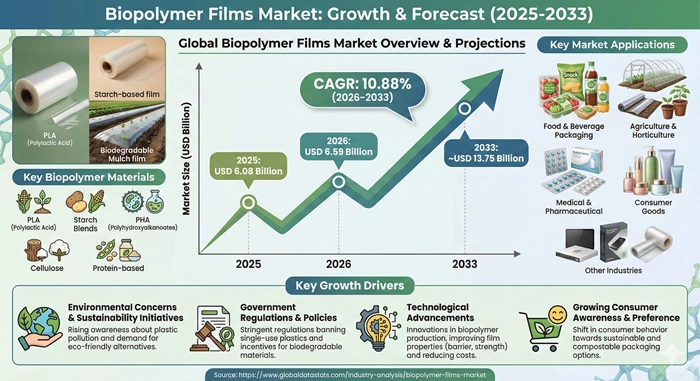
The global biopolymer films market size is valued at USD 6.08 billion in 2025 and is predicted to increase from USD 6.59 billion in 2026 to approximately USD 13.75 billion by 2033, growing at a CAGR of 10.88% from 2026 to 2033. This rapidly expanding industry encompasses biodegradable and compostable film materials manufactured from renewable biological sources including corn starch, sugarcane, cellulose, and other plant-based feedstocks replacing conventional petroleum-based plastic films. Biopolymer films deliver environmental sustainability benefits through biodegradability, compostability, and reduced carbon footprints while maintaining functional performance across packaging, agriculture, and specialty applications requiring barrier properties, mechanical strength, and processing compatibility.
The biopolymer films market addresses escalating environmental concerns where single-use plastics create persistent pollution, regulatory restrictions mandate sustainable alternatives, and consumer preferences shift toward eco-friendly products throughout retail sectors. These renewable materials demonstrate decomposition capabilities in industrial composting facilities, marine environments, or soil conditions reducing long-term environmental impacts compared to traditional plastics persisting centuries in landfills and ecosystems. Major application sectors including food packaging, agricultural mulch films, shopping bags, pharmaceutical packaging, and personal care products consume substantial biopolymer film volumes as brands pursue sustainability commitments, regulatory compliance, and competitive differentiation through environmentally responsible packaging solutions throughout product lifecycles.
AI Impact on the Biopolymer Films Industry
Machine Learning and Process Optimization Revolutionize Material Formulation and Manufacturing Efficiency
Artificial intelligence transforms the biopolymer films market through computational modeling predicting material properties, processing parameters, and end-use performance based on polymer composition, additive combinations, and manufacturing conditions before expensive pilot production trials. Machine learning algorithms analyze thousands of formulation variables including polymer molecular weights, plasticizer concentrations, compatibilizer selections, and processing temperatures identifying optimal combinations achieving target mechanical strength, barrier properties, and biodegradation rates. These AI-powered systems enable virtual screening of novel biopolymer blends combining PLA, PHA, starch-based materials, and cellulose derivatives predicting compatibility, phase separation risks, and final film characteristics accelerating commercialization timelines from years to months. Deep learning models trained on microscopy images perform automated defect detection identifying film thickness variations, surface imperfections, and contamination at production speeds impossible through manual quality control processes.
Advanced AI applications extend beyond formulation development to revolutionize manufacturing process control within the biopolymer films market landscape. Computer vision systems integrated with extrusion equipment monitor melt temperatures, die gap uniformity, and cooling conditions in real-time automatically adjusting parameters preventing defects including gels, streaks, and thickness variations compromising film quality and conversion efficiency. Neural networks predict optimal extrusion parameters analyzing raw material batch variations, ambient conditions, and equipment wear patterns maintaining consistent output despite input variability typical of bio-based feedstocks. Predictive maintenance algorithms monitor equipment performance including extruder barrel wear, die lip degradation, and cooling roll conditions scheduling maintenance interventions preventing costly downtime and quality issues. These AI-driven capabilities position manufacturers to achieve six-sigma quality levels while reducing scrap rates by 25-35% and improving overall equipment effectiveness throughout forecast period.
Growth Factors
Plastic Waste Regulations and Corporate Sustainability Commitments Drive Unprecedented Biopolymer Films Adoption
The biopolymer films market experiences robust growth propelled by stringent plastic waste regulations where governments worldwide implement single-use plastic bans, extended producer responsibility schemes, and mandatory recycled content requirements favoring biodegradable alternatives. European Union Single-Use Plastics Directive banning specific plastic products including bags, straws, and food containers creates immediate market opportunities for compostable biopolymer films meeting regulatory definitions. California, New York, and other progressive US states enact legislation restricting plastic bag distribution, mandating compostability certifications, and establishing plastic reduction targets accelerating retail adoption of biopolymer alternatives. Asian nations including China, India, and Southeast Asian countries implement phased plastic bans particularly targeting agricultural films, shopping bags, and food service items creating substantial market demand across diverse applications. These regulatory frameworks create compliance imperatives overriding cost considerations as brands and retailers pursue market access maintaining operations across jurisdictions with varying plastic restrictions.
Corporate sustainability initiatives drive biopolymer films market expansion through ambitious plastic reduction targets announced by consumer goods manufacturers, retailers, and food service companies responding to investor pressure and consumer expectations. Unilever, Nestle, Procter & Gamble, and Coca-Cola commit to making 100% of packaging recyclable, reusable, or compostable by 2025-2030 timeframes creating procurement demand for sustainable film materials including biopolymer alternatives. Retail chains including Walmart, Carrefour, and Tesco establish supplier requirements mandating sustainable packaging materials, recycled content minimums, and circular economy compliance driving specification changes across supply chains. Food service operators including McDonald's, Starbucks, and delivery platforms transition from conventional plastics to compostable packaging including biopolymer films, cutlery, and containers aligning with sustainability branding. These voluntary commitments create sustained market momentum as corporations pursue reputation management, risk mitigation, and competitive positioning through environmental leadership throughout forecast period.
Market Outlook
Technology Advancement and Cost Reduction Position Industry for Sustained Long-Term Expansion
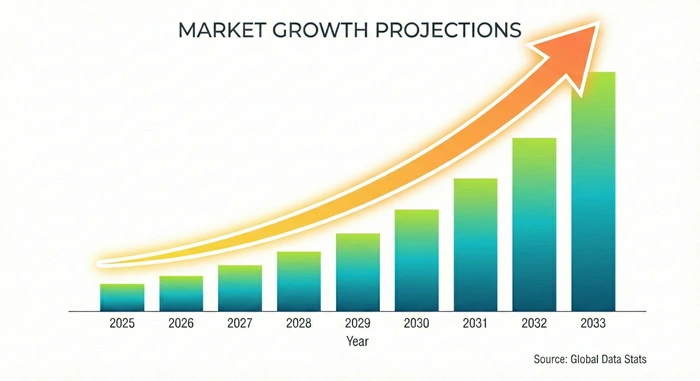
The biopolymer films market outlook remains exceptionally positive as manufacturers invest substantially in second-generation materials addressing performance limitations and cost constraints restricting broader adoption. Advanced PLA formulations incorporating crystallization promoters, impact modifiers, and chain extenders achieve heat resistance exceeding 120 degrees Celsius enabling hot-fill applications, retort processing, and automotive interior components previously impossible with standard grades. PHA materials demonstrating marine biodegradability and superior flexibility capture specialty applications including agricultural mulch films, water-soluble packaging, and medical applications where complete decomposition essential. Starch-based blends incorporating thermoplastic starch with petroleum-based or bio-based polymers balance cost, performance, and biodegradability characteristics creating economically viable solutions for high-volume commodity applications including shopping bags and food service items. Cellulose-derived materials including cellulose acetate and regenerated cellulose films demonstrate excellent barrier properties and compostability addressing food packaging requirements for moisture protection and oxygen exclusion.
Investment trends within the biopolymer films market reflect growing confidence in long-term demand fundamentals as chemical companies, packaging converters, and private equity investors expand production capacity targeting packaging, agriculture, and specialty applications. NatureWorks, Total Corbion PLA, BASF, and Novamont maintain robust capital expenditure programs commissioning large-scale production facilities achieving economies of scale reducing costs approaching conventional plastic parity. Acquisition activity intensifies as multinational corporations pursue market entry through strategic acquisitions of biopolymer producers, converting companies, and technology platforms accessing intellectual property, customer relationships, and manufacturing capabilities. Vertical integration strategies connecting feedstock production with polymer manufacturing and film conversion create streamlined supply chains reducing costs and improving quality consistency. These favorable dynamics position the market for sustained expansion exceeding general plastics industry growth rates through 2033.
Expert Speaks
-
Ramani Narayan, University Distinguished Professor at Michigan State University and bioplastics expert, emphasized industry transformation: "The transition to bio-based and biodegradable polymers represents a fundamental shift in materials science. Advanced formulations combining renewable feedstocks with enhanced performance characteristics are enabling applications previously dominated by conventional plastics while addressing end-of-life environmental concerns through controlled biodegradation pathways."
-
Marc Verbruggen, Former CEO of NatureWorks and independent consultant, highlighted PBAT developments: "PBAT represents the cheapest and easiest way to make biodegradable packaging today. When blended with PLA or starch-based materials, it provides the flexibility and processing characteristics needed for film applications while maintaining compostability certifications essential for regulatory compliance and consumer acceptance across global markets."
-
François de Bie, CEO of Futerro and Galactic, articulated strategic vision: "PLA technology continues advancing through next-generation production processes, improved material formulations, and expanded application development. Our integrated approach from fermentation through polymerization and converting enables optimized solutions addressing specific customer requirements for barrier properties, mechanical performance, and sustainability credentials demanded by leading brands."
Key Report Takeaways
-
Asia Pacific dominates the biopolymer films market with commanding share exceeding 38%, driven by concentrated manufacturing across China, Japan, and India where government plastic bans, agriculture applications, and e-commerce packaging consume substantial PLA and starch-based film volumes supported by domestic production capabilities and sustainability initiatives.
-
Europe emerges as a significant regional market with substantial share approaching 32% through 2033, propelled by stringent Single-Use Plastics Directive implementation, circular economy policies, and advanced waste management infrastructure supporting compostable packaging adoption across food service, retail, and consumer goods sectors.
-
PLA films represent the dominant material segment accounting for approximately 41% market share due to superior clarity, processability, and established production infrastructure where corn-derived lactic acid fermentation creates commercially viable biopolymer offering mechanical properties approaching conventional polyester films.
-
Food packaging applications constitute the largest end-use segment capturing substantial market share driven by flexible packaging pouches, fresh produce bags, bakery films, and modified atmosphere packaging requiring barrier properties, sealability, and composability where brand differentiation and regulatory compliance justify premium pricing.
-
Blown film extrusion maintains process technology leadership representing dominant manufacturing share due to versatility producing various film thicknesses, widths, and mechanical property profiles suitable for shopping bags, agricultural films, and industrial packaging where established equipment infrastructure supports adoption.
-
Agricultural mulch films exhibit exceptional growth potential with anticipated CAGR exceeding 12.8% through 2033, attributed to biodegradable alternatives replacing conventional polyethylene mulch films eliminating costly removal and disposal while preventing soil contamination supporting sustainable farming practices and government subsidy programs.
Market Scope
| Report Coverage Details | |
|---|---|
| Market Size by 2033 | USD 13.75 Billion |
| Market Size by 2025 | USD 6.08 Billion |
| Market Size by 2026 | USD 6.59 Billion |
| Market Growth Rate from 2026 to 2033 | CAGR of 10.88% |
| Dominating Region | Asia Pacific |
| Fastest Growing Region | Europe |
| Base Year | 2025 |
| Forecast Period | 2026 to 2033 |
| Segments Covered | Material Type, Manufacturing Process, Application, End-Use, Region |
| Regions Covered | North America, Europe, Asia Pacific, Latin America, Middle East & Africa |
Market Dynamics
Drivers Impact Analysis
Environmental Regulations and Consumer Demand Accelerate Biopolymer Films Adoption Across Packaging Applications
| Impact Factor | (≈) % Impact on CAGR Forecast | Geographic Relevance | Impact Timeline |
|---|---|---|---|
| Plastic Waste Regulations | +3.2% | Europe, Asia Pacific | 2026-2033 |
| Corporate Sustainability Goals | +2.6% | Global Markets | 2026-2033 |
| Consumer Environmental Awareness | +2.1% | Developed Markets | 2026-2033 |
| Feedstock Availability | +1.5% | Agricultural Regions | 2026-2033 |
The biopolymer films market benefits substantially from accelerating plastic waste regulations where jurisdictions implement comprehensive restrictions on single-use plastics creating immediate substitution opportunities for compostable alternatives. European Union Single-Use Plastics Directive effective July 2021 prohibits specific plastic products including oxo-degradable plastics, expanded polystyrene food containers, and plastic bags unless meeting compostability standards defined by EN 13432 certification. Member states including France, Italy, and Spain implement extended producer responsibility schemes requiring packaging producers fund collection and recycling infrastructure creating economic incentives for materials with established end-of-life pathways including industrial composting. California Assembly Bill 1162 restricting single-use plastic foodware and SB 54 mandating 25% plastic reduction by 2032 establish precedents adopted by other progressive states creating fragmented regulatory landscape favoring flexible materials including biodegradable films meeting multiple jurisdictional requirements simultaneously.
Consumer environmental consciousness drives biopolymer films market expansion as surveys consistently demonstrate willingness to pay premium pricing for sustainable packaging particularly among younger demographics and educated urban populations. Nielsen research indicates 73% of global consumers willing to change consumption habits reducing environmental impact while 81% feel strongly companies should help improve environment creating market pull for brands demonstrating sustainability leadership. Social media amplification of plastic pollution imagery including ocean debris, landfill accumulation, and wildlife impacts creates reputational risks for brands using conventional plastics while rewarding early adopters of compostable alternatives. Retail purchasing behavior demonstrates preference for products featuring sustainability claims, eco-certifications, and transparent environmental messaging validating brand investments in biopolymer packaging. These consumer dynamics create sustained demand signals throughout supply chains as manufacturers, retailers, and converters respond to market preferences transcending regulatory compliance mandates throughout forecast period.
Restraints Impact Analysis
Cost Premiums and Performance Limitations Challenge Market Penetration Across Price-Sensitive Applications
| Restraint Factor | (≈) % Impact on CAGR Forecast | Geographic Relevance | Impact Timeline |
|---|---|---|---|
| Higher Material Costs | -2.3% | Global Markets | 2026-2033 |
| Limited Heat Resistance | -1.6% | Hot-Fill Applications | 2026-2031 |
| Composting Infrastructure Gaps | -1.4% | Developing Markets | 2026-2033 |
| Barrier Property Limitations | -1.1% | Extended Shelf-Life Packaging | 2026-2030 |
The biopolymer films market faces growth constraints from substantial cost premiums where materials command prices 30-60% higher than commodity polyethylene or polypropylene films creating budget obstacles across high-volume applications. Retailers and consumer goods companies pursuing sustainability commitments encounter financial trade-offs where biopolymer packaging increases costs 5-15% across product portfolios potentially eroding profit margins or requiring consumer price increases. Commodity applications including agricultural mulch films, industrial stretch wrap, and construction vapor barriers demonstrate extreme price sensitivity where farmers and contractors prioritize lowest-cost solutions unless regulatory mandates or subsidy programs offset premium pricing. Raw material costs including corn-derived dextrose, sugarcane-based feedstocks, and specialty additives fluctuate with agricultural commodity markets creating pricing volatility complicating long-term supply agreements and budget planning.
Performance limitations constrain biopolymer films market penetration across demanding applications requiring superior barrier properties, heat resistance, or mechanical strength. PLA films demonstrate limited heat resistance with glass transition temperatures around 55-60 degrees Celsius preventing use in hot-fill beverages, retort processing, or applications requiring boiling water contact without specialty formulations adding costs. Oxygen and moisture barrier properties of standard biopolymer films generally inferior to conventional materials including EVOH, PVDC, or metallized structures limiting utility for oxygen-sensitive products including fresh meat, snack foods, or pharmaceuticals requiring extended shelf life. Mechanical property limitations including brittleness, low impact strength, and limited puncture resistance restrict adoption across heavy-duty applications including industrial bags, stretch films, or construction materials. These performance constraints limit addressable market opportunities restricting biopolymer films to applications emphasizing environmental benefits over maximum functional performance throughout forecast period.
Opportunities Impact Analysis
Agricultural Applications and E-Commerce Packaging Create Substantial Growth Avenues Beyond Traditional Food Packaging
| Opportunity Factor | (≈) % Impact on CAGR Forecast | Geographic Relevance | Impact Timeline |
|---|---|---|---|
| Biodegradable Mulch Films | +2.4% | Asia Pacific, Europe | 2026-2033 |
| E-Commerce Packaging | +1.9% | Global Markets | 2026-2033 |
| Compostable Food Service | +1.6% | Urban Markets | 2027-2033 |
| Medical and Pharmaceutical | +1.2% | Developed Markets | 2027-2033 |
The biopolymer films market stands to capture substantial value from agricultural mulch film applications where biodegradable alternatives eliminate costly removal and disposal of conventional polyethylene films while preventing soil contamination. Traditional plastic mulch films used extensively across vegetable production, berry cultivation, and specialty crops require end-of-season collection, disposal, and potential soil contamination from degraded plastic fragments. Biodegradable mulch films manufactured from starch-PLA blends, PBAT formulations, or cellulose-based materials demonstrate complete soil incorporation within 6-24 months through microbial decomposition meeting ASTM D6400 or EN 17033 biodegradation standards. Government subsidy programs across Europe, Asia, and progressive US states offset 30-50% of material cost premiums encouraging farmer adoption particularly organic operations pursuing sustainable practices. Agronomic benefits including soil moisture retention, weed suppression, and crop yield improvements justify investments where labor costs for conventional film removal exceed premium pricing for biodegradable alternatives.
E-commerce packaging expansion presents exceptional growth opportunities for the biopolymer films market as online retail proliferation creates demand for sustainable mailer bags, bubble wrap alternatives, and product cushioning materials. Global e-commerce sales projected to exceed 6 trillion dollars annually by 2028 generate substantial packaging waste streams where consumer unboxing experiences increasingly scrutinized for environmental impacts. Compostable mailer bags manufactured from biopolymer films enable direct disposal in municipal composting programs or home composting bins eliminating guilt associated with conventional plastic packaging. Major e-commerce platforms including Amazon, Alibaba, and regional players announce sustainable packaging commitments creating procurement opportunities for suppliers offering certified compostable solutions meeting TUV Austria OK Compost HOME or BPI certification requirements. Subscription box services, direct-to-consumer brands, and specialty retailers emphasize sustainability differentiating offerings through eco-friendly packaging validating premium positioning. These diverse opportunities expand addressable markets beyond traditional food packaging applications throughout forecast period.
Segment Analysis
By Material Type: PLA (Polylactic Acid) Films
Renewable Feedstocks and Established Manufacturing Infrastructure Sustain PLA Segment Market Leadership Position
PLA films command the largest share within the biopolymer films market, accounting for approximately 41% of global revenue with continued expansion projected at robust CAGR of 11.2% through 2033. This material category encompasses films manufactured from lactic acid-derived polymers produced through corn starch fermentation, sugarcane processing, or cellulose conversion creating thermoplastic materials demonstrating optical clarity, printability, and mechanical properties approaching conventional polyester films. The biopolymer films market benefits from PLA's established production infrastructure where NatureWorks, Total Corbion PLA, and emerging producers operate commercial-scale facilities achieving economies of scale reducing costs toward conventional plastic parity. Processing versatility enables blown film extrusion, cast film production, and thermoforming applications across diverse end-uses including food packaging, agriculture, and consumer products. Biodegradability certifications including ASTM D6400, EN 13432, and various national standards validate end-of-life claims supporting marketing messaging and regulatory compliance.
Asia Pacific leads PLA film consumption within the market, driven by concentrated production capacity across China, Thailand, and emerging Southeast Asian facilities supporting domestic packaging demand and export markets. Chinese producers including BBCA Biochemical, Zhejiang Hisun Biomaterials, and Jiangsu Yaxing expand PLA production capacity targeting domestic e-commerce packaging, agricultural mulch, and food service applications where government plastic bans create immediate substitution demand. Thai operations leveraging sugarcane-based feedstocks including Total Corbion PLA facility produce specialty grades serving premium packaging applications across Asia Pacific and Western export markets. Leading film converters including Taghleef Industries, Futamura Chemical, and regional specialists operate converting lines optimized for PLA processing addressing customers requiring specific thicknesses, surface treatments, and performance characteristics. North American and European PLA film applications emphasize premium segments including organic food packaging, cosmetics, and specialty retail where brand positioning and consumer willingness to pay justify material cost premiums throughout forecast period.
By Application: Food Packaging
Retail Sustainability Mandates and Brand Differentiation Position Food Packaging as Dominant Application Category
Food packaging applications represent the largest segment within the biopolymer films market, capturing substantial market share driven by flexible packaging pouches, fresh produce bags, bakery films, and modified atmosphere packaging. This sector encompasses diverse packaging formats including stand-up pouches, flow-wrap films, lidding films, and over-wrap materials protecting food products while communicating brand values and sustainability commitments. The biopolymer films market benefits from food packaging segment's volume opportunities where global flexible packaging consumption exceeds 25 million metric tons annually with sustainable alternatives capturing growing market share. Regulatory drivers including composability mandates for food-contact materials, single-use plastic restrictions, and extended producer responsibility schemes create compliance requirements favoring certified biodegradable films. Consumer purchasing behavior demonstrates preference for foods packaged in environmentally responsible materials particularly organic products, premium brands, and categories emphasizing natural ingredients creating brand alignment opportunities.
Europe and North America lead food packaging biopolymer film adoption within the market, driven by stringent regulations, advanced composting infrastructure, and established organic food sectors. European food retailers including supermarket chains, convenience stores, and specialty grocers transition produce departments from conventional plastic bags to compostable biopolymer alternatives meeting Single-Use Plastics Directive requirements. Fresh produce applications including salad greens, herbs, mushrooms, and organic vegetables utilize breathable biopolymer films maintaining product quality while enabling composting with food waste eliminating sorting requirements. Bakery products including bread bags, pastry packaging, and specialty items adopt printed biopolymer films communicating artisan quality and environmental responsibility. North American organic food sector projected to exceed 80 billion dollars annually specifies sustainable packaging materials including biopolymer films aligning with USDA Organic certification requirements and consumer expectations. Leading food brands including Danone, Nestle Waters, and specialty producers pilot biopolymer packaging initiatives creating demonstration effects accelerating broader industry adoption throughout forecast period.
Regional Insights
Asia Pacific
Manufacturing Scale and Government Initiatives Establish Regional Dominance in Biopolymer Films Production and Consumption
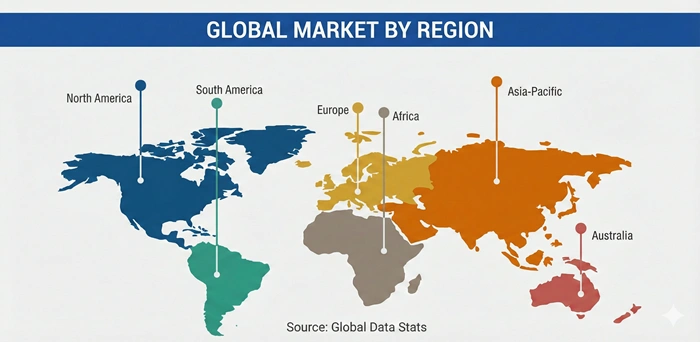
Asia Pacific commands the biopolymer films market with dominant share exceeding 38%, driven by concentrated production capacity across China, Japan, and India where domestic consumption, agricultural applications, and export manufacturing consume substantial PLA and starch-based film volumes. China alone accounts for over 45% of Asia Pacific market share with integrated production spanning feedstock cultivation through polymer manufacturing and film converting operations. Government initiatives including National Sword plastic import restrictions, single-use plastic bans in major cities, and 14th Five-Year Plan sustainability targets accelerate domestic biopolymer adoption across packaging and agricultural sectors. Japan demonstrates technology leadership through advanced PLA formulations, high-barrier coatings, and specialty applications where companies including Mitsubishi Chemical, Toray, and Unitika pioneer next-generation biodegradable films. India represents fastest-growing market within region driven by plastic waste management rules, agricultural mulch film adoption, and expanding e-commerce sector creating diverse application opportunities.
Regional manufacturers maintain vertically integrated operations controlling costs and ensuring quality consistency critical for commodity film applications. Chinese producers including Kingfa, BBCA Biochemical, and Cofco Biochemical operate large-scale PBAT and PLA production facilities serving domestic converters and international customers. Leading film converters including Taghleef Industries, Biogreen, and regional specialists invest in specialized equipment handling biopolymer processing requirements including precise temperature control, optimized die designs, and downstream treatment systems. Agricultural applications particularly biodegradable mulch films demonstrate strong growth across China, Japan, and India where government subsidy programs offset cost premiums encouraging farmer adoption preventing soil contamination from conventional plastic films. E-commerce packaging boom across Asia Pacific region driven by Alibaba, JD.com, and regional platforms creates substantial demand for compostable mailer bags, bubble wrap alternatives, and void-fill materials. The region's market dominance continues strengthening through 2033 as production capacity expansion, technology advancement, and regulatory support create self-reinforcing dynamics supporting continued leadership position.
Europe
Regulatory Leadership and Circular Economy Infrastructure Position Region as Innovation Hub and Premium Market
Europe represents the fastest-growing regional biopolymer films market with projected CAGR of 11.4% through 2033, propelled by stringent Single-Use Plastics Directive implementation, advanced composting infrastructure, and corporate sustainability leadership. The region demonstrates regulatory cohesion through EU-wide policies establishing consistent frameworks for plastic restrictions, compostability certifications, and extended producer responsibility schemes creating predictable market conditions supporting long-term investments. Germany, France, Italy, and Netherlands lead adoption through national legislation exceeding EU minimum requirements, municipal composting programs accepting certified biopolymer films, and consumer environmental consciousness driving purchasing behavior. Advanced waste management infrastructure including industrial composting facilities, anaerobic digestion plants, and organic waste collection systems create viable end-of-life pathways validating biodegradability claims and enabling circular material flows.
European biopolymer films market benefits from established industry leadership where companies including Novamont, BASF, Biome Bioplastics, and FKuR Kunststoff maintain technology development, production capacity, and market presence. Italian producer Novamont pioneers Mater-Bi starch-based formulations demonstrating biodegradability across diverse environments including soil, marine, and composting conditions enabling applications from shopping bags to agricultural mulch films. German specialty producer FKuR develops bio-based and biodegradable compounds serving converting customers requiring specific performance characteristics, regulatory certifications, and technical support. Food service sector transformation across major European cities implementing single-use plastic bans drives substantial demand for compostable films, bags, and packaging materials where restaurants, cafes, and delivery services transition from conventional plastics. Retail sector leadership through supermarket chains including Carrefour, Tesco, and Rewe establishing sustainable packaging targets creates procurement opportunities for biopolymer film suppliers meeting certification requirements and volume commitments. These favorable dynamics position Europe as premium market and innovation hub throughout forecast period.
Top Key Players
-
NatureWorks LLC (United States)
-
BASF SE (Germany)
-
Novamont SpA (Italy)
-
Total Corbion PLA (Netherlands)
-
Danimer Scientific (United States)
-
Biome Bioplastics (United Kingdom)
-
Taghleef Industries (United Arab Emirates)
-
Futamura Chemical Co. Ltd. (Japan)
-
Mitsubishi Chemical Corporation (Japan)
-
Toray Industries Inc. (Japan)
-
Braskem (Brazil)
-
FKuR Kunststoff GmbH (Germany)
-
BioBag International (Norway)
-
Kingfa Science & Technology Co. Ltd. (China)
-
BBCA Biochemical Corporation (China)
Recent Developments
-
NatureWorks (2021): Launched new Ingeo PLA-based film with enhanced barrier properties improving moisture and oxygen protection for food packaging applications, addressing previous performance limitations and expanding addressable markets where shelf-life requirements previously restricted PLA adoption, demonstrating continued innovation leadership in bio-based polymer solutions.
-
BioBag International (2022): Announced significant production capacity expansion increasing manufacturing capabilities to meet growing global demand for certified compostable films across retail, food service, and agricultural applications, reflecting confidence in long-term market growth and positioning company to serve expanding customer base across multiple geographic regions.
-
Organix Solutions (2023): Secured major long-term supply contract with large international food packaging company providing biopolymer films for fresh produce, bakery products, and specialty food applications, validating commercial viability of sustainable packaging solutions and demonstrating growing customer acceptance of bio-based alternatives across mainstream applications.
-
Taghleef Industries (2024): Invested substantially in research and development programs advancing new compostable film technologies including enhanced barrier coatings, improved heat-seal properties, and specialized surface treatments enabling broader application adoption, positioning company as technology leader addressing performance gaps limiting market penetration.
-
Kingfa Science & Technology (2025): Expanded PBAT film production capacity substantially consolidating position as global leader in biodegradable polyester films, while targeting export markets across Europe and North America where regulatory mandates and corporate sustainability commitments create strong demand for certified compostable materials meeting international certification standards.
Market Trends
Advanced Material Formulations and Certification Standards Reshape Industry Competitive Dynamics
The biopolymer films market experiences transformative trends centered on next-generation material formulations addressing performance limitations restricting broader application adoption. Polymer blending strategies combining PLA with PBAT, PHA, or starch-based materials create synergistic property profiles balancing mechanical strength, flexibility, heat resistance, and biodegradation rates optimized for specific applications. Nanotechnology incorporation including nanoclay platelets, zinc oxide nanoparticles, or cellulose nanocrystals improves barrier properties, mechanical performance, and thermal stability enabling PLA films to compete with conventional materials across demanding packaging applications. Coating technologies applying thin layers of PVOH, proteins, or bio-based waxes enhance moisture barriers, heat-seal strength, and printability expanding functional capabilities. Nucleating agents and crystallization promoters increase PLA heat resistance enabling hot-fill applications, thermoforming, and elevated-temperature use cases previously impossible with standard grades throughout forecast period.
Certification standardization trends reshape the biopolymer films market as international organizations harmonize testing protocols, labeling requirements, and composability definitions enabling global commerce and consumer confidence. ASTM D6400 and EN 13432 standards establishing biodegradation requirements, disintegration timelines, and ecotoxicity limits create internationally recognized frameworks validating environmental claims. TUV Austria certifications including OK Compost INDUSTRIAL, OK Compost HOME, and OK Biodegradable SOIL differentiate materials based on composting environment enabling appropriate end-of-life messaging. Biodegradable Products Institute certification programs in North America and similar schemes across Asia Pacific regions expand geographic coverage ensuring materials meeting performance requirements across diverse regulatory jurisdictions. Third-party verification through independent testing laboratories builds credibility addressing greenwashing concerns and enabling brands to communicate sustainability attributes with confidence supporting marketing initiatives and regulatory compliance throughout forecast period.
Segments Covered in the Report
By Material Type
-
PLA (Polylactic Acid) Films
-
PHA (Polyhydroxyalkanoate) Films
-
Starch-Based Films
-
PBAT (Polybutylene Adipate Terephthalate) Films
-
Cellulose-Based Films
-
Others
By Manufacturing Process
-
Blown Film Extrusion
-
Cast Film Extrusion
-
Solution Casting
-
Others
By Application
-
Food Packaging (Flexible Pouches, Fresh Produce Bags, Bakery Films)
-
Agricultural Films (Mulch Films, Greenhouse Films, Silage Films)
-
Shopping Bags and Carry Bags
-
Pharmaceutical and Medical Packaging
-
Personal Care and Cosmetics
-
Others
By End-Use
-
Food and Beverage Industry
-
Agriculture and Horticulture
-
Retail and Consumer Goods
-
Healthcare and Pharmaceuticals
-
Others
By Region
-
North America (United States, Canada, Mexico)
-
Europe (Germany, France, Italy, United Kingdom, Netherlands, Rest of Europe)
-
Asia Pacific (China, Japan, India, Thailand, South Korea, Rest of Asia Pacific)
-
Latin America (Brazil, Argentina, Rest of Latin America)
-
Middle East & Africa (UAE, Saudi Arabia, South Africa, Rest of MEA)
Frequently Asked Questions
Question 1: What is the projected size of the biopolymer films market by 2033?
Answer: The global biopolymer films market is expected to reach approximately USD 13.75 billion by 2033, growing from USD 6.59 billion in 2026. This substantial expansion reflects increasing adoption across food packaging, agricultural applications, and e-commerce sectors driven by plastic waste regulations and corporate sustainability commitments.
Question 2: Which region dominates the biopolymer films market currently?
Answer: Asia Pacific leads the biopolymer films market with over 38% share, driven by concentrated production capacity and consumption across China, Japan, and India. Leading manufacturers including Kingfa, BBCA Biochemical, Mitsubishi Chemical, and Taghleef Industries maintain dominant regional positions serving domestic and export markets.
Question 3: What are the primary drivers of biopolymer films market growth?
Answer: Key growth drivers include stringent plastic waste regulations implementing single-use plastic bans, corporate sustainability goals mandating sustainable packaging transitions, consumer environmental awareness preferring eco-friendly products, and renewable feedstock availability. These factors create sustained demand across packaging, agriculture, and specialty applications.
Question 4: Which material type holds the largest biopolymer films market share?
Answer: PLA films dominate the biopolymer films market with approximately 41% share due to established production infrastructure, superior clarity and printability, and proven biodegradability certifications. Performance characteristics and cost advantages justify market leadership compared to PHA, starch-based, and cellulose alternatives across diverse packaging applications.
Question 5: How do biopolymer films compare to conventional plastic films?
Answer: Biopolymer films offer biodegradability and compostability advantages reducing environmental persistence while derived from renewable feedstocks lowering carbon footprints. However, they typically cost 30-60% more than conventional plastics and may demonstrate lower heat resistance and barrier properties. Performance gaps narrow through advanced formulations enabling broader application adoption throughout forecast period.