
Biodefense Market Overview
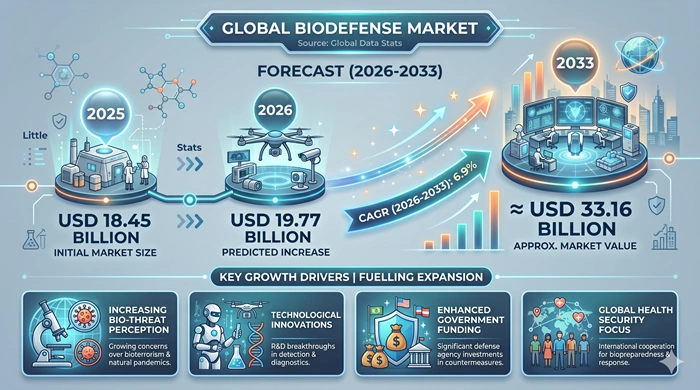
The global biodefense market size is valued at USD 18.45 billion in 2025 and is predicted to increase from USD 19.77 billion in 2026 to approximately USD 33.16 billion by 2033, growing at a CAGR of 6.9% from 2026 to 2033.
Biodefense encompasses the full spectrum of preparedness, protection, detection, and response capabilities that governments, military organizations, and civilian health systems develop and deploy to counter the threat of biological weapons, bioterrorism, and naturally occurring infectious disease outbreaks with pandemic potential. The market includes vaccines, medical countermeasures, antibiotics, antitoxins, diagnostics and biosurveillance technologies, personal protective equipment, and decontamination systems used to protect military personnel and civilian populations against deliberate or accidental biological threats. The biodefense market is supported by sustained government defense and public health procurement funding globally — with the United States, European Union member states, and a growing number of Asia-Pacific and Middle Eastern governments progressively expanding their national biodefense investment programs in response to growing biological threat complexity, post-pandemic preparedness awareness, and the escalating geopolitical tensions that are driving broader defense spending increases worldwide.
AI Impact on the Biodefense Industry
Artificial Intelligence Is Transforming the Biodefense Industry Through AI-Powered Biosurveillance and Outbreak Early Warning Systems, Machine Learning-Accelerated Vaccine and Medical Countermeasure Development, AI-Enhanced Pathogen Detection Diagnostics, and Predictive Threat Intelligence Platforms
Artificial intelligence is creating fundamentally new capabilities in the biodefense market by enabling faster, more comprehensive, and more actionable threat detection, countermeasure development, and response coordination than was achievable with traditional analytical approaches. AI-powered biosurveillance platforms — such as the ProMED and GPHIN disease intelligence systems and their more advanced AI-successors — continuously scan global news feeds, scientific publications, social media, healthcare data streams, and genomic surveillance databases to detect early signals of emerging biological threats and outbreak events, providing public health and defense officials with earlier warning of potential biodefense-relevant events than traditional passive surveillance approaches can deliver. The US Department of Defense's DARPA and BARDA programs are actively investing in AI-driven biosurveillance platforms and predictive threat modeling systems that can identify novel pathogen emergence, predict outbreak trajectory, and recommend countermeasure deployment strategies — representing the application of frontier AI capabilities to the biodefense market's most critical operational need for timely and actionable threat intelligence.
The most commercially transformative near-term AI application in the biodefense market is the acceleration of medical countermeasure development through AI-driven drug discovery, vaccine design, and clinical trial optimization. Traditional vaccine and therapeutic development timelines of 5–15 years represent a critical biodefense vulnerability — with naturally emerging pandemics and potential bioweapon attacks requiring countermeasure development timelines measured in months rather than years to be practically useful. AI-powered protein structure prediction tools, deep learning-based drug candidate screening platforms, and AI-optimized clinical trial design systems are collectively compressing MCM development timelines by identifying promising vaccine antigen candidates, predicting molecular binding affinity, and optimizing trial protocols — capabilities that were prominently demonstrated during the COVID-19 mRNA vaccine development program and are now being applied systematically across the broader biodefense MCM development pipeline to create a more agile and responsive national MCM development capability.
Growth Factors
Escalating Global Biological Threat Complexity Driving Government Biodefense Investment, Post-COVID Pandemic Preparedness Awareness, Growing Bioterrorism Risk Perception, and Advancing Biotechnology Enabling More Effective Medical Countermeasure Development Are the Core Growth Drivers
The post-COVID-19 pandemic period has produced a lasting and substantial upward shift in government biodefense investment priorities globally — as the extraordinary human, economic, and social costs of the COVID-19 pandemic demonstrated with devastating clarity the inadequacy of pre-existing pandemic preparedness and medical countermeasure development and deployment infrastructure. National governments across the developed and developing world have responded by substantially increasing their biodefense budget allocations for pandemic preparedness, MCM development and stockpiling, biosurveillance network strengthening, and laboratory infrastructure investment. The United States' BARDA budget, the EU's HERA (Health Emergency Preparedness and Response Authority) funding commitments, the UK's Health Security Agency investment, and similar national programs represent a broad-based and multi-year structural increase in government biodefense market spending that provides the procurement revenue foundation for sustained market growth through the forecast period.
The growing sophistication of biological threat actors — including state-sponsored biological weapons programs, the potential misuse of commercially available synthetic biology and gene editing tools by non-state actors, and the natural emergence of novel high-consequence pathogens — is creating a threat environment of increasing complexity that requires continuous investment in advanced biodefense capabilities to maintain an adequate security posture. The dual-use nature of modern biotechnology — where the same tools and knowledge that enable beneficial pharmaceutical and agricultural innovation can theoretically be misused to create enhanced biological threat agents — is particularly challenging for biodefense planners and is driving investment in detection systems, countermeasures, and response protocols that must be capable of addressing a broad and evolving threat spectrum. This multidimensional biological threat environment ensures sustained government investment in the biodefense market regardless of near-term budget cycle pressures, as the strategic national security implications of biodefense preparedness gaps are politically unacceptable.
Market Outlook
The Biodefense Market Is Positioned for Sustained Growth Through 2033 as Government Procurement Programs Expand, Next-Generation Platform Vaccine Technologies Mature, Biosurveillance Networks Strengthen, and Private Sector Biodefense Investment Grows Under Government Partnership Programs
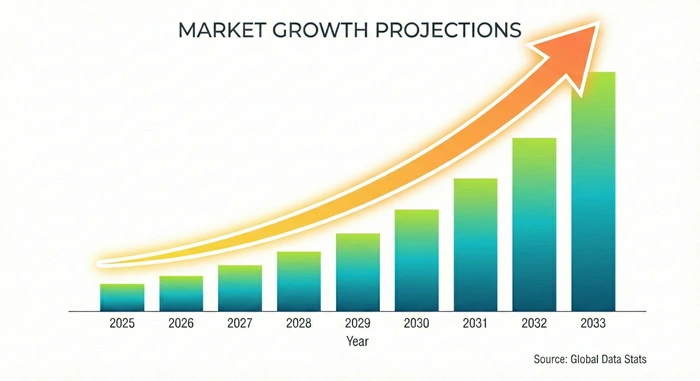
The commercial outlook for the biodefense market through 2033 is strongly positive, characterized by a combination of sustained government procurement funding, active investment in next-generation MCM platform development, and the progressive maturation of commercial biosurveillance and detection technology markets. The shift toward mRNA and other platform vaccine technologies — demonstrated by the extraordinary speed of COVID-19 mRNA vaccine development — is transforming the MCM development landscape by creating vaccine production platforms that can be rapidly reprogrammed to generate new vaccine candidates against novel pathogen threats within weeks rather than years. BARDA, NIH, and international equivalents are actively investing in maintaining mRNA and other platform technology manufacturing capacity on standby — creating long-term procurement contracts and development funding streams that support the commercial biodefense market's MCM development sector through the forecast period.
The growing private sector investment in biodefense-relevant commercial products and services — driven by the convergence of national security contracting opportunities with commercially valuable healthcare and public health applications — is progressively broadening the biodefense market's commercial ecosystem beyond its traditional dependence on government contract procurement. Companies developing AI-powered biosurveillance platforms, point-of-care bioagent detection systems, autonomous biosafety monitoring equipment, and rapid diagnostic technologies for potential biodefense-relevant pathogens are increasingly finding commercial value in both defense and civilian healthcare channels — creating a dual-use commercial model that improves the financial sustainability of biodefense technology development by diversifying revenue beyond government contract-only business models.
Expert Speaks
-
Robert Davis, CEO, Moderna — "The extraordinary experience of COVID-19 mRNA vaccine development demonstrated that platform vaccine technologies are transformative for the biodefense market — enabling a speed of countermeasure development against novel biological threats that was simply not achievable with conventional vaccine manufacturing approaches, and Moderna is actively investing in mRNA-based countermeasures for multiple high-priority biodefense-relevant pathogens including pandemic influenza, Nipah virus, and other Category A bioterrorism agents. The convergence of mRNA platform technology, AI-powered antigen design, and scalable lipid nanoparticle manufacturing is creating a new generation of biodefense preparedness capability that will significantly improve the nation's ability to rapidly generate and deploy effective vaccines against both anticipated and emerging biological threats."
-
Albert Bourla, CEO, Pfizer — "Government investment in biodefense preparedness and medical countermeasure development represents one of the most important public health and national security expenditures that nations make — and the private sector's ability to deliver on biodefense commitments depends critically on the sustained long-term procurement contracts and development funding mechanisms that BARDA and equivalent international agencies provide. Pfizer is deeply engaged in biodefense-relevant countermeasure development programs, and we believe the biodefense market's sustained growth trajectory reflects an appropriate and overdue strengthening of national biological threat preparedness that the COVID-19 experience made impossible for any government to deprioritize going forward."
-
Stephane Bancel, CEO, Moderna — "The lessons of COVID-19 have permanently changed the biodefense market's investment landscape — making clear that nations that invest in platform vaccine technologies, rapid manufacturing surge capacity, and robust biosurveillance infrastructure before a biological threat event are able to respond faster and save far more lives than those that attempt to build these capabilities reactively during an active emergency. Moderna's ongoing investments in pandemic influenza mRNA vaccines, respiratory syncytial virus countermeasures, and other public health threat MCMs are driven by both the commercial healthcare market opportunity and our deep commitment to ensuring that mRNA platform technology is available and ready to address whatever biological threat the world faces next."
Key Report Takeaways
-
North America leads the biodefense market, holding approximately 42.8% of global revenue in 2025, driven by the United States' role as the world's largest single government biodefense procurement market — through BARDA, DoD, and the Strategic National Stockpile program — the world's highest concentration of biodefense-specialized pharmaceutical and biotechnology companies, and the federal funding infrastructure that sustains both government-directed MCM development and commercial biodefense technology investment through long-term contracts and development agreements
-
Asia-Pacific is the fastest-growing regional market, projected to expand at a CAGR of over 7.8% through 2033, driven by growing government biodefense investment across China, India, Japan, South Korea, and Australia in response to increasing biological threat awareness, post-pandemic preparedness strengthening, regional biosecurity concerns, and the progressive development of domestic biotechnology and vaccine manufacturing capability that can support national biodefense MCM programs
-
Vaccines dominate the product type segment, accounting for approximately 35.6% of total product type revenue in 2025, driven by the central role of prophylactic vaccines as the most effective and operationally practical biodefense MCM for protecting military personnel and civilian populations against known biological warfare agents — including anthrax, smallpox, and plague — and the strong BARDA and international government procurement programs sustaining vaccine stockpiling and life-cycle management investment
-
Medical countermeasures represent the dominant application segment, contributing approximately 50% of total application revenue in 2025 and driven by the foundational role of drug countermeasures, vaccines, antitoxins, and diagnostics in the biodefense response framework — covering the full MCM spectrum from prophylaxis through post-exposure therapeutic treatment that governmental biodefense preparedness plans require
-
Military end-users are the dominant end-user segment, accounting for approximately 36.6% of total end-user revenue in 2025, driven by the military sector's unique operational biodefense requirements for protecting deployed personnel against biological warfare agent attacks — including offensive threat agent detection, individual protection systems, and rapid prophylactic and therapeutic MCM deployment capabilities
-
Nanotechnology-based biodefense systems are the fastest-growing technology segment in the biodefense market, projected to grow at a CAGR of approximately 9.5% through 2033 and expected to account for approximately 18% of total technology segment revenue by 2033, driven by nanotechnology's ability to enable targeted drug delivery, improved vaccine adjuvant systems, ultra-sensitive detection platforms, and novel antimicrobial mechanisms that are creating a new generation of more effective and precisely deployable biodefense MCMs
Market Scope
| Report Coverage | Details |
|---|---|
| Market Size by 2033 | USD 33.16 Billion |
| Market Size by 2025 | USD 18.45 Billion |
| Market Size by 2026 | USD 19.77 Billion |
| Market Growth Rate (2026–2033) | CAGR of 6.9% |
| Dominating Region | North America |
| Fastest Growing Region | Asia-Pacific |
| Base Year | 2025 |
| Forecast Period | 2026 – 2033 |
| Segments Covered | Product Type, Technology, Application, End User, Pathogen Type |
| Regions Covered | North America, Europe, Asia-Pacific, Latin America, Middle East & Africa |
Market Dynamics
Drivers Impact Analysis
Growing Global Biological Threat Complexity and Government Biodefense Budget Expansion, Post-COVID Pandemic Preparedness Investment, mRNA Platform Technology Enabling Rapid MCM Development, and Strengthening Biosurveillance Infrastructure Investment Are the Core Drivers of the Biodefense Market
| Driver | ≈ % Impact on CAGR Forecast | Geographic Relevance | Impact Timeline |
|---|---|---|---|
| Government biodefense budget expansion following post-COVID preparedness priority reset | ~30% | North America, Europe, Asia-Pacific | Short to Long-term |
| Growing biological threat complexity from state actors and synthetic biology misuse risk | ~25% | Global | Ongoing |
| mRNA and platform vaccine technology enabling rapid MCM development against novel threats | ~22% | North America, Europe | Short to Long-term |
| Biosurveillance network investment and AI-enhanced outbreak early warning development | ~15% | Global | Short to Long-term |
| International biodefense cooperation programs expanding procurement across allied nations | ~8% | North America, Europe, Asia-Pacific | Short to Medium-term |
The United States government represents the world's largest single national biodefense market — with BARDA alone maintaining a multi-billion dollar annual budget for MCM development contracts, advanced development and manufacturing procurement, and strategic national stockpile replenishment — and the political and national security imperative to maintain comprehensive biological threat preparedness ensures sustained above-baseline biodefense procurement funding regardless of broader fiscal pressures. Post-COVID legislative mandates including the PREVENT Pandemics Act have further institutionalized pandemic preparedness funding commitments that support the biodefense market's MCM development and stockpiling sectors, creating a more predictable and structurally embedded funding base for biodefense spending than existed prior to the pandemic. European Union investment through HERA and CEPI (Coalition for Epidemic Preparedness Innovations), combined with growing bilateral biodefense cooperation programs among NATO allies, is progressively expanding the international procurement base for biodefense products and technologies beyond the US-dominated historical market structure.
The progressive commercialization and cost reduction of advanced biotechnologies — including next-generation sequencing, CRISPR-based diagnostics, synthetic biology tools, and mRNA manufacturing infrastructure — is simultaneously enabling more sophisticated threat agent engineering and creating more powerful and rapidly deployable biodefense response capabilities. The dual-use challenge of advanced biotechnology — where the same tools that enable beneficial applications can be misused by hostile actors — is a structural driver of sustained biodefense investment, as defense planners must continuously upgrade detection, protection, and response capabilities to stay ahead of the evolving threat landscape. DARPA's Biological Technologies Office programs and NIH's NIAID biodefense research funding collectively represent multi-billion dollar annual investment streams that are driving the frontier of biodefense technology development and creating near-term commercial opportunities for companies capable of delivering next-generation biodefense capabilities to meet these advanced requirements.
Restraints Impact Analysis
Limited Commercial Non-Government Revenue Streams Concentrating Market Risk in Government Budget Cycles, Long MCM Development and Regulatory Approval Timelines, Dual-Use Regulatory Complexity, and Stockpile Management Challenges Are the Primary Restraints
| Restraint | ≈ % Impact on CAGR Forecast | Geographic Relevance | Impact Timeline |
|---|---|---|---|
| Heavy dependence on government procurement concentrating revenue risk in budget cycles | ~32% | Global | Ongoing |
| Long MCM development timelines and regulatory approval complexity | ~26% | Global | Ongoing |
| Dual-use regulatory restrictions limiting technology development and commercialization | ~22% | Global | Ongoing |
| Strategic national stockpile management challenges including product expiry and replenishment costs | ~13% | North America, Europe | Ongoing |
| Political and public perception challenges surrounding biodefense research and bioweapons programs | ~7% | Global | Ongoing |
The fundamental commercial structure of the biodefense market — in which government agencies are the primary or sole buyers for most biodefense-specific MCM products and technologies — creates significant revenue concentration risk tied to government budget cycles, political procurement priorities, and the unpredictable timing of threat assessment updates that can accelerate or defer specific MCM procurement programs. Defense budget pressures during fiscal tightening periods, changes in threat prioritization as geopolitical dynamics shift, and the uncertainty of contract renewal for long-term MCM stockpile management agreements collectively create revenue volatility risk for biodefense companies that pure commercial pharmaceutical and medical device companies do not face to the same degree. Companies that successfully develop dual-use biodefense technologies with both defense and commercial healthcare applications — such as broad-spectrum antiviral platforms with both biodefense and pandemic preparedness applications — reduce their government procurement concentration risk and create more stable and diversified revenue streams within the biodefense market.
The extraordinary regulatory rigor applied to MCM approval — reflecting the genuine safety and efficacy requirements for products intended to protect people from highly dangerous biological agents — creates development timelines and approval costs that are challenging for smaller biodefense companies that lack the capital and clinical development infrastructure of large pharmaceutical companies. The Animal Rule pathway for MCMs where human efficacy trials are ethically or practically impossible introduces additional regulatory complexity and scientific validation requirements beyond standard drug development — extending timelines and increasing development costs in ways that can make biodefense MCM development economically marginal for commercial companies without substantial government contract funding support.
Opportunities Impact Analysis
mRNA Platform Vaccine Scale-Up for Biodefense Preparedness, AI-Powered Biosurveillance and Diagnostic Platform Commercialization, International Biodefense Cooperation Program Expansion, and Civilian Healthcare Application Development for Dual-Use Biodefense Technologies Are the Most Compelling Opportunities
| Opportunity | ≈ % Impact on CAGR Forecast | Geographic Relevance | Impact Timeline |
|---|---|---|---|
| mRNA and platform vaccine technology scale-up for comprehensive biodefense MCM coverage | ~33% | North America, Europe | Short to Long-term |
| AI-powered biosurveillance and pathogen detection platform commercial development | ~25% | Global | Short to Long-term |
| International biodefense procurement cooperation expanding export market for US/EU companies | ~22% | Asia-Pacific, MEA, Latin America | Short to Medium-term |
| Dual-use technology development creating commercial healthcare applications for biodefense platforms | ~13% | North America, Europe | Medium to Long-term |
| Private sector investment in biodefense technology driven by national security startup incentives | ~7% | North America, Europe | Short to Medium-term |
The mRNA vaccine platform represents arguably the most commercially consequential technology development in the history of the biodefense market — transforming what was previously a years-long MCM development process into a platform where new vaccine candidates against novel or emerging biological threats can be designed, manufactured, and ready for initial clinical testing within weeks to months of threat identification. BARDA and international government agencies are actively investing in maintaining mRNA manufacturing capacity on standby and in pre-developing mRNA vaccine candidate libraries against high-priority biological threat agents — creating long-term government contract opportunities that are attracting investment from Moderna, Pfizer-BioNTech, and a growing number of specialized biodefense-focused biotechnology companies seeking to participate in this expanding procurement market. The demonstrated public health impact of mRNA vaccines and the strong political will to maintain pandemic preparedness creates a durable government commitment to mRNA platform investment within the biodefense market.
Biosurveillance technology — encompassing environmental monitoring for aerosolized threat agent release, wastewater epidemiology systems detecting pathogen-specific nucleic acids, genomic sequencing networks, and AI-powered outbreak intelligence platforms — represents a growing and increasingly commercially validated opportunity within the biodefense market. The COVID-19 pandemic dramatically demonstrated the commercial and public health value of wastewater-based epidemiology as an early-warning tool for community-level disease tracking, accelerating adoption of environmental biosurveillance technologies in both defense and public health settings globally. Companies including Biowatch Technologies, Battelle, and emerging AI biosurveillance startups are developing environmental monitoring platforms for both military base protection and civilian public health applications — creating a dual-channel commercial market that supports more sustainable and diversified biodefense surveillance technology businesses than defense-only procurement models could sustain.
Segment Analysis
By Product Type
Vaccines Dominate the Biodefense Market as the Most Strategically Important and Commercially Significant Product Category While Biothreat Detection Devices Emerge as the Fastest-Growing Segment
The vaccines segment is the dominant product type in the biodefense market, accounting for approximately 35.6% of total product type revenue in 2025 and projected to maintain a steady CAGR of 6.7% through 2033. Biodefense vaccines encompass anthrax vaccines (BioThrax and emerging next-generation alternatives), smallpox vaccines (JYNNEOS and ACAM2000), plague vaccines, and pandemic influenza preparedness vaccines — all of which are maintained in national stockpiles by the United States and other governments as the foundational prophylactic protection layer of their biodefense response frameworks. North America is the overwhelmingly dominant region for biodefense vaccine procurement revenue, where BARDA's multi-billion dollar stockpile maintenance programs and advanced development contracts sustain the world's largest and most diversified biodefense vaccine portfolio. Emergent BioSolutions (United States) is the market's largest dedicated biodefense vaccine company — manufacturing BioThrax anthrax vaccine under long-term BARDA contracts — while Bavarian Nordic (Denmark), Pfizer (United States), and Moderna (United States) are significant competitors within the broader biodefense vaccines segment of the biodefense market.
Europe is the second-largest regional market for biodefense vaccines, driven by NATO member nation biodefense stockpiling obligations, the European Union's HERA-funded MCM stockpiling programs, and growing national biodefense investment across the United Kingdom, Germany, France, and Nordic nations in response to elevated threat perception following geopolitical events. The biothreat detection devices segment — encompassing portable and fixed bioagent detection systems for anthrax, plague, botulinum toxin, and other biological warfare agents — is the fastest-growing product type in the biodefense market, projected to grow at a CAGR of approximately 8.2% through 2033, driven by growing deployment of environmental monitoring systems in airports, subway systems, government buildings, and military facilities, and by the development of new miniaturized, field-deployable multiplex detection platforms.
By End User
Military End Users Lead the Biodefense Market as the Dominant End-User Segment While Government Civilian Agencies Represent the Fastest-Growing Procurement Category
The military end-user segment is the dominant category in the biodefense market, accounting for approximately 36.6% of total end-user revenue in 2025 and projected to maintain a CAGR of 6.6% through 2033. Military biodefense requirements drive procurement of the full spectrum of biodefense products — individual protection equipment, vaccine stockpiles for force protection, field-deployable bioagent detection systems, therapeutic MCMs for post-exposure treatment, and decontamination systems — all specified to the stringent performance requirements of active operational deployment. North America is the largest military biodefense end-user market globally, where the United States Department of Defense's extensive biodefense programs, force protection mandates, and advanced MCM research investments under DARPA and the Chemical and Biological Defense Program sustain the world's largest single national military biodefense procurement. Key companies serving the military biodefense segment include Emergent BioSolutions, Battelle Memorial Institute, DynPort Vaccine Company (a CSRA company), and large defense contractors including Leidos, SAIC, and General Dynamics that provide biodefense system integration and laboratory services.
Government civilian agencies — including public health ministries, national health security agencies, homeland security departments, and civil defense organizations — are the fastest-growing end-user segment in the biodefense market, projected to grow at a CAGR of 7.4% through 2033, driven by the post-COVID pandemic preparedness investment wave that is channeling substantial new government spending into civilian biodefense infrastructure including public health laboratory capacity, national MCM stockpile expansion, biosurveillance network development, and emergency response planning. Asia-Pacific is the fastest-growing region for government civilian biodefense procurement, where China's Centers for Disease Control expansion, India's National Centre for Disease Control strengthening, and multiple Southeast Asian government health security program investments are creating rapidly growing demand for biodefense technologies and MCMs within the global biodefense market.
Regional Insights
North America
North America Leads the Global Biodefense Market With the Dominant Revenue Share, the World's Largest Government Biodefense Procurement Programs, the Highest Concentration of Biodefense-Specialized Companies, and the Most Advanced MCM Development Infrastructure
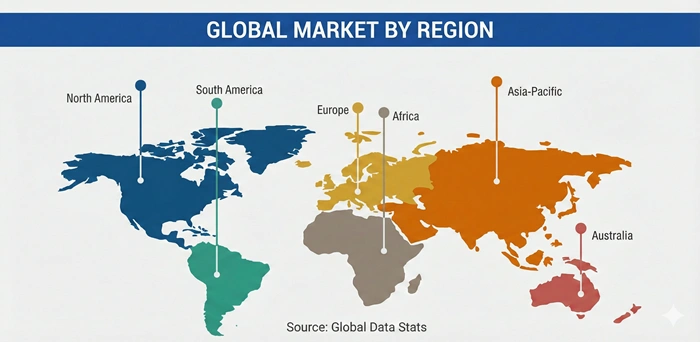
North America holds the dominant position in the global biodefense market, accounting for approximately 42.8% of total global revenue in 2025 and projected to maintain a CAGR of 6.5% through 2033. The United States is the overwhelmingly primary national biodefense market — with BARDA maintaining multi-billion dollar annual procurement and development contracts, the Strategic National Stockpile program requiring ongoing MCM replenishment and life-cycle management, and the Department of Defense's Chemical and Biological Defense Program representing the world's largest single national biodefense investment. Leading biodefense companies headquartered or with primary US government operations in North America — including Emergent BioSolutions, Bavarian Nordic Americas, SIGA Technologies, PharmAthene (now part of SIGA Technologies), and large defense and healthcare companies including Battelle and DynPort — collectively form the world's most commercially developed biodefense industry cluster. The United States' unique combination of the world's largest single-customer government procurement budget, the deepest pool of biodefense-specialized biotechnology talent, and the most comprehensive regulatory pathway infrastructure for MCM approval makes North America the center of gravity for global biodefense market commercial activity.
Canada is the second-largest North American biodefense market, with the National Research Council Canada, the Public Health Agency of Canada's National Microbiology Laboratory, and growing bilateral biodefense cooperation with the United States under shared Canada-US border security and public health frameworks supporting a growing domestic biodefense research and MCM development sector. Post-COVID, the Canadian government has substantially increased investment in domestic vaccine manufacturing capacity and pandemic preparedness infrastructure — creating new commercial biodefense market procurement opportunities for both domestic and international biodefense companies operating in the Canadian market.
Asia-Pacific
Asia-Pacific Is the Fastest-Growing Regional Biodefense Market, Driven by Rising Government Biodefense Investment, Growing Biological Threat Awareness, Domestic Vaccine Manufacturing Expansion, and Post-Pandemic Public Health Security Infrastructure Strengthening
Asia-Pacific is the most rapidly expanding regional market in the global biodefense landscape, projected to grow at a CAGR of 7.8% from 2026 to 2033. The region currently accounts for approximately 22.4% of global biodefense market revenue in 2025, with China, India, Japan, South Korea, and Australia as the primary national markets. China is the largest and fastest-growing national biodefense market within Asia-Pacific — driven by the People's Liberation Army's biodefense investment programs, China's CDC network expansion, growing domestic vaccine manufacturing industry development, and China's active investment in biosurveillance and pathogen detection capabilities for both military force protection and civilian public health emergency preparedness. Japan and South Korea have the most technically advanced civilian biodefense infrastructure in Asia-Pacific, with national health security agencies maintaining MCM stockpiles and advanced laboratory biosurveillance capabilities that are creating sustained institutional procurement of biodefense technologies within the regional biodefense market. Key companies active across Asia-Pacific include Serum Institute of India (vaccines), Bharat Biotech (India), and the regional distribution and technology transfer operations of global biodefense players including Pfizer, Moderna, and Bavarian Nordic.
Australia has established itself as an important biodefense market contributor within Asia-Pacific — with the Australian Government's Centre for Disease Control, the CSIRO's high-containment laboratory network, and growing bilateral biodefense cooperation agreements with the United States, United Kingdom, and regional partners creating a well-funded national biodefense preparedness program that supports consistent government procurement of biodefense MCMs, detection systems, and laboratory technologies within the regional biodefense market.
Top Key Players
-
Emergent BioSolutions Inc. (United States)
-
Bavarian Nordic A/S (Denmark)
-
SIGA Technologies Inc. (United States)
-
Ology Biosciences Inc. (United States)
-
PharmAthene / SIGA Technologies (United States)
-
Cleveland BioLabs Inc. (United States)
-
DynPort Vaccine Company LLC (United States)
-
Battelle Memorial Institute (United States)
-
Pfizer Inc. (United States)
-
Moderna Inc. (United States)
-
Leidos Holdings Inc. (United States)
-
Bharat Biotech International Ltd. (India)
Recent Developments
-
Emergent BioSolutions (2025) — Continued delivery of its BioThrax anthrax vaccine to the US Strategic National Stockpile under its multi-year BARDA procurement contract, while also advancing development of its next-generation anthrax vaccine candidates with improved dosing schedules and enhanced immunogenicity profiles — and announced organizational restructuring to sharpen focus on its core government biodefense MCM product portfolio following strategic review of non-core product lines within the biodefense market competitive landscape
-
Bavarian Nordic (2025) — Expanded production and delivery of its JYNNEOS smallpox and monkeypox vaccine to both US BARDA stockpile programs and international government customers across Europe and Asia-Pacific, reporting record revenue driven by the intersection of its smallpox biodefense stockpile contracts and the commercial opportunity created by the ongoing mpox/monkeypox public health emergency that demonstrated the dual-use value of its smallpox biodefense vaccine investment within the broader biodefense market
-
Moderna (2025) — Advanced multiple mRNA-based biodefense MCM development programs under BARDA contract funding, including mRNA vaccine candidates against pandemic influenza strains, Nipah virus, and other Category A/B biological threat agents — publicly reporting progress in its BARDA-funded pandemic influenza mRNA vaccine program that demonstrated strong immunogenicity in Phase I clinical trials and reinforcing its position as a leading technology partner for the US government's biodefense preparedness infrastructure
-
SIGA Technologies (2025) — Secured additional US government procurement orders for its TPOXX (tecovirimat) smallpox antiviral therapeutic under BARDA procurement contracts and Strategic National Stockpile replenishment programs, while also expanding international sales of TPOXX to government health agencies in European and Asian markets for both smallpox biodefense stockpiling and mpox therapeutic treatment applications — demonstrating the expanding dual-use commercial value of its core biodefense MCM product within the global biodefense market
-
Battelle Memorial Institute (2025) — Expanded its government biodefense research and laboratory services portfolio through new DoD and DHS contracts for biological threat detection system development, laboratory biosurveillance network support, and MCM evaluation services — while advancing commercial development of its autonomous biological detection and decontamination technology platforms that are being evaluated for deployment in high-security civilian venues, military installations, and critical infrastructure protection applications across the biodefense market
Market Trends
The Integration of mRNA Platform Technology Into Biodefense MCM Development Programs and the Rapid Expansion of AI-Powered Environmental Biosurveillance Networks Are the Two Most Commercially Significant Trends Defining the Biodefense Market's Near-Term Development Trajectory
The mRNA platform technology revolution — validated at unprecedented scale by the COVID-19 vaccine program — is fundamentally transforming the biodefense market's MCM development landscape by creating a programmable vaccine manufacturing platform that can be rapidly adapted to generate new vaccine candidates against novel biological threats in weeks rather than years. BARDA and international government biodefense agencies are actively investing in maintaining mRNA manufacturing capacity on strategic standby, building mRNA vaccine candidate libraries against priority biological threat agents, and funding clinical development of mRNA MCMs for anthrax, pandemic influenza, Nipah, and other high-consequence pathogens. This transition from slow, antigen-specific conventional vaccine manufacturing toward agile mRNA platform production represents the most consequential technology shift in the history of biodefense preparedness — reducing the vulnerability window between biological threat emergence and effective MCM availability, and creating sustained government investment in mRNA platform development that will generate commercial biodefense market revenue throughout the forecast period.
Autonomous and networked environmental biosurveillance — combining miniaturized biological aerosol collection systems, automated nucleic acid extraction and detection, AI-powered threat signature analysis, and real-time alert communication infrastructure — is progressing from laboratory concept toward practical deployment in high-value civilian and military facilities as technological maturity, cost reduction, and operational validation milestones are achieved. Programs like the US Department of Homeland Security's BioWatch program — despite its well-publicized operational challenges with its earlier generation technology — have created the institutional infrastructure, government procurement expertise, and technology development ecosystem for next-generation autonomous biosurveillance systems that are now being developed with dramatically improved detection speed, sensitivity, specificity, and operational autonomy. The commercial development of cost-effective, high-performance autonomous biosurveillance systems represents one of the most technically and commercially compelling product development frontiers in the biodefense market heading toward 2033.
Segments Covered in the Report
By Product Type:
-
Vaccines (Anthrax Vaccine, Smallpox Vaccine, Plague Vaccine, Pandemic Influenza Vaccine, Others)
-
Antibiotics and Antitoxins
-
Biothreat Detection Devices (Portable Detectors, Fixed Environmental Monitoring Systems, Laboratory Detection Equipment)
-
Medical Countermeasure (MCM) Therapeutics (Antivirals, Antitoxins, Radiation Countermeasures)
-
Personal Protective Equipment (PPE) and Decontamination Systems
-
Others
By Technology:
-
Genetic Engineering and Recombinant Technologies
-
Nanotechnology-Based Systems
-
UV Light and Physical Decontamination
-
Next-Generation Sequencing and Genomics
-
AI and Bioinformatics
-
Others
By Application:
-
Medical Countermeasures (MCM) Development and Stockpiling
-
Biosurveillance and Detection
-
Laboratory and Diagnostic Services
-
Force Protection and Individual Protection
-
Decontamination and Environmental Remediation
By End User:
-
Military and Defense Forces
-
Government Civilian Agencies (Public Health, Homeland Security, Civil Defense)
-
Hospitals and Healthcare Facilities
-
Research and Academic Institutions
-
Others
By Pathogen Type:
-
Anthrax (Bacillus anthracis)
-
Smallpox (Variola Virus)
-
Botulism (Clostridium botulinum)
-
Plague (Yersinia pestis)
-
Viral Hemorrhagic Fevers (Ebola, Marburg)
-
Radiation/Nuclear Combined Threats
-
Others
By Region:
-
North America (United States, Canada, Mexico)
-
Europe (Germany, United Kingdom, France, Russia, Rest of Europe)
-
Asia-Pacific (China, India, Japan, South Korea, Australia, Rest of Asia-Pacific)
-
Latin America (Brazil, Argentina, Rest of Latin America)
-
Middle East & Africa (UAE, Saudi Arabia, Israel, Rest of MEA)
Frequently Asked Questions
Question 1: What is the current size of the global biodefense market?
Answer: The global biodefense market is valued at USD 18.45 billion in 2025 and is projected to reach USD 33.16 billion by 2033. The market is growing at a CAGR of 6.9% from 2026 to 2033, driven by escalating global biological threat complexity, post-COVID pandemic preparedness investment, mRNA platform technology enabling rapid medical countermeasure development, and sustained government biodefense procurement funding through BARDA and equivalent international agencies.
Question 2: What are the main products in the biodefense market?
Answer: The biodefense market encompasses vaccines (anthrax, smallpox, pandemic influenza), antibiotics and antitoxins for post-exposure treatment, biothreat detection devices for environmental and point-of-care biological agent identification, therapeutic medical countermeasures including antivirals and radiation countermeasures, personal protective equipment, and decontamination systems — collectively covering the full preparedness-to-response spectrum of biological threat management. Vaccines are the dominant product type, accounting for approximately 35.6% of total product revenue in 2025, driven by their foundational role in military force protection and civilian population prophylaxis against known biowarfare agent threats.
Question 3: Which region leads the biodefense market?
Answer: North America leads the biodefense market, accounting for approximately 42.8% of global revenue in 2025, driven by the United States' role as the world's largest single national biodefense procurement market through BARDA, the Strategic National Stockpile program, and the Department of Defense's Chemical and Biological Defense Program — collectively creating the world's most commercially developed national biodefense industry ecosystem. Asia-Pacific is the fastest-growing regional market, projected to expand at a CAGR of 7.8% through 2033, driven by growing government biodefense investment, domestic vaccine manufacturing development, and post-pandemic health security infrastructure strengthening across China, India, Japan, and other regional markets.
Question 4: How is mRNA technology transforming the biodefense market?
Answer: mRNA platform technology is transforming the biodefense market by enabling vaccine candidates against novel biological threats to be designed, manufactured, and ready for initial clinical testing within weeks — dramatically compressing the development timelines that previously left governments vulnerable to new biological threats for years while conventional vaccines were developed and approved. BARDA and international government biodefense agencies are actively investing in mRNA platform capacity and pre-developed MCM libraries against priority biological threat agents, creating sustained commercial procurement opportunities that are attracting major pharmaceutical companies including Moderna and Pfizer to expand their biodefense market commitments.
Question 5: What are the main challenges in the biodefense market?
Answer: The primary commercial challenges in the biodefense market include heavy dependence on government procurement funding that concentrates revenue risk in budget cycles and political priorities, long MCM development timelines and complex regulatory approval pathways under the Animal Rule, and dual-use regulatory restrictions that limit technology development and commercialization flexibility. Strategic national stockpile management — including the ongoing costs of product replenishment as stockpiled MCMs reach expiry dates and the challenges of maintaining manufacturing readiness for low-volume but strategically critical products — represents a persistent operational and financial challenge for both government procurement agencies and biodefense company commercial planning within the biodefense market.