
Benzene Market Overview
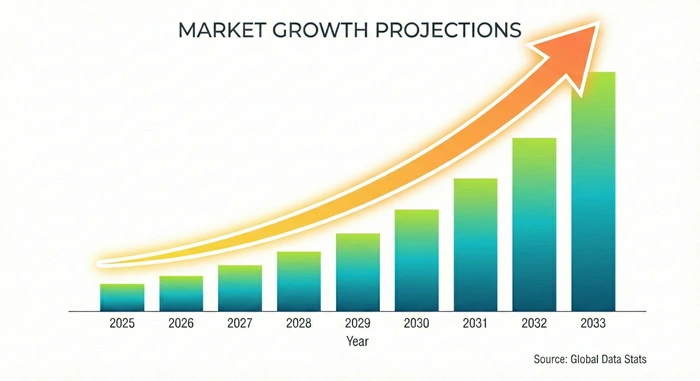
The global benzene market size is valued at USD 42.66 billion in 2025 and is predicted to increase from USD 45.11 billion in 2026 to approximately USD 67.10 billion by 2033, growing at a CAGR of 5.10% from 2026 to 2033.
The industry supplies one of the most essential aromatic hydrocarbons serving as a fundamental building block for countless petrochemical derivatives and synthetic materials. This clear, highly flammable liquid with characteristic sweet odor serves as a critical feedstock for producing styrene, phenol, cyclohexane, and other intermediate chemicals supporting plastics, resins, synthetic fibers, and rubber manufacturing. Refineries and petrochemical complexes worldwide produce millions of metric tons annually through catalytic reforming, steam cracking, and other extraction processes.
The sector represents vital infrastructure supporting global chemical manufacturing ecosystems where benzene derivatives enable production of everyday materials from plastic bottles to automotive components. Rising polymer consumption and expanding chemical manufacturing capacity drive steady demand for this aromatic compound. Industrial facilities invest substantially in production optimization and emission control technologies meeting increasingly stringent environmental regulations while maintaining supply reliability.

AI Impact on the Benzene Industry
Advanced Process Control and Predictive Maintenance Revolutionizing Production Efficiency
Artificial intelligence has begun transforming how refineries and petrochemical plants optimize benzene production processes, maximize yield, and predict equipment maintenance requirements. Modern AI systems continuously analyze real-time data from catalytic reforming units monitoring temperature profiles, pressure fluctuations, catalyst activity, and feedstock composition to identify optimal operating parameters maximizing benzene yield while minimizing energy consumption. These intelligent platforms help process engineers adjust reaction conditions, hydrogen circulation rates, and separation parameters automatically based on predictive models learning from historical production data across thousands of operating hours. Machine learning algorithms detect subtle process deviations indicating catalyst deactivation, heat exchanger fouling, or fractionation column inefficiencies enabling proactive interventions before performance degradation affects production volumes or product quality.
Predictive analytics powered by AI enables petrochemical facilities to forecast benzene demand patterns, optimize inventory management, and coordinate production scheduling across integrated refinery-petrochemical complexes. Neural networks analyze market pricing trends, downstream derivative demand, seasonal consumption patterns, and crude oil quality variations to recommend optimal production allocations between benzene and alternative aromatic compounds. These systems also monitor equipment health using vibration analysis, thermal imaging, and acoustic sensors predicting pump failures, compressor issues, and piping degradation weeks before catastrophic failures occur. Computer vision technologies inspect catalyst pellets identifying physical deterioration, coking buildup, and particle size distribution changes that indicate regeneration or replacement timing optimizing catalyst lifecycle management and production economics.
Growth Factors
Expanding Polymer Production and Automotive Industry Demand Fueling Market Expansion
The global plastics and polymer manufacturing sector creates fundamental demand for the benzene market as styrene production consumes approximately 50% of benzene volumes worldwide supporting polystyrene, ABS resins, synthetic rubber, and countless other polymer applications. Modern consumer lifestyles depend heavily on polystyrene packaging, insulation materials, appliance housings, and disposable products manufactured from styrene-based polymers. The packaging industry particularly drives robust styrene demand as e-commerce growth, food delivery services, and pharmaceutical logistics require expanded protective packaging solutions. ABS resin consumption continues growing across automotive interiors, electronic device housings, and consumer appliance components where the material's excellent impact resistance, surface finish, and processing characteristics justify its widespread adoption despite competition from alternative engineering plastics.
Automotive manufacturing expansion drives substantial benzene derivative consumption as vehicles incorporate increasing quantities of synthetic rubber tires, nylon components, polyester fabrics, and engineering plastics throughout their construction. Each passenger vehicle contains 50-60 kilograms of plastics and composites, many derived from benzene-based intermediates including styrene, phenol, and caprolactam. The automotive industry's shift toward electric vehicles accelerates demand for lightweight materials reducing vehicle weight to extend battery range, increasing plastic and composite content per vehicle. Synthetic rubber production for tires requires enormous benzene volumes converted to styrene-butadiene rubber providing the performance characteristics that natural rubber cannot match. Construction sector growth worldwide sustains phenol demand for producing polycarbonate glazing, phenolic resins for adhesives and coatings, and bisphenol A for epoxy systems used in flooring and protective coatings throughout buildings and infrastructure projects.
Market Outlook
Regional Production Dynamics and Sustainability Pressures Reshaping Industry Landscape
Asia Pacific solidifies its dominant position as both the largest production hub and fastest-growing consumption region, driven by massive petrochemical capacity expansions, growing polymer manufacturing, and substantial automotive production throughout China, India, and Southeast Asia. The region benefits from integrated refinery-petrochemical complexes producing benzene as byproduct from naphtha cracking and catalytic reforming operations supplying captive downstream units manufacturing styrene, phenol, and other derivatives. China alone accounts for over 40% of global benzene consumption as the country's dominant position in plastics manufacturing, textile production, and chemical processing creates enormous domestic demand. Government policies supporting petrochemical industry development, favorable energy pricing, and access to Middle Eastern crude oil supplies reinforce Asia Pacific's production advantages despite environmental compliance pressures intensifying across the region.
Environmental regulations increasingly influence production strategies and market dynamics as governments worldwide implement stricter emission standards, occupational exposure limits, and waste management requirements addressing benzene's carcinogenic properties. European Union REACH regulations, US EPA monitoring requirements, and emerging Asian environmental frameworks impose substantial compliance costs requiring investments in emission control equipment, workplace exposure monitoring, and environmental remediation programs. These regulatory pressures accelerate technology adoption including closed-loop systems, vapor recovery units, and advanced monitoring equipment minimizing benzene releases during production, storage, transportation, and handling operations. Sustainability initiatives also drive research into bio-based benzene alternatives and circular economy approaches recovering aromatics from plastic waste streams, though commercial viability remains limited compared to conventional petroleum-derived production meeting global demand scales.
Expert Speaks
-
Darren Woods, CEO of ExxonMobil – "Benzene and aromatic compounds remain essential building blocks supporting global chemical manufacturing and modern materials production. Our integrated refining and chemical operations optimize benzene yield while advancing emission reduction technologies and operational efficiency supporting both environmental performance and reliable supply for downstream customers."
-
Martin Brudermüller, CEO of BASF – "The petrochemical value chain built on aromatics like benzene underpins countless consumer products and industrial materials essential to modern economies. Strategic investments in production technology, feedstock flexibility, and downstream integration enable us to serve growing global demand while advancing sustainability through improved resource efficiency and closed-loop processes."
-
Vicki Hollub, CEO of Occidental Petroleum – "Integrated refinery operations producing benzene and other aromatics provide crucial feedstocks for chemical manufacturing while maximizing value from crude oil processing. Technology advancements in catalytic processes and separation techniques continue improving yields and energy efficiency across our petrochemical operations serving global markets."
Key Report Takeaways
-
Asia Pacific dominates the global benzene market with approximately 58% market share, powered by massive petrochemical production capacity, expanding polymer manufacturing, and substantial automotive industries across China, India, Japan, and South Korea driving both regional production leadership and consumption growth
-
Asia Pacific also represents the fastest-growing region with projected CAGR exceeding 5.9% through 2033, driven by continued industrialization, infrastructure development, automotive sector expansion, and substantial investments in integrated refinery-petrochemical complexes establishing production facilities serving domestic and export markets
-
Ethylbenzene production leads application segments capturing roughly 38% market share as styrene manufacturing consumes vast benzene volumes supporting polystyrene, ABS resins, synthetic rubber, and styrenic polymer production across packaging, construction, automotive, and consumer goods industries
-
Petrochemical end-use sector dominates consumption accounting for approximately 48% of market share as chemical manufacturers convert benzene into countless intermediate chemicals and polymer feedstocks supporting plastics, synthetic fibers, resins, and specialty chemical production
-
Catalytic reforming leads production processes holding about 55% market share thanks to widespread adoption in refineries producing high-octane gasoline while simultaneously generating benzene-rich reformate streams supplying petrochemical operations
-
Cyclohexane applications show strongest growth trajectory among derivative segments with highest projected CAGR approaching 5.7% as nylon production expansion drives caprolactam and adipic acid demand serving textile, automotive, and industrial applications requiring engineering plastics with superior mechanical properties
Market Scope
| Report Coverage | Details |
|---|---|
| Market Size by 2033 | USD 67.10 Billion |
| Market Size by 2025 | USD 42.66 Billion |
| Market Size by 2026 | USD 45.11 Billion |
| Market Growth Rate from 2026 to 2033 | CAGR of 5.10% |
| Dominating Region | Asia Pacific |
| Fastest Growing Region | Asia Pacific |
| Base Year | 2025 |
| Forecast Period | 2026 to 2033 |
| Segments Covered | Application, Grade, End-Use Industry, Production Process, Region |
| Regions Covered | North America, Europe, Asia Pacific, Latin America, Middle East & Africa |
Market Dynamics
Drivers Impact Analysis
Polymer Industry Growth and Derivative Demand Supporting Robust Market Expansion
| Driver | Impact on CAGR Forecast | Geographic Relevance | Impact Timeline |
|---|---|---|---|
| Expanding styrene and polystyrene production globally | ≈ 1.8% positive impact | Global, strongest in Asia Pacific | Immediate and long-term |
| Automotive industry growth and lightweighting trends | ≈ 1.4% positive impact | Global, particularly emerging markets | Immediate and long-term |
| Construction sector expansion requiring phenolic derivatives | ≈ 1.2% positive impact | Asia Pacific, Middle East, Latin America | Immediate |
| Nylon and synthetic fiber production growth | ≈ 0.9% positive impact | Global, concentrated in Asia | Medium to long-term |
Styrene production expansion creates sustained demand for the benzene market as approximately half of global benzene consumption feeds ethylbenzene plants converting aromatics into styrene monomer supporting enormous polystyrene and styrenic polymer industries. Polystyrene packaging materials serve food service, consumer electronics, medical devices, and countless other applications where lightweight, moisture-resistant, insulating properties justify widespread adoption. Expanded polystyrene insulation boards reduce building energy consumption helping meet increasingly stringent energy efficiency standards across residential and commercial construction. ABS resin production serving automotive interiors, appliance housings, and consumer products continues growing as manufacturers appreciate the material's excellent impact resistance, dimensional stability, and surface finish quality. Styrene-butadiene rubber production for vehicle tires requires substantial benzene volumes as synthetic rubber delivers performance characteristics that natural rubber cannot match under modern driving conditions and temperature extremes.
Automotive manufacturing growth across emerging markets drives benzene derivative consumption as rising middle-class populations in China, India, Southeast Asia, and Latin America purchase increasing vehicle volumes. Each passenger vehicle incorporates 50-60 kilograms of plastics, synthetic rubber, coatings, and composites derived from benzene-based intermediates. Electric vehicle production accelerates lightweight material adoption as automakers pursue weight reduction strategies extending battery range and improving performance efficiency. Nylon production for automotive components including air intake manifolds, fuel system parts, and structural elements requires cyclohexane derived from benzene catalytic hydrogenation. Interior fabrics, carpeting, and trunk liners utilize synthetic fibers manufactured from caprolactam requiring benzene as feedstock through cyclohexane conversion. Construction sector expansion worldwide sustains phenol demand for polycarbonate glazing, phenolic insulation boards, wood adhesives, and epoxy resin systems protecting concrete and steel infrastructure from corrosion and environmental degradation.
Restraints Impact Analysis
Environmental Regulations and Health Concerns Creating Market Development Challenges
| Restraint | Impact on CAGR Forecast | Geographic Relevance | Impact Timeline |
|---|---|---|---|
| Stringent environmental regulations and emission controls | ≈ 0.9% negative impact | Europe, North America, developed Asia | Immediate and long-term |
| Carcinogenic health risks and occupational exposure limits | ≈ 0.8% negative impact | Global | Immediate |
| Volatility in crude oil prices affecting production economics | ≈ 1.1% negative impact | Global | Short to medium-term |
| Competition from bio-based and alternative materials | ≈ 0.6% negative impact | Europe, North America | Medium to long-term |
Environmental regulations create substantial compliance costs and operational constraints for the benzene market as governments worldwide impose increasingly strict emission standards addressing air quality concerns and occupational health protection. Benzene represents one of the most hazardous air pollutants regulated by environmental agencies due to its known carcinogenic properties and contribution to ground-level ozone formation. Refineries and petrochemical plants must invest millions in emission control equipment including vapor recovery systems, flare minimization technologies, and leak detection and repair programs reducing fugitive emissions from equipment components. Storage terminals require expensive floating roof tanks, vapor collection systems, and secondary containment preventing benzene releases during transfer operations. Transportation regulations mandate dedicated equipment, specialized training, and rigorous safety protocols increasing logistics costs throughout the supply chain.
Occupational exposure concerns intensify regulatory scrutiny as benzene exposure even at low concentrations increases risks of leukemia and other blood disorders affecting workers throughout production, transportation, and end-use applications. OSHA workplace exposure limits requiring time-weighted average concentrations below 1 ppm mandate extensive personal protective equipment, engineering controls, and medical surveillance programs protecting employee health. These requirements increase operational costs while potentially limiting production flexibility when exposure monitoring indicates approaching regulatory thresholds. Public health advocacy groups pressure governments toward even stricter regulations potentially restricting benzene usage in consumer products and industrial applications where exposure risks exist. Several countries consider or implement policies phasing out benzene in certain applications encouraging substitution with less hazardous alternatives despite performance compromises or cost increases.
Opportunities Impact Analysis
Emerging Market Development and Technology Innovation Creating Growth Avenues
| Opportunity | Impact on CAGR Forecast | Geographic Relevance | Impact Timeline |
|---|---|---|---|
| Asia Pacific petrochemical capacity expansion | ≈ 1.6% positive impact | China, India, Southeast Asia, Middle East | Immediate and long-term |
| Advanced production technologies improving yield and efficiency | ≈ 1.0% positive impact | Global | Medium to long-term |
| Specialty chemical and high-performance polymer development | ≈ 0.9% positive impact | Developed markets initially | Medium to long-term |
| Circular economy and chemical recycling initiatives | ≈ 0.7% positive impact | Europe, North America, Japan | Medium-term |
Petrochemical capacity expansion throughout Asia Pacific and Middle East creates substantial opportunities for the benzene market as integrated refinery-petrochemical complexes establish world-scale production facilities serving regional and global markets. China continues building massive chemical parks housing multiple derivative plants consuming benzene for styrene, phenol, cyclohexane, and specialty chemical production serving the country's dominant manufacturing sectors. India pursues petroleum and petrochemical investment corridors attracting billions in foreign capital establishing integrated facilities converting crude oil and natural gas into chemicals and polymers supporting domestic industrialization. Southeast Asian countries including Indonesia, Vietnam, and Thailand develop petrochemical industries leveraging favorable demographics, growing manufacturing sectors, and strategic positions within global supply chains. Middle Eastern nations pursue downstream diversification converting abundant hydrocarbon resources into higher-value petrochemicals including aromatics production from refinery operations and gas-to-liquids facilities.
Advanced production technologies create efficiency improvements and cost advantages as catalyst innovations, process optimization, and digital controls increase benzene yields from existing facilities. Next-generation reforming catalysts featuring improved activity, selectivity, and stability enable higher aromatic yields while extending catalyst lifecycles reducing regeneration frequency and replacement costs. Membrane separation technologies supplement traditional distillation processes achieving higher purity products with lower energy consumption compared to conventional separation methods. Process intensification approaches integrating reaction and separation functions reduce capital costs and improve energy efficiency across new production facilities. These technological advances help producers maintain cost competitiveness despite rising environmental compliance expenses and energy costs affecting production economics throughout the chemical industry.
Segment Analysis
Ethylbenzene Application
Dominant Derivative Segment Serving Styrene Monomer Production and Polymer Manufacturing
Ethylbenzene production represents the largest application segment capturing approximately 38% of the benzene market share in 2025, expanding at 5.3% CAGR through the forecast period. This derivative serves almost exclusively as an intermediate for styrene monomer production through catalytic dehydrogenation, with styrene subsequently polymerized into polystyrene, ABS resins, SBR rubber, and other styrenic materials serving diverse end markets. Asia Pacific dominates ethylbenzene consumption as the region's massive polystyrene production capacity supports packaging industries, electronics manufacturing, and construction materials across China, Japan, South Korea, and Southeast Asia. China alone operates over 40% of global styrene production capacity driving enormous ethylbenzene demand from integrated petrochemical complexes converting benzene through ethylbenzene to styrene in multi-billion-dollar production chains. The packaging sector particularly drives regional growth as expanding middle-class populations, e-commerce logistics, and food delivery services require vast quantities of polystyrene foam and rigid packaging materials.
Major ethylbenzene and styrene producers including INEOS, Shell Chemicals, LyondellBasell, SABIC, and Asian giants like Sinopec and PetroChina operate world-scale integrated facilities converting benzene feedstock through efficient alkylation processes. These companies invest substantially in process technology optimizing ethylene consumption, maximizing conversion efficiency, and minimizing byproduct formation affecting economics throughout the production chain. Environmental considerations increasingly influence technology selection as producers adopt liquid-phase alkylation processes using zeolite catalysts replacing traditional aluminum chloride systems eliminating hazardous waste generation. The automotive industry indirectly drives significant ethylbenzene demand as ABS resins serve interior trim, instrument panels, and exterior components while SBR rubber production for tires requires styrene derived from ethylbenzene. Electronics manufacturing consumes polystyrene and ABS materials for computer housings, television cabinets, and countless consumer electronic devices produced throughout Asian manufacturing hubs.
Petrochemical End-Use Industry
Largest Consuming Sector Spanning Integrated Chemical Manufacturing Value Chains
Petrochemical applications dominate end-use consumption capturing approximately 48% market share in 2025, growing at 5.2% CAGR as chemical manufacturers convert benzene into countless intermediate chemicals, polymer feedstocks, and specialty products. This segment encompasses styrene production, phenol manufacturing, cyclohexane conversion, nitrobenzene synthesis, and alkylbenzene production serving detergent manufacturing and countless other applications throughout global chemical industries. North America and Europe maintain substantial petrochemical benzene consumption despite production shifting toward Asia Pacific, as established chemical complexes continue operating efficiently serving regional polymer, pharmaceutical, and specialty chemical manufacturers. The integrated nature of petrochemical production creates captive demand where refineries supply benzene to co-located chemical plants minimizing transportation costs and supply chain complexities while maximizing overall crude oil value realization.
Leading global petrochemical companies including Dow Chemical, BASF, Chevron Phillips Chemical, ExxonMobil Chemical, and Asian producers including Formosa Plastics and Mitsubishi Chemical operate extensive benzene derivative facilities producing thousands of downstream products. These corporations maintain vertically integrated operations controlling benzene supply through refining capabilities while operating derivative plants converting aromatics into styrene, phenol, cumene, and specialty chemicals. Technology licensing organizations including Lummus Technology, CB&I, and UOP provide process designs, catalysts, and technical support enabling efficient benzene conversion across diverse applications. The pharmaceutical industry represents a growing specialty application as benzene derivatives serve as starting materials and intermediates for countless active pharmaceutical ingredients including analgesics, antibiotics, and advanced oncology compounds. Agrochemical manufacturing utilizes benzene derivatives producing herbicides, insecticides, and plant growth regulators supporting global agricultural production.
Regional Insights
Asia Pacific
Commanding Market Leadership Through Massive Production Scale and Consumption Growth
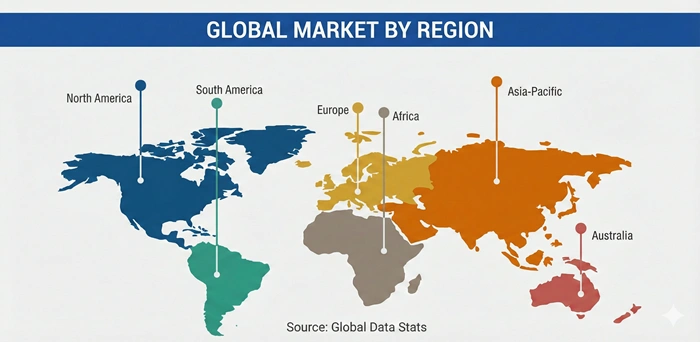
Asia Pacific dominates with approximately 58% of the global benzene market share, valued at over USD 24.7 billion in 2025 and growing at 5.9% CAGR through 2033. The region benefits from massive integrated refinery-petrochemical complexes, expanding polymer manufacturing capacity, and substantial automotive production throughout China, India, Japan, South Korea, and Southeast Asia. China represents the world's largest benzene producer and consumer accounting for over 40% of global demand as the country's dominant position in plastics manufacturing, textile production, automotive assembly, and construction activities creates enormous consumption across derivative applications. The country continues expanding petrochemical capacity through coastal industrial clusters integrating crude oil processing with downstream chemical production serving domestic markets while also exporting intermediate chemicals and finished products globally.
Major regional producers including Sinopec, PetroChina, China National Offshore Oil Corporation, along with multinational operations from ExxonMobil, Shell, and BASF establish world-scale production throughout Asia Pacific. These companies benefit from proximity to crude oil supplies via Middle Eastern imports, access to cost-competitive labor and engineering resources, and favorable government policies supporting chemical industry development. India emerges as a high-growth market as economic development, infrastructure investment, and manufacturing sector expansion drive benzene derivative demand across construction, automotive, textiles, and consumer goods industries. The country pursues petrochemical self-sufficiency through refinery expansions and new chemical complexes reducing dependence on imports while creating export capabilities. Southeast Asian nations including Thailand, Indonesia, Vietnam, and Malaysia attract substantial petrochemical investments leveraging strategic locations, growing domestic markets, and participation in regional manufacturing supply chains serving global consumer markets.
North America
Mature Market Emphasizing Operational Excellence and Derivative Integration
North America represents approximately 17% of global market share, growing at 4.5% CAGR as automotive manufacturing, construction activity, and specialty chemical production sustain benzene demand despite mature market conditions. The region emphasizes operational efficiency, environmental compliance, and technology leadership as established refineries and petrochemical complexes optimize benzene production from naphtha reforming and ethylene plant byproduct streams. United States dominates regional production and consumption through Gulf Coast integrated facilities converting domestically produced crude oil and natural gas liquids into benzene and derivative chemicals. The shale revolution providing abundant ethane feedstock for ethylene production generates substantial benzene byproducts from steam cracking operations supplementing traditional reforming sources.
Leading North American producers including ExxonMobil, Chevron Phillips Chemical, LyondellBasell, Shell Chemical, and Dow operate extensive benzene production and derivative manufacturing facilities throughout Gulf Coast and Midwest regions. These companies benefit from access to cost-competitive feedstocks, established infrastructure, proximity to end-use markets, and technology leadership in process optimization and emission control systems. The automotive industry concentrated in Michigan and Southern states drives benzene derivative consumption through plastics, synthetic rubber, and nylon component manufacturing. Construction sector activity throughout growing Southern and Western states sustains phenolic resin demand for adhesives, insulation, and protective coatings. Pharmaceutical and specialty chemical manufacturing centered in the Northeast and Puerto Rico utilizes benzene derivatives as starting materials for countless active ingredients and specialty products commanding premium pricing justifying domestic production despite higher operating costs compared to Asian facilities.
Top Key Players
-
Sinopec (China Petroleum & Chemical Corporation) (China)
-
ExxonMobil Corporation (United States)
-
Royal Dutch Shell plc (Netherlands)
-
China National Petroleum Corporation (CNPC) (China)
-
BP plc (United Kingdom)
-
SABIC (Saudi Basic Industries Corporation) (Saudi Arabia)
-
Chevron Phillips Chemical Company (United States)
-
LyondellBasell Industries (Netherlands/United States)
-
BASF SE (Germany)
-
Total Energies SE (France)
-
Formosa Plastics Corporation (Taiwan)
-
INEOS Group (United Kingdom)
-
Reliance Industries Limited (India)
-
JX Nippon Oil & Energy Corporation (Japan)
Recent Developments
-
Sinopec (2024) – Completed construction of USD 3.2 billion integrated refinery-petrochemical complex in Zhanjiang increasing benzene and aromatics production capacity by 1.2 million tons annually serving growing styrene and phenol derivative demand throughout Southern China and export markets
-
ExxonMobil (2025) – Announced advanced catalyst technology implementation across Gulf Coast aromatic complexes increasing benzene yield from reforming operations by 8% while reducing energy consumption and emissions supporting both economic performance and environmental objectives
-
Royal Dutch Shell (2024) – Completed acquisition of regional aromatics business strengthening integrated benzene production capabilities and derivative market positions across Asia Pacific serving styrene, phenol, and specialty chemical customers with enhanced supply reliability
-
SABIC (2025) – Inaugurated world-scale integrated crude oil-to-chemicals facility in Yanbu converting 400,000 barrels per day crude directly to chemicals including benzene and derivatives bypassing conventional fuel production maximizing petrochemical value realization
-
LyondellBasell (2024) – Invested USD 450 million expanding ethylbenzene and styrene production capacity at Channelview, Texas facility by 15% capturing growing North American polystyrene and ABS resin demand while improving operational efficiency and emission performance
Market Trends
Integrated Production Models and Sustainability Initiatives Reshaping Industry Operations
The benzene market experiences fundamental transformation toward integrated crude oil-to-chemicals configurations as producers maximize petrochemical output directly from crude processing bypassing traditional fuel production routes. These innovative facilities employ advanced catalytic processes converting crude oil fractions directly into ethylene, propylene, and aromatics including benzene achieving higher chemical yields and improved economics compared to conventional refineries producing fuels as primary products. Middle Eastern producers particularly pursue this strategy leveraging abundant low-cost crude oil resources and proximity to Asian chemical markets establishing massive integrated complexes exporting petrochemical products globally. Asian chemical companies adopt similar integration strategies within coastal industrial clusters where refineries, steam crackers, and derivative plants operate as coordinated systems optimizing overall value chain economics and minimizing intermediate transportation and storage requirements.
Sustainability pressures increasingly influence production strategies and investment decisions as stakeholders demand reduced carbon emissions, improved resource efficiency, and circular economy approaches throughout petrochemical value chains. Producers invest in energy efficiency improvements including waste heat recovery, advanced process controls, and equipment optimization reducing carbon intensity per ton of benzene produced. Some facilities explore hydrogen production from renewable electricity for use in catalytic reforming and hydrotreating operations reducing fossil fuel consumption. Chemical recycling technologies emerge enabling conversion of mixed plastic waste back into petrochemical feedstocks potentially including benzene and other aromatics, though commercial scale deployment remains limited compared to mechanical recycling approaches. These sustainability initiatives respond to customer demands, regulatory pressures, and corporate environmental commitments while requiring substantial capital investments with uncertain economic returns under current market conditions and policy frameworks.
Segments Covered in the Report
By Application
-
Ethylbenzene (Styrene Production)
-
Cumene (Phenol and Acetone Production)
-
Cyclohexane (Nylon Production)
-
Nitrobenzene (Aniline Production)
-
Alkylbenzene (Detergent Production)
-
Others
By Grade
-
Nitration Grade
-
Extraction Grade
-
Polymerization Grade
-
Cyclohexane Grade
By End-Use Industry
-
Petrochemicals
-
Pharmaceuticals
-
Automotive
-
Construction
-
Electronics
-
Textile
-
Others
By Production Process
-
Catalytic Reforming
-
Steam Cracking
-
Toluene Hydrodealkylation
-
Others
By Region
-
North America
-
Europe
-
Asia Pacific
-
Latin America
-
Middle East & Africa
Frequently Asked Questions
Question 1: What drives growth in the benzene market globally?
Answer: The benzene market experiences robust growth from expanding styrene production supporting polystyrene manufacturing and increasing automotive industry demand for synthetic materials. Petrochemical capacity expansion throughout Asia Pacific and growing construction activity worldwide also contribute significantly to sustained market growth.
Question 2: Which region leads the benzene market currently?
Answer: Asia Pacific dominates the benzene market with approximately 58% share backed by massive petrochemical production capacity and expanding polymer manufacturing. The region benefits from integrated refinery-petrochemical complexes throughout China, India, and Southeast Asia driving both production leadership and consumption growth.
Question 3: How do environmental regulations impact the benzene market?
Answer: Environmental regulations significantly influence the benzene market through stringent emission controls and occupational exposure limits addressing carcinogenic health risks. Producers invest heavily in vapor recovery systems, leak detection programs, and workplace safety measures increasing compliance costs while potentially limiting production flexibility.
Question 4: What applications consume the most benzene market production?
Answer: Ethylbenzene production leads the benzene market representing approximately 38% of consumption for styrene manufacturing supporting polystyrene and styrenic polymers. Cumene production for phenol and acetone, along with cyclohexane for nylon manufacturing, follow as major derivative applications consuming substantial benzene volumes.
Question 5: Which end-use sector shows fastest growth in the benzene market?
Answer: Petrochemical applications demonstrate strong growth in the benzene market as integrated chemical manufacturing expands throughout Asia Pacific regions. The sector benefits from rising polymer demand, specialty chemical production growth, and substantial investments in derivative capacity serving diverse industrial applications globally.