
Bearing Market Overview
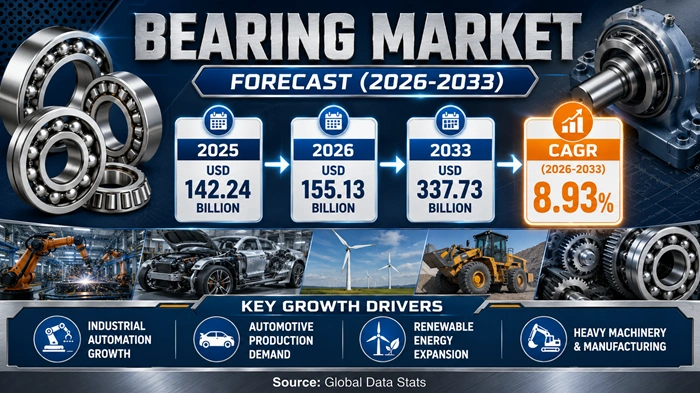
The global bearing market size is valued at USD 142.24 billion in 2025 and is predicted to increase from USD 155.13 billion in 2026 to approximately USD 337.73 billion by 2033, growing at a CAGR of 8.93% from 2026 to 2033. Bearings play a critical role in reducing friction between moving components across diverse machinery and equipment, spanning from automotive parts and farm equipment to aerospace systems and industrial machinery. The growing demand from automotive manufacturing, expanding infrastructure projects, and rising adoption of electric vehicles are collectively driving substantial growth in the bearing market worldwide.
AI Impact on the Bearing Industry
Predictive Maintenance and Real-Time Monitoring Systems Revolutionizing Bearing Performance and Operational Efficiency
Artificial intelligence is fundamentally transforming the bearing industry by enabling predictive maintenance capabilities and real-time performance monitoring through sensor-integrated smart bearings. The integration of AI-powered sensors within bearing systems allows manufacturers to monitor critical parameters including vibration patterns, temperature fluctuations, rotation speed, and load-carrying capacity, thereby preventing unexpected equipment failures and reducing costly downtime across industrial operations. The advent of the Industrial Internet of Things combined with AI algorithms enables continuous assessment of bearing conditions, allowing operators to predict potential faults before they occur and schedule maintenance activities proactively rather than reactively.
Machine learning algorithms are enhancing bearing design optimization by analyzing vast datasets from operational environments to improve material selection, lubrication performance, and structural configurations. Leading bearing manufacturers are leveraging AI-driven digital twins to simulate bearing performance under various operating conditions, accelerating product development cycles and ensuring superior quality standards before physical production commences. The digitalization of bearing monitoring systems through AI integration is creating new value propositions for end-users by reducing maintenance costs, extending service life, and improving overall equipment effectiveness across automotive, aerospace, and industrial automation sectors.
Growth Factors
Rising Electric Vehicle Adoption and Industrial Automation Driving Unprecedented Demand for High-Performance Bearing Solutions
The accelerating transition toward electric vehicles represents a significant growth catalyst for the bearing market, as each passenger automobile requires approximately 35 bearings, with advanced dual-clutch transmission systems necessitating additional specialized bearing components. The automotive electrification trend is driving demand for bearings with enhanced electrical insulation properties, reduced friction characteristics, and improved durability to support the unique operational requirements of electric drivetrains and continuously variable transmission systems. The global surge in vehicle production, particularly in emerging economies where more than one-third of the world population resides, is substantially boosting automotive bearing consumption across passenger cars and two-wheeler segments.
Industrial automation and the expansion of manufacturing capabilities worldwide are propelling bearing market growth as industries increasingly adopt robotics, precision machinery, and automated production systems. The renewable energy sector, particularly wind turbine installations, is generating substantial demand for large-scale high-capacity bearings designed to withstand extreme operational conditions while maintaining efficiency and reliability over extended service periods. The construction and mining equipment sectors are experiencing robust growth driven by infrastructure development initiatives across developing nations, creating sustained demand for heavy-duty roller bearings capable of supporting substantial radial and axial loads in challenging operational environments.
Market Outlook
Strategic Investments in Smart Manufacturing and Sustainable Solutions Positioning Industry for Long-Term Expansion
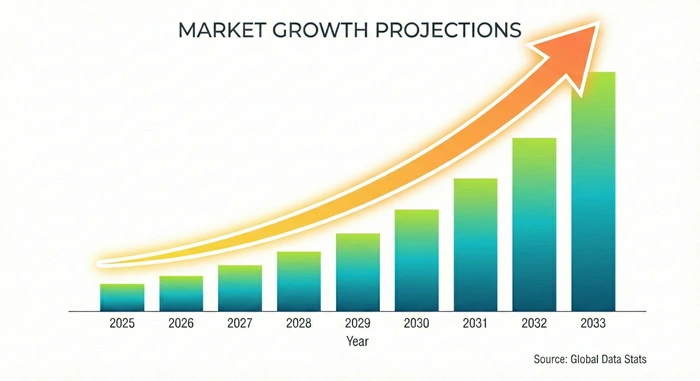
Between 2026 and 2033, the bearing market is anticipated to witness substantial expansion fueled by technological innovations in materials science, advanced manufacturing processes, and the integration of condition-monitoring technologies. Major bearing manufacturers including SKF, Schaeffler AG, NSK Ltd, NTN Corporation, and Timken Company are investing heavily in research and development to create specialized bearing solutions tailored for industry-specific applications such as aerospace support systems, medical imaging equipment, and high-speed industrial machinery. The startup ecosystem within the bearing industry is gaining momentum, with emerging companies like SpinDrive, Galaxy Bearings, and Menon Bearings developing innovative bearing technologies to address evolving end-user requirements across diverse industrial verticals.
The bearing market is experiencing a fundamental shift toward sustainability, with manufacturers developing energy-efficient bearing solutions that align with global environmental regulations and corporate carbon reduction objectives. The food processing and medical device industries are emerging as important growth segments, requiring specialized food-grade stainless steel bearings and miniature precision bearings that meet stringent safety, hygiene, and regulatory compliance standards. Strategic collaborations, mergers and acquisitions, and technology partnerships are becoming increasingly prevalent as companies seek to expand their geographical footprint, enhance product portfolios, and capture emerging opportunities in electric mobility, renewable energy, and industrial automation markets.
Expert Speaks
-
CEO of SKF Group stated that the integration of advanced sensor technologies and artificial intelligence in bearing systems is enabling customers to achieve unprecedented levels of operational efficiency and predictive maintenance capabilities, transforming traditional bearings into intelligent components that drive Industry 4.0 initiatives across manufacturing sectors globally.
-
President of Schaeffler Automotive Technologies emphasized that the transition to electric mobility presents significant opportunities for bearing innovation, with the company focusing on developing current-insulated bearings and hybrid ceramic bearing solutions specifically designed to address the unique challenges of electric powertrains and high-speed electric motor applications.
-
CEO of Timken Company highlighted that strategic acquisitions in precision motion control and bearing technology are essential for delivering integrated solutions that combine mechanical excellence with electronic control systems, positioning the company to serve evolving customer needs in aerospace, medical robotics, and industrial automation applications.
Key Report Takeaways
-
Asia Pacific region leads the global bearing market with the largest market share of approximately 41%, driven by rapid industrialization, extensive automotive manufacturing, and robust infrastructure development across China, India, and Japan
-
Asia Pacific is also the fastest-growing region with a projected CAGR of 9.66%, fueled by expanding vehicle production, strong aftermarket demand, and government investments in manufacturing and transportation infrastructure
-
Roller bearings segment dominates product categories with over 45% market share due to superior efficiency in reducing rotational friction and capability to sustain heavy radial loads and limited axial loads across industrial applications
-
Automotive application segment captures the largest market share at approximately 49%, attributed to high global vehicle production volumes, increasing adoption of technologically advanced automotive solutions, and growing electric vehicle manufacturing
-
Railway and aerospace segment represents the fastest-growing application category, driven by increasing travel activities, fleet modernization requirements, stringent environmental regulations, and rising demand for small single-aisle aircraft from emerging economies
-
Ball bearings segment is anticipated to witness substantial growth with a market share exceeding 30% and CAGR of approximately 9.2%, supported by widespread adoption in light vehicle manufacturing, reduced surface contact area minimizing friction, and compatibility with both axial and radial loading applications
Market Scope
| Report Coverage | Details |
|---|---|
| Market Size by 2033 | USD 337.73 Billion |
| Market Size by 2025 | USD 142.24 Billion |
| Market Size by 2026 | USD 155.13 Billion |
| Market Growth Rate from 2026 to 2033 | CAGR of 8.93% |
| Dominating Region | Asia Pacific |
| Fastest Growing Region | Asia Pacific |
| Base Year | 2025 |
| Forecast Period | 2026 to 2033 |
| Segments Covered | Product Type, Application, Material, Distribution Channel, Region |
| Regions Covered | North America, Europe, Asia Pacific, Latin America, Middle East & Africa |
Market Dynamics
Drivers Impact Analysis
Expanding Renewable Energy Infrastructure and Automotive Electrification Creating Substantial Opportunities
| Factor | (≈) % Impact on CAGR Forecast | Geographic Relevance | Impact Timeline |
|---|---|---|---|
| Electric Vehicle Adoption | 2.8% - 3.2% | Global, especially Asia Pacific and Europe | 2026 - 2033 |
| Industrial Automation Growth | 2.1% - 2.5% | Asia Pacific, North America | 2026 - 2033 |
| Renewable Energy Expansion | 1.5% - 1.8% | Europe, North America, Asia Pacific | 2027 - 2033 |
The accelerating global adoption of electric vehicles is fundamentally reshaping the bearing market landscape as automotive manufacturers require specialized bearing solutions with enhanced electrical insulation properties and reduced friction characteristics to optimize electric powertrain efficiency. Each electric vehicle incorporates numerous high-precision bearings throughout the motor assembly, transmission system, wheel hubs, and auxiliary components, with advanced dual-clutch transmission configurations necessitating three additional bearing units compared to conventional powertrains. The development of high-capacity bearings combined with improved lubrication technologies is enabling electric vehicles to achieve extended driving ranges and superior performance characteristics, thereby accelerating consumer acceptance and market penetration of electric mobility solutions.
Industrial automation initiatives across manufacturing sectors are generating sustained demand for precision bearings that support robotic systems, automated assembly lines, and high-speed production equipment requiring minimal maintenance and extended operational life. The food processing and beverage industries are increasingly investing in specialized food-grade stainless steel bearings that comply with stringent FDA regulations and sanitary requirements while delivering reliable power transmission and smooth operation in environments where contact with consumable products is anticipated. The medical device sector represents an emerging high-value application segment requiring miniature precision bearings for rotating assemblies in surgical instruments, diagnostic imaging equipment, and electronic medical tools, with specifications demanding minimal noise, low friction, high-speed capability, chemical resistance, and exceptional reliability throughout extended service periods.
Restraints Impact Analysis
Supply Chain Disruptions and Raw Material Price Volatility Challenging Market Stability
| Factor | (≈) % Impact on CAGR Forecast | Geographic Relevance | Impact Timeline |
|---|---|---|---|
| Fluctuating Raw Material Costs | -1.2% to -1.5% | Global | 2026 - 2028 |
| Bearing Clearance Issues | -0.8% to -1.0% | North America, Europe | 2026 - 2030 |
| High Maintenance Costs | -0.6% to -0.8% | Mature markets globally | 2026 - 2033 |
Bearing failures resulting from inadequate clearance specifications and insufficient lubrication practices represent significant challenges within the bearing market, with contamination and improper lubrication identified as primary causes of premature bearing failure rather than natural fatigue wear. Although only a small percentage of installed bearings experience catastrophic failure, approximately 50 million bearing units globally require replacement annually due to damage, contamination, or operational defects, creating substantial costs for end-users and maintenance service providers. The difficulty in identifying root causes of severe bearing failures, particularly when secondary damage obscures original failure mechanisms, complicates preventive maintenance strategies and can result in unexpected equipment downtime affecting production schedules and operational efficiency.
Fluctuating prices of raw materials including high-carbon chromium steel, stainless steel alloys, and specialty ceramics used in bearing manufacturing are creating cost pressures for bearing producers and affecting pricing strategies across global markets. The increasing complexity of electric vehicle drivetrains introduces new challenges related to electrical current damage in bearings, necessitating investment in specialized current-insulated bearing technologies and advanced coating systems to protect bearing components from electrical erosion. The higher initial acquisition costs and maintenance requirements associated with premium bearing solutions can deter adoption among cost-sensitive customers in developing markets, particularly within small and medium-sized enterprises operating with limited capital budgets.
Opportunities Impact Analysis
Wind Energy Sector and Smart Bearing Technologies Unlocking New Revenue Streams
| Factor | (≈) % Impact on CAGR Forecast | Geographic Relevance | Impact Timeline |
|---|---|---|---|
| Wind Turbine Bearing Demand | 1.8% - 2.2% | Europe, North America, Asia Pacific | 2026 - 2033 |
| Smart Bearing Integration | 1.5% - 1.9% | North America, Europe | 2027 - 2033 |
| Additive Manufacturing Adoption | 0.9% - 1.2% | North America, Europe | 2028 - 2033 |
The global expansion of wind energy infrastructure is creating substantial opportunities for bearing manufacturers to develop and supply large-scale specialized bearings for turbine propellers, main shafts, and generator assemblies. Wind turbine applications require customized bearing solutions capable of withstanding extreme environmental conditions, minimizing friction losses, reducing thermal expansion effects, and maximizing overall turbine efficiency and power generation output. Innovations in asymmetric spherical roller bearings are enhancing power transmission efficiency between wind turbine engines and propeller systems, contributing to improved renewable energy generation economics and accelerating global wind farm deployment.
The emergence of sensor-integrated smart bearings equipped with real-time monitoring capabilities represents a transformative opportunity for bearing manufacturers to deliver value-added solutions beyond traditional mechanical components. Smart bearing technologies enable continuous assessment of critical operational parameters including vibration signatures, temperature profiles, rotation speeds, and directional forces, allowing predictive maintenance algorithms to identify potential failures before they occur and optimize maintenance scheduling. Advancements in additive manufacturing technologies and novel bearing materials are enabling the production of complex bearing geometries, lightweight designs, and customized solutions tailored to specific application requirements in aerospace, medical devices, and high-performance industrial equipment.
Segment Analysis
Ball Bearing Segment
Growing Light Vehicle Production and Versatile Load Handling Capabilities Driving Segment Expansion
The ball bearing segment is experiencing robust growth within the global bearing market, anticipated to achieve a market share exceeding 30% with a compound annual growth rate of approximately 9.2% throughout the forecast period from 2026 to 2033. Ball bearings incorporate spherical rolling elements that create smaller surface contact areas compared to alternative bearing types, thereby significantly reducing friction and enabling efficient operation with both axial thrust loads and radial loading configurations. The automotive industry represents the primary growth driver for ball bearing adoption, particularly within light vehicle manufacturing where these components are extensively utilized in engine assemblies, driveshaft systems, wheel bearings, steering columns, and transmission mechanisms. The cost-effectiveness and compact design characteristics of ball bearing products make them particularly attractive for manufacturers serving cost-sensitive market segments, while their versatility in handling various loading conditions supports widespread application across two-wheeler and four-wheeler automobile categories.
Deep groove ball bearings are gaining significant traction due to their high operational speeds and exceptional efficiency in managing combined radial and axial load conditions, making them ideal for high-performance automotive and industrial applications. The digitalization trend within manufacturing sectors is accelerating ball bearing innovation, with manufacturers integrating wireless monitoring capabilities to assess lubrication levels and vibration patterns in real-time, enabling proactive maintenance interventions before performance degradation occurs. Asia Pacific region dominates ball bearing consumption, with major automotive manufacturing hubs in China, Japan, and India driving substantial volume growth as vehicle production scales to meet rising consumer demand from dense population centers. Leading ball bearing manufacturers including NSK Ltd, SKF Group, and Schaeffler AG are investing in advanced materials and precision manufacturing technologies to produce self-aligning ball bearings, angular contact ball bearings, and specialized variants serving aerospace, medical equipment, and precision machinery applications across global markets.
Roller Bearing Segment
Superior Load Capacity and Industrial Application Dominance Sustaining Market Leadership Position
The roller bearing segment commands the largest market share within the global bearing industry, accounting for over 45% of total market revenue in 2025 and maintaining dominance throughout the forecast period extending to 2033. Roller bearings utilize cylindrical rolling components that provide larger contact surface areas compared to ball bearings, enabling these products to efficiently reduce rotational friction while supporting substantial radial loads and limited axial loading requirements in heavy-duty industrial applications. The widespread adoption of roller bearings across capital equipment, automotive manufacturing, home appliances, and aerospace sectors stems from their superior load-carrying capabilities and reliability in demanding operational environments where equipment uptime and performance consistency are critical success factors. Industrial machinery applications including construction equipment, mining systems, and manufacturing production lines rely extensively on tapered roller bearings and cylindrical roller bearings to support heavy rotating assemblies operating under continuous high-load conditions.
The automotive sector represents a significant consumption category for roller bearings, with applications spanning truck hub units, car hub assemblies, belt tensioner systems, propeller shaft support bearings, and transmission components requiring durable bearing solutions capable of withstanding dynamic loading cycles. North America and Europe constitute mature markets for roller bearing products, with demand driven by rebounding motor vehicle production, healthy fixed investment environments, and increasing sales of high-value custom-built roller bearings utilized in wind turbines and heavy industrial machinery. Asia Pacific region exhibits the fastest growth trajectory for roller bearing adoption, propelled by rapid expansion of machinery manufacturing capabilities and robust automotive production infrastructure in China, India, and Southeast Asian nations. Key roller bearing manufacturers including Timken Company, JTEKT Corporation, NTN Corporation, and Schaeffler Group are developing advanced tapered roller bearing designs, split roller bearing configurations, and specialized high-speed roller bearings incorporating improved lubrication systems and enhanced seal technologies to extend service life and reduce maintenance requirements across diverse industrial applications.
Regional Insights
Asia Pacific
Dominant Market Position Driven by Manufacturing Excellence and Infrastructure Investment
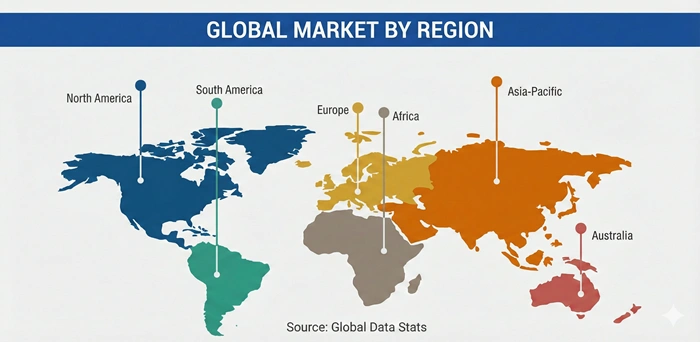
Asia Pacific region maintains the leading position in the global bearing market, capturing approximately 41% market share in 2025 valued at USD 58.26 billion, with projections indicating continued dominance throughout the forecast period extending to 2033. The region demonstrates the fastest growth trajectory globally, with an anticipated compound annual growth rate of 9.66% from 2026 to 2033, driven by rapid industrialization, extensive automotive manufacturing capacity, and robust government-supported infrastructure development initiatives across key economies. China and Japan emerge as primary growth engines within Asia Pacific, where bearing sales are experiencing substantial acceleration due to rapid expansion of machinery production, motor vehicle manufacturing facilities, and strong aftermarket demand for industrial equipment maintenance and automobile repair services. The concentration of over one-third of the global population in India and China is generating unprecedented demand for passenger vehicles and two-wheeler transportation, directly translating to massive consumption volumes of automotive bearings across wheel hub assemblies, transmission systems, and engine components.
India's construction and mining equipment sectors are displaying particularly robust growth patterns, supported by extensive infrastructure modernization projects, urban development programs, and expanding industrial manufacturing capabilities creating sustained demand for heavy-duty bearing solutions. China specifically accounts for approximately 53.75% of the Asia Pacific bearing market revenue share, attributable to rapid urbanization trends, comprehensive industrialization policies, and large-scale infrastructure construction initiatives driving robust bearing demand across construction machinery, automotive production facilities, and industrial equipment manufacturing. Leading bearing manufacturers including NSK Ltd, NTN Corporation, Harbin Bearing Manufacturing Co., and C&U Group maintain significant production capacity and market presence throughout Asia Pacific, serving both original equipment manufacturer requirements and expansive aftermarket distribution networks. The region benefits from competitive manufacturing cost structures, established supply chain infrastructure, and proximity to major end-user industries, positioning Asia Pacific as the epicenter of global bearing production and consumption throughout the forecast period.
North America
Technological Innovation and High-Value Bearing Solutions Driving Market Evolution
North America represents a strategically important bearing market characterized by technological sophistication, high-value product segments, and strong emphasis on innovation-driven bearing solutions. The region's bearing market growth is fundamentally supported by recovering motor vehicle production volumes, healthy fixed investment climate, and increasing adoption of sport utility vehicles and hatchback models requiring extensive bearing content per vehicle. An average hatchback automobile incorporates approximately 60 bearing units, with sedan and SUV configurations requiring even greater bearing quantities, creating substantial volume opportunities as North American vehicle sales experience positive growth trends. The region demonstrates particular strength in specialized bearing applications including large-diameter custom-built bearings utilized in wind turbine installations and heavy industrial machinery, reflecting advanced engineering capabilities and focus on renewable energy infrastructure development.
Stringent Environmental Protection Agency regulations and Corporate Average Fuel Economy standards are driving North American automotive manufacturers to prioritize lightweight vehicle designs, creating demand for advanced bearing solutions incorporating carbon fiber, polymer composites, and high-strength steel alloys that reduce vehicle weight while maintaining performance standards. The North American steel industry is actively developing specialized alloy formulations and advanced material processing techniques to produce bearings with high tensile strength, enhanced flexibility, and reduced mass characteristics tailored for next-generation automotive applications. Leading bearing manufacturers operating within North America including Timken Company, RBC Bearings Inc., and SKF Group maintain advanced research facilities and production operations serving aerospace, automotive, industrial automation, and renewable energy sectors with premium bearing products and integrated motion control solutions. The United States bearing market specifically benefits from mature industrial infrastructure, established original equipment manufacturer relationships, and sophisticated aftermarket distribution channels supporting both replacement demand and new equipment installations across diverse industrial verticals.
Top Key Players
-
SKF Group (Sweden)
-
Schaeffler AG (Germany)
-
Timken Company (United States)
-
NSK Ltd (Japan)
-
NTN Corporation (Japan)
-
JTEKT Corporation (Japan)
-
MinebeaMitsumi Inc. (Japan)
-
RBC Bearings Incorporated (United States)
-
Regal Rexnord Corporation (United States)
-
Harbin Bearing Manufacturing Co., Ltd. (China)
-
C&U Group Co., Ltd. (China)
-
Nachi-Fujikoshi Corp (Japan)
-
THK Co., Ltd. (Japan)
-
NBI Bearings Europe (Europe)
-
LYC Bearing Corporation (China)
Recent Developments
-
In September 2025, SKF Group announced a strategic partnership with Sieb & Meyer focused on collaborative development of advanced magnetic bearing technologies for industrial and renewable energy applications, combining SKF's bearing expertise with Sieb & Meyer's control system capabilities to deliver integrated motion control solutions
-
In August 2025, Schaeffler AG inaugurated a new state-of-the-art manufacturing facility in Shoolagiri, Tamil Nadu, India, dedicated to producing a comprehensive range of high-technology bearings serving automotive, industrial, and renewable energy sectors, significantly expanding the company's Asian production footprint and local market service capabilities
-
In November 2024, SKF developed innovative Infinium bearings utilizing advanced Laser Metal Deposition technology enabling repeated remanufacturing cycles for enhanced sustainability and circular economy performance, expanding the company's portfolio of environmentally responsible bearing solutions and strengthening market position in eco-conscious customer segments
-
In January 2025, Schaeffler introduced optimized current-insulated bearings from the J20G series featuring advanced Insutect A coating technology providing superior protection against electrical current damage in electric vehicle and industrial motor applications, strengthening presence in rail transportation, wind energy generation, and industrial automation sectors
-
In May 2025, NTN Corporation acquired strategic ownership stakes in La Tunisie Mecanique S.A. located in Tunisia, expanding the company's geographic manufacturing presence and market access within North African and Middle Eastern bearing markets while enhancing production capacity for automotive and industrial bearing products
Market Trends
Integration of Condition Monitoring Technologies and Sustainable Manufacturing Reshaping Industry Standards
The bearing industry is experiencing a fundamental transformation driven by the integration of sensor technologies and Internet of Things connectivity, creating intelligent bearing systems capable of real-time performance monitoring and predictive maintenance capabilities. Manufacturers are increasingly incorporating advanced sensor units directly within bearing assemblies to continuously monitor critical operational parameters including vibration signatures, temperature fluctuations, rotation speeds, axial movement, and load-carrying capacity, enabling early detection of potential failures and optimized maintenance scheduling. The emergence of smart bearing solutions represents a significant value proposition for industrial customers by substantially reducing costs associated with unexpected equipment downtime, minimizing maintenance labor requirements, and extending overall equipment effectiveness across manufacturing operations. Although smart bearing adoption remains in relatively early stages, major industry participants including SKF, Schaeffler, and NSK are expanding their intelligent bearing portfolios as end-users recognize the operational and financial benefits of condition-based maintenance strategies over traditional time-based replacement approaches.
Sustainability considerations are increasingly influencing bearing design, material selection, and manufacturing processes as industry stakeholders respond to environmental regulations and corporate carbon reduction commitments. Bearing manufacturers are developing energy-efficient products that minimize friction losses, reduce lubrication consumption, and incorporate recyclable materials to support circular economy principles throughout product lifecycles. The adoption of lightweight bearing solutions is accelerating within aerospace and automotive sectors, with manufacturers utilizing advanced materials including ceramic composites, titanium alloys, and polymer materials to reduce bearing mass while maintaining structural integrity, load capacity, and operational reliability. Strategic collaborations between bearing manufacturers and material science companies are fostering innovation in bearing coatings, surface treatments, and hybrid material combinations that enhance durability, reduce friction, and improve performance characteristics across demanding application environments.
Segments Covered in the Report
By Product Type
-
Ball Bearing
-
Deep Groove Ball Bearing
-
Angular Contact Ball Bearing
-
Self-Aligning Ball Bearing
-
Four-Point Contact Ball Bearing
-
Others
-
-
Roller Bearing
-
Tapered Roller Bearing
-
Cylindrical Roller Bearing
-
Spherical Roller Bearing
-
Split Roller Bearing
-
Others
-
-
Plain Bearing
-
Journal Plain Bearing
-
Linear Plain Bearing
-
Thrust Plain Bearing
-
-
Others
By Application
-
Automotive
-
Railway & Aerospace
-
Electrical
-
Mining & Construction
-
Agriculture
-
Power Transmission
-
Oil & Gas
-
Automotive Aftermarket
-
Others
By Material
-
Metal
-
Stainless Steel
-
Chrome Steel
-
Carbon Steel
-
Brass
-
Others
-
-
Ceramic
-
Plastic
By Distribution Channel
-
Original Equipment Manufacturer (OEM)
-
Aftermarket
By Region
-
North America
-
United States
-
Canada
-
-
Europe
-
Germany
-
United Kingdom
-
France
-
Italy
-
Russia
-
Rest of Europe
-
-
Asia Pacific
-
China
-
India
-
Japan
-
South Korea
-
Rest of Asia Pacific
-
-
Latin America
-
Brazil
-
Mexico
-
Rest of Latin America
-
-
Middle East & Africa
-
Saudi Arabia
-
United Arab Emirates
-
South Africa
-
Rest of Middle East & Africa
-
Frequently Asked Questions
Question 1: What is the bearing market size and growth forecast from 2026 to 2033?
Answer: The global bearing market is valued at USD 155.13 billion in 2026 and is projected to reach USD 337.73 billion by 2033, growing at a CAGR of 8.93% during the forecast period.
Question 2: Which region dominates the global bearing market and holds the largest market share?
Answer: Asia Pacific region dominates the bearing market with approximately 41% market share, driven by rapid industrialization, extensive automotive manufacturing, and strong infrastructure development across China, India, and Japan.
Question 3: What are the primary application segments driving bearing market growth and demand?
Answer: The automotive segment leads bearing market applications with approximately 49% market share, while the railway and aerospace segment represents the fastest-growing application category supported by fleet modernization and electric vehicle adoption.
Question 4: Which bearing product type accounts for the largest market share in the bearing industry?
Answer: Roller bearings command the largest market share exceeding 45%, attributed to superior load-carrying capabilities and widespread adoption across automotive, industrial machinery, and heavy equipment applications.
Question 5: How is electric vehicle adoption impacting the bearing market growth and technology innovation?
Answer: Electric vehicle adoption is significantly driving bearing market expansion, creating demand for specialized current-insulated bearings, reduced-friction designs, and high-precision components optimized for electric powertrain efficiency and performance requirements.