
Baby Cleaning Products Market Overview
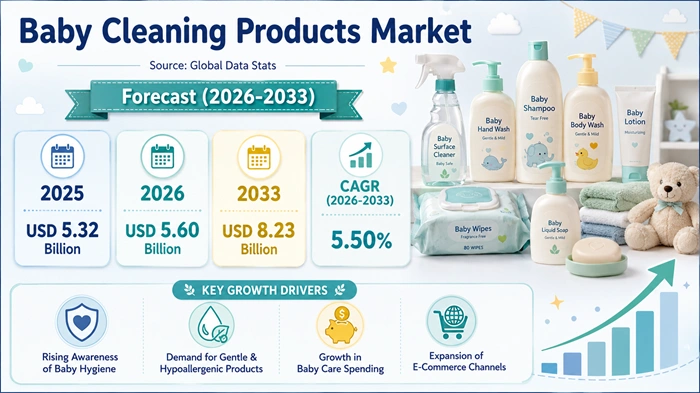
The global baby cleaning products market size is valued at USD 5.32 billion in 2025 and is predicted to increase from USD 5.60 billion in 2026 to approximately USD 8.23 billion by 2033, growing at a CAGR of 5.50% from 2026 to 2033. Parents worldwide are increasingly prioritizing their infants' health and hygiene, leading to greater adoption of specialized cleaning products designed specifically for babies' sensitive skin and delicate needs.
AI Impact on the Baby Cleaning Products Industry
Revolutionizing Product Development and Personalized Solutions for Infant Care
Artificial intelligence is transforming the baby cleaning products market by enabling manufacturers to develop smarter formulations and deliver personalized solutions tailored to individual infant needs. Machine learning algorithms analyze vast datasets containing information about skin sensitivity patterns, allergic reactions, and ingredient effectiveness to help researchers create safer and more effective cleaning products. AI-powered quality control systems monitor production lines in real-time, detecting potential contamination or formulation inconsistencies that could pose risks to babies' health. Natural language processing tools scan millions of customer reviews and feedback from parents to identify common concerns about product performance, packaging issues, or skin reactions, allowing companies to rapidly address problems and improve their offerings.
Predictive analytics powered by artificial intelligence help manufacturers forecast demand patterns based on birth rates, seasonal trends, and regional preferences, optimizing inventory management and reducing waste throughout supply chains. Smart packaging incorporating QR codes and augmented reality features connects parents directly to AI-driven virtual assistants that provide usage instructions, safety information, and personalized recommendations based on their baby's age and specific needs. Companies are deploying AI-enhanced research tools to screen thousands of natural ingredient combinations rapidly, identifying optimal formulations that maximize cleaning effectiveness while minimizing the risk of irritation or adverse reactions on delicate baby skin.
Growth Factors
Rising Health Awareness and Changing Consumer Preferences Drive Market Expansion
The baby cleaning products market is experiencing robust growth fueled by heightened parental awareness regarding infant hygiene and the critical importance of using specialized products rather than regular household cleaners. Modern parents are increasingly educated about the potential dangers of harsh chemicals, synthetic fragrances, and artificial additives commonly found in conventional cleaning products, driving demand for baby-specific alternatives formulated with gentler ingredients. Rising disposable incomes across developing nations enable more families to afford premium baby care products that offer enhanced safety profiles and superior performance compared to basic cleaning solutions. The growing prevalence of dual-income households creates demand for convenient, time-saving cleaning products that deliver effective results without requiring extensive preparation or complicated application procedures.
Global initiatives promoting infant health and sanitation practices significantly influence consumer behavior and purchasing patterns in the baby cleaning products market. Organizations like UNICEF and World Health Organization actively campaign for improved hygiene standards in childcare, raising awareness about the link between proper cleaning practices and reduced incidence of infections, rashes, and other health complications in infants. The explosion of social media and parenting blogs provides platforms where mothers share product recommendations, reviews, and experiences, creating powerful word-of-mouth marketing that influences purchasing decisions across broad demographic groups. Urbanization trends bring more families into cities where modern retail infrastructure and e-commerce platforms make baby cleaning products more accessible than ever before, particularly in regions that previously relied primarily on traditional cleaning methods.
Market Outlook
Sustainable Innovation and Premium Positioning Define Future Trajectory
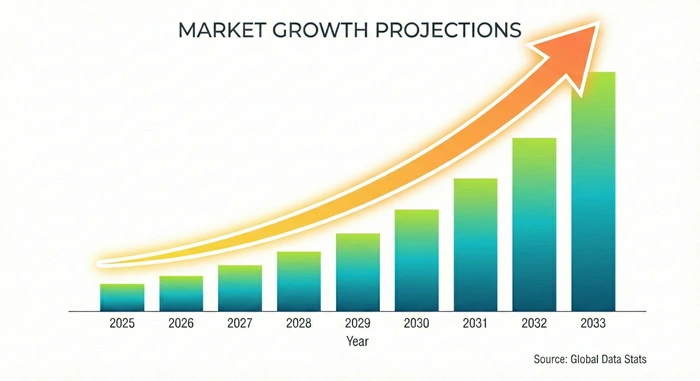
The baby cleaning products market is poised for sustained expansion through 2033 as manufacturers continue innovating to meet evolving consumer demands for safer, more sustainable, and higher-performing products. The shift toward organic and natural ingredients represents more than just a passing trend, reflecting fundamental changes in consumer values and expectations regarding product safety and environmental impact. Companies investing in plant-based formulations, biodegradable packaging, and eco-friendly manufacturing processes are gaining competitive advantages as environmentally conscious millennials and Gen-Z parents become the dominant consumer demographic. Regulatory environments worldwide are tightening safety standards for infant care products, pushing manufacturers to reformulate existing products and invest heavily in research and development to ensure compliance while maintaining product efficacy.
E-commerce channels are reshaping distribution strategies in the baby cleaning products market, with online sales projected to grow faster than traditional retail throughout the forecast period. Digital platforms offer parents unprecedented access to product information, ingredient transparency, customer reviews, and expert recommendations that inform purchasing decisions. Subscription-based models are gaining traction, allowing parents to receive regular shipments of frequently used items like laundry detergents and cleaning wipes without the hassle of repeated ordering. The premiumization trend continues accelerating as affluent consumers willingly pay higher prices for products that offer demonstrable benefits such as hypoallergenic formulations, dermatologist testing, organic certifications, and sustainable packaging that aligns with their values.
Expert Speaks
-
Jon Moeller, Chief Executive Officer of Procter & Gamble, emphasized that the company remains deeply committed to innovation in baby care, focusing on developing products that combine superior safety profiles with environmental sustainability, while investing in digital technologies that help parents make informed decisions about infant hygiene.
-
Joaquin Duato, Chief Executive Officer of Johnson & Johnson, highlighted that consumer trust remains paramount in the baby care segment, noting the company's ongoing efforts to enhance ingredient transparency and reformulate products with natural components that address growing concerns about chemical exposure in infant products.
-
Ramon Laguarta, Chairman and Chief Executive Officer of PepsiCo, stated that consumer preferences are shifting dramatically toward health and wellness across all product categories, with parents particularly focused on safe, natural formulations for baby care items, driving industry-wide transformation toward cleaner ingredient profiles.
Key Report Takeaways
-
North America leads the baby cleaning products market with approximately 35% market share in 2025, driven by high parental awareness of hygiene importance, strong purchasing power, continuous product innovation, and the presence of major multinational corporations with extensive distribution networks.
-
Asia Pacific is growing the fastest with an anticipated CAGR of 6.85% from 2026 to 2033, fueled by enormous populations, rising birth rates, expanding middle-class incomes, increasing urbanization, and growing awareness about specialized baby hygiene products across countries like China, India, and Indonesia.
-
Residential consumers represent the primary user base for baby cleaning products, accounting for over 96% of market consumption as parents prioritize their infants' health and safety through specialized cleaning solutions designed for sensitive baby skin and common infant care applications.
-
The laundry detergent segment contributes the most to overall market revenue with approximately 38% share in 2025, reflecting the constant need to wash baby clothes, blankets, and linens with gentle yet effective cleaning solutions free from harsh chemicals and artificial fragrances.
-
E-commerce distribution channels are the most rapidly growing sales avenue with a projected CAGR of 6.20%, as digital platforms offer parents convenient access to diverse product selections, detailed ingredient information, customer reviews, competitive pricing, and home delivery services.
-
The bottle wash segment will grow quickly with an estimated CAGR of 7.15% and market share expanding from 16% to 19% by 2033, driven by increasing awareness about the critical importance of properly sanitizing baby bottles to prevent bacterial contamination and protect infant health.
Market Scope
| Report Coverage | Details |
|---|---|
| Market Size by 2033 | USD 8.23 Billion |
| Market Size by 2025 | USD 5.32 Billion |
| Market Size by 2026 | USD 5.60 Billion |
| Market Growth Rate from 2026 to 2033 | CAGR of 5.50% |
| Dominating Region | North America |
| Fastest Growing Region | Asia Pacific |
| Base Year | 2025 |
| Forecast Period | 2026 to 2033 |
| Segments Covered | Product Type, Distribution Channel, Region |
| Regions Covered | North America, Europe, Asia Pacific, Latin America, Middle East and Africa |
Market Dynamics
Driver Impact Analysis
Heightened Hygiene Awareness and Specialized Product Demand Propel Market Forward
Growing consciousness about infant hygiene and the prevention of health complications represents the most significant driver propelling the baby cleaning products market toward sustained expansion. Parents today have unprecedented access to medical information and research highlighting the critical importance of maintaining proper sanitation practices for infants, whose developing immune systems remain vulnerable to bacterial, viral, and fungal infections. The increased incidence of skin conditions like eczema, dermatitis, and allergic reactions among infants has motivated parents to seek out specialized cleaning products specifically formulated to be gentle on sensitive baby skin while effectively eliminating germs and contaminants. Educational campaigns by healthcare organizations and government agencies emphasizing the connection between proper hygiene practices and reduced infant mortality rates have successfully raised awareness globally.
The shift away from using regular household cleaning products on baby items stems from mounting evidence about the potential harm caused by harsh chemicals, synthetic fragrances, sulfates, parabens, and other common ingredients in conventional cleaners. Scientific studies documenting the absorption of chemical residues through babies' permeable skin have alarmed parents and prompted them to invest in products explicitly designed with infant safety as the primary consideration. The baby cleaning products market benefits from the willingness of modern parents to pay premium prices for products that provide peace of mind regarding their child's health and wellbeing. Innovation in product formulations incorporating organic ingredients, plant-based cleaners, and hypoallergenic compounds addresses parental concerns while delivering effective cleaning performance that meets rigorous safety standards established by regulatory authorities.
| Driver | ≈ % Impact on CAGR Forecast | Geographic Relevance | Impact Timeline |
|---|---|---|---|
| Rising Hygiene Awareness | +1.35% | Global, strongest in North America and Europe | 2026-2033 |
| Increasing Disposable Income | +1.20% | Asia Pacific, Latin America, Middle East | 2026-2030 |
| Demand for Organic Products | +1.05% | North America, Europe, Urban Asia | 2026-2033 |
| E-commerce Expansion | +0.90% | Global, particularly Asia Pacific | 2026-2033 |
Restraints Impact Analysis
Economic Constraints and Limited Awareness Hinder Market Penetration in Developing Regions
The baby cleaning products market faces considerable challenges related to affordability barriers that prevent widespread adoption in price-sensitive emerging markets and lower-income demographic segments. Premium baby-specific cleaning products typically cost significantly more than regular household cleaners, creating financial hurdles for families with limited disposable income who may view specialized baby products as unnecessary luxuries rather than essential purchases. Economic uncertainty, inflation, and currency fluctuations in developing countries further constrain household budgets, forcing parents to prioritize spending on food, healthcare, and basic necessities over specialized cleaning products. The perception that regular soap and water provide adequate cleaning at a fraction of the cost persists in many regions, particularly rural areas where traditional childcare practices remain deeply entrenched.
Limited awareness about the importance of using baby-specific cleaning products continues to restrict market growth in underdeveloped regions where education levels and access to health information remain inadequate. Many parents, especially in remote areas, lack knowledge about the potential risks associated with using harsh household cleaners on baby items, unaware that chemical residues can cause skin irritation, allergic reactions, or more serious health complications. Cultural preferences and traditional cleaning methods passed down through generations create resistance to adopting modern commercial cleaning products, with some communities viewing them with skepticism or distrust. The baby cleaning products market also contends with competition from homemade alternatives and traditional remedies that parents perceive as safer and more natural than manufactured products containing unfamiliar chemical names on ingredient labels.
| Restraint | ≈ % Impact on CAGR Forecast | Geographic Relevance | Impact Timeline |
|---|---|---|---|
| High Product Costs | -0.75% | Developing markets globally | 2026-2033 |
| Limited Awareness | -0.60% | Rural areas, Sub-Saharan Africa, South Asia | 2026-2030 |
| Competition from Alternatives | -0.35% | Traditional markets globally | 2026-2033 |
Opportunities Impact Analysis
Natural Ingredients and Digital Commerce Create Lucrative Growth Avenues
The accelerating consumer preference for natural, organic, and eco-friendly products presents enormous opportunities for manufacturers in the baby cleaning products market to differentiate their offerings and capture premium market segments. Parents increasingly scrutinize ingredient labels and actively seek products free from synthetic chemicals, artificial fragrances, parabens, sulfates, and other potentially harmful substances, creating strong demand for formulations based on plant-derived ingredients, essential oils, and organic compounds. Companies that successfully communicate their commitment to natural ingredients, sustainable sourcing, and environmental responsibility can command higher price points while building loyal customer bases among health-conscious and eco-aware parents. Certifications from recognized organic and eco-friendly organizations provide powerful marketing tools that validate product claims and build consumer trust.
The explosive growth of e-commerce platforms and digital marketing channels opens new pathways for reaching consumers and building direct relationships with parents throughout the baby cleaning products market. Online retail eliminates geographical barriers that previously limited market access, enabling small and medium-sized brands to compete with established multinationals by reaching customers in remote areas through digital channels. Social media marketing, influencer partnerships, and content marketing strategies allow companies to educate parents about product benefits, share testimonials, and build communities around their brands at relatively low costs compared to traditional advertising. Subscription-based business models create predictable recurring revenue streams while offering convenience to busy parents who appreciate automatic deliveries of frequently used items without the need for repeated ordering.
| Opportunity | ≈ % Impact on CAGR Forecast | Geographic Relevance | Impact Timeline |
|---|---|---|---|
| Natural Product Innovation | +1.65% | Global, led by developed markets | 2026-2033 |
| E-commerce Growth | +1.40% | Asia Pacific, Latin America | 2026-2033 |
| Emerging Market Expansion | +1.10% | Africa, Southeast Asia, Latin America | 2027-2033 |
| Sustainable Packaging | +0.80% | Europe, North America | 2026-2033 |
Segment Analysis
Laundry Detergents
Maintaining Dominant Position Through Essential Daily Use and Product Innovation
The laundry detergents segment commands the largest share of the baby cleaning products market with approximately 38% in 2025, reflecting the fundamental necessity of frequently washing baby clothes, blankets, bedding, and other fabric items that come into contact with infants' sensitive skin. Regular laundry detergents contain harsh chemicals, strong fragrances, optical brighteners, and enzymes that can leave residues on fabrics, potentially causing skin irritation, allergic reactions, and discomfort for babies with delicate skin that remains highly permeable and reactive to chemical exposure. Baby-specific laundry detergents are specially formulated to be hypoallergenic, fragrance-free or lightly scented with natural ingredients, free from harsh chemicals, and capable of thoroughly rinsing from fabrics to eliminate residue that could irritate sensitive skin. The segment's market leadership is reinforced by the high frequency of use, as parents typically need to wash baby clothes and linens multiple times per week, creating consistent repeat purchase patterns that drive steady revenue streams for manufacturers in the baby cleaning products market.
North America leads the laundry detergents segment with approximately 36% regional share, supported by high consumer awareness about the importance of using specialized products for baby clothing and strong brand presence from major manufacturers like Procter & Gamble, Church & Dwight, and Seventh Generation. Leading companies in this segment are innovating with concentrated formulas that reduce packaging waste, plant-based ingredients that appeal to eco-conscious consumers, and specialized formulations targeting specific concerns like removing stubborn stains from baby food and biological messes without requiring hot water washes. The segment is experiencing a CAGR of 5.25% from 2026 to 2033, driven by growing organic product adoption, increasing births in developing regions, and rising consumer willingness to pay premium prices for products that offer superior gentleness and environmental benefits. Europe shows particularly strong growth in organic and eco-certified laundry detergents, with brands like Ecover and Attitude gaining market share among environmentally conscious parents who prioritize sustainability alongside safety.
Bottle Wash
Fastest Growing Segment Capitalizing on Heightened Sanitation Awareness
The bottle wash segment represents the fastest-growing category in the baby cleaning products market with a projected CAGR of 7.15% from 2026 to 2033, driven by increasing parental awareness about the critical importance of properly sanitizing baby bottles, nipples, pacifiers, and feeding accessories to prevent bacterial contamination and protect infant health. Regular dish soap often contains harsh chemicals like sodium lauryl sulfate, sodium laureth sulfate, synthetic fragrances, and dyes that can leave residues on bottles that babies may ingest, potentially causing digestive upset or exposing infants to harmful substances. Baby-specific bottle wash products are formulated to be food-safe, non-toxic, fragrance-free, and capable of thoroughly removing milk residue and oils while rinsing completely clean without leaving any chemical traces. Growing awareness about the risks of bacterial growth in inadequately cleaned bottles, particularly for newborns and young infants with developing immune systems, motivates parents to invest in specialized cleaning products designed specifically for feeding equipment.
Asia Pacific is experiencing the most rapid growth in the bottle wash segment with a CAGR exceeding 8.20%, as rising middle-class populations in China, India, Indonesia, and Southeast Asian nations increasingly adopt modern feeding practices and Western childcare standards that emphasize rigorous sanitation protocols. Major manufacturers including Pigeon Corporation, Johnson & Johnson, Philips Avent, and NUK dominate this segment through extensive product portfolios offering liquid bottle wash, foaming formulas, and natural plant-based options that cater to diverse consumer preferences and price points. The baby cleaning products market for bottle wash benefits from increasing breastfeeding rates combined with supplemental bottle feeding, creating demand across broader demographic segments. Product innovations incorporating natural antibacterial agents like plant extracts and essential oils, along with formulations specifically designed for removing tough milk fat residues and eliminating odors, drive premiumization trends that elevate average transaction values within the segment.
Regional Insights
North America
Market Leadership Through Innovation Excellence and Premium Consumer Preferences
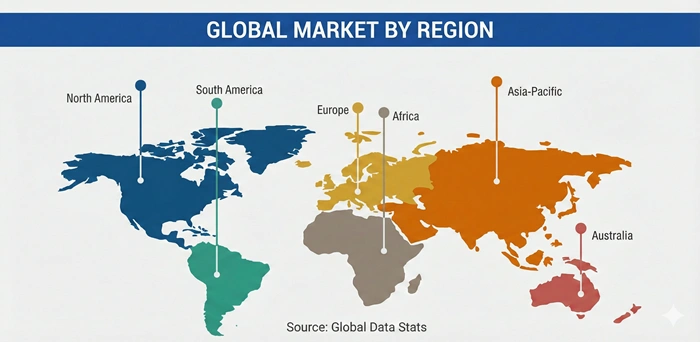
North America maintains its position as the dominant region in the baby cleaning products market, commanding approximately 35% of global market share in 2025 with an estimated value of USD 1.86 billion, projected to reach USD 2.68 billion by 2033 growing at a CAGR of 4.85%. The region's leadership stems from multiple reinforcing factors including high levels of parental education about infant health and hygiene, strong purchasing power that enables families to afford premium products, continuous innovation by leading manufacturers, and sophisticated retail infrastructure spanning traditional stores and advanced e-commerce platforms. The United States represents the largest market within North America, accounting for approximately 78% of regional revenue, driven by the presence of industry giants like Procter & Gamble, Johnson & Johnson, and Kimberly-Clark Corporation that invest heavily in research, development, and marketing of baby cleaning products.
Consumer preferences in North America increasingly favor organic, natural, and eco-friendly formulations, pushing manufacturers to reformulate traditional products and launch new lines emphasizing plant-based ingredients, sustainable packaging, and environmental responsibility throughout production processes. The baby cleaning products market in this region benefits from high brand loyalty and sophisticated marketing campaigns that leverage digital channels, social media influencers, and celebrity endorsements to build consumer trust and drive purchasing decisions. Leading companies in North America including Seventh Generation, Babyganics, The Honest Company, and Earth Mama Organics have successfully captured significant market share by positioning themselves as premium natural alternatives to conventional products. Regulatory standards enforced by agencies like the U.S. Food and Drug Administration and Consumer Product Safety Commission ensure high safety standards that build consumer confidence while creating barriers to entry for low-quality international competitors.
Asia Pacific
Explosive Growth Driven by Demographics and Rising Living Standards
Asia Pacific represents the fastest-growing region in the baby cleaning products market with a projected CAGR of 6.85% from 2026 to 2033, with market value expected to increase from USD 1.60 billion in 2025 to USD 2.61 billion by 2033, capturing an expanding share of global revenue. The region's exceptional growth trajectory is fueled by enormous populations exceeding 4.6 billion people, including massive birth cohorts in countries like India, China, Indonesia, and the Philippines that create substantial demand for infant care products. Rising disposable incomes across expanding middle-class segments enable more families to afford specialized baby cleaning products rather than relying solely on traditional cleaning methods or regular household products. Rapid urbanization brings millions of families into cities where modern retail infrastructure, increased exposure to marketing, and changing lifestyle patterns drive adoption of commercial baby care products in the baby cleaning products market.
China and India together account for over 65% of the Asia Pacific baby cleaning products market, with both countries experiencing transformative shifts in consumer behavior as young parents increasingly prioritize infant health, hygiene, and safety. Key manufacturers serving this dynamic region include Pigeon Corporation and Kao Corporation from Japan, along with multinational giants like Procter & Gamble, Unilever, and Johnson & Johnson that have established strong local presence through manufacturing facilities and extensive distribution networks. The explosive growth of e-commerce platforms including Alibaba, JD.com, Amazon India, and Flipkart has revolutionized product distribution in Asia Pacific, enabling brands to reach consumers in smaller cities and rural areas that previously had limited access to specialized baby products. Government initiatives promoting infant health and sanitation, combined with increasing internet penetration and smartphone adoption that facilitates access to parenting information and online shopping, continue to drive robust market expansion throughout the forecast period.
Top Key Players
-
Procter & Gamble Company (United States)
-
Johnson & Johnson Consumer Inc. (United States)
-
Kimberly-Clark Corporation (United States)
-
Unilever plc (United Kingdom)
-
Pigeon Corporation (Japan)
-
Koninklijke Philips N.V. (Netherlands)
-
Church & Dwight Co., Inc. (United States)
-
Kenvue Inc. (United States)
-
Seventh Generation Inc. (United States)
-
Babyganics, LLC (United States)
-
The Honest Company (United States)
-
Earth Mama Organics (United States)
-
Kao Corporation (Japan)
-
Henkel AG & Co. KGaA (Germany)
-
Reckitt Benckiser Group plc (United Kingdom)
Recent Developments
-
Johnson & Johnson (2024): Successfully launched the reformulated Vivvi & Bloom natural baby care line across European and Asian markets, featuring plant-based ingredients and sustainable packaging designed in collaboration with millennial and Gen-Z parents, achieving 22% sales growth in the premium segment within the first six months of introduction.
-
Procter & Gamble (2023): Completed a strategic USD 450 million investment in upgrading North American manufacturing facilities for baby care products, implementing advanced automation and quality control systems that reduced production costs by 18% while enhancing product consistency and safety testing protocols.
-
Kimberly-Clark Corporation (2024): Announced a major partnership with leading e-commerce platforms in Southeast Asia including Lazada and Shopee to expand digital presence for Huggies baby cleaning products, resulting in 35% year-over-year growth in online sales across Indonesia, Thailand, and Vietnam markets.
-
Pigeon Corporation (2024): Launched the Natural Botanical Baby cleaning products line in February featuring 100% plant-derived ingredients and eco-friendly packaging, targeting environmentally conscious millennial parents in Japan, Singapore, and Australia, with plans for North American expansion in 2025.
-
Seventh Generation (2023): Acquired by Unilever for USD 700 million in a strategic move to strengthen the parent company's position in the natural and organic baby cleaning products segment, expanding distribution reach into international markets while maintaining the brand's commitment to sustainability and chemical-free formulations.
Market Trends
Sustainability and Transparency Reshape Industry Standards and Consumer Expectations
The baby cleaning products market is experiencing transformative shifts driven by consumer demand for greater transparency regarding ingredients, manufacturing processes, and environmental impacts throughout product lifecycles. Modern parents actively research product formulations, seeking detailed information about each ingredient's purpose, origin, and safety profile before making purchasing decisions. Companies responding to this demand by providing comprehensive ingredient disclosures, third-party safety certifications, and clear communication about testing procedures are building stronger customer relationships and brand loyalty. The trend toward "clean beauty" and "clean living" has extended into the baby care segment, with parents applying the same scrutiny to cleaning products that they use for cosmetics and personal care items.
Sustainable packaging innovations represent another major trend reshaping the baby cleaning products market as environmental consciousness influences purchasing decisions across all consumer segments. Manufacturers are transitioning away from single-use plastics toward recyclable materials, biodegradable packaging, concentrated formulas that reduce packaging volume, and refillable container systems that minimize waste. Brands like Blueland and Grove Collaborative have disrupted traditional business models by offering tablet-based cleaning products that dissolve in water, eliminating the need to ship heavy liquid products in plastic bottles while significantly reducing carbon footprints associated with transportation. The integration of digital technologies including QR codes, augmented reality experiences, and mobile apps that provide usage instructions, safety information, and sustainability impact data is becoming standard practice among leading manufacturers seeking to engage tech-savvy millennial and Gen-Z parents who value transparency and convenience.
Segments Covered in the Report
By Product Type
-
Laundry Detergents
-
Cleaning Wipes
-
Bottle Wash
-
Fabric Conditioners
-
Cleaning Sprays
-
Vegetable Wash
-
Toy Cleaners
-
Surface Cleaners
-
Dish Soap
By Distribution Channel
-
Retail
-
Hypermarkets and Supermarkets
-
Specialty Stores
-
Pharmacies
-
Department Stores
-
-
E-commerce
-
Brand Websites
-
Online Marketplaces
-
Subscription Services
-
-
Non-Retail
-
Hospitals
-
Healthcare Facilities
-
By Region
-
North America
-
United States
-
Canada
-
Mexico
-
-
Europe
-
United Kingdom
-
Germany
-
France
-
Italy
-
Spain
-
Rest of Europe
-
-
Asia Pacific
-
China
-
India
-
Japan
-
South Korea
-
Indonesia
-
Australia
-
Rest of Asia Pacific
-
-
Latin America
-
Brazil
-
Argentina
-
Rest of Latin America
-
-
Middle East and Africa
-
Saudi Arabia
-
United Arab Emirates
-
South Africa
-
Rest of Middle East and Africa
-
Frequently Asked Questions
Question 1: What is the projected baby cleaning products market size by 2033?
Answer: The baby cleaning products market is projected to reach USD 8.23 billion by 2033, growing from USD 5.60 billion in 2026. This represents significant expansion driven by rising hygiene awareness and increasing demand for specialized infant care products.
Question 2: Which region dominates the global baby cleaning products market share?
Answer: North America dominates the global baby cleaning products market with approximately 35% market share in 2025. This leadership position is supported by high consumer awareness, strong purchasing power, and continuous product innovation from major manufacturers.
Question 3: What factors are driving the baby cleaning products market growth?
Answer: Key factors driving baby cleaning products market growth include increasing parental awareness about infant hygiene importance, rising disposable incomes in developing countries, growing demand for organic and natural formulations, and expanding e-commerce distribution channels. Health consciousness and urbanization also significantly contribute to market expansion.
Question 4: Which product segment holds the largest share in the baby cleaning products market?
Answer: The laundry detergents segment holds the largest share in the baby cleaning products market with approximately 38% in 2025. This dominance reflects the essential need to frequently wash baby clothes and linens with gentle, specialized cleaning products designed for sensitive infant skin.
Question 5: What are the emerging trends in the baby cleaning products market?
Answer: Emerging trends in the baby cleaning products market include the shift toward natural and organic ingredient formulations, sustainable and eco-friendly packaging innovations, enhanced ingredient transparency, e-commerce expansion with subscription models, and integration of digital technologies. Premium product positioning and hypoallergenic formulations continue gaining traction among health-conscious parents.