
Automotive Ethernet Market Overview
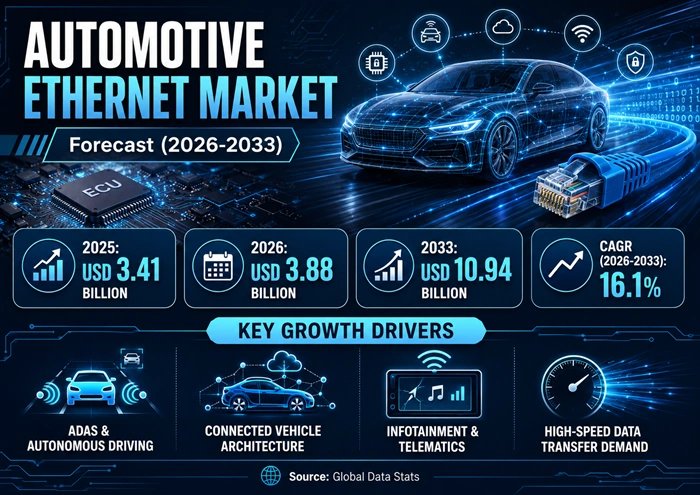
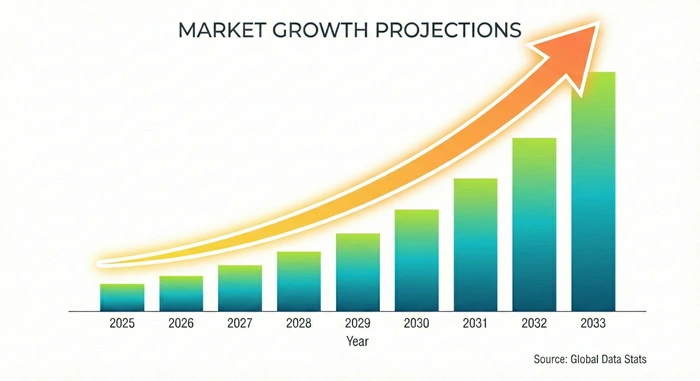
The global Automotive Ethernet market size is valued at USD 3.41 billion in 2025 and is predicted to increase from USD 3.88 billion in 2026 to approximately USD 10.94 billion by 2033, growing at a CAGR of 16.1% from 2026 to 2033.
The rapid integration of Advanced Driver Assistance Systems (ADAS), in-vehicle infotainment, and autonomous vehicle platforms is fueling unprecedented demand for high-bandwidth, reliable in-vehicle networking. Automotive Ethernet has emerged as the backbone technology enabling this transformation, replacing older protocols such as CAN bus and LIN with a standardized, scalable, and cost-effective communication architecture.
AI Impact on the Automotive Ethernet Industry
Artificial Intelligence Is Redefining In-Vehicle Network Intelligence, Reshaping How Automotive Ethernet Evolves Across Every Layer of Modern Vehicle Architecture
Artificial intelligence is fundamentally transforming the automotive Ethernet market by enabling smarter, more adaptive in-vehicle networks. AI-powered algorithms now optimize data routing within vehicle communication systems, reducing latency and improving bandwidth allocation in real time. These capabilities are especially critical for software-defined vehicles (SDVs), where the vehicle's core functions are managed by centralized computing platforms that depend on fast, secure, and reliable Ethernet connectivity. When OEMs embed AI into Ethernet diagnostics, they reduce manual troubleshooting time significantly and improve network uptime across complex multi-ECU architectures.
On the cybersecurity front, machine learning models are being deployed to detect anomalies in Ethernet data flows — identifying potential intrusions before they compromise vehicle safety systems. AI also plays a central role in enabling seamless over-the-air (OTA) software updates, which require secure, high-speed Ethernet pipelines to deliver new features and safety patches without interrupting vehicle operations. Companies like Keysight Technologies have already partnered with AI and ML specialists to build next-generation physical-layer Ethernet test platforms, signaling a broader industry trend toward AI-native automotive networking infrastructure.
Growth Factors
Strong Demand from ADAS, EV Proliferation, and Connected Vehicle Platforms Is Driving Sustained Growth Momentum in the Automotive Ethernet Market
The most significant growth catalyst in the automotive Ethernet market is the explosive adoption of ADAS technologies. Modern ADAS systems rely on high-definition cameras, radar, LiDAR, and ultrasonic sensors — all of which generate massive volumes of real-time data that need to be processed and shared across the vehicle's electronic control units with minimal delay. Traditional in-vehicle networks cannot support these bandwidth requirements, making automotive Ethernet the preferred solution. The growing push toward Level 3 and Level 4 autonomous vehicles further intensifies this demand, as higher automation levels require even greater data throughput and network reliability.
Electric vehicles represent another powerful driver, as their complex powertrain architectures and sophisticated battery management systems require highly integrated, lightweight, and scalable networking solutions. Automotive Ethernet, particularly single-pair Ethernet (SPE), reduces wiring weight by up to 40%, which directly contributes to extended EV driving range — a critical selling point for manufacturers and consumers alike. Government incentives for EV adoption across China, Germany, the U.S., and India are accelerating vehicle production volumes, indirectly boosting the demand for automotive-grade Ethernet components across the entire supply chain.
Market Outlook
The Automotive Ethernet Market Is Poised for Strong Expansion Through 2033, Supported by Software-Defined Vehicle Adoption and Multi-Gigabit Ethernet Standards
Looking ahead, the automotive Ethernet market is poised for robust and sustained growth through 2033, driven by the industry's transition to software-defined vehicles and zonal electrical architectures. As automakers shift from domain-based to zone-based vehicle designs, Ethernet becomes the primary high-speed data highway connecting multiple zonal controllers, reducing both wiring complexity and overall system cost. OEMs across North America, Europe, and Asia Pacific are already embedding multi-gigabit Ethernet — including 1 Gbps and 10 Gbps solutions — into next-generation vehicle platforms.
Time-Sensitive Networking (TSN) standards are becoming increasingly central to the market's evolution, as they guarantee deterministic, low-latency communication for safety-critical ADAS functions. The integration of 5G connectivity with automotive Ethernet is also unlocking new possibilities for vehicle-to-everything (V2X) communication, enabling real-time data exchange between vehicles, infrastructure, and cloud platforms. These trends collectively ensure that the automotive Ethernet market will remain one of the most dynamic and high-growth segments within the broader automotive electronics industry over the next decade.
Expert Speaks
Leading executives in the automotive and semiconductor industries are increasingly vocal about the transformative role of in-vehicle networking technologies:
-
"The shift to software-defined vehicles is one of the most significant architectural changes the automotive industry has ever seen — and Ethernet is the foundation that makes it all possible. We are investing heavily to ensure our solutions meet the bandwidth and security demands of tomorrow's connected cars." — CEO, NXP Semiconductors
-
"ADAS and autonomous driving are not just features anymore — they are the future of mobility. Delivering the real-time, high-bandwidth communication these systems require is exactly why automotive Ethernet has become indispensable in our vehicle development roadmap." — CEO, Broadcom Inc.
-
"Electric vehicles and connected platforms demand a completely rethought approach to in-vehicle networking. Our focus is on developing Ethernet solutions that are not just fast, but also secure, lightweight, and ready for the next generation of mobility." — CEO, Texas Instruments Inc.
Key Report Takeaways
-
Asia Pacific leads the global automotive Ethernet market, holding approximately 49% of the global market share in 2025, driven by China's massive EV production volumes, Japan's software-defined vehicle initiatives, and South Korea's ADAS-heavy OEM ecosystem.
-
Europe is the fastest-growing regional market, expected to register a strong CAGR during the forecast period, fueled by ISO 26262 safety regulations, rapid EV adoption, and OEM investment in zonal architectures in Germany, France, and the UK.
-
Passenger cars remain the largest vehicle-type segment, commanding approximately 71.9% of the global market share in 2026, as consumer demand for infotainment, safety, and connectivity features drives Ethernet adoption across entry-level to premium vehicles.
-
The ADAS application segment dominates the market, holding approximately 42.61% of the global application share in 2026, as ADAS relies on deterministic, low-latency Ethernet communication to enable real-time safety decision-making.
-
The 100 Mbps bandwidth segment holds the largest share, accounting for approximately 39.37% of the market in 2026, due to its cost-effectiveness and ability to support a wide range of mid-tier automotive applications including parking cameras and sensor aggregation.
-
The 1 Gbps segment is the fastest-growing bandwidth category, expected to record the highest CAGR through 2033, as multi-zone infotainment systems and autonomous driving platforms increasingly require gigabit-speed Ethernet backbones.
-
The commercial vehicles segment is poised for strong future growth, expected to grow at an accelerated CAGR, capturing increasing market share by 2033 as fleet telematics, autonomous trucking, and advanced safety systems become standard in the commercial segment.
Market Scope
| Report Coverage | Details |
|---|---|
| Market Size by 2033 | USD 10.94 Billion |
| Market Size by 2025 | USD 3.41 Billion |
| Market Size by 2026 | USD 3.88 Billion |
| Market Growth Rate from 2026 to 2033 | CAGR of 16.1% |
| Dominating Region | Asia Pacific |
| Fastest Growing Region | Europe |
| Base Year | 2025 |
| Forecast Period | 2026 to 2033 |
| Segments Covered | Component, Bandwidth, Vehicle Type, Application, and Region |
| Regions Covered | North America, Europe, Asia Pacific, Latin America, and Middle East & Africa |
Market Dynamics
Drivers Impact Analysis
Rising ADAS Adoption and EV Expansion Are the Twin Pillars Powering Consistent Growth Across the Automotive Ethernet Market Worldwide
| Driver | ≈ % Impact on CAGR Forecast | Geographic Relevance | Impact Timeline |
|---|---|---|---|
| Rising ADAS deployment | ~35% | Global, especially Asia Pacific & North America | 2026–2033 |
| EV production growth | ~25% | China, Europe, U.S. | 2026–2030 |
| Software-defined vehicle transition | ~20% | Germany, Japan, U.S. | 2027–2033 |
| Connected vehicle & V2X demand | ~12% | North America, Europe | 2028–2033 |
| OTA update requirements | ~8% | Global | 2026–2033 |
The increasing deployment of ADAS across both passenger and commercial vehicle segments is the single largest driver for the automotive Ethernet market, accounting for an estimated 35% contribution to CAGR momentum. ADAS systems — including emergency braking, lane-keep assist, adaptive cruise control, and 360-degree surround view systems — generate continuous, high-volume data streams that require the high-bandwidth, low-latency performance that only Ethernet can reliably deliver at automotive grade. As global safety regulations become stricter, OEMs across North America and Asia Pacific are mandating higher levels of ADAS integration even in mid-range vehicles, broadening the addressable market significantly.
Electric vehicles are reshaping the entire electronics architecture of modern automobiles, and automotive Ethernet is at the core of this transformation. EVs feature significantly more ECUs than traditional internal combustion engine vehicles, managing everything from battery thermal control to regenerative braking and over-the-air software updates — all of which depend on fast, reliable Ethernet communication. China alone accounts for more than half of global EV production, making Asia Pacific the most critical geography for this driver. As battery technology matures and EV adoption spreads to emerging markets in Southeast Asia and Latin America, this driver will continue to expand the automotive Ethernet market well into 2033.
Restraints Impact Analysis
High Upfront Integration Costs and Cybersecurity Complexity Continue to Create Friction in the Adoption of Automotive Ethernet Across Smaller Automakers
| Restraint | ≈ % Impact on CAGR Forecast | Geographic Relevance | Impact Timeline |
|---|---|---|---|
| High initial deployment costs | ~30% negative impact | Global, especially emerging markets | 2026–2029 |
| Cybersecurity complexity | ~25% negative impact | Global | 2026–2033 |
| Standardization challenges | ~20% negative impact | Asia Pacific, Latin America | 2026–2028 |
| Legacy system interoperability | ~15% negative impact | Europe, North America | 2026–2028 |
| Latency issues in critical systems | ~10% negative impact | Global | 2026–2030 |
Deploying automotive Ethernet in vehicles requires substantial upfront investment in new hardware ecosystems — including specialized ECUs, automotive-grade switches, connectors, cables, and testing infrastructure — that significantly raise the cost of vehicle development. For smaller OEMs and Tier-2 suppliers, particularly in Latin America and Southeast Asia, these costs can be prohibitive in the near term. While Ethernet is more cost-efficient than legacy protocols like MOST or FlexRay over the long run, the transition period demands capital that not all market participants can easily allocate, slowing adoption rates in cost-sensitive segments.
Cybersecurity is a growing concern that adds both technical complexity and cost to automotive Ethernet deployment. As in-vehicle networks become more connected — interfacing with V2X systems, cloud platforms, and mobile devices — the attack surface for cyber threats expands considerably. Implementing robust Ethernet-based security gateways, intrusion detection systems, and encrypted communication protocols adds layers of engineering complexity that require highly specialized expertise. Regulatory requirements around automotive cybersecurity (such as UNECE WP.29) further demand that OEMs demonstrate compliance, increasing development cycles and adding to the restraints facing rapid market expansion.
Opportunities Impact Analysis
The Rise of Autonomous Vehicles and Multi-Gigabit Ethernet Standards Presents Immense Untapped Opportunity for Technology Providers in the Automotive Ethernet Market
| Opportunity | ≈ % Impact on CAGR Forecast | Geographic Relevance | Impact Timeline |
|---|---|---|---|
| Autonomous vehicle development | ~35% positive impact | North America, China, Europe | 2027–2033 |
| Multi-gigabit Ethernet (10 Gbps) | ~25% positive impact | Global | 2027–2033 |
| Zonal vehicle architecture adoption | ~20% positive impact | Germany, Japan, U.S. | 2026–2033 |
| Emerging markets EV infrastructure | ~12% positive impact | India, Brazil, MEA | 2028–2033 |
| 5G-V2X Ethernet integration | ~8% positive impact | Global | 2029–2033 |
The development of fully autonomous vehicles at Level 4 and Level 5 represents the most transformative long-term opportunity for the automotive Ethernet market. Autonomous platforms require the integration of dozens of high-resolution sensors, real-time sensor fusion, and split-second decision-making — all of which demand multi-gigabit Ethernet speeds and Time-Sensitive Networking (TSN) protocols to function safely and reliably. Companies actively working on autonomous fleets — including Waymo, GM Cruise, and Baidu Apollo — are already standardizing on Ethernet as their primary in-vehicle networking solution, validating this opportunity at scale.
The broader transition to zonal vehicle architectures creates a structural, long-term opportunity for Ethernet solution providers. In zonal designs, each physical zone of the vehicle hosts a powerful central controller that manages all nearby sensors and actuators, requiring a high-speed Ethernet backbone to connect zones to the central compute unit. This architecture reduces wiring harness weight and complexity while dramatically improving vehicle performance and updateability. OEMs in Germany, Japan, and the United States are leading this architectural shift, and as it cascades into mainstream vehicle production by 2028–2030, it will generate significant incremental demand for automotive-grade Ethernet components across the entire supply chain.
Segment Analysis
By Application
ADAS Dominates the Application Landscape as Real-Time Safety Communication Becomes the Non-Negotiable Foundation of Modern Vehicle Design
The ADAS segment is the undisputed leader within the automotive Ethernet market by application, holding approximately 42.61% of the global application share in 2026. ADAS systems — encompassing adaptive cruise control, lane-departure warning, automated emergency braking, blind-spot detection, and surround-view parking systems — collectively generate enormous volumes of real-time sensor data that must be transmitted across multiple vehicle subsystems with deterministic, low-latency performance. Automotive Ethernet, enhanced by Time-Sensitive Networking (TSN) protocols, ensures that this data reaches its destination without delay, which is critical when milliseconds determine whether a collision is avoided. The segment is growing fastest in Asia Pacific, where China, Japan, and South Korea are mandating ADAS features even in mid-range vehicles, with major OEMs like Toyota, Hyundai, and BYD leading adoption. Companies like Broadcom, NXP Semiconductors, and Texas Instruments dominate the semiconductor supply chain for ADAS Ethernet PHY components in this region.
The infotainment segment represents the fastest-growing application category within the automotive Ethernet market, driven by the consumer shift toward connected, personalized in-vehicle experiences. Modern infotainment platforms integrate high-definition touchscreens, 4K rear-seat entertainment, multi-zone audio, real-time traffic navigation, and seamless smartphone mirroring — all of which require the kind of high-bandwidth, low-interference data pipeline that only Ethernet reliably delivers. Europe is experiencing particularly strong infotainment-driven Ethernet adoption, with OEMs like BMW, Mercedes-Benz, and Volkswagen investing in premium connected vehicle platforms that leverage gigabit Ethernet backbones. The infotainment segment is projected to grow at an above-average CAGR through 2033, supported by consumer demand for subscription-based in-car services, over-the-air entertainment updates, and deeper cloud connectivity integration.
By Vehicle Type
Passenger Cars Lead Vehicle-Type Segmentation While Commercial Vehicles Emerge as the Fastest-Growing Category Driven by Fleet Intelligence Demands
The passenger cars segment commands the largest share of the automotive Ethernet market, projected to account for 71.9% of the global vehicle-type segment in 2026. The sheer volume of passenger vehicle production worldwide — particularly in China, the U.S., and Germany — combined with rapidly evolving consumer expectations for connectivity, safety, and entertainment, makes this segment the primary consumption engine for automotive Ethernet technology. Modern passenger cars increasingly come equipped with multiple cameras, radar sensors, advanced infotainment systems, and over-the-air software update capabilities, all of which depend on Ethernet to function effectively. In Asia Pacific — the dominant manufacturing region — automotive Ethernet adoption in passenger cars is accelerating at a CAGR above the global average, with companies like Marvell Technology, Realtek Semiconductor, and STMicroelectronics supplying critical Ethernet PHY and switching components to regional OEM partners.
The commercial vehicles segment, while currently smaller in market share, is positioned as the fastest-growing vehicle-type category in the automotive Ethernet market, expected to expand at a strong CAGR through 2033. Long-haul trucks, city buses, delivery fleets, and construction vehicles are increasingly being equipped with ADAS features, telematics platforms, fatigue monitoring systems, and autonomous driving capabilities — each of which demands high-bandwidth, reliable in-vehicle networking. Automotive Ethernet enables commercial vehicle operators to implement real-time fleet monitoring, remote diagnostics, and predictive maintenance through fast, secure data transmission between onboard sensors and cloud platforms. North America, where autonomous trucking initiatives are advancing rapidly through companies like TuSimple and Aurora Innovation, is emerging as a key growth market for commercial vehicle Ethernet adoption alongside China's expanding logistics automation sector.
Regional Insights
Asia Pacific
Asia Pacific Maintains Its Dominant Position in the Automotive Ethernet Market, Powered by Unmatched EV Production Volumes and Strong ADAS Mandates
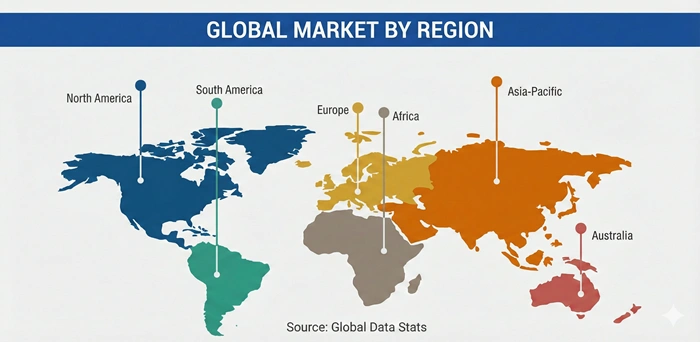
Asia Pacific is the largest and most influential regional market for automotive Ethernet, holding approximately 49% of the global market share in 2025 and projected to generate revenues exceeding USD 7 billion by 2033 at a CAGR of approximately 15.33%. China is the centerpiece of this regional dominance, accounting for the largest portion of the region's Ethernet demand, driven by the world's highest electric vehicle production volumes, aggressive government mandates for ADAS adoption, and rapid growth in smart mobility infrastructure. Japanese OEMs such as Toyota and Honda are transitioning to software-defined vehicle platforms that require gigabit-speed Ethernet backbones, while South Korean manufacturers including Hyundai and Kia are embedding multi-camera surround-view and driver monitoring systems that depend on high-bandwidth Ethernet links. Key companies driving the regional market include NXP Semiconductors, Marvell Technology, Broadcom, and Realtek Semiconductor.
India and Southeast Asia represent the emerging growth corridors within the Asia Pacific automotive Ethernet market. India's passenger vehicle production is expanding rapidly, with the government's Bharat New Car Assessment Programme (BNCAP) raising safety standards and compelling OEMs to integrate ADAS features into more affordable vehicle segments. This creates a broadening demand base for cost-effective Ethernet PHY solutions at lower bandwidth tiers. Southeast Asian nations — including Thailand, Indonesia, and Vietnam — are attracting OEM manufacturing investments that bring with them the latest vehicle electronics standards, including automotive Ethernet. The region's favorable demographic trends, growing middle class, and rising urbanization collectively ensure that Asia Pacific will continue to be the anchor region for the global automotive Ethernet market through 2033.
Europe
Europe Is the Fastest-Growing Regional Market, Driven by Stringent Safety Regulations, Software-Defined Vehicle Leadership, and Aggressive EV Transition
Europe is forecasted to be the fastest-growing regional market for automotive Ethernet during the 2026–2033 forecast period, propelled by a unique combination of regulatory pressure, OEM innovation leadership, and deep EV adoption. ISO 26262 functional safety standards, UNECE WP.29 cybersecurity regulations, and the European Union's ambitious CO₂ reduction targets are collectively compelling European automakers to accelerate their transition to zonal, Ethernet-based vehicle architectures. Germany leads within the region, with BMW, Mercedes-Benz, Volkswagen, and Continental AG investing in next-generation Ethernet switch and gateway technologies for their upcoming EV and autonomous platforms. The UK and France are also contributing meaningfully to regional growth, with Stellantis and Jaguar Land Rover increasing their Ethernet integration across new model lines. Europe's market is expected to represent approximately 25.4% of the global share and grow at an above-average regional CAGR through 2033.
The European automotive Ethernet market benefits from a mature, innovation-driven supply chain that includes Tier-1 suppliers such as Continental AG, Robert Bosch, and Aptiv, all of whom are investing in Ethernet hardware and software solutions for the region's premium vehicle platforms. Germany's automotive engineering ecosystem — supported by research institutions like the Fraunhofer Society and industry consortia such as AUTOSAR — is pioneering the standardization of zonal Ethernet architectures that are expected to become the global norm by 2030. The adoption of single-pair Ethernet (SPE) across European premium brands is also gaining momentum, as it reduces vehicle wiring weight and contributes directly to EV range improvements — a critical competitive differentiator in an increasingly electrified European market.
Report Customization by Region and Country
This report offers comprehensive region-wise and country-wise customization, allowing stakeholders to access in-depth market analysis, trends, growth opportunities, competitive landscapes, and strategic insights tailored to their specific geography of interest — across the automotive Ethernet market.
Customized versions of this report are available for the following regions and countries, each offering detailed, geography-specific intelligence:
North America
-
United States — ADAS adoption trends, autonomous vehicle regulations, top players, and market size
-
Canada — EV policy landscape, OEM presence, and regional Ethernet demand
-
Mexico — Automotive manufacturing hub analysis, nearshoring trends, and connectivity adoption
Europe
-
United Kingdom — Post-Brexit regulatory environment, EV market growth, and key player activity
-
Germany — Zonal architecture adoption, premium OEM Ethernet integration, and TSN standards
-
France — EV expansion, Stellantis platform analysis, and infotainment connectivity trends
-
Italy — Automotive supplier ecosystem and ADAS integration in mid-range vehicles
-
Rest of Europe — Emerging market opportunities across Scandinavia, Eastern Europe, and the Iberian Peninsula
Asia Pacific
-
China — World's largest EV market, ADAS mandates, and domestic Ethernet semiconductor ecosystem
-
India — BNCAP safety standards, mid-market Ethernet adoption, and OEM investment activity
-
Japan — Software-defined vehicle leadership, single-pair Ethernet deployment, and Toyota/Honda roadmaps
-
South Korea — Hyundai/Kia ADAS platforms, domestic semiconductor supply chain, and export market trends
-
Australia — Connected vehicle infrastructure and premium segment Ethernet demand
-
Rest of Asia Pacific — Southeast Asian manufacturing growth and regional EV adoption trends
Latin America
-
Brazil — Automotive production expansion, government initiatives, and IoT vehicle integration
-
Argentina — Economic conditions, vehicle import policies, and technology adoption pace
-
Rest of Latin America — Regional market development, infrastructure trends, and growth potential
Middle East & Africa
-
UAE — Smart mobility vision, connected vehicle adoption, and luxury vehicle Ethernet demand
-
Saudi Arabia — Vision 2030 transportation initiatives, 5G expansion, and AV investments
-
Rest of MEA — GCC fleet telematics demand and digital transformation in mobility infrastructure
Top Key Players
-
Broadcom Inc. (United States)
-
NXP Semiconductors N.V. (Netherlands)
-
Marvell Technology Inc. (United States)
-
Texas Instruments Inc. (United States)
-
Microchip Technology Inc. (United States)
-
Realtek Semiconductor Corp. (Taiwan)
-
STMicroelectronics NV (Switzerland)
-
Analog Devices Inc. (United States)
-
Keysight Technologies Inc. (United States)
-
Cadence Design Systems Inc. (United States)
-
Continental AG (Germany)
-
Robert Bosch GmbH (Germany)
-
Aptiv PLC (Ireland)
-
Vector Informatik GmbH (Germany)
-
TE Connectivity Ltd. (Switzerland)
Recent Developments
-
In January 2026, STMicroelectronics and AutoCore jointly launched an Ethernet-based ZCU distributed audio solution, marking a significant milestone in in-vehicle audio transmission technology. This collaboration demonstrated how Ethernet-based architectures can deliver high-performance, cost-effective solutions for global OEMs in the growing software-defined vehicle segment.
-
In January 2026, Anritsu launched a dedicated automotive Ethernet test solution for validating safety compliance using a vector network analyzer alongside a Tektronix 6 Series MSO oscilloscope. This development addressed the growing need for precise physical-layer validation tools as Ethernet speeds increase to multi-gigabit levels in next-generation vehicles.
-
In August 2025, Infineon Technologies completed a landmark acquisition of Marvell Technology's automotive Ethernet business. This strategic move significantly bolstered Infineon's position in the software-defined vehicle market and reinforced its global leadership in automotive semiconductors.
-
In May 2025, Analog Devices and the BMW Group announced an early adoption partnership for ADI's E²B technology, which uses 10BASE-T1S Ethernet to enable edge bus connectivity. This collaboration supports next-generation zonal vehicle architectures and makes BMW Group one of the first OEMs to deploy this technology in ambient lighting systems.
-
In January 2025, Keysight Technologies collaborated with KD Inc. to develop a comprehensive AI and ML-powered test platform for the physical layer of automotive Ethernet. This solution is specifically designed to support OEMs and Tier-1 suppliers in validating next-generation Ethernet technologies with greater accuracy and speed.
Market Trends
The Automotive Ethernet Market Is Being Reshaped by Multi-Gigabit Speed Demands, Zonal Architecture Transitions, and the Convergence of Connectivity with AI-Driven Vehicle Intelligence
The automotive Ethernet market is undergoing a decisive technological shift as the industry moves from 100 Mbps deployments toward 1 Gbps and beyond. The proliferation of high-resolution cameras, LiDAR, and radar sensors in autonomous and semi-autonomous vehicles is pushing bandwidth requirements to levels that only multi-gigabit Ethernet can accommodate. Simultaneously, the adoption of Time-Sensitive Networking (TSN) standards is enabling automotive Ethernet to guarantee deterministic communication — a requirement that was previously limited to older, purpose-built protocols. This convergence of speed and determinism is making Ethernet the universal networking standard for next-generation vehicles, replacing a fragmented ecosystem of legacy protocols with a single, scalable solution.
Another major trend shaping the automotive Ethernet market is the transition to single-pair Ethernet (SPE), which delivers significant weight and cost savings compared to traditional multi-pair cabling. As OEMs face increasing pressure to extend EV driving range and reduce vehicle production costs, SPE offers an attractive engineering trade-off — delivering 100 Mbps over a single, lightweight cable pair, reducing the overall wiring harness weight by up to 40%. Beyond connectivity, the integration of Ethernet with over-the-air (OTA) update pipelines is transforming the post-sale vehicle experience, allowing manufacturers to continuously deliver performance improvements, new features, and security patches throughout the vehicle's operational lifespan. These trends position automotive Ethernet not just as a networking protocol, but as a core platform for the future of mobility.
Segments Covered in the Report
By Component
-
Hardware
-
Software
-
Services
By Bandwidth
-
10 Mbps
-
100 Mbps
-
1 Gbps
-
2.5 / 5 / 10 Gbps
By Vehicle Type
-
Passenger Cars
-
Commercial Vehicles
By Application
-
ADAS
-
Infotainment
-
Body & Comfort
-
Powertrain
-
Chassis
-
Others
By Region
-
North America (U.S., Canada, Mexico)
-
Europe (UK, Germany, France, Italy, Rest of Europe)
-
Asia Pacific (China, India, Japan, South Korea, Australia, Rest of Asia Pacific)
-
Latin America (Brazil, Argentina, Rest of Latin America)
-
Middle East & Africa (UAE, Saudi Arabia, Rest of MEA)
"Built for Every Level — From Startups to Industry Giants"
Here Is Exactly How This Report Works for You
-
For Tier 1 & Tier 2 automotive suppliers, OEMs, and high-level enterprises, this report delivers granular competitor revenue analysis, revenue source breakdowns, and geopolitical risk assessments that enable strategic sourcing decisions, partnership targeting, and investment prioritization in the automotive Ethernet space — all in one consolidated intelligence package.
-
For startups, mid-level companies, and investors, this report maps supply-demand dynamics across all key regions and segments, identifying white-space opportunities in emerging bandwidth tiers and underpenetrated geographies, giving early movers the intelligence advantage needed to capture market share before competition intensifies.
-
For decision-makers at every level, this report provides a detailed analysis of how macroeconomic factors, trade regulations, and geopolitical developments are shaping the automotive Ethernet market — so that whether you are negotiating supplier contracts, entering new markets, or securing Series B funding, your decisions are grounded in verified, forward-looking data.
Frequently Asked Questions
Question 1: What is the current size of the automotive Ethernet market and how is it expected to grow through 2033?
Answer: The automotive Ethernet market is valued at USD 3.41 billion in 2025 and is projected to reach USD 10.94 billion by 2033. It is expected to grow at a CAGR of 16.1% from 2026 to 2033, driven by ADAS adoption and EV expansion.
Question 2: What are the key factors driving growth in the automotive Ethernet market?
Answer: The primary drivers include rising demand for ADAS systems, increasing electric vehicle production, and the transition to software-defined vehicles that require high-bandwidth in-vehicle networks. Expanding V2X connectivity requirements and government safety regulations are also accelerating automotive Ethernet adoption globally.
Question 3: Which region dominates the automotive Ethernet market and which is growing the fastest?
Answer: Asia Pacific dominates the automotive Ethernet market with approximately 49% of the global share in 2025, led by China's massive EV and ADAS ecosystem. Europe is the fastest-growing region, driven by stringent ISO 26262 safety standards and aggressive EV transition policies.
Question 4: Which application segment holds the largest share in the automotive Ethernet market?
Answer: The ADAS segment holds the largest share at approximately 42.61% of the automotive Ethernet market in 2026. ADAS requires deterministic, low-latency communication that automotive Ethernet with TSN protocols reliably delivers for real-time safety functions.
Question 5: What are the major challenges facing the automotive Ethernet market?
Answer: The automotive Ethernet market faces key challenges including high initial deployment costs for new hardware ecosystems and growing cybersecurity threats targeting connected in-vehicle networks. Standardization gaps and the complexity of integrating Ethernet with legacy vehicle protocols also present ongoing technical and commercial hurdles.