
Atomic Layer Deposition Market Overview
Precision Thin-Film Coating Technology Powers Advanced Semiconductor Manufacturing and Emerging Nanotechnology Applications
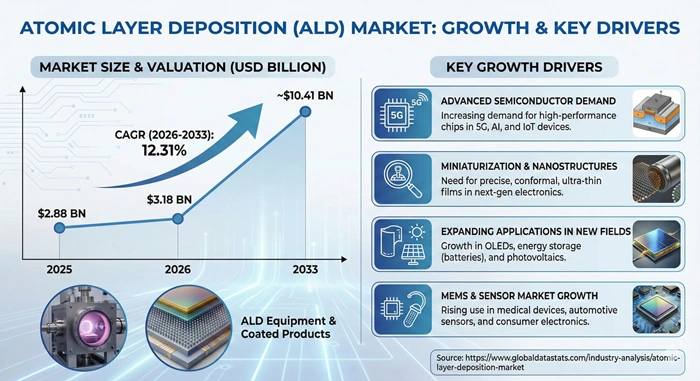
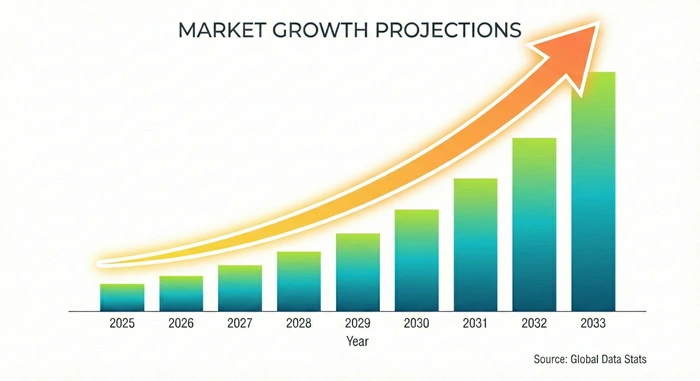
The global atomic layer deposition market size is valued at USD 2.88 billion in 2025 and is predicted to increase from USD 3.18 billion in 2026 to approximately USD 10.41 billion by 2033, growing at a CAGR of 12.31% from 2026 to 2033. This technology represents a revolutionary thin-film deposition process that enables atomic-scale precision in coating materials, making it indispensable for manufacturing advanced semiconductors, displays, and energy devices. The process deposits ultra-thin films one atomic layer at a time through sequential self-limiting surface reactions, achieving exceptional uniformity and conformality across complex three-dimensional structures.
The atomic layer deposition market serves critical functions across semiconductor fabrication, where shrinking transistor dimensions demand precise control over nanometer-scale features. This technology enables manufacturers to create conformal coatings inside deep trenches and high-aspect-ratio structures that conventional deposition methods cannot adequately address. Growing complexity in chip architecture, including gate-all-around transistors, three-dimensional NAND memory, and advanced packaging configurations, creates sustained demand for equipment capable of delivering atomic-level precision while maintaining production throughput requirements.
AI Impact on the Atomic Layer Deposition Industry
Machine Learning Algorithms and Process Automation Transform Equipment Performance and Accelerate Material Development Cycles
Artificial intelligence revolutionizes the atomic layer deposition market through advanced process control systems that optimize deposition parameters in real-time based on substrate conditions and target film specifications. Machine learning algorithms analyze thousands of process variables including precursor flow rates, chamber pressure, substrate temperature, and reaction times to identify optimal recipes that maximize film quality while minimizing cycle time and material consumption. These AI-powered systems continuously learn from production data, automatically adjusting parameters to compensate for equipment drift, precursor aging, and environmental variations that human operators struggle to detect. Neural networks trained on extensive film characterization datasets predict final properties based on process inputs, enabling engineers to achieve target specifications with fewer experimental iterations, reducing development timelines from months to weeks.
Deep learning applications accelerate new precursor development and expand process windows within the atomic layer deposition market landscape. Computational chemistry models powered by artificial intelligence simulate molecular interactions between candidate precursors and substrate surfaces, predicting deposition rates, conformality, and film properties before expensive laboratory synthesis and testing. Natural language processing extracts insights from decades of scientific literature and patent databases, identifying promising chemical structures and process conditions that researchers might otherwise overlook. Computer vision systems integrated into production equipment perform real-time defect detection by analyzing substrate images, identifying contamination or process anomalies that could compromise device yield. These AI-driven capabilities position advanced equipment manufacturers to deliver systems that continuously improve performance through operational experience while reducing dependence on specialized process engineers.
Growth Factors
Semiconductor Industry Expansion and Advanced Node Migration Drive Unprecedented Equipment Demand
The atomic layer deposition market experiences robust growth propelled by semiconductor industry transformation toward sub-three-nanometer process nodes where conventional deposition techniques cannot deliver required precision and conformality. Leading-edge logic and memory fabrication requires depositing ultra-thin gate dielectrics, barrier layers, and spacer materials with angstrom-level thickness control across billions of transistors. Gate-all-around transistor architectures replacing traditional FinFET designs demand conformal coatings completely surrounding nanowire channels, applications where atomic layer deposition provides unmatched capability. Three-dimensional NAND flash memory expansion continues increasing layer counts beyond 200 levels, requiring deposition processes that maintain uniformity across extreme aspect ratios approaching 100-to-1 that only atomic-level control can achieve consistently.
Advanced packaging technologies drive atomic layer deposition market expansion through emerging applications in through-silicon vias, microbump metallization, and hybrid bonding interfaces that enable heterogeneous integration of multiple chips. High-bandwidth memory stacks require precision barrier and adhesion layers between vertically integrated DRAM dies, where film quality directly impacts yield and performance. Artificial intelligence accelerators and graphics processors incorporate increasingly complex packaging architectures combining logic, memory, and specialized compute elements, creating new deposition requirements for diffusion barriers, passivation layers, and thermal management coatings. These advanced packaging applications expand addressable markets beyond traditional wafer fabrication into assembly and test operations, creating additional growth opportunities for equipment manufacturers offering systems tailored to packaging substrates and processing requirements.
Market Outlook
Technology Diversification and Emerging Applications Position Market for Sustained Long-Term Expansion
The atomic layer deposition market outlook remains exceptionally positive as technology adoption expands beyond traditional semiconductor applications into emerging sectors including flexible electronics, energy storage, and medical devices. Flexible display manufacturing increasingly deploys atomic layer deposition for encapsulation barriers protecting organic light-emitting diodes from moisture and oxygen degradation, where nanometer-scale pinhole-free films prove essential for device longevity. Solid-state battery development relies on conformal coatings to stabilize electrode interfaces and prevent dendrite formation, enabling higher energy densities critical for electric vehicle applications. Medical implant manufacturers explore biocompatible coatings deposited with atomic precision to enhance tissue integration while preventing corrosion, expanding equipment demand into specialty manufacturing operations traditionally outside semiconductor supply chains.
Investment trends within the atomic layer deposition market reflect growing confidence in technology versatility and long-term value proposition across expanding application portfolios. Semiconductor fabrication facilities allocate substantial capital expenditures toward next-generation deposition equipment supporting sub-two-nanometer roadmaps and gate-all-around transistor implementations requiring multiple atomic layer deposition steps per device layer. Government initiatives including the United States CHIPS Act and similar programs across Europe and Asia accelerate domestic semiconductor manufacturing capacity expansion, creating concentrated equipment demand as new fabrication facilities simultaneously ramp production. The convergence of spatial atomic layer deposition technologies offering higher throughput with traditional temporal approaches maintaining superior conformality enables manufacturers to optimize process selection based on specific application requirements, broadening addressable markets while sustaining premium pricing for advanced capabilities.
Expert Speaks
-
Gary Dickerson, CEO of Applied Materials, emphasized industry transformation: "My discussions with customers and partners reinforce my view that opportunities for the semiconductor industry and Applied Materials have never been greater. AI has reached a tipping point that is accelerating investment in next-generation computing infrastructure and advanced silicon. Today, we are seeing a virtuous cycle of innovation and demand, with major technology inflections underway in leading-edge logic, high-performance DRAM, and advanced packaging".
-
Benjamin Loh, President and CEO of ASM International, highlighted strategic acquisitions: "This is an important milestone for ASM. Together with LPE we look forward to capturing many of the opportunities in the high-growth silicon carbide epitaxy market and to support our power electronics customers with innovative solutions, driving the further electrification of the automotive industry. By 2030, ASM aims to maintain a market share above 55 percent in ALD, sustaining its lead in logic and foundry while also expanding its position in memory".
-
Toshiki Kawai, CEO of Tokyo Electron, articulated expansion priorities: "Tokyo Electron is increasingly exploring opportunities in emerging markets as the semiconductor sector gains momentum globally. We are focused on research and development of advanced wafer level packaging and assembly to address the need of Internet of Things devices with high performance and low power consumption, positioning ourselves to support the industry's transformation toward more sophisticated manufacturing requirements".
Key Report Takeaways
-
Asia Pacific dominates the atomic layer deposition market with commanding market share exceeding 48%, driven by concentrated semiconductor manufacturing capacity across Taiwan, South Korea, China, and Japan where leading foundries and memory manufacturers operate advanced fabrication facilities requiring state-of-the-art deposition equipment.
-
North America emerges as the fastest-growing regional market with projected CAGR approaching 13.5% through 2033, propelled by CHIPS Act funding accelerating domestic semiconductor capacity expansion, substantial research and development investments by leading equipment manufacturers, and growing adoption across emerging applications including power electronics and advanced packaging.
-
Semiconductor and electronics applications dominate end-use segments capturing approximately 65% market share due to critical role in advanced node fabrication, three-dimensional NAND memory production, and gate-all-around transistor manufacturing where atomic-level precision proves essential for device performance and yield.
-
Thermal atomic layer deposition maintains technology leadership accounting for roughly 58% of installations, reflecting proven conformality, broad materials compatibility, and extensive process libraries developed over decades of semiconductor manufacturing, though plasma-enhanced variants exhibit faster growth rates for temperature-sensitive applications.
-
Equipment sales represent the dominant revenue component constituting over 70% of market value, while aftermarket services including maintenance, upgrades, and consumable precursor chemicals provide growing high-margin recurring revenue streams for established manufacturers with large installed bases.
-
Energy and power electronics emerge as fastest-growing application segments with anticipated CAGR exceeding 14% through 2033, driven by solid-state battery commercialization, silicon carbide device manufacturing expansion, and advanced photovoltaic cell development requiring precision coatings for performance optimization.
Market Scope
| Report Coverage Details | |
|---|---|
| Market Size by 2033 | USD 10.41 Billion |
| Market Size by 2025 | USD 2.88 Billion |
| Market Size by 2026 | USD 3.18 Billion |
| Market Growth Rate from 2026 to 2033 | CAGR of 12.31% |
| Dominating Region | Asia Pacific |
| Fastest Growing Region | North America |
| Base Year | 2025 |
| Forecast Period | 2026 to 2033 |
| Segments Covered | Type, Technology, Application, End-Use Industry, Region |
| Regions Covered | North America, Europe, Asia Pacific, Latin America, Middle East & Africa |
Market Dynamics
Drivers Impact Analysis
Advanced Semiconductor Architecture Requirements and Manufacturing Capacity Expansion Fuel Equipment Adoption
| Impact Factor | (≈) % Impact on CAGR Forecast | Geographic Relevance | Impact Timeline |
|---|---|---|---|
| Advanced Node Migration and GAA Transistors | +3.8% | Taiwan, South Korea, United States | 2026-2033 |
| Three-Dimensional NAND Layer Count Expansion | +2.9% | Asia Pacific, Global Memory Hubs | 2026-2031 |
| CHIPS Act and Regional Capacity Initiatives | +2.4% | United States, Europe, India | 2026-2030 |
| Advanced Packaging and Heterogeneous Integration | +1.9% | Taiwan, United States, Japan | 2027-2033 |
The atomic layer deposition market benefits substantially from semiconductor industry transition toward gate-all-around transistor architectures at sub-three-nanometer nodes where conventional deposition methods cannot achieve required conformality around nanowire and nanosheet channel structures. Leading foundries including TSMC and Samsung allocate billions in capital expenditures supporting technology transitions requiring significantly more deposition steps per device layer compared to legacy planar and FinFET architectures. Gate dielectric stacks, work function metals, spacer materials, and barrier layers demand angstrom-level thickness control with near-perfect conformality across high-aspect-ratio features, applications where atomic layer deposition provides unique capabilities justifying premium equipment pricing. The technology intensity increases accelerate equipment demand growth rates exceeding overall semiconductor capital spending, creating favorable market dynamics for specialized deposition tool suppliers.
Three-dimensional NAND flash memory evolution drives atomic layer deposition market expansion through relentless layer count increases pushing beyond 200 levels per device, creating unprecedented conformality challenges across aspect ratios approaching 100-to-1. Memory manufacturers require deposition processes maintaining thickness uniformity better than two percent across entire wafer areas while coating vertical channel sidewalls completely surrounding storage node structures. Atomic layer deposition enables manufacturers to achieve these stringent specifications through self-limiting surface chemistry that prevents thickness variations regardless of feature geometry. Industry roadmaps project continued scaling toward 300-plus layer devices through the forecast period, sustaining equipment demand as memory manufacturers continuously upgrade fabrication lines supporting higher-capacity products. These memory applications complement logic device requirements, providing diversified revenue streams that reduce equipment supplier exposure to cyclical demand patterns affecting individual semiconductor segments.
Restraints Impact Analysis
High Equipment Costs and Process Complexity Limit Adoption in Cost-Sensitive Applications
| Restraint Factor | (≈) % Impact on CAGR Forecast | Geographic Relevance | Impact Timeline |
|---|---|---|---|
| High Capital Equipment Investment | -1.6% | Emerging Fabs, Smaller Manufacturers | 2026-2030 |
| Slow Throughput and Cycle Times | -1.3% | Global, High-Volume Applications | 2026-2033 |
| Limited Precursor Availability and Cost | -0.9% | Global Supply Chain | 2026-2031 |
| Process Complexity and Expertise Requirements | -0.7% | New Manufacturing Regions | 2026-2029 |
The atomic layer deposition market faces growth constraints stemming from substantial capital equipment costs that create barriers for smaller semiconductor manufacturers and emerging fabrication facilities operating under budget limitations. Leading-edge deposition systems command prices exceeding several million dollars per tool, with advanced configurations incorporating multiple process chambers and automation capabilities reaching ten million or more. Fabrication facilities require multiple systems supporting different material combinations and process conditions, resulting in total equipment investments representing significant portions of overall facility capital expenditure budgets. These high costs prove particularly challenging for trailing-edge facilities manufacturing mature products where profit margins cannot justify premium equipment investments, limiting addressable markets to advanced nodes and specialty applications where atomic-level precision delivers irreplaceable value.
Inherent process throughput limitations constrain atomic layer deposition market penetration in high-volume manufacturing applications where cycle time directly impacts production economics. The sequential self-limiting chemistry fundamental to atomic layer deposition requires separate precursor exposure, purge, reactant exposure, and purge steps for each atomic layer, resulting in deposition rates orders of magnitude slower than competing techniques like chemical vapor deposition or physical vapor deposition. Manufacturing thick films or coating large substrate areas demands extended processing times that reduce tool utilization efficiency and increase cost-per-wafer metrics. While spatial atomic layer deposition variants address throughput concerns through simultaneous precursor exposure zones, these systems sacrifice some conformality advantages while adding mechanical complexity. Equipment manufacturers continuously invest in throughput improvements through chamber design optimization, precursor chemistry advances, and process parameter refinement, but fundamental chemistry limitations constrain achievable productivity gains compared to alternative deposition technologies.
Opportunities Impact Analysis
Emerging Applications and Geographic Expansion Create Substantial Growth Avenues Beyond Traditional Semiconductor Markets
| Opportunity Factor | (≈) % Impact on CAGR Forecast | Geographic Relevance | Impact Timeline |
|---|---|---|---|
| Power Electronics and SiC Device Manufacturing | +2.1% | United States, Europe, Japan | 2027-2033 |
| Flexible Electronics and Display Encapsulation | +1.7% | Asia Pacific, Global Display Hubs | 2027-2033 |
| Solid-State Battery Development | +1.5% | United States, Europe, China | 2028-2033 |
| Medical Device and Biocompatible Coatings | +1.1% | United States, Europe | 2028-2033 |
The atomic layer deposition market stands to capture substantial value from expanding power electronics manufacturing, particularly silicon carbide devices enabling electric vehicle powertrains and renewable energy systems. Silicon carbide semiconductor fabrication requires specialized epitaxial layers and passivation coatings where atomic-level control enhances device performance and reliability. Automotive electrification initiatives worldwide drive silicon carbide device demand growth rates exceeding 25% annually, creating corresponding equipment requirements for manufacturers establishing or expanding production capacity. Equipment suppliers increasingly develop systems optimized for silicon carbide substrate characteristics and processing requirements, addressing market segments historically underserved by tools designed primarily for silicon wafer fabrication.
Flexible electronics manufacturing presents exceptional growth opportunities for the atomic layer deposition market as display makers and wearable device manufacturers require ultra-thin barrier films protecting organic materials from environmental degradation. Organic light-emitting diode displays demand moisture barriers achieving water vapor transmission rates below 0.001 grams per square meter per day, specifications attainable only through defect-free nanometer-scale films deposited with atomic precision. Flexible substrate processing introduces unique challenges including temperature sensitivity and mechanical handling complexity that drive development of specialized low-temperature atomic layer deposition systems. The convergence of consumer demand for foldable displays, wearable health monitors, and flexible photovoltaics creates diverse application opportunities extending equipment sales beyond traditional semiconductor customer bases into display manufacturing and specialty coating operations, diversifying revenue streams while reducing cyclical exposure to semiconductor capital spending fluctuations.
Segment Analysis
By Application: Semiconductor and Electronics
Advanced Logic and Memory Fabrication Dominates Market Through Critical Role in Next-Generation Device Manufacturing
Semiconductor and electronics applications command the largest share within the atomic layer deposition market, accounting for approximately 65% of global revenue with continued expansion projected at robust CAGR of 12% through 2033. This segment encompasses critical processes including gate dielectric formation, metal barrier deposition, spacer material coating, and interconnect passivation across logic processors, memory chips, and advanced packaging substrates. The atomic layer deposition market benefits from technology intensity increases as transistor dimensions shrink and device architectures grow more complex, requiring additional deposition steps per manufactured wafer. Gate-all-around transistor implementations at two-nanometer nodes and below demand conformal coatings completely surrounding nanowire channels with thickness uniformity better than one angstrom, specifications achievable exclusively through atomic-level deposition control. Asia Pacific dominates this application segment with concentrated equipment installations across Taiwan Semiconductor Manufacturing Company, Samsung Foundry, and leading memory manufacturers SK Hynix and Micron Technology operating advanced fabrication facilities.
Leading semiconductor equipment suppliers including Applied Materials, Tokyo Electron, Lam Research, and ASM International compete intensively within this segment through continuous innovation in chamber design, precursor chemistry, and process integration. Applied Materials commands strong market position in leading-edge logic applications through extensive co-development relationships with foundry customers, while ASM International maintains dominant share exceeding 55% in specialized atomic layer deposition processes for advanced nodes. North American atomic layer deposition market participants particularly benefit from CHIPS Act funding accelerating domestic semiconductor capacity expansion, with Intel, Micron, and TSMC collectively investing over 100 billion dollars in new fabrication facilities requiring state-of-the-art deposition equipment. The segment's market leadership continues strengthening as roadmaps project further transistor scaling through 2033, sustaining equipment demand while driving average selling prices higher as systems incorporate advanced automation, process control, and throughput enhancement features addressing increasingly stringent manufacturing requirements.
By Technology: Thermal Atomic Layer Deposition
Proven Process Maturity and Broad Material Compatibility Sustain Technology Segment Leadership Position
Thermal atomic layer deposition represents the established technology segment within the atomic layer deposition market, currently accounting for approximately 58% market share with steady expansion anticipated at CAGR of 11.5% through 2033. This approach utilizes thermal energy alone to drive surface reactions between gaseous precursors and substrate materials, achieving exceptional film conformality through sequential self-limiting chemistry without requiring plasma assistance. The technology's dominance stems from decades of process development establishing extensive materials libraries, proven reliability in high-volume manufacturing, and superior conformality across extreme aspect ratio features where plasma-based variants struggle to penetrate narrow openings. Thermal processes enable deposition of diverse materials including metal oxides, nitrides, and pure metals critical for semiconductor device fabrication, with well-characterized process windows supporting rapid production ramp.
Asia Pacific leads thermal atomic layer deposition technology adoption within the market, with substantial installations across semiconductor manufacturing hubs in Taiwan, South Korea, and Japan where foundries and memory manufacturers prioritize proven processes minimizing yield risks. Key industry participants including ASM International, Tokyo Electron, and Applied Materials invest heavily in thermal system development, advancing chamber designs that enhance precursor utilization efficiency while reducing cycle times without compromising conformality advantages. Europe and North America exhibit growing thermal equipment demand driven by new fabrication facility construction and capacity expansion initiatives requiring validated baseline processes before introducing plasma-enhanced variants for specialized applications. The technology segment benefits from continuous precursor chemistry innovations enabling lower deposition temperatures and faster growth rates that address throughput limitations while maintaining the conformality and film quality advantages sustaining thermal atomic layer deposition as the preferred approach for critical semiconductor manufacturing processes throughout the forecast period.
Regional Insights
Asia Pacific
Concentrated Semiconductor Manufacturing Capacity and Leading-Edge Technology Adoption Establish Regional Market Dominance
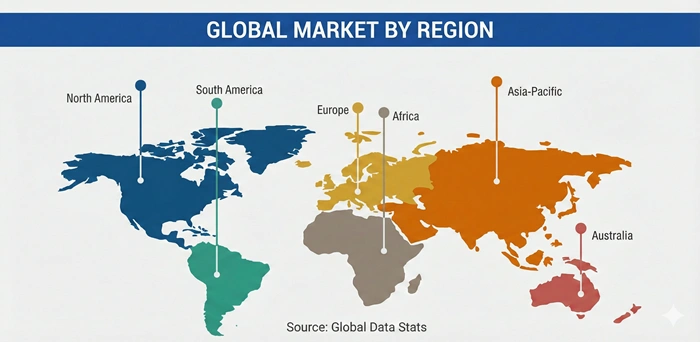
Asia Pacific commands the atomic layer deposition market with dominant share exceeding 48%, driven by concentrated semiconductor manufacturing infrastructure across Taiwan, South Korea, China, and Japan where leading foundries and memory producers operate the world's most advanced fabrication facilities. Taiwan Semiconductor Manufacturing Company alone accounts for over 60% of global advanced logic production, operating multiple facilities incorporating hundreds of atomic layer deposition systems supporting sub-three-nanometer process technologies. South Korean memory manufacturers Samsung and SK Hynix drive substantial equipment demand through aggressive three-dimensional NAND scaling beyond 200 layers and development of next-generation high-bandwidth memory products requiring precision deposition capabilities. Regional semiconductor capital expenditure exceeding 150 billion dollars annually sustains robust equipment sales as manufacturers continuously upgrade fabrication lines supporting technology transitions and capacity expansion addressing artificial intelligence and high-performance computing demand.
China represents the fastest-growing national market within Asia Pacific, expanding at CAGR approaching 15% as government initiatives prioritize semiconductor self-sufficiency through substantial subsidies supporting domestic fabrication capacity development. Chinese memory manufacturers including Yangtze Memory Technologies and logic foundries such as Semiconductor Manufacturing International Corporation invest billions in facility construction and equipment procurement, though United States export restrictions limit access to most advanced systems. Japan maintains significant atomic layer deposition market presence through domestic equipment manufacturers Tokyo Electron and Kokusai Electric alongside substantial captive consumption by manufacturers including Kioxia and Renesas Electronics. Major international equipment suppliers including Applied Materials, ASM International, Lam Research, and Tokyo Electron maintain extensive regional operations encompassing manufacturing facilities, research and development centers, and comprehensive customer support infrastructure positioning Asia Pacific for continued market leadership throughout the forecast period.
North America
Government Incentives and Domestic Manufacturing Renaissance Drive Regional Market Emergence as Fastest-Growing Geography
North America emerges as the fastest-growing regional atomic layer deposition market with projected CAGR of 13.5% through 2033, propelled by unprecedented government support through the CHIPS and Science Act providing 52 billion dollars in subsidies and tax incentives for domestic semiconductor manufacturing expansion. Leading semiconductor companies including Intel, Micron Technology, TSMC, and Samsung collectively announced United States investments exceeding 200 billion dollars in new fabrication facilities scheduled to commence production between 2025 and 2028. These greenfield projects require comprehensive equipment purchases including hundreds of atomic layer deposition systems supporting advanced logic, memory, and specialty semiconductor production, creating concentrated near-term demand benefiting regional equipment suppliers and installation service providers.
The United States atomic layer deposition market specifically exhibits robust growth with Arizona, Ohio, Texas, and New York emerging as semiconductor manufacturing hubs hosting multiple major facility developments. Intel's Arizona expansion alone encompasses 20 billion dollars in new fabrication capacity targeting gate-all-around transistor production requiring extensive deposition equipment installations. Equipment manufacturers including Applied Materials, Lam Research, and Veeco Instruments maintain substantial North American operations providing competitive advantages in customer support, application engineering, and rapid technology deployment. Canadian research institutions contribute to atomic layer deposition technology advancement through academic partnerships with equipment suppliers, though manufacturing installations remain concentrated in the United States. Leading market participants including Applied Materials, ASM International, Tokyo Electron, and Lam Research position North America as strategic growth priority given government support, proximity to innovation centers, and customer commitments supporting sustained regional market expansion through the forecast period.
Top Key Players
-
ASM International N.V. (Netherlands)
-
Applied Materials, Inc. (United States)
-
Tokyo Electron Limited (Japan)
-
Lam Research Corporation (United States)
-
Veeco Instruments Inc. (United States)
-
Beneq Oy (Finland)
-
Picosun Oy (Finland)
-
Kurt J. Lesker Company (United States)
-
Forge Nano Inc. (United States)
-
ALD NanoSolutions Inc. (United States)
-
Entegris Inc. (United States)
-
Oxford Instruments plc (United Kingdom)
-
AIXTRON SE (Germany)
-
Encapsulix SAS (France)
-
Nano-Master Inc. (United States)
Recent Developments
-
Applied Materials (2024): Completed strategic acquisition of Picosun, Finnish atomic layer deposition equipment specialist, strengthening low-temperature process capabilities and expanding specialty ALD portfolio addressing flexible electronics, medical devices, and advanced packaging applications requiring temperature-sensitive substrate processing.
-
ASM International (2022): Finalized acquisition of LPE S.p.A., Italian manufacturer of epitaxial reactors for silicon carbide and silicon, for combination of cash, conditional earn-out, and 631,154 ASM shares, establishing strong position in rapidly growing power electronics equipment market supporting automotive electrification initiatives.
-
Tokyo Electron (2025): Announced plans to invest 170 million dollars in new chip equipment manufacturing facility in Oshu, Japan, expanding production capacity for atomic layer deposition and related semiconductor processing systems addressing growing demand from domestic and international semiconductor manufacturers.
-
Lam Research (2025): Committed 100 billion rupees investment in Karnataka, India, establishing local manufacturing presence supporting Indian semiconductor industry development and positioning company to serve emerging regional market anticipated to capture substantial government incentives.
-
ASM International (2021): Acquired Reno Sub-Systems Inc., supplier of radio frequency matching sub-systems for plasma processing equipment, enhancing vertical integration and strengthening capabilities in plasma-enhanced atomic layer deposition systems critical for advanced semiconductor applications.
Market Trends
Spatial Deposition Technologies and Application Diversification Transform Industry Dynamics and Competitive Landscape
The atomic layer deposition market experiences transformative trends centered on spatial deposition technologies that dramatically improve throughput by eliminating purge steps through physical separation of precursor exposure zones. Traditional temporal approaches sequentially introduce precursors with intervening purge cycles, limiting throughput to roughly one wafer per minute for typical processes. Spatial systems continuously move substrates through separate precursor zones, achieving deposition rates five to ten times faster while sacrificing some conformality in high-aspect-ratio features. This technology proves particularly attractive for advanced packaging, display manufacturing, and energy device applications where modest aspect ratios permit spatial approaches to deliver adequate conformality at substantially lower cost-per-substrate compared to temporal systems. Equipment suppliers increasingly offer both spatial and temporal platforms, enabling customers to optimize technology selection based on specific application requirements balancing throughput, conformality, and cost considerations.
Application diversification beyond traditional semiconductor manufacturing reshapes atomic layer deposition market dynamics as technology adoption expands into energy storage, biomedical devices, and specialty coatings. Solid-state battery developers utilize atomic layer deposition for solid electrolyte layers and protective coatings stabilizing lithium metal anodes, enabling higher energy densities critical for electric vehicle range improvement. Medical device manufacturers explore biocompatible coatings improving implant integration while preventing corrosion, creating specialty equipment demand requiring materials and process conditions differing substantially from semiconductor applications. These emerging segments exhibit higher growth rates than mature semiconductor markets while commanding premium pricing due to specialized requirements and limited competition. Equipment suppliers increasingly develop application-specific systems optimized for non-semiconductor substrates, precursor chemistries, and process conditions, expanding addressable markets while diversifying revenue streams that reduce dependence on cyclical semiconductor capital spending patterns throughout the forecast period.
Segments Covered in the Report
By Type
-
Metal ALD
-
Aluminum Oxide ALD
-
ALD on Polymers
-
Catalytic ALD
-
Plasma Enhanced ALD
By Technology
-
Thermal Atomic Layer Deposition
-
Plasma-Enhanced Atomic Layer Deposition
-
Spatial Atomic Layer Deposition
By Application
-
Semiconductor and Electronics
-
Solar Devices
-
Medical Equipment
-
Others
By End-Use Industry
-
Semiconductor Manufacturing
-
Electronics
-
Energy and Power
-
Healthcare and Biomedical
-
Automotive
-
Others
By Region
-
North America (United States, Canada, Mexico)
-
Europe (Germany, France, United Kingdom, Netherlands, Finland, Rest of Europe)
-
Asia Pacific (China, Taiwan, South Korea, Japan, Singapore, Rest of Asia Pacific)
-
Latin America (Brazil, Rest of Latin America)
-
Middle East & Africa (UAE, Rest of MEA)
Frequently Asked Questions
Question 1: What is the projected size of the atomic layer deposition market by 2033?
Answer: The global atomic layer deposition market is expected to reach approximately USD 10.41 billion by 2033, growing from USD 3.18 billion in 2026. This substantial expansion reflects increasing adoption across advanced semiconductor manufacturing, emerging power electronics applications, and specialty coating markets worldwide.
Question 2: Which region dominates the atomic layer deposition market currently?
Answer: Asia Pacific leads the atomic layer deposition market with over 48% share, driven by concentrated semiconductor manufacturing capacity in Taiwan, South Korea, China, and Japan where leading foundries and memory manufacturers operate advanced facilities. Substantial capital expenditure by regional semiconductor companies sustains dominant equipment demand.
Question 3: What are the primary drivers of atomic layer deposition market growth?
Answer: Key growth drivers include semiconductor industry migration toward sub-three-nanometer process nodes, three-dimensional NAND layer count expansion, gate-all-around transistor adoption, and government initiatives supporting domestic semiconductor capacity expansion. Advanced packaging applications and emerging power electronics markets provide additional growth momentum throughout the forecast period.
Question 4: Which application segment holds the largest atomic layer deposition market share?
Answer: Semiconductor and electronics applications dominate with approximately 65% market share due to critical role in advanced logic fabrication, memory production, and device manufacturing where atomic-level precision proves essential. Technology intensity increases at advanced nodes accelerate equipment demand growth rates exceeding overall semiconductor capital spending.
Question 5: How does throughput limitation impact atomic layer deposition market development?
Answer: Sequential self-limiting chemistry inherent to atomic layer deposition results in significantly slower deposition rates compared to alternative techniques, constraining adoption in high-volume cost-sensitive applications. Equipment manufacturers address this limitation through spatial deposition technologies and process optimization, expanding addressable markets while maintaining critical conformality advantages for advanced semiconductor manufacturing.