
Assisted Living Market Overview
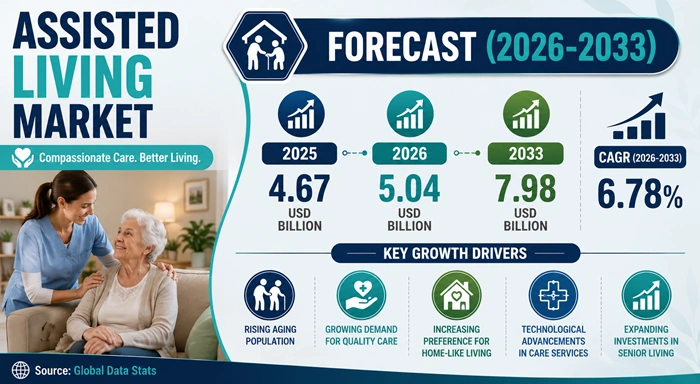
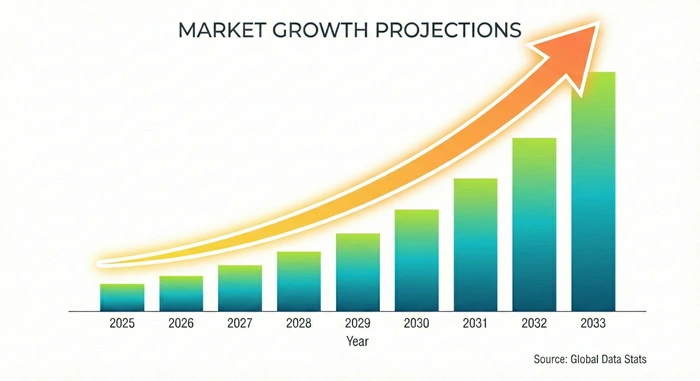
The global assisted living market size is valued at USD 4.67 billion in 2025 and is predicted to increase from USD 5.04 billion in 2026 to approximately USD 7.98 billion by 2033, growing at a CAGR of 6.78% from 2026 to 2033. The aging population worldwide creates unprecedented demand for specialized residential care facilities offering personalized support, medical assistance, and social engagement for seniors who need help with daily activities while maintaining independence and dignity.
AI Impact on the Assisted Living Industry
Artificial Intelligence Revolutionizing Care Delivery and Operational Efficiency
Artificial intelligence is fundamentally transforming the assisted living market by enabling predictive health monitoring, personalized care plans, and operational optimization that enhance resident safety while reducing costs. Machine learning algorithms analyze health data from wearable devices, smart sensors, and electronic health records to predict potential medical emergencies, falls, or cognitive decline episodes before they occur, enabling proactive interventions that prevent hospitalizations and improve outcomes. AI-powered virtual assistants provide companionship, medication reminders, cognitive stimulation exercises, and emergency response capabilities that enhance resident independence while reducing staff workload. Computer vision systems monitor resident movements, detect falls instantly, identify unusual behavior patterns indicating health concerns, and alert caregivers immediately without invasive constant surveillance that compromises privacy and dignity.
Natural language processing enables voice-activated environmental controls, entertainment systems, and communication platforms that help residents with limited mobility or cognitive impairment maintain autonomy and social connections. Predictive analytics optimize staff scheduling based on resident acuity patterns, anticipated care needs, and historical data to ensure adequate coverage during peak demand periods while controlling labor costs. AI-driven administrative platforms automate billing, regulatory compliance documentation, family communication, and operational reporting that traditionally consumed significant staff time and resources. The assisted living market benefits from robotic assistance technologies including medication dispensing systems, meal delivery robots, and mobility support devices that augment human caregivers, enabling them to focus on high-value personal interactions and complex care tasks requiring empathy and clinical judgment.
Growth Factors
Demographic Shifts and Healthcare Cost Pressures Drive Market Expansion
The assisted living market is experiencing robust growth driven by rapidly aging populations worldwide, increasing prevalence of chronic conditions requiring ongoing support, and growing preference for residential care settings offering independence compared to nursing homes. The global population aged 65 and older is projected to reach 1.5 billion by 2050, with the fastest growth occurring in developed nations where life expectancy exceeds 80 years and birth rates remain low. Baby boomer generation entering retirement years in massive numbers creates unprecedented demand for senior housing options, with many seeking assisted living facilities providing the ideal balance between independence and necessary support services. Rising incomes and accumulated wealth among retirees enable more families to afford assisted living fees typically ranging from USD 3000 to USD 6000 monthly, making these facilities accessible beyond only affluent populations.
Healthcare cost containment pressures motivate payers, families, and policymakers to seek alternatives to expensive hospital stays and skilled nursing facilities, with assisted living representing cost-effective middle-ground option for seniors requiring moderate support. Growing awareness about social isolation's detrimental health effects drives seniors toward community living environments where structured activities, dining programs, and social opportunities combat loneliness and depression common among elderly living independently. Changing family structures including geographic dispersion, dual-income households, and smaller family sizes reduce adult children's ability to provide caregiving, creating reliance on professional residential care services. The assisted living market benefits from destigmatization of senior housing, with modern facilities offering resort-like amenities, wellness programs, and vibrant communities that appeal to active seniors viewing assisted living as lifestyle upgrade rather than last resort.
Market Outlook
Innovation and Personalization Define Future Industry Evolution
The assisted living market is positioned for sustained expansion through 2033 as operators invest heavily in facility modernization, technology integration, and specialized care programs addressing diverse senior needs and preferences. Memory care units dedicated to Alzheimer's and dementia residents represent fastest-growing segment as these conditions affect increasing percentages of aging populations requiring specialized secured environments, trained staff, and therapeutic programs. Wellness-focused assisted living emphasizing preventive health, fitness programs, nutritional counseling, and chronic disease management attracts healthier seniors seeking proactive approaches to successful aging. Luxury assisted living targeting affluent seniors offers hotel-like amenities including fine dining, concierge services, spa facilities, and upscale accommodations that command premium pricing while driving industry professionalization.
Technology integration becomes standard expectation with residents and families demanding telehealth capabilities, family communication portals, electronic health records, and smart home features that enhance convenience, safety, and care quality. Regulatory frameworks continue evolving to ensure resident safety, care quality, and financial transparency while balancing operational feasibility and affordability considerations. Staffing challenges drive innovation in care delivery models including technology-augmented caregiving, cross-training programs, and competitive compensation strategies attracting quality employees to demanding industry. The assisted living market witnesses consolidation as large operators acquire independent facilities to achieve scale economies, while boutique operators differentiate through specialized programs, cultural focus, or unique amenities appealing to specific demographic segments seeking tailored experiences.
Expert Speaks
-
Debra A. Cafaro, former Chairman and Chief Executive Officer of Ventas, Inc., emphasized that senior housing and healthcare real estate sectors experience structural growth driven by unstoppable demographic trends, with innovative operators who embrace technology, deliver exceptional experiences, and maintain operational excellence positioned to capture expanding market opportunities and generate sustainable returns.
-
Christopher Winkle, President and Chief Executive Officer of Brookdale Senior Living, highlighted that personalized care, resident choice, and associate engagement represent strategic priorities as Brookdale transforms operational models to meet evolving senior preferences, with investments in technology, clinical programs, and associate training enhancing quality outcomes while improving efficiency and financial performance.
-
Dawn Kussow, Chief Executive Officer of Sonida Senior Living, stated that the assisted living industry must innovate beyond traditional service models to address changing consumer expectations, emphasizing wellness, purpose, and community connections that enable residents to thrive rather than simply receive custodial care, creating differentiated value propositions that justify premium positioning.
Key Report Takeaways
-
North America leads the assisted living market with approximately 52% market share in 2025, driven by large elderly population, established senior housing infrastructure, high per capita income enabling affordability, strong regulatory frameworks ensuring quality, and cultural acceptance of residential care as preferred aging option.
-
Asia Pacific is growing the fastest with a projected CAGR of 8.20% from 2026 to 2033, fueled by rapidly aging populations particularly in China and Japan, rising incomes enabling care affordability, changing family structures reducing home caregiving capacity, and government initiatives supporting senior care infrastructure development.
-
Elderly residents represent the primary customer segment for assisted living facilities, accounting for approximately 87% of market demand as individuals aged 75 and older increasingly require assistance with activities of daily living while preferring residential settings maintaining independence over institutional nursing homes.
-
The assisted living facilities segment contributes the most to overall market revenue with approximately 48% share in 2025, reflecting that traditional assisted living combining residential housing with personal care services represents largest and most established senior housing category serving moderate-acuity residents.
-
Healthcare services dominate with approximately 44% market share as medical assistance, medication management, nursing support, and chronic disease monitoring represent core value propositions differentiating assisted living from independent senior housing while addressing resident health needs.
-
The memory care segment will grow quickly with an estimated CAGR of 8.50% and market share expanding from 26% to 31% by 2033, driven by increasing Alzheimer's and dementia prevalence, growing recognition of specialized care needs, and willingness of families to pay premiums for dedicated secure units with trained staff.
Market Scope
| Report Coverage | Details |
|---|---|
| Market Size by 2033 | USD 7.98 Billion |
| Market Size by 2025 | USD 4.67 Billion |
| Market Size by 2026 | USD 5.04 Billion |
| Market Growth Rate from 2026 to 2033 | CAGR of 6.78% |
| Dominating Region | North America |
| Fastest Growing Region | Asia Pacific |
| Base Year | 2025 |
| Forecast Period | 2026 to 2033 |
| Segments Covered | Facility Type, Service, Application, Region |
| Regions Covered | North America, Europe, Asia Pacific, Latin America, Middle East and Africa |
Market Dynamics
Driver Impact Analysis
Aging Demographics and Chronic Disease Prevalence Propel Market Growth
The explosive growth of elderly populations worldwide represents the most powerful driver propelling the assisted living market toward sustained expansion across all geographic regions and socioeconomic segments. The global 65-plus population is growing faster than any other age group, driven by declining birth rates, increased life expectancy from medical advances, and massive baby boomer cohorts entering senior years. By 2030, adults aged 65 and older are projected to outnumber children under 15 globally for the first time in human history, creating unprecedented demand for senior care services and housing options. The oldest-old segment aged 85 and above grows even more rapidly, representing individuals most likely requiring assisted living services due to functional limitations, chronic conditions, and cognitive impairment incidence increasing dramatically with age.
Chronic disease prevalence rises exponentially with aging, with over 80% of seniors living with at least one chronic condition and nearly 70% having two or more, creating care complexity requiring professional support beyond family capabilities. Conditions including diabetes, heart disease, arthritis, osteoporosis, and respiratory diseases impair mobility, stamina, and ability to perform activities of daily living independently. The assisted living market benefits from Medicare and insurance coverage for healthcare services within facilities, reducing out-of-pocket costs for residents while enabling operators to provide comprehensive care addressing medical needs alongside housing and personal assistance. Alzheimer's disease and related dementias affect increasing percentages of elderly populations, with memory care representing fastest-growing assisted living segment as families seek specialized secure environments with trained staff managing complex behavioral symptoms and safety concerns inherent to cognitive impairment.
| Driver | ≈ % Impact on CAGR Forecast | Geographic Relevance | Impact Timeline |
|---|---|---|---|
| Aging Population Growth | +2.40% | Global, strongest in developed nations | 2026-2033 |
| Chronic Disease Prevalence | +1.80% | Developed markets worldwide | 2026-2033 |
| Family Structure Changes | +1.30% | North America, Europe, Urban Asia | 2026-2033 |
| Healthcare Cost Containment | +0.90% | Global, payer-driven markets | 2026-2033 |
Restraints Impact Analysis
High Costs and Staffing Challenges Limit Market Penetration
The assisted living market confronts significant barriers related to affordability constraints, severe staffing shortages, and regulatory complexity that limit access, constrain growth, and pressure operator profitability. Assisted living costs averaging USD 4500 monthly create affordability barriers for middle-income seniors who don't qualify for Medicaid assistance yet lack sufficient retirement savings to cover years or decades of facility fees. Medicare doesn't cover assisted living room and board costs, leaving families responsible for substantial ongoing expenses that deplete retirement assets and create difficult financial decisions. Limited long-term care insurance penetration among current elderly populations means most residents rely on personal savings that may prove inadequate for extended stays, forcing difficult transitions to lower-cost nursing homes as funds deplete.
Severe staffing shortages plague the assisted living market as caregiving positions offer modest wages, physically demanding work, emotionally challenging situations, and limited career advancement opportunities that struggle competing with alternative employment options. High turnover rates exceeding 50% annually in many facilities create continuity concerns, training cost burdens, and care quality challenges as inexperienced staff provides critical personal assistance and health monitoring. The assisted living market suffers from negative perceptions positioning caregiving as low-skilled work despite requiring compassion, clinical knowledge, problem-solving abilities, and emotional resilience managing complex resident needs and family dynamics. Regulatory requirements vary dramatically across jurisdictions, creating compliance complexity for multi-state operators while imposing costs related to staffing ratios, training mandates, physical plant standards, and documentation requirements that challenge smaller independent operators lacking administrative scale.
| Restraint | ≈ % Impact on CAGR Forecast | Geographic Relevance | Impact Timeline |
|---|---|---|---|
| Affordability Constraints | -1.60% | Middle-income segments globally | 2026-2033 |
| Staffing Shortages | -1.40% | North America, developed markets | 2026-2033 |
| Regulatory Complexity | -0.85% | Highly regulated markets | 2026-2033 |
Opportunities Impact Analysis
Technology Integration and Specialized Programs Create Growth Avenues
Technology adoption presents enormous opportunities for the assisted living market as digital health platforms, smart facility systems, and operational software enhance care quality, improve safety, and reduce costs while addressing staffing constraints through efficiency gains. Remote patient monitoring systems track vital signs, activity patterns, sleep quality, and medication adherence continuously, enabling early intervention preventing acute episodes requiring hospitalization. Telehealth integration expands access to specialists, mental health services, and routine consultations without transportation burdens or infection risks associated with clinical visits. Robotic assistance including medication dispensing, meal delivery, and mobility support augments human caregivers, enabling staff to focus on high-value personal interactions requiring empathy and complex clinical judgment.
Specialized program development targeting specific demographic segments creates differentiation opportunities and premium pricing potential in increasingly competitive markets. LGBTQ-affirming assisted living addressing unique needs of sexual and gender minorities who may have experienced discrimination in traditional healthcare settings and lack family support systems creates underserved niche market. Cultural-specific facilities serving ethnic communities offering native language staff, culturally appropriate cuisine, familiar cultural activities, and shared heritage connections appeal to immigrant populations preferring culturally resonant environments. The assisted living market benefits from wellness-focused positioning emphasizing preventive health, fitness programs, cognitive stimulation, purpose-driven activities, and community engagement that attracts healthier active seniors viewing facilities as lifestyle upgrades rather than medical necessities, enabling earlier moves and longer stays generating revenue growth.
| Opportunity | ≈ % Impact on CAGR Forecast | Geographic Relevance | Impact Timeline |
|---|---|---|---|
| Technology Integration | +1.70% | Developed markets, tech-savvy operators | 2027-2033 |
| Specialized Programs | +1.45% | Urban markets, affluent segments | 2026-2033 |
| Emerging Market Expansion | +1.20% | Asia Pacific, Latin America | 2027-2033 |
| Value-Based Care Models | +0.95% | Integrated healthcare systems | 2028-2033 |
Segment Analysis
Assisted Living Facilities
Market Leadership Through Balanced Independence and Support Services
The assisted living facilities segment dominates the assisted living market with approximately 48% share in 2025, reflecting the segment's positioning as ideal middle-ground option for seniors requiring moderate assistance with activities of daily living while maintaining maximum independence and autonomy. This segment's market leadership stems from assisted living's flexible care model accommodating diverse resident needs through personalized service plans ranging from minimal assistance to substantial daily support without institutional nursing home environment. Assisted living facilities combine private or semi-private residential units with communal dining, social activities, housekeeping, transportation, medication management, and personal care assistance enabling residents to age in place as needs increase. The segment benefits from strong consumer preference for residential settings preserving privacy, choice, and dignity compared to nursing homes while providing safety, social engagement, and care access unavailable in independent living alone.
North America shows particularly strong assisted living facilities adoption with approximately 54% regional segment share and CAGR of 6.65%, driven by well-established senior housing industry, regulatory frameworks specifically governing assisted living, and cultural acceptance of residential care as preferred option for aging parents. Leading operators in the assisted living market including Brookdale Senior Living, Sunrise Senior Living, Atria Senior Living, Five Star Senior Living, and Holiday Retirement dominate through extensive facility networks, operational expertise, brand recognition, and ability to serve diverse resident acuity levels within single campuses. The segment continues innovating through neighborhood models creating smaller household-style living groups within larger buildings, universal design principles supporting aging in place, and amenities including fitness centers, bistros, theaters, and beauty salons rivaling resort offerings. Memory care units within assisted living facilities represent particularly strong growth area as dedicated secured environments with specialized programming serve increasing numbers of dementia residents requiring supervision and therapeutic activities unavailable in general assisted living settings.
Memory Care
Fastest Growing Segment Addressing Alzheimer's and Dementia Prevalence
The memory care segment represents the fastest-growing category in the assisted living market with a projected CAGR of 8.50% from 2026 to 2033, driven by explosive growth in Alzheimer's disease and related dementias affecting over 55 million people globally with prevalence expected to triple by 2050 as populations age. Memory care facilities provide specialized secured environments preventing wandering, trained staff managing complex behavioral symptoms, structured daily routines reducing confusion and anxiety, and therapeutic programming including reminiscence therapy, music therapy, and sensory stimulation addressing cognitive impairment. Families increasingly recognize that dementia care requires expertise, patience, and environmental modifications beyond capabilities of general assisted living or home care, motivating moves to specialized memory care despite premium pricing typically 20-30% above standard assisted living fees.
Asia Pacific shows particularly explosive memory care growth with CAGR exceeding 9.20%, driven by rapidly increasing dementia prevalence as populations age, cultural shifts regarding family caregiving obligations, and infrastructure development addressing historically underserved segment. Key players serving the assisted living market including Sunrise Senior Living, Atria Senior Living, Brookdale Senior Living, Silverado, and specialized memory care operators like Arden Courts invest heavily in staff training, facility design, and programming specifically addressing dementia symptoms and needs. The segment benefits from growing clinical understanding of dementia care best practices, evidence-based program development, and outcome measurement demonstrating specialized care's value compared to general settings. Technology integration including GPS tracking preventing elopements, circadian lighting supporting sleep-wake cycles, and digital therapeutic platforms delivering cognitive exercises enhances memory care capabilities while addressing staffing constraints through efficiency improvements and monitoring support.
Regional Insights
North America
Market Dominance Through Established Infrastructure and Cultural Acceptance
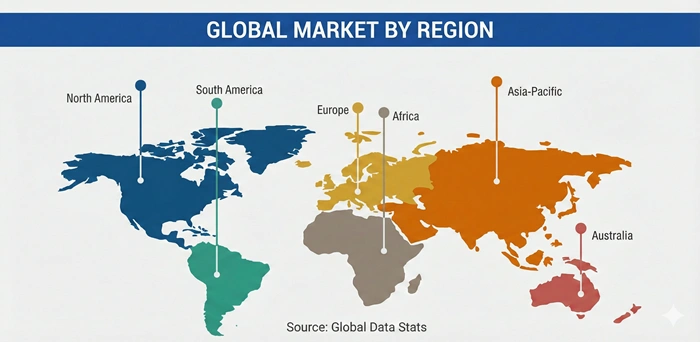
North America maintains its position as the dominant region in the assisted living market, commanding approximately 52% of global market share in 2025 with an estimated value of USD 2.43 billion, projected to reach USD 3.89 billion by 2033 growing at a CAGR of 6.50%. The region's leadership stems from large elderly population exceeding 60 million aged 65 and older in United States alone, well-established senior housing industry with thousands of facilities and mature operational standards, and strong cultural acceptance of residential care as appropriate aging option. Favorable regulatory environments in most states balance resident protection with operational feasibility, creating stable business conditions attracting capital investment from real estate investment trusts, private equity, and institutional investors.
The United States dominates North American demand with approximately 85% regional share driven by high per capita income enabling affordability, Medicare and Medicaid programs supporting healthcare services within facilities, and extensive long-term care insurance penetration among affluent segments covering significant portions of costs. Leading operators serving the North American assisted living market including Brookdale Senior Living, Sunrise Senior Living, Atria Senior Living, Holiday Retirement, and regional chains like Integral Senior Living operate thousands of facilities across urban, suburban, and rural communities. Canada contributes approximately 13% of North American revenue through similar demographic patterns, government support for senior care, and growing acceptance of assisted living as preferable alternative to institutional nursing homes or overburdened family caregiving.
Asia Pacific
Fastest Regional Growth Through Demographic Pressure and Economic Development
Asia Pacific represents the fastest-growing region in the assisted living market with a projected CAGR of 8.20% from 2026 to 2033, with market value expected to increase from USD 0.84 billion in 2025 to USD 1.51 billion by 2033, capturing expanding global revenue share. The region's exceptional growth trajectory stems from rapidly aging populations particularly in Japan, China, and South Korea where over 25% of populations will exceed 65 years old by 2030, creating unprecedented demand for senior care services and housing. Economic development and rising incomes make assisted living increasingly affordable for middle-class families, while urbanization and smaller living spaces make home-based elder care impractical.
Cultural shifts regarding filial piety and family caregiving obligations create openness to professional residential care previously stigmatized in many Asian societies, particularly among younger generations balancing career demands with eldercare responsibilities. Leading companies serving the Asia Pacific assisted living market include Japanese operators like Sompo Holdings and Nichiigakkan, Chinese developers including China Vanke and China Resources, and international entrants like Orpea and Aegis Living adapting Western models to Asian preferences. The region benefits from government initiatives including subsidies, tax incentives, and regulatory frameworks encouraging private sector investment in senior care infrastructure addressing massive projected shortfalls. Japan leads regional market maturity with sophisticated service models, quality standards, and consumer acceptance providing templates for China, India, and Southeast Asian nations developing nascent assisted living sectors.
Top Key Players
-
Brookdale Senior Living Inc. (United States)
-
Sunrise Senior Living (United States)
-
Atria Senior Living Group (United States)
-
Five Star Senior Living Inc. (United States)
-
Holiday Retirement (United States)
-
Sonida Senior Living, Inc. (United States)
-
Integral Senior Living (United States)
-
Prestige Senior Living LLC (United States)
-
Silverado Senior Living (United States)
-
Aegis Living (United States)
-
Orpea (France)
-
HC-One (United Kingdom)
-
Sompo Holdings, Inc. (Japan)
-
Nichiigakkan Co., Ltd. (Japan)
-
Ramsay Health Care Limited (Australia)
Recent Developments
-
Brookdale Senior Living (2025): Announced strategic partnership with major health system in January 2025 integrating clinical services, care coordination, and value-based payment models across assisted living portfolio, enhancing resident outcomes while reducing hospitalizations and emergency department utilization through proactive health management and embedded medical services within residential communities.
-
Sunrise Senior Living (2024): Completed acquisition of regional assisted living operator in November 2024 adding 18 properties across Southeast United States, expanding geographic footprint while gaining experienced operational team and established relationships with referral sources including hospitals, physicians, and senior service organizations strengthening market position in high-growth Sunbelt markets.
-
Sonida Senior Living (2024): Launched comprehensive technology platform in September 2024 integrating electronic health records, family communication portal, staff scheduling optimization, and predictive analytics capabilities across entire portfolio, improving care coordination, operational efficiency, and family satisfaction while reducing administrative burden and enhancing resident safety through real-time monitoring.
-
Atria Senior Living (2023): Invested USD 75 million in facility renovations and upgrades during 2023, modernizing physical plants, adding memory care units, expanding wellness centers, and implementing smart home technologies including voice-activated environmental controls and fall detection systems, enhancing resident experience while increasing facility competitiveness and enabling premium pricing.
-
Holiday Retirement (2023): Expanded dedicated memory care portfolio through development of specialized secured neighborhoods within existing facilities during 2023, training staff in evidence-based dementia care practices, implementing therapeutic programming, and creating sensory-rich environments supporting cognitive function while addressing growing segment demand generating incremental revenue from premium pricing and higher occupancy.
Market Trends
Wellness Focus and Aging-in-Place Models Reshape Service Delivery
The assisted living market is experiencing transformative shifts driven by wellness-centered philosophies, aging-in-place care models, and hospitality-inspired experiences that reposition facilities from medical-focused institutions to vibrant lifestyle communities. Preventive health programming including fitness classes, nutritional counseling, chronic disease management, and falls prevention initiatives helps residents maintain functional abilities longer, delay progression to higher acuity levels, and optimize quality of life. Holistic wellness approaches addressing physical, mental, social, and spiritual dimensions through diverse activities, purpose-driven programs, intergenerational connections, and community service opportunities combat isolation and depression while promoting engagement and meaning. Technology integration including telehealth platforms, remote monitoring systems, electronic health records, and family communication portals becomes standard expectation rather than differentiator.
Person-centered care models emphasizing resident choice, preferences, routines, and autonomy replace traditional task-oriented approaches, with flexible dining times, personalized activity options, and individualized care plans respecting dignity and supporting independence. The assisted living market witnesses design innovation including household models creating intimate living groups, universal design principles supporting accessibility, outdoor spaces promoting nature exposure and physical activity, and resort-inspired amenities including bistros, theaters, fitness centers, and salon services enhancing resident experience. Specialized programming targeting specific populations including veterans, LGBTQ seniors, cultural communities, and active younger residents creates niche differentiation. Sustainability initiatives incorporating energy efficiency, local food sourcing, and environmental consciousness appeal to values-driven residents while reducing operating costs through utility savings and operational efficiencies.
Segments Covered in the Report
By Facility Type
-
Independent Living
-
Memory Care
-
Assisted Living Facilities
By Service
-
Residential
-
Healthcare
-
Food and Hospitality
-
Others
By Application
-
Elderly
-
Disabled
By End User
-
Private Payers
-
Government Payers
-
Others
By Region
-
North America
-
United States
-
Canada
-
Mexico
-
-
Europe
-
United Kingdom
-
Germany
-
France
-
Italy
-
Spain
-
Rest of Europe
-
-
Asia Pacific
-
China
-
Japan
-
India
-
South Korea
-
Australia
-
Rest of Asia Pacific
-
-
Latin America
-
Brazil
-
Argentina
-
Rest of Latin America
-
-
Middle East and Africa
-
United Arab Emirates
-
Saudi Arabia
-
South Africa
-
Rest of Middle East and Africa
-
Frequently Asked Questions
Question 1: What is the projected assisted living market size by 2033?
Answer: The assisted living market is projected to reach USD 7.98 billion by 2033, growing from USD 5.04 billion in 2026. This represents steady expansion driven by aging demographics, chronic disease prevalence, changing family structures, and growing preference for residential care settings balancing independence with necessary support services.
Question 2: Which region dominates the global assisted living market share?
Answer: North America dominates the global assisted living market with approximately 52% market share in 2025, valued at USD 2.43 billion. This leadership position reflects large elderly population, established senior housing infrastructure, high affordability levels, favorable regulatory environments, and strong cultural acceptance of residential care as preferred aging option.
Question 3: What factors are driving the assisted living market growth?
Answer: Key factors driving assisted living market growth include rapidly aging populations globally, increasing chronic disease prevalence requiring ongoing support, changing family structures reducing home caregiving capacity, healthcare cost containment pressures favoring residential care over hospitals, and growing consumer preference for community living combating social isolation. Technology integration and specialized programming also contribute significantly to market expansion.
Question 4: Which facility type segment holds the largest share in the assisted living market?
Answer: The assisted living facilities segment holds the largest share in the assisted living market with approximately 48% in 2025. This dominance reflects the segment's positioning as ideal middle-ground option combining residential housing with personalized care services, maintaining resident independence while providing necessary assistance with activities of daily living.
Question 5: What are the emerging trends in the assisted living market?
Answer: Emerging trends in the assisted living market include wellness-centered care models emphasizing preventive health and holistic wellbeing, aging-in-place approaches supporting residents through increasing acuity levels, hospitality-inspired experiences with resort-like amenities, person-centered care respecting individual preferences and autonomy, and technology integration including telehealth, remote monitoring, and smart facility systems. Specialized programming targeting specific demographic segments and sustainability initiatives also gain significant traction.