Artificial Intelligence in Genomics Market Overview
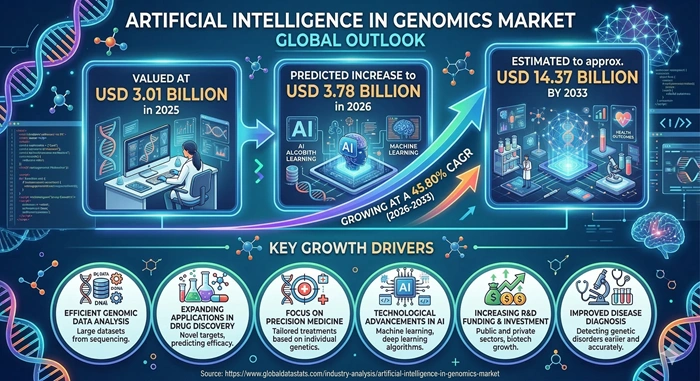
The global artificial intelligence in genomics market size is valued at USD 3.01 billion in 2025 and is predicted to increase from USD 3.78 billion in 2026 to approximately USD 14.37 billion by 2033, growing at a CAGR of 45.80% from 2026 to 2033. The market is gaining exceptional momentum as healthcare systems, research institutions, and pharmaceutical companies increasingly adopt AI-powered tools to decode genomic data, accelerate drug discovery, and enable precision medicine at scale.
AI Impact on the Artificial Intelligence in Genomics Industry
The Convergence of Machine Learning and Genomic Science Is Fundamentally Redefining How Researchers Understand Disease Biology, Drug Targets, and Personalized Treatment Pathways
Artificial intelligence is not just a tool within the genomics space — it is the central force reshaping the entire field. Deep learning algorithms can now analyze whole-genome sequences in hours rather than weeks, identifying disease-causing variants, gene expression patterns, and molecular biomarkers with a level of accuracy that was previously unachievable. This capability is directly enabling earlier diagnosis of genetic disorders and more targeted therapeutic development across oncology, rare diseases, and metabolic conditions.
What makes AI particularly transformative in this domain is its ability to synthesize multi-dimensional biological datasets — genomics, proteomics, transcriptomics, and clinical records — into unified, clinically actionable insights. Models trained on population-scale genomic databases are now predicting individual disease risk with high confidence, powering the next generation of preventive medicine. As sequencing costs continue to fall and data volumes grow exponentially, the role of AI in extracting meaningful knowledge from genomic information will only deepen.
Growth Factors
Declining Sequencing Costs, Expanding Genomic Databases, and the Global Push Toward Precision Medicine Are Creating Powerful and Sustained Market Growth Conditions
The artificial intelligence in genomics market is experiencing exceptionally rapid growth driven by the sharp reduction in next-generation sequencing (NGS) costs over the past decade. The cost of sequencing a human genome has dropped from millions of dollars to under $200 today, making large-scale genomic studies feasible for hospitals, academic institutions, and smaller biotech companies. This democratization of genomic data generation is producing the massive datasets that AI algorithms require to train effectively, creating a powerful feedback loop between data availability and analytical capability.
The global push toward precision medicine — where treatments are tailored to an individual's genetic profile — is another foundational growth driver. Governments across the United States, United Kingdom, China, and several European nations have launched national genomics initiatives that are generating population-scale data and mandating the adoption of AI-powered analytical tools. These programs are directly funding research collaborations between genomics companies, technology firms, and academic medical centers, accelerating both scientific discovery and commercial product development across the sector.
Market Outlook
Extraordinary CAGR Reflects the Early-Stage Nature of the Market and the Enormous Unmet Need for Intelligent Genomic Interpretation Across Clinical and Research Settings
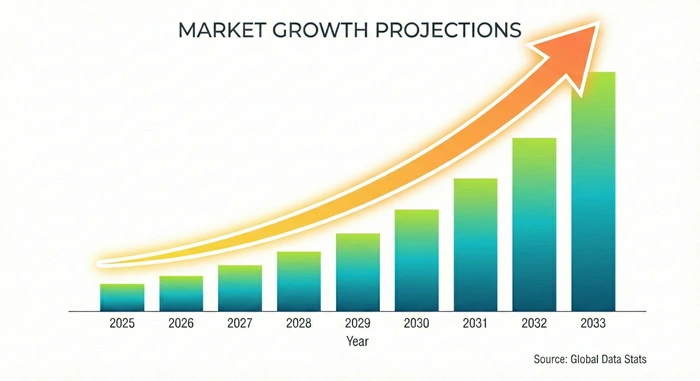
The outlook for the artificial intelligence in genomics market between 2026 and 2033 is among the most compelling in the entire life sciences sector. The market is still in its early commercial phase, meaning that the foundational infrastructure — large genomic databases, standardized data formats, and validated AI models — is only now reaching the maturity needed to support widespread clinical deployment. This creates a significant runway for growth as adoption transitions from academic and research settings into routine clinical workflows.
Pharmaceutical and biotechnology companies are increasingly embedding AI-genomics platforms into their drug discovery pipelines, using them to identify novel drug targets, predict patient response to therapies, and design precision clinical trials. The biosimilar and oncology segments are particularly active, with multiple late-stage products relying on genomic AI for companion diagnostics. As regulatory agencies in the U.S., EU, and Asia develop clearer frameworks for AI-assisted genomic diagnostics, market adoption is expected to accelerate sharply, reinforcing the strong growth trajectory projected through 2033.
Expert Speaks
-
Albert Bourla, CEO of Pfizer Inc. (USA): "AI-driven genomics is fundamentally changing how we identify drug targets and design clinical trials. The ability to analyze large genomic datasets in real time is compressing timelines and improving our probability of success in drug development significantly."
-
Chris Viehbacher, CEO of Biogen Inc. (USA): "Understanding the genetic basis of neurological diseases has always been our north star. AI in genomics is giving us tools to finally decode complex polygenic conditions and develop therapies that were previously out of reach."
-
Pascal Soriot, CEO of AstraZeneca plc (United Kingdom): "Genomics and AI together are enabling us to move from population-level medicine to truly individual-level treatment. We are integrating these capabilities across our oncology pipeline and seeing extraordinary results in patient stratification and biomarker discovery."
Key Report Takeaways
-
North America dominates the global artificial intelligence in genomics market, holding approximately 42.15% revenue share in 2025, driven by the presence of leading genomics companies, robust NIH and private R&D funding, advanced healthcare infrastructure, and a highly active biotech ecosystem that is rapidly commercializing AI-genomics applications.
-
Asia-Pacific is the fastest-growing regional market, projected to expand at a CAGR exceeding 49% through 2033, fueled by large national genomics programs in China and India, rapidly growing digital health infrastructure, and increasing government investment in precision medicine and life sciences innovation.
-
Pharmaceutical and biotechnology companies represent the largest end-user segment, as they are the most intensive consumers of AI-powered genomic analysis tools for drug target identification, clinical trial design, companion diagnostics, and patient stratification across multiple disease areas.
-
Drug discovery and development is the leading application segment within the AI in genomics market, accounting for the highest revenue share in 2025 and reflecting the pharmaceutical industry's deep reliance on genomic insights to accelerate and de-risk the drug development process.
-
Machine learning (ML) holds the largest technology segment share, capturing approximately 45.32% of market revenue in 2025, as ML-based algorithms are the most widely adopted approach for variant calling, disease prediction, gene expression analysis, and multi-omics data integration across genomics workflows.
-
Generative AI and large language models applied to genomics are the fastest-growing future technology segment, projected to grow at a CAGR above 52% through 2033, driven by their emerging ability to design synthetic gene sequences, predict protein folding with high accuracy, and generate novel hypotheses from multi-omics datasets.
Market Scope
| Report Coverage | Details |
|---|---|
| Market Size by 2033 | USD 14.37 Billion |
| Market Size by 2025 | USD 3.01 Billion |
| Market Size by 2026 | USD 3.78 Billion |
| Market Growth Rate from 2026 to 2033 | CAGR of 45.80% |
| Dominating Region | North America |
| Fastest Growing Region | Asia-Pacific |
| Base Year | 2025 |
| Forecast Period | 2026 – 2033 |
| Segments Covered | By Technology, By Application, By End User, By Region |
| Regions Covered | North America, Europe, Asia-Pacific, Latin America, Middle East & Africa |
Market Dynamics
Drivers Impact Analysis
Surging Volume of Genomic Data, Expanding Precision Medicine Initiatives, and Growing Pharmaceutical R&D Investment Are the Core Forces Propelling the AI in Genomics Market
| Driver | ≈ % Impact on CAGR Forecast | Geographic Relevance | Impact Timeline |
|---|---|---|---|
| Declining cost of next-generation sequencing enabling large-scale genomic studies | ~30% | Global | Short to Long Term |
| Growing national and institutional genomics programs generating population-scale data | ~25% | North America, Europe, Asia-Pacific | Medium to Long Term |
| Rising pharmaceutical investment in AI-powered drug discovery and target identification | ~22% | North America, Europe | Short to Medium Term |
| Increasing adoption of precision medicine and companion diagnostics | ~15% | North America, Europe | Medium to Long Term |
| Expanding cloud computing infrastructure supporting genomics data processing at scale | ~8% | Global | Short to Medium Term |
The artificial intelligence in genomics market is being propelled by an extraordinary convergence of data availability and analytical power. As whole-genome and whole-exome sequencing becomes standard in both clinical and research settings, the volume of genomic data generated annually is growing at an exponential rate. AI platforms are the only tools capable of processing and interpreting this data at the speed and scale required for clinical utility, making their adoption not just beneficial but operationally essential for institutions working with genomic information.
National genomics programs are another critical driver. Initiatives such as the UK Biobank, the U.S. All of Us Research Program, and China's Precision Medicine Initiative are collectively generating datasets encompassing millions of patient genomes. These programs not only produce the training data that AI models require but also validate the clinical utility of AI-genomics tools, accelerating regulatory approval and institutional adoption globally. The commercial pipeline of products emerging from these collaborations is expected to sustain strong market growth well beyond the 2033 forecast horizon.
Restraints Impact Analysis
Data Privacy Concerns, Algorithmic Bias Risks, Regulatory Ambiguity, and High Implementation Costs Are the Principal Barriers Constraining Broader Market Adoption
| Restraint | ≈ % Impact on CAGR Forecast | Geographic Relevance | Impact Timeline |
|---|---|---|---|
| Stringent data privacy regulations limiting cross-border genomic data sharing | ~30% | Europe, North America | Ongoing |
| Risk of algorithmic bias due to underrepresentation of non-European populations in training datasets | ~27% | Global | Medium to Long Term |
| High cost and technical complexity of AI-genomics platform implementation | ~20% | Emerging Markets | Short to Medium Term |
| Lack of standardized data formats hindering interoperability across genomics platforms | ~15% | Global | Medium Term |
| Uncertain regulatory frameworks for AI-assisted genomic diagnostics in several markets | ~8% | Asia-Pacific, Latin America, MEA | Medium Term |
Data privacy and security represent the most persistent structural restraint in the AI in genomics market. Genomic data is uniquely sensitive — it is immutable, personally identifying, and carries implications for entire biological families, not just the individual patient. Regulatory frameworks such as GDPR in Europe and HIPAA in the United States impose strict controls on how genomic data is collected, stored, and shared, which can limit the size and diversity of datasets available to train AI models. These constraints are particularly challenging for companies seeking to build globally generalizable algorithms.
Algorithmic bias is an equally serious concern that is drawing increasing attention from researchers, regulators, and ethicists. A significant proportion of genomic studies to date have been conducted on populations of European descent, meaning that AI models trained on these datasets may perform less accurately when applied to individuals of African, Asian, or Latin American ancestry. Addressing this bias requires deliberate, resource-intensive efforts to diversify genomic databases — a process that will take years to complete and represents a meaningful limitation on the near-term clinical utility of AI-genomics tools across global patient populations.
Opportunities Impact Analysis
Generative AI Applications, Rare Disease Research, Liquid Biopsy Integration, and Expanding Emerging Market Genomics Programs Represent the Highest-Value Growth Opportunities
| Opportunity | ≈ % Impact on CAGR Forecast | Geographic Relevance | Impact Timeline |
|---|---|---|---|
| Application of generative AI and large language models to genomic sequence design and analysis | ~32% | North America, Europe | Short to Medium Term |
| Growing use of AI-genomics in rare disease identification and orphan drug development | ~25% | North America, Europe | Medium to Long Term |
| Integration of AI with liquid biopsy platforms for early cancer detection | ~22% | North America, Asia-Pacific | Short to Medium Term |
| Expanding genomics programs and digital health investment in Asia-Pacific and MEA | ~13% | Asia-Pacific, MEA | Medium to Long Term |
| Development of AI-powered direct-to-consumer genomics products and wellness applications | ~8% | North America, Europe | Short to Medium Term |
Generative AI represents perhaps the most transformative near-term opportunity in the AI in genomics market. Models such as large biological language models — trained on protein sequences, gene regulatory elements, and genomic annotations — are demonstrating the ability to design novel therapeutic proteins, predict gene editing outcomes, and generate synthetic genomic sequences for research purposes. These capabilities are attracting substantial venture capital investment and academic interest, positioning generative genomics AI as a foundational technology for the next decade of life sciences innovation.
The integration of AI with liquid biopsy — the analysis of circulating tumor DNA and other biomarkers in blood samples — is another high-priority opportunity. AI-powered genomic analysis of liquid biopsy samples is enabling earlier and more sensitive detection of cancers before symptoms develop, with potential to transform oncology screening programs globally. Companies investing in this intersection of AI, NGS, and liquid biopsy are entering a market segment where clinical need is high, competitive differentiation is significant, and regulatory momentum is growing.
Segment Analysis
By Technology
Machine Learning Holds Commanding Market Leadership While Generative AI Emerges as the Highest-Velocity Growth Technology Within the AI in Genomics Ecosystem
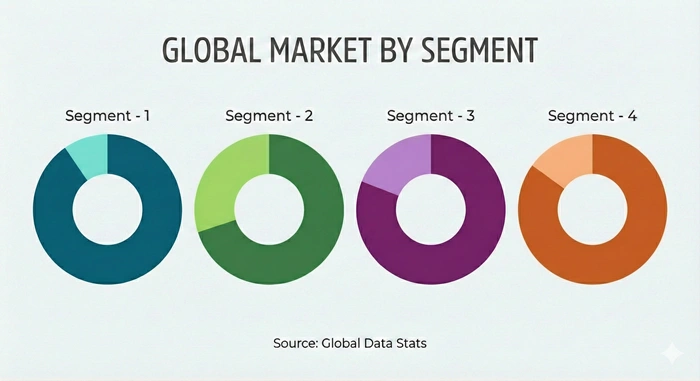
Machine learning dominates the technology segment of the artificial intelligence in genomics market, accounting for approximately 45.32% revenue share in 2025. ML algorithms — particularly deep learning neural networks and ensemble methods — are the workhorses of genomic variant calling, gene expression profiling, and disease risk prediction. Their dominance reflects the maturity of the technology, the large volume of validated training datasets now available, and the breadth of commercial applications already deployed in clinical and pharmaceutical settings. North America leads this technology segment, with companies such as Illumina Inc., Google DeepMind (through its AlphaFold and genomics platforms), and IBM Watson Health driving commercial adoption across research and clinical environments.
Natural language processing (NLP) applied to genomics is a fast-growing sub-technology, currently representing approximately 18% of the market and projected to grow at a CAGR of 48.60% through 2033. NLP is being used to extract genomic insights from unstructured clinical notes, scientific literature, and patient records, enabling richer context for genomic interpretation. The Asia-Pacific region is the fastest-growing geography for NLP-genomics applications, with Chinese technology companies and South Korean biotech firms investing heavily in platforms that bridge clinical informatics and genomic science. Sophia Genetics SA and Tempus AI are among the notable players expanding NLP capabilities within their genomics platforms across global markets.
By Application
Drug Discovery and Development Leads Application Revenue While Precision Oncology Emerges as the Fastest-Growing Clinical Use Case in the AI in Genomics Market
Drug discovery and development is the anchor application segment in the artificial intelligence in genomics market, representing approximately 38.47% of total revenue in 2025. Pharmaceutical companies are using AI-genomics platforms to identify novel drug targets by analyzing disease-associated genomic variants, predict the therapeutic efficacy of drug candidates using patient genomic profiles, and design precision clinical trials with genomically stratified patient cohorts. This application generates the highest per-unit revenue in the market due to the enormous commercial value of the drug development outcomes it supports. AstraZeneca plc, Roche Holding AG, and Regeneron Pharmaceuticals Inc. are among the leading pharmaceutical companies integrating AI-genomics deeply into their R&D pipelines, particularly in oncology and rare disease indications.
Precision oncology — the use of tumor genomic profiling to guide cancer treatment selection — is the fastest-growing application, projected to expand at a CAGR of 50.20% through 2033. The growing availability of tumor sequencing data, combined with AI tools that can match specific genomic mutations to approved or investigational targeted therapies, is making genomically guided cancer care increasingly standard in leading oncology centers. North America leads this sub-segment, with institutions like Memorial Sloan Kettering and MD Anderson deploying AI-genomics platforms for routine clinical decision support. Companies including Foundation Medicine Inc. (a Roche subsidiary) and Tempus AI are at the forefront of commercializing comprehensive genomic profiling tools for oncology care.
Regional Insights
North America
North America Leads the Global AI in Genomics Market Supported by Exceptional R&D Investment, a Mature Biotech Ecosystem, and the World's Most Advanced Precision Medicine Infrastructure
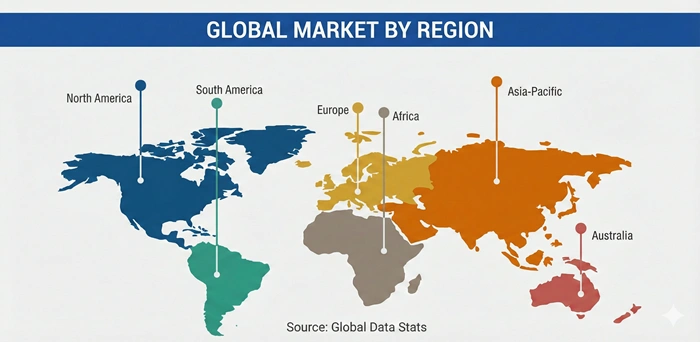
North America commands the largest share of the global artificial intelligence in genomics market, accounting for approximately 42.15% of total revenue in 2025, with a regional CAGR estimated at 46.50% through 2033. The United States is overwhelmingly the dominant market within the region, driven by NIH funding exceeding $40 billion annually, a highly active venture capital environment for genomics and AI startups, and the presence of world-leading genomics companies. Key players headquartered in North America include Illumina Inc., Tempus AI, Foundation Medicine Inc., Regeneron Pharmaceuticals Inc., and Pacific Biosciences of California Inc., all of which are actively integrating AI into their core genomics platforms.
The region also benefits from close collaboration between academic medical centers, technology companies, and pharmaceutical firms, which accelerates the translation of AI-genomics research into commercially deployed clinical tools. The FDA's progressive stance toward AI-based diagnostic software, combined with clear regulatory pathways for companion diagnostics, is reducing time-to-market for novel products and encouraging continued investment. North America's combination of data richness, regulatory clarity, and commercial infrastructure makes it the undisputed global leader in this market.
Asia-Pacific
Asia-Pacific Is the Fastest-Growing Region in the AI in Genomics Market, Powered by Large National Genomics Initiatives, Rapid Digital Health Adoption, and Growing Life Sciences Investment
Asia-Pacific is the fastest-growing regional market for artificial intelligence in genomics, projected to advance at a CAGR of over 49% through 2033, reflecting its early-stage development and enormous growth potential. China is the largest market within the region, backed by the government's Made in China 2025 and Healthy China 2030 initiatives, which allocate substantial funding to genomics research and AI-driven healthcare innovation. India, Japan, and South Korea are also significant contributors, with growing biotech sectors and increasing academic-industry collaboration in genomics. Regional players such as BGI Genomics (China), WuXi AppTec (China), and Macrogen Inc. (South Korea) are expanding their AI capabilities and global footprint.
The region's growth is further accelerated by the large and genetically diverse population bases that create valuable research cohorts unavailable in smaller Western markets. Governments across the region are investing in national biobanks and population genomics programs, generating the datasets needed to train locally relevant AI models. As digital health infrastructure matures and regulatory frameworks for AI-genomics products evolve, Asia-Pacific is expected to become the second-largest regional market by the end of the forecast period, narrowing the gap with North America considerably.
Top Key Players
-
Illumina Inc. (United States)
-
Tempus AI (United States)
-
Foundation Medicine Inc. (United States)
-
Regeneron Pharmaceuticals Inc. (United States)
-
Pacific Biosciences of California Inc. (United States)
-
Sophia Genetics SA (Switzerland)
-
AstraZeneca plc (United Kingdom)
-
Roche Holding AG (Switzerland)
-
BGI Genomics Co. Ltd. (China)
-
WuXi AppTec Co. Ltd. (China)
-
Macrogen Inc. (South Korea)
-
IBM Corporation (United States)
-
Microsoft Corporation (United States)
-
Nvidia Corporation (United States)
Recent Developments
-
Illumina Inc. (2025): Illumina launched its next-generation AI-powered whole genome sequencing analysis platform, incorporating deep learning models for enhanced variant calling accuracy and reduced analysis time, targeting both clinical diagnostics and population genomics research workflows globally.
-
Tempus AI (2024): Tempus AI completed a significant expansion of its genomic data library through strategic data-sharing partnerships with major U.S. cancer centers, increasing its AI model training dataset to over 6 million patient records, further strengthening its competitive position in oncology genomics.
-
Sophia Genetics SA (2025): Sophia Genetics announced the integration of generative AI capabilities into its SOPHiA DDM platform, enabling automated hypothesis generation from multi-omics datasets and expanding its clinical utility across rare disease diagnosis and oncology applications in European and North American markets.
-
BGI Genomics Co. Ltd. (2024): BGI Genomics entered into a strategic partnership with a leading Middle Eastern sovereign wealth fund to establish a regional genomics and AI research center, expanding its international footprint and gaining access to genetically diverse population datasets across the GCC region.
-
Roche Holding AG (2024): Roche's Foundation Medicine division received expanded FDA clearance for its comprehensive genomic profiling assay incorporating AI-powered tumor mutational burden analysis, broadening its approved indications across multiple solid tumor types and reinforcing its leadership in precision oncology diagnostics.
Market Trends
Large Biological Language Models and Multi-Omics AI Integration Are Emerging as the Two Most Consequential Technological Trends Reshaping the AI in Genomics Market
The most significant trend reshaping the artificial intelligence in genomics market is the emergence of large biological language models (BioLLMs) — AI systems trained on DNA, RNA, and protein sequences analogous to how large language models like GPT are trained on human text. These models, exemplified by DeepMind's AlphaFold and NVIDIA's BioNeMo platform, are demonstrating remarkable ability to predict molecular structures, design novel proteins, and interpret regulatory genomic sequences. Their commercial application in drug discovery, synthetic biology, and personalized medicine is accelerating rapidly, attracting billions in investment and reshaping competitive dynamics across the sector.
Multi-omics integration — the simultaneous AI-powered analysis of genomics, transcriptomics, proteomics, and metabolomics data — is the second defining trend. Rather than analyzing genomic data in isolation, leading research and clinical platforms are now combining multiple biological data layers to generate more complete and actionable disease models. AI is essential for this integration, as the data volumes and complexity involved far exceed human analytical capacity. This trend is driving demand for high-performance computing infrastructure, cloud-based genomics platforms, and AI tools capable of working across heterogeneous biological data types — creating significant opportunities for both established players and emerging technology companies in the market.
Segments Covered in the Report
By Technology:
-
Machine Learning (ML)
-
Deep Learning
-
Natural Language Processing (NLP)
-
Computer Vision
-
Generative AI
-
Other Technologies
By Application:
-
Drug Discovery & Development
-
Precision Oncology
-
Rare Disease Diagnosis
-
Agricultural Genomics
-
Pharmacogenomics
-
Population Genomics
-
Other Applications
By End User:
-
Pharmaceutical & Biotechnology Companies
-
Academic & Research Institutions
-
Hospitals & Diagnostic Laboratories
-
Government & Public Health Organizations
-
Other End Users
By Region:
-
North America (United States, Canada, Mexico)
-
Europe (Germany, United Kingdom, France, Switzerland, Rest of Europe)
-
Asia-Pacific (China, India, Japan, South Korea, Australia, Rest of Asia-Pacific)
-
Latin America (Brazil, Argentina, Rest of Latin America)
-
Middle East & Africa (GCC Countries, South Africa, Rest of MEA)
Frequently Asked Questions
Question 1: What is the current size of the global artificial intelligence in genomics market?
Answer: The global artificial intelligence in genomics market is valued at USD 3.01 billion in 2025 and is projected to reach USD 14.37 billion by 2033. It is expected to grow at an exceptional CAGR of 45.80% from 2026 to 2033.
Question 2: What are the primary growth drivers of the artificial intelligence in genomics market?
Answer: The artificial intelligence in genomics market is primarily driven by declining sequencing costs, growing national genomics programs, and rising pharmaceutical investment in AI-powered drug discovery. The global shift toward precision medicine is further accelerating demand for advanced genomic AI platforms.
Question 3: Which region leads the global artificial intelligence in genomics market?
Answer: North America leads the artificial intelligence in genomics market with approximately 42.15% revenue share in 2025. The region's dominance is underpinned by leading genomics companies, substantial NIH and private R&D funding, and a mature precision medicine ecosystem.
Question 4: How is AI being used in genomics for drug discovery?
Answer: In the artificial intelligence in genomics market, AI tools analyze disease-associated genomic variants to identify novel drug targets and predict therapeutic efficacy. These capabilities are compressing drug development timelines and improving clinical trial success rates across oncology and rare disease indications.
Question 5: Which companies are the key players in the artificial intelligence in genomics market?
Answer: Leading companies in the artificial intelligence in genomics market include Illumina Inc., Tempus AI, Foundation Medicine Inc., Sophia Genetics SA, and BGI Genomics Co. Ltd. These organizations are investing in generative AI, multi-omics integration, and global data partnerships to advance their competitive positions.