
Architecture Window Film Market Overview
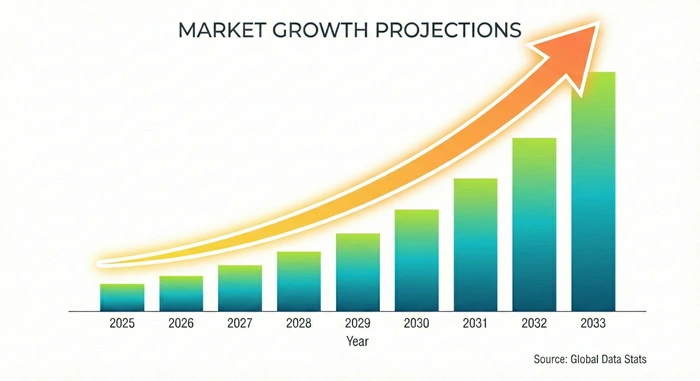
The global architecture window film market size is valued at USD 5.09 billion in 2025 and is predicted to increase from USD 5.31 billion in 2026 to approximately USD 7.44 billion by 2033, growing at a CAGR of 3.70% from 2026 to 2033.
The industry supplies advanced thin-layer polymer coatings applied to building glass surfaces providing solar control, safety enhancement, privacy protection, and decorative aesthetics. These specialized films utilize sophisticated material technologies including metalized layers, ceramic nanoparticles, and multi-layer optical constructions delivering performance benefits from heat rejection to UV blocking. Manufacturing facilities worldwide produce millions of square meters annually serving commercial office towers, residential developments, retail spaces, and institutional buildings.
The sector has become essential infrastructure supporting modern sustainable building practices and occupant comfort objectives. Rising energy costs and growing environmental awareness drive steady demand for heat-reducing window treatments. Building owners invest substantially in retrofit applications and new construction installations reducing HVAC loads while improving interior comfort and protecting furnishings from solar damage.

AI Impact on the Architecture Window Film Industry
Smart Building Integration and Predictive Performance Analytics Transforming Installation Practices
Artificial intelligence has begun transforming how building managers optimize window film selection, predict energy savings, and monitor performance across large commercial portfolios. Modern AI systems analyze building orientation, climate data, glass specifications, and occupancy patterns to recommend optimal film combinations maximizing energy savings while maintaining desired visibility and aesthetic requirements. These intelligent platforms help facility managers evaluate multiple film options through virtual simulations showing projected temperature reductions, glare improvements, and utility cost savings before physical installation. Machine learning algorithms process historical building performance data identifying which film types deliver best results under specific architectural conditions, climate zones, and usage patterns enabling data-driven specification decisions.
Predictive analytics powered by AI enables large real estate portfolios to forecast optimal retrofit timing, prioritize installations across multiple properties, and track actual performance against projected energy savings. Neural networks analyze utility billing data, weather patterns, and building management system inputs identifying properties where window film installations would deliver fastest payback periods and greatest comfort improvements. These systems also monitor film performance over time detecting degradation, delamination, or performance decline triggering maintenance interventions before visible failures occur. Computer vision technologies inspect installations identifying bubbles, scratches, or installation defects during quality control processes ensuring proper application meeting warranty requirements and performance specifications.
Growth Factors
Energy Efficiency Mandates and Climate Control Requirements Driving Market Expansion
The global push toward energy-efficient buildings creates fundamental demand for the architecture window film market as governments implement stringent building codes requiring reduced energy consumption and improved thermal performance. Modern green building certifications including LEED, BREEAM, and regional sustainability standards award points for solar heat gain reduction and daylight management strategies achievable through high-performance window films. These films enable existing buildings to meet updated energy codes without expensive window replacement by reducing solar heat gain up to 80% while maintaining natural daylighting. Commercial property owners increasingly adopt film retrofits as cost-effective energy conservation measures delivering payback periods under 3-5 years through HVAC load reductions and utility cost savings.
Rising global temperatures and climate change impacts accelerate demand as building occupants experience increased solar heat gain and glare issues affecting comfort and productivity. Office buildings in tropical and subtropical regions face substantial cooling challenges as all-glass facades popular in modern architecture create greenhouse effects raising interior temperatures and overloading air conditioning systems. Window films address these issues by rejecting infrared radiation while allowing visible light transmission maintaining views and natural daylighting. The healthcare sector shows particularly strong adoption as hospitals require precise temperature control for patient comfort while minimizing glare on computer screens and protecting light-sensitive medications and equipment from UV exposure.
Market Outlook
Regional Market Dynamics and Technology Innovation Shaping Industry Development
Asia Pacific maintains its market leadership position as the region's massive construction activity, rapid urbanization, and growing middle class drive both new construction installations and retrofit applications throughout China, India, Southeast Asia, and Australia. The region benefits from extreme climate conditions creating urgent solar control needs, expanding commercial real estate development, and increasing awareness of energy conservation benefits. China alone represents the world's largest construction market with hundreds of millions of square meters of new commercial and residential space added annually. Government policies promoting green building practices and energy efficiency standards accelerate film adoption across new developments. India's Smart Cities initiative and expanding IT sector drive substantial commercial building construction incorporating advanced glazing technologies including high-performance window films.
Technology advancement focuses on ceramic and nano-ceramic film formulations delivering superior heat rejection without metallic layers that interfere with wireless communications and electronic device connectivity. These advanced materials utilize microscopic ceramic particles suspended in polyester matrices achieving selective wavelength filtering blocking infrared heat while maintaining high visible light transmission and neutral aesthetic appearance. Manufacturers develop spectrally selective films optimized for specific climate zones and building types balancing heat rejection, daylighting, and visibility requirements. Smart film technologies incorporating electrochromic and suspended particle devices enable dynamic light control through electrical switching though cost premiums currently limit adoption primarily to premium commercial and residential applications.
Expert Speaks
-
Jim Fitterling, CEO of Dow – "Building envelope technologies including advanced window films represent crucial solutions addressing global energy efficiency challenges and climate adaptation needs. Material science innovations enabling improved thermal performance while maintaining aesthetic flexibility help building owners achieve sustainability objectives without compromising architectural vision or occupant comfort."
-
Vas Narasimhan, CEO of Novartis – "Our global real estate portfolio prioritizes occupant health and environmental sustainability through technologies like high-performance window films reducing glare, blocking harmful UV radiation, and improving workspace comfort. These solutions deliver measurable energy savings while supporting employee wellbeing and productivity across our facilities worldwide."
-
Mary Barra, CEO of General Motors – "As we transform our manufacturing and office facilities globally, energy-efficient building technologies including window films play important roles reducing operational costs and environmental footprints. Retrofit solutions providing quick paybacks enable cost-effective sustainability improvements across existing building portfolios without major capital investments."
Key Report Takeaways
-
Asia Pacific dominates the global architecture window film market with approximately 40% market share, powered by massive construction activity, extreme climate conditions driving solar control needs, and expanding commercial real estate development across China, India, and Southeast Asian countries
-
North America represents the fastest-growing region with projected CAGR exceeding 4.2% through 2033, driven by building retrofit trends, energy code requirements, commercial real estate renovation activity, and increasing awareness of film benefits among building owners and facility managers
-
Solar control films lead product categories capturing roughly 35% market share as commercial buildings prioritize heat rejection reducing cooling loads while decorative films and safety/security applications represent growing segments serving diverse building needs
-
Commercial building applications dominate end-use segments accounting for approximately 58% of market consumption as office towers, retail centers, hotels, and institutional facilities install films addressing energy efficiency, occupant comfort, and aesthetic requirements
-
Polyester PET films lead material categories holding about 40% market share thanks to proven performance, cost-effectiveness, and established manufacturing infrastructure though ceramic and nano-ceramic films show strongest growth as premium alternatives
-
Energy/heat reduction functionality shows robust expansion among benefit segments with strong CAGR as building owners prioritize cooling cost reduction and HVAC efficiency improvements delivering measurable utility savings and sustainability performance enhancements
Market Scope
| Report Coverage | Details |
|---|---|
| Market Size by 2033 | USD 7.44 Billion |
| Market Size by 2025 | USD 5.09 Billion |
| Market Size by 2026 | USD 5.31 Billion |
| Market Growth Rate from 2026 to 2033 | CAGR of 3.70% |
| Dominating Region | Asia Pacific |
| Fastest Growing Region | North America |
| Base Year | 2025 |
| Forecast Period | 2026 to 2033 |
| Segments Covered | Product Type, Functionality, Material/Construction, Application, Thickness, Region |
| Regions Covered | North America, Europe, Asia Pacific, Latin America, Middle East & Africa |
Market Dynamics
Drivers Impact Analysis
Multiple Market Forces Supporting Sustained Industry Growth and Adoption
| Driver | Impact on CAGR Forecast | Geographic Relevance | Impact Timeline |
|---|---|---|---|
| Energy efficiency regulations and green building mandates | ≈ 1.3% positive impact | Global, strongest in developed markets | Immediate and long-term |
| Rising energy costs and HVAC load reduction benefits | ≈ 1.1% positive impact | Global | Immediate and long-term |
| Climate change driving increased cooling requirements | ≈ 0.8% positive impact | Tropical/subtropical regions | Immediate |
| UV protection awareness and furnishing preservation | ≈ 0.6% positive impact | Global, particularly premium segments | Medium to long-term |
Energy efficiency regulations create sustained demand for the architecture window film market as governments worldwide implement increasingly stringent building energy codes requiring reduced consumption and improved thermal performance. The European Union's Energy Performance of Buildings Directive mandates member states establish minimum energy performance requirements for both new construction and major renovations with window thermal characteristics representing critical compliance factors. United States jurisdictions adopt increasingly rigorous energy codes based on ASHRAE 90.1 and IECC standards limiting fenestration solar heat gain coefficients pushing building designers toward higher-performance glazing solutions or aftermarket films achieving code compliance. Green building certification programs including LEED award credits for envelope thermal performance improvements achievable through window film retrofits providing cost-effective paths toward certification targets.
Rising utility costs globally make window film installations increasingly attractive as building owners seek rapid-payback energy conservation measures reducing operating expenses. Commercial buildings typically allocate 30-40% of total energy consumption to HVAC systems with substantial portions addressing solar heat gain through windows. High-performance films rejecting 50-80% of solar heat dramatically reduce cooling loads particularly on west and south-facing facades experiencing greatest solar exposure. Energy savings vary by climate zone, building orientation, and existing glazing types but typically range from 5-15% of total cooling energy consumption. These savings translate to payback periods under 3-5 years in most commercial applications making films among the most cost-effective building efficiency upgrades available.
Restraints Impact Analysis
Market Development Challenges and Adoption Barriers Affecting Growth Potential
| Restraint | Impact on CAGR Forecast | Geographic Relevance | Impact Timeline |
|---|---|---|---|
| Installation quality variability and skilled labor availability | ≈ 0.7% negative impact | Global, particularly emerging markets | Immediate |
| Upfront cost concerns and capital budget limitations | ≈ 0.8% negative impact | Price-sensitive segments | Immediate and medium-term |
| Competition from alternative glazing technologies | ≈ 0.6% negative impact | New construction markets | Medium to long-term |
| Performance degradation and warranty concerns | ≈ 0.5% negative impact | Hot/humid climates | Medium-term |
Installation quality variability creates significant challenges for the architecture window film market as improper application techniques result in bubbles, creases, edge peeling, and premature failures damaging market reputation and customer satisfaction. Professional installation requires specialized training, proper surface preparation, contamination-free environments, and precise application techniques difficult to achieve consistently across diverse installers and market conditions. The industry faces chronic skilled labor shortages particularly in emerging markets where installer training programs and certification standards remain underdeveloped. Poor installation experiences create negative customer perceptions discouraging adoption and generating warranty claims straining manufacturer resources. Quality control becomes increasingly challenging as markets expand into regions lacking established installation infrastructure and professional standards.
Upfront cost considerations limit adoption particularly among price-sensitive building owners and residential customers despite favorable long-term economics through energy savings. High-performance ceramic films cost USD 8-15 per square foot installed compared to USD 3-6 for basic dyed films creating sticker shock for customers unfamiliar with product performance differences and payback calculations. Residential customers particularly struggle justifying investments based on energy savings alone requiring broader value propositions including UV protection, glare reduction, and aesthetic enhancement. Budget-constrained commercial properties defer film installations prioritizing more visible building improvements despite superior energy savings potential. Financing mechanisms and energy service company models remain underdeveloped in many markets limiting access to third-party capital for efficiency upgrades.
Opportunities Impact Analysis
Emerging Growth Avenues and Market Development Potential
| Opportunity | Impact on CAGR Forecast | Geographic Relevance | Impact Timeline |
|---|---|---|---|
| Retrofit market expansion in aging building stocks | ≈ 1.2% positive impact | Developed markets, mature cities | Immediate and long-term |
| Smart and dynamic film technology development | ≈ 0.9% positive impact | Premium commercial segments initially | Medium to long-term |
| Emerging market urbanization and construction growth | ≈ 1.1% positive impact | Asia Pacific, Middle East, Africa | Immediate and long-term |
| Safety and security applications expansion | ≈ 0.7% positive impact | Global, particularly government/institutional | Medium-term |
Retrofit opportunities in existing building stocks present substantial growth potential for the architecture window film market as millions of older commercial and residential structures lack modern energy efficiency features. North American and European markets contain vast inventories of buildings constructed before current energy codes with single-pane or basic double-pane glazing offering minimal solar heat gain protection. Window film retrofits provide cost-effective alternatives to complete window replacement at 10-20% of replacement costs while delivering 60-80% of performance benefits. Building repositioning projects and major renovations increasingly incorporate film installations as relatively inexpensive energy upgrades improving competitiveness in tight commercial real estate markets. Government energy efficiency programs and utility rebates support retrofit adoption providing financial incentives reducing net installation costs and improving project economics.
Smart film technology development creates premium market segments as dynamic glazing solutions incorporating electrochromic and suspended particle technologies enable user-controlled transparency and solar control. These advanced films transition between clear and tinted states through electrical stimulation allowing occupants to adjust daylighting, view, and heat rejection based on real-time conditions and preferences. While currently priced at USD 50-100+ per square foot limiting adoption to luxury residential and flagship commercial applications, ongoing technology improvements and manufacturing scale should reduce costs expanding addressable markets. Integration with building management systems and smart home platforms enables automated control based on time of day, temperature, and occupancy patterns optimizing energy performance while maintaining occupant comfort and satisfaction.
Segment Analysis
Solar Control Films
Dominant Product Category Addressing Energy Efficiency and Comfort Requirements
Solar control films represent the largest product segment capturing approximately 35% of the architecture window film market share in 2025, expanding at 3.9% CAGR through the forecast period. This category encompasses metalized, ceramic, and nano-ceramic films engineered to reject solar infrared radiation while maintaining varying levels of visible light transmission and aesthetic appearance. Asia Pacific dominates solar control film consumption as the region's hot climates, all-glass architectural trends, and massive commercial construction create enormous demand for heat rejection solutions. Metalized films utilizing microscopic metal layers achieve excellent heat rejection but interfere with wireless signals and electronic devices limiting applications in modern connected buildings. Ceramic and nano-ceramic alternatives using non-metallic particles deliver comparable thermal performance without signal interference commanding premium pricing in technology-sensitive applications.
Major manufacturers including 3M, Eastman Chemical, Saint-Gobain, Madico, and Asian producers like Garware Suncontrol operate global production and distribution networks supplying diverse film specifications matching regional climate requirements and aesthetic preferences. These companies invest substantially in spectrally selective coating technologies optimizing infrared rejection while maximizing visible light transmission achieving superior comfort without excessive darkening. Commercial office buildings represent the largest application as all-glass facades popular in modern architecture create substantial cooling challenges driving HVAC costs and occupant discomfort complaints. Tropical and subtropical markets show particularly strong growth as year-round cooling loads and intense solar radiation create urgent needs for heat rejection solutions delivering measurable energy savings and comfort improvements.
Commercial Building Applications
Largest End-Use Segment Spanning Office, Retail, and Institutional Facilities
Commercial building applications dominate end-use consumption capturing approximately 58% market share in 2025, growing at 3.8% CAGR as office towers, retail centers, hotels, hospitals, and educational facilities install films addressing energy efficiency, occupant comfort, and aesthetic requirements. This segment benefits from professional facility management decisions based on return-on-investment calculations where energy savings and occupant productivity improvements justify installation investments. North America shows particularly strong commercial adoption as mature real estate markets pursue building repositioning strategies and energy efficiency upgrades maintaining competitive positions. High-rise office buildings in major metropolitan areas represent prime applications as extensive glazing creates significant cooling loads and glare issues affecting tenant satisfaction and lease rates.
Leading commercial real estate firms including CBRE, Jones Lang LaSalle, and Cushman & Wakefield increasingly recommend window film retrofits as cost-effective building improvement strategies delivering measurable energy savings and tenant comfort enhancements. These facility management organizations specify premium ceramic films for Class A properties maintaining aesthetic neutrality while achieving superior thermal performance. Retail environments utilize decorative and branded films creating visual interest, privacy screening, and solar control simultaneously supporting merchandising and operational objectives. Healthcare facilities represent growing segments as hospitals require precise environmental control, UV protection for medications and equipment, and glare reduction for computer workstations and patient rooms. Educational institutions adopt films addressing classroom overheating, glare on interactive displays, and safety enhancement through shatter-resistance properties.
Regional Insights
Asia Pacific
Market Leadership Through Construction Activity and Climate-Driven Demand
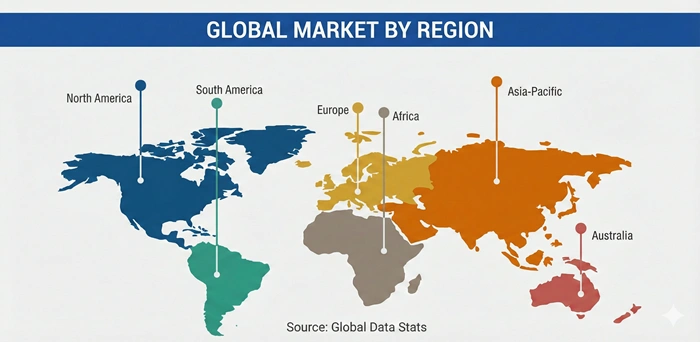
Asia Pacific dominates with approximately 40% of the global architecture window film market share, valued at over USD 2.0 billion in 2025 and growing at 4.2% CAGR through 2033. The region benefits from massive construction activity, extreme tropical and subtropical climates creating urgent solar control needs, and expanding middle-class populations demanding improved building comfort. China represents the largest national market as the country's construction boom produces hundreds of millions of square meters of new commercial and residential space annually. All-glass facades dominate modern Chinese architecture creating substantial heat gain issues driving window film adoption for both energy savings and occupant comfort. Government green building policies and energy efficiency mandates accelerate adoption across commercial developments seeking certification under Chinese Green Building Evaluation standards.
Major regional players including Garware Suncontrol, Hanita Coatings, Eastman operations, and numerous local manufacturers establish production and distribution throughout Asia Pacific. These companies adapt product portfolios to regional climate requirements emphasizing high heat rejection performance and moderate visible light transmission suitable for intense solar radiation conditions. India emerges as high-growth market as commercial real estate expansion, IT sector growth, and Smart Cities development drive modern building construction incorporating energy-efficient technologies. Southeast Asian countries including Singapore, Malaysia, Thailand, and Vietnam show robust growth as economic development, urbanization, and commercial construction expand middle-class demand for climate-controlled indoor environments. Australia represents mature market with strong environmental awareness and stringent building codes driving premium film adoption across commercial and residential applications.
North America
Fastest Growing Region Through Retrofit Activity and Energy Code Evolution
North America represents the fastest-growing regional market expanding at approximately 4.2% CAGR as building retrofit trends, energy code requirements, and commercial real estate renovation activity accelerate film adoption. The region emphasizes retrofit applications targeting existing building stocks with aging glazing systems unable to meet modern energy performance standards. United States dominates regional consumption through massive commercial real estate inventory, mature facility management practices, and established distribution infrastructure supporting professional installation networks. Energy service companies increasingly promote window film retrofits as cost-effective conservation measures delivering guaranteed savings under performance contracts. Western states including California, Arizona, and Nevada show particularly strong adoption driven by extreme cooling loads and supportive utility rebate programs.
Leading North American manufacturers and distributors including 3M, Eastman, Madico, Solar Gard (Saint-Gobain), and Llumar establish comprehensive dealer networks providing local installation services, technical support, and warranty administration. These organizations invest substantially in installer training programs, certification standards, and quality control protocols ensuring consistent application quality protecting brand reputation and customer satisfaction. Commercial office buildings represent largest application segment as property owners pursue building upgrades maintaining competitive positioning in tight leasing markets. Government and institutional facilities show growing adoption as federal, state, and municipal energy efficiency mandates drive conservation investments across public building portfolios. Residential applications remain smaller but growing as homeowner awareness increases regarding energy savings, UV protection, and privacy benefits particularly in premium housing segments.
Top Key Players
-
3M Company (United States)
-
Eastman Chemical Company (United States)
-
Saint-Gobain (Solar Gard) (France)
-
Madico Inc. (United States)
-
Garware Suncontrol Film (India)
-
Hanita Coatings (Israel)
-
Johnson Window Films (United States)
-
Avery Dennison Corporation (United States)
-
Armolan (Poland)
-
Toray Industries Inc. (Japan)
-
Eastman Performance Films (LLumar) (United States)
-
China National Bluestar Group (China)
-
Polytronix Inc. (United States)
-
Purlfrost Ltd. (United Kingdom)
Recent Developments
-
3M Company (2024) – Launched next-generation ceramic window film series featuring enhanced infrared rejection and improved clarity targeting premium commercial applications requiring superior heat rejection without excessive visible light reduction achieving 60% total solar energy rejection with 70% visible light transmission
-
Eastman Chemical (2025) – Expanded LLumar production capacity at Virginia manufacturing facility increasing output 25% supporting growing North American demand while introducing recycled PET content reducing environmental footprint and supporting sustainability objectives across commercial building markets
-
Saint-Gobain (2024) – Acquired regional architectural film distributor in Southeast Asia expanding Solar Gard market presence and distribution capabilities throughout high-growth markets including Thailand, Vietnam, and Indonesia serving expanding commercial construction sectors
-
Garware Suncontrol (2025) – Commissioned advanced coating line producing nano-ceramic films at Maharashtra facility establishing domestic Indian production capabilities reducing import dependence while developing products optimized for tropical climate heat rejection requirements
-
Madico Inc. (2024) – Introduced smart film technology enabling electrically switchable opacity targeting luxury residential and premium commercial applications integrating with building automation systems providing dynamic privacy and solar control responsive to occupant preferences and environmental conditions
Market Trends
Ceramic Technology Adoption and Sustainability Focus Reshaping Product Development
The architecture window film market experiences fundamental shift toward ceramic and nano-ceramic formulations as building owners prioritize wireless connectivity and electronic device functionality alongside thermal performance. Traditional metalized films interfere with cellular signals, WiFi networks, and GPS systems creating unacceptable connectivity issues in modern smart buildings dependent on wireless infrastructure. Ceramic alternatives utilizing non-metallic nanoparticles achieve comparable or superior infrared rejection without signal attenuation commanding premium pricing justified by functionality preservation. Manufacturers invest substantially in nanotechnology research developing proprietary ceramic particle formulations, multi-layer optical stacks, and advanced coating processes optimizing spectral selectivity. These technological advances enable films rejecting 60-70% of total solar energy while maintaining 60-70% visible light transmission and neutral aesthetic appearance suitable for architectural specifications emphasizing daylighting and transparency.
Sustainability considerations increasingly influence product development and customer purchasing decisions as building owners seek low-environmental-impact solutions supporting green building certifications. Manufacturers develop films incorporating recycled PET content, reduce VOC emissions during production, and establish take-back recycling programs addressing end-of-life disposal concerns. Some producers pursue bio-based raw materials replacing petroleum-derived polymers though commercial availability remains limited. Product lifecycle assessments quantify environmental benefits including energy savings, carbon emission reductions, and resource conservation supporting sustainability marketing claims. Installation contractors adopt solvent-free application methods and zero-waste practices minimizing environmental impacts throughout project execution meeting green building standards and customer environmental procurement policies.
Segments Covered in the Report
By Product Type
-
Solar Control Films (Metalized, Ceramic, Nano-Ceramic)
-
Safety & Security Films
-
Decorative Films
-
Privacy Films
By Functionality (Primary Benefit)
-
Energy/Heat Reduction
-
UV Protection
-
Glare Control
-
Light/Privacy Control
By Material/Construction
-
Polyester (PET) Films
-
Ceramic/Nano-Ceramic Films
-
Metal/Metalized Films
-
Hybrid Films
By Application
-
Commercial Buildings (Office, Retail, Hospitality)
-
Residential Buildings
-
Institutional (Healthcare, Education, Government)
By Thickness
-
Thin Films (<50 μm)
-
Medium Films (50-150 μm)
-
Thick Films (>150 μm)
By Region
-
North America
-
Europe
-
Asia Pacific
-
Latin America
-
Middle East & Africa
Frequently Asked Questions
Question 1: What drives growth in the architecture window film market globally?
Answer: The architecture window film market experiences robust growth from increasing energy efficiency mandates and rising utility costs driving building owners toward cost-effective heat rejection solutions. Climate change impacts creating more extreme temperatures and growing awareness of UV protection benefits also contribute significantly to market expansion.
Question 2: Which region leads the architecture window film market currently?
Answer: Asia Pacific dominates the architecture window film market with approximately 40% share backed by massive construction activity and extreme climate conditions. The region benefits from expanding commercial real estate development throughout China, India, and Southeast Asian countries driving both new construction and retrofit applications.
Question 3: How do ceramic films impact the architecture window film market?
Answer: Ceramic films significantly influence the architecture window film market through superior performance without signal interference addressing modern building connectivity requirements. These advanced materials command premium pricing while achieving comparable heat rejection to metallic alternatives making them preferred choices for technology-intensive commercial applications.
Question 4: What applications consume the most architecture window film market production?
Answer: Commercial building applications lead the architecture window film market representing approximately 58% of consumption across office towers, retail centers, and institutional facilities. These professional installations prioritize energy savings and occupant comfort delivering measurable ROI justifying film investments through reduced utility costs.
Question 5: Which segment shows fastest growth in the architecture window film market?
Answer: Energy/heat reduction functionality demonstrates strong growth in the architecture window film market as building owners prioritize cooling cost reduction. This benefit category attracts investment from facility managers seeking measurable utility savings and improved sustainability performance across commercial building portfolios.