
Arbovirus Testing Market Overview
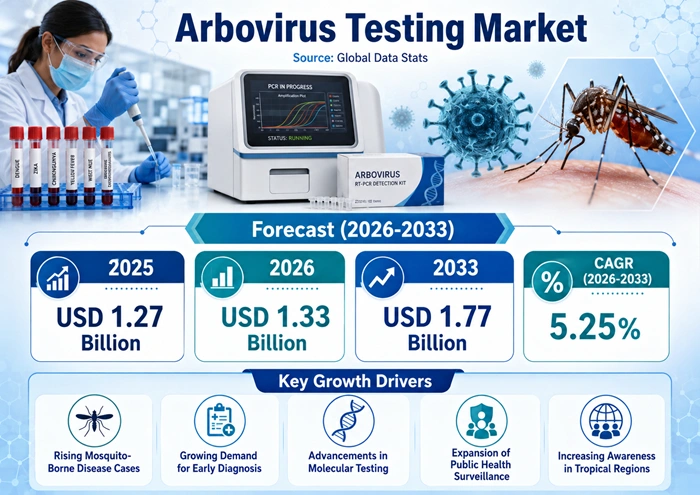
The global arbovirus testing market size is valued at USD 1.27 billion in 2025 and is predicted to increase from USD 1.33 billion in 2026 to approximately USD 1.77 billion by 2033, growing at a CAGR of 5.25% from 2026 to 2033. This steady expansion reflects a rising global need for fast, reliable detection of mosquito-borne viral infections, including dengue, Zika, chikungunya, and West Nile virus. Increasing outbreak frequency, climate change-driven vector expansion, and growing investment in public health infrastructure are together pushing demand for advanced diagnostic solutions across both developed and emerging economies.
AI Impact on the Arbovirus Testing Industry
Artificial Intelligence Is Quietly Transforming How the World Detects and Responds to Mosquito-Borne Viral Threats
Artificial intelligence is beginning to play a meaningful role in reshaping how arboviral infections are detected and managed. Machine learning algorithms integrated into ELISA readers and PCR platforms are improving diagnostic accuracy to over 99% while simultaneously reducing false positive rates by analyzing complex amplification data patterns that human technicians may miss. AI-powered tools are also shortening average turnaround time to under 65 minutes in automated, extraction-free workflows — a significant improvement for clinicians managing high patient volumes during seasonal outbreak peaks.
Beyond the lab, AI is enabling predictive outbreak modeling by processing large datasets on climate conditions, mosquito vector populations, travel patterns, and historical incidence rates. Health agencies in dengue-endemic countries are leveraging these tools to pre-position diagnostic supplies before outbreaks escalate. The broader integration of AI into disease surveillance networks also supports real-time data sharing, which strengthens national and regional response capacity — an area that has become central to health security planning following recent global health emergencies.
Growth Factors
Rising Disease Burden, Expanding Vector Habitats, and Technological Breakthroughs Are Converging to Accelerate Arboviral Diagnostic Demand
The primary engine driving the arbovirus testing market forward is the growing global incidence of vector-borne diseases. Dengue alone now affects tens of millions of people each year across tropical and subtropical regions, while Zika and chikungunya continue to spread into previously unaffected geographies due to warming temperatures that expand Aedes aegypti and Aedes albopictus mosquito habitats. This expanding disease footprint creates a direct and growing need for diagnostic tools capable of distinguishing between arboviruses with overlapping clinical presentations.
At the same time, technological innovation is making testing faster, more accessible, and more accurate. The widespread adoption of RT-PCR for early-stage viral RNA detection, the development of multiplex assays that test for multiple arboviruses in a single run, and the emergence of point-of-care (POC) lateral flow devices suitable for field settings are all expanding the addressable market. Government programs in countries like India, Brazil, and Thailand — which include mandatory surveillance networks and fever clinic networks — are further driving institutional procurement of both molecular and serological diagnostic kits.
Market Outlook
Strong Institutional Investment, Outbreak Preparedness Programs, and Emerging Market Expansion Are Setting the Stage for Sustained Long-Term Growth
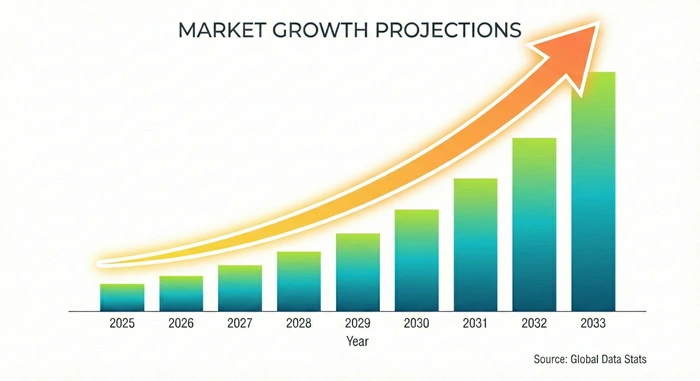
The arbovirus testing industry is positioned for sustained long-term growth driven by several converging macroeconomic and public health factors. As climate-related vector expansion brings arboviral diseases to new regions in Europe, North America, and parts of the Middle East, healthcare systems in these areas are beginning to build diagnostic and surveillance capacity for diseases that were previously considered geographically limited. This geographic broadening of the relevant market represents a significant new source of demand for diagnostic manufacturers and reagent suppliers.
Emerging markets will be a key battleground for growth through 2033. Countries across Asia Pacific, Latin America, and Sub-Saharan Africa are investing heavily in healthcare infrastructure, including centralized testing laboratories and point-of-care diagnostic programs in rural areas. International health organizations, including WHO and regional health bodies, continue to fund surveillance expansion projects that create sustained institutional procurement opportunities. Arbovirus testing companies that invest early in affordable, high-sensitivity product lines suited for low-resource environments are likely to capture a disproportionate share of this expanding demand.
Expert Speaks
-
"The diagnostics industry is witnessing an accelerating shift toward decentralized, point-of-care testing across infectious disease categories, and arboviral diagnostics is no exception. Portable, rapid-result platforms are becoming essential tools in both outbreak response and routine surveillance globally." — CEO, Abbott Laboratories
-
"Investment in infectious disease diagnostics infrastructure is one of the highest-return activities a healthcare system can undertake. The capacity to rapidly detect and differentiate arboviruses like dengue, Zika, and chikungunya directly reduces mortality, hospital burden, and outbreak duration." — CEO, Thermo Fisher Scientific
-
"Multiplex molecular panels that can identify several arboviruses from a single patient sample in under two hours are no longer aspirational — they are becoming standard of care in well-equipped hospital settings. The market opportunity for integrated diagnostic workflows in endemic regions is very large." — CEO, F. Hoffmann-La Roche
Key Report Takeaways
-
North America leads the global arbovirus testing market, holding approximately 42% market share in 2025, driven by an advanced healthcare infrastructure, widespread laboratory networks, and consistent government investment in outbreak preparedness and vector surveillance programs
-
Asia Pacific is the fastest-growing regional market, expected to expand at the highest CAGR through 2033, fueled by the high burden of dengue and chikungunya in countries like India, China, Thailand, and Indonesia, as well as rapid improvements in public health diagnostic infrastructure
-
Diagnostic laboratories are the dominant end-use segment, accounting for the largest revenue share in 2025 due to their superior throughput capacity, molecular testing capabilities, and critical role in large-scale disease surveillance programs
-
Dengue testing represents the leading application segment, commanding approximately 52% of the application segment share in 2026, reflecting the sheer volume of dengue cases reported annually and the urgent clinical need for fast, accurate differential diagnosis
-
Molecular Diagnostic Kits are the most widely used product category, accounting for around 46% of total product segment share in 2026, underpinned by the gold-standard status of RT-PCR in detecting arboviral RNA with high sensitivity and specificity
-
The research centers sub-segment under end use is expected to grow rapidly through the forecast period, with an estimated CAGR above the market average, driven by global investment in pandemic preparedness, vaccine development, and next-generation diagnostic tool development
Market Scope
| Report Coverage | Details |
|---|---|
| Market Size by 2033 | USD 1.77 Billion |
| Market Size by 2025 | USD 1.27 Billion |
| Market Size by 2026 | USD 1.33 Billion |
| Market Growth Rate from 2026 to 2033 | CAGR of 5.25% |
| Dominating Region | North America |
| Fastest Growing Region | Asia Pacific |
| Base Year | 2025 |
| Forecast Period | 2026 to 2033 |
| Segments Covered | Product, Application, End Use, Technology, Distribution Channel, Region |
| Regions Covered | North America, Europe, Asia Pacific, Latin America, Middle East & Africa |
Market Dynamics
Drivers Impact Analysis
Expanding Arboviral Disease Burden and Accelerating Diagnostic Innovation Are Emerging as the Two Most Powerful Forces Propelling This Market Forward
| Driver | ≈ % Impact on CAGR Forecast | Geographic Relevance | Impact Timeline |
|---|---|---|---|
| Rising incidence of dengue, Zika, and chikungunya outbreaks | ~35% | Asia Pacific, Latin America, MEA | Short to long-term |
| Adoption of molecular diagnostics (RT-PCR, multiplex panels) | ~28% | Global, especially North America, Europe | Medium to long-term |
| Government-funded disease surveillance programs | ~20% | Asia Pacific, Latin America, Africa | Short to medium-term |
| Expansion of POC testing infrastructure in rural areas | ~17% | South Asia, Sub-Saharan Africa, LATAM | Medium to long-term |
The rising global frequency and geographic spread of arboviral diseases is without question the single most powerful demand driver in the arbovirus testing market. Dengue incidence has grown dramatically over the past two decades, and reports now consistently show cases appearing in regions like southern Europe and the southern United States where they were historically absent. Climate change is extending the habitat range of Aedes mosquitoes northward and to higher altitudes, introducing arboviral threats to new populations with limited prior exposure — and therefore limited natural immunity — creating urgent demand for diagnostic capacity.
Technological advancement is the second critical driver. The transition from conventional serology to molecular diagnostics — particularly RT-PCR and multiplex assay panels — is enabling healthcare providers to distinguish between co-circulating arboviruses that present with nearly identical symptoms. This matters clinically because management of dengue, Zika, and chikungunya differs significantly. As healthcare systems upgrade diagnostic laboratory infrastructure globally, procurement of advanced arboviral testing kits and platforms is accelerating, particularly in mid-income countries that are now bridging the gap with developed healthcare systems.
Restraints Impact Analysis
Limited Laboratory Access in High-Burden Regions and Serological Cross-Reactivity Continue to Present Real-World Barriers to Full Market Penetration
| Restraint | ≈ % Impact on CAGR Forecast | Geographic Relevance | Impact Timeline |
|---|---|---|---|
| Limited laboratory infrastructure in low-income settings | ~38% | Sub-Saharan Africa, rural Asia | Short to medium-term |
| Cross-reactivity in serological tests leading to misdiagnosis | ~30% | All endemic regions | Short to long-term |
| High cost of molecular testing limiting adoption | ~20% | Low- to middle-income countries | Medium-term |
| Outbreak-driven, uneven demand complicating supply planning | ~12% | Global | Ongoing |
The most significant structural restraint in the arbovirus testing market is the mismatch between where the disease burden is highest and where diagnostic infrastructure is strongest. Sub-Saharan Africa and rural areas of South and Southeast Asia — regions where arboviral diseases are endemic and poorly controlled — lack the centralized laboratories, cold-chain logistics, and trained personnel needed to run molecular diagnostics at scale. This creates a gap where the communities most in need of testing solutions are least able to access them without significant external investment.
Cross-reactivity in serological assays, particularly ELISA-based IgM and IgG tests, remains a persistent technical challenge. Antibodies generated in response to one flavivirus — such as dengue — frequently bind to antigens from related viruses like Zika or West Nile, leading to false positives that complicate clinical decision-making. While molecular diagnostics mitigate this issue, the higher cost and infrastructure requirements of PCR-based testing limit its universal adoption. Manufacturers are investing in next-generation lateral flow devices and CRISPR-based diagnostics that combine speed with specificity, but commercial-scale deployment in resource-limited settings remains a work in progress.
Opportunities Impact Analysis
Multiplex Panel Development, POC Device Expansion, and Digital Surveillance Integration Represent the Most Commercially Significant Growth Opportunities
| Opportunity | ≈ % Impact on CAGR Forecast | Geographic Relevance | Impact Timeline |
|---|---|---|---|
| Development of multiplex arboviral detection panels | ~40% | Global, led by North America, Europe | Medium to long-term |
| Expansion of rapid POC testing in endemic regions | ~35% | Asia Pacific, Latin America, MEA | Short to medium-term |
| Integration with digital surveillance and reporting platforms | ~25% | Global | Long-term |
The development of multiplex diagnostic panels that can simultaneously detect dengue, Zika, chikungunya, and West Nile virus from a single patient sample represents one of the most commercially attractive opportunities in the arbovirus testing sector. These panels reduce diagnostic time, lower overall cost per test compared to running individual assays, and eliminate the ambiguity that arises when clinicians must choose which virus to test for based on incomplete clinical information. As arboviral co-infections become more commonly documented, demand for panels that cover multiple pathogens in a single workflow is expected to rise sharply.
Point-of-care testing devices suitable for field deployment — including portable cartridge-based systems and lateral flow assays — are opening entirely new distribution channels and customer segments that centralized laboratory products cannot reach. Rural health clinics, mobile health units, community surveillance teams, and airport health screening facilities represent a growing end-user base. Companies that can deliver WHO-prequalified, low-cost POC devices meeting diagnostic accuracy standards will find significant commercial opportunity in the procurement programs of governments and international NGOs operating in endemic regions.
Segment Analysis
By Product Type
Molecular Diagnostic Kits Lead the Product Landscape, Driven by Unmatched Sensitivity and the Gold-Standard Status of PCR-Based Arboviral Detection
Molecular Diagnostic Kits hold the dominant position in the arbovirus testing market, accounting for approximately 46% of the total product segment in 2026. This dominance is deeply rooted in the clinical superiority of RT-PCR and multiplex PCR platforms for detecting viral RNA during the acute phase of arboviral infection — a window where antibody-based serology tests often yield negative or inconclusive results. In high-income markets like the United States, Germany, and Japan, hospitals and reference laboratories have standardized molecular workflows for arboviral diagnosis, creating stable, recurring demand for RT-PCR kits and associated reagents. Leading companies such as Thermo Fisher Scientific, Roche, and QIAGEN continue to dominate procurement in these markets through well-established distribution networks and regulatory approvals across multiple geographies.
Asia Pacific is emerging as the fastest-growing region for molecular diagnostic kit adoption, expanding at a CAGR exceeding 5.3% in countries like China and India. The region's enormous dengue burden — India alone reports millions of suspected cases annually — combined with active government investment in sentinel surveillance hospitals and centralized public health laboratories, is generating significant institutional demand for RT-PCR platforms. Abbott Laboratories and Thermo Fisher Scientific have strengthened their regional presence through local distribution partnerships and government tender participation. The broader shift from conventional single-pathogen tests to multiplex arboviral panels is also being led by this segment, with next-generation sequencing kits gaining traction in research institutes focused on emerging virus surveillance.
By Application
Dengue Testing Remains the Undisputed Market Leader, Commanding Over Half the Application Segment and Generating Consistent Institutional Procurement Volumes
Dengue testing accounts for approximately 52% of the total application segment in 2026, reflecting the sheer scale of the global dengue disease burden. With hundreds of millions of infections estimated annually and a significant proportion requiring clinical attention, dengue testing represents the foundational demand driver across virtually every endemic market. Hospitals and diagnostic laboratories in dengue-hyperendemic countries — particularly Brazil, India, the Philippines, and Indonesia — maintain standing procurement contracts for dengue-specific ELISA kits, NS1 antigen rapid tests, and RT-PCR assays. This segment operates at a CAGR slightly above the overall arbovirus testing market average, supported by ongoing public health mandates for mandatory dengue reporting and surveillance in most affected countries.
Latin America is the standout growth region for dengue testing, expanding at approximately 4.9% CAGR, with Brazil serving as the primary demand anchor due to its hyper-endemic disease profile. Recurrent and record-breaking outbreaks in Brazilian cities have forced public health authorities to scale up testing dramatically, and private diagnostic chains have expanded dengue testing capacity in parallel. Companies like Bio-Rad Laboratories and Grifols Diagnostic Solutions have deepened their presence in the region through distributor partnerships and government supply agreements. Zika virus testing, while lower in absolute volume, is a rapidly growing application segment due to heightened screening requirements during pregnancy and neurological disease investigation protocols that WHO recommends in affected populations.
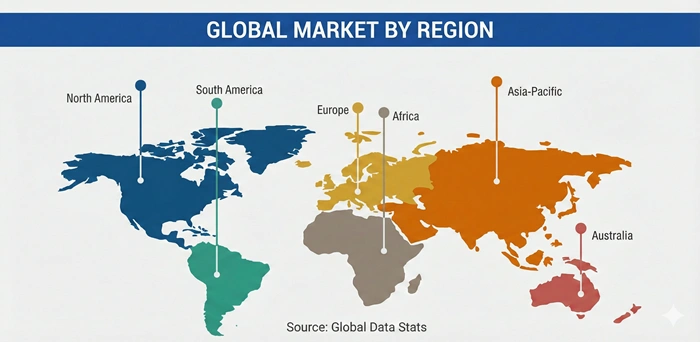
Regional Insights
North America
North America's Established Diagnostic Infrastructure and Strong Federal Investment in Infectious Disease Surveillance Make It the Global Market Leader
North America holds the dominant position in the global arbovirus testing market with approximately 42% market share in 2025 and is growing at a CAGR of around 4.93% through 2033. The United States drives the majority of regional demand, supported by a highly developed clinical laboratory network, strong investment by the CDC and NIH in arboviral surveillance programs, and rapid adoption of molecular diagnostic platforms including RT-PCR and multiplex panels. Key companies with strong North American market presence include Abbott Laboratories, Thermo Fisher Scientific, Bio-Rad Laboratories, and QIAGEN, all of which maintain direct sales infrastructure and government supply agreements in the region. Demand is further reinforced by the expansion of West Nile virus testing programs and growing clinical awareness of dengue risk among travelers and residents in southern states.
The U.S. alone accounts for the vast majority of North American revenue, with the market estimated at approximately USD 455 million in 2025. Healthcare providers across the country are increasingly adopting rapid, decentralized testing solutions — including lateral flow devices and portable molecular platforms — that reduce reliance on central lab processing for time-sensitive arboviral diagnosis. Canada and Mexico contribute meaningfully to regional growth, with Canada investing in national laboratory preparedness for emerging infectious diseases and Mexico scaling up dengue diagnostic capacity as part of its public health modernization agenda. The combination of strong institutional procurement channels, FDA regulatory clarity for diagnostic approvals, and high per-capita healthcare spending ensures North America's leadership position remains firmly intact through 2033.
Asia Pacific
Asia Pacific Is the Fastest-Growing Region for Arboviral Diagnostics, Powered by a Massive Disease Burden, Expanding Healthcare Systems, and Aggressive Government Investment
Asia Pacific is expected to register the fastest CAGR in the global arbovirus testing market through 2033, with China growing at 5.3% and India at 5.1% — both outpacing the global average. The region carries the world's heaviest dengue burden, with tropical and subtropical climates across Southeast Asia, South Asia, and parts of East Asia providing near-ideal conditions for Aedes mosquito proliferation and year-round virus transmission. Countries like India, Thailand, Vietnam, Bangladesh, and the Philippines report millions of dengue cases annually, and their governments have actively responded by expanding diagnostic laboratory networks, deploying rapid POC tests in district hospitals, and integrating arboviral surveillance into national infectious disease monitoring frameworks. Companies like Siemens Healthineers, Roche, and Abbott are expanding their Asia Pacific distribution capabilities to capture growing institutional procurement volumes.
India and China are the two markets to watch most closely within the region. India has established over 800 sentinel surveillance hospitals equipped with dengue diagnostic capabilities, and ongoing government health schemes are funding further diagnostic expansion in underserved rural areas. China's market, led by growing dengue transmission in southern provinces like Guangdong, is also witnessing rapid adoption of automated molecular diagnostic platforms and next-generation sequencing tools for outbreak investigation. Regional manufacturers are increasingly participating in the competitive landscape, offering cost-competitive ELISA and rapid diagnostic test kits that are meeting quality benchmarks while addressing affordability concerns. EUROIMMUN and NovaTec Immundiagnostica have also established distribution partnerships across select Asia Pacific markets, adding to the competitive intensity in this high-growth region.
Customization Available for This Report
This report offers comprehensive region-wise and country-wise customization, providing tailored market insights, trends, competitive analysis, and opportunity assessments specific to your geography of interest.
Our team can deliver a fully customized version of this report for any of the following regions and countries, providing deep-dive market analysis, demand forecasting, regulatory landscape review, and competitive intelligence specific to the selected market and arbovirus testing keyword combination:
North America
-
U.S. — Detailed analysis of CDC surveillance programs, FDA-cleared products, and hospital procurement trends in arboviral diagnostics
-
Canada — Insights into national lab preparedness, provincial health spending, and growing West Nile virus testing programs
-
Mexico — Dengue diagnostics expansion, public health investment, and POC testing deployment in remote areas
Europe
-
U.K. — Multiplex molecular diagnostic adoption, imported arboviral disease screening, and NHS procurement patterns
-
Germany — Advanced immunodiagnostic manufacturing landscape, regulatory environment, and clinical adoption rates
-
France — Overseas territory arboviral disease burden, ELISA market dynamics, and research institute demand
-
Italy — Growing Zika and West Nile screening in clinical settings, aging population diagnostics demand
-
Rest of Europe — Emerging diagnostic markets across Eastern Europe and the Baltics
Asia Pacific
-
China — Southern province dengue burden, government-funded diagnostic infrastructure, and domestic manufacturer competitiveness
-
India — Sentinel surveillance hospital network, ICMR-funded research demand, and affordable POC kit market
-
Japan — Advanced molecular diagnostics adoption, regulatory pathway analysis, and premium product market
-
South Korea — Imported arboviral disease screening, K-diagnostics export industry, and institutional procurement
-
Australia — Ross River virus and dengue testing in northern territories, and public health laboratory investments
-
Rest of Asia Pacific — Country-level analysis covering Thailand, Vietnam, Philippines, Indonesia, and Bangladesh
Latin America
-
Brazil — Hyper-endemic dengue market, federal public health procurement, and Fiocruz research ecosystem
-
Argentina — Emerging dengue surveillance needs and diagnostics market development
-
Rest of Latin America — Colombia, Mexico, Peru, and Chile country-level arboviral testing market sizing
Middle East & Africa
-
UAE — Advanced POC diagnostics adoption, Vision 2030-aligned healthcare investments, and imported disease screening
-
Saudi Arabia — Hajj-season infectious disease surveillance, laboratory modernization, and diagnostic procurement
-
Rest of MEA — Sub-Saharan Africa diagnostic access expansion, WHO-funded programs, and NGO procurement channels
Top Key Players
-
Abbott Laboratories (United States)
-
Thermo Fisher Scientific Inc. (United States)
-
F. Hoffmann-La Roche Ltd (Switzerland)
-
QIAGEN N.V. (Netherlands)
-
Bio-Rad Laboratories Inc. (United States)
-
Siemens Healthineers AG (Germany)
-
Merck KGaA (Germany)
-
EUROIMMUN Medical Laboratory Diagnostics AG (Germany)
-
Agilent Technologies Inc. (United States)
-
NovaTec Immundiagnostica GmbH (Germany)
-
Grifols Diagnostic Solutions Inc. (United States)
-
GT Molecular (United States)
-
Response Biomedical Corp. (Canada)
-
bioMérieux SA (France)
-
SD Biosensor Inc. (South Korea)
Recent Developments
-
In March 2025, Bolivia launched an emergency diagnostic response for dengue outbreaks with support from the European Civil Protection and Humanitarian Aid Operations, including strengthening entomology laboratory networks and establishing clinical leader networks for faster case identification and response coordination
-
In January 2025, QIAGEN received U.S. FDA clearance for the QIAstat-Dx Gastrointestinal Panel, marking the second syndromic mini-panel cleared on the QIAstat-Dx system in the U.S., reinforcing the company's strategy to expand rapid, multiplex syndromic testing platforms into the infectious disease diagnostics space
-
In April 2024, Grifols Diagnostic Solutions received the CE mark under the EU In Vitro Diagnostic Regulation (IVDR) for its Procleix ArboPlex Assay — an automated nucleic acid test designed to simultaneously detect dengue, Zika, chikungunya, and West Nile virus from a single sample
-
In 2025, Abbott Laboratories expanded its geographic presence across emerging markets in Asia Pacific and Latin America through new distribution agreements, targeting growing institutional demand for rapid infectious disease diagnostics in dengue-endemic healthcare systems
-
In January 2026, F. Hoffmann-La Roche Ltd expanded its molecular diagnostics product portfolio with new offerings targeting high-growth arboviral disease categories, strengthening its competitive position in both reference laboratory and point-of-care settings
Market Trends
The Arbovirus Testing Market Is Rapidly Shifting Toward Integrated, Multiplex Molecular Platforms and Field-Ready Point-of-Care Devices That Match the Evolving Geography of Outbreak Threats
Two of the most consequential trends reshaping the arbovirus testing landscape are the move toward multiplex molecular panels and the mainstreaming of point-of-care diagnostics in non-clinical settings. Multiplex panels that can differentiate dengue, Zika, chikungunya, and West Nile virus in a single RT-PCR run are replacing single-pathogen assays in well-equipped hospitals and reference laboratories. This trend is reducing diagnostic costs per patient, improving clinical decision speed, and enabling more precise epidemiological data collection during outbreak investigations. Diagnostic companies that offer validated multiplex solutions with strong clinical evidence packages are gaining market share at the expense of single-analyte test manufacturers.
The second major trend is the geographic broadening of arboviral threats into temperate regions of Europe and North America, which is pushing healthcare systems in these regions to build diagnostic readiness for diseases they previously considered tropical. This is opening entirely new market segments — travel clinics, airport health screening programs, and primary care networks — that historically had little need for arbovirus testing products. At the same time, the digitalization of disease surveillance systems, including automated reporting platforms that connect POC testing results to national databases in near real-time, is creating a new layer of service revenue for diagnostic companies that integrate software and connectivity into their testing platforms.
Segments Covered in the Report
By Product
-
Molecular Diagnostic Kits
-
RT-PCR Test Kits
-
Multiplex Arbovirus Panels
-
Real-Time PCR Assays
-
-
Serology Test Kits
-
IgM / IgG Antibody Tests
-
ELISA-Based Kits
-
Rapid Immunoassay Kits
-
-
Point of Care Test Kits
-
Lateral Flow Assays
-
Portable Testing Cartridges
-
Rapid Diagnostic Devices
-
-
Next Generation Sequencing Kits
-
Metagenomic Sequencing Panels
-
Viral Genome Detection Kits
-
Pathogen Surveillance Panels
-
-
Viral Culture Systems
-
Cell-Based Assays
-
Virus Isolation Kits
-
Reference Culture Media
-
By Application
-
Dengue Testing
-
Acute Infection Detection
-
Severe Dengue Diagnosis
-
Outbreak Monitoring
-
-
Zika Virus Testing
-
Congenital Infection Screening
-
Pregnancy-Related Testing
-
Neurological Complication Screening
-
-
Chikungunya Testing
-
Febrile Illness Diagnosis
-
Joint Pain Associated Testing
-
Differential Diagnosis Panels
-
-
West Nile Virus Testing
-
Neurological Infection Detection
-
Encephalitis Diagnosis
-
Blood Screening Programs
-
By End Use
-
Hospitals
-
Clinical Microbiology Labs
-
Emergency Diagnostic Units
-
Infectious Disease Departments
-
-
Diagnostic Laboratories
-
Reference Testing Labs
-
Central Public Health Labs
-
Specialized Virology Labs
-
-
Research Institutes
-
Epidemiology Research Centers
-
Vaccine Development Labs
-
Vector-Borne Disease Research
-
-
Public Health Agencies
-
Disease Surveillance Programs
-
Outbreak Monitoring Units
-
National Health Surveillance Labs
-
By Technology
-
Molecular Diagnostics
-
RT-PCR Technology
-
Multiplex PCR Systems
-
Quantitative PCR Platforms
-
-
Immunodiagnostics
-
ELISA Systems
-
Antibody Detection Technology
-
Chemiluminescent Assays
-
-
Next Generation Sequencing
-
Metagenomic Sequencing
-
Viral Genome Mapping
-
Pathogen Genomics
-
-
Rapid Diagnostic Technology
-
Lateral Flow Technology
-
Point-of-Care Detection Devices
-
Portable Diagnostic Platforms
-
By Distribution Channel
-
Direct Sales
-
Manufacturer to Hospitals
-
Public Health Procurement
-
Laboratory Supply Contracts
-
-
Distributors
-
Diagnostic Equipment Vendors
-
Regional Healthcare Distributors
-
Laboratory Supply Networks
-
-
Online Sales
-
Digital Diagnostic Platforms
-
E-Procurement Systems
-
Research Supply Portals
-
By Region
-
North America (U.S., Canada, Mexico)
-
Europe (U.K., Germany, France, Italy, Rest of Europe)
-
Asia Pacific (China, India, Japan, South Korea, Australia, Rest of Asia Pacific)
-
Latin America (Brazil, Argentina, Rest of Latin America)
-
Middle East & Africa (UAE, Saudi Arabia, Rest of MEA)
❝ Built for Every Level — From Startups to Industry Giants ❞
Here Is Exactly How This Report Works for You
-
For tier 1 enterprises, investors, and high-level decision-makers, this report delivers competitor revenue analysis, detailed revenue source breakdowns, geopolitical risk assessments, and supply-demand dynamics that enable confident capital allocation, M&A targeting, and strategic market entry or expansion decisions in the arbovirus testing space
-
For tier 2 and tier 3 companies, mid-level businesses, and startups, this report provides a practical roadmap of the most commercially viable segments, regional opportunities, and technology investment priorities — helping you compete effectively against established players and identify white spaces before they become crowded
-
For all decision-makers across the value chain, this report explains exactly how regulatory shifts, climate-driven demand changes, global health organization funding flows, and competitor positioning are converging to shape market direction through 2033 — giving you the intelligence framework to make proactive, evidence-based decisions rather than reactive ones
Frequently Asked Questions
Question 1: What is the current size of the global arbovirus testing market and how is it expected to grow?
Answer: The global arbovirus testing market was valued at USD 1.27 billion in 2025 and is projected to reach USD 1.77 billion by 2033. This growth is driven by expanding arboviral disease incidence and increasing investment in molecular diagnostic infrastructure globally.
Question 2: Which factors are driving growth in the arbovirus testing market?
Answer: The primary drivers of the arbovirus testing market include the rising global incidence of dengue, Zika, and chikungunya infections alongside climate-driven mosquito habitat expansion. Advancements in molecular diagnostic technologies such as RT-PCR and multiplex panels are further accelerating adoption across healthcare systems.
Question 3: Which region holds the largest share in the arbovirus testing market?
Answer: North America currently dominates the arbovirus testing market with approximately 42% market share, supported by advanced laboratory infrastructure and strong federal surveillance programs. Asia Pacific is the fastest-growing region, driven by a massive endemic disease burden and rapid public health investment.
Question 4: What are the key product segments driving revenue in the arbovirus testing market?
Answer: Molecular Diagnostic Kits account for approximately 46% of the product segment in the arbovirus testing market, reflecting the clinical preference for RT-PCR-based viral RNA detection. ELISA-based serology kits and point-of-care rapid test devices are also contributing meaningfully to overall market revenue.
Question 5: Who are the leading companies operating in the arbovirus testing market?
Answer: Leading players in the arbovirus testing market include Abbott Laboratories, Thermo Fisher Scientific, F. Hoffmann-La Roche, QIAGEN, and Bio-Rad Laboratories. These companies compete through broad product portfolios, global distribution networks, and continuous investment in molecular diagnostic innovation.