
Antiseptic and Disinfectants Market Overview
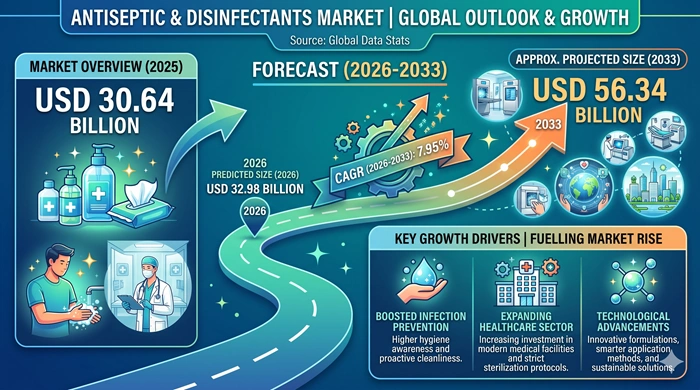
The global antiseptic and disinfectants market size is valued at USD 30.64 billion in 2025 and is predicted to increase from USD 32.98 billion in 2026 to approximately USD 56.34 billion by 2033, growing at a CAGR of 7.95% from 2026 to 2033. Growing global awareness of infection prevention and control, rising healthcare-associated infection (HAI) rates, surging demand from hospital and clinical settings, and the sustained behavioral shift toward hygiene and sanitation practices established during the COVID-19 pandemic are the primary forces sustaining robust and consistent growth across this essential healthcare and consumer hygiene product market worldwide.
AI Impact on the Antiseptic and Disinfectants Industry
Artificial Intelligence Is Driving Smarter Formulation Development, Real-Time Contamination Monitoring, and Intelligent Infection Control Protocol Management Across the Antiseptic and Disinfectants Sector*
AI is beginning to meaningfully reshape the antiseptic and disinfectants industry, particularly in the areas of product formulation optimization and automated contamination surveillance in healthcare settings. Machine learning algorithms are being applied by major chemical and consumer health companies to accelerate the development of next-generation antimicrobial formulations — identifying novel active ingredient combinations, predicting efficacy against emerging resistant microbial strains, and optimizing stability, skin compatibility, and environmental safety profiles for new product candidates. This AI-driven formulation development is significantly reducing the time and cost required to bring new disinfectant and antiseptic products from laboratory concept to commercial launch, enabling faster responses to emerging pathogen threats and resistance patterns. Companies including Ecolab, BASF, and Reckitt Benckiser are actively integrating AI-assisted formulation tools into their product development workflows.
In healthcare facility management, AI-powered environmental monitoring systems are being deployed to optimize hospital disinfection protocols, predict contamination risk zones, and guide automated UV-C and chemical disinfection robot schedules to maximize surface decontamination efficacy. Smart dispensing systems equipped with IoT sensors are tracking hand hygiene compliance in real time at the individual room and ward level, generating actionable data that infection control teams use to identify compliance gaps, focus training, and measure the impact of intervention programs on HAI rates. These AI-integrated infection control tools are driving demand for advanced antiseptic and disinfectant products that can be precisely quantified, monitored, and optimized within digital hospital hygiene management ecosystems — representing both a technology and commercial evolution that is reshaping how this market creates value.
Growth Factors
Rising Healthcare-Associated Infection Burden, Post-Pandemic Hygiene Awareness, Expanding Healthcare Infrastructure, and Stringent Regulatory Standards Are the Foundation of Market Growth*
The antiseptic and disinfectants market is fundamentally anchored by the persistent and growing burden of healthcare-associated infections worldwide. The WHO estimates that at any given time, 7% of patients in high-income countries and 15% in low- and middle-income countries are affected by at least one healthcare-associated infection during their hospital stay — generating enormous and growing demand for rigorous surface, equipment, and hand disinfection protocols across all healthcare facility types. Regulatory bodies including the U.S. CDC, ECDC (European Centre for Disease Prevention and Control), and WHO are continuously updating and strengthening infection prevention guidelines that mandate the use of approved antiseptic and disinfectant products in healthcare settings, creating a compliance-driven demand floor that sustains market volume regardless of broader economic conditions.
The COVID-19 pandemic created a permanent and structural elevation of hygiene consciousness among consumers, healthcare workers, and institutional facility managers globally. Behaviors that were adopted during the pandemic — including regular surface disinfection, frequent hand sanitization, and institutional hygiene audits — have been retained by a significant proportion of the global population and have become embedded in workplace hygiene policies, school sanitation protocols, and public health guidelines in many countries. This sustained behavioral shift has meaningfully expanded the consumer and institutional demand base for antiseptic and disinfectant products beyond healthcare settings into food service, hospitality, transportation, and public infrastructure — broadening the addressable market and creating new commercial channels that continue to generate growing revenue. The expanding global food safety regulation framework — which requires rigorous sanitation in food processing, packaging, and distribution facilities — is another major and growing demand driver.
Market Outlook
Sustained Growth Through 2033 Is Supported by Healthcare Infrastructure Expansion, Rising Institutional Hygiene Standards, Innovation in Eco-Friendly Formulations, and Growing Emerging Market Demand*
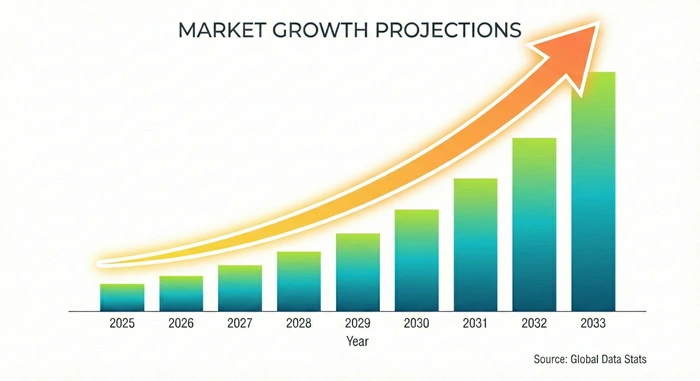
The long-term outlook for the antiseptic and disinfectants market is consistently strong, supported by structural demand from healthcare, food safety, and institutional hygiene sectors that are unlikely to contract meaningfully regardless of economic cycles. As global healthcare infrastructure expands — driven by hospital construction programs in Asia Pacific, the Middle East, Africa, and Latin America — the installed base of clinical settings requiring regulated disinfection protocols grows in parallel, creating an expanding and durable commercial demand base for professional disinfectant products. Environmental cleaning product regulations are also tightening in major markets as governments mandate efficacy testing, toxicity limits, and biodegradability standards for commercial disinfectants — driving investment in compliant next-generation product development by major manufacturers.
Product innovation is a key growth catalyst for the antiseptic and disinfectants market through 2033. Manufacturers are investing significantly in eco-friendly, biodegradable, and low-toxicity formulations that maintain broad-spectrum antimicrobial efficacy while reducing environmental impact and occupational exposure risk for professional users. Hypochlorous acid-based sanitizers, plant-derived antimicrobial formulations, and hydrogen peroxide-based no-rinse disinfectants are gaining growing commercial traction as healthcare systems, food manufacturers, and institutional facility managers prioritize environmental sustainability alongside infection control performance. The combination of regulatory pressure, sustainability-focused procurement policies, and consumer preference for greener hygiene products is expected to drive continued product reformulation and innovation investment by leading antiseptic and disinfectant manufacturers through the entire forecast period.
Expert Speaks
-
"Infection prevention is the foundation of patient safety, and Ecolab's water, hygiene, and infection prevention solutions are more critical than ever. We continue to invest in next-generation disinfection technologies and digital hygiene monitoring tools that help our healthcare and food safety customers achieve measurable, verified outcomes in their infection control programs." — Christophe Beck, CEO, Ecolab Inc.
-
"At Reckitt Benckiser, our hygiene brands — including Dettol and Lysol — have become trusted parts of daily life for billions of people worldwide. The sustained behavioral shift toward hygiene following the pandemic, combined with growing institutional demand for effective surface and hand hygiene solutions, gives us strong confidence in the long-term growth of the hygiene product market globally." — Kris Licht, CEO, Reckitt Benckiser Group plc
-
"3M's infection prevention and environmental hygiene portfolio addresses some of the most critical patient safety challenges in healthcare today. We are focused on developing next-generation disinfectant and antiseptic solutions that combine proven efficacy with improved environmental profiles, as our healthcare and institutional customers increasingly prioritize both infection control performance and sustainability outcomes." — William Brown, CEO, Solventum (formerly 3M Health Care)
Key Report Takeaways
-
North America leads the global antiseptic and disinfectants market, holding approximately 38–40% of total revenues in 2026, driven by its world-class healthcare infrastructure, stringent CDC and FDA infection prevention regulations, high per-capita hygiene product consumption in both clinical and consumer settings, and the presence of market-leading companies including Ecolab, Diversey, and Reckitt Benckiser.
-
Asia Pacific is the fastest-growing regional market, expanding at a CAGR of approximately 9.8% through 2033, driven by rapidly expanding hospital infrastructure, rising hygiene awareness, growing food processing industry disinfection requirements, government-mandated healthcare cleanliness standards, and strong domestic manufacturing growth across China, India, Japan, and Southeast Asia.
-
Hospitals and clinical healthcare facilities are the dominant end-user segment, accounting for the largest share of professional disinfectant and antiseptic consumption as stringent HAI prevention mandates, continuous surface disinfection requirements, and regulated hand hygiene protocols drive the highest per-facility volume of antiseptic and disinfectant product purchasing.
-
Liquid formulations contribute the most to total antiseptic and disinfectants market revenues, commanding approximately 52–54% of total revenues in 2025, due to their versatility across surface disinfection, wound antisepsis, hand sanitization, and equipment sterilization applications across both healthcare and consumer hygiene segments.
-
Quaternary ammonium compounds (QACs) are the most widely used active ingredient class in professional surface disinfectants, holding the largest product formulation share due to their broad-spectrum efficacy, long residual activity, low toxicity to humans, and cost-effectiveness that make them suitable for high-volume institutional use across healthcare, hospitality, and food processing environments.
-
The hand sanitizers and hand hygiene products segment is set to grow the fastest, projected to expand at a CAGR of approximately 8.7% through 2033, driven by continued institutionalization of hand hygiene compliance programs in healthcare settings, growth in premium consumer hand sanitizer categories, and expanding hand hygiene infrastructure investment in school, transportation, and public building settings across emerging markets.
Market Scope
| Report Coverage | Details |
|---|---|
| Market Size by 2025 | USD 30.64 Billion |
| Market Size by 2026 | USD 32.98 Billion |
| Market Size by 2033 | USD 56.34 Billion |
| Market Growth Rate (2026–2033) | CAGR of 7.95% |
| Dominating Region | North America |
| Fastest Growing Region | Asia Pacific |
| Base Year | 2025 |
| Forecast Period | 2026 to 2033 |
| Segments Covered | Product Type, Formulation, Active Ingredient, Application, End User, Region |
| Regions Covered | North America, Europe, Asia Pacific, Latin America, Middle East & Africa |
Market Dynamics
Drivers Impact Analysis
Rising HAI Burden, Post-Pandemic Hygiene Institutionalization, Expanding Food Safety Regulations, and Healthcare Infrastructure Growth Are the Core Antiseptic and Disinfectants Market Growth Drivers*
| Driver | ≈% Impact on CAGR Forecast | Geographic Relevance | Impact Timeline |
|---|---|---|---|
| Rising global healthcare-associated infection burden | ~31% | Global, highest in North America & Europe | Near to long-term |
| Post-pandemic sustained hygiene behavioral shift | ~26% | Global | Near to medium-term |
| Expanding food processing and food safety disinfection requirements | ~21% | North America, Europe, Asia Pacific | Near to long-term |
| Growing healthcare infrastructure in emerging markets | ~14% | Asia Pacific, Latin America, MEA | Medium to long-term |
| Tightening regulatory standards for institutional disinfection protocols | ~8% | North America, Europe | Near-term |
The antiseptic and disinfectants market is driven by one of the most reliable demand forces in the healthcare economy — the persistent and growing threat of healthcare-associated infections in clinical settings worldwide. HAIs including surgical site infections, catheter-associated urinary tract infections, central line-associated bloodstream infections, and Clostridioides difficile (C. diff) are collectively responsible for millions of patient infections and hundreds of thousands of deaths annually, creating both a moral imperative and a regulatory mandate for healthcare facilities to invest in rigorous, proven disinfection and antiseptic protocols. As healthcare systems globally strengthen their infection prevention programs in response to regulatory scrutiny, accreditation requirements, and outcome-based reimbursement models that penalize HAIs, the institutional demand for high-quality antiseptic and disinfectant products is expected to grow consistently.
The food processing and food safety sector is the second-most powerful demand driver for industrial disinfectants, as global food safety regulations — including FDA's Food Safety Modernization Act (FSMA) in the United States and the EU's General Food Law — mandate rigorous sanitation programs throughout food manufacturing, processing, and distribution facilities. Every expansion of industrial food production capacity, every new food processing facility opening, and every tightening of food safety inspection requirements generates direct and sustained demand for food-grade surface disinfectants, equipment sanitizers, and conveyor disinfection systems. Companies including Ecolab, Diversey, and Evonik Industries provide highly specialized food and beverage industry disinfection solutions that represent a large and growing proportion of the overall antiseptic and disinfectants market.
Restraints Impact Analysis
Regulatory Complexity for New Formulations, Environmental and Toxicity Concerns, Raw Material Price Volatility, and Resistance Development in Microbial Pathogens Are Key Market Restraints*
| Restraint | ≈% Impact on CAGR Forecast | Geographic Relevance | Impact Timeline |
|---|---|---|---|
| Stringent and lengthy regulatory approval processes for new disinfectant formulations | ~33% | North America, Europe | Near to medium-term |
| Growing environmental and occupational health concerns about traditional disinfectant chemicals | ~28% | North America, Europe | Near to medium-term |
| Raw material price volatility and supply chain disruptions | ~23% | Global | Near-term |
| Emerging microbial resistance to commonly used disinfectant actives | ~16% | Global | Medium to long-term |
The regulatory pathway for new antiseptic and disinfectant formulations — particularly in the United States and European Union — is complex, lengthy, and resource-intensive, creating significant barriers to product innovation and market entry for smaller manufacturers. In the U.S., biocide and disinfectant products must be registered with the EPA under the Federal Insecticide, Fungicide, and Rodenticide Act (FIFRA), a process that can take several years, require extensive efficacy and safety data packages, and carry significant submission and registration costs. The EU Biocidal Products Regulation (BPR) similarly imposes rigorous approval requirements that slow the introduction of new active ingredients and formulations. These regulatory timelines create competitive advantages for large, well-resourced manufacturers that can absorb the cost and time of compliance, while simultaneously limiting the pace of innovation across the broader market.
Growing environmental and occupational health concerns about traditional disinfectant chemical classes — including glutaraldehyde, formaldehyde-releasing biocides, certain quaternary ammonium compounds, and chlorine-based products — are driving regulatory review and restriction of specific formulations in the European Union and, increasingly, in North America. Healthcare facilities and institutional purchasers are under growing pressure from environmental sustainability initiatives to transition to lower-toxicity, biodegradable, and more environmentally responsible disinfectant solutions, which requires capital investment in new product procurement, staff retraining, and protocol updates. This transition creates short-term disruption costs and compliance complexity that acts as a temporary restraint on market growth while simultaneously incentivizing the development of greener alternatives.
Opportunities Impact Analysis
Eco-Friendly Formulation Innovation, Automated Disinfection Technologies, Emerging Market Healthcare Growth, and Demand for Specialized Medical Device Disinfectants Offer Compelling Market Expansion Opportunities*
| Opportunity | ≈% Impact on CAGR Forecast | Geographic Relevance | Impact Timeline |
|---|---|---|---|
| Development of eco-friendly, biodegradable, and low-toxicity disinfectant formulations | ~32% | North America, Europe | Near to medium-term |
| Automated UV-C and robot-assisted disinfection system integration | ~27% | North America, Europe, Asia Pacific | Near to medium-term |
| Expanding demand for medical device and high-level disinfectant products | ~24% | Global | Near to long-term |
| Healthcare and hygiene infrastructure growth in Asia Pacific and MEA | ~17% | Asia Pacific, Middle East & Africa | Medium to long-term |
The development and commercialization of eco-friendly, sustainable antiseptic and disinfectant formulations represents one of the most commercially promising growth opportunities in the market. Consumer and institutional demand for products that are effective, safe for users, and environmentally responsible is growing rapidly — driven by corporate sustainability commitments, green procurement policies, and increasing consumer health consciousness. Formulations based on hypochlorous acid (HOCl), electrolyzed water, hydrogen peroxide, and plant-derived antimicrobials are gaining strong market traction as they combine proven efficacy with dramatically improved environmental and safety profiles compared to traditional disinfectant chemistries. As these newer technologies achieve broader regulatory clearances and competitive pricing through manufacturing scale, their market share within the broader antiseptic and disinfectants sector is expected to grow significantly.
The integration of automated disinfection technologies — including UV-C light disinfection robots, electrostatic sprayers, and automated fogging systems — into healthcare and institutional facility management represents a transformative growth opportunity for the broader disinfection market. These automated systems consume significant volumes of compatible disinfectant chemicals and generate new and recurring product demand from facilities that deploy them as part of their infection control programs. Leading companies including Xenex (now part of UVD Robots), Diversey, and Ecolab are developing integrated automation-plus-chemistry solutions that combine automated application technology with proprietary disinfectant product lines, creating differentiated, high-value commercial offerings that capture both equipment and consumable revenue streams within the growing institutional disinfection ecosystem.
Segment Analysis
By Product Type
Surface Disinfectants Lead Antiseptic and Disinfectants Market Revenues While Hand Hygiene Products Drive the Fastest Volume Growth*
Surface disinfectants represent the largest product type segment in the antiseptic and disinfectants market, accounting for approximately 48–50% of total revenues in 2025 at a CAGR of approximately 7.6% through 2033. This dominance reflects the broad application of surface disinfection across healthcare, food processing, hospitality, transportation, and public infrastructure settings where regular, high-frequency environmental disinfection is a compliance requirement. North America holds the largest surface disinfectant revenue share globally, driven by stringent HAI prevention mandates in U.S. hospitals, robust food processing industry demand, and the institutional adoption of comprehensive environmental cleaning programs in commercial and public settings. Leading companies in the North American surface disinfectant segment include Ecolab, Diversey (now part of Solenis), Reckitt Benckiser (Lysol Professional), and 3M (Solventum), which collectively dominate the professional institutional disinfectant category through extensive product portfolios, direct sales forces, and infection prevention consultancy services that differentiate them from commodity chemical competitors.
The hand hygiene products segment — encompassing alcohol-based hand sanitizers, antiseptic hand washes, and waterless hand rub formulations — is the fastest-growing product type within the antiseptic and disinfectants market, projected to expand at a CAGR of approximately 8.7% through 2033. The COVID-19 pandemic permanently elevated hand sanitizer consumption globally and drove the installation of hand hygiene dispensing infrastructure across hospitals, schools, offices, restaurants, and public transportation hubs that continues to generate ongoing refill product demand. Asia Pacific is the fastest-growing geographic market for hand hygiene products, driven by expanding healthcare workforce hand hygiene compliance programs in India and China, growing consumer hand sanitizer adoption in urban populations, and government-mandated hand hygiene facility installation in public buildings across multiple Southeast Asian countries. GOJO Industries (Purell), Reckitt Benckiser (Dettol), Henkel, and Unilever are among the leading global companies competing in the hand hygiene product space.
By End User
Healthcare Facilities Dominate Institutional Consumption While Food and Beverage Processing Represents the Fastest-Growing Industrial End-User Segment*
Healthcare facilities — including hospitals, surgical centers, long-term care facilities, and outpatient clinics — are the dominant end-user segment in the antiseptic and disinfectants market, accounting for approximately 42–44% of total revenues in 2025 at a CAGR of approximately 7.4% through 2033. The infection control requirements of modern healthcare — mandating continuous environmental disinfection, hand antisepsis, medical device disinfection, and surgical site antiseptic preparation — create a structurally high and growing demand floor that scales with healthcare facility capacity. North America and Europe are the dominant geographies for healthcare end-user disinfectant consumption, where regulatory accreditation requirements, HAI surveillance programs, and value-based care reimbursement models that financially penalize facility-acquired infections drive rigorous institutional disinfection program investment. Companies including Ecolab Healthcare, Diversey, and Medline Industries supply the majority of professional healthcare facility disinfectant products in North America, offering both product and infection prevention program consulting services that create high switching costs and durable customer relationships.
The food and beverage processing industry is the second-largest and fastest-growing industrial end-user segment within the antiseptic and disinfectants market, driven by tightening global food safety regulations, expanding food production capacities in Asia Pacific and Latin America, and growing consumer and regulatory demand for transparent, auditable food safety practices. Food processing facilities require disinfectants that are effective against foodborne pathogens including Salmonella, Listeria, and E. coli while also being safe for contact with food-contact surfaces and residue-free at recommended dilution levels — creating demand for specialized food-grade disinfectant formulations that command premium prices and require technical sales expertise. Asia Pacific is the fastest-growing geographic market for food processing disinfectant consumption, where massive investments in industrial food production capacity — particularly in China, India, and Vietnam — are generating growing volumes of food-grade disinfectant demand. Ecolab, Diversey, Evonik, and LANXESS are the leading global suppliers of food and beverage industry disinfection solutions.
Regional Insights
North America
North America Dominates the Antiseptic and Disinfectants Market, Anchored by World-Class Healthcare Standards, Stringent Food Safety Regulations, and Strong Institutional Hygiene Culture*
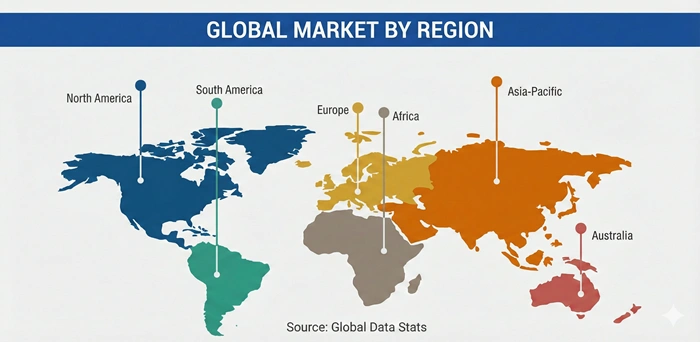
North America leads the global antiseptic and disinfectants market with approximately 38–40% of total revenues in 2026 and a CAGR of approximately 7.1% through 2033. The United States is the largest single country market, driven by the world's highest healthcare expenditure per capita, stringent CDC and Joint Commission infection prevention mandates, the largest industrial food processing sector in the world, and deeply institutionalized hygiene practices across healthcare, food service, hospitality, and educational settings. Major companies including Ecolab, GOJO Industries, Diversey, Reckitt Benckiser (Lysol), and Medline Industries maintain dominant positions in the U.S. institutional and consumer disinfectant market, supported by extensive distribution networks, large direct sales forces, and clinical evidence programs that support their infection prevention value propositions. Canada contributes meaningfully to regional revenues, with a publicly funded healthcare system that drives strong institutional disinfectant procurement and growing food processing industry sanitization demand.
North America's sustained leadership in the antiseptic and disinfectants market is reinforced by the continuous evolution of regulatory standards — including ongoing FDA reviews of antiseptic active ingredients, EPA's List N pathogen-specific disinfectant efficacy requirements, and USDA food safety sanitation regulations — that mandate product compliance and drive continuous reformulation and market renewal activity. The region's post-pandemic institutional hygiene standards have been formally updated in major sectors including airlines, transit authorities, schools, and hospitality, creating permanent demand elevation that sustains market revenues above pre-pandemic baselines.
Asia Pacific
Asia Pacific Is the Fastest-Growing Market for Antiseptics and Disinfectants, Fueled by Healthcare Expansion, Rising Hygiene Awareness, and Booming Food Processing Industry Demand*
Asia Pacific is the fastest-growing regional market for antiseptic and disinfectant products, projected to expand at a CAGR of approximately 9.8% through 2033, with a current market share of approximately 22–24% in 2026. China is the dominant country market within the region, driven by the government's massive healthcare infrastructure expansion program, rapidly growing food processing and export industry, and rising consumer hygiene consciousness in urban populations following the COVID-19 experience. India is registering particularly fast growth, driven by the National Clean India (Swachh Bharat) mission, expanding private hospital networks, growing pharmaceutical manufacturing facilities requiring clean-room sanitation, and a rapidly expanding food and beverage sector subject to tightening FSSAI food safety sanitation regulations. Companies including Godrej Consumer Products (India), Unilever (through its domestic brands), Reckitt Benckiser, Ecolab, and domestic disinfectant manufacturers across China and India are competing intensively in this high-growth regional market.
Japan and South Korea are mature, high-value segments within the Asia Pacific antiseptic and disinfectants market, characterized by premium product consumption, advanced hospital infection control standards, and strong domestic consumer hygiene product industries. Southeast Asia — particularly Indonesia, Vietnam, Thailand, and the Philippines — represents the highest-growth frontier in the region, where improving healthcare standards, rapid food industry formalization, and growing institutional hygiene consciousness among operators of hotels, schools, and public transportation networks are driving rapidly expanding demand for both professional and consumer antiseptic and disinfectant products. As multinational companies strengthen their regional distribution presence and local manufacturers scale their production capabilities, competition and product availability in Southeast Asian markets are set to intensify, further accelerating market growth through 2033.
Top Key Players
-
Ecolab Inc. (United States)
-
Reckitt Benckiser Group plc (United Kingdom)
-
GOJO Industries Inc. (Purell) (United States)
-
Diversey Holdings Inc. (Solenis) (United States)
-
3M Company / Solventum (United States)
-
Henkel AG & Co. KGaA (Germany)
-
Unilever plc (United Kingdom / Netherlands)
-
LANXESS AG (Germany)
-
Lonza Group AG (Switzerland)
-
Evonik Industries AG (Germany)
-
Medline Industries LP (United States)
-
Whiteley Corporation (Australia)
-
Godrej Consumer Products Ltd. (India)
-
Procter & Gamble Co. (United States)
Recent Developments
-
2024 – Ecolab Inc. expanded its healthcare infection prevention portfolio through the commercial launch of its Science Certified program for hospitality and commercial facilities, integrating proprietary disinfectant product lines with digital hygiene monitoring tools and IoT-enabled dispensing system data to provide verifiable, data-backed infection prevention outcomes for institutional clients.
-
2024 – Reckitt Benckiser invested in expanding its Dettol and Lysol manufacturing capacity across key Asia Pacific markets, including new production facility partnerships in India and Vietnam, to meet accelerating demand for professional-grade antiseptic and disinfectant products in these high-growth emerging markets with rapidly expanding healthcare and institutional hygiene sectors.
-
2024 – Lonza Group completed the expansion of its biocide active ingredient manufacturing capacity at its Visp, Switzerland site, adding production capacity for specialty quaternary ammonium compound actives used in hospital-grade disinfectant formulations, supporting growing global demand for regulated institutional disinfectant products with verified antimicrobial performance profiles.
-
2025 – GOJO Industries launched an advanced Purell Professional Surface Disinfectant line with a new one-step disinfect-and-clean formulation designed to reduce protocol complexity in healthcare environmental services workflows, featuring EPA List N registration for efficacy against a broad spectrum of healthcare-relevant pathogens including C. diff spores and emerging viral threats.
-
2025 – Diversey (Solenis) announced the global rollout of its IntelliDish and Clax digital laundry and disinfection monitoring platform to an expanded network of hospital and commercial laundry customers, integrating real-time chemical dispensing data, disinfection temperature monitoring, and compliance reporting tools that strengthen its value proposition as an integrated hygiene solutions partner.
Market Trends
Sustainability-Driven Formulation Innovation, Digital Hygiene Management Integration, and the Rise of Hypochlorous Acid-Based Disinfectants Are the Defining Trends in the Antiseptic and Disinfectants Market*
The most influential trend shaping the antiseptic and disinfectants market today is the accelerating shift toward sustainable, eco-friendly formulations that deliver broad-spectrum antimicrobial efficacy while minimizing environmental impact, occupational exposure risk, and surface material compatibility concerns. Hypochlorous acid (HOCl)-based disinfectants — produced through the electrolysis of saltwater — are gaining rapid commercial traction in healthcare, food processing, and consumer hygiene applications as they offer excellent efficacy against bacteria, viruses, and fungi, combined with minimal toxicity, rapid biodegradability, and compatibility with sensitive surfaces and equipment. Similarly, hydrogen peroxide-based accelerated hydrogen peroxide (AHP) formulations, plant-derived antimicrobials, and probiotic cleaning products are expanding from niche categories into mainstream institutional and consumer hygiene markets as environmental procurement policies and consumer sustainability awareness drive purchasing decisions toward greener alternatives.
The second major trend is the rapid integration of digital hygiene management platforms into institutional disinfection programs, particularly in healthcare and food processing environments. Smart dispensing systems, IoT-connected disinfectant dosing equipment, AI-powered compliance monitoring dashboards, and automated disinfection robots are collectively transforming how antiseptic and disinfectant products are purchased, used, tracked, and measured for outcomes. Companies that can offer not just effective products but also digital program management tools — delivering measurable compliance data, audit-ready documentation, and predictive maintenance alerts — are gaining significant competitive advantage in the high-value institutional segment of the antiseptic and disinfectants market. This digital transformation is elevating disinfection from a commodity product procurement decision to a value-added hygiene program service contract, creating higher customer retention and premium revenue opportunities for technology-enabled market leaders.
Segments Covered in the Report
By Product Type:
-
Surface Disinfectants
-
Hand Hygiene Products
-
Alcohol-Based Hand Sanitizers
-
Antiseptic Hand Washes
-
Waterless Hand Rubs
-
-
Instrument and Medical Device Disinfectants
-
High-Level Disinfectants
-
Intermediate-Level Disinfectants
-
Low-Level Disinfectants
-
-
Skin and Wound Antiseptics
-
Other Product Types
By Formulation:
-
Liquid
-
Spray
-
Wipes and Pre-Saturated Towelettes
-
Powder
-
Gel
-
Other Formulations
By Active Ingredient:
-
Quaternary Ammonium Compounds (QACs)
-
Alcohols (Ethanol, Isopropanol)
-
Chlorine and Chlorine Compounds
-
Hydrogen Peroxide and Peracetic Acid
-
Iodine and Iodophors
-
Phenolics
-
Hypochlorous Acid (HOCl)
-
Other Active Ingredients
By Application:
-
Hospital and Surgical Facility Disinfection
-
Hand Antisepsis and Hygiene
-
Food and Beverage Industry Sanitation
-
Pharmaceutical and Biotech Facility Disinfection
-
Consumer and Household Hygiene
-
Other Applications
By End User:
-
Hospitals and Healthcare Facilities
-
Food and Beverage Processing Industry
-
Pharmaceutical and Biotech Industry
-
Hospitality and Commercial Buildings
-
Household / Consumer
-
Other End Users
By Region:
-
North America
-
United States
-
Canada
-
-
Europe
-
Germany
-
United Kingdom
-
France
-
Italy
-
Spain
-
Rest of Europe
-
-
Asia Pacific
-
China
-
India
-
Japan
-
South Korea
-
Australia
-
Rest of Asia Pacific
-
-
Latin America
-
Brazil
-
Mexico
-
Rest of Latin America
-
-
Middle East & Africa
-
GCC Countries
-
South Africa
-
Rest of Middle East & Africa
-
"Built for Every Level — From Startups to Industry Giants"
Here Is Exactly How This Report Works for You
-
For Tier 1 multinational hygiene product companies, large hospital procurement systems, and institutional investors, this report delivers granular competitor revenue analysis, active ingredient and product category market share benchmarking, and regional demand forecasting across all antiseptic and disinfectant product segments — enabling precise portfolio investment strategies, acquisition target identification, and commercial expansion planning in one of healthcare's most structurally resilient product markets.
-
For Tier 2 and Tier 3 disinfectant manufacturers, specialty chemical companies, and regional distribution businesses, this report provides detailed supply-demand dynamics, raw material sourcing trend analysis, competitive pricing benchmarks, and unmet need mapping across end-user segments — giving growing organizations the intelligence to optimize product portfolios, identify underserved geographic markets, and build commercially differentiated positioning in the competitive antiseptic and disinfectants landscape.
-
For all decision-makers operating in today's complex geopolitical environment, this report delivers clear analysis of how API and raw material supply chain vulnerabilities, cross-border trade policy shifts affecting chemical imports and exports, region-specific regulatory divergences in biocide approval frameworks, and healthcare infrastructure investment patterns across emerging markets are impacting manufacturing costs, supply security, and global market access — equipping business leaders with the strategic intelligence to make confident and proactive decisions.
Frequently Asked Questions
Question 1: What is the current size of the antiseptic and disinfectants market and what is the growth forecast through 2033?
Answer: The antiseptic and disinfectants market is valued at USD 30.64 billion in 2025 and is projected to reach USD 56.34 billion by 2033. The market is expected to grow at a CAGR of 7.95% from 2026 to 2033.
Question 2: What are the main growth drivers in the antiseptic and disinfectants market?
Answer: The antiseptic and disinfectants market is primarily driven by rising healthcare-associated infection rates, sustained post-pandemic hygiene behavioral changes, and tightening food safety sanitation regulations globally. Expanding healthcare infrastructure in Asia Pacific, Latin America, and the Middle East & Africa is further accelerating demand for professional disinfectant and antiseptic products.
Question 3: Which product type holds the largest share in the antiseptic and disinfectants market?
Answer: Surface disinfectants hold the largest product type share, accounting for approximately 48–50% of total revenues in 2025, driven by broad application across healthcare, food processing, hospitality, and institutional settings. Hand hygiene products are the fastest-growing product category, expanding at approximately 8.7% CAGR through 2033.
Question 4: Which region dominates the antiseptic and disinfectants market and which is growing fastest?
Answer: North America dominates the antiseptic and disinfectants market with approximately 38–40% of global revenues in 2026, driven by stringent infection prevention regulations and high institutional hygiene standards. Asia Pacific is the fastest-growing region, expanding at approximately 9.8% CAGR through 2033 driven by healthcare expansion and rising hygiene awareness.
Question 5: Who are the top companies in the antiseptic and disinfectants market?
Answer: Leading companies in the antiseptic and disinfectants market include Ecolab, Reckitt Benckiser, GOJO Industries (Purell), Diversey (Solenis), 3M/Solventum, Henkel, Unilever, Lonza, LANXESS, and Evonik, among others. These companies compete through sustainable formulation innovation, digital hygiene program integration, global distribution networks, and regulatory compliance expertise.