
Anticoagulants Market Overview
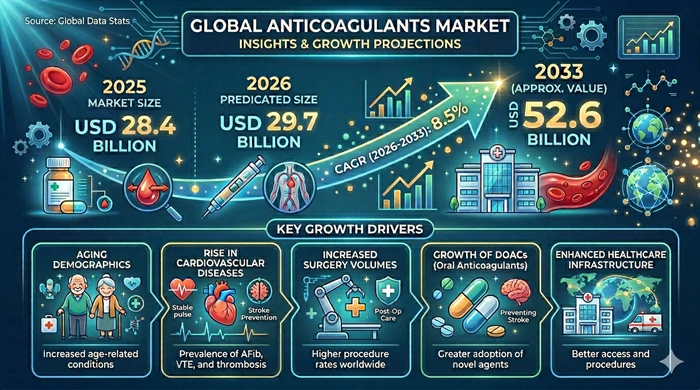
The global anticoagulants market size is valued at USD 28.4 billion in 2025 and is predicted to increase from USD 29.7 billion in 2026 to approximately USD 52.6 billion by 2033, growing at a CAGR of 8.5% from 2026 to 2033.
The anticoagulants market is witnessing strong momentum driven by the rising global burden of cardiovascular diseases, atrial fibrillation, and venous thromboembolism. Increasing adoption of novel oral anticoagulants (NOACs) and growing awareness about thrombotic conditions are significantly reshaping treatment landscapes across both developed and emerging economies.
AI Impact on the Anticoagulants Industry
Artificial Intelligence Is Transforming Anticoagulation Therapy Management, Dosing Precision, and Patient Monitoring Across Global Healthcare Systems
Artificial intelligence is steadily redefining how clinicians manage anticoagulation therapy. AI-powered clinical decision support systems are now helping physicians determine the right dosing regimen for anticoagulants, particularly for high-risk patients who require ongoing monitoring. These systems analyze patient history, lab values, and comorbidities in real time, significantly reducing the risk of adverse events such as bleeding complications or inadequate anticoagulation.
Beyond dosing, machine learning algorithms are being integrated into remote patient monitoring platforms that track international normalized ratio (INR) levels, flag potential drug interactions, and send alerts to care teams. This is particularly valuable in managing patients on warfarin or direct oral anticoagulants (DOACs). Pharmaceutical companies are also leveraging AI in drug discovery pipelines to identify new anticoagulant molecules with fewer side effects, accelerating the path from early research to clinical trials.
Growth Factors
Surging Cardiovascular Disease Burden, Aging Populations, and Expanding Access to Advanced Anticoagulant Therapies Are Fueling Market Expansion Worldwide
The primary driver of growth in the anticoagulants market is the rising global incidence of conditions that require blood-thinning therapy — including deep vein thrombosis (DVT), pulmonary embolism, and stroke prevention in atrial fibrillation patients. As populations age, particularly in North America, Europe, and parts of Asia, the demand for both preventive and therapeutic anticoagulation continues to climb at a consistent pace.
The shift from traditional anticoagulants like warfarin to newer, more convenient direct oral anticoagulants is another powerful growth engine. DOACs such as rivaroxaban, apixaban, and dabigatran offer predictable pharmacokinetics, fewer food interactions, and do not require routine INR monitoring. These advantages have fueled wide clinical adoption and driven strong revenue growth for manufacturers who have been quick to expand into emerging markets with generic and branded formulations.
Market Outlook
The Global Anticoagulants Market Is Poised for Sustained Long-Term Growth Backed by Innovation in Drug Delivery, Expanding Indications, and Improving Healthcare Infrastructure
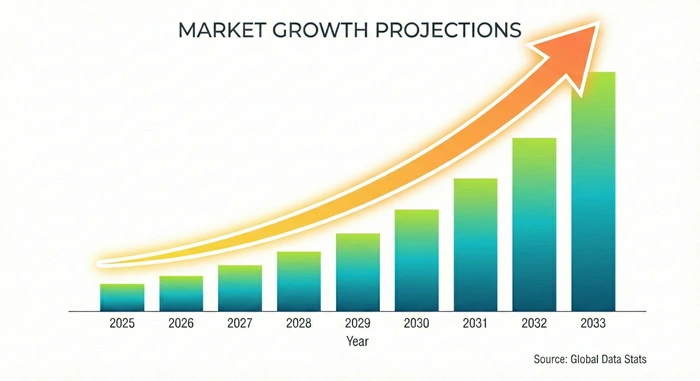
Looking ahead through 2033, the anticoagulants market is set to experience strong and sustained expansion. Companies are actively investing in new anticoagulant formulations, including factor XI inhibitors and RNA-targeting therapies that could offer improved safety profiles compared to currently available options. Pipeline innovation, combined with growing awareness in underserved markets, will create new revenue streams across the forecast period.
Emerging economies in Asia-Pacific, Latin America, and the Middle East are expected to become increasingly important markets as healthcare spending rises and access to specialized cardiac care improves. Governments and private payers are expanding reimbursement frameworks for NOACs, which will further accelerate adoption. With a healthy drug pipeline, broadening patient populations, and digital health integration, the anticoagulants market outlook through 2033 remains notably positive.
Expert Speaks
-
Albert Bourla, CEO, Pfizer Inc. — "Cardiovascular therapies, including anticoagulants, remain a critical focus for us. The transition toward more patient-friendly oral options is driving real-world outcomes, and we see significant untapped potential in both established and emerging markets over the coming decade."
-
Chris Boerner, CEO, Bristol-Myers Squibb — "Eliquis continues to demonstrate remarkable clinical performance globally. We are committed to expanding access to proven anticoagulation therapies and exploring next-generation compounds that can address unmet medical needs in high-risk patient populations."
-
Thomas Schinecker, CEO, Roche — "Diagnostics and therapeutics are increasingly interconnected in anticoagulation management. Precision monitoring paired with advanced drug therapies is the future of safe, effective treatment — and the market is responding strongly to that integrated care model."
Key Report Takeaways
-
North America dominates the anticoagulants market, holding the largest revenue share due to a high prevalence of atrial fibrillation, well-established healthcare infrastructure, and strong reimbursement policies for DOACs; the region accounts for approximately 38% of the global market share
-
Asia-Pacific is the fastest-growing region, driven by rapidly aging populations in China, Japan, and India, increasing cardiovascular disease awareness, improving hospital infrastructure, and expanding access to branded and generic anticoagulant drugs; the region is projected to grow at a CAGR of over 10.2% through 2033
-
Hospitals are the largest end-user segment in the anticoagulants market, accounting for the highest share of consumption due to in-patient treatment of acute thrombotic events, post-surgical anticoagulation, and stroke prevention protocols
-
Direct oral anticoagulants (DOACs) represent the dominant drug class, contributing the largest revenue share within the product segment, supported by their ease of use, fixed dosing, and strong clinical evidence base
-
Oral anticoagulants hold the leading position in terms of route of administration, given patient and physician preference for convenience over injectable alternatives in long-term chronic condition management
-
Stroke prevention in atrial fibrillation is the top application segment, reflecting the massive and growing patient population diagnosed with AF globally and the critical role of anticoagulant therapy in reducing stroke risk
-
Factor XI inhibitors represent the fastest-growing future segment, with a projected market share of approximately 12% by 2033 and an estimated CAGR of 14.8%, driven by their potential for superior safety profiles compared to existing anticoagulants
Market Scope
| Report Coverage | Details |
|---|---|
| Market Size by 2033 | USD 52.6 Billion |
| Market Size by 2025 | USD 28.4 Billion |
| Market Size by 2026 | USD 29.7 Billion |
| Market Growth Rate (2026–2033) | CAGR of 8.5% |
| Dominating Region | North America |
| Fastest Growing Region | Asia-Pacific |
| Base Year | 2025 |
| Forecast Period | 2026 – 2033 |
| Segments Covered | Drug Class, Route of Administration, Application, End User |
| Regions Covered | North America, Europe, Asia-Pacific, Latin America, Middle East & Africa |
Market Dynamics
Drivers Impact Analysis
Rising Incidence of Thromboembolic Disorders and Widespread Clinical Shift Toward Novel Oral Anticoagulants Are the Primary Forces Accelerating Market Growth
| Driver | ≈ % Impact on CAGR Forecast | Geographic Relevance | Impact Timeline |
|---|---|---|---|
| Increasing prevalence of atrial fibrillation and DVT | ~30% | Global, especially North America & Europe | Short to Long-term |
| Adoption of DOACs over traditional anticoagulants | ~25% | North America, Europe, Asia-Pacific | Short to Medium-term |
| Aging global population | ~20% | Europe, Japan, North America | Medium to Long-term |
| Rising healthcare expenditure in emerging markets | ~15% | Asia-Pacific, Latin America, MEA | Medium to Long-term |
| Growing surgical procedures requiring anticoagulation | ~10% | Global | Short to Medium-term |
The growing burden of cardiovascular and thromboembolic diseases is the most significant driver shaping the anticoagulants market. Atrial fibrillation alone affects over 59 million people globally, with that number expected to double by 2050 due to population aging. This creates an enormous and continuously expanding patient base requiring ongoing anticoagulation therapy, directly fueling demand for both branded and generic formulations.
The clinical transition toward direct oral anticoagulants has been another transformative driver. Unlike warfarin, which requires frequent blood monitoring and has numerous dietary interactions, DOACs offer fixed dosing and a more predictable safety profile. Healthcare providers across North America and Europe have been rapidly updating treatment guidelines to reflect this shift, and Asia-Pacific markets are quickly following suit with increasing insurance coverage for these therapies.
Restraints Impact Analysis
High Drug Costs, Bleeding Risk Concerns, and Limited Reversal Agent Availability Continue to Restrict Broader Adoption of Anticoagulants in Cost-Sensitive Markets
| Restraint | ≈ % Impact on CAGR Forecast | Geographic Relevance | Impact Timeline |
|---|---|---|---|
| High cost of branded DOACs | ~28% | Emerging markets, Low-income segments | Short to Medium-term |
| Bleeding and hemorrhagic complication risks | ~25% | Global | Ongoing |
| Limited availability of reversal agents | ~22% | Asia-Pacific, Latin America, MEA | Medium-term |
| Lack of awareness in rural and underserved regions | ~15% | Africa, Rural Asia-Pacific | Medium to Long-term |
| Stringent regulatory approval pathways | ~10% | Global | Medium-term |
Despite impressive clinical advantages, the anticoagulants market faces meaningful headwinds related to drug pricing. Branded DOACs remain expensive in many middle- and low-income countries, limiting their uptake to private-pay or insurance-covered patients. While generic versions of some older DOACs are becoming available, patent protection on newer agents continues to be a pricing barrier in a large portion of the world.
Bleeding risks associated with all anticoagulant therapies remain a constant clinical concern. Physicians in settings with limited access to reversal agents — such as idarucizumab for dabigatran or andexanet alfa for factor Xa inhibitors — may be more conservative in initiating therapy for borderline candidates. This caution, while clinically justified, does constrain market penetration, particularly in healthcare environments with limited critical care infrastructure.
Opportunities Impact Analysis
Pipeline Innovation in Factor XI Inhibitors, Gene Therapy Adjuncts, and Emerging Market Expansion Represent the Most Compelling Untapped Growth Avenues
| Opportunity | ≈ % Impact on CAGR Forecast | Geographic Relevance | Impact Timeline |
|---|---|---|---|
| Factor XI inhibitor pipeline development | ~35% | Global, led by North America | Medium to Long-term |
| Expansion into Asia-Pacific and Latin America | ~28% | Asia-Pacific, Latin America | Short to Long-term |
| Digital health integration for anticoagulation management | ~20% | North America, Europe | Short to Medium-term |
| Biosimilar and generic market entry for established DOACs | ~10% | Emerging markets globally | Short to Medium-term |
| Growing use in oncology-associated thrombosis | ~7% | North America, Europe | Medium-term |
The next wave of anticoagulant innovation is centered on factor XI inhibitors, which offer a promising benefit-risk profile by potentially preventing pathological clotting while preserving normal hemostasis. Several late-stage clinical programs from major pharmaceutical players are advancing, and positive trial readouts could unlock a significant share of the anticoagulants market by the early 2030s.
Geographic expansion into Asia-Pacific and Latin America represents another high-impact opportunity. As middle-class populations grow, healthcare systems in countries like India, Brazil, and Indonesia are investing heavily in cardiac care capabilities. Increasing awareness campaigns, combined with the entry of affordable generic anticoagulants, are expected to bring millions of previously undertreated patients into the formal healthcare system — creating a substantial long-term demand pool for this therapy class.
Segment Analysis
By Drug Class
Direct Oral Anticoagulants (DOACs) Continue to Dominate the Anticoagulants Market, Driven by Superior Convenience and Expanding Clinical Indications Across Multiple Therapeutic Areas
Direct oral anticoagulants represent the largest and most dynamic segment within the anticoagulants market, accounting for approximately 54% of total revenue in 2025. This segment is projected to maintain a strong CAGR of 9.2% through 2033, led primarily by apixaban and rivaroxaban, which together command a majority of DOAC prescriptions globally. North America dominates this segment due to high physician familiarity, robust reimbursement policies, and widespread guideline-driven prescribing in stroke prevention for atrial fibrillation patients. Major companies driving this segment include Bristol-Myers Squibb and Pfizer (co-marketers of Eliquis/apixaban), Johnson & Johnson and Bayer (Xarelto/rivaroxaban), and Boehringer Ingelheim (Pradaxa/dabigatran), all of which have maintained aggressive market presence through clinical evidence generation and medical education initiatives.
The DOAC segment is also benefiting from expanding indications beyond atrial fibrillation and DVT treatment. Regulatory approvals for use in patients with coronary artery disease, peripheral artery disease, and cancer-associated thrombosis have broadened the prescribing base significantly. Asia-Pacific is the fastest-growing region within this segment, where increasing cardiovascular disease awareness, improving diagnostic infrastructure, and rising per-capita healthcare spending are drawing both branded and generic DOAC manufacturers to invest heavily in market development. Companies like Daiichi Sankyo (edoxaban) hold particular strength in Japan and select Asian markets.
By Application
Stroke Prevention in Atrial Fibrillation Remains the Dominant Application, While Venous Thromboembolism Treatment Is Rapidly Gaining Ground in the Anticoagulants Market
Stroke prevention in atrial fibrillation accounts for the largest share within the application segment of the anticoagulants market, contributing nearly 40% of total application-based revenue in 2025. This dominance is driven by the enormous and growing global AF population, stringent clinical guidelines mandating anticoagulation therapy for intermediate- to high-risk AF patients, and strong outcomes data supporting long-term use. North America and Europe together account for the majority of this segment's revenue, with companies like Pfizer, Bristol-Myers Squibb, and Bayer leading the competitive landscape through well-established brand recognition and prescriber loyalty built over more than a decade.
Venous thromboembolism (VTE) treatment and prevention is the second-largest application and is growing at an impressive pace, fueled by rising hospitalization rates, increased surgical volumes, and growing awareness of DVT and pulmonary embolism risks. The application segment for VTE is projected to grow at a CAGR of 8.9% through 2033, with Asia-Pacific showing particularly strong momentum as awareness campaigns by healthcare ministries gain traction. Cancer-associated thrombosis is also emerging as a new and meaningful sub-application, with several clinical trials recently establishing DOACs as preferred anticoagulants in this high-risk patient population.
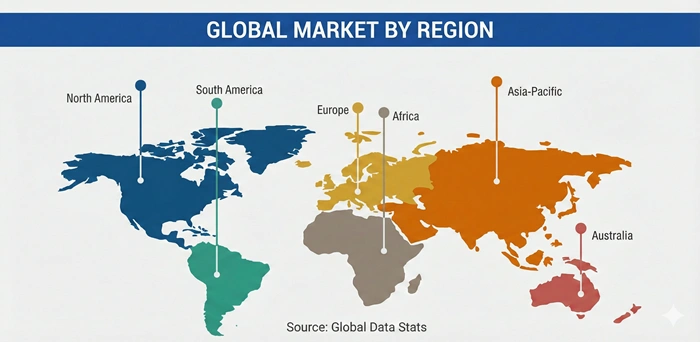
Regional Insights
North America
North America Leads the Global Anticoagulants Market With the Highest Revenue Share, Supported by Advanced Cardiac Care Infrastructure and High DOAC Adoption Rates
North America holds the dominant position in the global anticoagulants market, accounting for approximately 38% of total revenue in 2025, and is expected to sustain a CAGR of 7.8% through 2033. The United States represents the backbone of this regional market, with high AF prevalence, a well-developed healthcare system, and comprehensive insurance coverage for newer anticoagulant drugs. Canada also contributes meaningfully, with public health programs supporting anticoagulation therapy in high-risk cardiovascular patients. Leading companies operating actively in North America include Bristol-Myers Squibb, Pfizer, Johnson & Johnson, Boehringer Ingelheim, and AstraZeneca, all of which maintain significant commercial and clinical trial activity across this region.
The region benefits from well-established clinical guidelines from the American Heart Association and American College of Cardiology, which continue to advocate for DOAC therapy over warfarin in most AF patients. Hospital anticoagulation management programs are increasingly sophisticated, incorporating pharmacist-led services, digital monitoring tools, and AI-assisted dosing support. This ecosystem of clinical infrastructure, regulatory clarity, and strong reimbursement creates a highly favorable environment for sustained anticoagulants market growth throughout the forecast period.
Asia-Pacific
Asia-Pacific Is the Fastest-Growing Region in the Anticoagulants Market, Driven by Aging Demographics, Rising Cardiovascular Disease Burden, and Expanding Healthcare Access
Asia-Pacific is emerging as the most dynamic regional market for anticoagulants, projected to grow at a CAGR of 10.2% from 2026 to 2033 — the highest of any region globally. The region currently holds approximately 22% of global market share and is rapidly expanding as countries like China, India, Japan, and South Korea invest in cardiovascular disease management programs. Japan remains a mature market with high DOAC penetration, while China and India represent massive untapped opportunities driven by improving hospital infrastructure and a growing middle class with greater access to preventive cardiac care. Key players active in this region include Daiichi Sankyo, Bayer, Bristol-Myers Squibb, Pfizer, Sun Pharmaceutical Industries, and Cipla, the latter two capitalizing on generics demand in the Indian subcontinent.
Government initiatives across Asia-Pacific focused on reducing stroke mortality and managing chronic cardiovascular conditions are directly supporting anticoagulant therapy adoption. Reimbursement expansion in China's national insurance scheme and India's Ayushman Bharat program are expected to bring thousands of new anticoagulants prescriptions into the system over the coming years. The region's pharmaceutical manufacturing capabilities also make it an important production hub for both branded and generic anticoagulant formulations, further reinforcing its growing strategic importance in the global market landscape.
Top Key Players
-
Bristol-Myers Squibb (United States)
-
Pfizer Inc. (United States)
-
Johnson & Johnson (United States)
-
Bayer AG (Germany)
-
Boehringer Ingelheim (Germany)
-
AstraZeneca plc (United Kingdom)
-
Daiichi Sankyo Company (Japan)
-
Sanofi S.A. (France)
-
Abbott Laboratories (United States)
-
Sun Pharmaceutical Industries (India)
-
Cipla Limited (India)
-
Portola Pharmaceuticals (United States)
Recent Developments
-
Bristol-Myers Squibb & Pfizer (2025) — Announced expanded label indication for apixaban (Eliquis) in patients with cancer-associated venous thromboembolism following a successful Phase III trial outcome, reinforcing its position as a leading anticoagulant across multiple therapeutic settings
-
Bayer AG (2025) — Received regulatory approval in key European markets for a new low-dose rivaroxaban regimen targeting patients with chronic coronary and peripheral artery disease, expanding the addressable patient population for Xarelto significantly
-
Boehringer Ingelheim (2024) — Completed a strategic licensing agreement with a digital health company to integrate DOAC monitoring capabilities into wearable devices, marking a major step in connecting anticoagulation therapy with real-time remote patient data
-
Daiichi Sankyo (2024) — Expanded the commercial footprint of edoxaban (Lixiana/Savaysa) across Southeast Asian markets including Vietnam, Thailand, and the Philippines through a network of regional distribution partnerships, targeting underpenetrated atrial fibrillation patient populations
-
AstraZeneca (2025) — Advanced its factor XI inhibitor candidate (abelacimab) into Phase III clinical trials for stroke prevention in AF, with initial data suggesting significantly lower bleeding rates compared to standard DOAC therapy, generating substantial industry attention
Market Trends
Transition to Next-Generation Anticoagulants and Digital Monitoring Integration Are Defining the Most Important Emerging Trends in the Anticoagulants Market
One of the most consequential trends reshaping the anticoagulants market is the emergence of factor XI inhibitors as a potentially superior alternative to current DOACs. Early clinical data suggests these novel agents can prevent pathological clots without significantly impairing the body's natural bleeding response — a long-sought balance in anticoagulation pharmacology. Multiple pharmaceutical companies, including AstraZeneca, Anthos Therapeutics, and Bayer, are advancing candidates through mid- to late-stage trials, and positive outcomes could fundamentally alter prescribing patterns by the late 2030s.
Digital health integration represents the second major trend influencing this market. Remote INR monitoring devices, AI-driven dosing algorithms, and smartphone-based anticoagulation management applications are becoming more mainstream in developed healthcare markets. These technologies help healthcare providers maintain closer oversight of patient anticoagulation status without requiring frequent in-clinic visits, improving outcomes and reducing adverse events. As telehealth infrastructure matures globally, digital anticoagulation management is expected to become standard of care, further supporting the long-term growth trajectory of this market.
Segments Covered in the Report
By Drug Class:
-
Direct Oral Anticoagulants (DOACs)
-
Heparin and Low Molecular Weight Heparin (LMWH)
-
Vitamin K Antagonists (Warfarin)
-
Factor XI Inhibitors (Emerging)
-
Others
By Route of Administration:
-
Oral
-
Injectable
-
Others
By Application:
-
Stroke Prevention in Atrial Fibrillation
-
Venous Thromboembolism (DVT & Pulmonary Embolism)
-
Acute Coronary Syndrome
-
Cancer-Associated Thrombosis
-
Others
By End User:
-
Hospitals
-
Ambulatory Surgical Centers
-
Specialty Clinics
-
Home Care Settings
-
Others
By Region:
-
North America (United States, Canada, Mexico)
-
Europe (Germany, United Kingdom, France, Italy, Spain, Rest of Europe)
-
Asia-Pacific (China, Japan, India, South Korea, Australia, Rest of Asia-Pacific)
-
Latin America (Brazil, Argentina, Rest of Latin America)
-
Middle East & Africa (GCC Countries, South Africa, Rest of MEA)
Frequently Asked Questions
Question 1: What is the current size of the global anticoagulants market?
Answer: The global anticoagulants market is valued at USD 28.4 billion in 2025 and is expected to reach USD 52.6 billion by 2033. It is growing at a CAGR of 8.5% during the forecast period from 2026 to 2033.
Question 2: Which drug class leads the anticoagulants market today?
Answer: Direct oral anticoagulants (DOACs) dominate the anticoagulants market, holding approximately 54% of total revenue in 2025. Their ease of use, fixed dosing, and proven clinical outcomes make them the preferred choice among physicians globally.
Question 3: Which region is growing the fastest in the anticoagulants market?
Answer: Asia-Pacific is the fastest-growing region in the anticoagulants market, projected to grow at a CAGR of 10.2% through 2033. Rising cardiovascular disease awareness, aging populations, and expanding healthcare access are the key factors fueling this growth.
Question 4: What are the key factors driving growth in the anticoagulants market?
Answer: The anticoagulants market is primarily driven by the increasing global prevalence of atrial fibrillation, DVT, and related thromboembolic conditions. The ongoing shift from warfarin to newer oral anticoagulants with better safety profiles is also a critical growth driver.
Question 5: What future developments are expected to shape the anticoagulants market?
Answer: Factor XI inhibitors represent the most anticipated future innovation in the anticoagulants market, with the potential to offer safer clot prevention than existing therapies. Digital health integration and expanded use in oncology-associated thrombosis are also expected to open significant new growth avenues.