
Anti-Snoring Treatment Market Overview
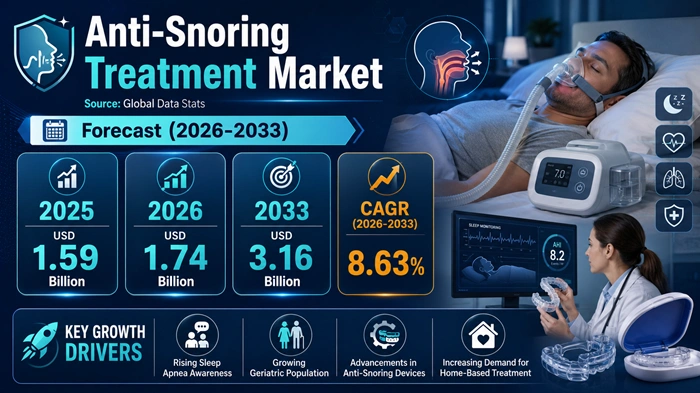
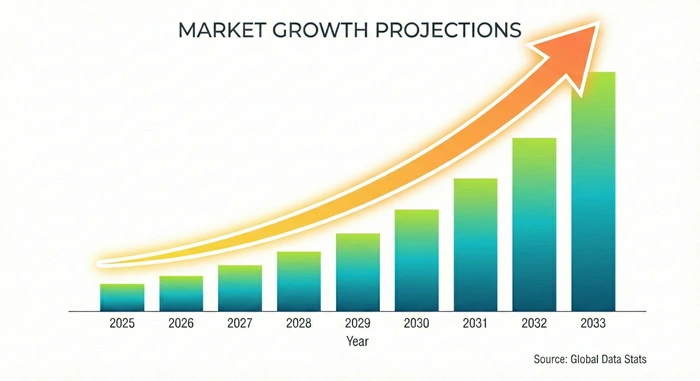
The global anti-snoring treatment market size is valued at USD 1.59 billion in 2025 and is predicted to increase from USD 1.74 billion in 2026 to approximately USD 3.16 billion by 2033, growing at a CAGR of 8.63% from 2026 to 2033.
This steady expansion reflects growing public awareness of how untreated snoring can affect sleep quality, relationships, and long-term cardiovascular health. Rising diagnosis rates for sleep apnea, growing obesity levels worldwide, and increasing availability of affordable over-the-counter anti-snoring devices are together driving demand across both clinical and consumer markets.
AI Impact on the Anti-Snoring Treatment Industry
Artificial Intelligence Is Quietly Transforming How Sleep Disorders Are Diagnosed and Managed at Home
Artificial intelligence is beginning to play a meaningful role in reshaping how snoring and related sleep disorders are detected and treated. Smart wearable devices and mobile applications now use machine learning algorithms to analyze breathing patterns, snoring intensity, and sleep position throughout the night, giving users detailed data that was previously only available through clinical sleep studies. This shift toward accessible, AI-powered home monitoring is helping more people identify snoring severity early, encouraging them to seek appropriate treatment before the condition worsens into more serious sleep apnea.
Beyond diagnosis, AI is improving how anti-snoring devices themselves function in real time. Smart mandibular advancement devices and connected CPAP machines increasingly use adaptive algorithms that adjust pressure or jaw positioning automatically based on the wearer's specific breathing patterns, improving comfort and treatment effectiveness compared to older fixed-setting devices. Manufacturers are also using AI-driven data analysis to refine future product designs based on real-world usage patterns collected from thousands of users, creating a continuous improvement loop that is gradually raising the overall quality and personalization of anti-snoring solutions available to consumers.
Growth Factors
Rising Sleep Disorder Awareness, Lifestyle Changes, and Product Accessibility Are Converging to Sustain Market Growth
The primary engine driving the anti-snoring treatment market forward is the growing public recognition of snoring as a legitimate health concern rather than a minor nuisance. Increasing medical research linking chronic snoring to conditions like obstructive sleep apnea, high blood pressure, and cardiovascular disease has encouraged more people to seek treatment rather than ignore the problem. This awareness has been reinforced by widespread media coverage and social sharing of sleep tracking data, which has normalized conversations about snoring and sleep quality in ways that were uncommon just a decade ago.
At the same time, lifestyle factors including rising obesity rates, sedentary habits, and increasing alcohol consumption are contributing to a growing pool of individuals experiencing snoring symptoms, expanding the potential customer base for the anti-snoring treatment market. The growing availability of affordable, easy-to-use over-the-counter products such as nasal strips, mouthguards, and anti-snoring pillows through both pharmacies and e-commerce platforms is making treatment more accessible than ever before. This combination of rising awareness and improving product accessibility continues to expand demand across price-sensitive and premium consumer segments alike.
Market Outlook
Home Sleep Testing Expansion, Emerging Market Penetration, and Product Innovation Are Setting the Stage for Sustained Growth
The anti-snoring treatment industry is positioned for sustained growth driven by the expanding availability of home sleep testing kits that make initial diagnosis far more convenient than traditional overnight sleep lab studies. As more healthcare systems and insurance providers recognize the cost benefits of home-based diagnostic pathways, patients are increasingly able to identify snoring-related conditions earlier and access appropriate anti-snoring devices without lengthy waiting periods. This shift toward decentralized diagnosis represents a meaningful structural opportunity for device manufacturers targeting both clinical and direct-to-consumer channels.
Emerging markets will be an important area of focus for growth through 2033, particularly across Asia Pacific and Latin America, where rising obesity rates and improving healthcare infrastructure are increasing diagnosis and treatment rates for sleep-related breathing disorders. Growing middle-class disposable income in these regions is making previously unaffordable clinical-grade devices more accessible to a broader population. Companies that invest early in affordable, well-designed anti-snoring products suited to these expanding markets are likely to capture a meaningful share of this growing demand within the anti-snoring treatment market.
Expert Speaks
-
"Sleep health has become a genuine priority for consumers worldwide, and our investment in smarter, more comfortable CPAP technology reflects how seriously the industry now takes this shift." — CEO, ResMed Inc.
-
"Growing awareness of the link between snoring and cardiovascular risk is pushing more patients toward early diagnosis and treatment, which is reshaping demand patterns across our device portfolio." — CEO, Koninklijke Philips N.V.
-
"Consumers increasingly expect anti-snoring solutions that are comfortable, discreet, and backed by real sleep data, not just generic one-size-fits-all products." — CEO, Fisher & Paykel Healthcare Limited
Key Report Takeaways
-
North America leads the global anti-snoring treatment market, holding approximately 37% market share in 2025, supported by high sleep apnea diagnosis rates, strong insurance coverage for CPAP therapy, and widespread consumer awareness of sleep health
-
Asia Pacific is the fastest-growing region, expected to expand at a CAGR of around 11% through 2033, driven by rising obesity levels, improving healthcare access, and growing middle-class demand for affordable anti-snoring products
-
Adults aged 35 to 55 represent the dominant customer base, relying heavily on anti-snoring devices to manage symptoms linked to weight gain, lifestyle habits, and age-related muscle relaxation in the throat
-
Home-use over-the-counter devices contribute the most to overall market volume, reflecting strong consumer preference for affordable, self-administered treatment options over clinical interventions
-
Mandibular advancement devices remain the most widely adopted treatment type, prized for their effectiveness in mild to moderate cases without the bulkiness of CPAP machines
-
Smart connected anti-snoring devices will grow the fastest among product segments, holding close to 22% market share with a CAGR near 13% through the forecast period, driven by rising consumer interest in data-driven sleep tracking
Market Scope
| Report Coverage | Details |
|---|---|
| Market Size by 2033 | USD 3.16 Billion |
| Market Size by 2025 | USD 1.59 Billion |
| Market Size by 2026 | USD 1.74 Billion |
| Market Growth Rate from 2026 to 2033 | CAGR of 8.63% |
| Dominating Region | North America |
| Fastest Growing Region | Asia Pacific |
| Base Year | 2025 |
| Forecast Period | 2026 to 2033 |
| Segments Covered | Product Type, Distribution Channel, End User, Age Group, Region |
| Regions Covered | North America, Europe, Asia Pacific, Latin America, Middle East & Africa |
Market Dynamics
Drivers Impact Analysis
Rising Sleep Disorder Awareness and Growing Obesity Rates Are Emerging as the Two Most Powerful Forces Propelling This Market Forward
| Driver | (≈) % Impact on CAGR Forecast | Geographic Relevance | Impact Timeline |
|---|---|---|---|
| Growing awareness of snoring as a health and cardiovascular risk | ~35% | Global, strongest in North America, Europe | Short to long-term |
| Rising global obesity rates increasing snoring prevalence | ~28% | Global | Medium to long-term |
| Expanding availability of affordable over-the-counter devices | ~20% | Global, led by e-commerce channels | Short to medium-term |
| Growth of home sleep testing and remote diagnosis | ~17% | North America, Europe, parts of Asia Pacific | Medium to long-term |
The growing public awareness of snoring as a genuine health concern is without question the single most powerful demand driver in the anti-snoring treatment market. As medical research continues to establish stronger links between chronic snoring and conditions like hypertension and cardiovascular disease, more individuals are motivated to seek treatment rather than dismiss the symptom as a minor inconvenience. This awareness is particularly pronounced in North America and Europe, where public health campaigns and widespread wearable sleep tracking technology have made snoring a mainstream health topic rather than a private embarrassment.
Rising global obesity rates represent the second critical driver shaping the anti-snoring treatment market. Excess weight, particularly around the neck and throat area, is strongly associated with increased snoring severity and higher risk of obstructive sleep apnea, and as obesity prevalence continues climbing across many regions, the pool of potential anti-snoring device users expands accordingly. This matters commercially because it creates a broad and growing addressable market that spans multiple age groups and income levels, not just older or higher-risk demographics, sustaining steady procurement of both clinical and consumer-grade anti-snoring products.
Restraints Impact Analysis
Low Treatment Compliance and Limited Insurance Coverage Continue to Present Real-World Barriers to Full Market Penetration
| Restraint | (≈) % Impact on CAGR Forecast | Geographic Relevance | Impact Timeline |
|---|---|---|---|
| Low long-term compliance with CPAP and mandibular devices | ~38% | Global | Short to medium-term |
| Limited insurance coverage for over-the-counter devices | ~30% | Emerging markets, parts of North America | Short to long-term |
| Discomfort and adjustment challenges with certain device types | ~20% | Global | Medium-term |
| Lack of awareness in rural and underserved regions | ~12% | Asia Pacific, Latin America, MEA | Ongoing |
The most significant structural restraint in the anti-snoring treatment market is the persistently low long-term compliance rate among users of CPAP machines and mandibular advancement devices. Many patients find these devices uncomfortable or inconvenient during the initial adjustment period and discontinue use before experiencing the full benefit, which limits repeat purchases and undermines the perceived effectiveness of clinical-grade treatment options. This compliance challenge remains one of the most persistent problems manufacturers face in converting diagnosed patients into long-term product users.
Limited insurance coverage for many over-the-counter anti-snoring products remains a persistent commercial challenge, particularly in markets where reimbursement policies favor only clinically prescribed devices like CPAP machines. Consumers purchasing nasal strips, mouthguards, or smart wearables often must pay entirely out of pocket, which can discourage adoption among price-sensitive buyers. While product comfort has improved significantly in recent years, the combination of compliance challenges and coverage gaps still limits how quickly the broader anti-snoring treatment market can convert awareness into sustained product usage.
Opportunities Impact Analysis
Smart Device Innovation and Emerging Market Expansion Represent the Most Commercially Significant Growth Opportunities
| Opportunity | (≈) % Impact on CAGR Forecast | Geographic Relevance | Impact Timeline |
|---|---|---|---|
| Growth of smart, connected anti-snoring devices with sleep tracking | ~40% | Global, led by North America, Europe | Medium to long-term |
| Expansion of affordable products into underpenetrated emerging markets | ~35% | Asia Pacific, Latin America | Short to medium-term |
| Growth of e-commerce and direct-to-consumer distribution | ~25% | Global | Long-term |
The growth of smart, connected anti-snoring devices equipped with sleep tracking sensors represents one of the most commercially attractive opportunities in this sector. Consumers are increasingly drawn to products that provide measurable feedback on sleep quality and snoring intensity rather than devices that simply claim to work without any data to support the outcome. Manufacturers that invest in app-connected devices offering personalized insights stand to capture a growing share of tech-savvy consumers willing to pay a premium for data-driven sleep solutions.
The expansion of affordable anti-snoring products into underpenetrated emerging markets is opening substantial new commercial opportunity as awareness spreads beyond traditional developed markets. Rising middle-class incomes across Asia Pacific and Latin America are making previously unaffordable devices accessible to a much larger consumer base for the first time. Companies that can deliver reliable, low-cost anti-snoring solutions tailored to these markets will find significant commercial opportunity as diagnosis rates and product awareness continue climbing steadily across the broader anti-snoring treatment market.
Segment Analysis
By Product Type: Mandibular Advancement Devices
Mandibular Advancement Devices Lead the Product Landscape, Driven by Effectiveness and Comfort Compared to CPAP Alternatives
Mandibular advancement devices hold a leading position in the anti-snoring treatment market, accounting for approximately 34% of the total product segment in 2025. This dominance is deeply rooted in their proven ability to treat mild to moderate snoring and sleep apnea by repositioning the jaw to keep airways open, without the bulk and noise associated with CPAP machines. In mature markets like the United States and Germany, dental and sleep specialists frequently recommend these devices as a first-line treatment option for patients who struggle with CPAP compliance. Leading companies such as SomnoMed, ProSomnus, and Whole You continue to dominate this segment through strong clinical partnerships and continuous improvements in device comfort and customization.
Europe is emerging as a strong growth region for mandibular advancement device adoption, expanding steadily as dental sleep medicine gains recognition as a legitimate specialty within broader healthcare systems. The region's aging population, combined with growing insurance recognition of oral appliance therapy as a reimbursable treatment, is generating significant institutional demand for these devices. Tomed GmbH and other regional manufacturers have strengthened their presence through partnerships with dental practices and sleep clinics across Germany and the United Kingdom. The broader shift toward custom-fitted, 3D-printed mandibular devices is also being led by this segment, with manufacturers increasingly offering personalized designs that improve comfort and long-term compliance.
By Distribution Channel: Online Retail
Online Retail Distribution Is Reshaping Purchasing Patterns Across the Anti-Snoring Treatment Market
Online retail channels account for a rapidly growing share of the distribution channel segment in 2025, reflecting the broader consumer shift toward researching and purchasing health-related products directly from home. E-commerce platforms allow consumers to compare anti-snoring device reviews, pricing, and features without needing to visit a pharmacy or medical specialist, which has proven particularly attractive for lower-cost over-the-counter products like nasal strips and simple mouthguards. This channel operates at a CAGR notably above pharmacy and clinical distribution, supported by growing consumer comfort with purchasing health devices online after reading verified customer reviews.
Asia Pacific stands out as a fast-growing region for online anti-snoring device distribution, driven by rapid e-commerce platform expansion and rising smartphone penetration across China, India, and Southeast Asia. Regional consumers increasingly turn to online marketplaces for affordable anti-snoring solutions, bypassing traditional retail infrastructure that remains limited in many areas. Companies like VVFLY Electronics and Snore Circle have built strong online distribution strategies specifically targeting this region's price-sensitive, digitally engaged consumer base. Offline pharmacy and clinical distribution, while still significant for prescription-based devices like CPAP machines, continues to face growing competition from convenient online alternatives across the broader anti-snoring treatment market.
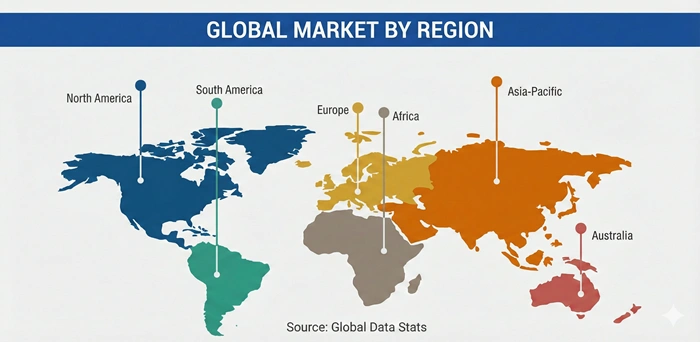
Regional Insights
North America
North America's High Diagnosis Rates and Strong Insurance Coverage Make It the Global Market Leader
North America holds the dominant position in the global anti-snoring treatment market with approximately 37% market share in 2025 and continues to expand steadily through 2033. The United States drives the majority of regional demand, supported by high rates of sleep apnea diagnosis, strong insurance coverage for CPAP therapy, and a well-established network of sleep clinics and specialists. Key companies with strong North American market presence include ResMed, Philips, and SomnoMed, all of which maintain extensive distribution networks and strong relationships with sleep medicine practitioners across the region.
Canada also contributes meaningfully to regional demand, with growing public health attention to sleep disorders supporting steady adoption of both clinical and over-the-counter anti-snoring products. Consumers across the region increasingly combine wearable sleep trackers with traditional treatment devices to monitor progress, reflecting a broader cultural shift toward proactive sleep health management. The combination of strong diagnosis infrastructure, favorable insurance policies, and high consumer health awareness ensures North America's leadership position in the anti-snoring treatment market remains firmly intact through 2033.
Asia Pacific
Asia Pacific Is the Fastest-Growing Region for Anti-Snoring Treatment, Powered by Rising Obesity and Expanding Healthcare Access
Asia Pacific is expected to register the fastest CAGR in the global anti-snoring treatment market through 2033, growing at approximately 11% as rising obesity rates and improving healthcare infrastructure drive up diagnosis and treatment rates across the region. China and India stand out as particularly important growth markets, supported by expanding middle-class populations who are increasingly able to afford both over-the-counter and clinical-grade anti-snoring devices. Companies like VVFLY Electronics and regional device manufacturers are expanding their presence to capture this growing institutional and consumer demand.
Japan and South Korea also contribute meaningfully to regional growth, both bringing aging populations with rising rates of sleep-related breathing disorders that require ongoing management. Local and international manufacturers are increasingly competing to serve the region's growing base of health-conscious consumers who are turning to e-commerce platforms for affordable anti-snoring solutions. The combination of rising obesity-linked snoring prevalence, expanding healthcare access, and improving product affordability ensures Asia Pacific will remain the fastest-growing region within the anti-snoring treatment market through the forecast period.
Customization Available for This Report
Region-Wise and Country-Wise Customization Ensures Every Client Gets Insights Tailored to Their Exact Market Focus
This report offers comprehensive region-wise and country-wise customization, providing tailored market insights, trends, competitive analysis, and opportunity assessments specific to your geography of interest.
Our team can deliver a fully customized version of this report for any of the following regions and countries, providing deep-dive market analysis, demand forecasting, regulatory landscape review, and competitive intelligence specific to the selected market and anti-snoring treatment keyword combination:
North America
-
U.S. — Detailed analysis of CPAP insurance coverage, sleep clinic distribution, and device adoption trends
-
Canada — Insights into public health awareness campaigns and treatment adoption patterns
-
Mexico — Growing consumer access to affordable over-the-counter anti-snoring products through expanding pharmacy chains and rising e-commerce penetration
Europe
-
U.K. — Insights into oral appliance therapy adoption and NHS-linked treatment pathways
-
Germany — Advanced medical device manufacturing landscape and strong consumer health awareness
-
France — Growing sleep clinic infrastructure and treatment adoption trends
-
Italy — Rising diagnosis rates and expanding device accessibility
-
Rest of Europe — Emerging anti-snoring treatment markets across Eastern Europe and the Nordics
Asia Pacific
-
China — Rising obesity-linked snoring prevalence and expanding domestic device manufacturing
-
India — Growing healthcare access, affordable device demand, and rising diagnosis rates
-
Japan — Aging population driving demand for clinical-grade sleep disorder management
-
South Korea — Institutional healthcare adoption and smart device manufacturing growth
-
Australia — Rising insurance coverage and consumer awareness of sleep health
-
Rest of Asia Pacific — Country-level analysis covering Thailand, Vietnam, Indonesia, and Malaysia
Latin America
-
Brazil — Growing urbanization, e-commerce distribution, and rising anti-snoring treatment adoption
-
Argentina — Early-stage market development and expanding healthcare access
-
Rest of Latin America — Colombia, Mexico, Peru, and Chile country-level anti-snoring treatment market sizing
Middle East & Africa
-
UAE — Growing healthcare infrastructure investment and rising consumer awareness
-
Saudi Arabia — Expanding sleep clinic networks and device accessibility
-
Rest of MEA — Sub-Saharan Africa healthcare access expansion and awareness campaign growth
Top Key Players
-
ResMed Inc (United States)
-
Koninklijke Philips N.V (Netherlands)
-
Fisher & Paykel Healthcare Limited (New Zealand)
-
SomnoMed Limited (Australia)
-
ProSomnus Inc (United States)
-
Tomed GmbH (Germany)
-
Apnea Sciences Corporation (United States)
-
Natus Medical Incorporated (United States)
-
Whole You Inc (United States)
-
Snore Circle (China)
-
VVFLY Electronics Co Ltd (China)
-
Sleep Number Corporation (United States)
Recent Developments
-
In 2025, ResMed expanded its smart CPAP product line with enhanced app-connected sleep tracking features aimed at improving long-term patient compliance
-
In 2026, Koninklijke Philips announced upgrades to its sleep therapy device portfolio, focusing on quieter, more comfortable designs for home users
-
In 2025, SomnoMed strengthened its dental sleep medicine partnerships across Europe to expand adoption of custom-fitted mandibular advancement devices
-
In 2026, Fisher & Paykel Healthcare introduced new mask designs aimed at improving CPAP comfort and reducing patient dropout rates
-
In 2025, ProSomnus expanded its manufacturing capacity for 3D-printed oral appliances to meet growing demand from sleep specialists across North America
Market Trends
The Anti-Snoring Treatment Market Is Rapidly Shifting Toward Smart Wearable Technology and Personalized Oral Appliance Therapy
Two of the most consequential trends reshaping the anti-snoring treatment landscape are the growing adoption of app-connected smart wearables and the rising popularity of custom-fitted oral appliance therapy over generic, one-size-fits-all devices. Consumers are increasingly drawn to devices that provide real-time feedback on snoring intensity, sleep position, and breathing patterns, allowing them to track improvement over time rather than relying purely on subjective feedback from a partner. This trend is pushing manufacturers to integrate sensors and mobile app connectivity into products that were traditionally simple mechanical devices.
The second major trend is the growing preference for custom-fitted mandibular advancement devices designed through dental impressions or 3D scanning technology, replacing older boil-and-bite designs that often caused discomfort and poor compliance. This shift toward personalized treatment is improving patient outcomes and encouraging longer-term device usage, which benefits both patients and manufacturers through repeat business and stronger clinical outcomes. At the same time, growing e-commerce distribution is making these improved products more accessible to consumers who previously had limited access to specialized sleep clinics.
Segments Covered in the Report
By Product Type
-
Mandibular Advancement Devices
-
Continuous Positive Airway Pressure Devices
-
Nasal Strips and Dilators
-
Anti-Snoring Pillows
-
Chin Straps and Mouthguards
By Distribution Channel
-
Pharmacies and Retail Stores
-
Online Retail
-
Hospitals and Sleep Clinics
By End User
-
Homecare
-
Hospitals and Clinics
By Age Group
-
Below 35 Years
-
35 to 55 Years
-
Above 55 Years
By Region
-
North America (U.S., Canada, Mexico)
-
Europe (U.K., Germany, France, Italy, Rest of Europe)
-
Asia Pacific (China, India, Japan, South Korea, Australia, Rest of Asia Pacific)
-
Latin America (Brazil, Argentina, Rest of Latin America)
-
Middle East & Africa (UAE, Saudi Arabia, Rest of MEA)
❝ Built for Every Level — From Startups to Industry Giants ❞
Here Is Exactly How This Report Works for You
-
For tier 1 enterprises, investors, and high-level decision-makers, this report delivers competitor revenue analysis, detailed revenue source breakdowns, geopolitical risk assessments, and supply-demand dynamics that enable confident capital allocation, M&A targeting, and strategic market entry or expansion decisions in the anti-snoring treatment space
-
For tier 2 and tier 3 companies, mid-level businesses, and startups, this report provides a practical roadmap of the most commercially viable segments, regional opportunities, and product investment priorities, helping you compete effectively against established players and identify white spaces before they become crowded
-
For all decision-makers across the value chain, this report explains exactly how insurance policy shifts, rising obesity trends, e-commerce distribution growth, and competitor positioning are converging to shape market direction through 2033, giving you the intelligence framework to make proactive, evidence-based decisions rather than reactive ones
Frequently Asked Questions
Question 1: What is the current size of the global anti-snoring treatment market and how is it expected to grow?
Answer: The global anti-snoring treatment market was valued at USD 1.59 billion in 2025 and is projected to reach USD 3.16 billion by 2033. This growth is driven by rising awareness of sleep disorders and increasing obesity-linked snoring prevalence.
Question 2: Which factors are driving growth in the anti-snoring treatment market?
Answer: The primary drivers of the anti-snoring treatment market include growing awareness of snoring as a cardiovascular health risk and rising global obesity rates. Expanding availability of affordable over-the-counter devices is further accelerating adoption.
Question 3: Which region holds the largest share in the anti-snoring treatment market?
Answer: North America currently dominates the anti-snoring treatment market with approximately 37% market share, supported by high diagnosis rates and strong insurance coverage. Asia Pacific is the fastest-growing region, driven by rising obesity and improving healthcare access.
Question 4: What are the key product segments driving revenue in the anti-snoring treatment market?
Answer: Mandibular advancement devices account for approximately 34% of the product segment, reflecting their effectiveness and comfort compared to CPAP alternatives. Online retail distribution is also growing rapidly as consumers increasingly shop for sleep devices from home.
Question 5: Who are the leading companies operating in the anti-snoring treatment market?
Answer: Leading players in the anti-snoring treatment market include ResMed, Philips, Fisher & Paykel Healthcare, SomnoMed, and ProSomnus. These companies compete through broad product portfolios, clinical partnerships, and continuous investment in smart, connected device technology.