
Anomaly Detection Market Overview
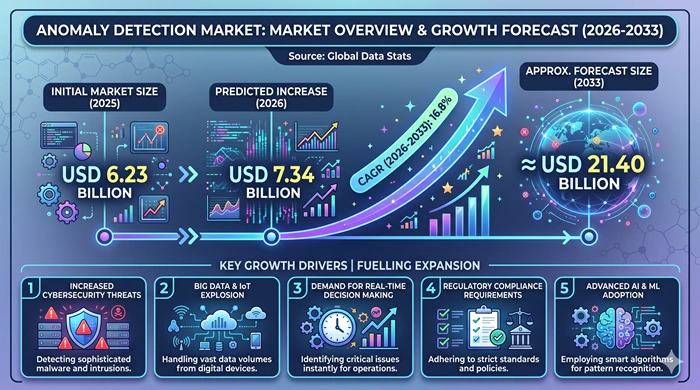
The global anomaly detection market size is valued at USD 6.23 billion in 2025 and is predicted to increase from USD 7.34 billion in 2026 to approximately USD 21.40 billion by 2033, growing at a CAGR of 16.8% from 2026 to 2033.
Anomaly detection refers to the process of identifying unusual patterns, behaviors, or data points that deviate significantly from expected norms — a capability that has become mission-critical across cybersecurity, financial fraud prevention, industrial operations monitoring, healthcare analytics, and network performance management. As organizations across every industry sector generate exponentially growing volumes of digital data, the ability to automatically detect anomalies in real time using AI and machine learning has shifted from a competitive advantage to a fundamental operational necessity. Growing cyber threats, rapid digital transformation, and the universal adoption of cloud and IoT infrastructure are collectively driving above-average growth in the anomaly detection market globally.
AI Impact on the Anomaly Detection Industry
Artificial Intelligence and Machine Learning Are Fundamentally Redefining Anomaly Detection Capabilities — Enabling Autonomous Real-Time Threat Identification, Adaptive Model Learning, and Predictive Behavioral Analytics Across Every Major Industry Vertical
Artificial intelligence is not merely augmenting existing anomaly detection approaches — it is fundamentally transforming what these systems can detect, how quickly they can respond, and how accurately they distinguish genuine threats from routine data variation. Traditional rule-based anomaly detection systems require security and operations teams to manually define thresholds and normal behavior baselines — a brittle approach that fails to adapt to changing environments and generates high false-positive rates that exhaust analyst attention. AI-powered anomaly detection systems, by contrast, use unsupervised and semi-supervised machine learning algorithms that continuously learn from streaming data, automatically update behavioral baselines, identify subtle multi-dimensional deviations that no static rule set could capture, and prioritize alerts based on contextual risk scoring — dramatically improving both detection accuracy and operational efficiency.
Deep learning architectures — including LSTM recurrent neural networks for time-series anomaly detection, autoencoders for unsupervised deviation scoring, and transformer-based models for sequence anomaly identification — are enabling a new generation of anomaly detection capabilities that are increasingly being embedded in commercial platforms across cybersecurity, network operations, manufacturing predictive maintenance, and financial fraud detection. These AI-native anomaly detection solutions can process millions of events per second, identify novel attack patterns and equipment failure signatures that have never been observed before, and correlate anomalies across multiple data streams simultaneously — capabilities that represent a qualitative leap beyond what previous generations of statistical anomaly detection methods could deliver. The AI integration trend is expected to be the single most important commercial driver of premium product differentiation and pricing power within the anomaly detection market through 2033.
Growth Factors
Escalating Cyber Threat Landscape Driving Security Analytics Demand, Exponential IoT Data Volume Growth Requiring Real-Time Monitoring, and Regulatory Compliance Requirements Creating Mandatory Anomaly Detection Investments Are the Primary Growth Drivers
The relentless escalation of cyber threats — encompassing ransomware attacks, advanced persistent threats (APTs), insider threats, supply chain compromises, and AI-generated phishing campaigns — is the most powerful demand driver for anomaly detection solutions in enterprise and government environments. Traditional perimeter-based security architectures are no longer sufficient against sophisticated adversaries who operate within network environments for extended periods before executing attacks. Behavioral anomaly detection systems — which identify unusual user activity, unexpected data access patterns, abnormal network traffic flows, and deviations from established endpoint behavior baselines — provide the continuous, behavior-based threat monitoring capability that modern zero-trust security frameworks require. Every new high-profile data breach or ransomware incident reported in the news simultaneously reinforces the investment case for anomaly detection investments among enterprise security decision-makers globally.
The explosive proliferation of IoT-connected devices across industrial facilities, smart buildings, healthcare environments, and consumer technology ecosystems is creating massive volumes of sensor data that require continuous monitoring for both security and operational purposes. Industrial IoT applications — including predictive maintenance for manufacturing equipment, pipeline integrity monitoring, and power grid stability management — generate continuous streams of operational telemetry that anomaly detection algorithms must analyze in real time to identify equipment degradation signatures before they result in failures, production disruptions, or safety incidents. The combination of rapidly expanding IoT data volumes and the commercial consequences of operational anomalies that go undetected until they cause failures is creating a substantial and growing market for specialized industrial anomaly detection solutions that operate at the scale and latency requirements of connected industrial environments.
Market Outlook
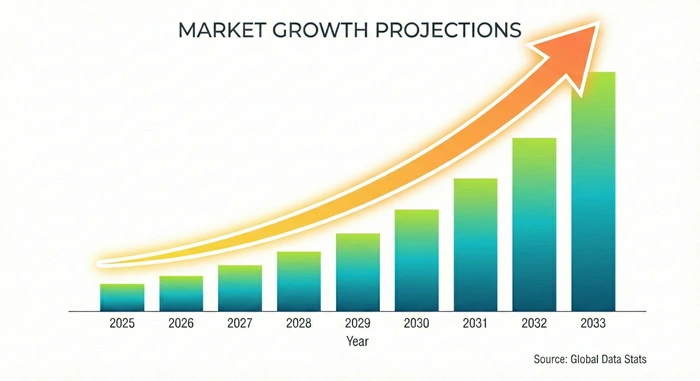
The Anomaly Detection Market Is Positioned for Sustained Double-Digit Growth Through 2033, Driven by Enterprise Security Transformation, Industrial IoT Expansion, Cloud-Native Platform Adoption, and Growing Regulatory Mandates Across Financial Services and Healthcare
The commercial outlook for the anomaly detection market through 2033 is exceptionally strong, supported by structural demand drivers that are intensifying across every major application vertical simultaneously. Enterprise cybersecurity transformation — encompassing the global adoption of zero-trust architecture, extended detection and response (XDR) frameworks, and security operations center (SOC) modernization programs — is creating large, well-funded procurement cycles for advanced anomaly detection and behavioral analytics platforms. Fortune 500 companies, government agencies, and critical infrastructure operators are increasing security analytics budgets in direct response to the growing sophistication and frequency of cyber attacks, and anomaly detection is increasingly recognized as a non-negotiable component of any credible enterprise threat detection and response capability.
The continued shift toward cloud-based deployment of anomaly detection solutions is expanding the accessible customer base beyond large enterprise organizations with substantial IT infrastructure budgets toward mid-market companies, small businesses, and organizations in emerging markets that can access cloud-delivered anomaly detection platforms as scalable, subscription-based services. Cloud-native anomaly detection solutions eliminate the upfront capital investment and complex on-premises infrastructure requirements that historically limited adoption to well-resourced organizations, creating a dramatically larger potential customer base for anomaly detection platform vendors offering SaaS and cloud-delivered deployment models. This democratization of access to advanced anomaly detection capabilities is expected to be a significant contributor to the market's above-average growth trajectory through 2033.
Expert Speaks
-
Arvind Krishna, Chairman & CEO, IBM — "The sophistication of modern cyber threats demands detection capabilities that can identify novel attack patterns in real time, before significant damage occurs — and AI-powered anomaly detection is central to how we help organizations achieve this capability. The anomaly detection market is evolving rapidly, and organizations that embrace AI-native behavioral analytics as the core of their security operations are establishing a fundamentally stronger security posture for the increasingly complex threat environment ahead."
-
Satya Nadella, CEO, Microsoft — "Across our Microsoft Sentinel and Azure security portfolio, we see anomaly detection and behavioral analytics capabilities becoming the most strategically valued components for enterprise security teams managing complex, multi-cloud environments. The integration of AI-powered anomaly detection into comprehensive security operations platforms is transforming how organizations detect and respond to threats, and we are investing heavily in delivering the most capable, scalable anomaly detection infrastructure available to organizations of every size globally."
-
Chuck Robbins, Chair & CEO, Cisco Systems — "Network-level behavioral anomaly detection has moved from an advanced capability deployed only by the most sophisticated organizations to a foundational requirement for any enterprise serious about its security posture. The growing integration of AI-driven anomaly detection with network operations, endpoint security, and cloud access management is creating a new generation of unified security analytics platforms that deliver meaningfully better outcomes for security operations teams facing an ever-more-complex threat landscape."
Key Report Takeaways
-
North America leads the anomaly detection market, holding approximately 45.6% of global revenue in 2025, driven by the world's highest enterprise cybersecurity spending, the earliest adoption of AI-powered security analytics platforms, strong cloud infrastructure investment among Fortune 500 companies and government agencies, and the concentration of global anomaly detection market leaders including IBM, Microsoft, Cisco, Splunk, Palo Alto Networks, and AWS in the United States
-
Asia-Pacific is the fastest-growing regional market, projected to expand at a CAGR of over 17.2% through 2033, driven by rapidly accelerating digital transformation across China, India, Japan, South Korea, and Southeast Asia, growing cybersecurity investment among enterprises newly entering cloud-first operational models, expanding government-mandated data protection regulations, and the rapid adoption of industrial IoT in manufacturing-intensive economies
-
Solutions dominate the component segment, accounting for approximately 65.1% of total component revenue in 2025, reflecting the primary commercial value proposition of licensed or subscription-based anomaly detection platform software and hardware appliances — which provide the core analytical engines, detection algorithms, dashboards, and alerting capabilities that organizations require — while services represent the fastest-growing component sub-segment at a CAGR of approximately 11.8%
-
Banking, financial services, and insurance (BFSI) is the dominant end-use industry segment, contributing approximately 29.8% of total end-use revenue in 2025, driven by the existential financial and reputational risks associated with payment fraud, account takeover attacks, money laundering, and insider trading anomalies — and the stringent regulatory requirements from PCI-DSS, Basel III, and AML/KYC frameworks that mandate continuous transactional monitoring and behavioral anomaly reporting
-
Machine learning and AI is the dominant technology segment, accounting for approximately 52.3% of total technology-based revenue in 2025, reflecting the superior detection accuracy, adaptive learning capability, and scalability that ML and AI-powered anomaly detection algorithms deliver compared to traditional statistical and rule-based approaches across all major application domains
-
Cloud-based deployment is the fastest-growing deployment model in the anomaly detection market, projected to expand at a CAGR of approximately 17.4% through 2033 and expected to account for approximately 65% of total deployment revenue by 2033, driven by the scalability, cost efficiency, rapid deployment timelines, and continuously updated AI model capabilities that cloud-native anomaly detection platforms deliver compared to on-premises alternatives
Market Scope
| Report Coverage | Details |
|---|---|
| Market Size by 2033 | USD 21.40 Billion |
| Market Size by 2025 | USD 6.23 Billion |
| Market Size by 2026 | USD 7.34 Billion |
| Market Growth Rate (2026–2033) | CAGR of 16.8% |
| Dominating Region | North America |
| Fastest Growing Region | Asia-Pacific |
| Base Year | 2025 |
| Forecast Period | 2026 – 2033 |
| Segments Covered | Component, Technology, Deployment Type, Network Behavior, User Behavior, Application, End-Use Vertical |
| Regions Covered | North America, Europe, Asia-Pacific, Latin America, Middle East & Africa |
Market Dynamics
Drivers Impact Analysis
Escalating Cybersecurity Threat Complexity, Explosive IoT and Connected Device Data Volume Growth, Regulatory Compliance Mandates Across Financial Services and Healthcare, and AI-Powered Real-Time Detection Technology Advancement Are Collectively Driving the Anomaly Detection Market
| Driver | ≈ % Impact on CAGR Forecast | Geographic Relevance | Impact Timeline |
|---|---|---|---|
| Escalating enterprise cybersecurity threats driving security analytics investment | ~31% | North America, Europe | Short to Long-term |
| IoT and connected device proliferation generating large-scale real-time monitoring demand | ~24% | Global, especially Asia-Pacific | Short to Long-term |
| Regulatory compliance mandates creating mandatory behavioral monitoring requirements | ~21% | North America, Europe | Ongoing |
| AI and ML technology advancement improving detection accuracy and reducing false positives | ~16% | North America, Europe, Asia-Pacific | Short to Long-term |
| Cloud infrastructure adoption enabling scalable anomaly detection deployment | ~8% | Global | Short to Medium-term |
The banking, financial services, and insurance sector's status as both the most heavily targeted industry for cybercrime and the most stringently regulated industry for transaction monitoring creates a uniquely powerful commercial mandate for anomaly detection solutions. Payment card fraud, account takeover attacks, synthetic identity fraud, and insider trading schemes collectively cost the global financial system hundreds of billions of dollars annually — creating a direct and well-funded business case for anomaly detection investment that security budgets consistently prioritize. Simultaneously, regulatory frameworks including PCI-DSS, the EU's AMLD6 Anti-Money Laundering Directive, the US Bank Secrecy Act, and evolving SEC market manipulation monitoring requirements create explicit compliance obligations for transactional behavioral monitoring that make anomaly detection investment a regulatory imperative rather than merely a strategic preference for financial services institutions.
The industrial and manufacturing application of the anomaly detection market is being powered by the global rollout of Industrial IoT (IIoT) infrastructure — where factories, energy utilities, and logistics networks are deploying billions of connected sensors, actuators, and operational technology devices that generate continuous performance telemetry. Predictive maintenance anomaly detection systems that identify early signatures of equipment degradation in rotating machinery, pressure vessels, electrical systems, and process instrumentation — before these degradation patterns manifest as failures or safety incidents — deliver quantifiable ROI through reduced unplanned downtime, extended equipment lifecycles, and avoided catastrophic failure events. This clear and measurable financial return on anomaly detection investment makes the industrial application segment one of the most commercially compelling within the overall anomaly detection market, particularly as IIoT device proliferation expands the scope of monitorable assets and the volume of available operational telemetry.
Restraints Impact Analysis
High Implementation Complexity and Integration Challenges, Elevated False Positive Rates Limiting Trust in Detection Systems, Skilled Data Science and Security Analytics Workforce Shortages, and Data Privacy Regulatory Constraints Are the Primary Barriers to the Anomaly Detection Market
| Restraint | ≈ % Impact on CAGR Forecast | Geographic Relevance | Impact Timeline |
|---|---|---|---|
| High implementation complexity and integration with existing IT/OT infrastructure | ~30% | Global, especially mid-market and emerging markets | Ongoing |
| Elevated false positive rates reducing analyst trust and operational utility | ~27% | Global | Ongoing |
| Shortage of skilled data scientists and security analytics professionals | ~22% | Global | Ongoing |
| Data privacy regulations limiting behavioral data collection and analysis scope | ~14% | Europe, North America | Ongoing |
| High total cost of ownership for enterprise-scale anomaly detection deployments | ~7% | Mid-market, developing markets | Short to Medium-term |
The high false positive rate problem remains one of the most persistent practical limitations of anomaly detection systems deployed in complex enterprise environments. When anomaly detection systems generate excessive numbers of false alerts — flagging legitimate user behavior, routine system maintenance activities, or expected seasonal data patterns as potential threats — security operations center analysts rapidly experience alert fatigue that leads to the systematic under-investigation of alerts and eventual erosion of confidence in the anomaly detection platform's outputs. Reducing false positive rates while maintaining high sensitivity to genuine anomalies requires sophisticated model tuning, extensive baseline data collection, and ongoing model calibration that demands significant skilled analyst time and expertise — resources that many organizations lack, particularly outside large enterprise environments.
The global shortage of skilled professionals with the combination of data science expertise, domain knowledge, and security operations experience required to effectively deploy, configure, and operationalize advanced anomaly detection systems represents a significant structural constraint on market adoption velocity. Enterprise anomaly detection platform implementations require qualified personnel who understand both the statistical and machine learning underpinnings of detection algorithms and the specific behavioral norms and risk profiles of the environments being monitored. This dual requirement — technical AI/ML expertise plus domain-specific security, operational, or financial monitoring knowledge — creates a talent scarcity that slows implementation timelines, increases reliance on vendor professional services, and limits the depth of anomaly detection utilization at many organizations that have purchased platform licenses but lack the internal expertise to unlock their full analytical potential.
Opportunities Impact Analysis
Autonomous SOC and SecOps Automation Integration, SME Market Penetration Through Cloud-Delivered SaaS Platforms, Operational Technology and ICS Security Monitoring Expansion, and Generative AI-Enhanced Contextual Detection Are the Most Compelling Growth Opportunities
| Opportunity | ≈ % Impact on CAGR Forecast | Geographic Relevance | Impact Timeline |
|---|---|---|---|
| Autonomous SOC integration and AI-driven alert triage automation | ~30% | North America, Europe | Short to Long-term |
| SME market penetration through cloud-delivered SaaS anomaly detection platforms | ~26% | Global | Short to Medium-term |
| Operational technology and industrial control system security monitoring expansion | ~22% | North America, Europe, Asia-Pacific | Medium to Long-term |
| Generative AI-enhanced contextual threat explanation and investigation acceleration | ~15% | North America, Europe | Short to Medium-term |
| Emerging market enterprise security buildout creating new platform procurement | ~7% | Asia-Pacific, Latin America | Medium to Long-term |
The integration of anomaly detection with autonomous security operations center (SOC) automation platforms represents one of the most commercially transformative near-term opportunities within the anomaly detection market. Autonomous SOC platforms that combine AI-driven anomaly detection with automated playbook execution, alert triage, threat investigation, and incident response workflows can dramatically reduce mean time to detect (MTTD) and mean time to respond (MTTR) — the two most operationally critical security metrics — while simultaneously reducing the analyst workload required per incident. As security operations teams struggle with understaffing and alert volume challenges, the ability to automate the investigation and initial response to the majority of anomaly-generated alerts using AI-driven SOC automation represents a compelling value proposition that is driving significant enterprise investment in integrated anomaly detection and SOAR (security orchestration, automation, and response) platform combinations.
The application of generative AI to anomaly detection — where large language models are integrated with detection systems to provide plain-language explanations of detected anomalies, assess their likely significance, suggest investigation steps, and generate incident summary reports — is creating a new functional capability layer that is substantially improving the practical utility of anomaly detection platforms for analyst teams of all experience levels. Rather than presenting raw anomaly scores and technical indicators that require deep domain expertise to interpret, GenAI-enhanced anomaly detection platforms can explain detected deviations in accessible natural language, provide contextual background on similar historical incidents, and guide analysts through structured investigation workflows — democratizing access to the full analytical power of advanced anomaly detection capabilities across security operations teams of varying sophistication levels.
Segment Analysis
By Component
Solutions Dominate the Anomaly Detection Market as the Core Revenue Category While Services Emerge as the Fastest-Growing Component Driven by Implementation Complexity and Managed Detection Demand
The solutions segment is the dominant component category in the anomaly detection market, accounting for approximately 65.1% of total component revenue in 2025 and projected to maintain a strong CAGR of 10.2% through 2033. Solutions encompass the licensed software platforms, cloud-delivered SaaS subscriptions, and hardware appliances that provide the core anomaly detection, behavioral analytics, alerting, and reporting capabilities that enterprises deploy for cybersecurity, operational monitoring, and fraud detection purposes. North America is the dominant region for solutions revenue, where large enterprise technology budgets, early adoption of AI-powered security analytics platforms, and the concentration of globally leading anomaly detection platform vendors — including IBM Security, Microsoft Sentinel, Splunk, Palo Alto Networks, and AWS — generate the world's largest concentration of anomaly detection solutions procurement. Asia-Pacific is the fastest-growing region for solutions adoption, driven by accelerating enterprise cloud adoption, growing cybersecurity investment among Chinese and Indian corporations, and rapid digital transformation across Southeast Asian markets.
The services segment is the fastest-growing component in the anomaly detection market, projected to grow at a CAGR of approximately 17.1% through 2033, driven by the growing demand for managed detection and response (MDR) services, professional implementation and integration services, and ongoing model tuning and optimization consulting engagements that help organizations extract maximum value from their anomaly detection platform investments. The complexity of enterprise-scale anomaly detection deployments — requiring integration with SIEM platforms, identity management systems, network monitoring infrastructure, and OT security tools — creates sustained demand for specialized implementation services that few organizations can fulfill entirely with internal resources. Key companies competing in the anomaly detection services segment include IBM Security Services, Accenture Security, Deloitte Cyber, CrowdStrike Services, and Secureworks — all leveraging deep domain expertise to help clients achieve faster time-to-value from their anomaly detection investments.
By End-Use Vertical
BFSI Leads End-Use Revenue in the Anomaly Detection Market Due to Regulatory Mandate and Fraud Prevention Requirements While Healthcare Emerges as the Fastest-Growing Vertical Driven by Clinical Data Security and Patient Safety Monitoring Demand
The banking, financial services, and insurance (BFSI) vertical is the dominant end-use segment in the anomaly detection market, contributing approximately 29.8% of total end-use revenue in 2025 and projected to maintain a strong CAGR of 10.8% through 2033. BFSI's dominance reflects the unique combination of regulatory mandates for continuous transactional monitoring, existential fraud risk exposure across payment networks and banking systems, and the financial industry's long-standing investment culture in advanced technology for risk management. North America leads BFSI vertical anomaly detection revenue, where major financial institutions including JPMorgan Chase, Bank of America, Goldman Sachs, and Citigroup invest heavily in anomaly detection platforms for fraud detection, market surveillance, AML monitoring, and insider threat programs. Key platform vendors serving the BFSI segment of the anomaly detection market include SAS Institute, NICE Actimize, IBM, Oracle Financial Services, and Splunk — all offering purpose-built financial services anomaly detection capabilities.
Healthcare is the fastest-growing end-use vertical in the anomaly detection market, projected to grow at a CAGR of approximately 17.9% through 2033, driven by the exponential growth of electronic health record data volumes, the growing threat of healthcare ransomware attacks and patient data breaches, and the emerging application of clinical anomaly detection for patient deterioration prediction, medical device performance monitoring, and clinical trial data integrity validation. Asia-Pacific is the fastest-growing region for healthcare anomaly detection adoption, where the rapid digitization of healthcare systems across China, India, South Korea, and Japan is generating large volumes of clinical and operational data that require real-time monitoring for both security and patient safety purposes. Leading companies active in the healthcare anomaly detection segment include Microsoft (Azure Health Analytics), IBM (Watson Health security tools), Cisco, and specialized healthcare IT security vendors including Claroty and Medigate.
Regional Insights
North America
North America Leads the Global Anomaly Detection Market With the Dominant Revenue Share, Driven by the World's Highest Enterprise Cybersecurity Investment, Advanced AI Analytics Infrastructure, and the Headquarters Concentration of Leading Global Vendors
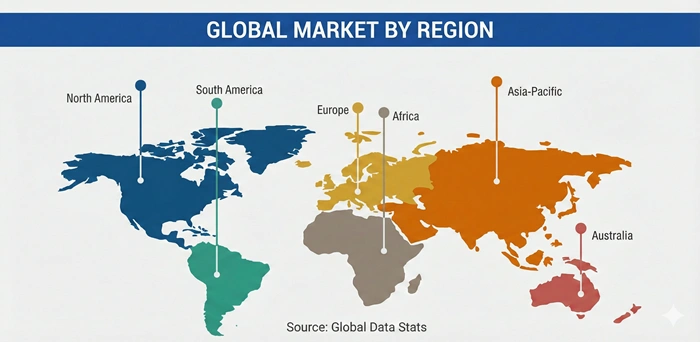
North America holds the dominant position in the global anomaly detection market, accounting for approximately 45.6% of total global revenue in 2025 and projected to maintain a CAGR of 10.5% through 2033. The United States is overwhelmingly the primary national market, driven by the world's highest enterprise cybersecurity spending per organization, the most advanced cloud infrastructure investment among major economies, and the most comprehensive regulatory framework for financial services transaction monitoring and healthcare data security. US-headquartered anomaly detection market leaders — including IBM, Microsoft, Cisco Systems, Palo Alto Networks, Splunk (Cisco), CrowdStrike, SAS Institute, and AWS — collectively represent the largest share of global anomaly detection platform revenue and drive the most significant product innovation in AI-powered detection algorithms, cloud-native deployment architectures, and autonomous SOC integration capabilities. Canada is the second-largest North American market, with strong enterprise cybersecurity investment among financial services, government, and telecommunications sector organizations that mirror US adoption patterns.
The US federal government and defense sector represents a particularly significant and growing procurement channel within the North American anomaly detection market — with agencies including the Department of Defense, Cybersecurity and Infrastructure Security Agency (CISA), and the intelligence community driving substantial investment in advanced behavioral anomaly detection and insider threat monitoring platforms. Regulatory developments including the SEC's cyber disclosure rules, the HIPAA Security Rule's behavioral monitoring guidance, and growing US critical infrastructure protection mandates are creating expanding compliance-driven procurement requirements that support sustained government and regulated industry investment in anomaly detection solutions.
Asia-Pacific
Asia-Pacific Is the Fastest-Growing Regional Market for Anomaly Detection, Powered by Rapid Digital Transformation, Escalating Cybersecurity Threat Intensity, and Large-Scale Cloud and IoT Infrastructure Deployment Across China, India, Japan, and Southeast Asia
Asia-Pacific is the most rapidly expanding regional market in the global anomaly detection landscape, projected to grow at a CAGR of 17.2% from 2026 to 2033. The region currently accounts for approximately 22% of global anomaly detection market revenue in 2025, with China, Japan, India, South Korea, and Australia representing the largest national markets. China is both the largest and fastest-growing national market within Asia-Pacific — driven by the Chinese government's Made in China 2025 initiative and Digital Economy development programs that are simultaneously accelerating industrial IoT adoption and creating large new attack surfaces that require anomaly detection coverage, alongside rapidly growing domestic cybersecurity regulatory requirements including the Cybersecurity Law and Data Security Law that are driving enterprise investment in behavioral monitoring and anomaly detection platforms. Japan and South Korea are the most technically mature Asia-Pacific anomaly detection markets, with high per-organization security analytics spending and well-developed financial services and manufacturing sector adoption of advanced anomaly detection platforms. Key companies active across Asia-Pacific include IBM, Microsoft, Cisco, Palo Alto Networks, and rapidly growing regional players including Alibaba Cloud Security and NTT Security (Japan).
India represents one of the most strategically important emerging markets within Asia-Pacific for anomaly detection platform vendors. India's rapidly expanding digital economy — encompassing a large and fast-growing fintech sector, major cloud-native enterprise adoption programs, and one of the world's largest IT services industries — is generating growing enterprise demand for anomaly detection solutions across cybersecurity, operational monitoring, and fraud prevention applications. The Reserve Bank of India's escalating cybersecurity and fraud monitoring requirements for banking institutions, combined with the rapid expansion of digital payment volumes that require real-time transaction anomaly monitoring, are creating well-funded compliance-driven anomaly detection procurement across India's large banking sector.
Top Key Players
-
IBM Corporation (United States)
-
Microsoft Corporation (United States)
-
Cisco Systems Inc. (United States)
-
Palo Alto Networks Inc. (United States)
-
Splunk Inc. / Cisco (United States)
-
Amazon Web Services (AWS) (United States)
-
SAS Institute Inc. (United States)
-
Broadcom Inc. (United States)
-
CrowdStrike Holdings Inc. (United States)
-
Dynatrace Inc. (United States)
-
Elastic N.V. (United States)
-
Anodot Ltd. (Israel)
Recent Developments
-
IBM (2025) — Launched major enhancements to its IBM Security QRadar SIEM platform incorporating next-generation AI-powered anomaly detection algorithms trained on the IBM X-Force Threat Intelligence database — delivering materially improved detection accuracy for insider threats, lateral movement patterns, and advanced persistent threat behaviors — while also releasing new integration capabilities that connect QRadar anomaly detection outputs with IBM's Security SOAR platform for automated investigation and response workflow execution
-
Microsoft (2025) — Advanced its Microsoft Sentinel cloud-native SIEM and anomaly detection platform with new generative AI-powered security copilot features that provide plain-language explanations of detected behavioral anomalies, automated threat investigation guidance, and AI-generated incident summary reports — significantly reducing analyst investigation time per alert and extending advanced anomaly detection capabilities to security operations teams of all experience levels across Microsoft's global enterprise customer base
-
Cisco Systems / Splunk (2025) — Following the completion of Cisco's USD 28 billion acquisition of Splunk in 2024, the combined entity accelerated integration of Splunk's industry-leading data analytics and anomaly detection capabilities with Cisco's network security and threat intelligence infrastructure — creating a deeply integrated security analytics platform that delivers behavioral anomaly detection spanning network traffic, endpoint activity, cloud workloads, and application performance monitoring across Cisco's global enterprise installed base
-
Palo Alto Networks (2025) — Expanded its Cortex XSIAM (Extended Security Intelligence and Automation Management) platform with new AI-powered anomaly detection modules specifically designed for operational technology and industrial control system monitoring — targeting the rapidly growing ICS/SCADA security segment of the anomaly detection market — and reported strong enterprise adoption growth driven by organizations seeking unified security analytics platforms that cover both IT and OT environments within a single integrated anomaly detection and response framework
-
CrowdStrike (2025) — Released significant updates to its Falcon Identity Threat Protection module incorporating enhanced behavioral anomaly detection algorithms for identity-based attack patterns — including credential abuse, privilege escalation, and golden ticket attacks — leveraging its Threat Graph AI platform that processes trillions of security events weekly to continuously improve anomaly detection model accuracy and reduce false positive rates across CrowdStrike's global managed detection and response customer base
Market Trends
The Convergence of Anomaly Detection With Extended Detection and Response (XDR) Platforms and the Application of Generative AI to Automated Anomaly Investigation and Contextual Explanation Are the Two Most Commercially Transformative Trends in the Anomaly Detection Market Today
The most strategically significant trend reshaping the anomaly detection market is the progressive integration of stand-alone anomaly detection capabilities into comprehensive extended detection and response (XDR) platforms that provide unified behavioral analytics across endpoints, networks, cloud workloads, identity systems, and applications. Security teams increasingly reject point solutions that detect anomalies within individual data domains but fail to correlate signals across the full attack surface — and XDR platforms that embed anomaly detection into a unified detection, investigation, and response workflow are rapidly gaining commercial preference. Major anomaly detection market participants including Palo Alto Networks, CrowdStrike, Microsoft, and Cisco are all investing heavily in XDR architectures that position anomaly detection as a core analytical capability within a comprehensive threat management platform rather than a standalone product.
Generative AI is beginning to address one of the most persistent practical limitations of anomaly detection platforms — the difficulty non-expert analysts face in interpreting anomaly alerts and conducting effective investigations. GenAI-powered security copilot tools integrated with anomaly detection platforms can automatically generate contextual threat narratives that explain detected behavioral deviations in plain language, relate them to known attack techniques in the MITRE ATT&CK framework, suggest investigation next steps, and produce structured incident reports — dramatically accelerating investigation workflows and improving the quality of analyst response even in organizations with limited security expertise. This capability is commercially transformative because it expands the practical utility of advanced anomaly detection platforms to mid-market and emerging market organizations that previously lacked the internal expertise to operationalize their full analytical potential, substantially growing the addressable customer base for the anomaly detection market.
Segments Covered in the Report
By Component:
-
Solutions (Software Platforms, Cloud-Delivered SaaS, Hardware Appliances)
-
Services (Managed Detection Services, Professional Services, Support and Maintenance)
By Technology:
-
Machine Learning and Artificial Intelligence
-
Big Data Analytics
-
Statistical Analysis and Time-Series Analysis
-
Neural Networks and Deep Learning
-
Others
By Deployment Type:
-
Cloud-Based
-
On-Premises
-
Hybrid
By Network Behavior:
-
Network Traffic Analysis
-
Intrusion Detection and Prevention
-
Protocol Anomaly Detection
-
Others
By User Behavior:
-
User and Entity Behavior Analytics (UEBA)
-
Identity Threat Detection
-
Insider Threat Monitoring
-
Others
By Application:
-
Cybersecurity and Threat Detection
-
Fraud Detection and Prevention
-
Predictive Maintenance and Industrial Monitoring
-
Healthcare Patient and Data Monitoring
-
Network Performance Management
-
Others
By End-Use Vertical:
-
Banking, Financial Services, and Insurance (BFSI)
-
Healthcare and Life Sciences
-
IT and Telecom
-
Manufacturing and Industrial
-
Government and Defense
-
Retail and E-Commerce
-
Energy and Utilities
-
Others
By Region:
-
North America (United States, Canada, Mexico)
-
Europe (Germany, United Kingdom, France, Netherlands, Rest of Europe)
-
Asia-Pacific (China, India, Japan, South Korea, Australia, Rest of Asia-Pacific)
-
Latin America (Brazil, Argentina, Rest of Latin America)
-
Middle East & Africa (UAE, Saudi Arabia, South Africa, Rest of MEA)
Frequently Asked Questions
Question 1: What is the current size of the global anomaly detection market?
Answer: The global anomaly detection market is valued at USD 6.23 billion in 2025 and is projected to reach USD 21.40 billion by 2033. The market is growing at a CAGR of 16.8% from 2026 to 2033, driven by escalating cybersecurity threats, IoT data proliferation, AI-powered detection technology advancement, and growing regulatory mandates for behavioral monitoring across financial services and healthcare sectors.
Question 2: Which technology dominates the anomaly detection market?
Answer: Machine learning and artificial intelligence is the dominant technology in the anomaly detection market, accounting for approximately 52.3% of total technology-based revenue in 2025, driven by the superior detection accuracy, adaptive learning capability, and ability to identify novel anomaly patterns that ML and AI algorithms deliver compared to traditional statistical and rule-based methods. Big data analytics is the fastest-growing technology sub-segment, driven by the exponential proliferation of enterprise data volumes requiring scalable real-time anomaly analysis.
Question 3: Which industry vertical contributes the most to the anomaly detection market?
Answer: The banking, financial services, and insurance (BFSI) sector is the dominant end-use vertical in the anomaly detection market, contributing approximately 29.8% of total end-use revenue in 2025, driven by the combination of regulatory compliance mandates for transaction monitoring, payment fraud detection requirements, and the significant financial consequences of undetected anomalous behaviors in financial systems. Healthcare is the fastest-growing end-use vertical, expanding at approximately 17.9% CAGR through 2033 driven by clinical data security requirements and patient deterioration monitoring applications.
Question 4: How is cloud deployment changing the anomaly detection market?
Answer: Cloud-based deployment is the fastest-growing deployment model in the anomaly detection market, projected to expand at approximately 17.4% CAGR through 2033 and reach approximately 65% of total deployment revenue by 2033 — driven by the scalability, cost efficiency, and continuously updated AI model capabilities that cloud-native platforms deliver. The shift to cloud deployment is democratizing access to advanced anomaly detection capabilities by eliminating large upfront capital requirements, enabling mid-market and emerging market organizations to adopt enterprise-grade behavioral monitoring solutions through affordable subscription models.
Question 5: Which region is growing the fastest in the anomaly detection market?
Answer: Asia-Pacific is the fastest-growing regional market for anomaly detection, projected to expand at a CAGR of 17.2% from 2026 to 2033, driven by rapid digital transformation across China, India, Japan, and Southeast Asia, escalating cybersecurity investment among enterprises entering cloud-first operational models, and growing government-mandated data security regulations across the region. China is the fastest-growing national market within Asia-Pacific, where government digital economy initiatives, industrial IoT adoption, and domestic cybersecurity regulatory requirements are collectively creating powerful demand across the anomaly detection market.