
Amino Acids Market Overview
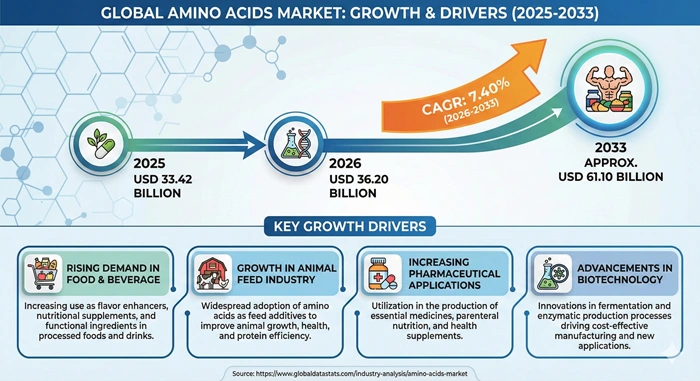
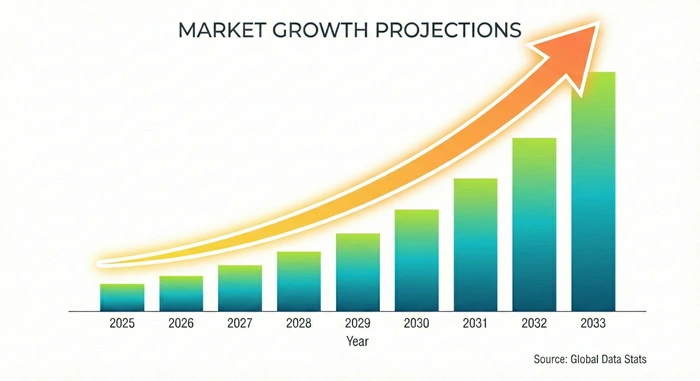
The global amino acids market size is valued at USD 33.42 billion in 2025 and is predicted to increase from USD 36.20 billion in 2026 to approximately USD 61.10 billion by 2033, growing at a CAGR of 7.40% from 2026 to 2033.
The industry supplies essential building blocks of proteins that support countless biological functions across human nutrition, animal feed, pharmaceuticals, and industrial applications. These organic compounds serve critical roles in muscle development, immune function, hormone production, and metabolic processes throughout living organisms. Manufacturing facilities worldwide produce billions of pounds annually through fermentation, extraction, and synthetic methods serving diverse sectors.
The sector has become vital infrastructure supporting global food security and human health objectives. Rising protein consumption and growing health awareness drive steady demand for amino acid supplements and fortified products. Countries invest substantially in production capacity and biotechnology research to meet increasing requirements while advancing sustainable manufacturing practices.
AI Impact on the Amino Acids Industry
Revolutionizing Fermentation Optimization and Strain Development
Artificial intelligence has begun transforming how manufacturers optimize microbial fermentation processes that produce the majority of commercial amino acids. Modern AI systems analyze massive datasets from bioreactors monitoring temperature, pH, dissolved oxygen, nutrient levels, and microbial growth patterns to identify optimal conditions maximizing yield and productivity. These technologies help bioprocess engineers adjust feeding strategies, aeration rates, and harvest timing automatically based on predictive models learning from thousands of production batches. Machine learning algorithms can identify subtle correlations between process parameters and final product quality that human operators might miss, enabling continuous improvement cycles that incrementally boost efficiency and reduce manufacturing costs.
Computational biology powered by AI accelerates development of improved microbial strains engineered for higher amino acid production through metabolic pathway optimization. Deep learning models predict how genetic modifications will affect cellular metabolism, helping researchers identify promising genetic targets before conducting expensive laboratory experiments. These tools analyze protein structures, enzyme kinetics, and metabolic flux distributions to suggest modifications that redirect cellular resources toward desired amino acid synthesis while minimizing byproduct formation. This computational approach dramatically shortens strain development timelines from years to months, accelerating commercialization of next-generation production organisms.
Growth Factors
Rising Health Consciousness and Protein Demand Driving Consumption
The growing global focus on health and wellness creates fundamental demand for the amino acids market as consumers increasingly adopt protein supplements, functional foods, and dietary products supporting fitness and nutritional goals. Aging populations in developed countries seek amino acid supplementation to maintain muscle mass and physical function as natural protein synthesis declines with age. Younger demographics embrace sports nutrition products containing branched-chain amino acids and essential amino acid blends that enhance athletic performance, accelerate recovery, and support muscle development. This health-conscious consumer behavior spans income levels and geographic regions, driving steady growth in nutritional supplement sales through retail stores, online platforms, and specialized fitness channels.
Animal agriculture's intensification to meet rising global protein demand drives substantial amino acid volumes as livestock producers optimize feed formulations for maximum growth efficiency and feed conversion ratios. Modern poultry, swine, and aquaculture operations rely heavily on supplemental lysine, methionine, threonine, and tryptophan to balance feed rations precisely matching animal nutritional requirements at different growth stages. This precision nutrition approach reduces overall feed costs, minimizes nitrogen waste, and improves environmental sustainability compared to traditional feeding strategies using excessive protein concentrations. The aquaculture sector shows particularly strong growth as fish farming expands rapidly to supply seafood demand while wild fishery harvests plateau globally.
Market Outlook
Regional Production Shifts and Sustainability Trends Shaping Future
Asia Pacific maintains its dominant position as both the largest production region and fastest-growing consumption market, driven by cost-competitive fermentation capacity and massive animal agriculture sectors. The region benefits from established biotechnology expertise, favorable regulatory environments for industrial fermentation, and proximity to raw material supplies including agricultural feedstocks for fermentation substrates. Production capacity continues expanding throughout China, India, and Southeast Asia where manufacturers leverage economies of scale and vertical integration from fermentation through final formulation serving global markets.
Sustainability considerations increasingly influence manufacturing strategies as companies invest in renewable feedstocks, circular production processes, and reduced carbon intensity operations. Fermentation-based production using agricultural waste streams and non-food biomass addresses environmental concerns while potentially lowering raw material costs compared to traditional glucose or molasses substrates. Manufacturers pursue green chemistry principles minimizing solvent use, reducing energy consumption, and improving water efficiency throughout production chains. These sustainability initiatives respond to customer demands for environmentally responsible ingredients while positioning companies favorably under emerging regulatory frameworks addressing climate change and resource efficiency.
Expert Speaks
-
Ilham Kadri, CEO of Solvay – "Amino acids represent strategic growth opportunities in our life sciences portfolio as demand accelerates across nutrition, health, and sustainable agriculture applications. We're investing in bio-based production technologies and precision fermentation capabilities to serve customers seeking high-purity ingredients with verified sustainability credentials."
-
Jennifer Johnson, former CEO of Franklin Covey – "The intersection of personalized nutrition and amino acid supplementation creates exciting possibilities as consumers increasingly understand individual nutritional needs based on genetics, lifestyle, and health goals. Digital platforms connecting diagnostic insights with targeted supplementation recommendations will transform how people optimize their amino acid intake."
-
Mark Costa, CEO of Eastman Chemical Company – "Advanced fermentation and biosynthesis technologies are revolutionizing specialty chemical production including amino acids, where biological manufacturing offers advantages in sustainability, selectivity, and scalability compared to traditional synthetic chemistry. Our investments in biomanufacturing platforms position us to capture growing markets for bio-based ingredients."
Key Report Takeaways
-
Asia Pacific dominates the global amino acids market with approximately 42% market share, powered by cost-efficient fermentation capacity, massive animal feed consumption, and growing dietary supplement demand across China, India, and Southeast Asian countries driving both production and consumption leadership
-
Asia Pacific also represents the fastest-growing region with projected CAGR exceeding 8.2% through 2033, driven by rising protein consumption, expanding livestock production, increasing health awareness, and substantial investments in biotechnology manufacturing infrastructure supporting domestic and export markets
-
Animal feed applications lead end-use categories capturing roughly 55% market share as livestock and aquaculture producers optimize feed formulations with supplemental lysine, methionine, threonine, and other essential amino acids improving growth rates, feed efficiency, and production economics
-
Essential amino acids dominate product segments accounting for approximately 58% of volumes due to their fundamental importance in human and animal nutrition since these compounds cannot be synthesized by organisms and must be obtained through diet or supplementation
-
Fermentation production methods lead manufacturing approaches holding over 65% market share thanks to cost efficiency, product purity, sustainability advantages, and scalability compared to extraction or chemical synthesis methods for most commercial amino acid products
-
Pharmaceutical and nutraceutical applications show strongest growth potential among end-use segments with highest projected CAGR approaching 8.5% as personalized medicine, clinical nutrition, and therapeutic applications drive demand for high-purity pharmaceutical-grade amino acids
Market Scope
| Report Coverage | Details |
|---|---|
| Market Size by 2033 | USD 61.10 Billion |
| Market Size by 2025 | USD 33.42 Billion |
| Market Size by 2026 | USD 36.20 Billion |
| Market Growth Rate from 2026 to 2033 | CAGR of 7.40% |
| Dominating Region | Asia Pacific |
| Fastest Growing Region | Asia Pacific |
| Base Year | 2025 |
| Forecast Period | 2026 to 2033 |
| Segments Covered | Product Type, Source, Production Method, Application, Form, Region |
| Regions Covered | North America, Europe, Asia Pacific, Latin America, Middle East & Africa |
Market Dynamics
Drivers Impact Analysis
Accelerating Growth Through Multiple Demand Channels
| Driver | Impact on CAGR Forecast | Geographic Relevance | Impact Timeline |
|---|---|---|---|
| Rising health and wellness trends driving supplement consumption | ≈ 2.1% positive impact | Global, strongest in developed markets | Immediate and long-term |
| Growing animal protein demand increasing feed amino acid use | ≈ 1.8% positive impact | Global, particularly Asia Pacific | Immediate and long-term |
| Expanding pharmaceutical and clinical nutrition applications | ≈ 1.3% positive impact | Global, led by North America and Europe | Medium to long-term |
| Increasing aging population requiring nutritional support | ≈ 1.2% positive impact | Developed markets, Japan, Europe, North America | Immediate and long-term |
The global health and wellness movement creates unprecedented demand for the amino acids market as consumers across demographics increasingly prioritize nutritional supplementation supporting fitness, longevity, and disease prevention objectives. Sports nutrition products containing branched-chain amino acids show particularly strong growth as athletes and fitness enthusiasts seek performance advantages and recovery support through targeted supplementation. The medical nutrition segment expands as healthcare providers prescribe amino acid formulations for patients with metabolic disorders, surgical recovery needs, or chronic conditions affecting protein metabolism. This medicalization of nutrition drives premium pricing for pharmaceutical-grade products meeting stringent purity and safety standards.
Animal agriculture's continuous productivity improvements depend heavily on precision nutrition strategies incorporating supplemental amino acids that optimize feed formulations for maximum efficiency and minimal environmental impact. Modern livestock production balances feed rations to precise amino acid specifications matching animal requirements at different growth stages, dramatically reducing excess protein feeding that historically caused nitrogen waste through manure excretion. This precision approach reduces feed costs per unit of meat, milk, or egg production while addressing environmental concerns about agriculture's nitrogen footprint affecting water quality and greenhouse gas emissions through improved nutrient utilization.
Restraints Impact Analysis
Challenges Limiting Market Expansion
| Restraint | Impact on CAGR Forecast | Geographic Relevance | Impact Timeline |
|---|---|---|---|
| Raw material and feedstock price volatility | ≈ 0.9% negative impact | Global | Immediate |
| Complex regulatory requirements for pharmaceutical grades | ≈ 0.7% negative impact | Global, particularly Europe and North America | Immediate and long-term |
| Production capacity concentration risks | ≈ 0.5% negative impact | Global, dependent on China production | Medium-term |
| Competition from protein-rich whole food alternatives | ≈ 0.6% negative impact | Developed markets | Medium to long-term |
Raw material costs including fermentation substrates like corn, molasses, and specialized nitrogen sources create margin pressure for the amino acids market as agricultural commodity prices fluctuate based on weather, trade policies, and global supply-demand balances. Energy costs for fermentation operations, downstream purification, and drying processes represent substantial production expenses sensitive to natural gas and electricity price movements across regions. Manufacturers struggle to maintain stable pricing when input costs spike unexpectedly while customer contracts often lock prices for extended periods, compressing margins during inflationary cycles affecting operating profitability.
Stringent regulatory frameworks governing pharmaceutical-grade and food-grade amino acid production require substantial investments in quality systems, analytical capabilities, and documentation processes that increase manufacturing costs. European regulations including REACH requirements, North American FDA oversight, and individual country-specific standards create compliance complexity for global suppliers serving multiple markets. These regulatory burdens favor larger established manufacturers with resources to maintain comprehensive quality infrastructure while creating barriers for smaller producers attempting to enter premium market segments requiring extensive validation and certification.
Opportunities Impact Analysis
Emerging Growth Avenues and Market Expansion
| Opportunity | Impact on CAGR Forecast | Geographic Relevance | Impact Timeline |
|---|---|---|---|
| Personalized nutrition and precision supplementation | ≈ 1.5% positive impact | Developed markets initially | Medium to long-term |
| Plant-based protein fortification applications | ≈ 1.1% positive impact | Global, led by developed markets | Immediate and long-term |
| Advanced fermentation technology reducing production costs | ≈ 0.9% positive impact | Global | Medium to long-term |
| Therapeutic amino acid applications expansion | ≈ 1.0% positive impact | Global, strongest in developed markets | Medium to long-term |
Personalized nutrition platforms leveraging genetic testing, metabolic profiling, and health data analytics create premium opportunities for the amino acids market as consumers increasingly seek customized supplementation addressing individual nutritional requirements. Direct-to-consumer brands combine diagnostic testing with targeted amino acid formulations designed for specific genetic variants, athletic goals, age-related needs, or health conditions affecting protein metabolism. These precision nutrition approaches command premium pricing compared to generic supplements while building customer loyalty through personalized recommendations supported by scientific data demonstrating individual optimization potential.
Plant-based protein product development drives substantial amino acid demand as food manufacturers fortify plant proteins with limiting amino acids to achieve complete amino acid profiles matching animal proteins. Pea protein, soy protein, and emerging alternative proteins often lack sufficient levels of specific essential amino acids, requiring supplementation with methionine, lysine, or other amino acids to meet nutritional labeling claims. This fortification strategy enables plant-based meat alternatives, dairy replacements, and protein beverages to compete nutritionally with conventional animal products while serving growing consumer segments seeking sustainable protein sources without compromising nutritional adequacy.
Segment Analysis
Essential Amino Acids
Fundamental Nutritional Requirements Driving Dominant Market Position
Essential amino acids command approximately 58% of the amino acids market share in 2025, expanding at 7.8% CAGR through the forecast period. This segment encompasses amino acids that cannot be synthesized by human or animal organisms and must be obtained through dietary intake or supplementation, including lysine, methionine, threonine, tryptophan, leucine, isoleucine, valine, phenylalanine, and histidine. Asia Pacific represents the largest regional market as massive animal feed consumption drives volumes of feed-grade lysine, methionine, and threonine supplementing corn-soybean meal diets for optimal livestock growth. North America and Europe show strong growth in human nutritional applications as sports nutrition, medical foods, and dietary supplements incorporate essential amino acid blends addressing specific health and performance objectives.
Major producers including Ajinomoto, Evonik Industries, CJ CheilJedang, and ADM dominate through vertically integrated operations spanning fermentation production, purification technologies, and global distribution networks serving feed, food, and pharmaceutical customers. These companies invest heavily in strain improvement programs developing microbial organisms with enhanced productivity and substrate utilization efficiency reducing production costs while maintaining product quality. The essential amino acid segment benefits from fundamental biological requirements ensuring sustained demand regardless of economic conditions, as these nutrients remain critical for growth, maintenance, and physiological function across all animal species including humans.
Animal Feed Applications
Largest End-Use Driving Overall Market Volumes
Animal feed applications represent the dominant end-use category capturing approximately 55% market share in 2025, growing at 7.3% CAGR as global livestock production intensifies to meet rising protein demand. This segment includes supplemental amino acids added to poultry, swine, cattle, and aquaculture feed formulations to optimize protein nutrition, improve feed conversion efficiency, and reduce overall production costs per unit of meat, milk, or eggs produced. Asia Pacific leads global consumption as the region's massive livestock populations and rapidly expanding aquaculture sector consume billions of pounds of feed-grade lysine, methionine, threonine, and tryptophan annually supporting production efficiency improvements.
Leading feed amino acid suppliers including Evonik Industries, Ajinomoto, Adisseo (Bluestar), CJ CheilJedang, and Novus International serve global animal agriculture through regional production facilities, technical support services, and precision nutrition expertise helping producers optimize formulations. These companies develop specialized product forms including coated amino acids with controlled-release characteristics, liquid formulations for spray application, and highly concentrated forms minimizing storage and handling requirements. The aquaculture subsegment shows particularly robust growth as fish farming expands globally, with species-specific amino acid requirements driving specialized product development for salmon, shrimp, tilapia, and other commercially important aquatic organisms.
Regional Insights
Asia Pacific
Dominant Production and Consumption Hub Leading Global Market
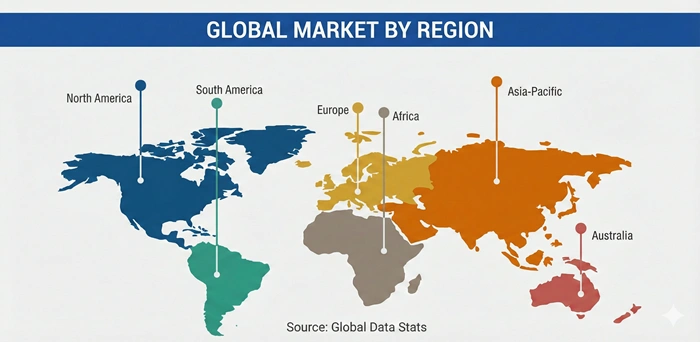
Asia Pacific controls approximately 42% of the global amino acids market share, valued at over USD 14 billion in 2025 and growing at 8.2% CAGR through 2033. The region benefits from cost-competitive fermentation manufacturing, massive animal agriculture sectors, and growing nutritional supplement consumption driven by rising health awareness and disposable incomes. China dominates regional production with over 60% of global amino acid manufacturing capacity concentrated in industrial clusters leveraging economies of scale, technical expertise, and favorable regulatory environments supporting biotechnology industries. India and Southeast Asian countries show the fastest growth rates as domestic livestock production expands, dietary supplement markets develop, and local manufacturing capacity increases serving domestic and export opportunities.
Major regional producers including CJ CheilJedang, Ajinomoto, Meihua Holdings Group, Fufeng Group, and Global Bio-chem Technology dominate through large-scale fermentation facilities, vertical integration, and strong positions in feed-grade amino acid markets. These companies benefit from proximity to agricultural feedstock supplies, lower labor costs, and established distribution networks throughout Asia Pacific and export markets worldwide. Japanese companies maintain technology leadership in pharmaceutical-grade and specialty amino acids while Chinese manufacturers dominate volume production of commodity feed-grade products serving global animal agriculture through competitive pricing strategies.
North America
Premium Market Emphasizing Pharmaceutical and Nutritional Applications
North America represents a significant regional market accounting for approximately 22% global share, growing at 6.8% CAGR as pharmaceutical applications, sports nutrition, and clinical nutrition segments expand rapidly. The region emphasizes high-purity pharmaceutical-grade amino acids, specialized formulations for medical foods, and premium dietary supplements commanding higher prices than commodity feed-grade products dominating Asian markets. United States leads regional consumption driven by massive dietary supplement industry, advanced healthcare systems utilizing clinical nutrition protocols, and sophisticated animal agriculture operations optimizing feed formulations through precision nutrition technologies.
Leading North American players including ADM, Kemin Industries, and regional operations of global companies like Ajinomoto and Evonik serve local markets through domestic manufacturing, technical support capabilities, and regulatory expertise navigating FDA requirements for pharmaceutical and food-grade products. The region's competitive advantages lie in innovation, quality assurance, and specialized applications rather than volume production where Asian manufacturers dominate through cost leadership. Sports nutrition and personalized supplement brands concentrated in North America drive premium amino acid demand supporting athletic performance, healthy aging, and metabolic optimization through targeted supplementation strategies.
Top Key Players
-
Ajinomoto Co., Inc. (Japan)
-
Evonik Industries AG (Germany)
-
CJ CheilJedang Corporation (South Korea)
-
Archer Daniels Midland Company (ADM) (United States)
-
Adisseo (Bluestar) (China)
-
Novus International (United States)
-
Meihua Holdings Group Co., Ltd. (China)
-
Fufeng Group Company Limited (China)
-
Kemin Industries (United States)
-
Royal DSM (Netherlands)
-
Global Bio-chem Technology Group (China)
-
BASF SE (Germany)
-
Sumitomo Chemical Co., Ltd. (Japan)
-
Kyowa Hakko Bio Co., Ltd. (Japan)
Recent Developments
-
Ajinomoto (2024) – Announced USD 300 million investment in North American amino acid production expansion adding capacity for pharmaceutical-grade products and specialty formulations serving growing clinical nutrition and dietary supplement markets with enhanced supply security
-
Evonik Industries (2025) – Completed acquisition of innovative fermentation technology company enhancing strain development capabilities and expanding production efficiency for methionine and specialty amino acids serving animal nutrition and human health applications
-
CJ CheilJedang (2024) – Opened new USD 450 million fermentation facility in Southeast Asia increasing lysine and threonine production capacity 25% to serve growing Asian feed markets and export opportunities with sustainable bio-based manufacturing processes
-
ADM (2025) – Launched new line of plant-based protein fortification solutions incorporating targeted amino acid blends designed for meat alternative and dairy replacement products addressing nutritional completeness requirements for vegan formulations
-
Adisseo (2024) – Invested USD 200 million in advanced liquid methionine production technology reducing environmental footprint while improving product stability and application convenience for poultry and aquaculture feed manufacturers globally
Market Trends
Sustainability and Personalization Reshaping Industry Dynamics
The amino acids market experiences fundamental shifts toward sustainable production methodologies as manufacturers invest heavily in renewable feedstock utilization, carbon footprint reduction, and circular economy principles minimizing waste streams. Companies develop fermentation processes using agricultural residues, non-food biomass, and captured carbon as substrates replacing traditional glucose and molasses feedstocks derived from food crops. These sustainability initiatives respond to customer demands for environmentally responsible ingredients while potentially lowering raw material costs through waste valorization strategies. Life cycle assessment and carbon footprint certification become competitive differentiators as food companies, pharmaceutical manufacturers, and animal agriculture operations face stakeholder pressure to improve supply chain sustainability and demonstrate progress toward climate goals.
Precision nutrition and personalized supplementation trends drive premiumization across human nutritional applications as brands leverage genetic testing, metabolic profiling, and health data analytics to recommend customized amino acid formulations. Direct-to-consumer companies combine diagnostic services with subscription supplement programs delivering personalized blends addressing individual genetic variants, athletic goals, age-related requirements, or metabolic conditions affecting protein utilization. This customization approach builds consumer loyalty while commanding premium pricing compared to generic supplements available through traditional retail channels. Digital platforms connecting diagnostic insights with targeted supplementation create data-driven engagement models demonstrating measurable health outcomes that justify higher prices.
Segments Covered in the Report
By Product Type
-
Essential Amino Acids (Lysine, Methionine, Threonine, Tryptophan, Valine, Leucine, Isoleucine, Phenylalanine, Histidine)
-
Non-Essential Amino Acids (Glutamic Acid, Glycine, Arginine, Aspartic Acid, Alanine, Others)
By Source
-
Plant-Based
-
Animal-Based
-
Synthetic
By Production Method
-
Fermentation
-
Extraction
-
Chemical Synthesis
By Application
-
Animal Feed (Poultry, Swine, Cattle, Aquaculture)
-
Food & Beverages
-
Pharmaceuticals & Nutraceuticals
-
Cosmetics & Personal Care
-
Others
By Form
-
Powder
-
Liquid
-
Crystals
By Region
-
North America
-
Europe
-
Asia Pacific
-
Latin America
-
Middle East & Africa
Frequently Asked Questions
Question 1: What drives growth in the amino acids market globally?
Answer: The amino acids market experiences robust growth from rising health consciousness driving supplement consumption and growing animal protein demand requiring feed optimization. Pharmaceutical applications and aging populations seeking nutritional support also contribute significantly to market expansion worldwide.
Question 2: Which region leads the amino acids market currently?
Answer: Asia Pacific dominates the amino acids market with approximately 42% share backed by cost-competitive manufacturing and massive animal feed consumption. The region benefits from established fermentation capacity and growing dietary supplement demand supporting both production and consumption leadership.
Question 3: How do production methods impact the amino acids market?
Answer: Fermentation methods dominate the amino acids market holding over 65% share due to superior cost efficiency and product purity. This biotechnology approach offers sustainability advantages and scalability compared to extraction or chemical synthesis for most commercial products.
Question 4: What applications consume the most amino acids market production?
Answer: Animal feed applications lead the amino acids market representing approximately 55% of consumption across poultry, swine, and aquaculture sectors. Food and pharmaceutical applications follow as significant end-use categories consuming substantial volumes for human nutrition and therapeutic purposes.
Question 5: Which segment shows fastest growth in the amino acids market?
Answer: Pharmaceutical and nutraceutical applications demonstrate the strongest growth trajectory in the amino acids market with projected CAGR approaching 8.5%. Essential amino acids also show robust expansion driven by fundamental nutritional requirements across human and animal applications globally.