
Alzheimer Therapeutics Market Overview
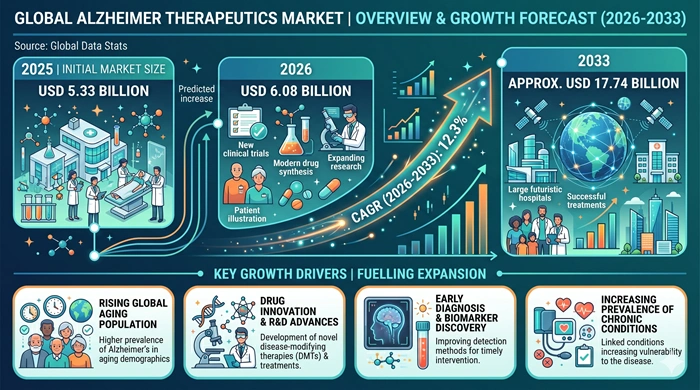
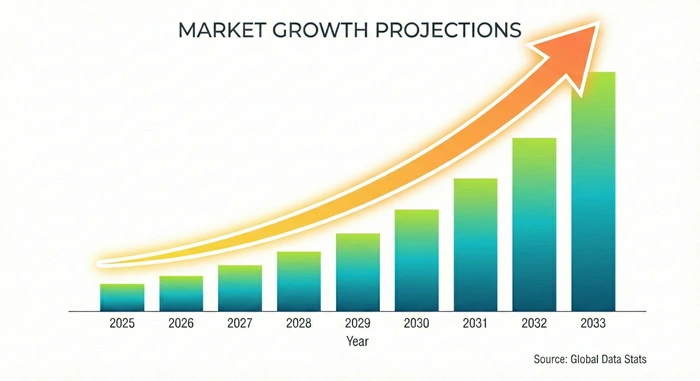
The global Alzheimer therapeutics market size is valued at USD 5.33 billion in 2025 and is predicted to increase from USD 6.08 billion in 2026 to approximately USD 17.74 billion by 2033, growing at a CAGR of 12.3% from 2026 to 2033.
The Alzheimer therapeutics market is undergoing one of the most significant transformations in modern neurology, driven by the historic arrival of disease-modifying therapies that directly target the biological causes of cognitive decline for the first time. With over 55 million people worldwide living with dementia — the majority attributed to Alzheimer's disease — and an aging global population accelerating disease prevalence, the clinical and commercial urgency around effective therapeutic solutions has never been greater. The paradigm shift from purely symptomatic management toward amyloid-targeting immunotherapies is fundamentally reshaping how this market is valued and how investment in Alzheimer drug development is prioritized globally.
AI Impact on the Alzheimer Therapeutics Industry
Artificial Intelligence Is Transforming Alzheimer Drug Discovery, Early Biomarker Detection, and Personalized Treatment Protocol Development Across the Global Neurological Therapeutics Landscape
Artificial intelligence is beginning to make a profound difference in how Alzheimer's disease is understood, diagnosed, and treated. In drug discovery, AI-driven molecular modeling platforms are helping pharmaceutical researchers identify novel therapeutic targets and predict the binding affinity and blood-brain barrier penetration characteristics of candidate compounds with unprecedented computational efficiency. Machine learning algorithms trained on large genomic, proteomic, and clinical datasets are now guiding the selection of clinical trial candidates — an application that is critically important in Alzheimer's research, where decades of high-profile late-stage trial failures have underscored the enormous difficulty of translating preclinical promise into clinical efficacy.
On the diagnostic and clinical management side, AI is enabling earlier and more accurate identification of Alzheimer's pathology — a development that is transformative for the Alzheimer therapeutics market because most disease-modifying therapies are expected to be most effective when administered early in the disease process. AI models trained on MRI scans, PET imaging, cerebrospinal fluid biomarker profiles, and retinal imaging data can detect characteristic Alzheimer pathological signatures — including amyloid plaques and tau tangles — years before clinical symptoms manifest. This capacity for preclinical detection is expanding the eligible patient population for disease-modifying therapies and driving strong growth in diagnostic-therapeutic convergence across the Alzheimer therapeutics landscape.
Growth Factors
Historic FDA Approvals of Disease-Modifying Anti-Amyloid Therapies, a Rapidly Aging Global Population, and Increasing Alzheimer Awareness Are the Primary Forces Driving the Alzheimer Therapeutics Market
The single most transformative growth driver for the Alzheimer therapeutics market is the recent regulatory approval of disease-modifying anti-amyloid immunotherapies — most notably lecanemab (Leqembi, approved by the FDA in 2023) and donanemab (Kisunla, approved in 2024) — which represent the first treatments ever demonstrated to meaningfully slow cognitive decline in early Alzheimer's disease. These approvals mark a historic milestone that has fundamentally reset market expectations and triggered a wave of pharmaceutical investment into follow-on amyloid therapies, tau-targeting agents, and combination treatment approaches. The commercial launch of these agents is still in early stages, and their market penetration is expected to increase substantially over the forecast period as reimbursement pathways broaden, administration infrastructure scales, and prescribing confidence among neurologists grows.
The rapidly aging global population is the structural bedrock of long-term demand growth in the Alzheimer therapeutics market. The number of people aged 65 and older is projected to double globally by 2050, and Alzheimer's disease prevalence increases sharply with age — roughly doubling every five years of age after 65. This demographic trajectory guarantees a sustained and accelerating expansion of the patient population requiring Alzheimer diagnosis and treatment for decades to come. In parallel, growing public awareness of early Alzheimer symptoms, expanding access to memory clinics and neurology specialists, and improving diagnostic infrastructure in developing markets are all contributing to earlier disease identification and an expanding pool of patients eligible for both symptomatic and disease-modifying therapeutic interventions.
Market Outlook
The Alzheimer Therapeutics Market Faces a Decade of Exceptional Commercial Opportunity, Backed by Disease-Modifying Drug Launch Momentum, Biomarker-Guided Patient Selection, and Emerging Combination Therapy Approaches
The outlook for the Alzheimer therapeutics market through 2033 is among the most optimistic of any major pharmaceutical segment, driven by the early-stage commercial ramp of disease-modifying therapies and a deep pipeline of next-generation candidates at various stages of development. Lecanemab and donanemab are expected to generate multi-billion-dollar annual revenues by the late 2020s as commercial launch infrastructure matures, reimbursement coverage expands — including anticipated broader Medicare coverage in the United States — and physician confidence in patient selection and monitoring grows. The pipeline behind these first-generation agents is rich with tau-targeting therapies, neuroinflammation modulators, and synaptic protection agents that could further expand the addressable treatment market beyond amyloid clearance alone.
Global healthcare system investment in Alzheimer care infrastructure is also creating important enabling conditions for market growth. Dedicated memory clinics, expanded access to amyloid PET imaging and CSF biomarker testing, and the establishment of clinical monitoring protocols for administering anti-amyloid therapies are all being built out in North America, Europe, and progressively in Asia-Pacific. This infrastructure buildout is a prerequisite for market penetration of disease-modifying therapies, and as it develops, the commercial addressable market for the Alzheimer therapeutics market will expand accordingly. The convergence of scientific innovation, infrastructure investment, and demographic tailwinds positions this market for exceptional value creation through 2033 and beyond.
Expert Speaks
-
Chris Boerner, CEO, Bristol Myers Squibb — "The Alzheimer's field has crossed a critical threshold with the approval of the first disease-modifying therapies. The clinical and commercial implications are profound — this is a market entering a new era of investment, innovation, and patient impact, and we are watching the competitive landscape evolve rapidly."
-
Albert Bourla, Chairman & CEO, Pfizer Inc. — "Neurological diseases, including Alzheimer's, represent one of the highest unmet medical needs remaining in medicine. The progress made with amyloid-targeting therapies marks a genuine scientific breakthrough, and we believe the best is yet to come as the field continues to deepen its mechanistic understanding of Alzheimer's pathology."
-
Vas Narasimhan, CEO, Novartis — "Disease-modifying therapy for Alzheimer's disease represents exactly the kind of transformative medical advance that can redefine how we think about aging and cognitive health. The Alzheimer therapeutics market is now genuinely positioned to deliver meaningful patient benefit at scale, and the pharmaceutical investment environment reflects that optimism."
Key Report Takeaways
-
North America leads the Alzheimer therapeutics market, accounting for approximately 41% of global revenue in 2025, driven by the highest Alzheimer disease prevalence rates, the earliest commercial launches of disease-modifying anti-amyloid therapies, strong neurological healthcare infrastructure, and comprehensive reimbursement discussions underway for novel agents at CMS
-
Asia-Pacific is the fastest-growing region, projected to expand at a CAGR of over 14.8% through 2033, driven by a rapidly aging population in China, Japan, and South Korea, increasing government investment in neurological research and dementia care infrastructure, and growing recognition of Alzheimer's disease as a major public health priority across the region
-
Cholinesterase inhibitors are the dominant drug class segment, holding approximately 49% of total drug class revenue in 2025, reflecting the continued widespread use of donepezil, rivastigmine, and galantamine as foundational first-line symptomatic treatments for mild-to-moderate Alzheimer's disease across both developed and developing healthcare markets
-
Oral route of administration is the dominant delivery format, accounting for the largest share of prescription volumes globally in 2025, driven by the widespread oral availability of established symptomatic agents and the strong patient and caregiver preference for convenient home-administered formulations in long-term dementia management
-
Hospital pharmacies represent the dominant distribution channel, accounting for approximately 35% of total distribution revenue in 2025, reflecting the high volume of Alzheimer therapy initiations managed within inpatient neurology and memory clinic settings, particularly for newly approved disease-modifying infusion-based therapies requiring clinical monitoring
-
Anti-amyloid monoclonal antibodies represent the fastest-growing therapeutic segment in the Alzheimer therapeutics market, projected to grow at a CAGR of 28.6% through 2033 and reach approximately 32% of total drug class market share by 2033, fueled by expanding commercial launches of lecanemab and donanemab and a growing pipeline of next-generation amyloid-targeting agents entering late-stage clinical trials
Market Scope
| Report Coverage | Details |
|---|---|
| Market Size by 2033 | USD 17.74 Billion |
| Market Size by 2025 | USD 5.33 Billion |
| Market Size by 2026 | USD 6.08 Billion |
| Market Growth Rate (2026–2033) | CAGR of 12.3% |
| Dominating Region | North America |
| Fastest Growing Region | Asia-Pacific |
| Base Year | 2025 |
| Forecast Period | 2026 – 2033 |
| Segments Covered | Drug Class, Alzheimer's Type, Route of Administration, Distribution Channel, End User |
| Regions Covered | North America, Europe, Asia-Pacific, Latin America, Middle East & Africa |
Market Dynamics
Drivers Impact Analysis
Landmark Disease-Modifying Therapy Approvals, Rapidly Aging Global Demographics, and Expanding Early Diagnostic Capabilities Are the Core Forces Accelerating the Alzheimer Therapeutics Market
| Driver | ≈ % Impact on CAGR Forecast | Geographic Relevance | Impact Timeline |
|---|---|---|---|
| FDA approval and commercial launch of anti-amyloid disease-modifying therapies | ~35% | North America, Europe, Japan | Short to Long-term |
| Rapidly aging global population increasing Alzheimer prevalence | ~28% | Global, especially Asia-Pacific and Europe | Medium to Long-term |
| Expanding biomarker-based early diagnosis enabling treatment eligibility | ~18% | North America, Europe | Short to Medium-term |
| Growing government and private sector R&D investment in Alzheimer therapeutics | ~12% | North America, Europe, Japan | Medium to Long-term |
| Increasing Alzheimer disease awareness driving earlier care-seeking behavior | ~7% | Global | Short to Medium-term |
The FDA approval of lecanemab and donanemab has marked a genuine inflection point for the Alzheimer therapeutics market — the first time in history that a drug has been demonstrated in large randomized controlled trials to slow cognitive decline in early Alzheimer's disease by targeting the underlying amyloid pathology. This achievement has not only created immediate commercial revenue opportunity for Eisai, Biogen, and Eli Lilly respectively, but has also catalyzed a broader wave of R&D investment into next-generation disease-modifying agents targeting amyloid, tau, neuroinflammation, and synaptic dysfunction. The commercial launch trajectory for these agents is still early, and revenue is expected to grow significantly as prescribing broadens, administration centers scale, and companion diagnostic infrastructure expands over the forecast period.
The demographic trajectory of the aging global population provides the deepest structural foundation for long-term Alzheimer therapeutics market growth. The number of people with dementia globally is expected to reach 78 million by 2030 and 139 million by 2050, with Alzheimer's accounting for 60–70% of these cases. This demographic pressure is most acute in Japan, Western Europe, and increasingly in China and South Korea, where populations are aging faster than in many other parts of the world. No plausible scenario exists in which the demand for effective Alzheimer treatments declines over the forecast period — making this market one of the most structurally durable long-term growth opportunities in the global pharmaceutical industry.
Restraints Impact Analysis
High Cost of Disease-Modifying Therapies, Reimbursement Uncertainty, Infusion Safety Monitoring Requirements, and Limited Early Diagnostic Infrastructure Are the Primary Challenges Facing the Alzheimer Therapeutics Market
| Restraint | ≈ % Impact on CAGR Forecast | Geographic Relevance | Impact Timeline |
|---|---|---|---|
| High treatment costs limiting access to disease-modifying therapies | ~32% | Emerging markets, price-sensitive payers | Ongoing |
| Restrictive or uncertain reimbursement coverage for anti-amyloid therapies | ~27% | USA, Europe | Short to Medium-term |
| MRI monitoring requirements for ARIA management limiting prescriber uptake | ~20% | Global | Short to Medium-term |
| Limited availability of amyloid PET and CSF biomarker diagnostics | ~13% | Emerging markets, community settings | Medium to Long-term |
| Caregiver and patient burden in managing complex treatment regimens | ~8% | Global | Ongoing |
The high annual cost of newly approved disease-modifying therapies — with list prices running into tens of thousands of dollars per year — is a significant barrier to broad market penetration, particularly in the United States where the Centers for Medicare and Medicaid Services (CMS) initially imposed restrictive coverage conditions. While CMS coverage for lecanemab has improved following full FDA approval, the reimbursement landscape for these agents remains complex and evolving, creating uncertainty for healthcare providers and patients about out-of-pocket cost exposure. In most other countries globally, reimbursement decisions for these agents are still pending or under negotiation, substantially limiting their commercial uptake outside of the US in the near term.
The management of amyloid-related imaging abnormalities (ARIA) — a known side effect of anti-amyloid immunotherapies characterized by brain swelling and microhemorrhages detectable on MRI — adds significant clinical complexity to prescribing these agents. Protocols for ARIA monitoring require regular MRI scans during the early infusion period, demanding specialist radiology capacity and creating a meaningful administrative and access burden for both patients and healthcare systems. This monitoring requirement effectively limits prescribing of these agents to specialized neurology centers with reliable MRI access, excluding large segments of the potential patient population in primary care and community settings — a constraint that will take years to fully overcome as healthcare infrastructure adapts.
Opportunities Impact Analysis
Expanding Combination Therapy Approaches, Tau-Targeting Pipeline Maturation, and Emerging Market Alzheimer Care Infrastructure Development Are the Most Compelling Growth Opportunities Ahead
| Opportunity | ≈ % Impact on CAGR Forecast | Geographic Relevance | Impact Timeline |
|---|---|---|---|
| Development and approval of next-generation tau-targeting and combination therapies | ~33% | Global, led by North America and Europe | Medium to Long-term |
| Expanding Medicare and international payer coverage for disease-modifying therapies | ~27% | USA, Europe, Japan | Short to Medium-term |
| Subcutaneous formulation development reducing infusion burden for patients | ~20% | North America, Europe | Medium to Long-term |
| Emerging market healthcare expansion improving Alzheimer diagnosis and treatment access | ~13% | Asia-Pacific, Latin America | Medium to Long-term |
| AI-driven precision medicine enabling patient-specific therapy selection | ~7% | North America, Europe | Medium to Long-term |
The development of subcutaneous formulations of anti-amyloid therapies — as both Eisai/Biogen and Eli Lilly are actively pursuing — represents a high-impact opportunity to overcome one of the most significant access barriers currently constraining the Alzheimer therapeutics market. Moving from intravenous infusion to a self-administered or home-administered injection would dramatically simplify the treatment logistics for patients, reduce the burden on hospital infusion centers, and expand the geographic reach of disease-modifying therapy to patients in community and rural settings who currently cannot access regular infusion appointments. Positive subcutaneous formulation data for lecanemab has already been reported, with regulatory submissions anticipated within the near-term forecast period.
The maturation of the tau-targeting pipeline represents the most significant longer-term commercial opportunity. While amyloid clearance has demonstrated meaningful clinical benefit, tau pathology — which correlates more closely with cognitive decline than amyloid burden — remains incompletely addressed by current therapies. Multiple tau-targeting agents including anti-tau monoclonal antibodies, tau aggregation inhibitors, and tau acetylation inhibitors are in active clinical development, and positive efficacy data from any of these programs could create substantial new treatment categories within the Alzheimer therapeutics market, multiplying the total addressable therapeutic opportunity beyond what anti-amyloid agents alone can deliver.
Segment Analysis
By Drug Class
Cholinesterase Inhibitors Currently Lead the Alzheimer Therapeutics Market by Volume, While Anti-Amyloid Monoclonal Antibodies Are Emerging as the Fastest-Growing and Highest-Value Drug Class
Cholinesterase inhibitors are the dominant drug class segment in the Alzheimer therapeutics market, accounting for approximately 49% of total drug class prescription volume in 2025. This segment is projected to sustain a moderate CAGR of 4.8% through 2033, reflecting the continued widespread use of established agents — most notably donepezil — as the foundational first-line symptomatic treatment for mild-to-moderate Alzheimer's disease across global healthcare systems. North America holds the largest regional revenue share for this drug class, with donepezil alone accounting for approximately 67% of total Alzheimer symptomatic therapy prescriptions in the United States according to market analyses. Key companies in this segment include Eisai Co. (the original developer of donepezil), Novartis (rivastigmine — Exelon), and a large ecosystem of generic manufacturers including Teva Pharmaceutical, Mylan, and Sun Pharmaceutical Industries that supply affordable cholinesterase inhibitors globally.
Europe and Asia-Pacific represent the second and third-largest geographies for cholinesterase inhibitor volume, where the drugs' oral availability, affordability, generic market penetration, and decades-long safety record continue to make them the pragmatic first-line choice in the Alzheimer therapeutics market, particularly in healthcare systems with limited access to expensive newer agents. However, the long-term growth trajectory of this drug class is being gradually moderated as disease-modifying therapies gain prescribing momentum and become increasingly positioned as the preferred approach for patients in early stages of the disease — shifting the center of gravity of the overall Alzheimer drug market toward higher-cost, higher-impact biologic agents over the course of the forecast period.
By Route of Administration
Oral Administration Leads the Alzheimer Therapeutics Market in Prescription Volume, While Intravenous Route Grows Rapidly With the Expansion of Anti-Amyloid Infusion Therapy Adoption
The oral route of administration is the dominant segment in the Alzheimer therapeutics market, contributing the largest share of total prescription volume in 2025. This dominance reflects the fact that all major cholinesterase inhibitors and NMDA receptor antagonists — including donepezil, rivastigmine, galantamine, and memantine — are available in oral tablet, capsule, or solution form, making them convenient for daily self-administration by patients and caregivers at home. The oral segment is projected to grow at a CAGR of 5.2% through 2033, supported by sustained prescribing of these established symptomatic agents across all major global markets. North America, Europe, and Asia-Pacific lead the oral segment equally, with large geriatric populations and well-established primary care prescribing of cholinesterase inhibitors driving consistent volume. Teva Pharmaceutical, Dr. Reddy's Laboratories, Mylan, and Sun Pharmaceutical dominate the global generic oral Alzheimer drug supply.
The intravenous route is the fastest-growing administration segment in the Alzheimer therapeutics market, projected to expand at a CAGR of 29.4% through 2033 as anti-amyloid monoclonal antibodies — administered by intravenous infusion every two weeks or monthly — gain clinical adoption at scale. North America is the leading region for IV-administered Alzheimer therapies, where Eisai/Biogen's lecanemab (Leqembi) and Eli Lilly's donanemab (Kisunla) are being administered at specialized memory clinics, academic medical centers, and infusion centers. Japan is also a significant early market for IV anti-amyloid therapies, where lecanemab received full approval and is being actively reimbursed. Europe's IV market is expected to accelerate significantly once regulatory approvals and reimbursement decisions are finalized across major EU member states, creating a major near-term expansion opportunity for the intravenous segment.
Regional Insights
North America
North America Leads the Global Alzheimer Therapeutics Market, Anchored by the World's Most Advanced Alzheimer Clinical Infrastructure, High Disease Burden, and First-Mover Advantage in Disease-Modifying Therapy Access
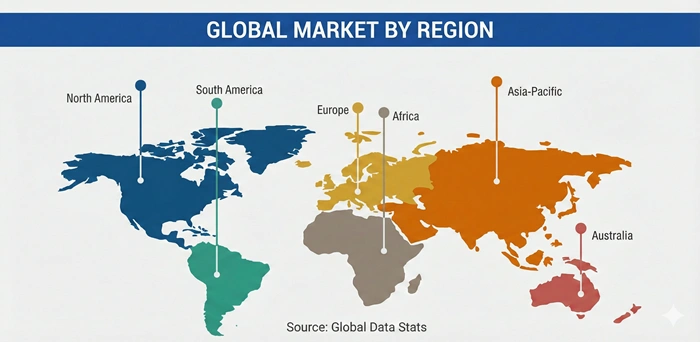
North America holds the dominant position in the global Alzheimer therapeutics market, accounting for approximately 41% of total global revenue in 2025 and projected to maintain a CAGR of 11.8% through 2033. The United States is by far the most significant national market, driven by the world's most active Alzheimer clinical research ecosystem, the earliest FDA approvals and commercial launches of disease-modifying therapies, and a large elderly population with the highest-quality access to neurology specialists, diagnostic imaging, and memory care services. The country's healthcare infrastructure for Alzheimer management — including an extensive network of Alzheimer Disease Research Centers (ADRCs), academic memory clinics, and dedicated infusion facilities — is actively scaling to meet the demands of administering and monitoring patients receiving anti-amyloid therapies. Key companies shaping the North American Alzheimer therapeutics market include Eisai/Biogen (lecanemab), Eli Lilly (donanemab), Pfizer, Johnson & Johnson (Janssen), AbbVie, Roche, and AstraZeneca.
Canada also contributes meaningfully to regional market growth, with Health Canada having approved lecanemab and ongoing reimbursement negotiations across provincial drug benefit programs. The North American Alzheimer therapeutics market benefits from the most robust biomarker diagnostic infrastructure globally — including widespread availability of amyloid PET imaging and CSF testing — which is essential for identifying patients who are eligible for disease-modifying therapy. Federal funding through the National Institutes of Health (NIH) and the National Institute on Aging continues to support a rich pipeline of Alzheimer clinical trials that will sustain innovation-driven market expansion throughout the forecast period.
Asia-Pacific
Asia-Pacific Is the Fastest-Growing Regional Market in the Alzheimer Therapeutics Space, Driven by the World's Largest Aging Population Base, Growing Dementia Awareness, and Expanding Neurological Healthcare Capacity
Asia-Pacific represents the most dynamic regional growth market in the global Alzheimer therapeutics landscape, projected to expand at a CAGR of 14.8% from 2026 to 2033 — the fastest rate of any global region. The region currently accounts for approximately 23% of global Alzheimer therapeutics market revenue, with Japan, China, South Korea, India, and Australia serving as the primary national markets. Japan is the most advanced Alzheimer therapeutic market in Asia-Pacific, with a fully approved and reimbursed anti-amyloid therapy (lecanemab) and the world's most rapidly aging population — more than 28% of Japanese citizens are already over 65. China and South Korea are emerging rapidly as the next high-growth Alzheimer markets, where dramatically aging populations, rising middle-class healthcare investment, and government dementia action plans are creating accelerating demand for both symptomatic and disease-modifying therapies. Leading companies active across the Asia-Pacific Alzheimer therapeutics market include Eisai, Daiichi Sankyo, Takeda Pharmaceutical, Sumitomo Pharma, and Roche.
India presents a significant long-term opportunity within the region, despite currently limited Alzheimer diagnostic and therapeutic infrastructure. With over 50 million people expected to be living with dementia in India by 2050, and growing awareness among Indian neurologists and policymakers of the need to invest in dementia care capacity, the country is positioned to become an increasingly important market for both affordable symptomatic therapies and, eventually, accessible forms of disease-modifying treatment. Government-backed healthcare expansion programs, growing private hospital neurology capabilities, and increasing penetration of memory clinics in Tier 1 and Tier 2 Indian cities are all laying the groundwork for meaningful Alzheimer therapeutics market development in the country over the next decade.
Top Key Players
-
Eisai Co. Ltd. (Japan)
-
Biogen Inc. (United States)
-
Eli Lilly and Company (United States)
-
Pfizer Inc. (United States)
-
Johnson & Johnson — Janssen (United States)
-
Roche Holding AG (Switzerland)
-
AstraZeneca plc (United Kingdom)
-
AbbVie Inc. (United States)
-
Novartis AG (Switzerland)
-
Takeda Pharmaceutical Company Ltd. (Japan)
-
Sumitomo Pharma Co. Ltd. (Japan)
-
AC Immune SA (Switzerland)
Recent Developments
-
Eisai/Biogen (2025) — Advanced the global commercial launch of lecanemab (Leqembi) with expanded regulatory approvals across multiple markets including key European countries and full reimbursement implementation in Japan, while simultaneously reporting positive Phase 3 data for a subcutaneous formulation that could substantially simplify administration and expand patient access beyond specialized infusion center settings
-
Eli Lilly (2025) — Completed the commercial launch of donanemab (Kisunla) in the United States following full FDA approval and began advancing international regulatory submissions, while also reporting progress in its next-generation amyloid and tau combination therapy program targeting patients at earlier preclinical stages of Alzheimer's pathology
-
Roche (2025) — Reported advanced clinical data for gantenerumab follow-on candidates and announced a significant expansion of its Alzheimer disease biomarker research collaboration with multiple academic medical centers, reinforcing its commitment to both therapeutic development and the companion diagnostics ecosystem that supports patient selection for disease-modifying therapies
-
AstraZeneca (2024) — Entered into a major strategic research collaboration focused on novel neuroinflammation-targeting approaches in Alzheimer's disease, reflecting the company's growing interest in broadening the mechanistic scope of Alzheimer therapeutic development beyond amyloid clearance toward the tau and neuroinflammatory pathways that drive disease progression
-
AC Immune SA (2025) — Reported positive early-stage clinical trial data for its anti-tau vaccine candidate — one of several tau-targeting therapeutic modalities under active development globally — and advanced discussions with potential pharmaceutical partners for late-stage development funding, strengthening the pipeline of next-generation Alzheimer therapeutics expected to reach the market within the extended forecast horizon
Market Trends
Biomarker-Guided Patient Selection, Subcutaneous Formulation Development for Anti-Amyloid Therapies, and Combination Treatment Protocol Research Are the Most Impactful Trends Defining the Alzheimer Therapeutics Market
One of the most consequential trends reshaping the Alzheimer therapeutics market is the growing centrality of biomarker-guided patient selection in both clinical practice and drug development. Disease-modifying therapies targeting amyloid are only appropriate for patients with confirmed amyloid pathology — a determination that requires either amyloid PET imaging or CSF/plasma biomarker testing. The increasing clinical emphasis on biomarker confirmation before therapy initiation is simultaneously improving treatment outcomes and driving robust growth in the Alzheimer diagnostics sector. The emergence of blood-based biomarkers — particularly plasma p-tau217 — as a practical, minimally invasive, and cost-effective screening tool is expected to transform Alzheimer diagnosis workflows and significantly expand early patient identification and treatment eligibility over the coming years.
The intensifying research focus on combination therapy protocols is the second major trend that will shape the long-term commercial landscape of the Alzheimer therapeutics market. Clinical researchers and pharmaceutical developers increasingly recognize that addressing amyloid alone may not be sufficient to halt disease progression in all patients — particularly those with co-existing tau pathology, neuroinflammation, or synaptic dysfunction. Multiple combination approaches pairing amyloid-clearing agents with tau-targeting antibodies, TREM2-activating neuroinflammation modulators, and neuroprotective agents are entering clinical development, inspired by the successful combination therapy paradigm established in oncology and HIV. Positive data from any of these combination programs would meaningfully expand the addressable commercial opportunity in the Alzheimer therapeutics market beyond what single-mechanism agents can capture.
Segments Covered in the Report
By Drug Class:
-
Cholinesterase Inhibitors (Donepezil, Rivastigmine, Galantamine)
-
NMDA Receptor Antagonists (Memantine)
-
Anti-Amyloid Monoclonal Antibodies (Lecanemab, Donanemab)
-
Tau-Targeting Therapies
-
Combination Therapies
-
Others
By Alzheimer's Type:
-
Early-Stage (Mild Cognitive Impairment)
-
Mild-to-Moderate Alzheimer's Disease
-
Severe Alzheimer's Disease
-
Early-Onset Alzheimer's Disease
By Route of Administration:
-
Oral
-
Intravenous
-
Transdermal Patch
-
Others
By Distribution Channel:
-
Hospital Pharmacies
-
Retail and Community Pharmacies
-
Online Pharmacies
-
Others
By End User:
-
Hospitals and Memory Clinics
-
Specialty Neurology Centers
-
Homecare Settings
-
Long-Term Care Facilities
-
Others
By Region:
-
North America (United States, Canada, Mexico)
-
Europe (Germany, United Kingdom, France, Italy, Spain, Netherlands, Rest of Europe)
-
Asia-Pacific (Japan, China, India, South Korea, Australia, Rest of Asia-Pacific)
-
Latin America (Brazil, Argentina, Rest of Latin America)
-
Middle East & Africa (UAE, Saudi Arabia, South Africa, Rest of MEA)
Frequently Asked Questions
Question 1: What is the current size of the global Alzheimer therapeutics market?
Answer: The global Alzheimer therapeutics market is valued at USD 5.33 billion in 2025 and is projected to reach USD 17.74 billion by 2033. The market is growing at a CAGR of 12.3% from 2026 to 2033, driven by the commercial launch of disease-modifying anti-amyloid therapies, a rapidly aging global population, and expanding early diagnostic capabilities.
Question 2: What are the most important recent developments in the Alzheimer therapeutics market?
Answer: The most significant recent development in the Alzheimer therapeutics market is the FDA approval and global commercial launch of lecanemab (Leqembi) and donanemab (Kisunla) — the first disease-modifying therapies ever demonstrated to slow cognitive decline in early Alzheimer's disease. These approvals have fundamentally transformed clinical practice expectations and triggered a major wave of R&D investment into next-generation Alzheimer drug candidates targeting amyloid, tau, and neuroinflammatory pathways.
Question 3: Which drug class leads the Alzheimer therapeutics market?
Answer: Cholinesterase inhibitors currently lead the Alzheimer therapeutics market, accounting for approximately 49% of total drug class prescription volume in 2025 due to the widespread use of donepezil and other agents for first-line symptomatic management. However, anti-amyloid monoclonal antibodies are the fastest-growing drug class, projected to grow at a CAGR of 28.6% through 2033 as lecanemab and donanemab gain broader commercial adoption globally.
Question 4: Which region dominates the Alzheimer therapeutics market?
Answer: North America holds the leading position in the Alzheimer therapeutics market, accounting for approximately 41% of global revenue in 2025, driven by the earliest regulatory approvals of disease-modifying therapies, advanced neurological healthcare infrastructure, and a large aging population with high rates of Alzheimer's disease diagnosis. The United States is the primary national market, supported by robust FDA approval pathways and a rapidly scaling infusion and monitoring infrastructure for anti-amyloid therapies.
Question 5: What is the outlook for the Alzheimer therapeutics market through 2033?
Answer: The Alzheimer therapeutics market is projected to reach USD 17.74 billion by 2033, growing at a CAGR of 12.3%, supported by the accelerating commercial uptake of disease-modifying therapies, expanding international regulatory approvals, and a pipeline of next-generation tau-targeting and combination agents expected to enter the market within the forecast period. Subcutaneous formulation development for anti-amyloid therapies and broader biomarker-guided early diagnosis are expected to substantially expand the eligible patient population and drive sustained market growth.