
Aluminum Market Overview
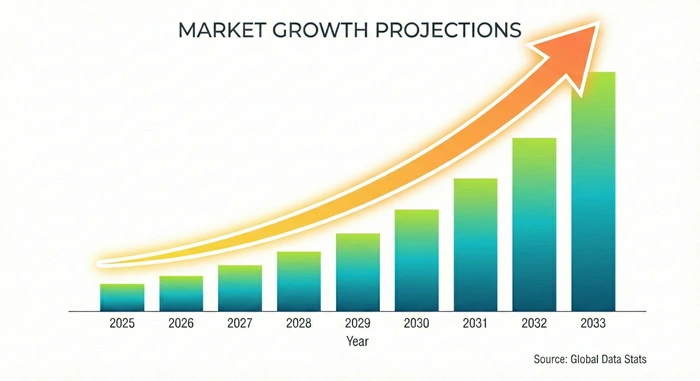
The global aluminum market size is valued at USD 190.68 billion in 2025 and is predicted to increase from USD 202.43 billion in 2026 to approximately USD 308.48 billion by 2033, growing at a CAGR of 5.64% from 2026 to 2033.
The industry supplies lightweight, durable, and corrosion-resistant metal that serves as a foundation material across transportation, construction, packaging, and manufacturing sectors worldwide. This versatile metal combines excellent strength-to-weight ratios with superior formability and recyclability characteristics. Production facilities across continents extract primary aluminum from bauxite ore while recycling operations recover secondary metal from scrap materials.
The sector represents a critical component of modern industrial infrastructure supporting global economic development. Metal consumption continues rising as industries prioritize weight reduction for fuel efficiency and sustainability goals. Countries invest heavily in production capacity and recycling infrastructure to meet growing demand while addressing environmental concerns through cleaner production technologies.

AI Impact on the Aluminum Industry
Transforming Production Efficiency and Quality Control
Artificial intelligence has started revolutionizing how smelters and fabrication facilities operate by optimizing complex production parameters in real-time. Modern AI systems monitor thousands of variables across electrolysis cells, casting operations, and rolling mills to maintain optimal conditions while minimizing energy consumption. These technologies help operators adjust voltage, temperature, chemical composition, and process timing automatically based on predictive algorithms that learn from historical performance data. Machine learning models can detect subtle patterns indicating equipment degradation or process drift before quality issues emerge, enabling proactive interventions that prevent costly production interruptions and material waste.
Predictive maintenance powered by AI has become essential for capital-intensive aluminum production assets where unplanned downtime costs millions in lost output and repair expenses. Sensors throughout facilities collect vibration, temperature, pressure, and acoustic data that AI models analyze to forecast bearing failures, refractory deterioration, electrode problems, and other mechanical issues weeks before they occur. This capability allows maintenance teams to schedule repairs during planned outages rather than responding to emergency breakdowns that disrupt production schedules and endanger worker safety in high-temperature environments.
Growth Factors
Transportation Electrification and Sustainability Driving Demand
The automotive industry's transformation toward electric vehicles creates unprecedented demand for the aluminum market as manufacturers seek lightweight materials to offset heavy battery pack weight. Modern electric vehicles contain 50-70% more aluminum than comparable internal combustion vehicles, with battery enclosures, body structures, suspension components, and wheels increasingly specified in aluminum alloys. This shift addresses range anxiety by reducing overall vehicle weight, enabling smaller battery packs while maintaining target driving distances. Automakers commit billions to aluminum-intensive vehicle architectures as regulatory pressure for emissions reduction intensifies globally.
Construction sector growth in developing countries drives substantial volumes as architects and builders specify aluminum for window frames, curtain walls, roofing, cladding, and structural applications. The metal's corrosion resistance, thermal performance, and aesthetic versatility make it ideal for modern building envelopes that must meet increasingly stringent energy efficiency standards. High-rise construction in Asian and Middle Eastern cities particularly favors aluminum facade systems that reduce building weight on foundations while providing design flexibility and minimal maintenance requirements over decades of service life.
Market Outlook
Regional Dynamics and Circular Economy Trends Shaping Future
Asia Pacific maintains its dominant position as both the largest production region and consumption market, driven by massive manufacturing sectors and infrastructure development programs. The region benefits from integrated supply chains spanning bauxite mining, alumina refining, primary smelting, and downstream fabrication concentrated in China, India, and Southeast Asia. Production capacity continues expanding to serve growing domestic demand while supplying global markets through efficient port infrastructure and competitive energy costs in hydropower-rich areas.
Circular economy principles increasingly shape industry strategies as companies invest heavily in recycling infrastructure and closed-loop material flows. Aluminum's infinite recyclability without property degradation makes it ideal for circular business models where scrap materials return to production as feedstock for new products. The energy savings from recycling versus primary production—roughly 95% less electricity required—create strong economic and environmental incentives driving secondary aluminum's rising market share globally.
Expert Speaks
-
Jean-Sébastien Jacques, former CEO of Rio Tinto – "Aluminum's role in the energy transition cannot be overstated as the metal enables lighter vehicles, renewable energy infrastructure, and efficient power transmission. Our industry must continue investing in low-carbon production technologies while expanding recycling capacity to meet surging demand sustainably."
-
Ivan Glasenberg, former CEO of Glencore – "Market fundamentals for aluminum remain robust despite cyclical price volatility, with structural growth drivers including transportation electrification, infrastructure development, and packaging applications. Supply discipline and operational excellence will determine which producers succeed in this competitive landscape."
-
Roy Harvey, President and CEO of Alcoa Corporation – "Decarbonization represents both challenge and opportunity for aluminum producers as customers increasingly demand low-carbon metal certified through transparent emissions tracking. We're pioneering breakthrough smelting technologies that eliminate direct carbon emissions while maintaining cost competitiveness essential for market adoption."
Key Report Takeaways
-
Asia Pacific dominates the global aluminum market with approximately 60% market share, powered by massive manufacturing bases, extensive production capacity, and growing consumption across transportation, construction, and packaging sectors particularly in China, India, and Southeast Asian economies
-
Middle East & Africa represents the fastest-growing region with projected CAGR exceeding 6.8% through 2033, driven by abundant low-cost hydroelectric power enabling competitive primary aluminum production, strategic investments in smelting capacity, and growing regional consumption from construction and industrial development
-
Transportation sector leads end-use applications capturing roughly 35% market share as automotive manufacturers increasingly adopt aluminum to reduce vehicle weight, improve fuel efficiency in traditional vehicles, and extend driving range in electric vehicles through lightweighting strategies
-
Flat rolled products dominate form categories accounting for approximately 45% of volumes as sheet and plate materials serve automotive body panels, beverage cans, building cladding, and countless other applications requiring formability and surface finish quality
-
Secondary aluminum shows strongest growth potential among product types with highest projected CAGR approaching 6.5% as recycling infrastructure expands, energy cost advantages versus primary production widen, and circular economy mandates drive closed-loop material flows across industries
-
Construction applications consume substantial volumes representing over 25% of global demand as architects specify aluminum for energy-efficient building envelopes, structural systems, and architectural elements benefiting from corrosion resistance and design flexibility
Market Scope
| Report Coverage | Details |
|---|---|
| Market Size by 2033 | USD 308.48 Billion |
| Market Size by 2025 | USD 190.68 Billion |
| Market Size by 2026 | USD 202.43 Billion |
| Market Growth Rate from 2026 to 2033 | CAGR of 5.64% |
| Dominating Region | Asia Pacific |
| Fastest Growing Region | Middle East & Africa |
| Base Year | 2025 |
| Forecast Period | 2026 to 2033 |
| Segments Covered | Product Type, Form, End-Use Industry, Application, Region |
| Regions Covered | North America, Europe, Asia Pacific, Latin America, Middle East & Africa |
Market Dynamics
Drivers Impact Analysis
Positive Forces Accelerating Market Expansion
| Driver | Impact on CAGR Forecast | Geographic Relevance | Impact Timeline |
|---|---|---|---|
| Electric vehicle adoption and automotive lightweighting | ≈ 1.8% positive impact | Global, particularly North America, Europe, Asia Pacific | Immediate and long-term |
| Infrastructure development and urbanization | ≈ 1.3% positive impact | Asia Pacific, Middle East, Latin America | Immediate and long-term |
| Packaging industry growth and beverage can demand | ≈ 0.9% positive impact | Global | Immediate |
| Renewable energy infrastructure expansion | ≈ 0.7% positive impact | Global, led by developed markets | Medium to long-term |
The transportation sector's rapid evolution toward electrification creates fundamental demand growth for the aluminum market as automakers redesign vehicle architectures around lightweight materials to maximize battery efficiency. Major automotive manufacturers announce multi-billion dollar investments in aluminum-intensive platforms specifically designed for electric propulsion where every kilogram saved translates directly to extended driving range or reduced battery costs. This structural shift affects not just battery electric vehicles but also hybrid models where weight reduction remains critical for achieving fuel economy targets under increasingly stringent regulatory standards worldwide.
Infrastructure modernization programs across developing countries consume massive aluminum volumes as governments invest trillions in transportation networks, power grids, urban development, and telecommunications requiring the metal's unique combination of conductivity, corrosion resistance, and structural properties. High-voltage transmission lines increasingly specify aluminum conductors that enable efficient long-distance power transmission from renewable generation sites to urban consumption centers. Building construction in tropical and coastal regions favors aluminum for window systems, facades, and roofing that withstand harsh environmental conditions while meeting energy efficiency requirements reducing air conditioning loads through reflective coatings and thermal breaks.
Restraints Impact Analysis
Challenges Limiting Market Growth Potential
| Restraint | Impact on CAGR Forecast | Geographic Relevance | Impact Timeline |
|---|---|---|---|
| High energy costs and production expenses | ≈ 1.1% negative impact | Global, particularly regions with expensive electricity | Immediate |
| Raw material supply constraints and bauxite availability | ≈ 0.7% negative impact | Global | Medium to long-term |
| Competition from alternative lightweight materials | ≈ 0.6% negative impact | Developed markets, high-performance applications | Medium to long-term |
| Environmental concerns about primary production | ≈ 0.5% negative impact | Global, strongest in Europe and North America | Immediate and long-term |
Energy costs represent the single largest expense for primary aluminum production, accounting for 30-40% of total production costs as electrolysis requires roughly 15,000 kilowatt-hours per ton of metal produced. Price volatility in electricity markets directly impacts smelter profitability and competitiveness across regions, with facilities in high-cost power markets struggling against producers with access to subsidized or hydroelectric generation. This cost sensitivity drives capacity shutdowns in Europe and restarts in regions offering long-term power supply agreements at competitive rates, fundamentally reshaping global production geography over time.
Competition from advanced composites, high-strength steels, and magnesium alloys challenges the aluminum market in certain high-performance applications where material properties must meet extremely demanding specifications. Aerospace manufacturers evaluate carbon fiber composites for primary structures despite higher material costs due to weight savings exceeding aluminum's capabilities in specific applications. Automotive engineers increasingly specify advanced high-strength steels for structural components where crash performance requirements favor steel's energy absorption characteristics over aluminum's properties, particularly in cost-sensitive vehicle segments serving price-conscious consumer markets.
Opportunities Impact Analysis
Emerging Avenues for Market Expansion
| Opportunity | Impact on CAGR Forecast | Geographic Relevance | Impact Timeline |
|---|---|---|---|
| Advanced recycling technology development | ≈ 1.4% positive impact | Global | Medium to long-term |
| Aerospace sector recovery and expansion | ≈ 0.8% positive impact | North America, Europe, Asia Pacific | Medium to long-term |
| 3D printing and additive manufacturing adoption | ≈ 0.6% positive impact | Developed markets initially | Medium to long-term |
| Low-carbon aluminum production technologies | ≈ 1.0% positive impact | Global, led by Europe and North America | Medium to long-term |
Advanced recycling technologies enabling high-quality secondary aluminum production from mixed scrap streams create opportunities for the aluminum market to expand circular material flows while reducing dependence on energy-intensive primary production. New sorting technologies using laser-induced breakdown spectroscopy and X-ray transmission can identify alloy compositions in complex scrap mixtures, enabling separation that preserves material value through appropriate recycling paths. These innovations address historical challenges where contamination forced downcycling of valuable automotive and aerospace alloys into lower-grade casting applications, destroying economic value and requiring virgin metal to replace high-performance materials.
Aerospace sector recovery following pandemic disruptions drives substantial aluminum demand as commercial aircraft production ramps up to meet airline fleet renewal requirements and growing passenger traffic in emerging markets. Modern aircraft contain 70-80% aluminum by weight in airframes, wings, fuselage structures, and countless components where the metal's strength-to-weight ratio and fatigue resistance remain unmatched for demanding aerospace applications. Defense spending increases across multiple regions further support specialized aluminum alloy demand for military aircraft, vehicles, and equipment where performance specifications justify premium pricing for advanced materials meeting stringent qualification standards.
Segment Analysis
Primary Aluminum
Foundation Production Driving Industry Volumes
Primary aluminum represents approximately 65% of the aluminum market share in 2025, growing at 5.3% CAGR through the forecast period. This segment encompasses metal produced through electrolytic reduction of alumina extracted from bauxite ore, requiring substantial energy inputs but yielding high-purity metal suitable for demanding applications across aerospace, automotive, and packaging industries. Asia Pacific dominates global primary production with over 60% of smelting capacity concentrated in China where access to domestic bauxite resources, alumina refineries, and relatively affordable electricity enables cost-competitive operations serving massive domestic manufacturing sectors.
Major producers including China Hongqiao, Chalco, Rusal, Rio Tinto, and Alcoa operate globally distributed smelter networks strategically located near hydroelectric power sources offering long-term electricity supply at competitive rates essential for profitable operations. These companies continue investing in next-generation smelting technologies including inert anode systems that could eliminate direct carbon emissions from the Hall-Héroult process currently responsible for substantial greenhouse gas output. Production capacity expansions concentrate in regions offering sustainable power access including Iceland, Norway, Canada, and Middle Eastern countries with abundant natural gas or renewable electricity surpluses supporting new world-scale facilities.
Transportation Sector
Leading End-Use Application Across Regions
Transportation applications dominate end-use categories capturing approximately 35% market share in 2025, expanding at 6.2% CAGR as automotive electrification and lightweighting trends accelerate aluminum adoption. This segment includes automotive body structures and closures, battery enclosures, heat exchangers, wheels, suspension components, along with aerospace airframes, rail vehicle bodies, and marine superstructures benefiting from weight reduction and corrosion resistance. North America and Europe show particularly strong growth as stringent fuel economy and emissions regulations drive automakers toward aluminum-intensive vehicle platforms replacing traditional steel construction across multiple vehicle classes.
Leading automotive aluminum suppliers including Novelis, Constellium, Aleris, and Arconic serve global OEMs through regional production networks co-located near major vehicle assembly plants ensuring just-in-time delivery of sheet products meeting exacting specifications. These suppliers invest heavily in automotive-grade alloy development, advanced joining technologies, and recycling systems that enable closed-loop material flows returning manufacturing scrap and end-of-life vehicles to production as feedstock. The aerospace sector sustains premium demand for specialized alloys where aluminum's proven performance, established supply chains, and lower costs versus composites maintain dominant positions in commercial and military aircraft programs despite emerging competitive materials.
Regional Insights
Asia Pacific
Market Leadership Through Production and Consumption Dominance
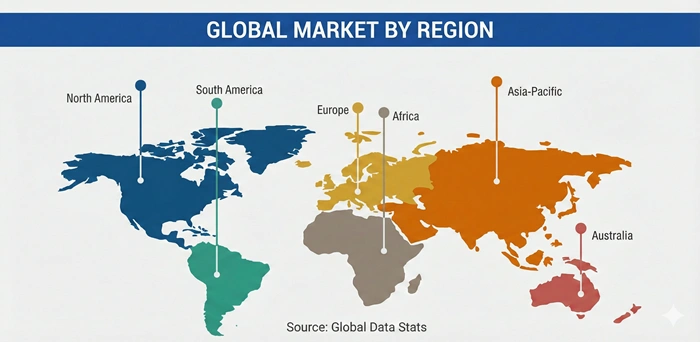
Asia Pacific controls approximately 60% of the global aluminum market share, valued at over USD 114 billion in 2025 and growing at 5.9% CAGR through 2033. The region benefits from integrated value chains spanning bauxite mining, alumina refining, primary smelting, and downstream fabrication concentrated in China which alone accounts for 55% of global primary production and consumption. Massive automotive manufacturing, construction activity, packaging demand, and export-oriented industries drive enormous metal consumption while domestic production capacity expansions meet growing requirements through investments in smelting and recycling infrastructure.
Major regional producers including China Hongqiao Group, Chalco, East Hope Group, and Yunnan Aluminium dominate through large-scale operations leveraging domestic resources and growing expertise in advanced production technologies. Indian companies including Vedanta and Hindalco expand aggressively to serve rapidly growing domestic demand as infrastructure development and vehicle production accelerate. Southeast Asian nations attract downstream fabrication investments from global companies seeking cost-competitive manufacturing locations with access to regional supply chains and export markets throughout Asia Pacific and beyond.
Middle East & Africa
Fastest Regional Growth Through Competitive Advantages
Middle East & Africa represents the fastest-growing regional market expanding at approximately 6.8% CAGR as abundant hydroelectric and natural gas resources enable highly competitive primary aluminum production costs. The region's strategic position between European, Asian, and African markets provides logistics advantages for exports while growing local economies increase domestic consumption across construction, infrastructure, and manufacturing sectors. Gulf Cooperation Council countries lead regional production with massive smelter complexes in UAE, Saudi Arabia, Bahrain, and Oman leveraging cheap energy and government support for industrial diversification beyond petroleum.
Leading producers including Emirates Global Aluminium, Alba (Aluminium Bahrain), Ma'aden, and Sohar Aluminium operate world-scale facilities optimized for export markets while developing downstream fabrication capabilities serving regional demand. African nations including Mozambique and Guinea attract major investments in bauxite mining and potential smelting projects leveraging substantial untapped hydroelectric potential that could support millions of tons of new production capacity. The region's competitive fundamentals in primary production costs combined with growing local consumption create powerful dual growth drivers supporting sustained expansion through the forecast period.
Top Key Players
-
China Hongqiao Group (China)
-
Chalco (Aluminum Corporation of China) (China)
-
Rusal (Russia)
-
Rio Tinto (United Kingdom)
-
Alcoa Corporation (United States)
-
Emirates Global Aluminium (United Arab Emirates)
-
Norsk Hydro (Norway)
-
Vedanta Limited (India)
-
Hindalco Industries (India)
-
Novelis Inc. (United States)
-
Constellium (France)
-
Alba (Aluminium Bahrain) (Bahrain)
-
Ma'aden (Saudi Arabia)
-
Yunnan Aluminium (China)
Recent Developments
-
Rio Tinto (2024) – Announced USD 2.5 billion investment in Quebec operations to develop breakthrough ELYSIS carbon-free aluminum smelting technology that eliminates direct greenhouse gas emissions from primary production, targeting commercial-scale deployment by 2025
-
Alcoa Corporation (2025) – Completed acquisition of Australian alumina refinery assets expanding low-cost feedstock supply and vertical integration supporting North American smelting operations with long-term competitive raw material access
-
Emirates Global Aluminium (2024) – Commissioned major capacity expansion adding 400,000 tons annual production to Al Taweelah smelter making it one of world's largest single-site facilities optimized for export to Asian markets
-
Novelis (2025) – Opened USD 2.6 billion automotive finishing plant in Kentucky featuring advanced recycling systems that process scrap vehicles into automotive-grade sheet meeting OEM specifications for closed-loop sustainability
-
Hindalco Industries (2024) – Started operations at new 100,000-ton recycling facility in India processing post-consumer scrap into secondary aluminum serving growing domestic automotive and construction demand
Market Trends
Industry Evolution Toward Sustainability and Lightweighting
The aluminum market experiences fundamental transformation toward low-carbon production as major producers invest billions in breakthrough technologies eliminating direct emissions from smelting processes. Companies develop inert anode systems replacing carbon electrodes that currently generate carbon dioxide as byproduct of electrolysis reactions producing aluminum from alumina feedstock. These technological advances respond to growing customer demands for certified low-carbon metal from automotive manufacturers, beverage companies, and building product suppliers facing their own emissions reduction targets. Carbon footprint tracking through blockchain and industry certification schemes enables material traceability documenting production methods and transportation emissions affecting total lifecycle impacts.
Advanced manufacturing technologies including additive manufacturing and precision casting expand aluminum applications into complex geometries previously requiring multiple components and assembly operations. Aerospace companies qualify aluminum alloy powders for 3D printing that consolidate parts, reduce weight, and accelerate production compared to traditional machining from billet stock generating substantial waste. Automotive lightweighting accelerates through multi-material designs combining aluminum structures with advanced high-strength steels, magnesium components, and polymer composites optimized for specific performance requirements in different vehicle zones balancing weight, cost, safety, and manufacturing considerations across entire vehicle architectures.
Segments Covered in the Report
By Product Type
-
Primary Aluminum
-
Secondary Aluminum
-
Aluminum Alloys
By Form
-
Flat Rolled Products
-
Extrusion
-
Casting
-
Forgings
-
Pigments & Powder
By End-Use Industry
-
Transportation
-
Construction
-
Packaging
-
Electrical
-
Machinery & Equipment
-
Consumer Durables
-
Others
By Application
-
Automotive
-
Aerospace
-
Building & Construction
-
Food & Beverage Packaging
-
Electrical Equipment
-
Pharmaceuticals
-
Others
By Region
-
North America
-
Europe
-
Asia Pacific
-
Latin America
-
Middle East & Africa
Frequently Asked Questions
What drives growth in the aluminum market globally?
The aluminum market experiences robust growth from transportation sector lightweighting particularly for electric vehicles and growing infrastructure development in emerging economies. Packaging demand and renewable energy applications also contribute significantly to steady consumption increases worldwide.
Which region leads the aluminum market currently?
Asia Pacific dominates the aluminum market with approximately 60% share backed by massive production capacity and consumption from automotive, construction, and manufacturing sectors. The region benefits from integrated supply chains and cost-competitive operations particularly in China.
How does recycling impact the aluminum market?
Recycling significantly impacts the aluminum market by providing cost-effective and energy-efficient secondary metal supply requiring 95% less energy than primary production. Growing recycling infrastructure expands material availability while supporting circular economy goals and emissions reduction targets.
What applications consume the most aluminum market production?
Transportation applications lead the aluminum market representing approximately 35% of consumption across automotive, aerospace, and rail sectors. Construction and packaging follow as major end-use categories consuming substantial volumes for building products and beverage cans.
Which segment shows fastest growth in the aluminum market?
Secondary aluminum shows the strongest growth trajectory in the aluminum market with highest projected CAGR exceeding 6.5% driven by expanding recycling infrastructure. Polyurethane Transportation applications also demonstrate robust growth from automotive electrification and lightweighting trends accelerating adoption.