
AI in Product Lifecycle Management Market Overview
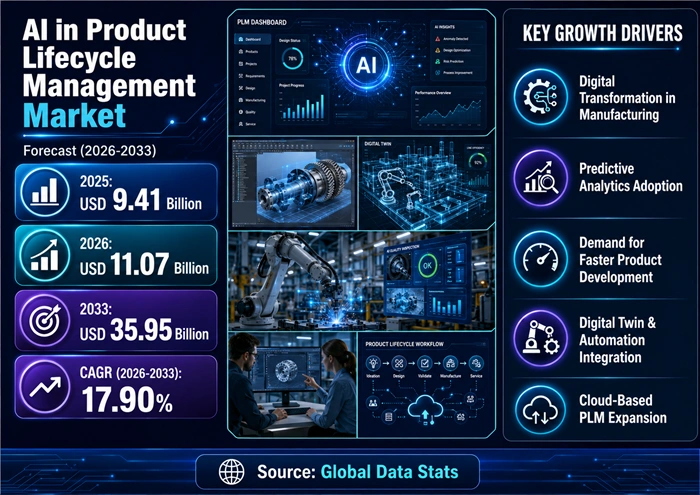
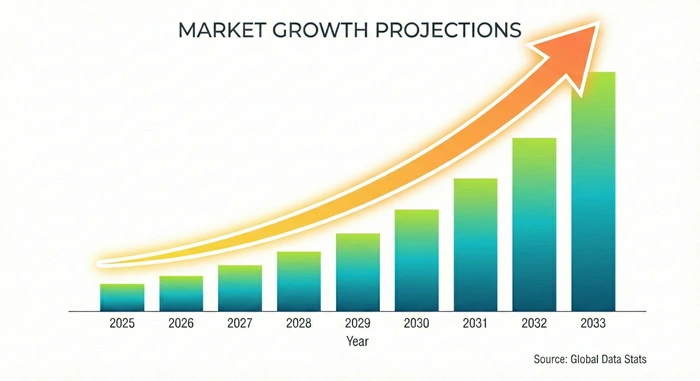
The global AI in product lifecycle management market size is valued at USD 9.41 billion in 2025 and is predicted to increase from USD 11.07 billion in 2026 to approximately USD 35.95 billion by 2033, growing at a CAGR of 17.90% from 2026 to 2033. This strong and sustained expansion is fueled by the growing integration of machine learning, generative AI, natural language processing, and digital twin technologies into PLM platforms — enabling manufacturers across automotive, aerospace, healthcare, and industrial sectors to dramatically accelerate product development cycles, improve cross-functional collaboration, reduce design iteration costs, and make smarter data-driven decisions across every phase of the product lifecycle from concept through end-of-life.
The convergence of AI capabilities with PLM infrastructure is transforming product development from a sequential, document-heavy process into an intelligent, continuously optimizing system where design iterations, compliance checks, supply chain risk assessments, and quality predictions can all be performed automatically and in parallel — compressing time-to-market and reducing costly late-stage engineering changes.
AI Impact on the AI in Product Lifecycle Management Industry
Generative AI and Large Language Models Are Fundamentally Redefining What PLM Platforms Can Do — Moving the Industry From Passive Data Repositories to Active Intelligent Co-Pilots That Accelerate Design, Automate Compliance, and Predict Product Failures Before They Occur
The most profound impact of AI on the product lifecycle management industry is the shift from reactive to predictive and generative product development workflows. Traditional PLM systems functioned primarily as structured repositories for product data — storing bills of materials, CAD models, engineering change orders, and regulatory documentation in organized databases accessible to engineering teams. AI is fundamentally changing this paradigm by enabling PLM platforms to actively analyze historical product data, identify patterns in design failures, predict quality outcomes for proposed design changes, and generate optimized design alternatives autonomously. Generative AI tools embedded in next-generation PLM platforms — including Siemens' Xcelerator with integrated AI capabilities, PTC's Windchill with embedded Generative AI, and Dassault Systèmes' 3DEXPERIENCE with NETVIBES AI — can now take a design brief as input and generate multiple valid engineering design alternatives, complete with structural analysis predictions, manufacturing feasibility assessments, and cost estimates — compressing early-stage design exploration from weeks to hours. This capability is particularly transformative for complex product programs in aerospace, defense, and medical devices where the design space is vast and the cost of physical prototyping is prohibitively high.
The integration of AI with digital twin technology within PLM ecosystems is creating a second wave of transformative capability that extends AI's value from design into the in-service phase of the product lifecycle. AI-powered digital twins — virtual models of physical products that are continuously updated with real-world sensor data from deployed products — enable PLM platforms to close the loop between in-service product behavior and design knowledge, automatically feeding real-world failure patterns, usage condition data, and maintenance history back into the PLM system where they inform future design decisions and quality management processes. This continuous learning loop, enabled by the combination of IoT-connected products, AI analytics, and PLM data management infrastructure, is enabling manufacturers to progressively reduce warranty claims, improve next-generation product reliability, and build increasingly accurate predictive models of product performance — creating a self-reinforcing improvement cycle that strengthens competitive advantage over time and positions AI-augmented PLM as a fundamental source of product development capability advantage in the AI in product lifecycle management market.
Growth Factors
Accelerating Digital Transformation Across Manufacturing Industries, the Explosive Growth of Generative AI Tooling for Engineering Applications, and Mandatory Regulatory Compliance Requirements Are the Three Strongest Growth Drivers Propelling the AI in Product Lifecycle Management Market
The global manufacturing sector's accelerating embrace of digital transformation — driven by Industry 4.0 and Industry 5.0 frameworks — is creating the foundational infrastructure that AI-powered PLM platforms require to operate effectively. Smart factories equipped with IoT sensors, edge computing nodes, and connected manufacturing equipment generate the rich real-time operational data that AI algorithms need to deliver meaningful insights — creating a positive feedback cycle where the more advanced the manufacturing infrastructure, the more value AI PLM capabilities can deliver. Major industrial economies including the United States, Germany, Japan, China, and South Korea are all making significant government and private sector investments in manufacturing digitalization that simultaneously improve factory operational efficiency and expand the data ecosystem that supports AI-driven product development intelligence. As PLM vendors including Siemens Digital Industries, PTC, Dassault Systèmes, and SAP embed increasingly sophisticated AI capabilities directly into their core PLM platforms — replacing separate standalone analytics tools with integrated, workflow-aware AI assistants — the barrier to AI PLM adoption is falling for mid-market manufacturers who previously lacked the technical resources to build custom AI solutions for product development.
The regulatory compliance burden facing manufacturers in highly regulated industries — including aerospace, pharmaceutical manufacturing, automotive safety systems, and medical devices — is creating a powerful institutional demand driver for AI-augmented PLM systems that can automate compliance documentation, trace regulatory requirements across the product design record, and flag potential non-compliance issues early in the development process when they can be resolved at minimum cost. Frameworks including the FDA's 21 CFR Part 11 for medical devices, the FAA's DO-178C for aviation software, the EU's Machinery Directive, and the automotive industry's IATF 16949 quality management standard all require meticulous product lifecycle documentation and traceability that manual PLM processes struggle to maintain consistently at scale. AI-powered compliance management tools within PLM platforms — which can automatically map design changes to regulatory requirements, generate compliance evidence packages, and maintain continuous audit-ready documentation — are becoming essential operational tools for manufacturers whose product approval timelines and market access depend on demonstrating regulatory compliance efficiently and reliably throughout the development process.
Market Outlook
The Mainstreaming of Generative AI for Engineering Design, the Rapid Adoption of Cloud PLM Platforms Among Mid-Market Manufacturers, and the Growing Industrial Metaverse Ecosystem Are Setting the Stage for Extraordinary Growth in the AI in Product Lifecycle Management Market Through 2033
The medium and long-term commercial outlook for the AI in product lifecycle management market is exceptional, anchored by several technology and market trends that are simultaneously expanding the addressable market and deepening the value of AI PLM solutions for existing customers. The generative AI wave — catalyzed by the commercial success of large language models and diffusion-based image synthesis systems — is reaching the engineering design domain with products including Autodesk's AI-powered design tools, ANSYS's AI-augmented simulation platforms, and numerous AI-native CAD startups building tools that allow engineers to describe design requirements in natural language and receive AI-generated design proposals with simulation-ready geometry. As these generative engineering AI capabilities mature and integrate with enterprise PLM workflow management systems, they will enable a step-change increase in engineering team productivity that makes AI integration from a competitive advantage into a business necessity — expanding the AI PLM total addressable market from large enterprise early adopters to the much larger mid-market and SME manufacturing segments.
The industrial metaverse — the integration of spatial computing, augmented and virtual reality, digital twin technology, and AI-powered simulation into immersive product development environments — represents a transformative long-term market expansion vector for AI PLM vendors. Platforms like Siemens' Xcelerator, PTC's Vuforia, and Dassault's 3DEXPERIENCE are building toward environments where design engineers, manufacturing planners, quality teams, and customers can all interact with photorealistic virtual product models simultaneously — using AI to generate design alternatives in real time, simulate manufacturing processes, and validate product performance against customer usage patterns before a single physical prototype is built. As hardware costs for spatial computing devices fall — driven by products including Apple Vision Pro and Meta's industrial AR/VR platforms — and as AI simulation capabilities improve in accuracy and speed, the industrial metaverse will transform from an experimental research topic into a commercially mainstream product development environment that drives a new generation of AI PLM platform capability investment and market growth.
Expert Speaks
-
"At Siemens, we believe that AI is the most transformative force to hit product development since CAD replaced the drafting board. Our Xcelerator portfolio with embedded AI is enabling our customers to design better products faster — catching problems in simulation that would have cost millions to fix in physical prototypes. The AI PLM market is growing rapidly, and the companies that invest now will build durable competitive advantages in their product development capabilities." — CEO, Siemens Digital Industries
-
"PTC has been embedding AI capabilities into Windchill and our broader PLM portfolio for several years, and what we are seeing in customer outcomes is genuinely extraordinary — engineering change cycle times cut by 40%, compliance documentation costs reduced significantly, and design quality improved measurably. The AI in product lifecycle management market is at an inflection point where adoption is moving from visionary early adopters to the mainstream manufacturing industry." — CEO, PTC Inc.
-
"At SAP, we see AI-powered product lifecycle management as one of the highest-value applications of AI in enterprise software — because the decisions made in PLM have downstream consequences across manufacturing, supply chain, service, and sustainability that compound over the entire product lifetime. Our investments in AI for PLM reflect our conviction that this is where some of the most significant enterprise value creation from AI will occur over the next decade." — CEO, SAP SE
Key Report Takeaways
-
North America leads the AI in product lifecycle management market with approximately 36% of global revenue share in 2025, supported by the strong presence of leading PLM platform vendors including PTC, Autodesk, IBM, Oracle, and Accenture, early AI adoption across aerospace, defense, and automotive manufacturing industries, and the deepest enterprise software investment culture of any global region
-
Asia Pacific is the fastest-growing region, projected to expand at a CAGR of approximately 21% from 2026 to 2033, driven by China's massive manufacturing industry digitalization investment under its Made in China 2025 and digital economy initiatives, India's rapidly growing manufacturing and software services sectors, and Japan and South Korea's advanced electronics and automotive manufacturing industries accelerating AI PLM adoption
-
The software component segment dominates, accounting for approximately 62% of total AI in product lifecycle management market revenue in 2025, driven by the shift toward cloud-based SaaS PLM platforms that embed AI capabilities natively — with SaaS deployment growing at significantly higher rates than on-premise as manufacturers of all sizes prefer cloud delivery for its lower implementation cost and continuous AI capability updates
-
The automotive and transportation end-use segment is the largest revenue contributor, holding approximately 28% of market revenue in 2025, as the enormous complexity of modern vehicle programs — encompassing thousands of components, millions of lines of embedded software, and increasingly stringent safety, emissions, and connected vehicle regulatory requirements — creates the strongest institutional demand for AI-powered PLM capabilities among all industry verticals
-
Cloud/SaaS deployment is the most popular deployment model and the fastest-growing category, growing at approximately 22% CAGR through 2033 as the majority of new PLM implementations across all company sizes are choosing cloud-native architectures that enable faster AI capability updates, lower IT infrastructure costs, and easier cross-organizational collaboration for distributed product development teams
-
The generative AI application segment is the fastest-growing future technology within the AI PLM market, projected at a CAGR of approximately 35% through 2033 as generative design automation, AI-driven simulation orchestration, and natural language PLM interaction tools transition from early-stage pilot programs to mainstream production deployments across the manufacturing industry
Market Scope
| Report Coverage | Details |
|---|---|
| Market Size by 2033 | USD 35.95 Billion |
| Market Size by 2025 | USD 9.41 Billion |
| Market Size by 2026 | USD 11.07 Billion |
| Market Growth Rate from 2026 to 2033 | CAGR of 17.90% |
| Dominating Region | North America |
| Fastest Growing Region | Asia Pacific |
| Base Year | 2025 |
| Forecast Period | 2026 – 2033 |
| Segments Covered | Component, Deployment, Technology, Application, End Use, Region |
| Regions Covered | North America, Europe, Asia Pacific, Latin America, Middle East & Africa |
Market Dynamics
Drivers Impact Analysis
Manufacturing Digitalization Investment, Mandatory AI Adoption by Tier-1 Suppliers, and the Escalating Cost and Complexity of Modern Product Development Are the Core Structural Drivers Accelerating the AI in Product Lifecycle Management Market Globally
| Driver | ≈ % Impact on CAGR Forecast | Geographic Relevance | Impact Timeline |
|---|---|---|---|
| Industry 4.0 / digital transformation in manufacturing | ~28% | Global, strongest in North America, Europe, Asia Pacific | Short to Long Term |
| Generative AI embedding in PLM platforms | ~24% | North America, Europe | Short to Medium Term |
| Regulatory compliance automation demand | ~20% | North America, Europe | Short to Long Term |
| Cloud PLM adoption among SME manufacturers | ~16% | Global | Medium to Long Term |
| Digital twin and IoT integration with PLM | ~12% | Global | Medium to Long Term |
The AI in product lifecycle management market is structurally driven by the growing recognition among manufacturing executives that product development speed, quality, and cost efficiency are becoming existential competitive differentiators rather than operational optimization targets. In industries including automotive and consumer electronics — where product development cycles are being measured against competitors who are deploying AI-assisted design tools — the speed premium that AI PLM delivers is not merely attractive but increasingly necessary to maintain competitive product program timelines. Leading automotive OEMs including Toyota, BMW, and Ford have all publicly disclosed investments in AI-powered design and engineering platforms that accelerate vehicle program development, and their supplier networks are following with AI PLM investments of their own — creating a cascade of adoption activity that is expanding the market from large enterprise OEMs downward through tier-1, tier-2, and tier-3 supply chain participants.
The growing complexity of modern products — particularly in the automotive sector where software-defined vehicles contain hundreds of millions of lines of code alongside tens of thousands of physical components — is making AI-assisted PLM not just advantageous but operationally essential for program teams attempting to manage the simultaneous design, validation, regulatory approval, and supply chain readiness of systems whose interdependencies far exceed the management capacity of unaugmented human engineering teams. AI PLM systems that can automatically propagate engineering change impacts across the full bill of materials and software architecture, flag compliance implications of design modifications, and predict quality risks before they reach validation testing are delivering measurable reductions in the late-stage engineering changes that represent the highest-cost quality problem in complex product programs — creating a clear and quantifiable ROI that is accelerating investment decision-making across the manufacturing industry globally.
Restraints Impact Analysis
High Implementation Complexity and Cost, Data Quality and Integration Challenges, and Change Management Resistance Within Engineering Organizations Are the Primary Factors Limiting Faster AI PLM Adoption Across the Manufacturing Sector
| Restraint | ≈ % Impact on CAGR Forecast | Geographic Relevance | Impact Timeline |
|---|---|---|---|
| High implementation cost and legacy system integration complexity | ~-30% | Global, strongest in SME segment | Ongoing |
| Poor data quality and fragmented PLM data environments | ~-24% | Global | Ongoing |
| Engineering organization resistance to AI-automated workflows | ~-20% | Global | Medium Term |
| AI model interpretability and trust concerns in safety-critical applications | ~-16% | Aerospace, medical, automotive sectors | Medium to Long Term |
| Shortage of qualified AI-PLM implementation specialists | ~-10% | Global | Ongoing |
The implementation of AI-powered PLM solutions in established manufacturing organizations faces significant practical challenges that frequently extend timelines, increase costs, and reduce realized value versus pre-project business case projections. Most manufacturers have product lifecycle data distributed across multiple disconnected systems — legacy PDM platforms, spreadsheet-based bill of materials management tools, siloed engineering department databases, and ERP systems — whose data is inconsistently structured, incompletely maintained, and lacks the standardization and completeness that AI algorithms require to generate reliable outputs. The foundational data preparation and system integration work required before AI PLM capabilities can deliver their promised value — data cleansing, schema standardization, API integrations, and master data management — is expensive, time-consuming, and requires specialized skills that many manufacturers must source from external system integrators at significant cost.
Engineering culture resistance is a second major adoption constraint that technology vendors and system integrators consistently identify as the primary non-technical barrier to successful AI PLM implementation. Experienced design engineers — many of whom have spent careers developing deep intuitive expertise in their product domain — are often skeptical of AI-generated design recommendations that arrive without the contextual engineering judgment and design intent explanation that they expect from human colleagues. Overcoming this resistance requires not just technical deployment but organizational change management programs that demonstrate AI recommendation quality through carefully designed pilot programs, provide engineers with transparency into the reasoning behind AI suggestions, and involve senior engineering leaders in program design in ways that build credibility for AI tools within the engineering culture. The manufacturers who invest in this change management dimension alongside their technical implementation consistently achieve significantly better adoption outcomes and faster ROI realization than those who treat AI PLM deployment as a pure technology installation exercise.
Opportunities Impact Analysis
Generative AI for Autonomous Engineering Design, AI PLM for Sustainable Product Development and Circular Economy Compliance, and the Expansion of AI PLM Into Mid-Market and SME Manufacturing Represent the Three Highest-Value Growth Opportunities in the AI in Product Lifecycle Management Market
| Opportunity | ≈ % Impact on CAGR Forecast | Geographic Relevance | Impact Timeline |
|---|---|---|---|
| Generative AI for autonomous design and topology optimization | ~+32% | North America, Europe, Asia Pacific | Short to Medium Term |
| AI PLM for sustainability, circular economy, and ESG compliance | ~+26% | Europe, North America | Medium to Long Term |
| Cloud AI PLM expansion into mid-market and SME manufacturers | ~+22% | Global | Short to Medium Term |
| AI-powered supply chain resilience and multi-tier visibility | ~+12% | Global | Medium Term |
| AI PLM for pharmaceutical and biotech product development | ~+8% | North America, Europe | Long Term |
Generative AI for engineering design represents the most commercially immediate and commercially large opportunity in the AI in product lifecycle management market — with multiple major PLM vendors already shipping generative design capabilities and a rapidly growing ecosystem of AI-native engineering design startups building competing tools that are attracting significant venture investment. The commercial prize is large because the design exploration phase of product development — where engineers evaluate thousands of possible design configurations to find the optimal balance of performance, weight, cost, and manufacturability — is currently one of the most expensive and time-consuming phases of product development in complex industries. AI-powered generative design tools that can evaluate this design space thousands of times faster than human engineers — while simultaneously checking each candidate design against structural analysis, manufacturing feasibility, cost models, and regulatory constraints — can compress design exploration from months to days, delivering ROI that justifies investment even for mid-size manufacturers with relatively modest AI PLM budgets.
The intersection of AI PLM with corporate sustainability strategy and circular economy compliance is emerging as a significant new value driver, particularly in European markets where Extended Producer Responsibility legislation, the EU Digital Product Passport initiative, and the Corporate Sustainability Reporting Directive are creating compliance obligations that require detailed, verifiable product lifecycle environmental impact data that manual PLM tracking cannot efficiently provide. AI PLM platforms that can automatically track the environmental attributes of every material and component in the bill of materials, calculate product carbon footprints through the full lifecycle, generate digital product passports with end-of-life disassembly instructions, and flag design choices that create recyclability or hazardous material compliance risks are becoming strategically important tools for manufacturers navigating the rapidly evolving European sustainability regulatory landscape — creating a growing compliance-driven demand vector that will expand the AI PLM market's addressable opportunity substantially through 2033.
Segment Analysis
By Component
Cloud-Native AI PLM Software Dominates Revenue While Consulting and Integration Services Drive the Fastest Growth as Organizations Navigate Complex AI Implementation Journeys
The software component holds approximately 62% of the AI in product lifecycle management market revenue in 2025 and is growing at a CAGR of approximately 17% through 2033, driven by the rapid shift toward cloud-based SaaS PLM platforms that embed AI capabilities directly into core engineering workflows — reducing the need for organizations to build custom AI integrations while enabling continuous capability improvements through cloud update cycles. Design and engineering management software represents the largest sub-segment, encompassing AI-assisted CAD integration, generative design tools, simulation orchestration, and engineering change management systems — the core platforms through which most manufacturing companies experience day-to-day AI PLM value. North America and Europe are the dominant regional markets for AI PLM software revenue, supported by the largest concentrations of global PLM platform vendors — including PTC (USA), Siemens Digital Industries (Germany), Dassault Systèmes (France), Autodesk (USA), and SAP (Germany) — which are all investing heavily in embedding AI capabilities throughout their product portfolios. Asia Pacific is the fastest-growing regional software market, driven by Chinese manufacturers' accelerating adoption of both domestic platforms including CAXA and internationally developed solutions adapted for local manufacturing workflows.
The services component — encompassing consulting, system integration, deployment, support, and quality assurance services — accounts for approximately 38% of market revenue in 2025 and is growing at approximately 19% CAGR through 2033, outpacing software growth as organizations investing in AI PLM implementations require significant external expertise to navigate data integration complexity, change management challenges, and AI model customization for industry-specific product development workflows. System integration services are particularly high-growth within the services segment, as the complexity of connecting AI PLM platforms with ERP systems, MES platforms, IoT data pipelines, and legacy PDM repositories requires specialized cross-platform expertise that most manufacturers cannot maintain internally at the depth required for complex AI integration programs. Leading services companies including Accenture, Capgemini, Wipro, and IBM Global Services are building dedicated AI PLM implementation practices that serve the growing demand for expert-guided implementation services, creating a strong B2B services revenue stream alongside the software platform vendors in the AI in product lifecycle management market.
By End Use
Automotive and Transportation Leads End-Use Revenue While Aerospace and Defense Drives the Highest Per-Engagement AI PLM Spending Due to Program Complexity and Compliance Requirements
The automotive and transportation end-use segment holds approximately 28% of the AI in product lifecycle management market revenue in 2025 and is growing at a CAGR of approximately 16.5% through 2033, driven by the automotive industry's ongoing software-defined vehicle transformation that is creating product development challenges of unprecedented complexity — simultaneously managing the design of physical vehicle systems and the development of the connected, over-the-air updateable software platforms that increasingly define vehicle functionality and competitive differentiation. The need for AI PLM tools that can manage the complex interdependencies between mechanical system design and software architecture — coordinating thousands of engineers working on interconnected sub-systems within tight program timelines — is particularly acute in automotive because vehicle program cost overruns and quality failures are both extremely visible and extremely expensive. Asia Pacific leads automotive AI PLM growth — driven by China's massive domestic auto industry, the rapid rise of domestic EV manufacturers including BYD, NIO, and Li Auto all building world-class engineering organizations, and Japan's traditional automotive excellence from Toyota, Honda, and Nissan accelerating AI PLM investment to maintain competitive product development speed.
The aerospace and defense end-use segment contributes approximately 22% of market revenue in 2025 but generates the highest average per-program AI PLM spending of any vertical due to the exceptional complexity of aerospace product programs, the multi-decade operational lifetimes of defense platforms, and the stringent regulatory certification requirements that mandate comprehensive digital product lifecycle records. Companies including Boeing, Airbus, Lockheed Martin, and Raytheon Technologies are investing in AI PLM capabilities that can manage the simultaneous development of complex integrated systems — where hundreds of sub-systems from thousands of suppliers must be designed, tested, and certified together within programs that span years or decades and generate petabytes of technical documentation. North America and Europe dominate aerospace AI PLM spending, with the U.S. defense industry's substantial budget for digital engineering transformation — supported by the U.S. Department of Defense's Digital Engineering Strategy that mandates model-based systems engineering and digital twin adoption across defense acquisition programs — creating a particularly well-funded institutional market for advanced AI PLM capabilities.
Regional Insights
North America's Technology Leadership and Asia Pacific's Manufacturing Scale Define the Two Regions That Will Most Powerfully Shape the Growth Trajectory of the Global AI in Product Lifecycle Management Market Through 2033
North America
North America's Leading PLM Platform Vendors, Highest Enterprise AI Adoption Rates, and Deep Manufacturing Industry Investment in Digital Engineering Establish It as the World's Largest Revenue Region in the AI in Product Lifecycle Management Market
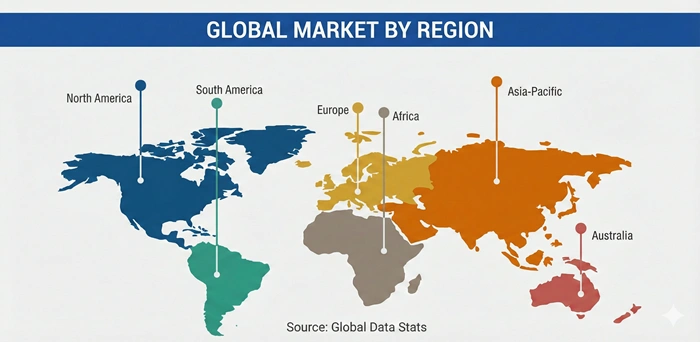
North America leads the AI in product lifecycle management market with approximately 36% of global revenue in 2025 and a regional CAGR of approximately 16.5% from 2026 to 2033, driven by the co-location of the world's leading PLM software vendors — including PTC, Autodesk, Oracle, IBM, and Accenture — with the world's most aggressive enterprise AI adopters across aerospace, defense, automotive, and industrial manufacturing industries. The United States Air Force and Navy's digital engineering mandates under the DoD Digital Engineering Strategy are creating significant government-funded demand for AI PLM capabilities across the defense industrial base — with prime contractors including Lockheed Martin, Raytheon, Boeing Defense, and Northrop Grumman all making major investments in AI-augmented PLM infrastructure to support digital engineering transformation programs. Canada contributes growing demand through its aerospace manufacturing industry centered in Montreal and its expanding advanced manufacturing sector, while Mexico's growing role as a nearshore manufacturing hub for automotive and electronics industries is generating increasing SME-level AI PLM demand.
The concentration of venture capital investment in AI-native engineering software startups in Silicon Valley, Boston, and Seattle is creating a continuous stream of innovative AI PLM tools that are both competing with and being acquired by established PLM platform vendors — accelerating the pace of AI capability innovation available to North American manufacturers and maintaining the region's technology leadership position in the AI PLM market. Recent high-profile AI engineering design startup funding rounds and acquisitions — including Autodesk's acquisition of AI design automation companies and PTC's investment in AI-powered simulation orchestration — illustrate how established vendors are using their capital resources to incorporate AI startup innovation into their mainstream PLM platform portfolios, creating continuously improving AI capabilities for their broad enterprise customer bases.
Asia Pacific
Asia Pacific's Massive Manufacturing Industrial Base, China's Digital Manufacturing Investment, and India's Growing Engineering Software Sector Are Driving the Fastest Regional Growth in the AI in Product Lifecycle Management Market
Asia Pacific is the fastest-growing regional market in the AI in product lifecycle management market, projected to expand at a CAGR of approximately 21% from 2026 to 2033, making it the region where the commercial opportunity for AI PLM vendors and service providers is growing most rapidly. China is the dominant force in regional growth, with the government's Made in China 2025 and newer dual circulation economic strategy both explicitly prioritizing manufacturing intelligence and product development technology as strategic national capabilities — creating policy-backed institutional demand for AI PLM investment across state-owned enterprises, major private manufacturers, and the rapidly growing technology-driven manufacturing sectors including new energy vehicles, advanced semiconductors, and aerospace equipment. Leading companies operating in the Chinese AI PLM market include Siemens Digital Industries (Germany, with major China operations), Dassault Systèmes (France, with extensive China enterprise relationships), PTC (USA), and domestic players including CAXA and PLM vendor Kingdee International Software.
Japan and South Korea represent mature but still-growing AI PLM markets, where established electronics and automotive manufacturing industries — including Toyota, Honda, Sony, Samsung, Hyundai, and LG — are systematically upgrading their PLM infrastructure with AI capabilities as part of broader digital transformation programs. India is the highest-growth emerging market within Asia Pacific for AI PLM services — driven by the country's world-leading IT services industry increasingly building AI PLM implementation expertise through companies including TCS, Infosys, Wipro, and HCL Technologies, which are all developing significant AI PLM consulting and integration practices that serve both domestic Indian manufacturing clients and international customers through global delivery models.
Report Customization Available by Region and Country
This report is fully customizable to provide targeted AI in product lifecycle management market intelligence for your specific region, country, or geography of interest — delivering locally relevant market sizing, competitive landscape analysis, regulatory environment assessment, technology adoption benchmarks, and growth opportunity mapping tailored precisely to the markets that matter most to your business strategy.
Customized versions of this report are available for all major global regions and their constituent countries, offering in-depth analysis of AI PLM adoption drivers, end-user industry landscapes, key vendor and service provider activity, and strategic expansion opportunities specific to each target geography.
North America
-
United States — World's largest AI PLM market with leading software vendors, defense digital engineering mandates, and advanced manufacturing AI adoption
-
Canada — Growing aerospace, automotive, and industrial manufacturing AI PLM market supported by government digital innovation investment
-
Mexico — Rapidly developing AI PLM market driven by nearshore automotive and electronics manufacturing expansion and supply chain digitalization
Europe
-
United Kingdom — Active aerospace, defense, and pharmaceutical AI PLM market with strong digital manufacturing investment and regulatory compliance drivers
-
Germany — Europe's largest AI PLM market, home to Siemens Digital Industries and SAP, with world-class automotive and industrial equipment manufacturing driving AI PLM demand
-
France — Strong AI PLM market anchored by Dassault Systèmes' domestic presence, Airbus's aerospace AI PLM investment, and growing industrial digital transformation programs
-
Italy — Growing AI PLM market with strong industrial machinery and automotive supplier sector demand for digital engineering capabilities
-
Rest of Europe — Includes Netherlands, Sweden, Switzerland, and Spain as active markets for AI PLM adoption across advanced manufacturing, medtech, and aerospace sectors
Asia Pacific
-
China — Asia Pacific's largest and fastest-growing AI PLM market, driven by government digital manufacturing policy, massive EV industry expansion, and growing domestic PLM platform development
-
India — High-growth AI PLM market combining domestic manufacturing expansion with world-leading IT services capability in PLM implementation and consulting
-
Japan — Mature AI PLM market with world-class automotive and electronics manufacturers systematically upgrading PLM infrastructure with AI capabilities
-
South Korea — Active AI PLM market driven by Samsung, Hyundai, LG, and SK Group investing in AI-augmented product development for electronics, automotive, and semiconductor applications
-
Australia — Developing AI PLM market with growing aerospace, defense, and advanced manufacturing sectors adopting digital engineering platforms
-
Rest of Asia Pacific — Includes Taiwan, Singapore, and Malaysia as important electronics and semiconductor manufacturing markets with growing AI PLM adoption
Latin America
-
Brazil — Largest Latin American AI PLM market with growing automotive and aerospace manufacturing sectors adopting digital engineering solutions
-
Argentina — Developing market with growing industrial manufacturing and technology sector creating nascent AI PLM demand
-
Rest of Latin America — Includes Mexico, Colombia, and Chile as developing markets with expanding manufacturing sectors and growing digitalization investment
Middle East & Africa
-
UAE — Advanced digital economy with growing aerospace, energy, and advanced manufacturing sectors investing in AI PLM capabilities as part of national digitalization strategies
-
Saudi Arabia — Expanding industrial and aerospace manufacturing capacity under Vision 2030 creating growing demand for advanced product development and AI PLM platforms
-
Rest of MEA — Includes South Africa, Turkey, and Israel as markets with established manufacturing sectors and growing AI technology adoption creating AI PLM demand
Top Key Players
-
Siemens Digital Industries Software (Germany)
-
PTC Inc. (United States)
-
Dassault Systèmes SE (France)
-
Autodesk Inc. (United States)
-
SAP SE (Germany)
-
Oracle Corporation (United States)
-
IBM Corporation (United States)
-
Accenture plc (Ireland)
-
Wipro Limited (India)
-
Capgemini SE (France)
-
ANSYS Inc. (United States)
-
Aras Corporation (United States)
-
Infor Inc. (United States)
-
TECHNIA AB (Sweden)
-
Centric Software Inc. (United States)
Recent Developments
-
In 2025, Siemens Digital Industries Software launched a major AI-embedded update to its Teamcenter PLM platform, introducing natural language interface capabilities that allow engineers to query the full product data model, generate engineering change analyses, and retrieve compliance documentation using conversational prompts — eliminating the need for specialized PLM query expertise and significantly accelerating information access for engineering teams
-
In 2025, PTC Inc. announced a strategic partnership with Microsoft to deepen the integration of PTC's Windchill AI-powered PLM platform with Microsoft Azure's enterprise AI services — enabling manufacturers to deploy AI PLM capabilities within their existing Azure cloud infrastructure and providing seamless connectivity between PLM data and Microsoft Copilot-powered productivity tools used by engineering teams
-
In 2024, Dassault Systèmes acquired a leading AI-powered design optimization startup to accelerate the embedding of generative design and topology optimization capabilities into its 3DEXPERIENCE platform — expanding its ability to provide AI-assisted design exploration tools to its broad base of aerospace, automotive, and industrial equipment manufacturing customers globally
-
In 2025, Accenture established a dedicated AI for Engineering and PLM practice, hiring over 2,000 specialists globally to serve the rapidly growing demand from manufacturing clients seeking expert implementation guidance for AI PLM platform deployments — signaling the market's transition from pilot programs to large-scale enterprise implementations requiring professional service support
-
In 2024, Autodesk expanded its Fusion 360 platform with advanced AI-powered generative design and simulation orchestration capabilities, making enterprise-grade AI design automation accessible to mid-market and SME manufacturers for the first time at price points and implementation complexities appropriate for organizations without dedicated PLM infrastructure teams
Market Trends
The Convergence of Generative AI With Engineering Design Automation, the Rise of AI-Powered Sustainable Product Development, and the Democratization of AI PLM Through Cloud Platforms Are the Three Most Transformative Trends Currently Shaping the AI in Product Lifecycle Management Market
Generative AI is moving from an experimental capability at the frontier of the AI in product lifecycle management market to a standard feature expectation in enterprise PLM platform evaluations — with every major PLM vendor now shipping or committed to shipping generative design, AI-assisted simulation, natural language PLM interaction, and automated documentation generation capabilities within their core platform portfolios. This rapid capability commoditization is simultaneously expanding the market — by making AI PLM accessible to a much broader range of manufacturers — and intensifying competitive differentiation pressure among vendors, who must now compete on the depth and manufacturing-domain specificity of their AI capabilities rather than simply on the presence of AI features. The vendors that will win disproportionate market share are those whose AI capabilities are most deeply integrated with the contextual product knowledge, industry-specific validation frameworks, and cross-functional workflow management capabilities that differentiate enterprise PLM platforms from generic AI tools.
The democratization of AI PLM through cloud-native SaaS platforms is transforming the market's demographic profile — expanding the addressable customer base from large enterprise manufacturers with multi-million-dollar PLM infrastructure investments to mid-market and SME manufacturers who can now access world-class AI PLM capabilities through affordable subscription models with minimal upfront implementation cost. This democratization trend is particularly powerful in Asia Pacific and Latin America, where rapidly growing manufacturing sectors contain large numbers of mid-market manufacturers whose product development competitiveness will be significantly enhanced by access to AI PLM tools previously available only to much larger organizations. As AI PLM SaaS platforms become more industry-specific — with purpose-built workflows for automotive suppliers, medical device manufacturers, consumer electronics companies, and industrial equipment producers — their relevance and usability for mid-market customers will improve further, accelerating adoption in market segments that represent a large and largely untapped growth opportunity for AI PLM vendors.
Segments Covered in the Report
-
By Component
-
Software
-
Portfolio Management
-
Design & Engineering Management
-
Quality & Compliance Management
-
Simulation, Testing & Change Management
-
Manufacturing Operations Management
-
Others
-
-
Services
-
Consulting
-
Integration & Deployment
-
Support & Maintenance
-
Quality Assurance
-
-
-
By Deployment
-
On-Premise
-
Cloud / SaaS
-
-
By Technology
-
Machine Learning
-
Natural Language Processing (NLP)
-
Computer Vision
-
Generative AI
-
Digital Twin
-
Others
-
-
By Application
-
Predictive Maintenance
-
Intelligent Design Automation
-
Supply Chain Optimization
-
Compliance & Regulatory Management
-
Product Quality Management
-
Others
-
-
By End Use
-
Automotive & Transportation
-
Aerospace & Defense
-
Healthcare & Life Sciences
-
Industrial Equipment & Heavy Machinery
-
Semiconductor & Electronics
-
IT & Telecom
-
Retail & Consumer Goods
-
Others
-
-
By Region
-
North America (U.S., Canada, Mexico)
-
Europe (U.K., Germany, France, Italy, Rest of Europe)
-
Asia Pacific (China, India, Japan, South Korea, Australia, Rest of Asia Pacific)
-
Latin America (Brazil, Argentina, Rest of Latin America)
-
Middle East & Africa (UAE, Saudi Arabia, Rest of MEA)
-
❝ Built for Every Level — From Startups to Industry Giants ❞
Here Is Exactly How This Report Works for You
-
For Fortune 500 manufacturers, enterprise PLM vendors, and institutional investors assessing the AI PLM technology landscape, this report delivers precise market sizing by component, technology, end-use industry, and geography, detailed competitor revenue and R&D investment benchmarking, customer adoption roadmap intelligence, and geopolitical risk analysis — including how U.S.-China technology competition affecting AI software exports, EU AI Act compliance requirements for high-risk industrial AI applications, and national digital manufacturing policy incentives across major markets are reshaping vendor strategy, market entry opportunity, and long-term growth forecasting for the AI in product lifecycle management market
-
For mid-market PLM solution providers, system integrators, and engineering AI startups, the report provides application-level demand segmentation, end-user buying behavior analysis, technology white-space identification, and go-to-market strategy intelligence — enabling product development, sales, and partnership teams to identify which AI PLM capability areas are generating the highest customer spending urgency, which industry verticals offer the fastest sales cycle and strongest ROI demonstration potential, and which geographic markets are most receptive to new AI PLM vendor relationships in the rapidly evolving competitive landscape
-
Investors, venture capital funds, and corporate development teams evaluating acquisitions or investments in the AI PLM ecosystem will find the report's total addressable market modeling by segment and geography, competitive landscape consolidation trend analysis, technology maturity curve assessment, and supply-demand imbalance intelligence essential for building credible investment theses, conducting informed due diligence on specific AI PLM companies, and making confident capital allocation decisions in one of enterprise software's highest-growth categories over the coming decade
Frequently Asked Questions
Question 1: What is the projected size of the AI in product lifecycle management market by 2033?
Answer: The AI in product lifecycle management market is projected to reach approximately USD 35.95 billion by 2033, growing from USD 11.07 billion in 2026 at a CAGR of 17.90%. This strong growth is powered by accelerating adoption of generative AI, digital twins, and cloud PLM platforms across automotive, aerospace, and industrial manufacturing industries globally.
Question 2: What industries are driving the AI in product lifecycle management market?
Answer: The AI in product lifecycle management market is most heavily driven by automotive and transportation, aerospace and defense, and industrial equipment manufacturing — industries where product complexity, regulatory compliance requirements, and competitive time-to-market pressure create the strongest institutional demand for AI-augmented product development capabilities. Healthcare and semiconductor industries are the next fastest-growing end-use verticals, driven by medical device regulatory digitalization and advanced chip packaging design automation needs respectively.
Question 3: Which region leads the AI in product lifecycle management market and why?
Answer: North America leads the AI in product lifecycle management market with approximately 36% of global revenue in 2025, driven by the headquarters presence of the world's leading PLM platform vendors including PTC, Autodesk, Oracle, and IBM, combined with the highest enterprise AI adoption rates globally across defense, aerospace, and automotive manufacturing industries. Asia Pacific is growing fastest at approximately 21% CAGR through 2033, led by China's government-supported manufacturing digitalization investment and India's growing AI PLM services sector.
Question 4: How is generative AI changing the AI in product lifecycle management market?
Answer: Generative AI is transforming the AI in product lifecycle management market by enabling PLM platforms to autonomously generate engineering design alternatives, perform real-time simulation-based design validation, and create compliance documentation automatically — compressing design exploration from weeks to hours for complex products in aerospace, automotive, and industrial machinery applications. All major PLM vendors including Siemens, PTC, and Dassault Systèmes are embedding generative AI capabilities into their core platforms, making it the fastest-growing technology segment in the market with a projected CAGR of approximately 35% through 2033.
Question 5: What are the main challenges facing companies adopting AI in product lifecycle management?
Answer: The primary challenges facing companies implementing AI in product lifecycle management solutions include the high cost and complexity of integrating AI PLM platforms with existing legacy data systems, the data quality and standardization work required before AI algorithms can deliver reliable outputs, and engineering team resistance to AI-automated design and compliance workflows that change established working practices. Companies that invest in change management programs alongside their technical implementation — demonstrating AI recommendation quality through pilot programs and involving senior engineering leaders in program design — consistently achieve better adoption and faster ROI than those treating AI PLM deployment as a purely technical exercise.