
AI in Mining Market Overview
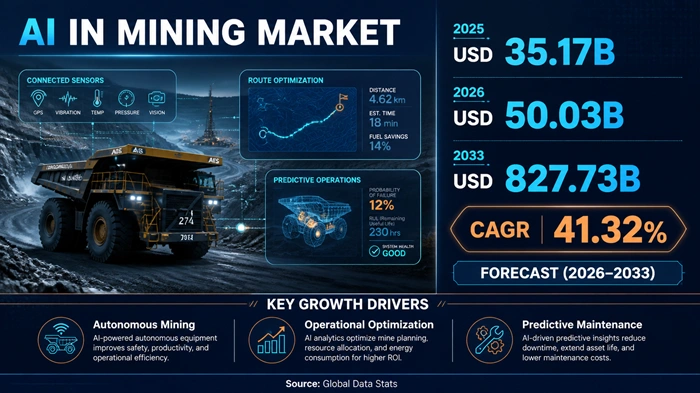
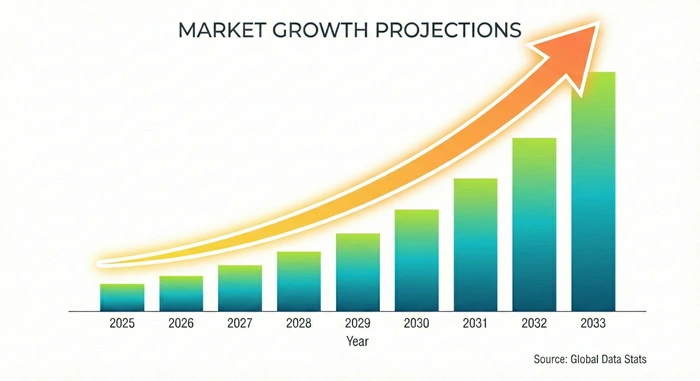
The global AI in mining market size is valued at USD 35.17 billion in 2025 and is predicted to increase from USD 50.03 billion in 2026 to approximately USD 827.73 billion by 2033, growing at a CAGR of 41.32% from 2026 to 2033.
Artificial intelligence in mining represents a revolutionary shift in how the mineral extraction industry operates, combining advanced computational algorithms, machine learning technologies, and robotics into prospecting, extraction, and processing stages. The mining sector is transitioning from traditional labor-intensive operations to smart mining paradigms defined by data-driven decision-making and autonomous systems. Mining companies worldwide are deploying AI solutions to address challenges including declining ore grades, rising safety standards, operational efficiency demands, and volatile commodity prices while simultaneously meeting environmental sustainability goals.
AI Impact on the Mining Industry
Transforming Operations Through Intelligent Automation and Data-Driven Decision Making
Artificial intelligence is fundamentally reshaping the global mining industry by introducing unprecedented levels of automation, safety enhancement, and operational efficiency across the entire value chain. Mining operations generate massive volumes of data from sensor networks, geological surveys, equipment monitoring systems, and environmental sensors, which AI algorithms analyze in real-time to optimize every aspect of mineral production. Machine learning models can detect patterns in geological data that remain invisible to human geologists, enabling mining companies to identify high-potential mineral deposits with greater precision while reducing exploration costs by up to 40%. AI-driven predictive maintenance systems analyze equipment health data to forecast failures before they occur, reducing unplanned downtime by 30% to 50% and extending asset lifecycles significantly.
The integration of AI technologies enables mining companies to operate autonomous haul trucks, drilling systems, and robotic equipment that function without human intervention in hazardous environments, dramatically improving worker safety while boosting productivity. AI-powered autonomous vehicles can optimize haulage routes, payloads, and speeds to reduce fuel consumption and operational costs across surface mining operations. Computer vision systems combined with AI algorithms perform real-time ore sorting on conveyor belts, adjusting processing parameters dynamically to maximize mineral recovery rates while minimizing waste. Environmental monitoring powered by AI helps companies track their carbon footprint, optimize energy consumption through renewable microgrids, and manage waste disposal systems in compliance with increasingly stringent sustainability regulations.
Growth Factors
Rising Safety Standards and Operational Efficiency Demands Accelerating AI Adoption
The AI in mining market is experiencing explosive growth driven by the critical need to enhance worker safety and minimize operational risks across underground and surface mining operations. Mining remains one of the most hazardous industries globally, with workers facing risks from equipment failures, structural collapses, gas leaks, and unpredictable geological conditions. AI-powered safety systems can detect potential hazards in environmental conditions such as landslides, roof collapses, and water rush-ins, alerting workers proactively to prevent accidents. Advanced wearables equipped with IoT sensors and AI capabilities monitor worker fatigue, health conditions, and exposure to harmful substances, enabling real-time interventions that protect human lives. Autonomous mining equipment eliminates the need for human presence in the most dangerous areas of mining operations, fundamentally transforming safety standards while simultaneously improving productivity metrics.
The global push toward digital transformation and Industry 4.0 adoption across industrial sectors is propelling rapid integration of AI technologies throughout mining value chains. Mining companies are under intense pressure to reduce operational costs, optimize resource extraction, and improve profitability amid volatile commodity prices and declining ore grades. AI solutions deliver tangible economic benefits through predictive analytics that enable proactive maintenance scheduling, reducing maintenance costs by 20% to 30% while preventing costly equipment failures. Machine learning algorithms optimize drilling patterns, blasting sequences, and ore processing parameters to maximize mineral recovery rates while minimizing energy consumption and waste generation. Government-backed initiatives across developing economies including China, India, and Southeast Asian nations are promoting technology adoption in mining through supportive policies, tax incentives, and infrastructure investments that accelerate AI integration.
Market Outlook
Sustained Expansion Driven by Autonomous Systems and Environmental Compliance Requirements
The AI in mining market demonstrates exceptional growth prospects through 2033, with market valuations projected to increase nearly 17-fold from current levels as mining companies worldwide embrace intelligent automation. Asia Pacific dominates the global market landscape with a commanding 40% share in 2024, driven by the region's vast mineral reserves, large-scale mining operations, and rapid technology adoption across countries including China, India, Australia, and Indonesia. China alone possesses the highest mineral concentration globally, accounting for over 50% of production across 18 different minerals and maintaining reserves of more than 35 minerals with concentrations exceeding 10%. Governments throughout the Asia Pacific region are implementing end-to-end automation initiatives and promoting AI-powered tools to enhance mining productivity, reduce operational costs, and position their nations as leaders in the global mining industry.
North America is projected to register the fastest growth rate during the forecast period, fueled by robust digital infrastructure, early adoption of innovative technologies, and the presence of tech-driven mining companies equipped with AI-powered tools across the United States and Canada. Mining companies in North America are deploying AI across entire value chains to improve productivity, reduce costs, and meet stringent safety and environmental standards imposed by regulatory authorities. The decarbonization imperative is driving AI adoption as mining operators utilize intelligent systems to optimize energy consumption, integrate renewable energy sources, and reduce greenhouse gas emissions in line with net-zero commitments. Digital twin technologies are gaining significant traction, allowing mining companies to create virtual replicas of physical assets and simulate operational scenarios before implementation, reducing risks and optimizing resource utilization.
Expert Speaks
-
Andrew Mackenzie, Former CEO of BHP: "AI and machine learning technologies are essential to unlocking the next level of productivity and safety improvements in mining operations. Our focus on autonomous systems and predictive analytics enables us to optimize asset performance while reducing our environmental footprint and creating safer working conditions for our people."
-
Jakob Stausholm, CEO of Rio Tinto: "Artificial intelligence plays a critical role in helping mining companies optimize operations, enhance safety standards, drive operational efficiency, promote innovation, and advance sustainability goals. The successful deployment of AI technologies requires robust digital infrastructure and data management systems that enable real-time decision-making across mining operations."
-
Mike Henry, CEO of BHP Group: "The establishment of our Industry AI Hub demonstrates our commitment to driving digital transformation and accelerating AI adoption throughout the mining and resources industry. By applying artificial intelligence to enterprise-level challenges, we can significantly improve safety outcomes, boost productivity, and embed data-driven decision-making into the core of our operations."
Key Report Takeaways
-
Asia Pacific leads the AI in mining market with the largest regional share of 40% in 2024, driven by extensive mineral reserves, massive mining operations, government-backed digitalization initiatives, and rapid technology adoption across China, India, Australia, and Southeast Asian nations
-
North America represents the fastest-growing region for AI in mining adoption during the forecast period, experiencing accelerated growth due to robust digital infrastructure, early technology adoption, stringent safety regulations, and the presence of leading mining companies across the United States and Canada
-
Machine learning technology captures the dominant position among AI technologies deployed in mining operations with a market share of 30% in 2024, enabling enhanced mineral exploration, predictive maintenance, process optimization, and automated decision-making capabilities
-
Exploration applications contribute the largest share of AI deployments in mining with 25% market share in 2024, as companies leverage machine learning models to analyze geological data, identify high-potential mineral deposits, and reduce exploration costs significantly
-
Software solutions dominate the solution type segment with the largest market share of 50% in 2024 and the fastest growth trajectory, as mining companies increasingly adopt AI-powered platforms for exploration, extraction, processing, and operational optimization without requiring extensive human intervention
-
Surface mining operations will experience rapid expansion holding the largest market share of 55% in 2024, as AI technologies optimize autonomous haulage systems, drilling operations, and fuel efficiency across open-pit mines while the underground mining segment is projected to grow at the highest CAGR due to AI-enabled safety monitoring and hazard detection capabilities
Market Scope
| Report Coverage Details | |
|---|---|
| Market Size by 2033 | USD 827.73 Billion |
| Market Size by 2025 | USD 35.17 Billion |
| Market Size by 2026 | USD 50.03 Billion |
| Market Growth Rate from 2026 to 2033 | CAGR of 41.32% |
| Dominating Region | Asia Pacific |
| Fastest Growing Region | North America |
| Base Year | 2025 |
| Forecast Period | 2026 to 2033 |
| Segments Covered | Technology, Application, End-Use Industry, Solution Type, Deployment Mode, Mining Type, Region |
| Regions Covered | North America, Europe, Asia Pacific, Latin America, Middle East & Africa |
Market Dynamics
Drivers Impact Analysis
Enhanced Safety Standards and Predictive Maintenance Capabilities Propelling Market Expansion
| Aspect | Details |
|---|---|
| ≈ % Impact on CAGR Forecast | High Impact (35-40%) |
| Geographic Relevance | Global, with strongest impact in Asia Pacific and North America |
| Impact Timeline | Immediate to Long-term (2026-2033) |
A significant driver accelerating AI in mining market adoption is the critical need for enhanced safety standards and the ability to provide precise predictions about equipment failures and mineral locations to minimize resource wastage. Various mining processes including drilling, sorting, and hauling can be automated through artificial intelligence tools, leading to enhanced productivity while minimizing overall labor costs and human exposure to hazardous conditions. AI systems can detect potential failures in mining equipment by analyzing sensor data, vibration patterns, temperature readings, and operational parameters, enabling timely maintenance interventions that prevent catastrophic breakdowns, costly downtime, and workplace accidents. This predictive capability is highly valued by mining operators and workers alike, as it offers unprecedented safety benefits for personnel working in dangerous underground and surface mining environments.
The integration of autonomous machinery including self-driving haul trucks, robotic drilling systems, and automated ore processing equipment enhances operational efficiency while prioritizing worker safety by limiting human exposure to high-risk areas. AI-powered systems can optimize truck routes dynamically based on real-time traffic patterns, road conditions, and payload requirements, reducing fuel consumption by 15% to 25% while improving productivity metrics. Mining companies implementing AI-driven solutions report significant reductions in maintenance costs, with predictive analytics enabling proactive scheduling that extends equipment lifecycles by 20% to 30% compared to reactive maintenance approaches. The ability to forecast equipment failures days or weeks in advance allows mining operators to order replacement parts, schedule technicians, and plan maintenance windows during non-peak production periods, minimizing operational disruptions.
Restraints Impact Analysis
High Initial Investment Costs and Workforce Skill Gaps Limiting Adoption Rates
| Aspect | Details |
|---|---|
| ≈ % Impact on CAGR Forecast | Moderate Impact (15-20%) |
| Geographic Relevance | Global, particularly affecting developing markets and small-to-medium enterprises |
| Impact Timeline | Short to Medium-term (2026-2029) |
Despite the substantial benefits offered by artificial intelligence technologies, adoption in the mining sector faces significant resistance due to concerns about job security and workforce displacement among laborers and labor organizations. Like any transformative technology, AI challenges established work cultures and traditional mining practices, creating hesitation among conventional mining operators who lack knowledge about implementation processes and harbor concerns about potential job losses. This resistance represents a major obstacle to AI expansion throughout the mining industry, particularly in regions where mining operations provide primary employment for large communities. Labor unions across mining regions have expressed skepticism about automation initiatives, fearing that autonomous equipment and AI-powered systems will eliminate thousands of jobs without adequate provisions for workforce retraining or alternative employment opportunities.
The substantial initial investment required for implementing AI technologies, including advanced sensor networks, autonomous equipment, data infrastructure, and specialized software platforms, creates financial barriers that hamper market growth, especially for small and medium-sized mining companies. Establishing the digital infrastructure necessary for AI deployment—including private 5G networks, edge computing systems, cloud platforms, and harmonized data processes—requires capital expenditures ranging from millions to hundreds of millions of dollars depending on operation scale. Data privacy and security concerns pose additional challenges, as AI systems rely on massive datasets containing sensitive operational information, geological surveys, and production metrics that become vulnerable to cyberattacks and data breaches if not adequately protected. Mining companies must invest significantly in cybersecurity measures, secure data storage systems, and network protection protocols to safeguard their AI implementations from potential threats.
Opportunities Impact Analysis
Automation of Complex Operations and Environmental Sustainability Initiatives Creating Growth Avenues
| Aspect | Details |
|---|---|
| ≈ % Impact on CAGR Forecast | High Impact (30-35%) |
| Geographic Relevance | Global, with exceptional opportunities in Asia Pacific and Europe |
| Impact Timeline | Medium to Long-term (2027-2033) |
A major opportunity for AI in mining market expansion lies in the growing focus on automating complex tasks and reducing environmental hazards through intelligent systems that enhance sustainability performance. Predictive AI models revolutionize mineral exploration by pinpointing mineral locations with exceptional accuracy, minimizing financial risks associated with unsuccessful drilling campaigns and reducing manual efforts required for geological surveys. AI-powered automated machinery including self-driving vehicles and robotic drilling systems enhance operational efficiency significantly while prioritizing worker safety by limiting human exposure to hazardous underground environments, unstable geological formations, and toxic substance exposure. The potential for fully autonomous dark mines that operate without human presence in the most dangerous areas represents a massive safety and cost opportunity, enabling mining companies to extract resources from deposits previously considered too dangerous for conventional operations.
On the sustainability front, AI efficiently manages non-renewable resources including water consumption and facilitates land restoration initiatives while optimizing waste management processes to ensure higher production rates with minimal resource wastage. AI systems can optimize energy consumption by managing renewable energy microgrids at remote mining sites, integrating solar and wind power sources with battery storage systems to reduce reliance on diesel generators and lower carbon emissions by 25% to 40%. This alignment with strict environmental regulations aimed at preventing illegal mining activities and managing critical mineral extraction meets growing demands from investors, customers, and regulators for responsible mining practices. The surge in demand for critical minerals including lithium, cobalt, copper, and rare earth elements driven by the global energy transition and electric vehicle adoption creates substantial opportunities for AI-powered exploration technologies that can shorten the discovery-to-production timeline, which currently averages over 15 years for new mining projects.
Segment Analysis
Machine Learning Technology
Advanced Algorithms Driving Optimization Across Exploration and Operations
Machine learning captured the dominant position in the AI in mining market by technology type, holding the largest revenue share of 30% in 2024 and maintaining a leadership trajectory throughout the forecast period. The dominance of machine learning stems from its exceptional ability to enhance operational efficiency, reduce costs, and improve safety through automation and superior data analysis capabilities that enable accurate mineral exploration from geological formations. Machine learning algorithms process vast quantities of geological data including seismic surveys, geochemical samples, drill core logs, and historical exploration records to identify patterns and predict potential mineral deposits with accuracy rates exceeding 85%, compared to 40-50% success rates using traditional exploration methods. These models facilitate optimization of resource extraction processes and predict equipment failures by analyzing sensor data from machinery, enabling mining companies to implement predictive maintenance strategies that reduce waste and minimize unplanned downtime.
Machine learning technology is experiencing particularly rapid adoption across North America and Asia Pacific regions, where leading mining companies including BHP, Rio Tinto, and Vale have integrated these advanced algorithms into their operations as part of comprehensive digital transformation strategies. In North America, companies are leveraging machine learning models for autonomous equipment operation, with systems controlling haul trucks, drilling rigs, and excavators that operate continuously without human intervention. Asia Pacific leads global implementation due to government-backed initiatives promoting technology adoption, with China implementing end-to-end automation across its mining sector and India integrating AI-powered tools to reduce operational costs and enhance competitiveness. Major technology providers including IBM, Microsoft, SAP, and specialized mining technology companies are developing sophisticated machine learning platforms tailored specifically for mining applications, incorporating predictive analytics, computer vision, and autonomous control systems.
Software Solutions
Cloud-Based Platforms Enabling Scalable AI Deployment Across Mining Operations
Software solutions dominated the AI in mining market by solution type, capturing the largest market share of 50% in 2024 and projected to sustain accelerated growth throughout the forecast period from 2026 to 2033. The commanding position of software segments reflects its ability to revolutionize core mining processes without requiring human intervention, as AI-based software optimizes operations including exploration, extraction, and processing even at massive scales. Mining companies are increasingly adopting cloud-based AI platforms that offer scalability, remote accessibility, and seamless integration with existing enterprise systems, reducing the need for extensive on-premise infrastructure investments while enabling rapid deployment across multiple mine sites. AI-driven software applications deliver precise analysis to identify economically feasible mineral deposits and extraction methods while enhancing safety protocols through real-time monitoring and predictive hazard detection capabilities.
The software segment is experiencing exceptional growth across Europe and North America, where established mining companies are implementing comprehensive digital transformation programs that place AI-powered software platforms at the center of their operational strategies. Cloud-based deployment models account for approximately 70% of software implementations in 2024, offering mining enterprises benefits including reduced capital expenditure, centralized data management, automatic software updates, and the ability to access analytics from anywhere globally. Leading software providers including SAP, Microsoft Azure, IBM Watson, and specialized mining software companies are developing AI platforms specifically designed for mining applications, incorporating modules for geological modeling, fleet management, process optimization, and ESG compliance reporting. The software segment enables mining enterprises to manage operational portfolios based on environmental regulations while providing effective solutions for safety management, productivity enhancement, and cost reduction across their global operations.
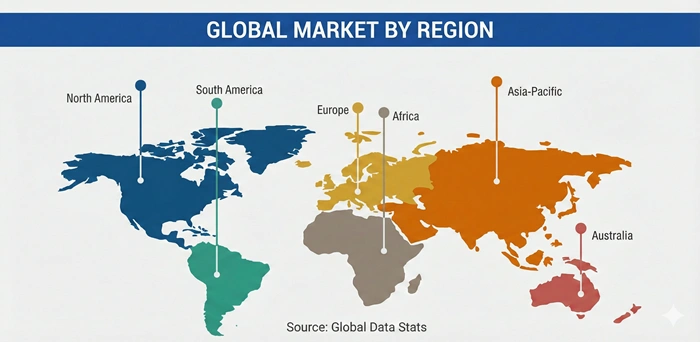
Regional Insights
Asia Pacific
Massive Mineral Reserves and Government Digitalization Initiatives Establishing Regional Dominance
Asia Pacific holds the dominant position in the AI in mining market with the largest regional share of 40% in 2024, valued at approximately USD 14.19 billion in 2025, and projected to reach USD 335.47 billion by 2034 at a CAGR of 42.09%. The region's commanding market leadership stems from its vast mineral reserves, massive-scale mining operations, and the rapid adoption of cutting-edge technologies including AI and machine learning to optimize mining processes for efficiency and superior outcomes. China leads the region with the highest mineral concentration globally, responsible for more than 50% of production across 18 different minerals while maintaining reserves of more than 35 minerals with concentrations exceeding 10%, creating enormous opportunities for AI implementation across exploration, extraction, and processing operations.
Government-backed projects and supportive policies throughout Asia Pacific are accelerating AI adoption, with national digital transformation initiatives providing tax incentives, research funding, and infrastructure investments that facilitate technology integration. India is integrating AI-powered tools across its mining industry to reduce operational costs, enhance safety standards, and establish itself as a leader in the global mining sector, with the Ministry of Mines launching the country's first-ever auction of exploration licenses to unlock untapped mineral resources. Australia represents another key growth market within the region, with mining companies deploying autonomous haulage systems, predictive maintenance platforms, and real-time risk management solutions across their extensive operations. Leading companies operating in Asia Pacific including BHP, Rio Tinto, Hitachi, Komatsu, and emerging local technology providers are engaging in strategic partnerships to address growing demand for AI in mining solutions across diverse industry segments.
North America
Digital Infrastructure Excellence and Stringent Regulations Driving Fastest Regional Growth
North America is projected to register the fastest growth rate in the AI in mining market during the forecast period from 2026 to 2033, with the region experiencing exceptional expansion due to robust digital infrastructure, early adoption of innovative technologies, and the concentration of tech-driven mining companies. The United States and Canada lead regional growth, with mining operators deploying AI-powered solutions across entire value chains to improve productivity, reduce operational costs, and meet increasingly stringent safety and environmental standards mandated by regulatory authorities. The region's well-established technology ecosystem enables seamless integration of AI systems with existing mining operations, while the presence of major technology providers including IBM, Microsoft, and specialized mining technology firms accelerates innovation and solution development.
Mining companies across North America are implementing AI technologies to achieve decarbonization objectives and environmental compliance requirements, utilizing intelligent systems to optimize energy consumption, integrate renewable power sources, and reduce greenhouse gas emissions aligned with corporate net-zero commitments. The United States produces nearly 50% of seven critical minerals and maintains reserves exceeding 10% for twelve different minerals, creating substantial opportunities for AI-powered exploration and extraction optimization. Autonomous vehicle adoption is advancing rapidly, with companies including Exyn Technologies offering Level-4A autonomous drones for underground mapping that navigate difficult areas without human pilots, cutting survey times by 60% while boosting safety at mining sites such as Northern Star's Pogo mine in Alaska. Leading North American mining companies including Caterpillar, Freeport-McMoRan, Newmont, and technology partners are investing heavily in AI solutions encompassing predictive maintenance, autonomous equipment operation, and advanced analytics platforms.
Top Key Players
-
IBM Corporation (United States)
-
SAP SE (Germany)
-
Microsoft Corporation (United States)
-
BHP Group (Australia)
-
Rio Tinto Group (United Kingdom)
-
ABB Ltd (Switzerland)
-
Sandvik AB (Sweden)
-
Caterpillar Inc. (United States)
-
Komatsu Ltd. (Japan)
-
Hitachi Ltd. (Japan)
-
Vale S.A. (Brazil)
-
Anglo American plc (United Kingdom)
-
Glencore plc (Switzerland)
-
Newmont Corporation (United States)
-
Schneider Electric SE (France)
Recent Developments
-
BHP Group (2025): BHP established its first Industry AI Hub in Singapore in May 2025, dedicated to accelerating digital transformation and AI adoption throughout the mining and resources industry by tackling enterprise-level challenges through artificial intelligence applications that boost safety standards and productivity metrics
-
ABB Ltd (2025): ABB launched GMD Copilot in March 2025, an AI-powered digital assistant designed to enhance performance and maintenance of gearless mill drives critical to mineral extraction operations, providing real-time insights through natural language interfaces that improve decision-making and reduce equipment downtime
-
Komatsu Ltd (2024): Komatsu announced plans in September 2024 to acquire Chilean mining optimization software developer Octodots Analytics to strengthen its AI capabilities and assist customers in improving operations through its new modular ecosystem that unifies data across mine sites
-
Indian Ministry of Mines (2025): India's Ministry of Mines launched in June 2025 the country's first-ever application of AI and machine learning models for mineral exploration in Rajasthan, revolutionizing the industry through advanced geological analysis and deposit prediction capabilities
-
Rio Tinto Group (2024): Rio Tinto expanded its autonomous haulage fleet across multiple mining sites in 2024, deploying over 400 autonomous haul trucks equipped with AI-powered navigation and optimization systems that operate 24/7 without human operators, improving productivity by 15% while reducing fuel consumption
Market Trends
Digital Twin Technologies and Edge Computing Reshaping Mining Intelligence Landscape
The AI in mining market is witnessing transformative trends as digital twin technologies gain significant traction across industrial sectors, enabling mining companies to create virtual replicas of physical assets for predictive modeling and simulation capabilities. Organizations are increasingly adopting digital twin solutions combined with AI systems to optimize maintenance scheduling, test operational scenarios, and predict equipment behavior under various conditions before implementing changes in actual mining operations. Anglo American represents a significant adopter of AI-enabled digital twin technology at its Quellaveco copper mine, utilizing these systems to simulate and accelerate processes, estimate operational challenges, and optimize resource usage including water consumption patterns. Newmont has implemented metallurgical digital twins using Metso's Geminex technology at its Lihir gold plant in Papua New Guinea, enabling real-time process optimization that increases mineral recovery rates by 5% to 8%.
Edge computing technologies are revolutionizing the AI in mining market by enabling real-time analytics and data processing capabilities close to equipment sources, reducing latency compared to cloud-only architectures. Edge devices analyze equipment conditions immediately and manage large volumes of data generated by IoT sensors deployed across mining operations, proving particularly valuable in remote or resource-constrained environments where constant cloud connectivity is unreliable. The convergence of AI with Internet of Things sensor networks enables continuous monitoring of equipment health, environmental conditions, and operational parameters across mine sites, with machine learning algorithms analyzing this data to identify anomalies and predict failures before they occur. Mining companies are increasingly partnering with technology providers to develop AI-powered subsurface mapping services, with Fleet Space Technologies' ExoSphere platform providing real-time 3D imaging of underground geological formations without extensive drilling requirements.
Segments Covered in the Report
By Technology
-
Machine Learning
-
Deep Learning
-
Natural Language Processing
-
Computer Vision
-
Robotics & Automation
-
Data Analytics
-
Internet of Things (IoT)
By Application
-
Exploration
-
Geological Data Analysis
-
Exploration Planning
-
Mineral Discovery
-
-
Extraction
-
Automated Drilling
-
Blasting Optimization
-
Remote Equipment Control
-
-
Processing
-
Ore Sorting
-
Process Optimization
-
Smelting and Refining Automation
-
-
Predictive Maintenance
-
Equipment Health Monitoring
-
Predictive Analytics
-
-
Safety and Security
-
Hazard Detection
-
Autonomous Vehicles
-
Surveillance Systems
-
-
Environment and Sustainability
-
Environmental Impact Monitoring
-
Waste Management
-
-
Supply Chain and Logistics
-
Supply Chain Optimization
-
Demand Forecasting
-
Transportation Automation
-
By End-Use Industry
-
Metal Mining
-
Copper
-
Gold
-
Silver
-
Aluminum
-
Zinc
-
Nickel
-
-
Coal Mining
-
Non-Metallic Mining
-
Oil Sands Mining
-
Other Mineral Mining (Lithium, Rare Earths)
By Solution Type
-
Software
-
AI Platforms
-
Data Management Tools
-
Analytics Software
-
-
Hardware
-
Robotics and Drones
-
Sensors and Actuators
-
Autonomous Vehicles
-
-
Services
-
AI Consulting
-
System Integration
-
Support and Maintenance
-
By Deployment Mode
-
Cloud-Based
-
On-Premises
By Mining Type
-
Surface Mining
-
Underground Mining
-
Mountaintop Removal Mining
-
Placer Mining
By Region
-
North America
-
United States
-
Canada
-
Mexico
-
-
Europe
-
United Kingdom
-
Germany
-
France
-
Italy
-
Spain
-
Rest of Europe
-
-
Asia Pacific
-
China
-
India
-
Japan
-
South Korea
-
Australia
-
Southeast Asia
-
Rest of Asia Pacific
-
-
Latin America
-
Brazil
-
Argentina
-
Chile
-
Rest of Latin America
-
-
Middle East & Africa
-
Saudi Arabia
-
UAE
-
South Africa
-
Rest of Middle East & Africa
-
Frequently Asked Questions
Question 1: What is the expected AI in mining market size by 2033?
Answer: The global AI in mining market is projected to reach approximately USD 827.73 billion by 2033, growing from USD 50.03 billion in 2026. This represents exceptional growth driven by autonomous systems adoption and digital transformation initiatives.
Question 2: Which region dominates the AI in mining market currently?
Answer: Asia Pacific dominates the AI in mining market with the largest share of 40% in 2024, driven by vast mineral reserves, massive mining operations, and government-backed digitalization initiatives. China leads the region with the highest global mineral concentration.
Question 3: What are the primary drivers of AI in mining market growth?
Answer: The primary drivers include enhanced safety standards, predictive maintenance capabilities, operational cost reduction, autonomous equipment adoption, and environmental sustainability requirements. AI systems reduce equipment downtime by 30% to 50% while improving worker safety significantly.
Question 4: Which technology segment shows the highest adoption in AI in mining market?
Answer: Machine learning technology captured the dominant position with a market share of 30% in 2024, enabling accurate mineral exploration, predictive maintenance, and process optimization. Deep learning is expected to grow at the fastest rate during the forecast period.
Question 5: What opportunities exist for AI in mining market expansion?
Answer: Major opportunities include automation of complex mining operations, development of autonomous dark mines, critical mineral exploration for energy transition, and environmental sustainability initiatives. AI can shorten mineral discovery timelines from 15 years to under 5 years.