
AI Direct Selling Market Overview
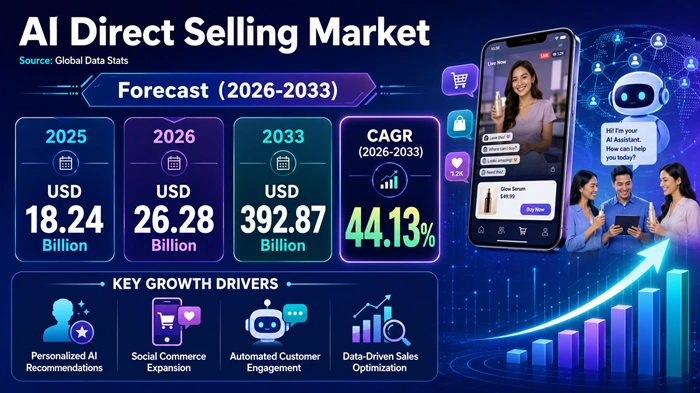
The global AI direct selling market size is valued at USD 18.24 billion in 2025 and is predicted to increase from USD 26.28 billion in 2026 to approximately USD 392.87 billion by 2033, growing at a CAGR of 44.13% from 2026 to 2033. This explosive expansion reflects a sweeping transformation across direct selling organizations as artificial intelligence reshapes how products are sold, distributors are managed, and customers are engaged. From AI-powered recommendation engines and conversational chatbots to predictive analytics and automated lead scoring, businesses are integrating intelligent tools at every layer of their sales operations to remain competitive in a rapidly digitizing commerce landscape.
AI Impact on the Direct Selling Industry
Artificial Intelligence Is Fundamentally Rewriting the Rules of How Direct Selling Companies Recruit, Engage, and Retain Customers at Scale
Artificial intelligence has moved from a peripheral technology experiment to a core operational engine within the direct selling industry. Companies that once relied on relationship-driven, manual selling processes are now deploying machine learning algorithms to analyze buyer behavior, predict churn risk, and deliver personalized product recommendations with a precision that no human team could achieve at scale. AI-powered chatbots are handling customer queries around the clock, freeing up distributors to focus on high-value relationship tasks while simultaneously improving response time and customer satisfaction scores across large, geographically dispersed networks.
The transformation goes deeper than automation. Generative AI tools are enabling distributors to produce high-quality, brand-consistent social media content, email campaigns, and product pitches without prior marketing expertise. Predictive sales coaching platforms are analyzing individual distributor performance data and delivering real-time, personalized training recommendations. AI-driven supply chain optimization — such as demand forecasting and inventory management — is reducing overstock situations and improving fulfillment accuracy by as much as 20%. The cumulative effect is a direct selling model that is faster, more personalized, and significantly more cost-efficient than its pre-AI predecessor.
Growth Factors
Hyper-Personalization Demand, Digital Commerce Expansion, and Deep AI Integration Are Together Fueling Unprecedented Growth in This Market
The most fundamental demand driver in the AI direct selling market is the rising consumer expectation for highly personalized, real-time shopping experiences. In a world where streaming platforms and e-commerce giants have conditioned buyers to expect recommendations tailored precisely to their preferences, direct selling companies face intense pressure to match that standard. AI is the only technology capable of delivering that level of personalization at scale — analyzing transaction histories, browsing patterns, demographic data, and behavioral signals to present each customer with offers and content that genuinely resonate. Companies using AI-driven personalization consistently report higher conversion rates, lower customer acquisition costs, and better retention metrics than those relying on traditional selling approaches.
At the same time, the rapid expansion of digital and social commerce platforms is creating a fertile environment for AI-powered selling tools. Social media, mobile commerce apps, and messaging platforms are becoming primary distribution channels for direct selling organizations, and AI tools that optimize content for these channels — including sentiment analysis, A/B testing automation, and influencer identification algorithms — are delivering measurable revenue improvements. The rise of the gig economy, particularly in emerging markets, is also expanding the distributor base rapidly, making AI-driven onboarding, training, and management tools increasingly essential for companies managing hundreds of thousands of independent sellers across multiple geographies.
Market Outlook
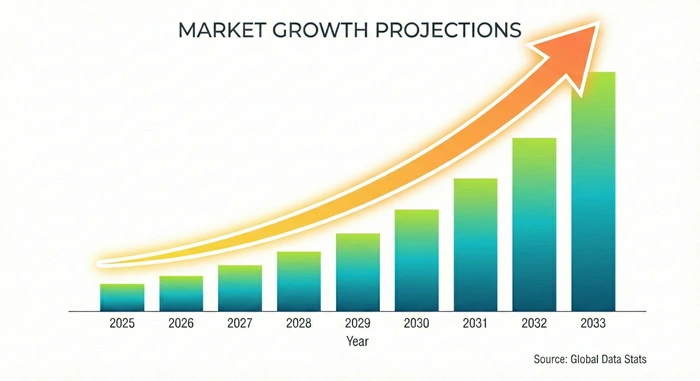
The AI Direct Selling Market Is on a Structural Growth Trajectory Driven by Technology Democratization, Emerging Market Penetration, and Expanding Use Cases
The long-term outlook for the AI direct selling sector is exceptionally strong, supported by converging technological, economic, and demographic factors. Cloud-based AI deployment models are dramatically lowering the barrier to adoption for small and mid-size direct selling companies, enabling them to access sophisticated tools — including predictive analytics, automated CRM, and intelligent distributor coaching — without the capital expenditure required for on-premises infrastructure. This democratization of AI access is expanding the addressable market and bringing advanced selling intelligence to businesses that previously lacked the resources to compete with large established players.
Emerging markets in Asia Pacific, Latin America, and the Middle East are expected to become significant growth engines through 2033. Countries like India, Indonesia, Brazil, and Vietnam are experiencing rapid smartphone penetration, expanding digital payment infrastructure, and strong cultural alignment with direct selling as an income model. As these markets mature, demand for AI tools that support local-language communication, community-based selling networks, and mobile-first customer engagement will accelerate. Investors and technology companies that position themselves in these high-growth geographies early will be well placed to capture disproportionate returns as the market scales toward USD 392.87 billion.
Expert Speaks
-
"Artificial intelligence is not simply a productivity tool for us — it is the foundation of how we build personalized relationships with millions of customers and distributors simultaneously. The direct selling model has always been about human connection, and AI is making those connections smarter, faster, and more impactful." — CEO, Amway Corp.
-
"We see enormous opportunity in combining AI-driven analytics with the fundamentally relationship-based nature of direct selling. Companies that use predictive intelligence to coach their distributor networks and personalize their customer outreach will define the next decade of growth in this space." — CEO, Salesforce Inc.
-
"The integration of generative AI into direct selling workflows is one of the most significant commercial opportunities we've seen in years. AI-powered content creation, real-time sales coaching, and intelligent lead scoring are transforming distributor productivity metrics across every market we serve." — CEO, Herbalife Nutrition Ltd.
Key Report Takeaways
-
North America leads the global AI direct selling market with approximately 35% market share in 2025, driven by the presence of major direct selling corporations like Amway and Herbalife, a mature AI development ecosystem, high cloud infrastructure investment, and strong regulatory frameworks that facilitate responsible AI adoption
-
Asia Pacific is the fastest-growing regional market, expected to record the highest CAGR through 2033, fueled by rapid smartphone penetration, expanding digital commerce infrastructure in China and India, a thriving startup ecosystem, and government-led digital transformation initiatives across Southeast Asian economies
-
Large enterprises are the dominant end-user segment in 2025, accounting for approximately 79% of the enterprise size segment, given their superior financial capacity to invest in comprehensive AI platforms covering distributor management, compliance monitoring, demand forecasting, and personalized customer engagement
-
Predictive analytics is the leading application segment, commanding the largest revenue share in 2026, as companies increasingly rely on data-driven demand forecasting, churn prediction, and distributor performance benchmarking to optimize sales strategy and operational efficiency
-
The solutions segment under offerings holds the dominant position at approximately 73% market share in 2025, driven by rising investment in AI-driven CRM platforms, intelligent sales automation software, and integrated distributor enablement tools across large enterprise deployments
-
The personalized recommendations application segment is expected to grow at the fastest CAGR through 2033, with share rising steadily as machine learning models become more sophisticated at analyzing individual customer behavior, purchase patterns, and real-time interaction data to drive cross-selling and upselling revenue
Market Scope
| Report Coverage | Details |
|---|---|
| Market Size by 2033 | USD 392.87 Billion |
| Market Size by 2025 | USD 18.24 Billion |
| Market Size by 2026 | USD 26.28 Billion |
| Market Growth Rate from 2026 to 2033 | CAGR of 44.13% |
| Dominating Region | North America |
| Fastest Growing Region | Asia Pacific |
| Base Year | 2025 |
| Forecast Period | 2026 to 2033 |
| Segments Covered | Offering, Deployment, Technology, Enterprise Size, Application, End User, Region |
| Regions Covered | North America, Europe, Asia Pacific, Latin America, Middle East & Africa |
Market Dynamics
Drivers Impact Analysis
Hyper-Personalized Customer Experience Demand and Rapid AI Technology Adoption Are Emerging as the Two Dominant Catalysts Accelerating Market Expansion
| Driver | ≈ % Impact on CAGR Forecast | Geographic Relevance | Impact Timeline |
|---|---|---|---|
| Escalating demand for hyper-personalized customer experiences | ~38% | Global, led by North America and Europe | Short to long-term |
| Rapid AI adoption across direct selling platforms and CRM systems | ~30% | North America, Asia Pacific | Medium to long-term |
| Expansion of social commerce and mobile-first digital selling channels | ~18% | Asia Pacific, Latin America | Short to medium-term |
| Growing gig economy and independent distributor base expansion | ~14% | Asia Pacific, MEA, Latin America | Medium to long-term |
The rising consumer expectation for hyper-personalized engagement is perhaps the most powerful structural driver in the AI direct selling market. Modern consumers are no longer satisfied with generic product pitches or one-size-fits-all promotional content. They expect real-time, context-aware communication that speaks directly to their individual preferences, purchase history, and behavioral signals. AI systems — particularly recommendation engines and machine learning-driven content personalization tools — are the only scalable solutions capable of delivering this standard of individualized engagement across the massive, distributed networks that characterize the direct selling industry. Companies reporting measurable ROI from AI personalization deployments consistently highlight 25–30% improvements in customer satisfaction scores and significant reductions in distributor-level sales downtime.
Technology adoption across enterprise and mid-market direct selling organizations is accelerating at a rate that few industries match. Cloud-based AI platforms have removed the capital expenditure barrier that once limited AI access to the largest global players, and subscription-based pricing models now allow even mid-size direct selling companies to deploy sophisticated tools for lead scoring, predictive analytics, and automated coaching. As AI technologies continue to mature — particularly generative AI, NLP, and multimodal machine learning — the range of available applications is expanding rapidly. This is creating a compounding adoption effect: early adopters report competitive advantages that pressure competitors to invest, broadening the market's customer base and deepening per-customer technology spending over time.
Restraints Impact Analysis
Data Privacy Regulation Complexity and Ethical AI Concerns Remain the Most Significant Barriers to Full-Scale AI Adoption in Direct Selling Operations
| Restraint | ≈ % Impact on CAGR Forecast | Geographic Relevance | Impact Timeline |
|---|---|---|---|
| Complex data privacy regulations (GDPR, CCPA) limiting AI data use | ~40% | Europe, North America | Short to medium-term |
| High initial investment and integration costs for legacy companies | ~30% | Global, especially SMEs and emerging markets | Medium-term |
| Ethical concerns around distributor surveillance and AI transparency | ~18% | North America, Europe | Long-term |
| Limited digital literacy and AI readiness among distributor networks | ~12% | MEA, Latin America, Rural Asia Pacific | Short to medium-term |
The most consequential constraint on the AI direct selling market's expansion is the regulatory complexity surrounding data privacy. AI systems in direct selling environments process vast quantities of personal customer and distributor data — including purchasing behavior, communication histories, location data, and financial information. Regulations like the European Union's GDPR and California's CCPA impose stringent rules on how this data may be collected, stored, processed, and used, creating compliance costs and operational restrictions that can slow AI deployment, particularly for companies operating across multiple jurisdictions simultaneously. Legal teams at major direct selling corporations are increasingly embedded in AI product development cycles to ensure compliance, adding both cost and development time.
Beyond regulatory compliance, many direct selling organizations — particularly those with large legacy distributor networks — face significant internal challenges when transitioning to AI-enabled operations. Older distributors with limited technical literacy may resist or struggle to adopt new AI tools, undermining the ROI of technology investments. The cost of retraining, change management, and technical support for large, geographically dispersed distributor networks should not be underestimated. Companies that fail to invest adequately in distributor enablement and digital literacy programs alongside their AI deployments frequently find that adoption rates disappoint and operational gains fall short of projections.
Opportunities Impact Analysis
Generative AI for Distributor Content Creation, Emerging Market Expansion, and AI-Blockchain Integration Represent the Highest-Value Growth Opportunities
| Opportunity | ≈ % Impact on CAGR Forecast | Geographic Relevance | Impact Timeline |
|---|---|---|---|
| Generative AI for personalized distributor content and communication | ~42% | Global, led by North America and Europe | Short to medium-term |
| Market expansion in Asia Pacific and Latin America via mobile AI platforms | ~35% | Asia Pacific, Latin America | Medium to long-term |
| Integration of AI with blockchain for transparent MLM compliance and payments | ~23% | Global | Long-term |
Generative AI represents the single largest near-term commercial opportunity in the AI direct selling sector. For decades, one of the biggest operational challenges in direct selling has been enabling hundreds of thousands of independent distributors to produce consistent, high-quality, brand-compliant content for social media, email marketing, and customer communication. Generative AI platforms can now automate this process — creating personalized product descriptions, promotional posts, video scripts, and email sequences tailored to each distributor's audience and communication style. Early adopters report up to a 30% reduction in content production time and significant improvements in distributor engagement and sales conversion, underscoring the enormous commercial value of this application category.
Emerging market penetration is the second major opportunity horizon. The combination of expanding smartphone adoption, growing digital payment infrastructure, and strong cultural receptivity to direct selling business models in markets like India, Indonesia, Brazil, and South Africa creates a compelling environment for AI-powered direct selling platforms. Companies that develop affordable, mobile-first AI solutions with multilingual capabilities and low-bandwidth optimization will unlock massive new customer and distributor segments. Government-backed digital economy initiatives in India, Southeast Asia, and parts of the Middle East are further accelerating the pace at which these markets are becoming viable targets for sophisticated AI-driven direct selling platforms.
Segment Analysis
By Offering
The Solutions Segment Dominates AI Direct Selling Revenue, Powered by Enterprise Investment in Integrated AI Platforms That Cover the Full Distributor and Customer Lifecycle
The solutions segment holds the dominant position in the AI direct selling market, commanding approximately 73% of the total offering segment share in 2025 and growing at a CAGR above the market average. This dominance is rooted in the broad functional coverage that AI solutions platforms provide — spanning CRM automation, distributor performance monitoring, predictive demand analytics, intelligent lead scoring, and real-time sales dashboards — all within integrated ecosystems that large direct selling companies prefer over point-solution approaches. North America drives the largest volume of solutions revenue, with U.S.-headquartered companies like Salesforce, Penny AI, and DirectScale commanding strong institutional relationships with Tier 1 direct selling enterprises including Amway and Herbalife. The high level of customization available through leading solutions platforms, combined with their deep integration capabilities with enterprise ERP and data warehouse systems, makes this segment sticky and resilient to competitive displacement.
Asia Pacific is emerging as the fastest-growing regional market for AI solutions platforms, expanding at approximately 45.1% CAGR as direct selling organizations in China, India, and Southeast Asia accelerate digital transformation programs. Indian startups and technology firms are developing cost-competitive AI solutions platforms tailored to the unique characteristics of Asia Pacific direct selling networks — including multilingual NLP engines, low-data-usage mobile interfaces, and culturally adapted recommendation algorithms. Companies like Epixel Solutions, headquartered in India, are gaining traction in this space by offering affordable, scalable AI platforms that meet the specific requirements of the region's growing independent distributor base. The services segment, while smaller, is expected to register the fastest CAGR through 2033, driven by rising demand for AI implementation consulting, workflow redesign services, and managed analytics support from both emerging and established direct selling companies.
By Application
Predictive Analytics Leads Application Revenue, While Personalized Recommendations Is Emerging as the Fastest-Growing Category in the AI Direct Selling Ecosystem
Predictive analytics holds the leading position in the AI direct selling market's application segment, accounting for the largest revenue share in 2026 and generating consistent demand from large enterprises that rely on data-driven forecasting for inventory optimization, distributor performance benchmarking, and sales trend identification. Companies using predictive analytics in their direct selling operations report improvements in demand estimation accuracy of up to 18%, reductions in inventory holding costs of approximately 15%, and significant gains in order fulfillment precision — all metrics that translate directly into measurable operating margin improvements at scale. North America leads adoption of predictive analytics solutions, with Salesforce, IBM, and SAP among the primary technology vendors serving major direct selling corporations in the region through enterprise-grade analytics platform deployments.
The personalized recommendations application segment is positioned to grow at the fastest CAGR through 2033, driven by the increasing sophistication of machine learning models that can analyze real-time customer interaction data, purchase histories, and browsing behavior to deliver hyper-targeted product suggestions. This segment is particularly relevant to the AI direct selling market as it directly addresses the foundational strength of the direct selling model — personal, relationship-based engagement — while amplifying it to scales previously unachievable by human distributors alone. Latin America is a notable growth region for personalized recommendation applications, with Brazilian and Mexican direct selling companies investing in AI recommendation engines to improve conversion rates across their large independent distributor networks. Virtual assistants and chatbot applications are also gaining momentum, particularly in Asia Pacific markets where mobile-first engagement and 24/7 customer service expectations are driving deployment of conversational AI tools.
Regional Insights
North America
North America's First-Mover Advantage in Enterprise AI Adoption and Its Dense Concentration of Global Direct Selling Headquarters Make It the Undisputed Market Leader
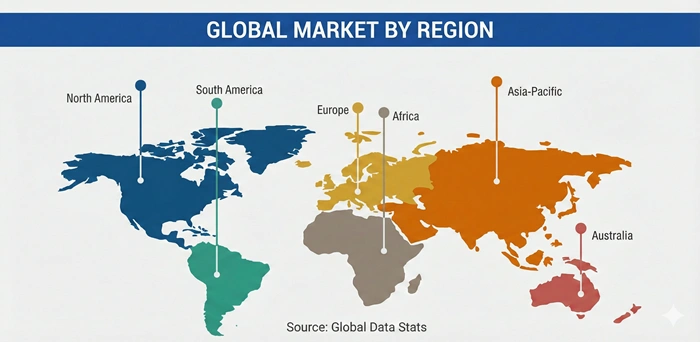
North America holds the dominant position in the global AI direct selling market, commanding approximately 35% market share in 2025 and expanding at a strong CAGR of approximately 45.11% through 2033. The United States is the primary driver of regional demand, home to the world's largest direct selling corporations — including Amway, Herbalife, and Nu Skin — alongside a thriving ecosystem of AI technology developers and cloud infrastructure providers. Companies like Salesforce, Penny AI, DirectScale, and Conversica have built extensive commercial relationships with these enterprises, delivering AI tools for distributor performance management, predictive analytics, and intelligent customer engagement. The region's advanced regulatory environment, while presenting compliance costs, also provides a framework that builds consumer trust in AI-powered sales interactions — a critical foundation for long-term market expansion.
The U.S. market alone was estimated at approximately USD 6.38 billion in 2025 and represents the single largest national market within the global AI direct selling sector. Federal and state-level investment in cloud computing infrastructure, combined with some of the world's highest rates of enterprise AI adoption, ensures that North American direct selling companies have access to the most mature and capable AI platforms available. Canada contributes meaningfully to regional growth, particularly in AI research and cloud service provision, while Mexico is emerging as a notable growth market where the combination of a strong direct selling culture and rapidly expanding digital commerce infrastructure is creating demand for AI tools tailored to the region's mobile-first consumer base.
Asia Pacific
Asia Pacific Is Poised to Become the World's Fastest-Growing AI Direct Selling Region, Powered by a Massive Distributor Base, Rapid Digitalization, and Strong Government Support
Asia Pacific is positioned to register the highest CAGR globally in the AI direct selling market through 2033, with the region as a whole expanding well above the global average CAGR of 44.13%. China and India are the twin engines of regional growth, driven by their enormous direct selling distributor bases, rapidly expanding digital payment ecosystems, and strong government support for AI-driven digital commerce initiatives. In India, the government's AI Mission and BHASHINI multilingual AI initiative are specifically enabling direct selling companies to reach previously underserved rural and semi-urban markets with AI-powered, regional-language selling platforms. Companies including Epixel Solutions (India), and international players such as Salesforce and SAP, are expanding their Asia Pacific footprints aggressively to capture this demand. The region's mobile-first consumer behavior — with smartphone-driven social commerce accounting for a rapidly growing share of direct selling transactions — provides an ideal deployment environment for AI-powered recommendation, chatbot, and predictive analytics tools.
South Korea, Japan, and Australia also contribute meaningfully to Asia Pacific market revenue, with their well-developed digital infrastructure and high consumer technology adoption rates creating strong institutional demand for premium AI direct selling platforms. Southeast Asian markets — particularly Indonesia, Vietnam, Thailand, and the Philippines — are emerging as the next wave of high-growth geographies within the region, as rising income levels, expanding e-commerce penetration, and a culturally embedded affinity for direct selling business models create fertile ground for AI tool adoption. Local and regional AI startups are increasingly entering this space with affordable, mobile-optimized solutions designed specifically for the distributed, community-based selling networks that characterize Southeast Asian direct selling markets.
Customization Available for This Report
This report offers fully tailored region-wise and country-wise customization, delivering market-specific insights, competitive intelligence, demand analysis, and growth opportunities aligned precisely to your selected geography and the AI direct selling keyword combination.
We can provide a fully customized version of this report covering any of the regions and countries listed below, delivering in-depth analysis of market size, growth trajectory, technology adoption trends, regulatory landscape, key player positioning, and demand-side drivers specific to each market:
North America
-
U.S. — Enterprise AI platform adoption, major direct selling corporation AI investment, regulatory compliance trends under CCPA, and cloud infrastructure deployment patterns
-
Canada — AI research ecosystem, cloud service contributions, and emerging direct selling AI startup activity
-
Mexico — Mobile-first AI selling tools, direct selling cultural adoption, and digital commerce infrastructure expansion
Europe
-
U.K. — GDPR-compliant AI deployment, enterprise CRM market, and growing social commerce AI tools
-
Germany — Stringent data regulation environment, enterprise AI adoption, and high-quality wellness product direct selling market
-
France — Distributor content AI tools, beauty and personal care direct selling sector, and multilingual NLP platform demand
-
Italy — Regional direct selling network growth, SME AI tool adoption, and digital distributor enablement
-
Rest of Europe — Eastern and Nordic European market development, digital commerce growth, and compliance-driven AI adoption
Asia Pacific
-
China — Social commerce AI integration, WeChat-based direct selling platforms, and domestic AI vendor competitiveness
-
India — AI Mission-driven digital infrastructure, multilingual NLP platforms, and rapidly growing independent distributor base
-
Japan — Premium AI solutions adoption, enterprise-grade CRM deployments, and high-technology direct selling market
-
South Korea — K-beauty direct selling market, digital platform innovation, and AI-powered influencer selling tools
-
Australia — Digital-first direct selling model, cloud AI platform adoption, and wellness sector demand
-
Rest of Asia Pacific — Country-level analysis for Indonesia, Vietnam, Thailand, Philippines, and Bangladesh
Latin America
-
Brazil — Hyper-endemic direct selling culture, social commerce AI tools, and mobile-first distribution network management
-
Argentina — Emerging digital selling infrastructure and AI platform adoption among growing SME distributor networks
-
Rest of Latin America — Colombia, Mexico, Peru, and Chile country-level AI direct selling market sizing and opportunity analysis
Middle East & Africa
-
UAE — Tech-driven commerce ecosystem, Vision 2030-aligned digital investment, and premium AI platform adoption
-
Saudi Arabia — Digital transformation programs, growing e-commerce infrastructure, and direct selling market formalization
-
Rest of MEA — Sub-Saharan Africa mobile commerce growth, NGO-driven digital selling programs, and emerging AI platform demand
Top Key Players
-
Penny AI Technologies Inc. (Canada)
-
Rallyware Inc. (United States)
-
DirectScale Inc. (United States)
-
Epixel Solutions Pvt. Ltd. (India)
-
Salesforce Inc. (United States)
-
ByDesign Technologies (United States)
-
Conversica Inc. (United States)
-
Amway Corp. (United States)
-
Herbalife International of America Inc. (United States)
-
SAP SE (Germany)
-
Veeva Systems Inc. (United States)
-
LivePerson Inc. (United States)
-
Nowsite (United States)
-
eXalt Solutions Inc. (United States)
-
Multisoft Corp. (United States)
Recent Developments
-
In December 2025, Salesforce announced a definitive agreement to acquire Qualified, a leading provider of agentic AI marketing solutions, with plans to integrate Qualified's always-on AI marketing agent capabilities into the Agentforce platform to autonomously build and manage sales pipelines; the transaction was expected to close in the first quarter of Salesforce's fiscal year 2027 pending regulatory approvals
-
In February 2026, Herbalife announced the launch of its Pro2col digital operating system as part of a strategic shift toward a data-driven wellness platform, initiating a phased beta rollout across the U.S., Canada, and Puerto Rico to deliver personalized nutrition services; global football star Cristiano Ronaldo invested USD 7.5 million for a 10% stake in the technology
-
In August 2024, AmplifyAI launched its new chatbot service, SalesBot Pro, specifically engineered to automate customer interactions and increase sales conversion rates for direct selling companies, marking a significant step in the commercialization of AI-native selling assistants for the independent distributor channel
-
In November 2024, IBM and Infosys entered into a strategic partnership to co-develop industry-specific AI solutions for direct selling organizations, combining IBM's Watson AI platform capabilities with Infosys's deep domain expertise in enterprise technology integration
-
In February 2025, L'Oréal invested USD 10 million in AI-driven direct selling startup BeautyBridge to expand its digital sales channels and enhance AI-powered customer engagement strategies, signaling growing interest from consumer goods majors in AI-first direct selling infrastructure
Market Trends
Two Major Forces Are Redefining the AI Direct Selling Market: The Mainstreaming of Generative AI for Distributor Enablement and the Deep Integration of AI With Social Commerce Platforms
The most impactful trend reshaping the AI direct selling market is the rapid mainstreaming of generative AI as a distributor enablement tool. Historically, producing high-quality, personalized content for each independent distributor's unique audience was one of the industry's most persistent scalability challenges. Generative AI platforms are eliminating this bottleneck by automating the creation of social media posts, product descriptions, email sequences, and promotional scripts that are customized to each distributor's selling style, product focus, and customer base. Companies deploying these tools are reporting measurable improvements in distributor productivity and content quality consistency, while simultaneously reducing the cost and complexity of managing large-scale distributor communication programs.
The second defining trend is the convergence of AI with social commerce platforms — a development that is fundamentally changing how direct selling companies acquire customers and manage distributor-to-buyer relationships. AI tools that analyze social media engagement patterns, identify high-potential prospects within distributor networks, and optimize content posting schedules for maximum reach are becoming standard competitive requirements. Simultaneously, voice-enabled AI commerce tools and augmented reality product visualization applications are creating immersive buying experiences that reduce purchase hesitation and improve conversion rates. As AI capabilities continue to advance and social commerce platforms deepen their AI integration capabilities, the boundary between direct selling, influencer marketing, and AI-powered e-commerce will continue to blur — creating significant new commercial opportunities for companies that position themselves at the intersection of all three.
Segments Covered in the Report
By Offering
-
Solutions
-
AI-Driven CRM Platforms
-
Sales Automation Software
-
Distributor Performance Tools
-
Demand Forecasting Systems
-
-
Services
-
Implementation and Integration Services
-
Consulting and Training Services
-
Support and Maintenance Services
-
Managed Analytics Services
-
By Deployment
-
Cloud-Based
-
SaaS AI Platforms
-
Cloud-Native Selling Tools
-
Remote Access Analytics
-
-
On-Premises
-
Enterprise AI Servers
-
Internal Data Processing Systems
-
Compliance-First Deployment Models
-
-
Hybrid
-
Mixed Cloud and On-Premises Architecture
-
Flexible Scalability Systems
-
By Technology
-
Natural Language Processing (NLP)
-
Conversational AI Tools
-
Multilingual Communication Platforms
-
Sentiment Analysis Engines
-
-
Machine Learning and Deep Learning
-
Predictive Analytics Models
-
Behavioral Pattern Recognition
-
Automated Learning Algorithms
-
-
Computer Vision
-
AR Product Visualization Tools
-
Visual Recognition in Commerce
-
-
Others
-
Generative AI Tools
-
AI-Blockchain Integration
-
By Enterprise Size
-
Large Enterprises
-
Global Direct Selling Corporations
-
Multinational CRM Deployments
-
-
Small and Medium Enterprises (SMEs)
-
Regional Selling Networks
-
Startup Direct Selling Platforms
-
By Application
-
Predictive Analytics
-
Sales Trend Forecasting
-
Distributor Performance Benchmarking
-
Inventory Demand Estimation
-
-
Personalized Recommendations
-
Real-Time Product Suggestions
-
Cross-Sell and Upsell Engines
-
-
Virtual Assistants and Chatbots
-
Customer Support Automation
-
AI Sales Coaching Bots
-
-
Sales Forecasting and Optimization
-
Revenue Prediction Models
-
Pipeline Management Tools
-
-
Network Intelligence and Relationship Management
-
Distributor Network Analytics
-
MLM Performance Monitoring
-
-
Others
-
Compliance Monitoring
-
Fraud Detection Systems
-
By End User
-
Individual Sellers and Distributors
-
SMEs and Growing Direct Selling Organizations
-
Large Enterprises and Global Direct Selling Corporations
By Region
-
North America (U.S., Canada, Mexico)
-
Europe (U.K., Germany, France, Italy, Rest of Europe)
-
Asia Pacific (China, India, Japan, South Korea, Australia, Rest of Asia Pacific)
-
Latin America (Brazil, Argentina, Rest of Latin America)
-
Middle East and Africa (UAE, Saudi Arabia, Rest of MEA)
❝ Built for Every Level — From Startups to Industry Giants ❞
Here Is Exactly How This Report Works for You
-
For tier 1 enterprises, institutional investors, and C-suite decision-makers, this report delivers competitor revenue analysis, detailed revenue source breakdowns by segment and region, geopolitical risk frameworks, and supply-demand dynamics — giving you the intelligence needed to make confident capital allocation, M&A targeting, and strategic expansion decisions in the AI direct selling space with clarity and reduced risk
-
For tier 2, tier 3 companies, startups, and mid-level direct selling organizations, this report maps the most commercially viable technology segments, identifies regional white spaces before they become overcrowded, and benchmarks competitive positioning — helping you compete effectively against established players and prioritize AI investment where it delivers the fastest measurable ROI
-
For all decision-makers across the value chain, this report explains precisely how regulatory shifts, geopolitical trade disruptions, AI technology advancement cycles, and evolving distributor network dynamics are reshaping market direction through 2033 — so you can move from reactive decision-making to a proactive, evidence-backed strategy that positions your organization ahead of the next wave of AI-driven direct selling growth
Frequently Asked Questions
Question 1: What is the current size of the global AI direct selling market and what is the growth forecast through 2033?
Answer: The global AI direct selling market was valued at USD 18.24 billion in 2025 and is projected to reach USD 392.87 billion by 2033. This rapid expansion is driven by rising adoption of AI-powered personalization, automated distributor management, and data-driven sales optimization across global direct selling networks.
Question 2: What are the key factors driving growth in the AI direct selling market?
Answer: The primary drivers of the AI direct selling market include escalating consumer demand for hyper-personalized buying experiences and rapid adoption of cloud-based AI platforms across direct selling enterprises. Expansion of social commerce channels and the growing independent distributor economy in emerging markets are additional accelerators.
Question 3: Which region dominates the AI direct selling market and which region is growing fastest?
Answer: North America holds the dominant share in the AI direct selling market at approximately 35% in 2025, supported by a mature AI ecosystem and major direct selling corporations. Asia Pacific is growing at the fastest CAGR, driven by rapid digitalization and a massive expanding distributor base in China and India.
Question 4: What are the leading application segments in the AI direct selling market?
Answer: Predictive analytics leads the AI direct selling market application segment in 2026, helping companies forecast sales trends, optimize inventory, and benchmark distributor performance. The personalized recommendations segment is expected to grow fastest through 2033, powered by increasingly sophisticated machine learning models that drive cross-selling and customer retention.
Question 5: Who are the leading companies operating in the AI direct selling market?
Answer: Leading players in the AI direct selling market include Penny AI, Rallyware, DirectScale, Salesforce, Epixel Solutions, and Conversica, among others. These companies are competing through continuous AI innovation, strategic partnerships, and geographic expansion into high-growth markets.