
Aerospace Materials Market Overview
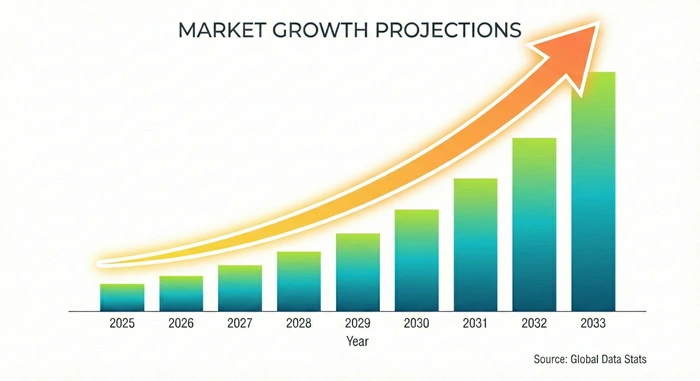
The global aerospace materials market size is valued at USD 46.96 billion in 2025 and is predicted to increase from USD 50.59 billion in 2026 to approximately USD 91.83 billion by 2033, growing at a CAGR of 8.10% from 2026 to 2033.
Aerospace materials are specialized substances engineered for aircraft manufacturing that demand exceptional characteristics including superior tensile strength, enhanced transparency, elevated temperature endurance, and reinforced surface properties. Modern aviation producers are transitioning away from conventional metals toward advanced substances such as sophisticated polymers and glass or carbon-based fiber composites to construct airplane components including windows, airframes, interiors, engine parts, mirrors, propulsion systems, and ceilings. These materials must demonstrate durability, high tolerance to damage, and long lifespan reliability, which remain essential for fuselages and structural integrity across commercial, military, and space applications.

AI Impact on the Aerospace Materials Industry
Transforming Manufacturing Precision and Supply Chain Intelligence Through Advanced Algorithms
Artificial intelligence is revolutionizing the aerospace materials market by accelerating material discovery, optimizing production workflows, and enhancing quality control mechanisms across manufacturing facilities. Machine learning algorithms now predict material performance under extreme thermal and pressure conditions, reducing certification cycles from three years to eighteen months for established alloys used in safety-critical hardware. AI-powered automated composite fabrication systems cut labor hours by 35 percent while maintaining strict quality standards, enabling manufacturers to meet aggressive fleet renewal targets set by major aircraft producers. Predictive maintenance systems analyze real-time sensor data from composite lay-up lines, identifying potential defects before they compromise structural integrity and reducing scrap rates by up to 22 percent.
Advanced neural networks are streamlining supply chain logistics for strategic materials such as titanium and carbon fiber, which face ongoing availability constraints due to geopolitical tensions and energy price volatility. AI models forecast demand patterns across commercial aviation, defense programs, and emerging space-launch ecosystems, allowing suppliers to adjust production capacity and minimize lead times. Digital twin technology simulates material behavior throughout aircraft lifecycles, from initial manufacturing through maintenance, repair, and overhaul operations, providing operators with data-driven insights that extend component service life and lower replacement costs. As additive manufacturing penetrates deeper into engine-component production, AI optimization algorithms are refining powder-bed fusion parameters to achieve near-parity buy-to-fly ratios while freeing working capital for original equipment manufacturers across the aerospace materials market.
Growth Factors
Rising Demand for Fuel-Efficient Aircraft and Expansion of Global Air Travel Drive Material Innovation
The accelerating demand for lightweight and fuel-efficient airplanes stands as one of the primary factors propelling expansion across the global aerospace materials market. Aircraft weight reduction translates directly to operating expense decreases, with composite-intensive twin-aisle programs achieving 20 percent lower operating weight that delivers 15 percent fuel consumption reductions over a 20-year lifecycle. Airlines benefit from greater fuel economy while simultaneously meeting increasingly stringent environmental regulations and carbon-neutral roadmaps announced by major manufacturers. Air traffic growth in developing regions, particularly Asia-Pacific, causes fleet numbers to expand rapidly, which increases demand for aviation materials as carriers modernize aging aircraft and add new capacity to handle rising passenger volumes.
Government and private sector investments in space exploration and space-based businesses are creating substantial new frontiers for the aerospace materials market, with annual orbital launches tripling between 2020 and 2025. Reusable-rocket providers flying up to 15 cycles per first stage create duty profiles that demand alloys capable of surviving extreme re-entry temperatures while satellite constellation deployments add volume by embedding high-frequency antenna substrates and radiation-hardened panels. Defense modernization programs accelerate implementation of specialized aerospace materials within military applications, where radar-absorbent laminates, single-crystal turbine blades, and boron-fiber composites command premium pricing. Technological innovations including additive manufacturing, automated composite fabrication, and nanomaterial integration enhance performance while reducing production costs, with laser-sintered fuel nozzles and 3D-printed landing-gear fittings recently earning regulatory certification for safety-critical applications across the aerospace materials market.
Market Outlook
Commercial Aviation Recovery and Space Vehicle Growth Shape Industry Trajectory Through 2033
The aerospace materials market exhibits robust expansion momentum driven by aggressive fleet renewal initiatives and rising commercial delivery targets from leading manufacturers. Production rates for narrowbody aircraft families reached noteworthy output levels in late 2025, indicating positive outlooks for raw material suppliers globally as manufacturers set challenging targets exceeding 800 annual deliveries. Each commercial airliner consumes 45 tons of aluminum, 8 tons of titanium, and 12 tons of composites, with widebody programs inverting that mix to emphasize composite-intensive construction that shaves operating weight and improves mission economics. Space vehicle demand climbs at the fastest segment growth rate, contributing over 15 billion dollars in incremental opportunity by 2031 as launch operators iterate hardware every 18 to 24 months and compress material qualification cycles.
Regional dynamics underscore Asia-Pacific dominance with production capacity expansions across China, India, and Japan establishing the region as both the largest consumer and fastest-growing market for aerospace materials through 2033. Indigenous airframe programs in China plan annual output increases to 150 units by 2028, with each airplane absorbing substantial quantities of domestically sourced materials, while India repatriates heavy maintenance work that lifts demand for structural adhesives and replacement panels. North America maintains strong positioning anchored by established manufacturers and emerging space-launch providers, with policy support earmarking funding for advanced material plants aimed at rebalancing import dependence for carbon fiber and titanium. Europe's multi-site assembly networks require constant feeds of composites, aluminum alloys, and superalloys despite production delays affecting certain narrowbody programs, while the aerospace materials market benefits from circular-economy mandates driving development of recyclable thermoplastic matrices across the region.
Expert Speaks
-
Guillaume Faury, CEO of Airbus, emphasized in 2025 that composite materials represent the shape of aerospace's future, highlighting their winning combination of high strength, low weight, and durability as more than half of the A350 XWB's structure now consists of advanced composites that reduce aircraft weight while maintaining structural integrity.
-
Dave Calhoun, former CEO of Boeing, stated in early 2025 that the company's plan for 100 percent sustainable aviation fuel compatibility by 2030 compels reformulation of resins and elastomers resistant to higher aromatic content, driving material innovation across commercial aviation programs to meet carbon-neutral commitments.
-
Elon Musk, CEO of SpaceX, noted in 2024-2025 that reusable launch vehicle development creates unprecedented material demands, with each Falcon 9 consuming 25 tons of aluminum-lithium and 8 tons of composites while requiring alloys that survive extreme thermal cycles across up to 15 flight missions per first stage.
Key Report Takeaways
-
Asia-Pacific leads the aerospace materials market with a 53.65 percent revenue share in 2025, driven by indigenous commercial aircraft programs, maintenance repair and overhaul expansion, and supply chain localization across China, India, Japan, and South Korea.
-
Asia-Pacific emerges as the fastest-growing region with a 9.24 percent CAGR through 2033, fueled by COMAC delivery targets, Air India fleet modernization, and substantial foreign direct investment in aerostructures manufacturing across ASEAN members.
-
Commercial aviation constitutes the largest aircraft type segment representing 55.82 percent market share in 2025, consuming 50 to 80 metric tons of materials per aircraft as narrowbody and widebody programs prioritize lightweight construction.
-
Airframe structures contribute the dominant application share accounting for 34.47 percent of 2025 spend, driven by composite-rich wing assemblies and fuselage barrels employing advanced carbon fiber grades for enhanced stiffness and weight reduction.
-
Composite materials dominate by type generating 69 percent revenue share in 2024, reflecting contemporary aerospace landscape priorities as carbon-fiber-reinforced polymers and thermoplastic composites enable manufacturers to reduce aircraft weight while maintaining structural integrity.
-
Space vehicles represent the fastest-growing aircraft segment expanding at an 11.08 percent CAGR as reusable launch systems and satellite constellation deployments raise material intensity per kilogram, creating substantial incremental opportunity through 2033 in the aerospace materials market.
Market Scope
| Report Coverage | Details |
|---|---|
| Market Size by 2033 | USD 91.83 Billion |
| Market Size by 2025 | USD 46.96 Billion |
| Market Size by 2026 | USD 50.59 Billion |
| Market Growth Rate from 2026 to 2033 | CAGR of 8.10% |
| Dominating Region | Asia-Pacific |
| Fastest Growing Region | Asia-Pacific |
| Base Year | 2025 |
| Forecast Period | 2026 to 2033 |
| Segments Covered | By Type (Composites, Aluminum Alloys, Titanium Alloys, Steel Alloys, Plastics), By Aircraft Type (Commercial Aircraft, Military Aircraft, Space Vehicles, Helicopters), By Application (Airframe Structures, Engine Components, Interior Systems, MRO and Aftermarket Replacement), By Region (Asia-Pacific, North America, Europe, South America, Middle East & Africa) |
| Regions Covered | Asia-Pacific, North America, Europe, South America, Middle East & Africa |
Market Dynamics
Drivers Impact Analysis
Lightweight Composite Adoption and Space Exploration Expansion Accelerate Market Growth
| Driver | (≈) % Impact on CAGR Forecast | Geographic Relevance | Impact Timeline |
|---|---|---|---|
| Lightweight-driven surge in structural composites | +2.1% | North America, Europe, Asia-Pacific | Medium term (2-4 years) |
| Rapid expansion of space-launch ecosystems | +1.8% | North America, Asia-Pacific, Middle East | Long term (≥ 4 years) |
| OEM carbon-neutral roadmaps | +1.5% | Europe, North America, Asia-Pacific | Medium term (2-4 years) |
| Additive-manufactured certified alloys | +1.3% | North America, Europe, Asia-Pacific | Short term (≤ 2 years) |
Composite content surpassing 50 percent by structural weight in leading twin-aisle programs by 2025 unlocks significant weight reductions that translate to lower fuel consumption over aircraft lifecycles, directly supporting sustainability and emissions-reduction goals demanded by regulatory authorities and airline operators. Even cost-sensitive narrowbody platforms are raising composite ratios, with regional programs targeting 25 percent in next-generation block upgrades as manufacturers leverage advanced fiber-placement lines that cut labor hours substantially. Major material suppliers announced multi-billion-dollar capacity additions to meet this trajectory, positioning the aerospace materials market for sustained growth despite supply-chain bottlenecks in aerospace-grade polyacrylonitrile precursor that temper substitution pace. Carbon-fiber-reinforced polymers demonstrate superior strength-to-weight ratios, corrosion resistance, and design flexibility critical for improving flight performance through better acceleration and enhanced safety across commercial, military, and space applications.
Annual orbital launches tripling between 2020 and 2025 create substantial material demand as reusable-rocket providers iterate first-stage hardware across up to 15 flight cycles, requiring specialized alloys capable of surviving extreme thermal environments during atmospheric re-entry. Emerging space programs from government agencies and private ventures adopt aluminum-lithium, ceramic-matrix composites, and carbon-carbon nose-cone structures to maximize payload margins while satellite constellation deployments embed high-frequency substrates and radiation-hardened panels that raise material intensity per kilogram of spacecraft. Hydrogen propulsion concepts under study require cryogenic tanks operating at extremely low temperatures, disqualifying legacy aluminum alloys and steering development toward composite overwrapped pressure vessels that expand opportunities across the aerospace materials market. Additive manufacturing penetration accelerates as regulatory bodies certify laser-sintered fuel nozzles and 3D-printed landing-gear fittings for safety-critical hardware, with buy-to-fly ratios plummeting from 20:1 in machined titanium to near parity while lead times shrink from one year to six weeks.
Restraints Impact Analysis
High Energy Costs and Strategic Metal Supply Chain Vulnerabilities Challenge Growth Momentum
| Restraint | (≈) % Impact on CAGR Forecast | Geographic Relevance | Impact Timeline |
|---|---|---|---|
| High cost and energy intensity of carbon fiber | -1.4% | Global; acute in Asia-Pacific | Short term (≤ 2 years) |
| Strategic-metal supply-chain exposure | -1.1% | Europe, North America | Medium term (2-4 years) |
| Lengthy certification and qualification cycles | -0.8% | Global | Long term (≥ 4 years) |
Producing one kilogram of aerospace-grade carbon fiber consumes substantial energy and generates significant carbon emissions, quadrupling the carbon footprint of aluminum on a weight basis and creating cost pressures that constrain adoption rates across price-sensitive aircraft programs. Energy price spikes in 2024 raised precursor costs by more than 20 percent, squeezing margins for integrated producers while small-tow fiber prices remain elevated at 30 to 40 dollars per kilogram, approximately twice the cost of industrial large-tow grades used in non-aerospace applications. Western manufacturers co-locate new production lines near renewable energy sources to mitigate volatility, while Chinese competitors undercut on price but frequently lack certification standards required for primary structural applications in the aerospace materials market. Commercial-scale alternative precursors promise 30 percent energy reductions but remain three to five years from full commercialization, limiting near-term relief from cost pressures.
Sanctions on Russian titanium supplies in 2024 severed 35 percent of global aerospace availability, elevating billet prices substantially and delaying aircraft deliveries by 8 to 12 weeks as manufacturers scrambled to secure alternative sources. Qualification requirements for new suppliers demand 24 to 36 months before materials gain certification approval, constraining near-term capacity additions while titanium's exceptional strength and low density remain unmatched for engine mounts and landing gear applications where substitution proves impractical. Japan and India expand sponge production capacity, but market balance remains unlikely before 2029 as strategic-metal exposure shaves growth from the aerospace materials market trajectory. Lengthy certification cycles for novel materials, particularly those introduced through additive manufacturing processes, extend validation timelines to three years even for established alloy compositions, slowing innovation deployment and limiting manufacturers' ability to capitalize on technological breakthroughs.
Opportunities Impact Analysis
Unmanned Aerial Vehicle Expansion and Circular Economy Initiatives Create New Growth Avenues
| Opportunity | (≈) % Impact on CAGR Forecast | Geographic Relevance | Impact Timeline |
|---|---|---|---|
| Expanding UAV and drone applications | +1.6% | North America, Asia-Pacific, Middle East | Medium term (2-4 years) |
| Circular-economy mandates driving recyclability | +0.9% | Europe, North America | Long term (≥ 4 years) |
| Emerging market aerospace infrastructure development | +1.2% | Asia-Pacific, Latin America | Medium term (2-4 years) |
Applications for unmanned aerial vehicles in defense operations have evolved substantially, becoming valuable resources for militaries worldwide while commercial and civil drone sectors remain in early development stages with numerous untapped possibilities across surveillance, logistics, agricultural monitoring, and infrastructure inspection applications. Military spending on UAV technology increases as a proportion of overall defense funding, providing growth prospects for specialized drone producers who require cost-optimized glass-fiber composites and lightweight polymers that balance performance with affordability constraints in the aerospace materials market. As UAV platforms proliferate across commercial delivery services and autonomous cargo operations, material suppliers gain opportunities to scale production volumes while developing tailored solutions that address unique requirements for smaller airframes operating in diverse environmental conditions.
Circular-economy mandates gaining traction in Europe and North America drive development of recyclable thermoplastic matrices that promise 30 percent lower embedded carbon compared to traditional thermoset composites, aligning with aviation industry carbon-neutral commitments and environmental regulations. Manufacturers race to commercialize bio-based adhesives, sustainable resins, and recycled aluminum alloys that meet stringent aerospace performance standards while reducing lifecycle environmental impact, creating differentiation opportunities for material suppliers who successfully navigate certification requirements. Emerging markets including India, Brazil, and Middle Eastern nations invest heavily in aerospace infrastructure development, establishing maintenance repair and overhaul facilities, aerostructures manufacturing clusters, and component machining capacity that diversify the geographic footprint of the aerospace materials market. These investments lower logistics costs, reduce supply-chain vulnerabilities, and position regional suppliers to capture growing domestic demand as air travel expands and defense modernization programs accelerate across developing economies.
Segment Analysis
By Type
Composite Materials Lead Revenue Share with Superior Performance Characteristics
Composite materials dominate the aerospace materials market by generating 69 percent revenue share in 2024, indicative of the contemporary aerospace landscape where carbon-fiber-reinforced polymers, thermoplastic composites, and advanced nanocomposites enable manufacturers to reduce aircraft weight while maintaining structural integrity required for safety-critical applications. Carbon fiber locked into place with plastic resin offers better strength-to-weight ratios than metals, with less sensitivity to fatigue and corrosion, making it lighter than aluminum, stronger than iron, and more corrosion-resistant than both traditional materials. Composite adoption surpassed 50 percent by structural weight in leading widebody programs, with manufacturers such as Airbus utilizing advanced composites from nose to tail across jetliner product lines, while even narrowbody platforms increase composite content to achieve fuel efficiency targets demanded by airline customers. The segment expands at an 8.42 percent CAGR through 2033, outstripping non-structural materials that serve coatings, sealants, and foams, driven by rising adoption across commercial, military, and space applications in the aerospace materials market.
Major suppliers including Toray and Hexcel together provide 60 percent of prepreg consumed in commercial programs, leveraging end-to-end control from polyacrylonitrile precursor production through autoclave curing that shields gross margins at approximately 20 percent despite competitive pressures. Asia-Pacific leads composite consumption with Japan exporting 2.8 billion dollars in carbon-fiber prepreg annually, while North American and European manufacturers invest in advanced fiber-placement automation that cuts labor hours by 35 percent and improves quality consistency. Aluminum alloys retain significant structural spend inside airframe envelopes, leveraging drop-in compatibility with legacy manufacturing jigs to deliver 7 to 10 percent weight reductions without wholesale redesign, while titanium alloys command premium pricing at 35 to 40 dollars per kilogram despite representing just 5 percent of structural weight due to irreplaceable performance in engine mounts and landing gear. Plastics including polyetheretherketone, polymethyl methacrylate, and polyphenylene sulfide expand adoption in interior systems, removing 200 to 300 kilograms from cabin weight while meeting stringent flammability codes across the aerospace materials market.
By Aircraft Type
Commercial Aviation Maintains Largest Share While Space Vehicles Demonstrate Fastest Growth
General and commercial aviation retained 55.82 percent market share in 2025, consuming 50 to 80 metric tons of materials per aircraft as narrowbody programs prioritize cost and production cadence with aluminum fuselages paired with composite wings, whereas composite-intensive widebodies invert that mix to shave operating weight and extend range capabilities. Business jet manufacturers justify 40 percent material cost premiums by delivering range extensions beyond 8000 nautical miles through aggressive weight reduction strategies that maximize composite utilization in wings, fuselages, and empennages. The segment records mid-single-digit CAGR growth as fleet additions normalize following post-pandemic recovery, with material suppliers focusing on production efficiency improvements and automated manufacturing processes that support aggressive delivery targets set by aircraft producers in the aerospace materials market.
Space vehicles emerge as the fastest-growing aircraft type segment, expanding at 11.08 percent CAGR and raising market share for launch systems and satellites as reusable-rocket providers multiply per-unit material content in heat shields, propellant tanks, and engine chambers. Each launch vehicle consumes 25 tons of aluminum-lithium and 8 tons of composites while flying up to 96 missions annually, with duty profiles demanding alloys capable of surviving extreme re-entry temperatures and thermal cycling that would destroy conventional materials. Satellite constellation deployments add volume by embedding high-frequency antenna substrates and radiation-hardened panels, with miniaturized satellite designs creating demand for lightweight yet highly resilient materials across the aerospace materials market. Defense platforms contribute 30 percent of segment value despite lower unit counts, given appetite for radar-absorbent laminates, single-crystal turbine blades, and boron-fiber composites used in military aircraft, while unmanned aerial systems adopt cost-optimized glass-fiber composites that balance performance with affordability across surveillance and cargo applications expanding throughout North America, Europe, and Asia-Pacific regions.
Regional Insights
Asia-Pacific
Indigenous Manufacturing Programs and MRO Expansion Drive Regional Dominance
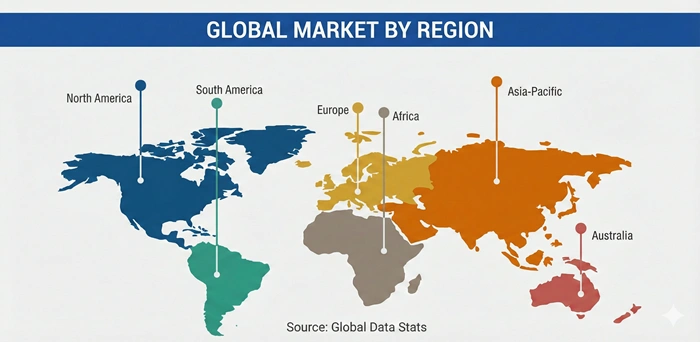
Asia-Pacific dominates the aerospace materials market with 53.65 percent revenue share in 2025, positioned to maintain leadership through 2033 with 9.24 percent CAGR expansion driven by indigenous commercial aircraft programs, maintenance repair and overhaul capacity additions, and aggressive supply-chain localization initiatives across China, India, Japan, South Korea, and ASEAN member nations. COMAC delivered 39 C919 aircraft in 2025 with annual output plans reaching 150 units by 2028, each airplane absorbing 45 tons of aluminum, 8 tons of titanium, and 12 tons of composites mostly sourced from domestic suppliers who gained certification approval for primary structural applications. India logged 1200 heavy maintenance events in 2025 as Air India and IndiGo repatriated work from overseas facilities, lifting demand for structural adhesives, replacement panels, and repair materials while the country attracts foreign direct investment in aerostructures manufacturing that broadens regional supplier bases. Japan exports 2.8 billion dollars in carbon-fiber prepreg annually with Toray's production sites feeding 40 percent of global supply, while South Korea's indigenous fighter programs require 25 percent composites by weight, creating sustained demand across the aerospace materials market.
Regional growth benefits from ASEAN nations attracting 1.2 billion dollars in aerostructures foreign direct investment between 2024 and 2025, establishing machining capacity, composite fabrication facilities, and aluminum extrusion plants that serve both domestic aircraft programs and international original equipment manufacturers. Leading aerospace materials market suppliers including Hexcel Corporation, Toray Industries, Kobe Steel, Teijin Limited, and Mitsubishi Chemical Holdings operate major production facilities throughout the region, leveraging proximity to aircraft assembly lines and lower labor costs to maintain competitive positioning. China's aerospace sector benefits from government support for advanced material development, with domestic producers gaining market share in aluminum alloys, titanium forgings, and glass-fiber composites despite ongoing certification challenges for carbon-fiber prepreg used in primary structures. India's expanding commercial aviation sector drives material consumption as carriers modernize aging fleets and add capacity to handle rising passenger volumes, while defense modernization programs accelerate adoption of specialized materials including radar-absorbent coatings and single-crystal turbine blades across the aerospace materials market in Asia-Pacific through 2033.
North America
Established Manufacturers and Space Launch Providers Anchor Strong Market Position
North America maintains substantial aerospace materials market presence anchored by Boeing, Lockheed Martin, and SpaceX production hubs that consume significant quantities of aluminum-lithium, titanium alloys, carbon-fiber composites, and specialized superalloys across commercial aviation, defense, and space-launch applications. SpaceX alone consumed 25 tons of aluminum-lithium and 8 tons of composites per Falcon 9 vehicle while flying 96 missions in 2024 and 72 additional launches by mid-2025, creating sustained demand for materials capable of surviving extreme thermal cycling across reusable first stages. Policy support via government initiatives earmarks 500 million dollars for advanced material plants aimed at rebalancing import dependence for carbon fiber and titanium following supply-chain disruptions caused by geopolitical tensions and trade restrictions. Canada's aerospace cluster supplies 15 percent of global landing-gear forgings through specialized titanium machining facilities, while Mexico's aerospace exports reached 9.2 billion dollars in 2025 as tier-two manufacturing capacity scaled across Queretaro and Chihuahua supporting major aircraft programs.
Regional aerospace materials market growth benefits from established certification infrastructure, deep supplier networks, and substantial research and development investments by manufacturers including Hexcel Corporation, Arconic, Alcoa Corporation, Howmet Aerospace, and ATI Metals who maintain major production facilities throughout the United States. Boeing's narrowbody and widebody programs require constant material feeds despite production delays affecting certain aircraft families, with 737 MAX deliveries demonstrating resilience and A320neo competitor platforms reaching noteworthy monthly output rates that sustain aluminum and composite demand. Defense spending remains robust with military aircraft modernization programs driving adoption of radar-absorbent laminates, ceramic-matrix composites for turbine applications, and aluminum-lithium alloys that reduce structural weight while maintaining damage tolerance. Space vehicle production accelerates across commercial launch providers, government space agencies, and satellite manufacturers who leverage additive manufacturing for rapid prototyping and certified production parts, with 3D-printed components achieving 30 percent weight reductions in landing-gear fittings recently earning regulatory approval across the North American aerospace materials market through 2033.
Top Key Players
-
Toray Industries Inc. (Japan)
-
Hexcel Corporation (United States)
-
Solvay S.A. (Belgium)
-
Alcoa Corporation (United States)
-
ATI Metals (United States)
-
Allegheny Technologies Incorporated (United States)
-
Constellium N.V. (Netherlands)
-
Kobe Steel Ltd. (Japan)
-
Teijin Limited (Japan)
-
Arconic Corporation (United States)
-
GKN Aerospace (United Kingdom)
-
Howmet Aerospace (United States)
-
VSMPO-AVISMA Corporation (Russia)
-
SGL Carbon SE (Germany)
-
Mitsubishi Chemical Holdings (Japan)
Recent Developments
-
December 2025: SeAH Aerospace & Defense Materials, a subsidiary of SeAH Besteel Holdings, secured a pivotal partnership with Boeing under a long-term supply agreement to provide high-strength aluminum alloy materials beginning in 2026 that will be integral to fuselage and wing construction for Boeing's commercial aircraft programs.
-
October 2025: At PTC Industries' Strategic Materials Technology Complex in Lucknow, Uttar Pradesh, India, the Defence Minister inaugurated one of the nation's pioneering Titanium and Superalloy Materials Plants, while PTC Industries Limited and Bharat Dynamics Limited signed a memorandum of understanding establishing a joint venture focused on production of propulsion systems and aero-engines.
-
July 2025: Howmet Aerospace completed a 400 million dollar acquisition of Arconic's aluminum extrusion unit, consolidating 60 percent of North American capacity and lowering billet conversion costs through integrated ingot casting operations that enhance supply-chain efficiency for aircraft structural components.
-
March 2025: Solvay and BASF announced parallel commercialization initiatives for recyclable thermoplastic matrices promising 30 percent lower embedded carbon compared to traditional thermoset composites, targeting certification approval for commercial aircraft applications by 2027 to support industry carbon-neutral roadmaps.
-
January 2025: Teijin Limited expanded its North American production capacity for thermoplastic prepreg materials used in aerospace interiors and secondary structures, investing 120 million dollars in automated manufacturing equipment that reduces labor costs while improving quality consistency for customer programs.
Market Trends
Sustainable Materials and Advanced Manufacturing Technologies Reshape Industry Standards
The transition toward recyclable and bio-based materials enhances global sustainability goals, promoting long-term growth across the aerospace materials market as manufacturers respond to carbon-neutral roadmaps, environmental regulations, and circular-economy mandates gaining traction in Europe and North America. Companies introduce completely biobased material brands with goals of lowering carbon emissions and promoting sustainable use of materials for aerospace purposes, developing alternatives including lignin-based carbon fiber precursors, recycled aluminum alloys, and bio-derived epoxy resins that maintain performance standards while reducing lifecycle environmental impact. Chromate-free primers and coatings gain market share as environmental constraints tighten, with suppliers' aerospace coatings revenue increasing substantially in 2025 through products that eliminate hazardous substances without compromising corrosion resistance or adhesion properties. Epoxy adhesives eliminate tens of thousands of fasteners per twin-aisle airframe, cutting assembly hours by 30 percent while polyurethane and silicone sealants secure pressure boundaries across extreme thermal cycles, demonstrating how functional materials defend high margins through stringent qualification barriers.
Additive manufacturing penetration accelerates across engine components where certified 3D-printed alloys cut lead times from 12 months to 6 weeks while slashing buy-to-fly ratios and material waste, enhancing original equipment manufacturer agility and lowering working capital requirements. Laser-sintered fuel nozzles, 3D-printed landing-gear fittings, and topology-optimized brackets earn regulatory certification for safety-critical hardware, with turbine makers adopting powder-bed fusion lines that support hundreds of parts per engine and anchor a market segment exceeding one billion dollars in 2025. Composite repair stations proliferate as maintenance repair and overhaul providers expand capacity to process narrowbody and widebody panels following reported damage incidents, with parts-manufacturer-approval alternatives saving aircraft operators up to 50 percent versus original equipment manufacturer list prices. The aerospace materials market benefits from fleet aging that reaches 11.5 years average across global commercial aviation, creating sustained aftermarket demand for replacement materials, structural adhesives, and repair solutions through 2033 as supply-chain bottlenecks extend lead times for new production deliveries.
Segments Covered in the Report
By Type
-
Composite Materials
-
Carbon Fiber
-
Glass Fiber
-
Aramid Fiber
-
Ceramic-Matrix Composites
-
-
Aluminum Alloys
-
Aluminum-Lithium Alloys
-
-
Titanium Alloys
-
Steel Alloys
-
Superalloys
-
Nickel-Based
-
Cobalt-Based
-
-
Plastics
-
Polyetheretherketone (PEEK)
-
Polymethyl Methacrylate (PMMA)
-
Polyphenylene Sulfide (PPS)
-
Acrylonitrile Butadiene Styrene (ABS)
-
By Aircraft Type
-
Commercial Aircraft
-
Military and Defense Aircraft
-
Space Vehicles
-
Helicopters
-
Business and General Aviation
By Application
-
Airframe Structures
-
Fuselage
-
Wings
-
Empennage
-
-
Engine Components
-
Interior Systems
-
Passenger Seating
-
Galley Systems
-
Interior Panels
-
-
Propulsion Systems
-
MRO and Aftermarket Replacement
-
Landing Gear and Actuation Systems
-
Avionics and Electronics Housing
By Region
-
Asia-Pacific
-
China
-
India
-
Japan
-
South Korea
-
ASEAN Countries
-
-
North America
-
United States
-
Canada
-
Mexico
-
-
Europe
-
Germany
-
United Kingdom
-
France
-
Italy
-
Russia
-
-
South America
-
Brazil
-
Argentina
-
-
Middle East & Africa
-
Saudi Arabia
-
United Arab Emirates
-
South Africa
-
Frequently Asked Questions
Question 1: What is the projected aerospace materials market size by 2033?
Answer: The global aerospace materials market is expected to reach USD 91.83 billion by 2033, growing at a CAGR of 8.10 percent from 2026 to 2033. This growth is driven by increasing demand for lightweight composites, space exploration expansion, and commercial aviation recovery.
Question 2: Which region leads the aerospace materials market in terms of growth rate?
Answer: Asia-Pacific leads the aerospace materials market with a 9.24 percent CAGR through 2033, driven by indigenous aircraft manufacturing programs, maintenance repair and overhaul expansion, and supply-chain localization across China, India, and Japan. The region also maintains the largest market share at 53.65 percent in 2025.
Question 3: What are the primary drivers of the aerospace materials market expansion?
Answer: Primary drivers include lightweight composite adoption for fuel efficiency, rapid expansion of space-launch ecosystems, carbon-neutral roadmaps by aircraft manufacturers, and additive manufacturing certification for safety-critical components. These factors collectively add approximately 6.7 percentage points to the aerospace materials market CAGR.
Question 4: Which aircraft type segment demonstrates the fastest growth in the aerospace materials market?
Answer: Space vehicles represent the fastest-growing aircraft type segment with an 11.08 percent CAGR, as reusable launch systems and satellite constellations raise material intensity per kilogram. This segment is expected to contribute over USD 15 billion in incremental opportunity by 2031.
Question 5: What challenges does the aerospace materials market face through 2033?
Answer: Key challenges include high energy costs for carbon fiber production, strategic metal supply-chain vulnerabilities affecting titanium availability, and lengthy certification cycles for novel materials. These restraints collectively reduce the aerospace materials market CAGR by approximately 3.3 percentage points through the forecast period.