
Aerospace Artificial Intelligence Market Overview
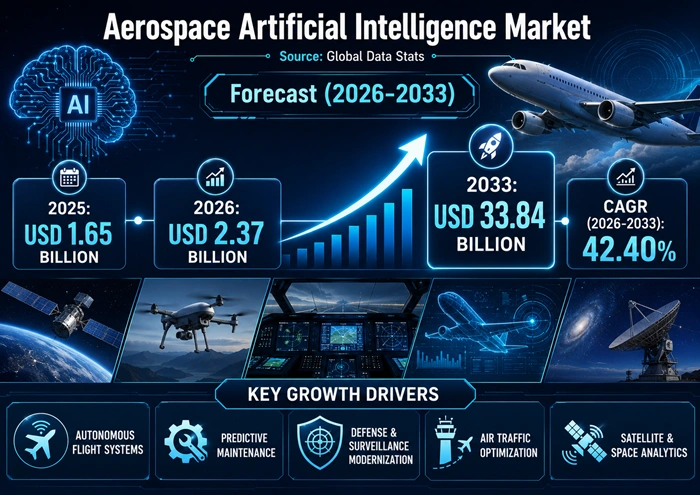
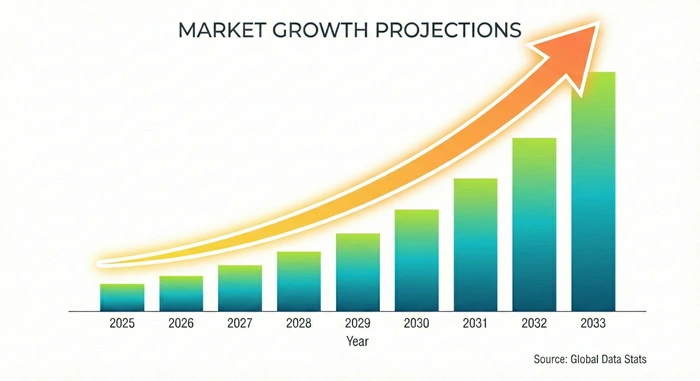
The global aerospace artificial intelligence market size is valued at USD 1.65 billion in 2025 and is predicted to increase from USD 2.37 billion in 2026 to approximately USD 33.84 billion by 2033, growing at a CAGR of 42.40% from 2026 to 2033.
The industry supplies cutting-edge computational intelligence technologies transforming aviation and space operations through machine learning algorithms, neural networks, and autonomous decision-making systems. These sophisticated platforms enable predictive maintenance, flight optimization, air traffic management, and unmanned aerial vehicle operations across commercial airlines, military aviation, and aerospace manufacturing facilities. Technology providers worldwide develop thousands of AI-powered solutions annually serving flight operations, manufacturing processes, and defense systems.
The sector represents critical infrastructure supporting modern aviation safety, efficiency, and innovation objectives. Rising air traffic volumes and mounting pressure for operational cost reduction drive steady demand for intelligent automation. Airlines and aerospace manufacturers invest substantially in AI technologies achieving fuel savings, maintenance optimization, and enhanced passenger experiences while addressing pilot shortages and complex operational challenges.
AI Impact on the Aerospace Artificial Intelligence Industry
Advanced Algorithms and Deep Learning Networks Revolutionizing Aviation Operations
Artificial intelligence fundamentally transforms aerospace operations through self-learning systems that continuously improve performance based on vast datasets collected from aircraft sensors, flight operations, and maintenance records. Modern deep learning networks analyze millions of flight parameters identifying subtle patterns indicating potential equipment failures days or weeks before traditional monitoring systems detect problems. These neural networks process engine vibration signatures, hydraulic pressure fluctuations, and electrical system performance data predicting component failures with 85-95% accuracy enabling proactive maintenance scheduling. Machine learning algorithms optimize flight paths analyzing weather patterns, air traffic congestion, and fuel efficiency factors calculating routes saving 3-5% fuel consumption per flight translating to billions in annual industry savings.
Natural language processing enables conversational interfaces where pilots interact with aircraft systems using voice commands while computer vision technologies automate aircraft inspection processes. Vision-based AI systems examine aircraft exteriors detecting minute cracks, corrosion, and structural anomalies that human inspectors might miss reducing inspection times from hours to minutes while improving detection accuracy. Autonomous flight control systems leverage reinforcement learning enabling unmanned aerial vehicles to navigate complex environments, avoid obstacles, and make split-second decisions without human intervention. These technologies prove particularly valuable for military reconnaissance, cargo delivery operations, and search-and-rescue missions where human pilots face significant risks or operational limitations.
Growth Factors
Operational Efficiency Demands and Safety Enhancement Requirements Driving Market Expansion
The global aviation industry's relentless pursuit of operational efficiency creates fundamental demand for the aerospace artificial intelligence market as airlines seek technologies reducing fuel consumption, optimizing crew scheduling, and minimizing maintenance costs. Commercial aviation operates on razor-thin profit margins where 1-2% efficiency improvements translate to hundreds of millions in annual savings for major carriers. AI-powered predictive maintenance systems reduce unscheduled aircraft downtime by 30-40% through early failure detection preventing costly delays and cancellations disrupting passenger schedules. These systems analyze historical maintenance data, manufacturer specifications, and real-time sensor readings predicting optimal component replacement timing maximizing useful life while preventing in-service failures.
Air traffic growth particularly throughout Asia Pacific and emerging markets strains existing air traffic management infrastructure demanding intelligent systems capable of handling increased aircraft volumes safely and efficiently. Global passenger numbers expected to double over the next 15 years create unprecedented congestion at major airports and airspace corridors requiring AI-powered traffic management optimizing aircraft spacing, runway utilization, and gate assignments. Military aviation investments accelerate as nations pursue autonomous combat systems, intelligent surveillance platforms, and AI-assisted pilot decision support enhancing operational capabilities while reducing personnel exposure to hostile environments. Defense applications including autonomous drones, intelligent targeting systems, and threat detection platforms drive substantial government funding for aerospace AI research and development.
Market Outlook
Regional Development Patterns and Technology Evolution Shaping Industry Future
North America maintains its commanding market position as the region's aerospace industry leadership, massive defense spending, and technology innovation ecosystem drive AI adoption across commercial aviation, military applications, and aerospace manufacturing. The United States dominates global aerospace AI development hosting major aircraft manufacturers Boeing and Lockheed Martin alongside technology leaders including IBM, Microsoft, and Google developing aviation-specific AI solutions. Silicon Valley's proximity to aerospace clusters enables collaboration between technology startups and aviation companies accelerating innovation in autonomous systems, predictive analytics, and intelligent automation. Defense Department investments exceeding billions annually fund autonomous combat systems, intelligent surveillance platforms, and AI-assisted mission planning supporting military modernization objectives.
Technology advancement focuses on autonomous flight systems enabling pilotless aircraft operations initially for cargo transportation and eventually passenger services. Several companies including Airbus, Boeing, and numerous startups develop autonomous aircraft technologies targeting regional routes and cargo operations where regulatory approval pathways appear most feasible. Edge computing capabilities advance enabling aircraft to process sensor data and make decisions locally rather than relying on ground-based computing infrastructure reducing latency and improving reliability particularly for autonomous operations. Explainable AI development addresses aviation industry's stringent safety certification requirements ensuring algorithms provide transparent decision-making processes that regulators and operators can understand, validate, and trust throughout safety-critical applications.
Expert Speaks
-
Dave Calhoun, Former CEO of Boeing – "Artificial intelligence represents transformative technology reshaping how we design, manufacture, and operate aircraft enabling unprecedented levels of efficiency and safety. Our investments in AI span manufacturing automation through autonomous flight systems supporting commercial aviation's evolution while addressing industry challenges including pilot shortages and operational cost pressures."
-
Guillaume Faury, CEO of Airbus – "AI technologies fundamentally enhance our capabilities across the aviation value chain from optimizing manufacturing processes through enabling autonomous systems and predictive maintenance. These innovations support our sustainability objectives while improving operational efficiency for airline customers facing intense competitive and environmental pressures."
-
Gregory Hayes, Former CEO of Raytheon Technologies – "Defense and commercial aerospace applications increasingly rely on artificial intelligence delivering capabilities from autonomous systems through intelligent threat detection and mission planning. Continued investments in AI technologies remain central to maintaining technological superiority and addressing evolving global security challenges."
Key Report Takeaways
-
North America dominates the global aerospace artificial intelligence market with approximately 42% market share, powered by aerospace industry leadership, massive defense spending, advanced technology ecosystem, and early AI adoption across commercial aviation and military applications
-
Asia Pacific represents the fastest-growing region with projected CAGR exceeding 45.8% through 2033, driven by rapid air traffic growth, expanding commercial aviation fleets, increasing defense modernization investments, and growing aerospace manufacturing capabilities throughout China, India, and Southeast Asia
-
Software offerings lead market segments capturing roughly 38% market share as AI algorithms, machine learning platforms, and intelligent decision-support systems provide core functionality enabling autonomous operations, predictive maintenance, and operational optimization
-
Smart maintenance applications dominate use cases accounting for approximately 35% of market consumption as airlines and defense operators prioritize predictive analytics reducing unscheduled downtime, optimizing component replacement, and lowering maintenance costs
-
Commercial aviation leads end-user segments holding about 48% market share as airlines invest heavily in AI technologies addressing operational efficiency, fuel optimization, passenger experience enhancement, and pilot shortage challenges
-
Machine learning technology shows strongest growth trajectory among AI approaches with highest projected CAGR approaching 44.5% as deep learning networks, neural networks, and reinforcement learning enable increasingly sophisticated autonomous systems and predictive capabilities
Market Scope
| Report Coverage | Details |
|---|---|
| Market Size by 2033 | USD 33.84 Billion |
| Market Size by 2025 | USD 1.65 Billion |
| Market Size by 2026 | USD 2.37 Billion |
| Market Growth Rate from 2026 to 2033 | CAGR of 42.40% |
| Dominating Region | North America |
| Fastest Growing Region | Asia Pacific |
| Base Year | 2025 |
| Forecast Period | 2026 to 2033 |
| Segments Covered | Offering, Technology, Application, End-User, Aircraft Type, Region |
| Regions Covered | North America, Europe, Asia Pacific, Latin America, Middle East & Africa |
Market Dynamics
Drivers Impact Analysis
Multiple Technological and Operational Forces Accelerating Market Growth
| Driver | Impact on CAGR Forecast | Geographic Relevance | Impact Timeline |
|---|---|---|---|
| Predictive maintenance adoption reducing operational costs | ≈ 12.5% positive impact | Global, strongest in commercial aviation | Immediate and long-term |
| Autonomous systems development for UAVs and aircraft | ≈ 10.2% positive impact | North America, defense applications | Medium to long-term |
| Air traffic growth straining management systems | ≈ 8.4% positive impact | Asia Pacific, emerging markets | Immediate and long-term |
| Pilot shortage challenges driving automation | ≈ 6.8% positive impact | Global, particularly developed markets | Immediate |
Predictive maintenance applications create sustained demand for the aerospace artificial intelligence market as airlines realize substantial cost savings through data-driven maintenance scheduling replacing traditional time-based or reactive approaches. Modern aircraft generate terabytes of sensor data during every flight including engine performance parameters, hydraulic pressures, electrical system loads, and environmental conditions. AI algorithms analyze this data identifying subtle patterns indicating impending component failures enabling maintenance teams to schedule repairs during planned downtime avoiding costly in-flight failures or unexpected groundings. Airlines implementing AI-powered predictive maintenance report 25-35% reductions in maintenance costs through optimized component replacement timing, reduced spare parts inventory requirements, and fewer flight disruptions.
Autonomous systems development accelerates particularly for unmanned aerial vehicles serving military reconnaissance, cargo delivery, and surveillance applications where AI enables sophisticated autonomous operations. Military forces worldwide invest billions developing autonomous combat drones capable of target identification, threat avoidance, and mission execution with minimal human oversight. These systems leverage computer vision for object recognition, reinforcement learning for tactical decision-making, and swarm intelligence enabling coordinated operations among multiple autonomous platforms. Commercial applications including package delivery drones, agricultural monitoring, and infrastructure inspection drive civilian UAV market growth requiring intelligent flight control, obstacle avoidance, and autonomous navigation capabilities.
Restraints Impact Analysis
Technical and Regulatory Challenges Constraining Market Development
| Restraint | Impact on CAGR Forecast | Geographic Relevance | Impact Timeline |
|---|---|---|---|
| Stringent aviation safety certification requirements | ≈ 5.4% negative impact | Global, particularly developed markets | Immediate and long-term |
| Data security and cybersecurity concerns | ≈ 4.2% negative impact | Global | Immediate |
| High implementation costs and ROI uncertainties | ≈ 3.8% negative impact | Small operators, emerging markets | Immediate and medium-term |
| AI algorithm transparency and explainability challenges | ≈ 3.1% negative impact | Safety-critical applications | Medium-term |
Aviation safety certification requirements create significant barriers for the aerospace artificial intelligence market as regulatory authorities demand extensive validation and testing before approving AI systems for safety-critical applications. Federal Aviation Administration and European Aviation Safety Agency certification processes require demonstrating AI algorithms perform reliably across all possible operating conditions including rare edge cases that might occur once in millions of flight hours. Traditional software certification methodologies struggle addressing machine learning systems that evolve through training rather than explicit programming creating regulatory uncertainty. The certification process for new avionics systems typically requires 3-5 years and costs tens of millions of dollars creating substantial barriers particularly for smaller technology developers and startups.
Cybersecurity concerns limit AI adoption as connected aircraft systems and cloud-based analytics platforms create potential attack vectors threatening flight safety and passenger security. Aircraft increasingly rely on data links connecting to ground-based systems for real-time analytics, software updates, and operational communications creating vulnerabilities that malicious actors might exploit. High-profile cybersecurity incidents affecting other transportation sectors heighten aviation industry wariness about expanding digital connectivity and AI system adoption. Military applications face even greater security challenges as adversaries might attempt manipulating AI algorithms, spoofing sensor inputs, or disrupting autonomous systems operations through electronic warfare techniques.
Opportunities Impact Analysis
Emerging Applications and Market Segments Creating Growth Potential
| Opportunity | Impact on CAGR Forecast | Geographic Relevance | Impact Timeline |
|---|---|---|---|
| Urban air mobility and eVTOL aircraft development | ≈ 8.6% positive impact | Urban centers globally | Medium to long-term |
| Space operations and satellite management AI | ≈ 6.4% positive impact | Space-capable nations | Medium to long-term |
| Passenger experience personalization through AI | ≈ 5.2% positive impact | Premium commercial aviation | Medium-term |
| AI-enhanced pilot training and simulation | ≈ 4.8% positive impact | Global | Immediate and medium-term |
Urban air mobility represents transformative opportunity for the aerospace artificial intelligence market as dozens of companies develop electric vertical takeoff and landing aircraft requiring sophisticated autonomous systems for safe urban operations. These eVTOL vehicles aim providing on-demand air taxi services throughout congested metropolitan areas leveraging AI for autonomous flight control, traffic management, and safe landing zone identification. The confined urban environment with buildings, power lines, and unpredictable obstacles demands advanced computer vision, real-time decision-making, and fail-safe control systems beyond current aviation technology. Major aerospace companies including Boeing, Airbus, Joby Aviation, and Lilium invest billions developing eVTOL platforms with AI-powered autonomous capabilities targeting commercial service launch within 3-5 years.
Space operations create premium market segments as satellite operators, launch providers, and exploration missions adopt AI technologies for autonomous spacecraft control, orbital debris avoidance, and deep space navigation. The expanding satellite constellation market with thousands of satellites launched annually for communications, Earth observation, and internet connectivity requires intelligent autonomous systems for orbital maneuvering, collision avoidance, and coordination among multiple spacecraft. AI algorithms optimize satellite positioning, antenna pointing, and power management maximizing operational performance and extending mission lifespans. Deep space missions including Mars exploration and asteroid mining operations demand autonomous decision-making as communication delays prevent real-time human control requiring spacecraft to navigate obstacles, analyze scientific targets, and respond to anomalies independently.
Segment Analysis
Software Segment
Dominant Offering Category Providing Core AI Functionality Across Applications
Software offerings represent the largest segment capturing approximately 38% of the aerospace artificial intelligence market share in 2025, expanding at 43.2% CAGR through the forecast period. This category encompasses machine learning platforms, predictive analytics applications, autonomous flight control systems, and intelligent decision-support software powering diverse aviation applications. North America dominates software adoption as the region's technology leadership, extensive aerospace software development ecosystem, and early AI implementation drive market growth. These software solutions integrate with existing aircraft systems, maintenance management platforms, and flight operations centers providing actionable insights and autonomous capabilities without requiring extensive hardware modifications. Cloud-based AI platforms enable smaller operators accessing sophisticated analytics and predictive maintenance capabilities through subscription models avoiding large upfront capital investments.
Major software providers including IBM Watson, Microsoft Azure, Google Cloud AI, General Electric Aviation, and specialized aerospace AI startups develop platforms serving commercial airlines, defense operators, and aerospace manufacturers. These vendors offer pre-trained models for common aviation applications including engine health monitoring, flight path optimization, and maintenance scheduling while providing customization capabilities for operator-specific requirements. Predictive maintenance software represents the largest sub-segment as airlines prioritize reducing unscheduled maintenance events that disrupt operations and generate substantial costs. European commercial aviation shows robust adoption as carriers including Lufthansa, Air France-KLM, and British Airways implement AI-powered maintenance systems across fleets. Defense applications also drive software demand as military forces develop intelligent mission planning systems, autonomous drone control platforms, and AI-assisted pilot decision support tools.
Commercial Aviation End-User
Largest Consumer Segment Driven by Operational Efficiency and Passenger Experience Goals
Commercial aviation applications dominate end-user consumption capturing approximately 48% market share in 2025, growing at 41.8% CAGR as airlines invest heavily in AI technologies addressing operational challenges, fuel efficiency objectives, and competitive pressures. This segment encompasses passenger airlines, cargo carriers, and charter operators implementing AI across flight operations, maintenance, crew management, and customer service functions. Asia Pacific shows particularly strong growth as the region's rapidly expanding aviation market, new aircraft deliveries, and airline fleet modernization create favorable conditions for AI adoption. Major carriers including Singapore Airlines, Cathay Pacific, and China Southern Airlines implement comprehensive AI strategies spanning predictive maintenance through passenger experience personalization. The region's technology-forward carriers often lead global AI adoption willing to embrace innovative solutions addressing operational challenges.
Leading commercial airlines including Delta, United, American, Emirates, and Qantas deploy AI technologies across operations achieving measurable benefits including reduced fuel consumption, improved on-time performance, and enhanced maintenance efficiency. These carriers partner with technology providers including GE Aviation, Honeywell Aerospace, IBM, and specialized AI vendors developing customized solutions for airline-specific requirements. Fuel optimization represents high-priority application as jet fuel typically accounts for 25-30% of airline operating costs making 1-2% efficiency improvements worth hundreds of millions annually for major carriers. AI algorithms analyze weather patterns, air traffic flows, aircraft performance characteristics, and fuel prices calculating optimal flight paths, speeds, and altitudes. Revenue management systems leverage machine learning optimizing ticket pricing, capacity allocation, and ancillary revenue generation maximizing profitability across route networks.
Regional Insights
North America
Market Leadership Through Technology Innovation and Aerospace Industry Dominance
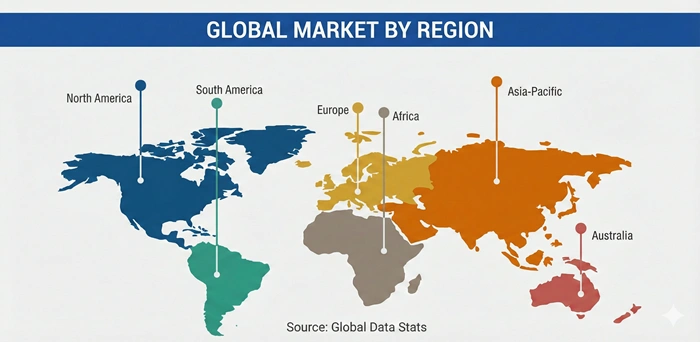
North America dominates with approximately 42% of the global aerospace artificial intelligence market share, valued at over USD 690 million in 2025 and growing at 40.5% CAGR through 2033. The region benefits from aerospace industry leadership including Boeing and Lockheed Martin, massive defense spending exceeding USD 800 billion annually, and advanced technology ecosystem spanning Silicon Valley through aerospace clusters in Seattle, Dallas, and Southern California. United States represents the world's largest market as commercial airlines operate sophisticated fleet management systems, military aviation leads global defense spending, and NASA pursues autonomous space exploration technologies. The Department of Defense's Joint Artificial Intelligence Center and service-specific AI initiatives drive billions in research funding supporting autonomous combat systems, intelligent surveillance platforms, and AI-enhanced command and control systems.
Major regional players including Boeing, Lockheed Martin, Northrop Grumman, General Electric Aviation, and Honeywell Aerospace establish comprehensive AI development programs spanning commercial and defense applications. These companies collaborate with technology leaders including IBM, Microsoft, Google, and Amazon Web Services bringing cloud computing, machine learning expertise, and data analytics capabilities to aerospace applications. Commercial aviation AI adoption accelerates as major US carriers including Delta, United, and American implement predictive maintenance systems, flight optimization platforms, and AI-powered customer service reducing operational costs while improving reliability. Canada contributes significantly through aerospace manufacturers Bombardier and CAE alongside military AI investments supporting NORAD operations and CF-18 fighter modernization programs incorporating intelligent systems.
Asia Pacific
Fastest Growing Region Through Air Traffic Expansion and Defense Modernization
Asia Pacific emerges as the fastest-growing regional market expanding at approximately 45.8% CAGR as rapid air traffic growth, expanding commercial aviation fleets, increasing defense spending, and growing aerospace manufacturing capabilities drive AI adoption throughout China, India, Japan, and Southeast Asia. China dominates regional growth as the country's commercial aviation market expected to become world's largest by 2030 creating enormous demand for operational efficiency technologies. Major Chinese carriers including China Southern, China Eastern, and Air China implement AI-powered systems addressing fleet management, maintenance optimization, and passenger service enhancement. Government initiatives supporting domestic aerospace industry development and military modernization including autonomous combat systems and intelligent surveillance platforms drive substantial AI investments.
Leading regional and global suppliers including COMAC, Mitsubishi Heavy Industries, Hindustan Aeronautics, Boeing operations, Airbus facilities, and technology providers establish substantial market presence serving diverse customer segments. These companies develop AI solutions addressing regional requirements including high-density air traffic management, tropical climate maintenance challenges, and integration with regional aviation systems and standards. India represents high-growth opportunity as commercial aviation expands rapidly, defense modernization accelerates, and aerospace manufacturing capabilities develop. Major Indian carriers including IndiGo, Air India, and SpiceJet adopt AI technologies improving operational efficiency across expanding domestic and international route networks. Defense applications also drive growth as India develops indigenous fighter aircraft, unmanned combat vehicles, and intelligent surveillance systems supporting border security and military modernization objectives.
Top Key Players
-
Boeing (United States)
-
Lockheed Martin Corporation (United States)
-
Northrop Grumman Corporation (United States)
-
Airbus SE (France/Netherlands)
-
General Electric Aviation (United States)
-
Honeywell Aerospace (United States)
-
IBM Corporation (United States)
-
Thales Group (France)
-
Raytheon Technologies (United States)
-
BAE Systems (United Kingdom)
-
SITA (Switzerland)
-
Intel Corporation (United States)
-
NVIDIA Corporation (United States)
-
Microsoft Corporation (United States)
Recent Developments
-
Boeing (2024) – Launched AI-powered predictive maintenance platform integrating with 787 Dreamliner fleet operations analyzing real-time sensor data from engines, hydraulics, and electrical systems predicting component failures 10-15 days advance enabling proactive maintenance scheduling reducing unscheduled downtime by 30% across airline customers globally
-
Airbus (2025) – Announced strategic partnership with Google Cloud developing AI-enhanced flight operations management system leveraging machine learning for fuel optimization, weather pattern analysis, and air traffic prediction deployed across A350 and A320neo family aircraft achieving 3-5% fuel consumption reduction
-
General Electric Aviation (2024) – Expanded AI-powered engine health monitoring capabilities across CFM LEAP and GE9X engine families incorporating deep learning algorithms analyzing vibration signatures, temperature profiles, and performance parameters serving over 500 airline customers achieving 95% accuracy predicting engine maintenance requirements
-
Honeywell Aerospace (2025) – Acquired AI technology startup specializing in computer vision for aircraft inspection developing autonomous drone-based inspection systems examining aircraft exteriors detecting surface defects, corrosion, and structural anomalies reducing inspection times from 4 hours to 30 minutes while improving detection accuracy
-
Lockheed Martin (2024) – Invested USD 200 million expanding AI research facilities in California and Texas developing autonomous flight control systems, intelligent target recognition, and AI-assisted mission planning supporting F-35 fighter modernization and next-generation combat aircraft programs
Market Trends
Edge Computing and Explainable AI Reshaping Aviation Technology Development
The aerospace artificial intelligence market experiences fundamental transformation toward edge computing architectures as aircraft process sensor data and execute AI algorithms locally rather than relying exclusively on cloud-based systems. This architectural shift addresses latency concerns for time-critical applications including autonomous flight control, collision avoidance, and real-time decision-making where millisecond response times prove essential for safety. Modern aircraft incorporate powerful edge computing hardware including GPUs and neural processing units enabling sophisticated machine learning inference executing onboard without ground connectivity. This approach also addresses cybersecurity concerns by minimizing data transmission reducing attack surfaces while ensuring autonomous systems function reliably during communication disruptions or intentional jamming scenarios particularly critical for military applications.
Explainable AI development emerges as critical priority as aviation regulators and operators demand transparency understanding how algorithms reach decisions particularly for safety-critical applications. Traditional deep learning networks function as "black boxes" providing accurate predictions without explaining reasoning processes creating certification and operational acceptance challenges. Researchers develop explainable AI techniques including attention mechanisms, saliency maps, and decision tree approximations revealing which input factors most influence algorithm outputs. These capabilities enable human operators understanding, validating, and trusting AI recommendations while supporting regulatory certification processes requiring demonstrating reliable performance across all operating conditions including rare edge cases.
Segments Covered in the Report
By Offering
-
Hardware (Processors, Memory, Network)
-
Software (AI Platforms, AI Solutions)
-
Services (Deployment & Integration, Support & Maintenance)
By Technology
-
Machine Learning
-
Natural Language Processing
-
Computer Vision
-
Context-Aware Computing
By Application
-
Smart Maintenance (Predictive Maintenance, Condition Monitoring)
-
Flight Operations (Flight Planning, Fuel Optimization, Crew Management)
-
Manufacturing (Design Optimization, Production Automation)
-
Surveillance (Threat Detection, Reconnaissance)
-
Virtual Assistants (Passenger Service, Crew Support)
-
Training (Pilot Training, Maintenance Training)
By End-User
-
Commercial Aviation (Passenger Airlines, Cargo Carriers)
-
Military Aviation (Combat Aircraft, UAVs, Helicopters)
-
General Aviation
By Aircraft Type
-
Fixed-Wing Aircraft
-
Rotary-Wing Aircraft
-
Unmanned Aerial Vehicles (UAVs)
By Region
-
North America
-
Europe
-
Asia Pacific
-
Latin America
-
Middle East & Africa
Frequently Asked Questions
Question 1: What drives growth in the aerospace artificial intelligence market globally?
Answer: The aerospace artificial intelligence market experiences explosive growth from predictive maintenance adoption reducing operational costs and autonomous systems development for UAVs and aircraft. Air traffic expansion straining management infrastructure and pilot shortage challenges also contribute significantly to accelerating AI technology adoption across commercial and military aviation.
Question 2: Which region leads the aerospace artificial intelligence market currently?
Answer: North America dominates the aerospace artificial intelligence market with approximately 42% share backed by aerospace industry leadership and massive defense spending. The region benefits from advanced technology ecosystems, early AI adoption among major airlines, and substantial government funding supporting autonomous military systems development.
Question 3: How does machine learning impact the aerospace artificial intelligence market?
Answer: Machine learning significantly influences the aerospace artificial intelligence market through predictive analytics enabling 85-95% accuracy forecasting equipment failures. These algorithms analyze vast sensor datasets identifying subtle patterns invisible to traditional monitoring systems while continuously improving performance through operational experience.
Question 4: What applications drive the aerospace artificial intelligence market consumption?
Answer: Smart maintenance applications lead the aerospace artificial intelligence market representing approximately 35% of consumption. Airlines prioritize predictive analytics reducing unscheduled downtime by 30-40% while flight operations optimization and autonomous systems development represent rapidly growing application segments.
Question 5: Which segment shows fastest growth in the aerospace artificial intelligence market?
Answer: Machine learning technology demonstrates the strongest growth trajectory in the aerospace artificial intelligence market with projected CAGR approaching 44.5%. This approach enables increasingly sophisticated autonomous systems, predictive capabilities, and operational optimization across commercial aviation and defense applications.