
Acupuncture Market Overview
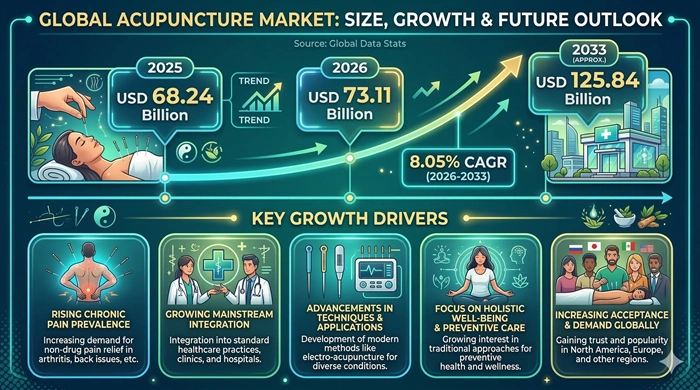
The global Acupuncture market size is valued at USD 68.24 Billion in 2025 and is predicted to increase from USD 73.11 Billion in 2026 to approximately USD 125.84 Billion by 2033, growing at a CAGR of 8.05% from 2026 to 2033. The market is growing steadily due to increasing interest in non-drug pain management, wider acceptance of complementary medicine, rising stress-related disorders, and stronger consumer demand for holistic therapy. Related terms such as traditional Chinese medicine market and integrative pain therapy market also align closely with this industry.
A Wider Shift Toward Preventive Wellness Chronic Pain Relief and Integrative Healthcare Is Strengthening Long Term Demand Across the Acupuncture Ecosystem
The Acupuncture market includes services, treatment sessions, training programs, clinical delivery models, consumables, and supporting tools used in acupuncture-based care. Demand is rising across pain management, migraine treatment, stress reduction, women’s health, sports recovery, and wellness applications. Consumers are increasingly looking for treatment options that reduce dependence on long-term medication use while supporting overall well-being.
The market is also benefiting from the expansion of integrative care models in hospitals, wellness centers, rehabilitation clinics, and private practices. In many countries, acupuncture is no longer seen only as an alternative therapy. It is increasingly being used alongside physiotherapy, rehabilitation, mental wellness support, and chronic disease management. This broader use case is helping the market expand beyond traditional treatment settings.
AI Impact on the Acupuncture Industry
Digital Intelligence Is Improving Patient Matching Appointment Optimization and Personalized Wellness Planning Across the Acupuncture Industry
Artificial intelligence is starting to influence the Acupuncture market mainly through scheduling platforms, patient engagement systems, digital symptom tracking, and treatment planning support. AI tools can help clinics group patients by symptom pattern, treatment frequency, recovery response, and follow-up need. This improves workflow efficiency and can make patient retention stronger, especially in multi-location clinic networks.
AI also supports the broader consumer wellness environment surrounding acupuncture. Digital assistants, remote consultation tools, and app-based care plans are helping providers educate patients and improve continuity between sessions. Over time, AI may strengthen the Acupuncture market by enabling more personalized care journeys, better treatment adherence, and improved operational efficiency for providers.
Growth Factors
Rising Chronic Pain Burden Growing Consumer Wellness Spending and Expanding Integrative Healthcare Models Are Driving Acupuncture Market Expansion
One of the key growth factors in the Acupuncture market is the increasing burden of chronic pain. Conditions such as lower back pain, neck pain, arthritis, migraines, and postural stress are encouraging patients to try non-invasive and non-pharmaceutical therapies. Many individuals now prefer treatment approaches that support symptom relief with lower risk of long-term medication dependence. This trend is particularly strong in urban populations with high stress levels and sedentary lifestyles.
Another growth factor is the rising acceptance of holistic and preventive healthcare. Employers, insurers, and healthcare providers are paying more attention to wellness outcomes, mental balance, and lifestyle-based treatment support. Acupuncture fits well into this model because it is often positioned as a therapy that supports pain relief, stress management, sleep quality, and emotional well-being. As integrative medicine becomes more mainstream, the Acupuncture market is gaining stronger commercial traction.
Market Outlook
The Market Outlook Remains Positive As Clinical Acceptance Consumer Awareness and Service Accessibility Continue To Improve Across Major Regions
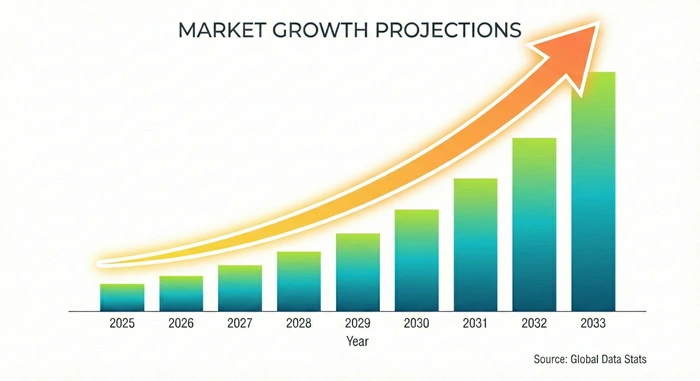
The outlook for the Acupuncture market remains favorable through the forecast period. Demand is likely to rise as patients seek more personalized and lower-risk treatment options for pain, anxiety, stress, insomnia, and mobility-related conditions. The market is also expected to benefit from continued clinic expansion, professional training growth, and the inclusion of acupuncture in selected reimbursement systems. These factors improve affordability and strengthen repeat patient visits.
Looking ahead, the market is likely to expand through hybrid care models that combine acupuncture with physiotherapy, massage therapy, rehabilitation, and digital wellness monitoring. Providers that offer structured treatment plans and stronger patient education may capture more long-term demand. The Acupuncture market should also see higher growth in emerging economies where urban wellness spending and alternative therapy acceptance are rising quickly.
Expert Speaks
-
David Cordani (United States), CEO of Cigna, has emphasized the need for more personalized and preventive healthcare models, which supports the broader use of integrative therapies such as acupuncture in long-term care pathways.
-
Andrew Witty (United States), CEO of UnitedHealth Group, has highlighted value-based care and better whole-person health management, both of which align with the growing commercial relevance of acupuncture services.
-
Gail Boudreaux (United States), CEO of Elevance Health, has spoken about expanding access to coordinated care and wellness-based solutions, a trend that creates a more supportive environment for non-drug treatment approaches.
Key Report Takeaways
-
North America leads the Acupuncture market with an estimated 34.8% share in 2026 due to higher awareness, stronger clinic networks, growing integrative care adoption, and better spending capacity for wellness services.
-
Asia Pacific is the fastest-growing region and is projected to expand at a CAGR of 9.43% from 2026 to 2033 because of strong cultural familiarity, a large patient base, urban healthcare expansion, and rising private wellness consumption.
-
Adults with chronic pain and stress-related conditions represent the largest customer group in the Acupuncture market, accounting for nearly 69.2% of demand as they seek recurring treatment for musculoskeletal and lifestyle-linked disorders.
-
Pain management applications contribute the highest share at around 41.6%, supported by the use of acupuncture for back pain, joint pain, headaches, nerve pain, and sports recovery.
-
Manual acupuncture remains the most widely used treatment process because it is cost-effective, familiar to practitioners, and broadly accepted across both traditional and modern care settings.
-
Medical acupuncture in hospital-linked and integrative clinics is expected to grow quickly, holding an estimated 22.4% share in 2026 and registering a projected CAGR of 8.88% through 2033 due to rising clinical acceptance and structured care delivery.
Market Scope
| Scope Item | Details |
|---|---|
| Market Size by 2033 | USD 125.84 Billion |
| Market Size by 2025 | USD 68.24 Billion |
| Market Size by 2026 | USD 73.11 Billion |
| Market Growth Rate from 2026 to 2033 | CAGR of 8.05% |
| Dominating Region | North America |
| Fastest Growing Region | Asia Pacific |
| Base Year | 2025 |
| Forecast Period | 2026 to 2033 |
| Segments Covered | By Type By Application By End User By Technique By Region |
| Regions Covered | North America Europe Asia Pacific Latin America Middle East & Africa |
Market Dynamics
Drivers Impact Analysis
Growing Preference For Non Drug Therapies Rising Chronic Pain Cases and Expanding Integrative Clinics Are Accelerating The Acupuncture Market
| Driver | (≈) % Impact on CAGR Forecast | Geographic Relevance | Impact Timeline |
|---|---|---|---|
| Rising chronic pain burden | 2.1% | Global | Short to Long Term |
| Higher acceptance of complementary medicine | 1.7% | North America Europe Asia Pacific | Medium to Long Term |
| Growth of wellness and preventive care spending | 1.4% | Global | Medium Term |
The Acupuncture market is strongly supported by the rising number of patients living with chronic pain, stress disorders, fatigue, migraines, and musculoskeletal discomfort. Many of these patients are looking for therapies that can be repeated safely and used alongside conventional treatment. This creates a broader demand base for acupuncture across clinics, wellness centers, and rehabilitation settings. As awareness increases, more first-time users are entering the market.
A second major driver is the shift toward holistic and patient-centered care. Healthcare systems and private providers are increasingly open to complementary therapies that support quality of life and long-term condition management. The Acupuncture market benefits from this trend because it is often integrated into pain relief, post-injury recovery, women’s health, and mental wellness programs. This makes the market more resilient and less dependent on a single treatment application.
Restraints Impact Analysis
Limited Reimbursement Variations In Regulatory Standards and Clinical Skepticism Continue To Restrain Faster Acupuncture Market Growth
| Restraint | (≈) % Impact on CAGR Forecast | Geographic Relevance | Impact Timeline |
|---|---|---|---|
| Limited insurance reimbursement | -1.3% | North America Europe | Short to Medium Term |
| Uneven practitioner standards | -0.9% | Global | Medium Term |
| Clinical skepticism in some care systems | -0.8% | Global | Long Term |
The Acupuncture market still faces reimbursement-related barriers in many countries. Even where acupuncture is accepted, coverage levels may differ by insurer, indication, or treatment setting. This raises out-of-pocket costs and can reduce the frequency of repeat visits. For price-sensitive consumers, cost remains a meaningful barrier.
The market also faces challenges around standardization and perception. Practitioner training, licensing, and treatment protocols vary by region, which can affect trust and service consistency. In some medical systems, skepticism remains about the breadth of clinical evidence across all use cases. These issues may slow institutional adoption even as consumer interest continues to rise.
Opportunities Impact Analysis
Medical Integration Digital Wellness Platforms and Emerging Urban Consumer Demand Are Creating New Growth Space In The Acupuncture Market
| Opportunity | (≈) % Impact on CAGR Forecast | Geographic Relevance | Impact Timeline |
|---|---|---|---|
| Integration into hospital and rehab settings | 1.6% | North America Europe Asia Pacific | Medium to Long Term |
| Digital booking and patient retention platforms | 1.2% | Global | Short to Medium Term |
| Expansion in emerging urban markets | 1.8% | Asia Pacific Latin America | Medium to Long Term |
A major opportunity in the Acupuncture market is the expansion of medical acupuncture within structured healthcare settings. Hospitals, sports medicine centers, rehabilitation providers, and pain clinics are adding acupuncture to multidisciplinary treatment plans. This increases trust, improves patient access, and creates a stronger recurring revenue model. It also positions acupuncture as part of organized care rather than a standalone wellness service.
Another opportunity lies in digital enablement and urban demand growth. Online appointment systems, subscription-based wellness plans, and app-led follow-up reminders help clinics improve retention and operating efficiency. In fast-growing cities across Asia Pacific and Latin America, rising middle-class spending is supporting broader use of preventive and therapeutic wellness services. This gives the Acupuncture market new room to scale.
Segment Analysis
By Type
Traditional Acupuncture Continues To Lead While Medical Acupuncture Gains Momentum Through Clinical Integration
The traditional acupuncture segment holds the largest share of the Acupuncture market at an estimated 57.3% in 2026. This segment remains dominant because it is widely practiced, culturally established, and accessible across private clinics and wellness centers. Patients often prefer this format for recurring treatment of pain, stress, headaches, fatigue, and sleep-related concerns. Asia Pacific leads this segment due to deep historical acceptance, a large practitioner base, and broad public familiarity with traditional methods.
The segment is also growing steadily in North America and Europe as consumers seek natural pain management and preventive care. Private wellness chains and independent clinics continue to expand service offerings around traditional acupuncture. Companies and organized provider groups in these regions benefit from repeat visits and long-duration treatment plans. The Acupuncture market for traditional services is projected to grow at a CAGR of 7.72% through 2033 because of broad consumer acceptance and stable application demand.
By Application
Pain Management Remains The Core Revenue Segment Because It Connects Strong Consumer Need With Repeat Treatment Behavior
The pain management segment accounts for about 41.6% of the Acupuncture market in 2026, making it the largest application area. This segment covers lower back pain, neck pain, osteoarthritis-related discomfort, migraines, muscle tension, and recovery from repetitive strain. It dominates because patients are actively seeking drug-free or low-drug supportive care for persistent pain conditions. North America leads this segment through strong patient awareness, sports recovery usage, and integrative clinic adoption.
The segment is expected to expand at a CAGR of 8.34% through 2033, supported by clinical acceptance and recurring patient demand. Europe is also showing strong progress because of higher interest in complementary medicine and rehabilitation support. Major clinic groups, wellness networks, and integrated therapy providers are increasing service availability in urban areas. This keeps pain management at the center of the Acupuncture market and supports long-term revenue stability.
Regional Insights
North America
Strong Wellness Spending Better Clinical Awareness and Wider Integrative Care Adoption Keep North America In The Leading Position
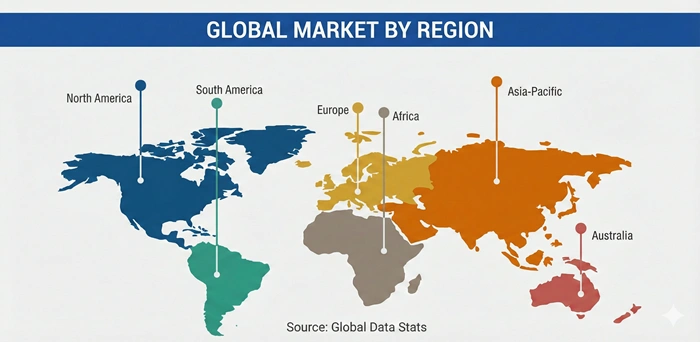
North America leads the Acupuncture market with an estimated 34.8% share in 2026. The region benefits from high consumer awareness, a large chronic pain patient base, developed wellness infrastructure, and stronger spending on complementary therapies. The United States remains the largest contributor because of high service availability across private clinics, rehabilitation centers, and hospital-linked integrative programs. The market also benefits from urban concentration and growing employer interest in wellness support.
The regional market is expected to grow at a CAGR of 7.54% through 2033. Growth is supported by stronger acceptance of non-drug pain management and increasing consumer willingness to pay for preventive health services. Organized provider groups, wellness clinic chains, and insurer-linked pilot programs are supporting the maturing Acupuncture market in the region. North America should remain the leading regional market over the forecast period.
Asia Pacific
Cultural Familiarity Large Patient Volume and Fast Urban Healthcare Expansion Make Asia Pacific The Fastest Growing Acupuncture Market
Asia Pacific is the fastest-growing region in the Acupuncture market and is projected to register a CAGR of 9.43% from 2026 to 2033. The region has a strong cultural base for acupuncture and traditional medicine, which supports everyday treatment use across multiple age groups. China, Japan, South Korea, and India are key growth centers because they combine tradition with rising urban healthcare demand. Expanding private clinics and wellness chains are improving service availability.
Asia Pacific held an estimated 31.1% market share in 2026 and is expected to climb steadily by 2033. Growth is being supported by rising income levels, stronger consumer wellness behavior, and wider professional training access. Local clinic networks, traditional medicine institutions, and integrated care providers are helping the regional Acupuncture market scale faster. This makes Asia Pacific the strongest growth engine for the industry.
Top Key Players
-
Modern Acupuncture (United States)
-
WellnessLiving Systems Inc. (Canada)
-
Ping Ming Health (United States)
-
Pacific College Of Health And Science (United States)
-
Acupuncture Is My Life Clinic Group (United Kingdom)
-
Japan Traditional Acupuncture Association (Japan)
-
Beijing Tong Ren Tang (China)
-
Eu Yan Sang International Ltd. (Singapore)
-
Shandong Buchang Pharmaceuticals Co. Ltd. (China)
-
China Resources Sanjiu Medical & Pharmaceutical Co. Ltd. (China)
Recent Developments
-
2025: Modern Acupuncture continued expanding branded clinic-based delivery across major urban markets, strengthening its position in membership-led acupuncture services.
-
2025: WellnessLiving Systems Inc. enhanced digital scheduling, client retention, and business management tools widely used by wellness and acupuncture providers, supporting better clinic efficiency.
-
2024: Ping Ming Health broadened service communication around integrative care and chronic pain support, reflecting stronger patient demand for structured treatment plans.
-
2024: Pacific College Of Health And Science expanded education visibility for acupuncture and East Asian medicine, supporting practitioner pipeline growth in North America.
-
2024: Eu Yan Sang International Ltd. continued developing its traditional wellness presence across Asia, supporting broader consumer adoption of complementary health solutions linked to acupuncture demand.
Market Trends
Service Standardization Digital Patient Management and Integrative Wellness Positioning Are Becoming Central Trends Across The Acupuncture Market
One important trend in the Acupuncture market is the shift from standalone therapy to integrated service packages. Providers are increasingly combining acupuncture with physiotherapy, massage therapy, cupping, herbal support, and lifestyle counseling. This raises average spending per patient and improves treatment continuity. It also helps clinics position services more effectively around specific outcomes.
Another trend is the growth of digital patient management. Clinics are using online booking, automated reminders, subscription plans, and data-led patient retention tools to improve repeat visit rates. These systems are especially valuable in urban and franchise-style clinic models. As a result, the Acupuncture market is becoming more organized, scalable, and commercially efficient.
Segments Covered in the Report
-
By Type: Traditional acupuncture, medical acupuncture
-
By Technique: Manual acupuncture, electroacupuncture, auricular acupuncture, dry needling-related acupuncture services
-
By Application: Pain management, neurological disorders, women’s health, mental wellness, sleep disorders, sports injury recovery
-
By End User: Hospitals, specialty clinics, wellness centers, rehabilitation centers, independent practitioners
-
By Age Group: Adult, geriatric, pediatric
-
By Service Model: Private pay, insurance-supported, membership-based, hospital-integrated
-
By Region: North America, Europe, Asia Pacific, Latin America, Middle East & Africa
Frequently Asked Questions
Question 1: What is the current size of the Acupuncture market?
Answer: The Acupuncture market is valued at USD 68.24 Billion in 2025. It is projected to reach USD 125.84 Billion by 2033.
Question 2: What is driving the Acupuncture market growth?
Answer: The Acupuncture market is growing because more people want non-drug pain relief and holistic wellness support. Rising chronic pain and stress levels are also increasing treatment demand.
Question 3: Which region leads the Acupuncture market?
Answer: North America currently leads the Acupuncture market. The region has strong wellness spending and broad service availability.
Question 4: Which region is growing fastest in the Acupuncture market?
Answer: Asia Pacific is the fastest-growing region in the Acupuncture market. Cultural familiarity and expanding urban healthcare access are supporting this growth.
Question 5: Which application contributes the most to the Acupuncture market?
Answer: Pain management contributes the most to the Acupuncture market. It remains the main reason many patients choose acupuncture treatment.